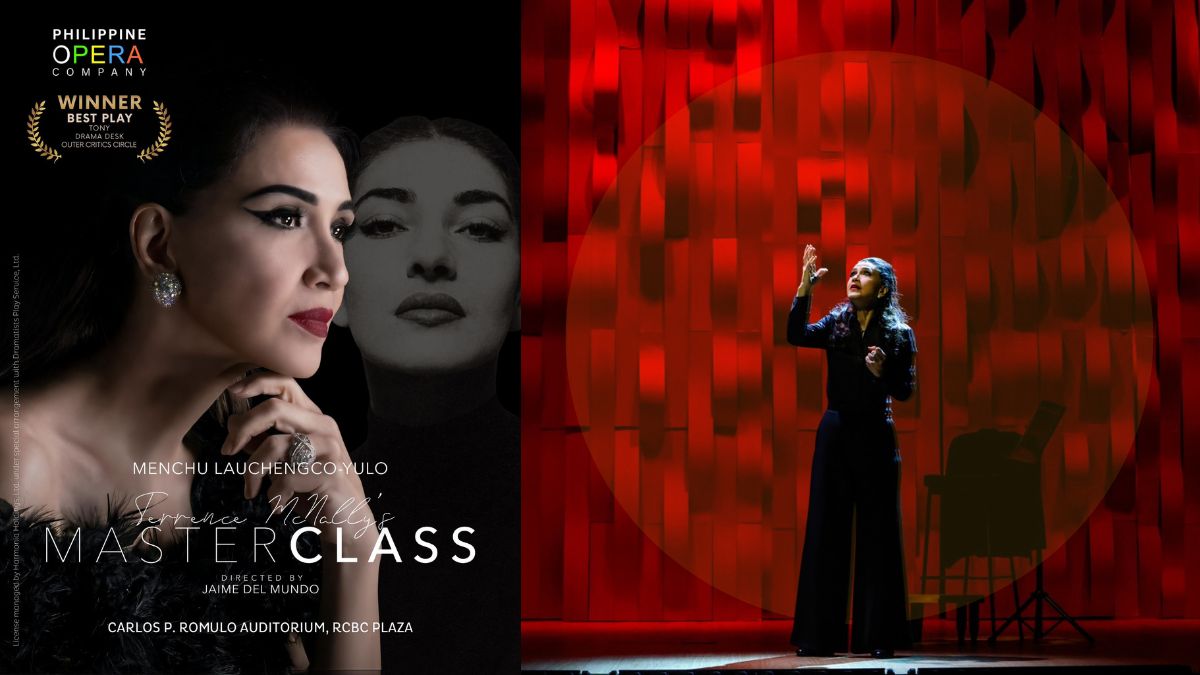
Terrence McNally’s play Master Class is an imagining of one of the sessions of famed opera diva Maria Callas’ master class, which she held a few years before she died, after her voice had given out and her retirement. It is a fictional account of what a master class would be like with someone so important and revolutionary in the world of opera that her teachings would give way to asides that would talk about art, discipline, fame, and her own personal life. It is funny and brutal, it’s casual and accessible and yet it reaches out and engages thoroughly with the sophisticated world of an elite art practice. In efforts to demystify and humanize Callas, McNally allows humour – formed by Callas’ self-confidence and belief in herself and her brutally honest and frank way of critiquing the students and anybody else who catches her attention – into the script and interweaves it with explorations of what it takes to truly express the truth in art while also wrestling with Callas’ own personal demons.
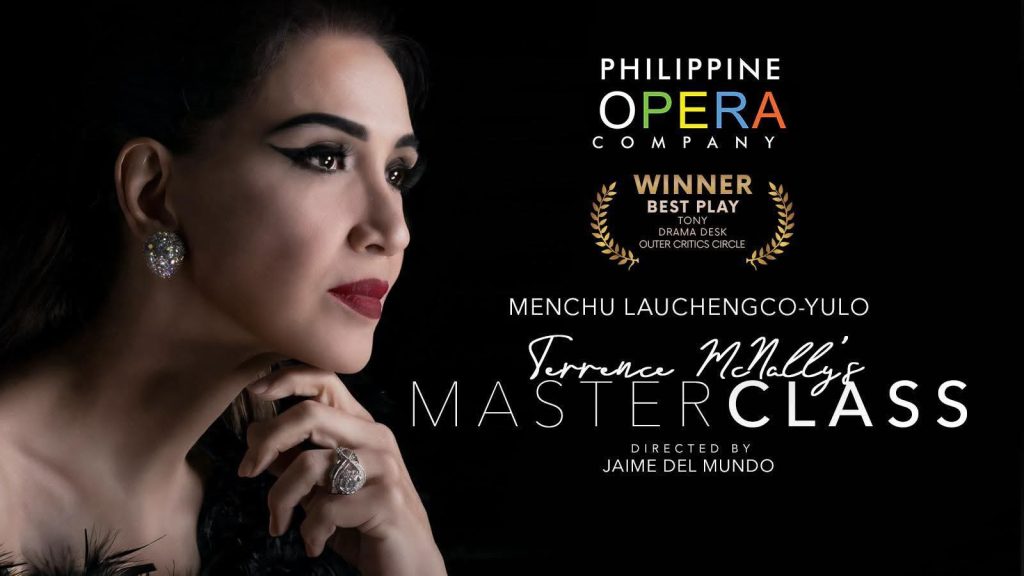
The Philippine Opera Company’s latest staging of Master Class has Jaime Del Mundo in the director’s chair, and he strips away the theatrics of the Carlos P. Romulo Theater at the RCBC Plaza and turns the stage into a rather simple venue for a master class.
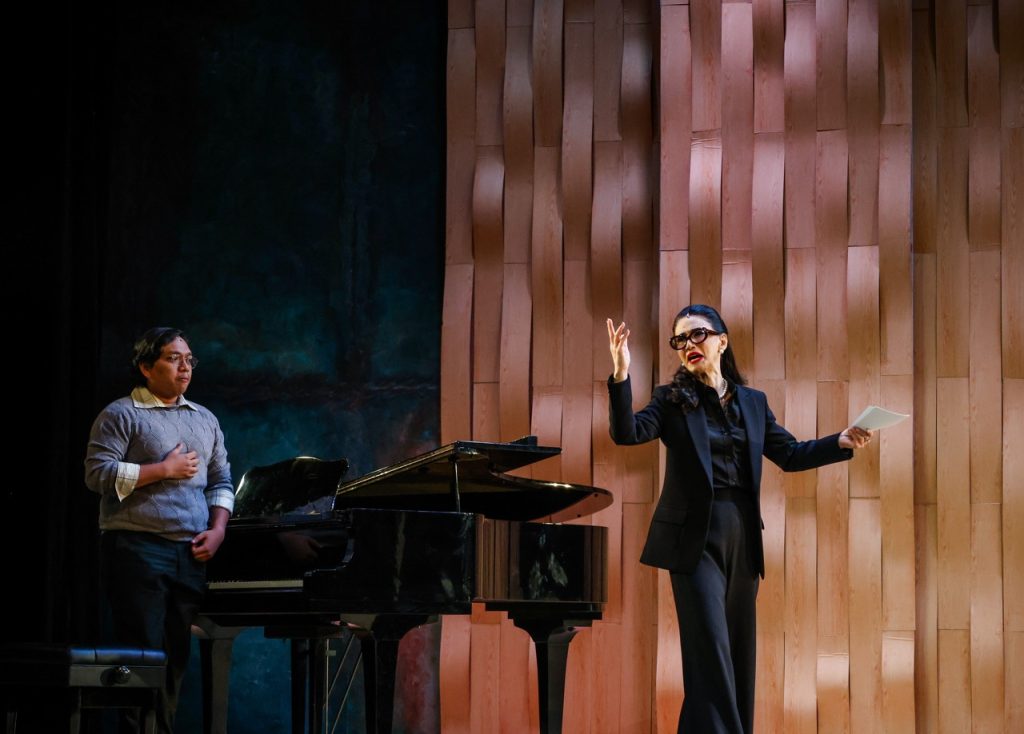
There’s a piano, a high chair with a music stand, and a table filled with books at the back. Before the start of the play, a projection of Maria Callas is screened on the backdrop, a textured screen that remains dormant until the finale, which gives way to the only spectacle Del Mundo allows for this play.
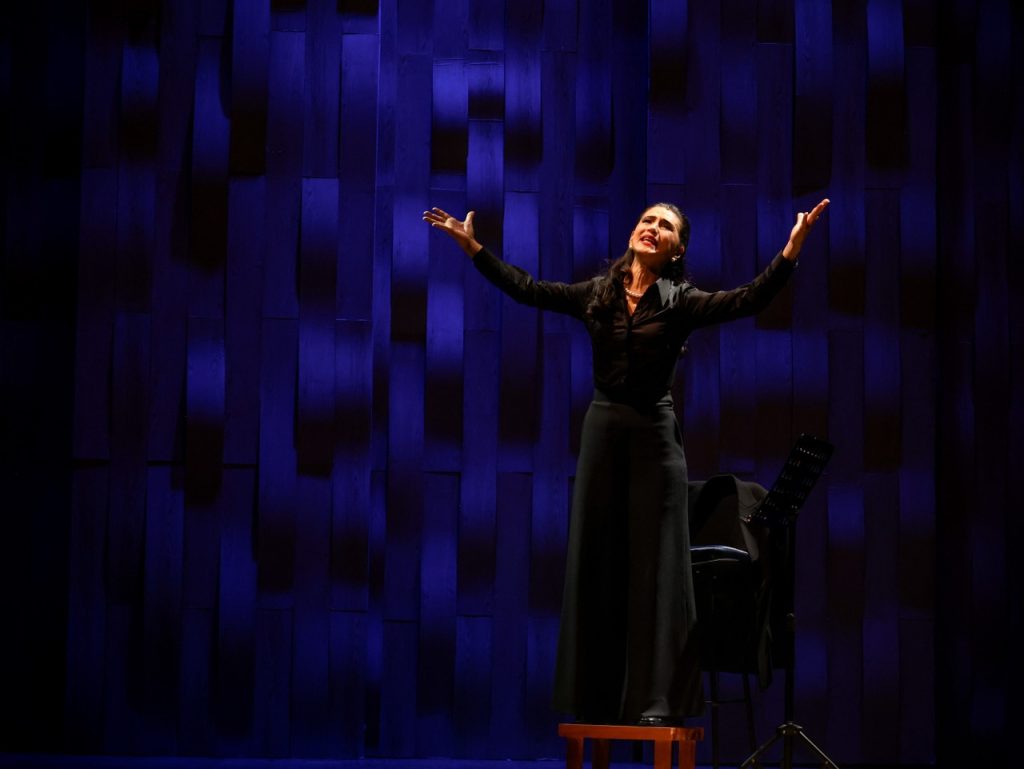
There are no theatrics here. The spectacle is the performance of Menchu Lauchengco-Yulo as Maria Callas, a force of nature walking in from the audience’s side who, through sheer aura and stage presence alone, grabs all of our attention.
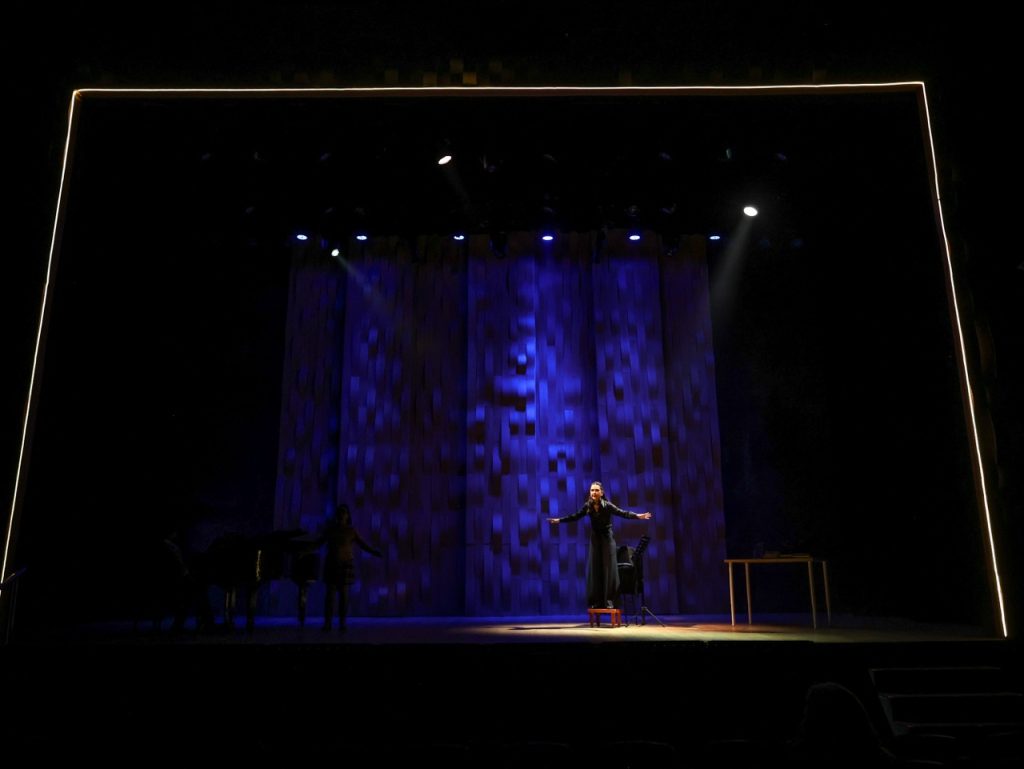
Lauchengco-Yulo does not try to mimic or imitate Callas. Instead, she takes all of the opera diva’s essence and truth and presents it in her line delivery, her posture, and her facial expressions. It’s a commanding role, with the majority of the play’s two acts centered around her. Callas knows she’s a star and that this class is filled with people who want to be like her, and Lauchengco-Yulo runs with it but, at the same time, is hiding something deep inside.
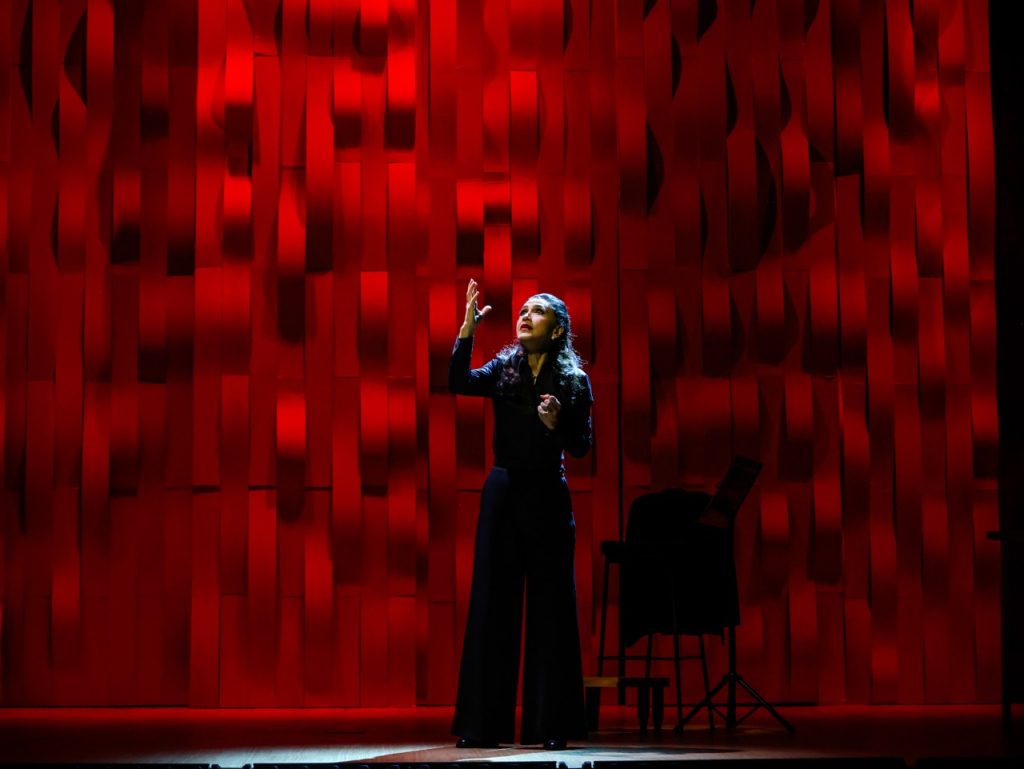
This is presented in moments while her students are singing; she enters into her own interiority, and delivers a gut-wrenching monologue that mines all of the character’s emotional struggles into a powerful moment for Lauchengco-Yulo.
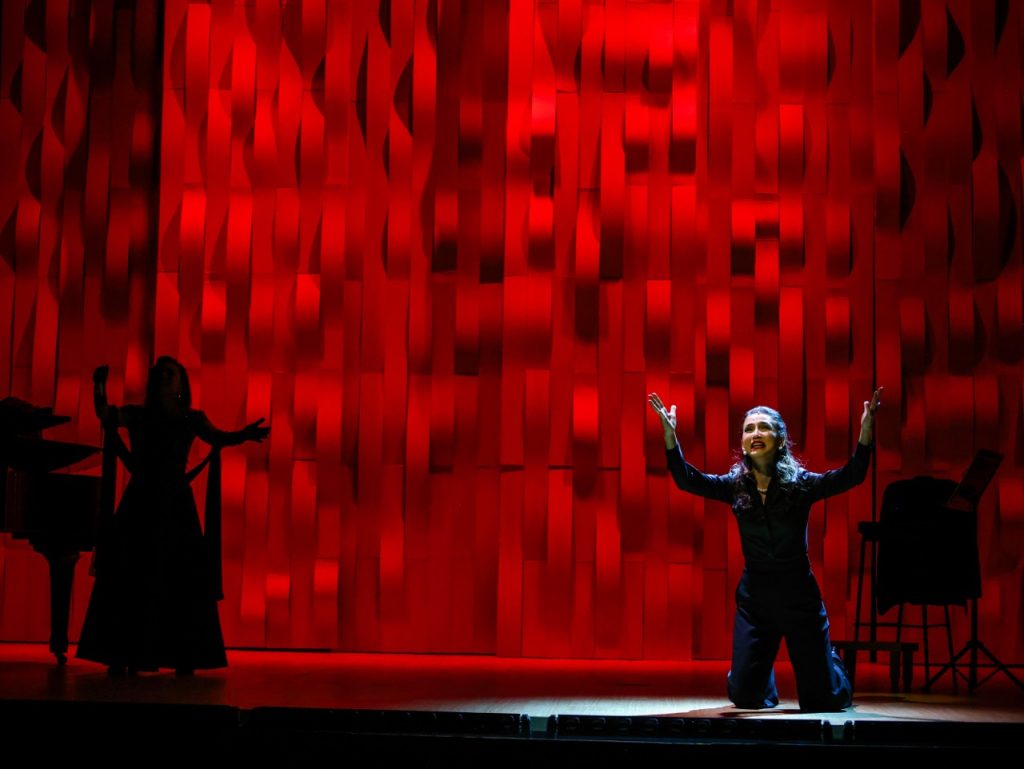
She does this twice – once before the end of act one and a second time before the end of act two – and it’s really the highlight of the show.
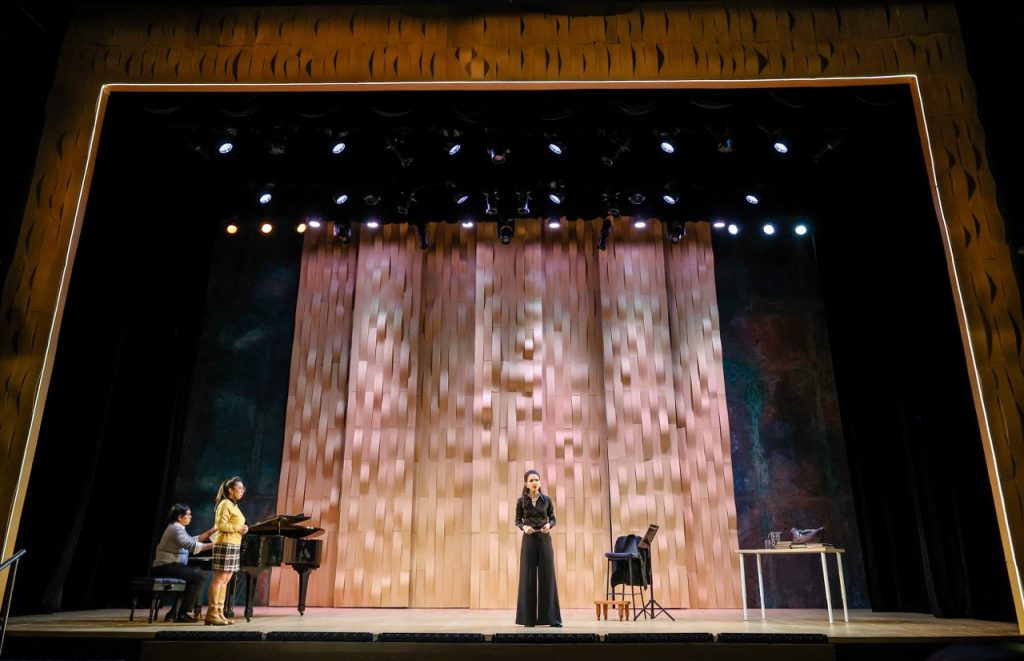
The cast surrounding her – her accompanist on the piano, Manny (Louie Angelo Oca), the three students, Sophie de Palma (Alexandra Bernas), Anthony Candolino (Arman Ferrer), and Sharon Graham (Angeli Benipayo), and a stagehand (Nelsito Gomez) – feels directed to play in total contrast to Lauchengco-Yulo’s Callas.
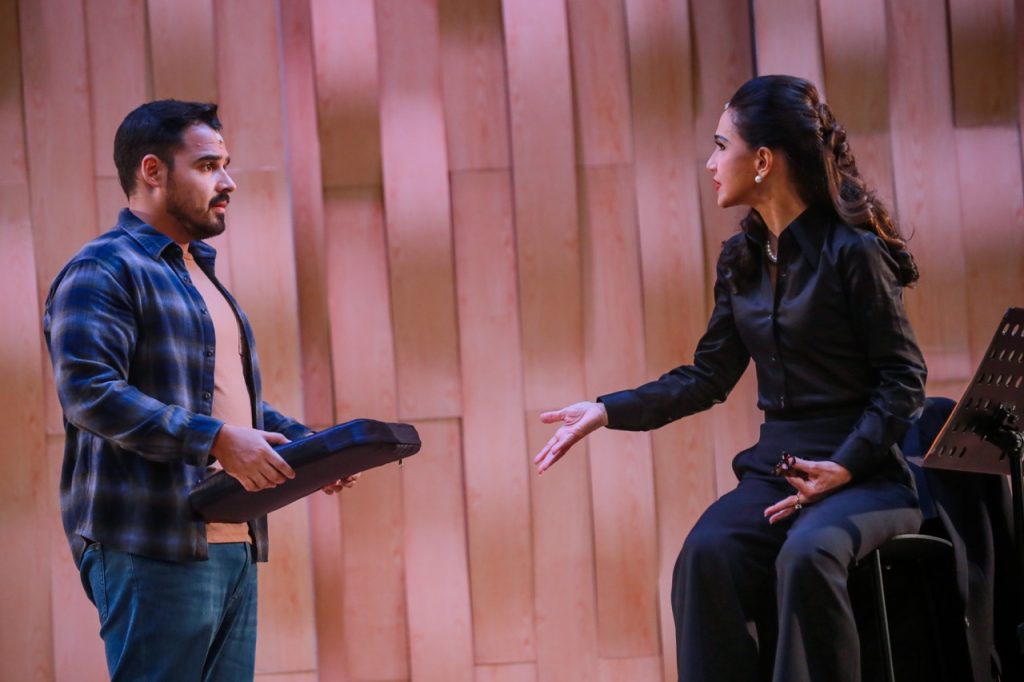
As she is grounded in emotion, the supporting cast feel exaggerated and hyper-real; as Callas is striving for truth, the people around her are playing to people’s expectations.
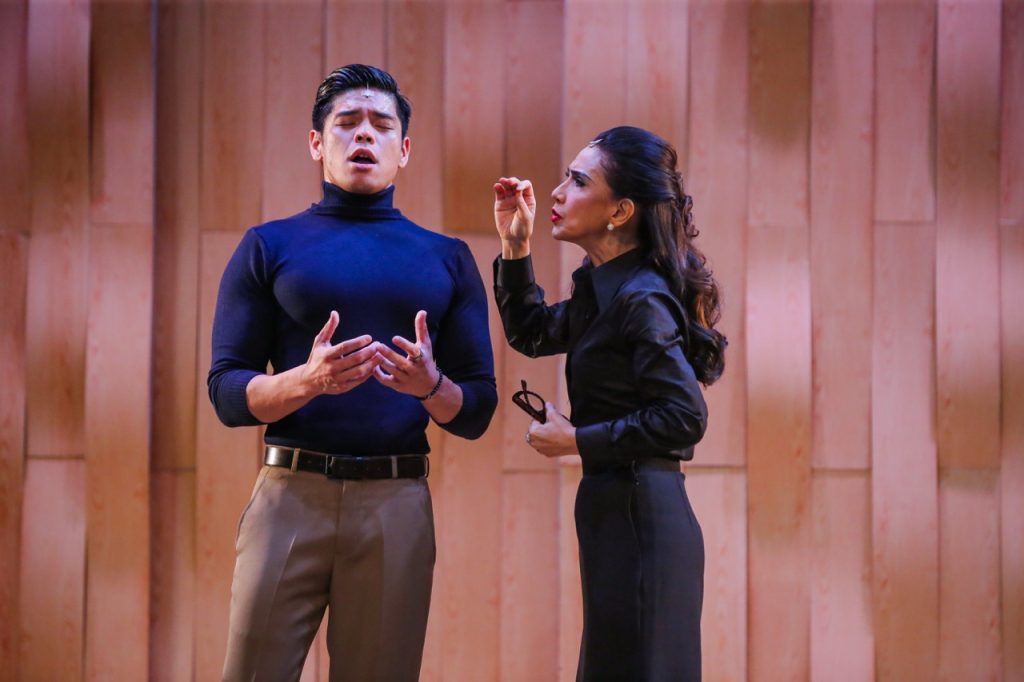
The contrast is apparent, and the magic really happens when Ferrer and Benipayo have to sing, with Lauchengco-Yulo, in character, directing them through the songs. I grew up listening to opera arias when my dad would play them while working. I know very little about it, but I could hear the shifts and tones when Ferrer and Benipayo began to imbibe Callas’ teachings.
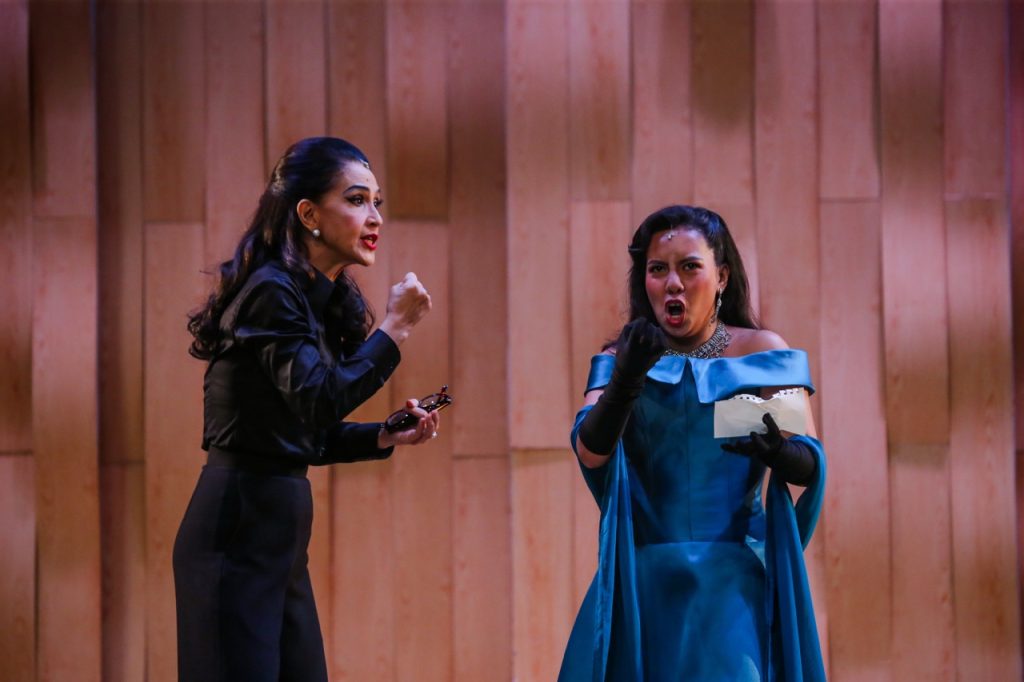
They are singing difficult pieces – one from Turandot and the other from Verdi’s MacBeth – and they are acting through them. The largeness of their spoken scenes is given nuance and texture as they sing their arias and learn how to find truth in the performance. By the time they exit the stage, Ferrer and Benipayo have changed their approach and Callas has done her work.
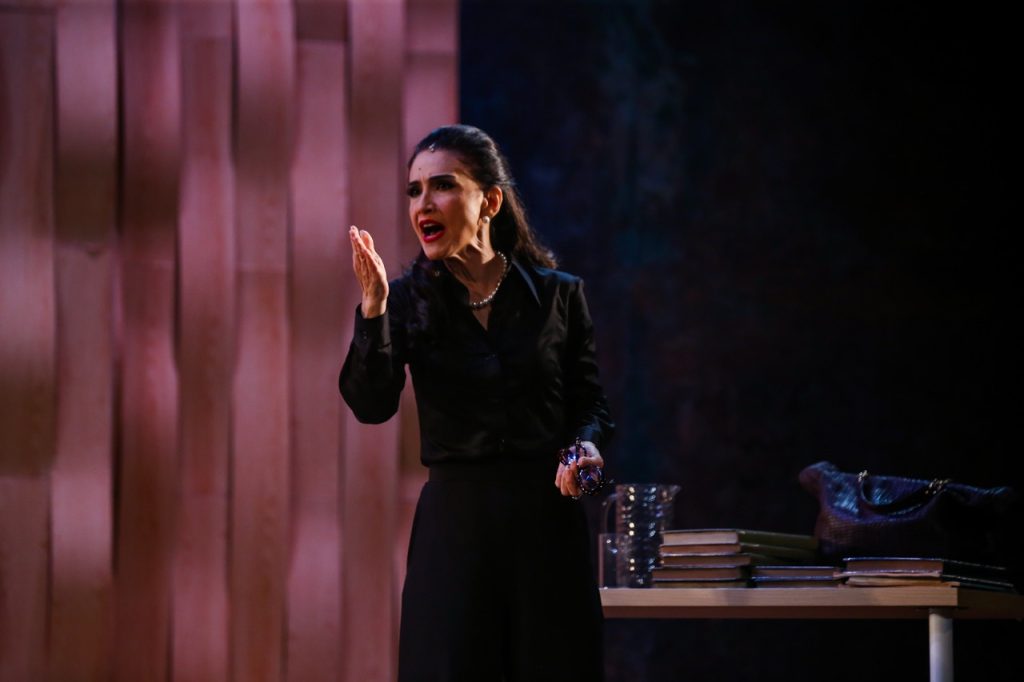
Maria Callas, as a character, is not easy to like, though you can admire her. She’s abrasive and self-possessed and we can hang on to her story because she has lived a truly remarkable life. Lauchengco-Yulo plays her head on, without begging for sympathy, and the result hits like a hammer to the head. It’s a bravura performance from Lauchengco-Yulo that realises the full extent of McNally’s play, but it also makes the piece feel somewhat inaccessible unless you truly love the practice of art like I do. There were people around me who couldn’t grasp the full nature of the show; taking the master class tone and setting to mean they were not in the theater, they began talking incessantly from the middle of the first act.
My Rating: 3.5 Stars

Driven by a commanding, bravura performance from Menchu Lauchengco-Yulo, this production is a must-see for true lovers of the craft. Don’t miss the final weekend of Terrence McNally’s award-winning masterpiece, Master Class. The final shows will run on May 30 at 3 PM and 8 PM at the Carlos P. Romulo Auditorium, RCBC Plaza, Makati. You can secure your tickets now by calling 09176452946 or by visiting Ticket2Me.
Leave a Reply
You must be logged in to post a comment.