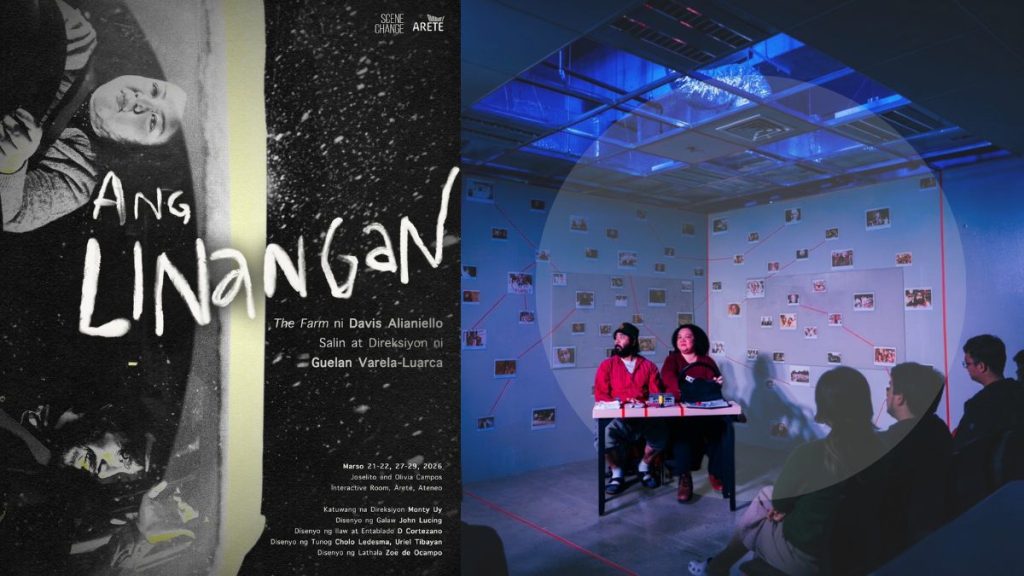
Scene Change is doing really groundbreaking work in theater, creating productions in alternative theater spaces to keep the tone intimate and compact. This approach allows itself to work on plays where the spectacle and theatricality are found in the nuances that thrive in such close proximity. Last year’s 3 Upuan does exactly this and Guelan Varela-Luarca does it again, directing Ang Linangan, a translation of The Farm by New York-based playwright Davis Alianiello. The production transforms the Joselito and Olivia Campos Interactive Room at the third floor of Ateneo’s Areté into a space seating roughly 30 to 40 people. The stage is just one tiny corner of the room with only a table, two chairs arranged to resemble a car’s driver and passenger side, along with a backdrop of photos with red thread, resembling that of detective boards in a police movie or series. With the ceiling removed to expose the plumbing above, the design is simple yet filled with texture as we watch two actors, playing siblings, skirt around difficult subject matters.
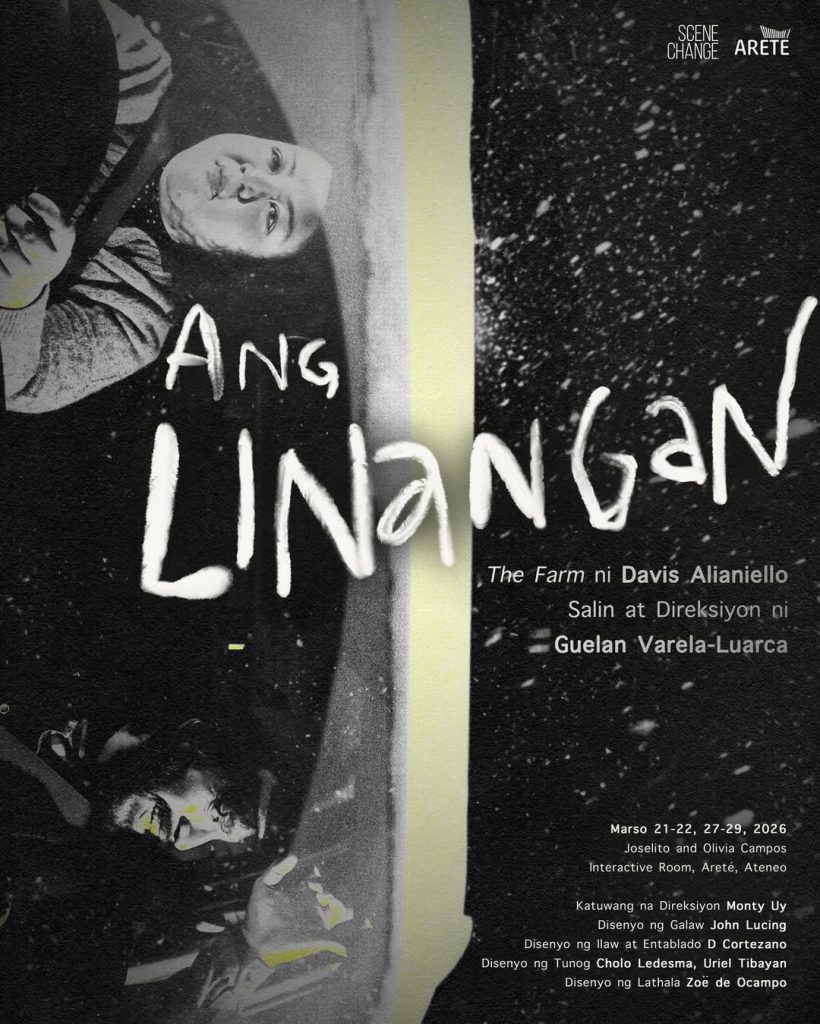
Brian Sy and J-mee Katanyag play siblings Tyler and Sasha. The play begins in the middle of winter as Sasha picks up Tyler in her car. Tyler has been away for a long time in a place called “Linangan,” which we realise, as they converse, is a cult. Tyler appears to be the troubled sibling, lost and without direction, while Sasha is the older, more serious type who seemingly has her life together. Running for approximately 90 to 100 minutes in a single act without intermission, the majority of this is just the two siblings catching up. They are avoiding difficult subject matters (but they do get into it), and being exactly like brother and sister.
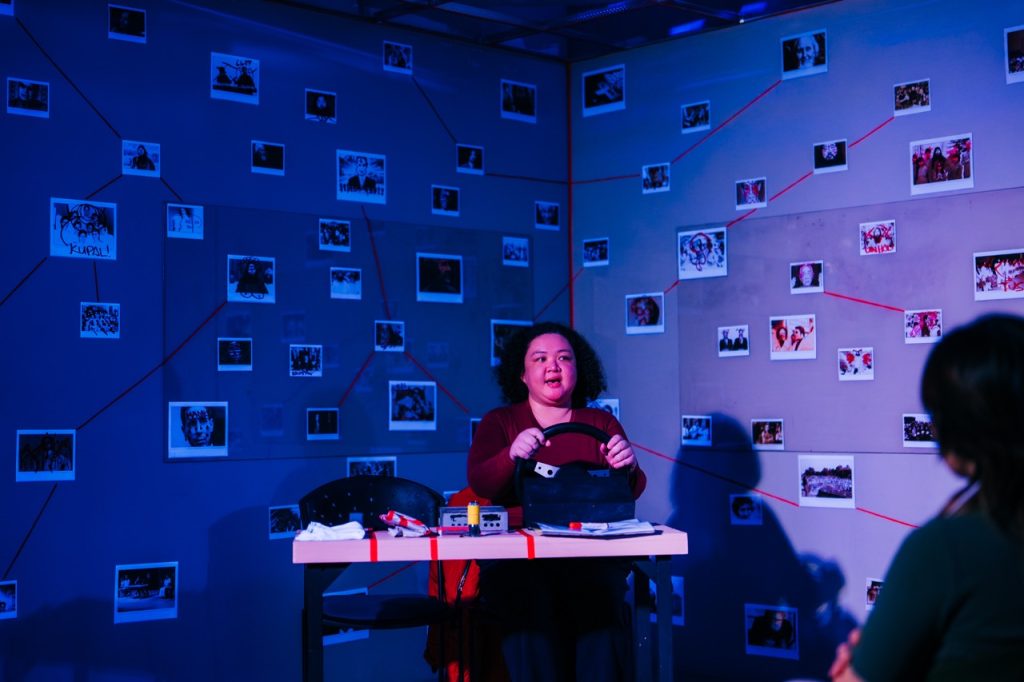
At its heart, the play is simply just two people talking, yet the dramatic situation of the play is so interesting that you are caught up in the story. Sy and Katanyag manage to fully embody the sibling relationship so fully that I was brought back to my own exchanges with my own siblings. The shorthand way by which we speak, having a history together so that certain talking points can go by so quickly. There’s a lot of love and fear on that stage, and the two leads deliver the emotional weight of this play’s story in such a satisfactory way.
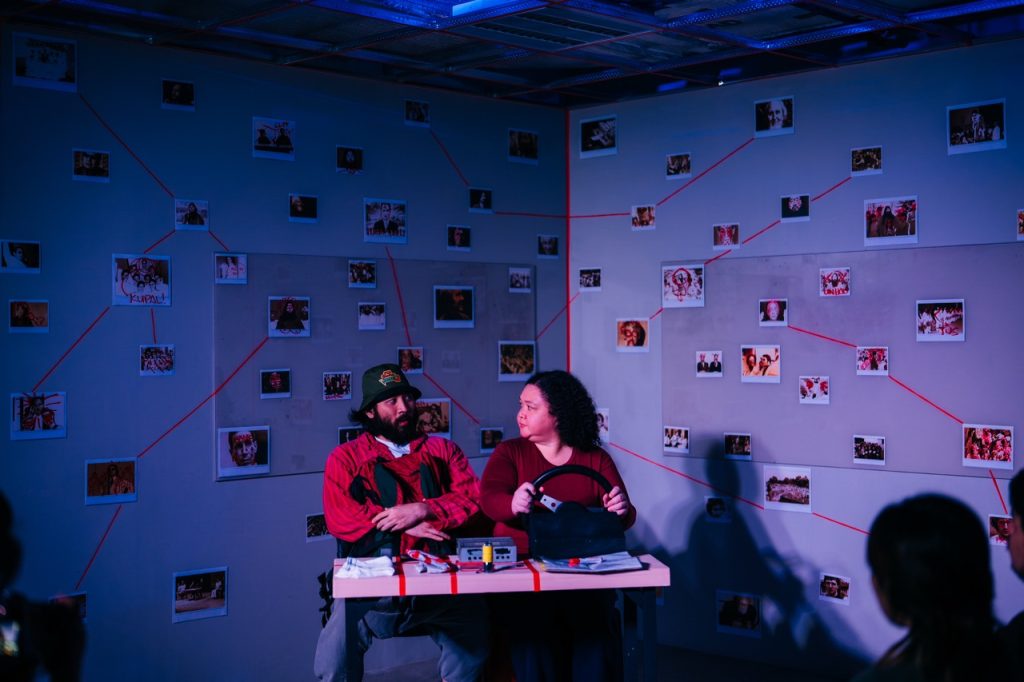
They are completely alone in that car, vulnerable and isolated and it is so interesting to watch because what has happened to Tyler is not something we encounter all the time. Sasha serves as our entry point into the narrative: do we react the way she does? How kind should we be? How badly do we want to call our sibling “stupid” for doing something so silly? But you know you can’t because there’s a deep emptiness there if your sibling thought joining a cult would be the best way to fill it.
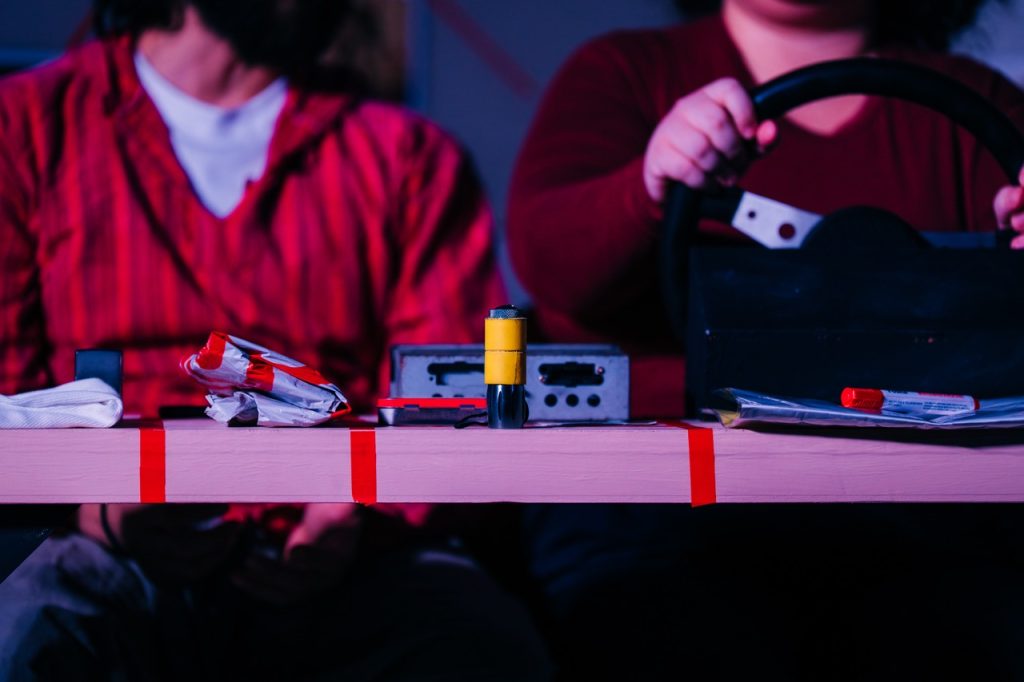
The play is never loud or grand and Varela-Luarca is excellent at amplifying the little things that make this play pop. First, the way he had directed his actors to mine the scene for all its worth emotionally and theatrically. During their conversation, while Sasha is driving, Tyler would get up and stretch and walk around the car, yet we know he is still in it, telling his story, but as the audience we know he is finally relaxing. He is finally feeling comfortable and safe being alone in this space with his sister. The table and the chair that approximates the front half of the car suddenly becomes the whole stage; Varela-Luarca understands that when two people are on a drive and it’s just them, it’s a whole entire world there with just the two of them. D Cortezano’s lighting design punctuates these shifts, marking transitions as the characters go into flashbacks or imagined moments, while the symbolic yet grounded stage design further anchors the characters’ reality.
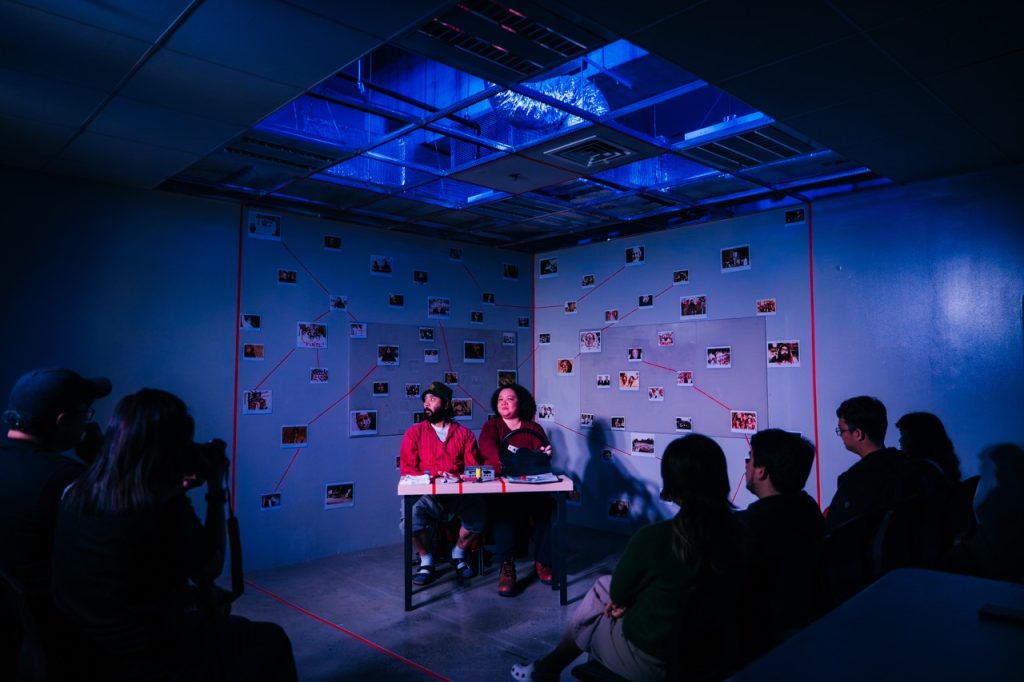
Even the sound design, when the two actors mime putting on their seatbelts, the recorded clicking of the buckle is timed perfectly with the actor’s movements. The first fifteen minutes transports you from the Joselito and Olivia Campos Interactive Room and into Tyler and Sasha’s private world, and the rest of the time, you are just transfixed in that moment with them. The play is dense, heady, and complex yet it’s also funny, touching and moving. While Sy is always a reliable actor, Katanyag is a total powerhouse, delivering a bravura performance that is unforgettable. In her, I saw flashes of myself, my sister, in other moments, and in some snippets of dialogue, she is my two older brothers. She just captures it.
I’m glad someone is doing these plays that are left-of-center and are creating full Filipino translations of Western plays that don’t adapt the material; it just makes it accessible to a wider audience. There are moments when I forgot that these characters weren’t originally written as Filipino at all. The naturalism of the language confused me, but they could very much well have been our own. This is the universality of a great theatrical production.
I am so excited to see what else Scene Change has in store for us this year.
My Rating: 5 Stars

Ang Linangan was an unforgettable study of sibling bonds that set a high bar for Philippine theater this year. Although the run concluded this past March, its impact remains. Support local, “left-of-center” theater by keeping Scene Change on your radar for the rest of the 2026 season.