There’s something powerful about watching Cameron Mackintosh’s production of Les Misérables live. Like many, I grew up with this musical, listening and learning the songs by heart as a kid. But also like many, I had never seen it performed live. I’ve watched the concerts, both on video – the 10th Anniversary and 25th Anniversary concerts, both featuring Lea Salonga as Eponine and Fantine, respectively – but after seeing Les Misérables: World Tour Spectacular at the Theater at Solaire last week, I must say my affection for this show has grown tremendously since.
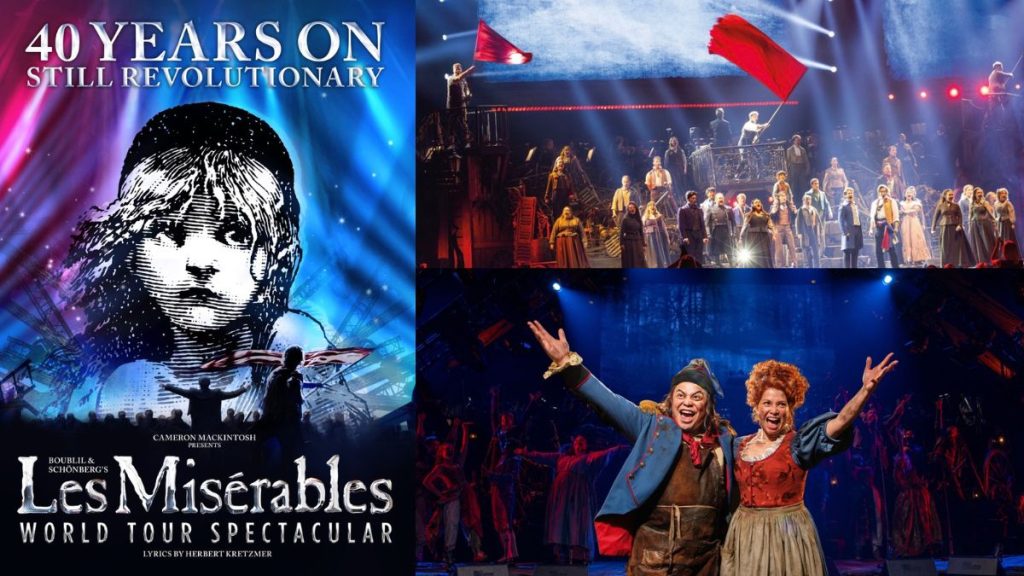
The concert staging is directed by James Powell and Jean-Pierre Van Der Spuy. As a concert, the ensemble takes their seats on steps leading up to a second story, where the large orchestra performs, with orchestration by Stephen Metcalfe, Christopher Jahnke, and Stephen Brooker. Beneath the stage is an aperture where the main cast can make their entrances and exits.
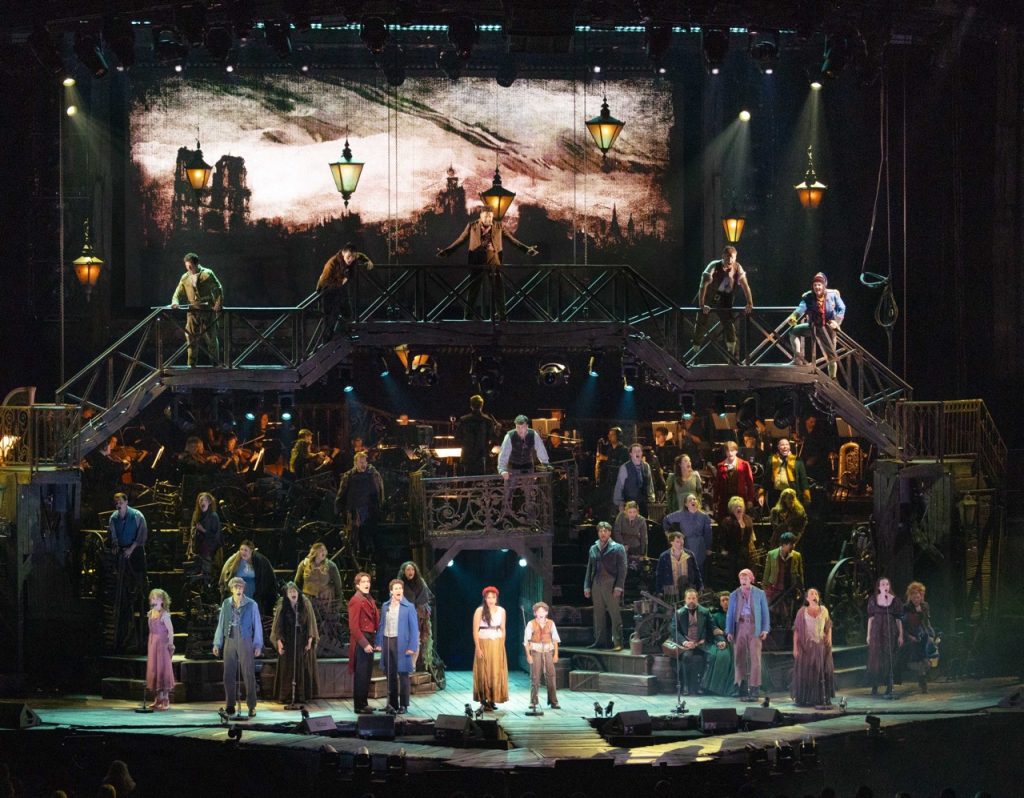
As the show opens, there is a huge barricade that blocks the view, but it is lifted into the air as the performance begins. Later, a bridge is brought, adding further size and scope to the whole production. The design by Matt Kinley is relatively simple but effective in creating an awe-inspiring effect.
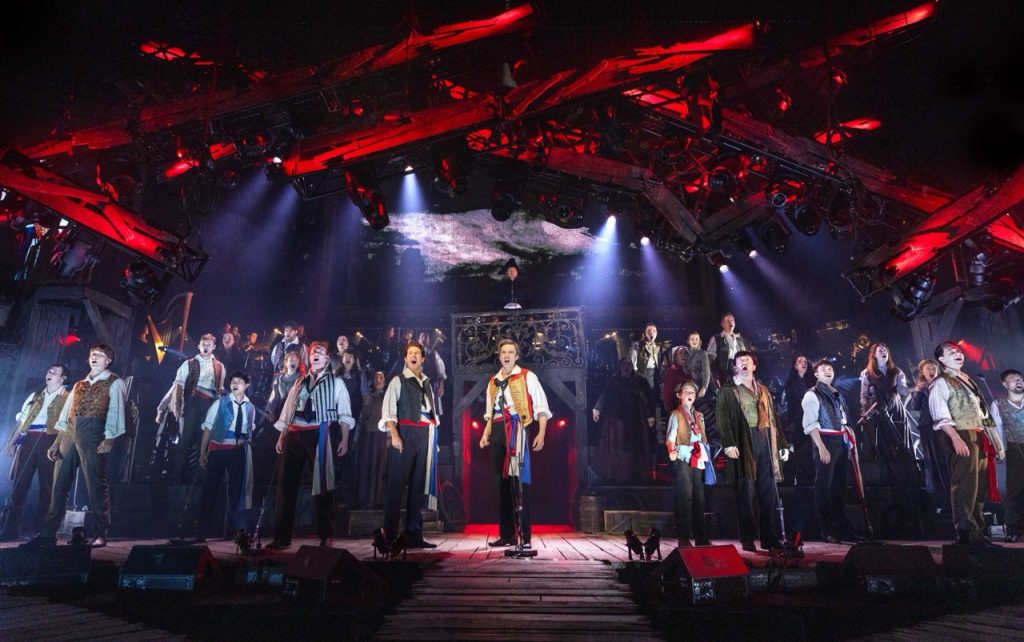
The cast walks up to the front of the stage to sing their parts in front of microphones. It’s definitely a concert rather than a fully staged production, but the whole story of Les Misérables is conveyed through the songs; it’s practically sung-through, so you still get the full range of the narrative, even when done this way. At the same time, many of the cast really perform these songs. Minimal stage directions can help the audience visualize what’s happening.
The full power of this concert really gives you a pretty good sense of the show, as it is. For someone who has never seen it live, this was really the next best thing.
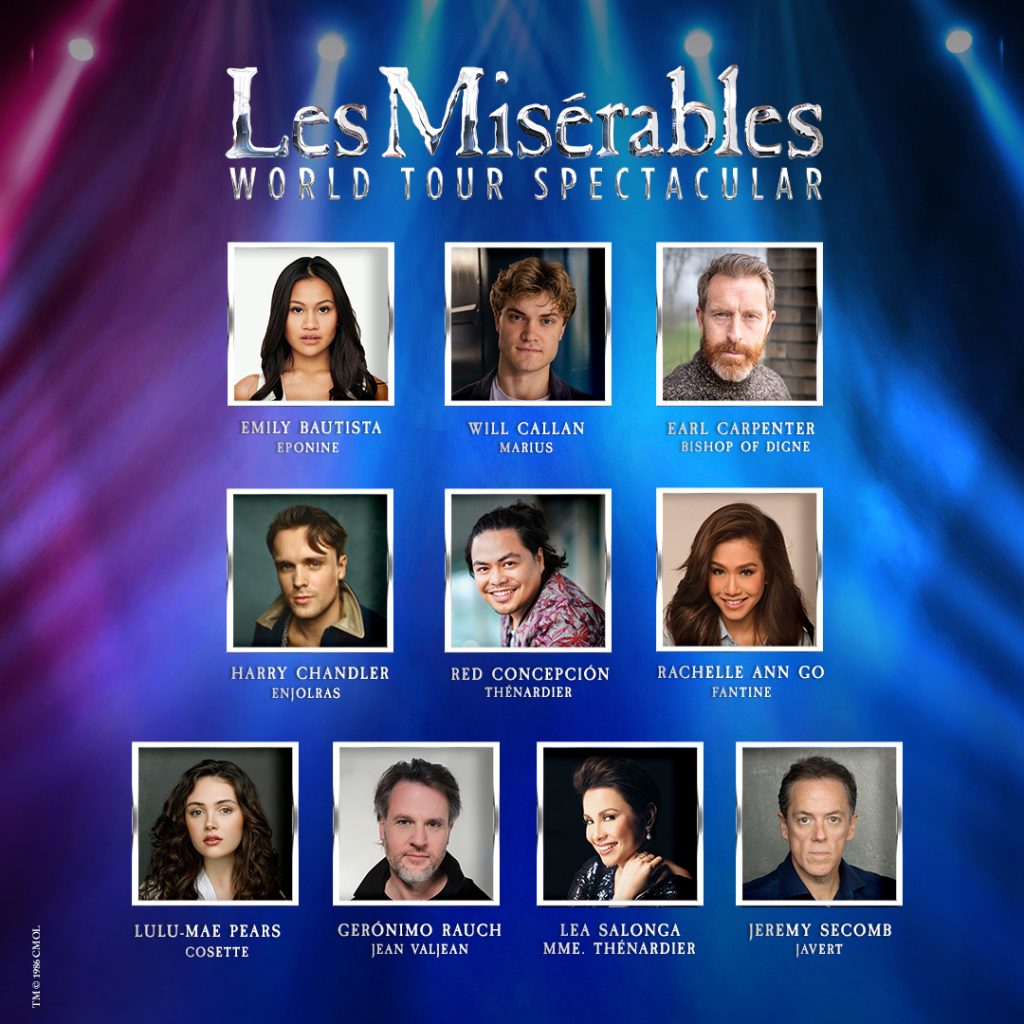
Les Misérables tells the story of Jean Valjean (Geronimo Rauch), who has just completed a 19-year prison sentence, initially five years for stealing a loaf of bread for his sister’s sick son, extended due to multiple escape attempts. As he leaves, Javert (Jeremy Secomb), a police inspector, implies that men like him never truly change. He’s sure to see Valjean again.
When Valjean steals from a bishop who had taken him in, he is caught and about to be returned to jail. But the bishop tells the police that he gave the silver to Valjean, and even gives him more. As the police leave, the bishop tells Valjean to lead an honest life. Valjean tears his parole ticket, changes his name, and vows to lead a righteous life.
Ten years later, Valjean has become the mayor of a town but his crime of escaping parole is discovered by Javert. Before he can be taken in, Valjean escapes with Cosette (Lulu Mae Pears), the young daughter of Fantine (Rachelle Ann Go), a woman who has suffered much and who has asked Valjean to take care of her daughter Cosette.
Now in hiding, Valjean and Cosette find themselves embroiled in a town where a revolution is about to start. A young student revolutionary, Marius (Will Callan), has fallen in love with Cosette but trouble is brewing. Javert is still on Valjean’s trail, and their part of the city is about to be drenched in blood.
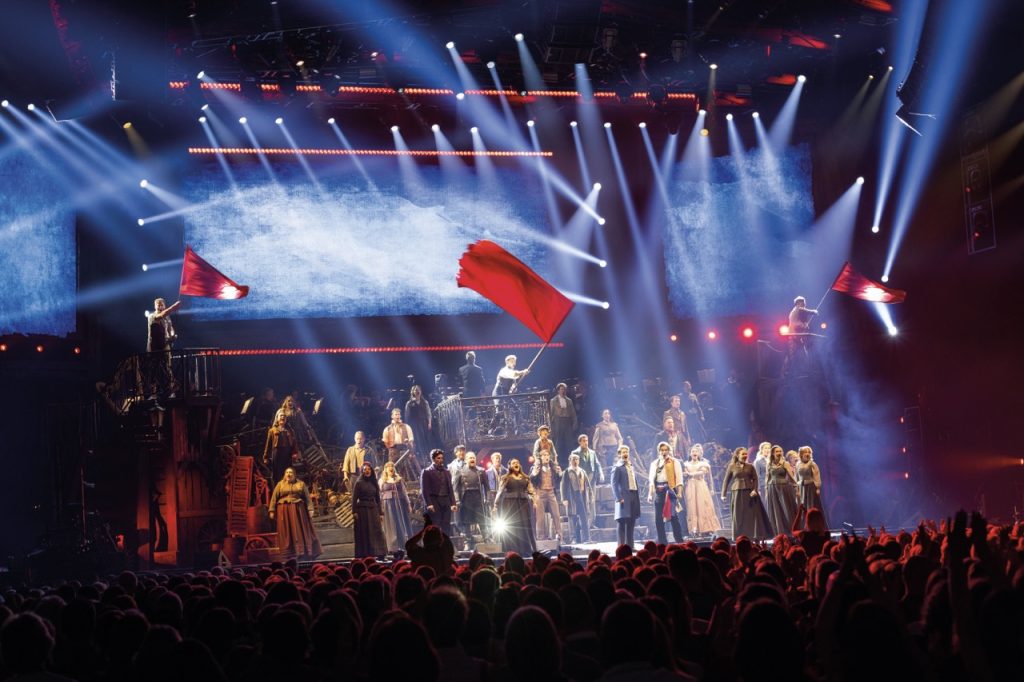
Les Misérables is an emotional roller coaster. With its large cast of characters and various storylines branching out in all directions, watching the concert live allowed me to see how the show’s various, multiple storylines paint a picture of an unjust and chaotic world. The law, as symbolized by Javert, has been used to favour the rich and to punish the poor. The youth are always fighting for radical change but are sorely outmatched, and while love still manages to bloom amid all this threat of destruction, these social ills make it challenging to find one’s happy ending.
I’ve never really paid close attention to the musical’s story because I’ve only really listened to the songs – and while the whole story is there – without the imagery of a staged production (even if just a performed concert), the nuances and textures of the narrative get lost in Claude-Michel Schonberg’s gorgeous music. But here, with the ensemble right in front of you and with fantastic lighting design by Paule Constable and Warren Letton, all of that becomes clear.
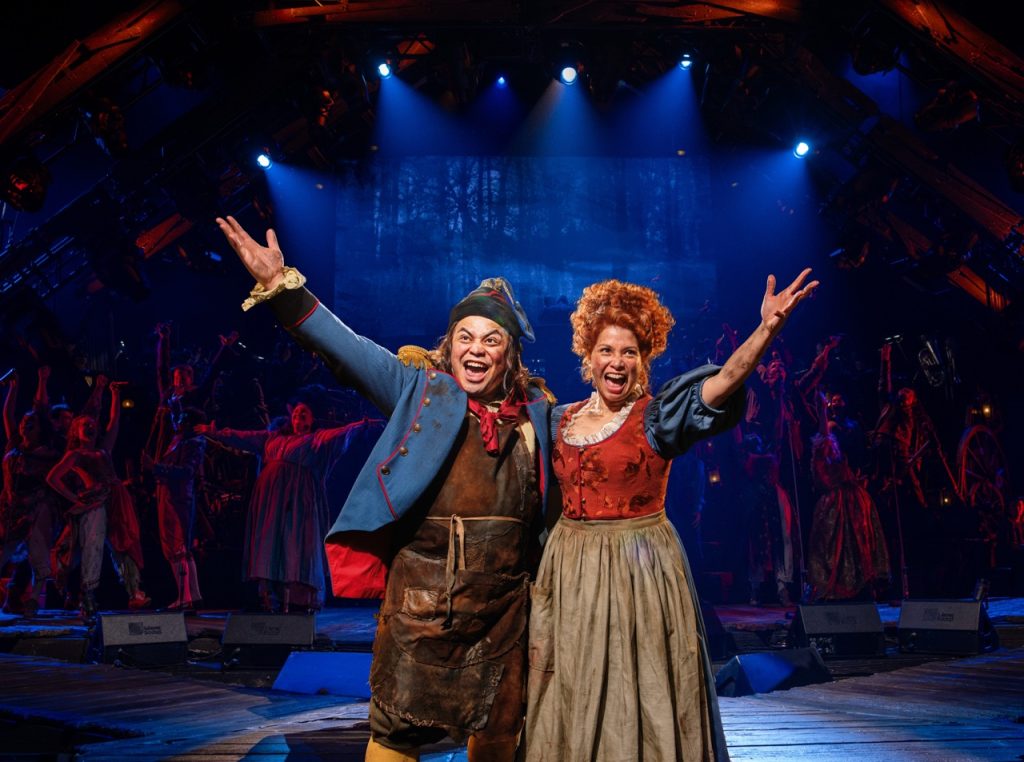
Les Misérables: World Tour Spectacular is a powerful theatrical experience. The orchestration is superb, and the performances are stellar – with Lea Salonga and Red Concepcion as the Thenardiers standing out, alongside Jeremy Secomb’s relentless and powerful performance as Javert. The whole ensemble brings the songs to life.
I had much affection for this musical but I never really thought of it as more than anything but catchy. But now that I got to see it like this: performed live, excellently sung and orchestrated, and with the visuals completing the whole experience; I must say I finally understand why Les Miserables is an enduring musical, whose themes feel more relevant and powerful today than ever before.
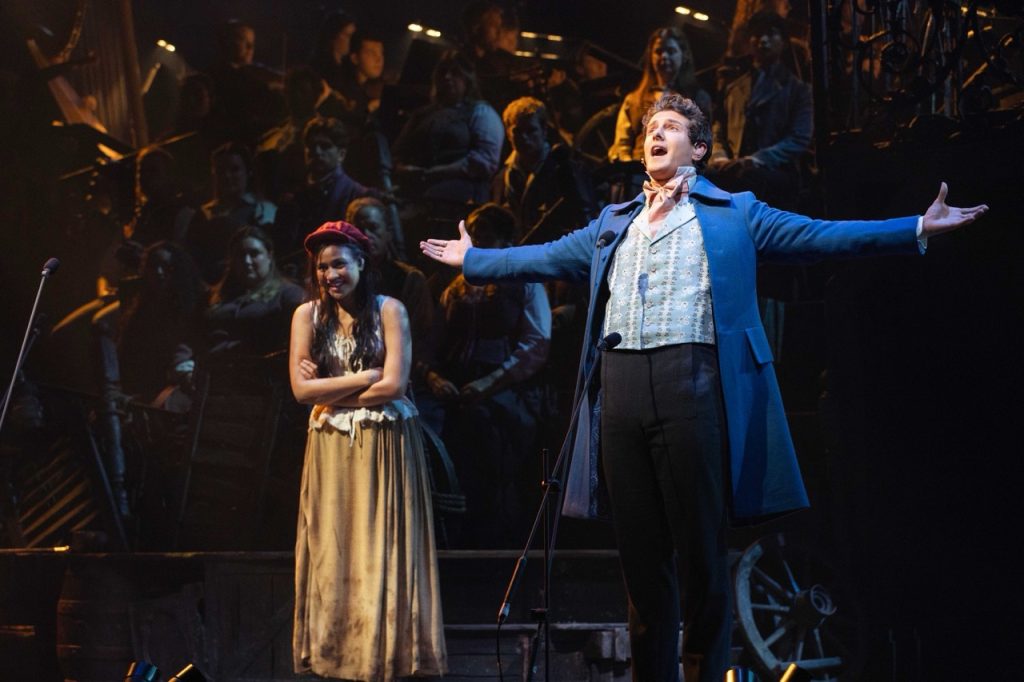
I felt that the video wall was not as effective as it could have been, often blocked by the raised barricade, it felt useless and unnecessary. And Lulu Mae Pears could have had more presence on stage as Colette, as she was outshined by another Filipina, Emily Bautista playing Eponine. These, however, are just nitpicks in what is otherwise an incredible show.
My Rating: 4.5 Stars

Whether you grew up with the music or are discovering it anew, Les Misérables: World Tour Spectacular is a moving reminder of the power of live theater. Performing at The Theater at Solaire, the show runs until March 1, and though tickets are sold out, this is the kind of unforgettable performance that truly showcases why Les Misérables has endured for generations.