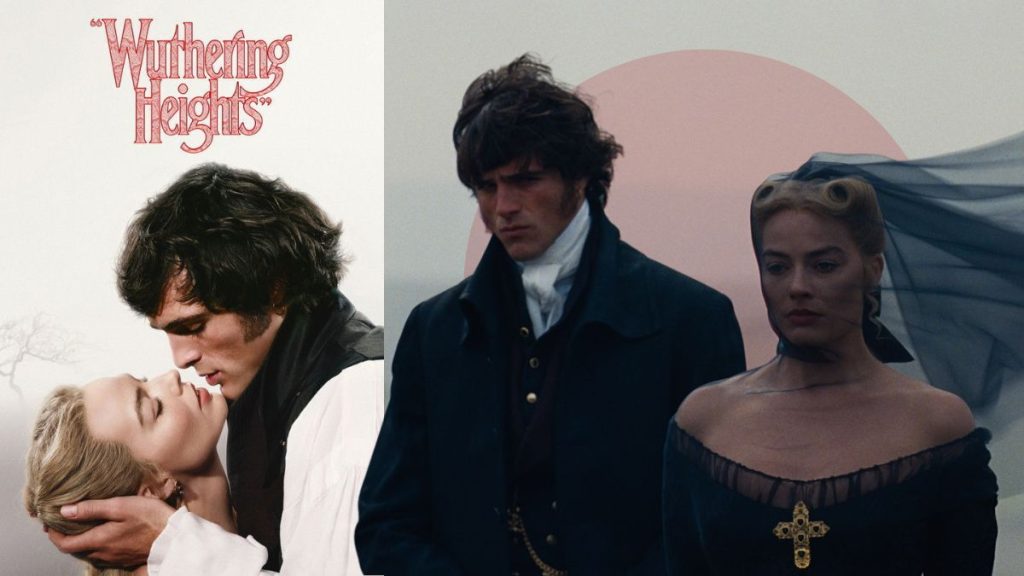
I’ve never read the novel by Emily Bronte, but I have seen my fair share of BBC adaptations of Wuthering Heights. But after reading through all the sentiments on social media about Emerald Fennell’s new film adaptation of the 1847 novel, and considering what I know of Fennell from her films Promising Young Woman and Saltburn I kind of curbed my expectations. Even the idea that the soundtrack would include new songs from pop singer-songwriter Charlie XCX told me a lot I walked into the film.
Fennell had stated that she is merely doing her own version of the story, and in this take, it is the story of two children, Cathy and Heathcliff, who become close friends when Cathy’s drunken father, a somewhat disgraced lord, adopted Heathcliff as a ward. In the decrepit home of Wuthering Heights, the two grow up finding solace in each other, with Heathcliff promising to protect Cathy and Cathy promising to never leave his side. They grow up with deep affection for each other, but their circumstances would not find their marriage favourably. Cathy’s father is perpetually broke from gambling and drinking, and her only real prospect is to marry rich. Heathcliff, merely a ward of questionable origins, has no chance of marrying someone like Cathy.
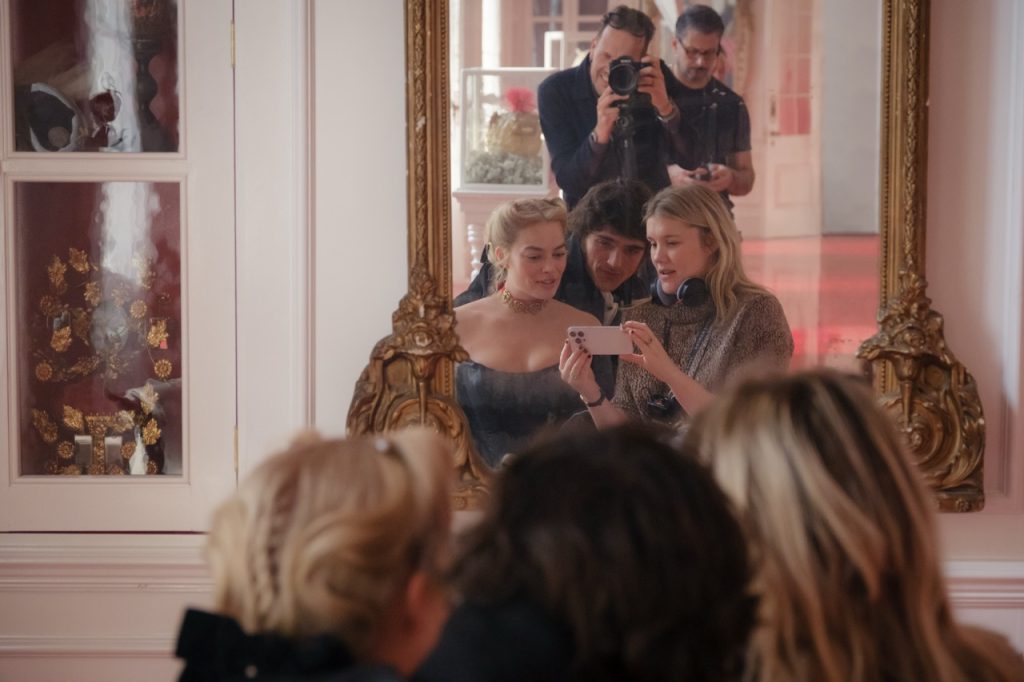
As their love for each other grows from familial affection into something romantic coinciding with their sexual awakenings, something even more primal than that, their love and friendship constantly push them toward hurting each other. When life at Wuthering Heights becomes dire, Cathy chooses to marry their wealthy neighbour, Edgar Linton.
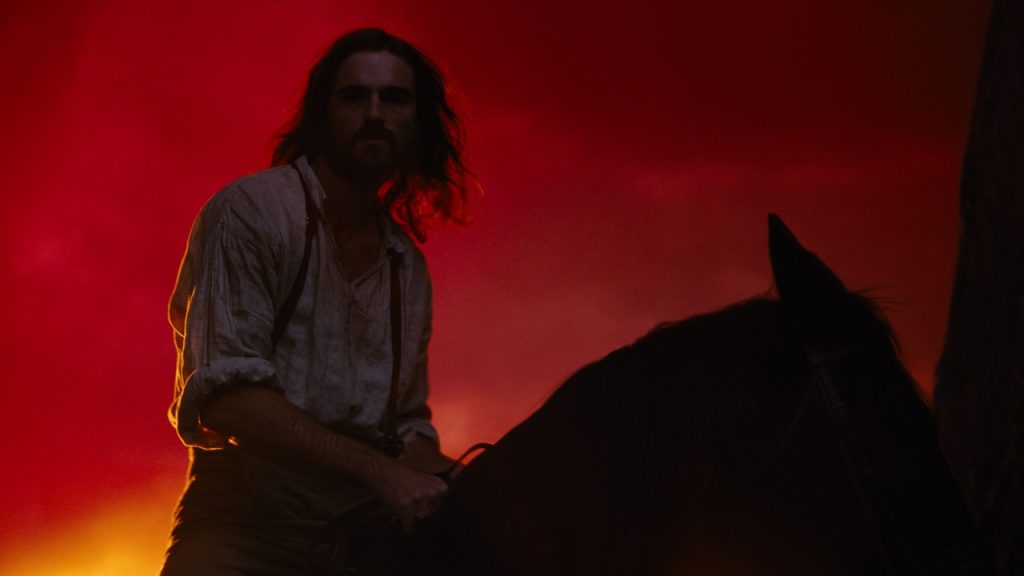
Heathcliff takes a horse and leaves before he discovers the truth about Cathy’s feelings for him. Years later, Cathy is living in wealth and privilege and is with child when Heathcliff returns. He has become wealthy, having purchased Wuthering Heights. The passion they still. harbor for one another ultimately destroys them and everyone around them.
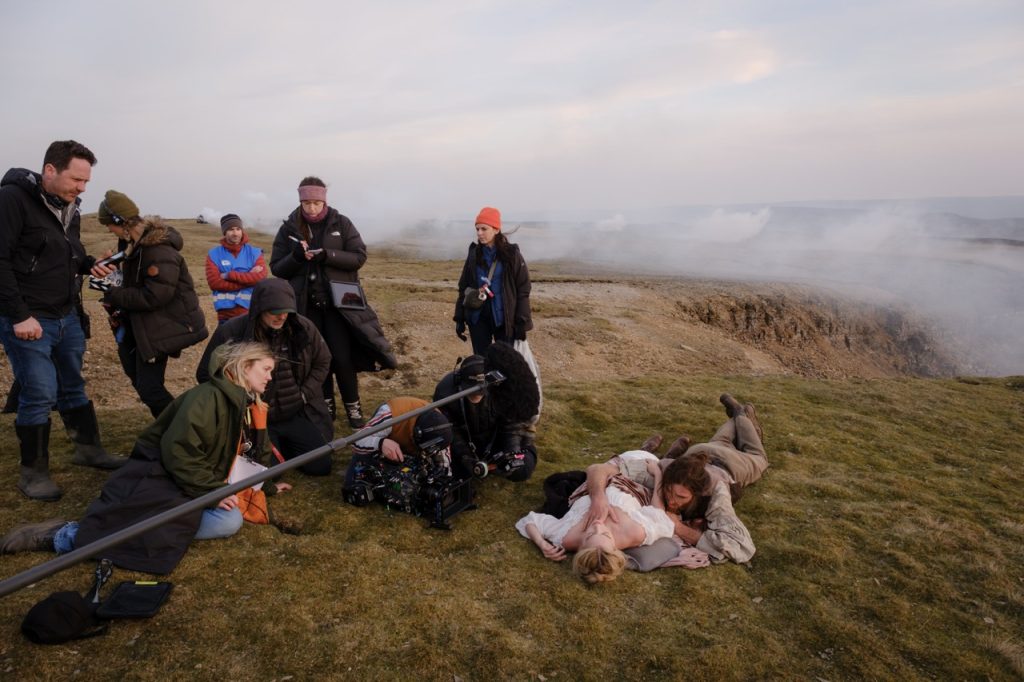
If anything, Fennel has a striking visual style and creates some very powerful imagery throughout the film. The way she captured sensuality in Saltburn finds its way here as well. She plays with the film’s sound design so that the heavy breaths characters take almost evokes a sexuality, even when the imagery suggests the opposite – take note of the opening scene. It’s as if she’s deliberately creating a link between sex and violence.
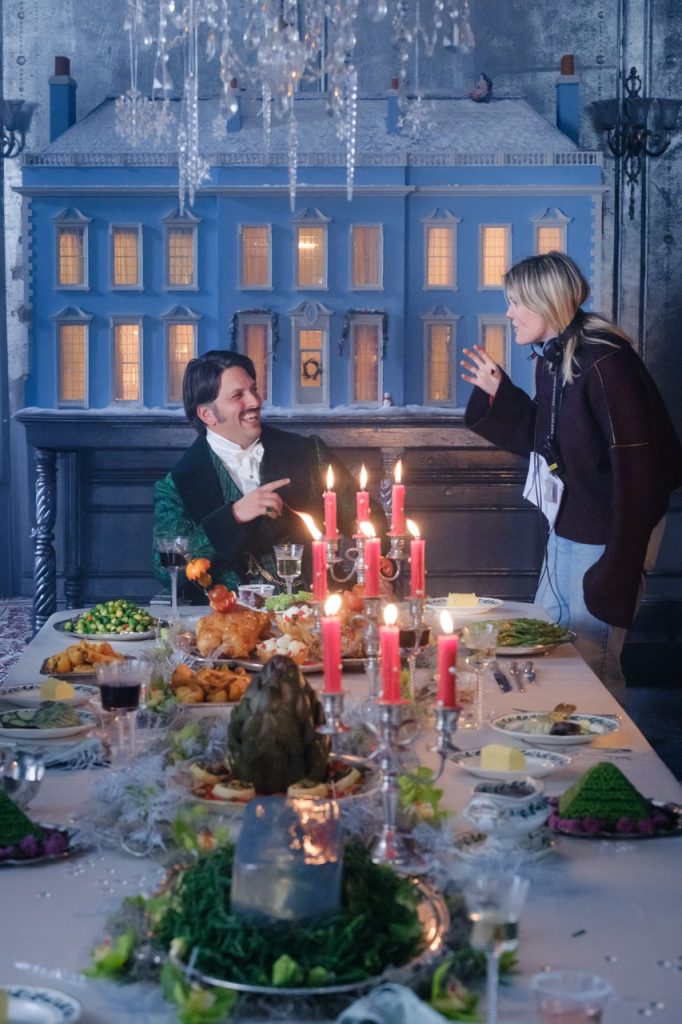
She also uses elaborate set pieces that look like intentionally constructed, emphasizing to show off the movie’s artifice. Everything is hyper-real as if signaling to us that this is adaptation is not to be taken too seriously.
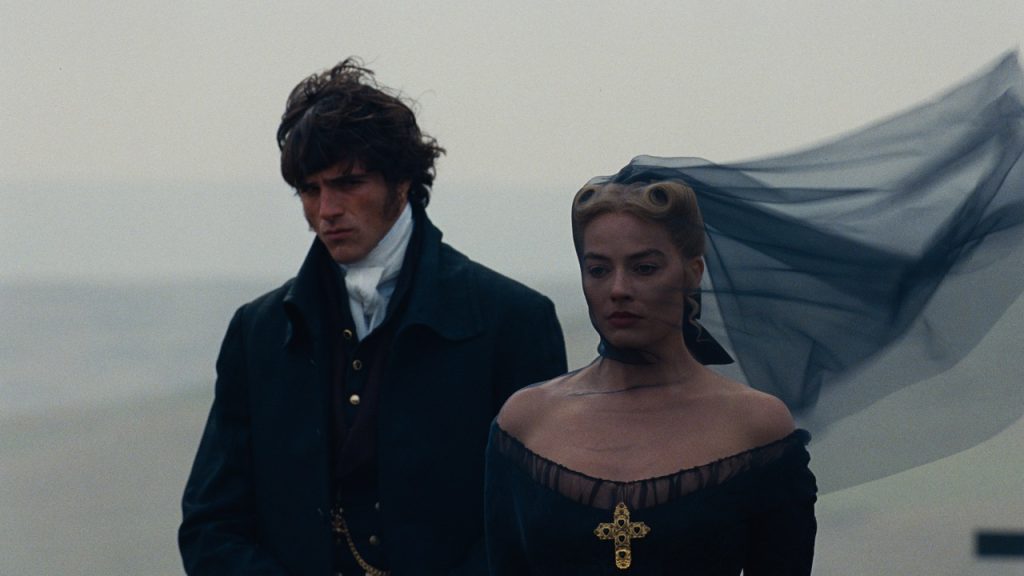
Margot Robbie and Jacob Elordi, as Cathy and Heathcliff have an undeniable chemistry. However, while Elordi’s has proven his range in Priscilla, his performance here feels somewhat one-note, it’s a shame that his full range isn’t utilized here, and it’s Robbie who takes center stage. She’s a wildfire, a tempest and she does not play for our sympathy. Instead, she portrays Cathy as a spoiled woman unable to control her innermost desires.
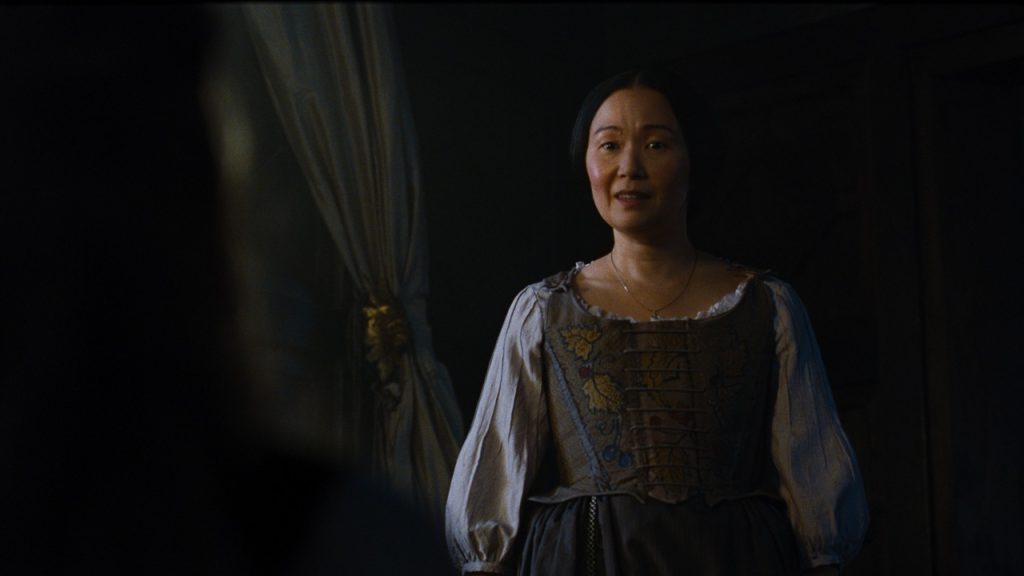
The perfect foil for her is Hong Chau as Nelly, Cathy’s companion. Caught in the crossfire of Cathy and Heathcliff’s destructive love, Nelly becomes the grounding force, attempting to impose a sense of order on her childhood friend. Yet even she takes things to an extreme, having a hand in the separation of the two. Chau is brilliant. While her work is less explosive than Robbie’s, as a more dignified character, she has to hold her emotions close, revealing what she really feels through subtle gestures and looks. Despite Nelly’s flaws, she becomes the only character I could truly grasp and connect with.
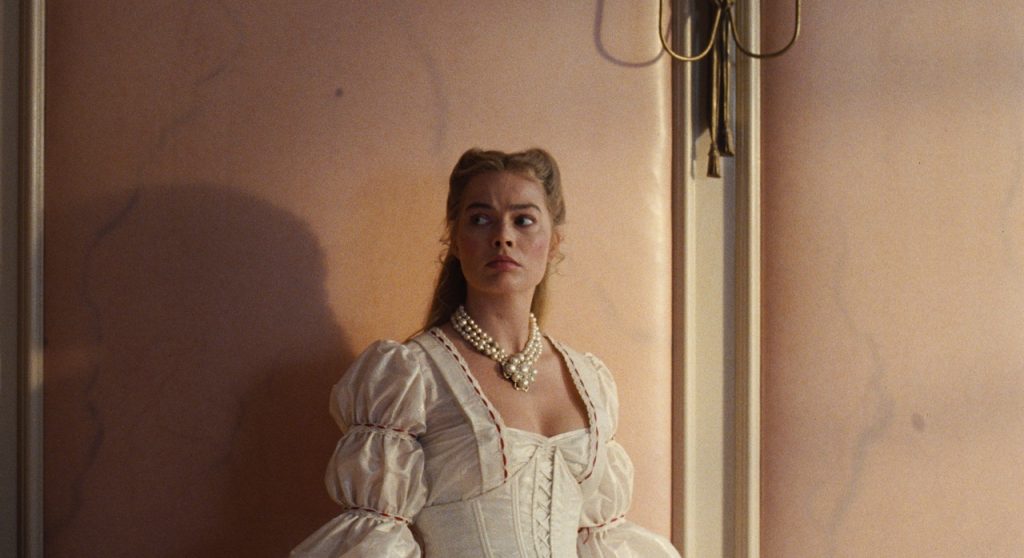
Despite Robbie and Chau’s performances and Fennell’s powerful visual style, I am made to feel uncomfortable with how the film positions the love story as a tragic romance when they are so toxic to each other and to everyone around them.
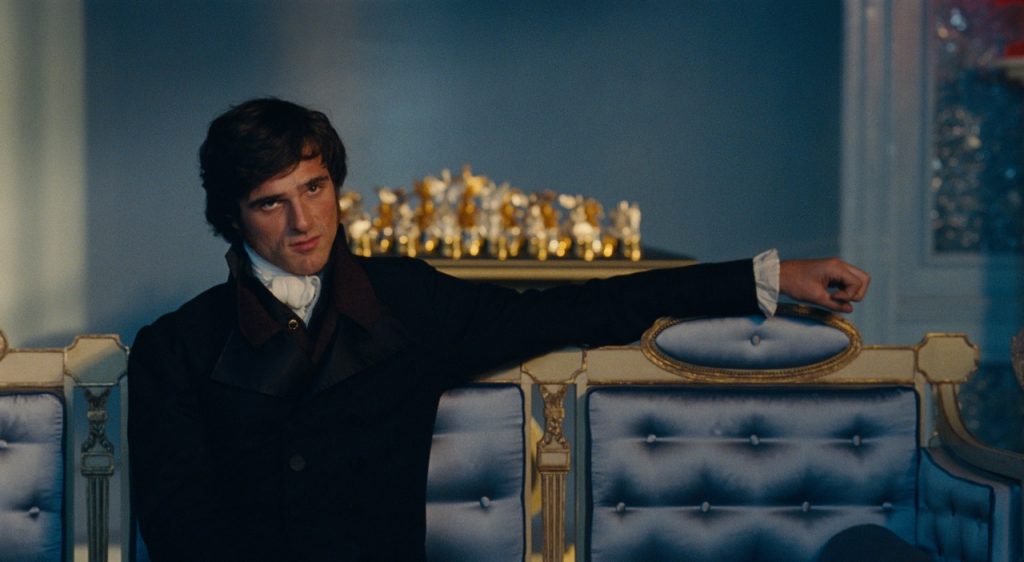
Their destructive choices and the film centers this as the driving force of the narrative. The music swirls when they find themselves intertwined. At some point, I did feel that there is a commentary here against the class system that puts Cathy’s future in the hands of a wealthy husband and not with the person she truly loves, who has no prospects. It could be a message that Fennell is going for if she didn’t seem to put so much emphasis on how wonderful it is to be rich during this era of civilization. Robbie has a plethora of costume changes, each one more grand, more stylish than the last. If the film is attempting to make any commentaries against social class inequality, it falters by enjoying the moments of privileges Cathy gains from marrying a man for convenience rather than love.
The film focuses more on the passion and illicit affair between Cathy and Heathcliff than on the damage they inflict on those around them, which makes it feel as though Fennell is more fascinated and interested by the subject matter than by its consequences. This is what makes the film so hard to stomach despite its gorgeous visual elements.
My Rating: 2 Stars

Love. Obsession. Destruction. Experience the stormy passion of Cathy and Heathcliff in Wuthering Heights on the big screen. Catch Emerald Fennell’s daring adaptation in theaters now, and don’t miss the drama, the visuals, and the unforgettable performances of Margot Robbie and Jacob Elordi.