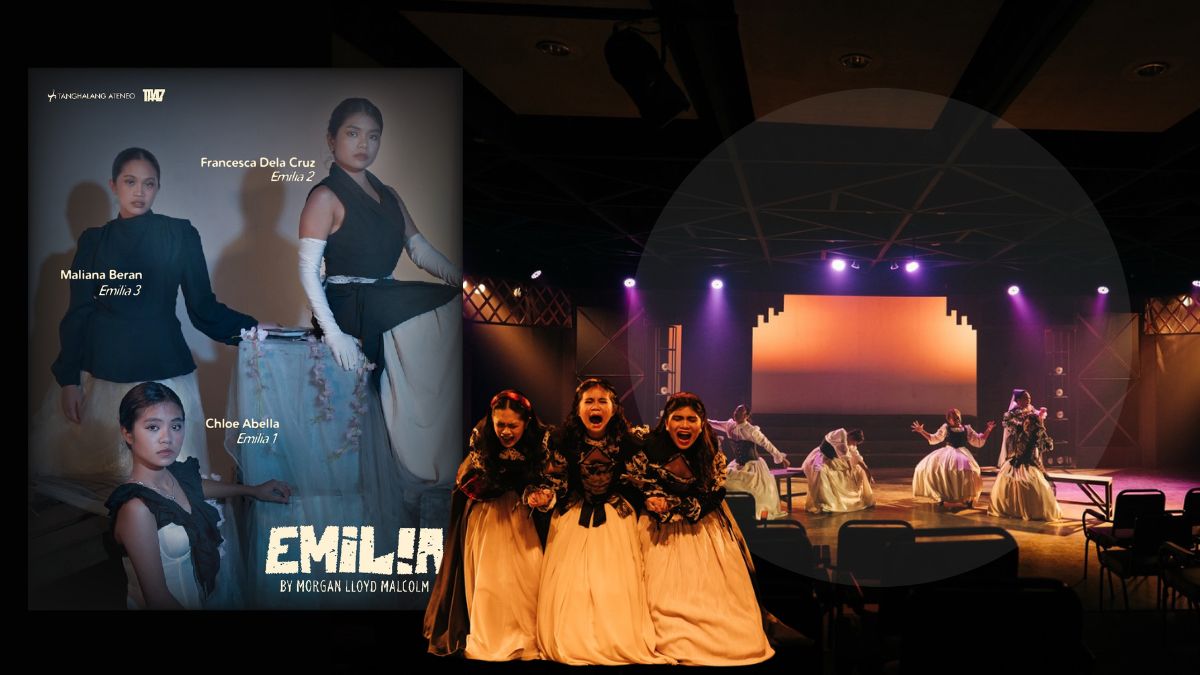
Tanghalang Ateneo’s Emilia would have been a perfect fit for Women’s Month. The play is a translation of Morgan Lloyd Malcolm’s work of the same title, telling the story of the poet Emilia Bassano Lanier, who is suspected to be William Shakespeare’s “Dark Lady” in his sonnets. In 17th-century England, women were expected to serve their husband or the men in their lives, but Emilia was a writer and a poet who wanted her voice to be heard. Consequently, the patriarchy erased her story from history.
Translated by the TA Dramatist Collective’s Gab Mactal, Keith Bernas, and Meeka Sayaboc—with dramaturgy by Regina Manalo, Petes Castillo, Joyce Ann San Buenaventura, Thandie Alino, and PM Oliveros—the text is a vital adaptation. By utilizing deep Tagalog for the English aristocracy and modern Filipino slang for the common folk, the translation brilliantly bridges the social class divide and connects it to the Filipino lived experience. Through the impeccable direction of Sarah Facuri, the play manages to retain Emilia Bassano Lanier’s historical narrative while grounding it in real-world, modern Filipino class struggle. The effect is electric.
The story follows Emilia as she narrates her own life and the erasure of her legacy from the history books. As a young woman of the courts, she refuses to play the game in search of a husband, preferring instead to write poetry much to the displeasure of those around her. She eventually finds a suitor in Lord Henry Carey, who takes her in as his mistress. Through his support, she is able to be free of the shackles of society’s low measure of a woman and allows her to engage in her literary proclivities.
It is during this time that she captures the eye of William Shakespeare, her intellectual and literary arts match. They fall in love, but Shakespeare begins to use her in his works and writing about her. She also becomes a subversive, writing for women to empower them but is eventually betrayed. Stripped of her patron and her status, she finds refuge among a community of common folk women. She dedicated herself to teaching and empowering them until the weight of the patriarchy once again intervenes to silence her.
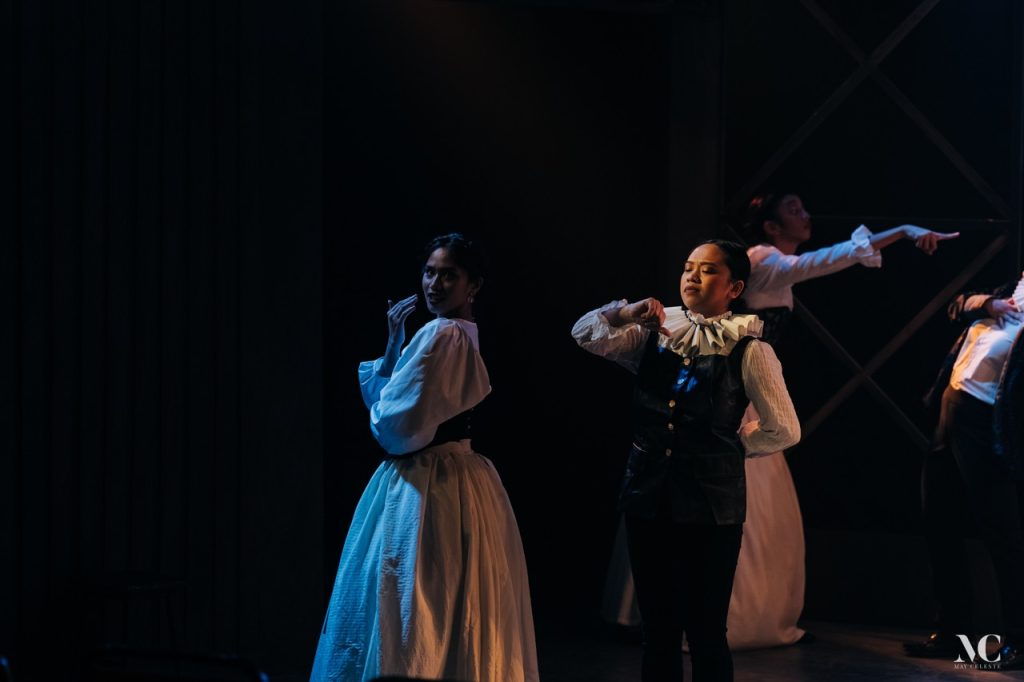
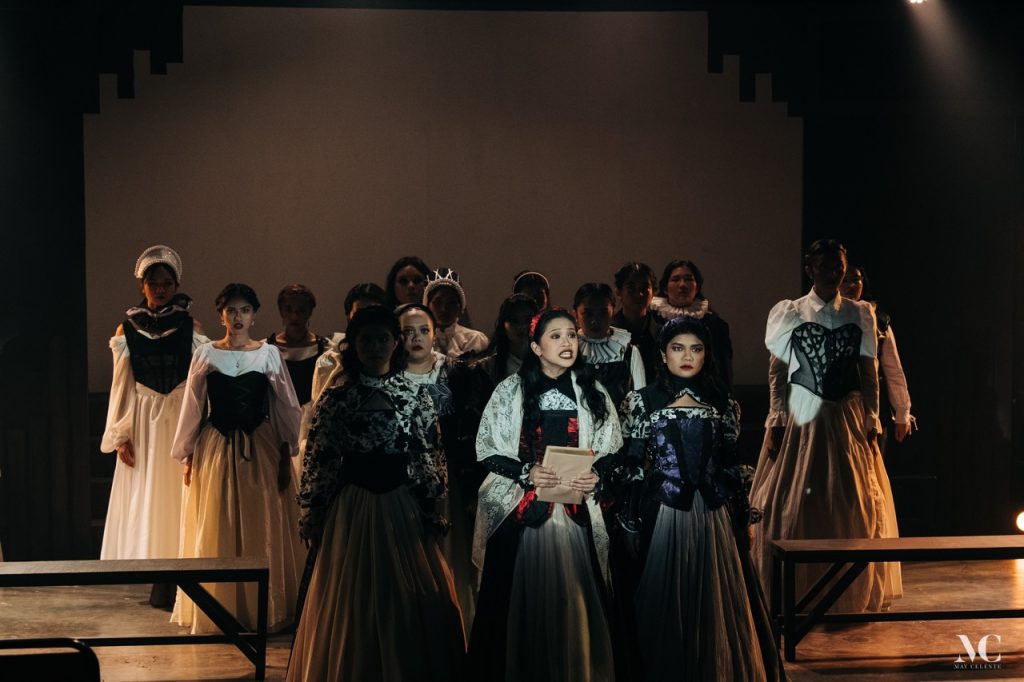
Facuri, who also designed the movement and the set, keeps the pace running quickly, there is never a dull moment in the play’s two-and-a-half-hour runtime (which includes a fifteen-minute intermission). Her blocking is superb, utilizing the full power of the ensemble to amplify every scene when needed and then empties it out for a dramatic duet to find its intimacy.
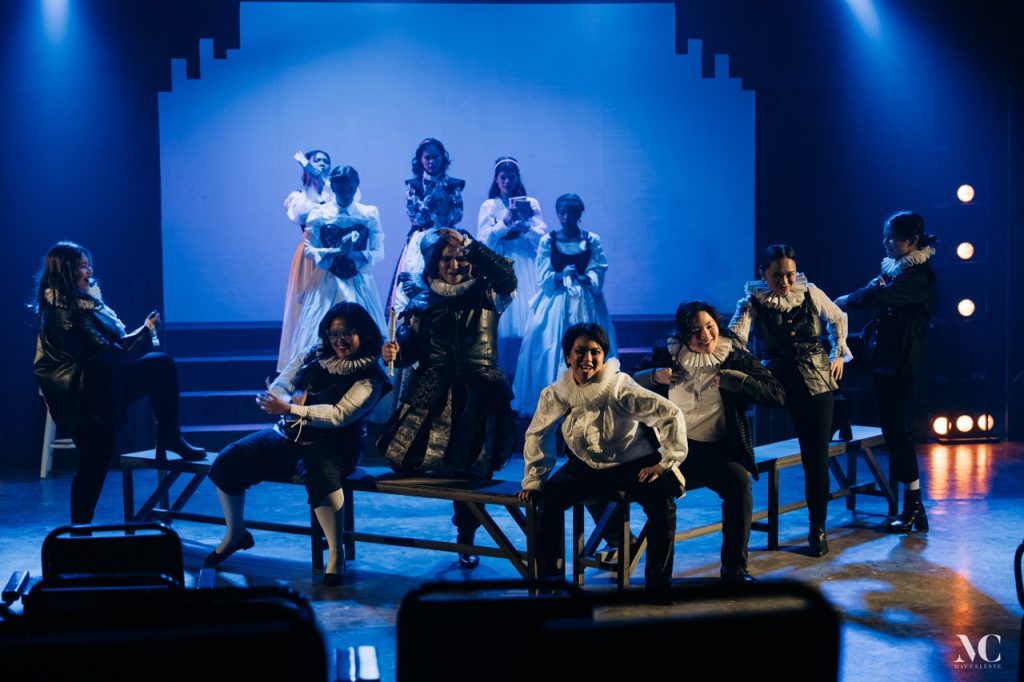
Like a conductor leading a symphony, Facuri orchestrates her performers to shift from drama to comedy effortlessly. This tonal shifts never break the play’s rhythm, instead, they surprise the audience without ever feeling jarring. In one standout scene, the play transitions into a musical number and it happens at just the right time that it doesn’t feel like it doesn’t belong, particularly as the song’s arrangement has a touch of the modern edge in its arrangement.
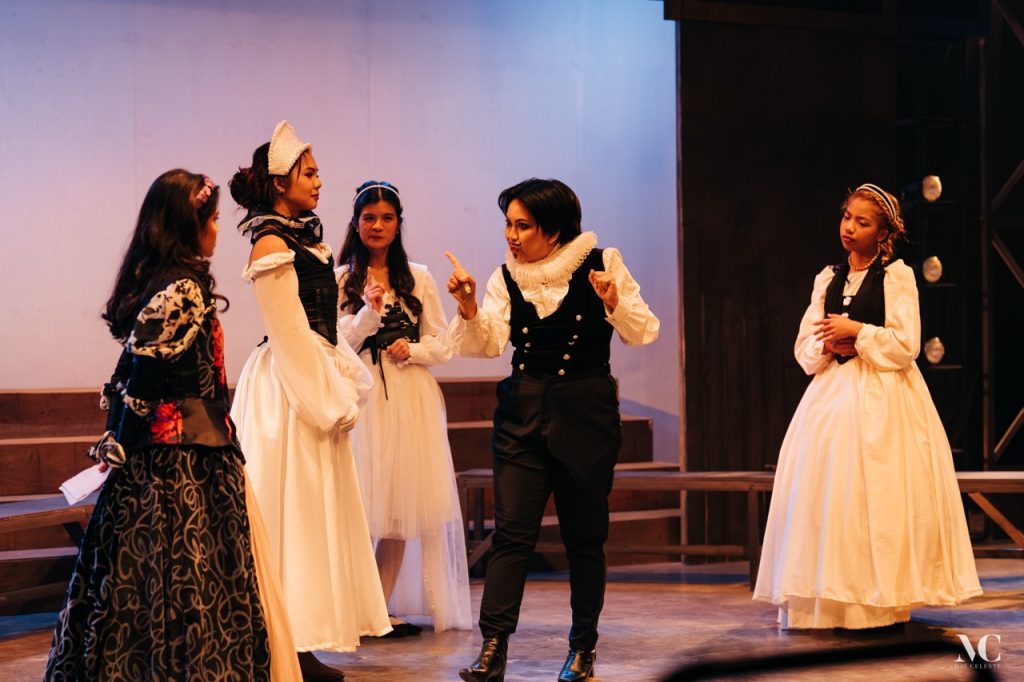
And what a cast she has assembled. Much like how, in Shakespeare’s time, where all the roles were originally performed by men – even the women parts – this production of Emilia features an all-female cast, including the male characters. Since the play serves as a direct attack on the patriarchy, the actors playing the male parts perform their roles as parodies of various types of toxic masculinity. The effect is both breathtaking and oftentimes funny. The intent feels as if to ridicule, and it reads right with the audience.
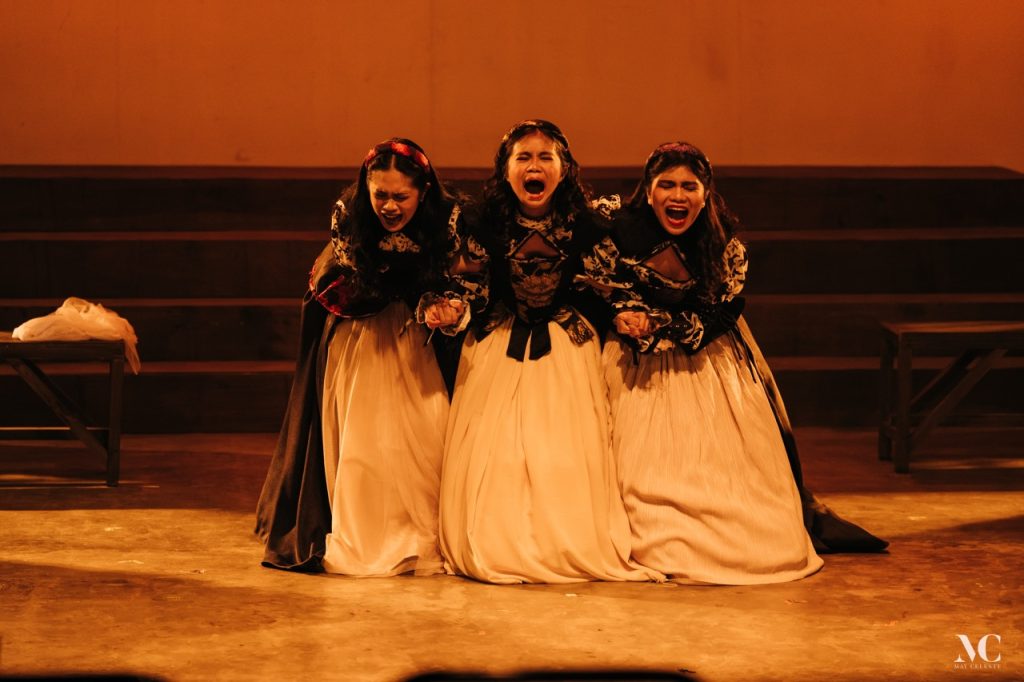
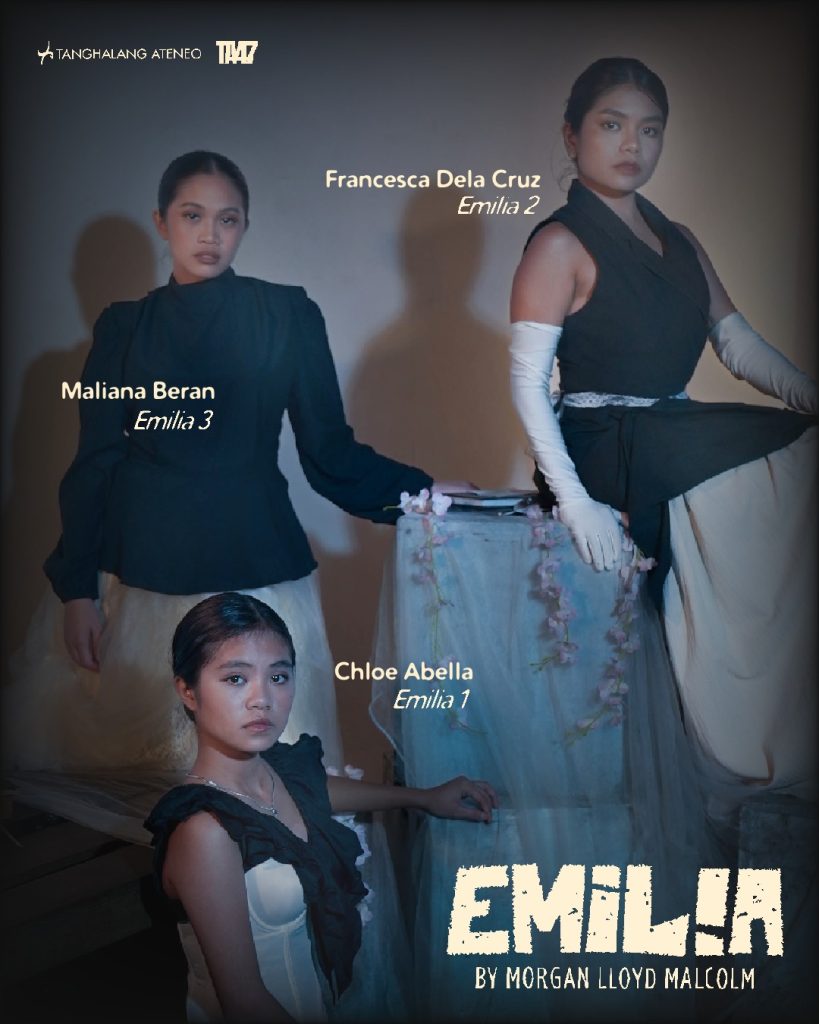
While the entire ensemble is great, I have to commend the three actresses playing Emilia: Chloe Abella, Francesca Dela Cruz, and Maliana Beran – who play Emilia at the courts, Emilia as a young woman, and Emilia as an older woman, respectively. The trope of the child, the mother, and the crone in full view. As one Emilia plays the scene, the other two watch, sometimes commenting. They are witness to their own rise and fall. Each actress commands the stage and filled it with their presence.
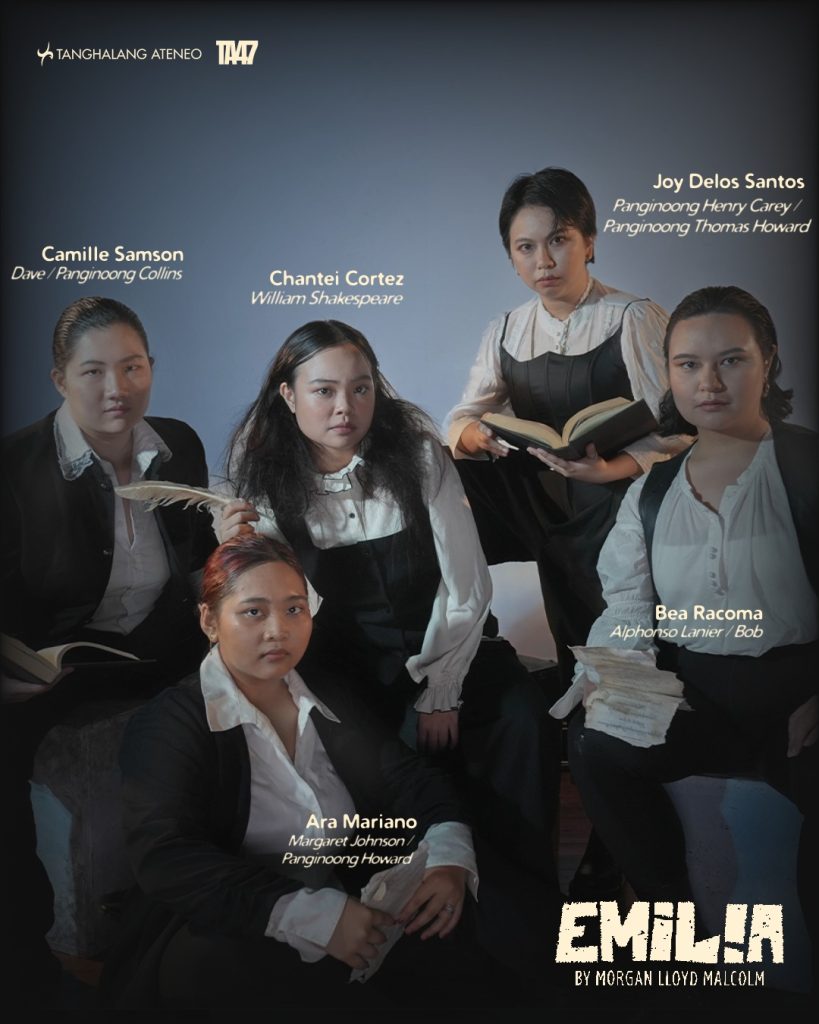
The other standout in this extremely powerhouse cast is Joy Delos Santos, who doubles as Lord Henry Carey and Thomas Howard. As Carey, she is respectful, warm, and nurturing. He’d be the only decent man in the play if he wasn’t cheating on his wife. On the other side of the spectrum, Delos Santos’s Thomas Howard, the man who eventually persecutes Emilia for immorality, is the perfect English fop – effete, cowardly, and full of hot air. Through the Filipino translation, this character takes the form of either the evil Spanish friars in our colonial history or the soft aristocrat, almost feminine, hiding his weakness with his power and his gender.
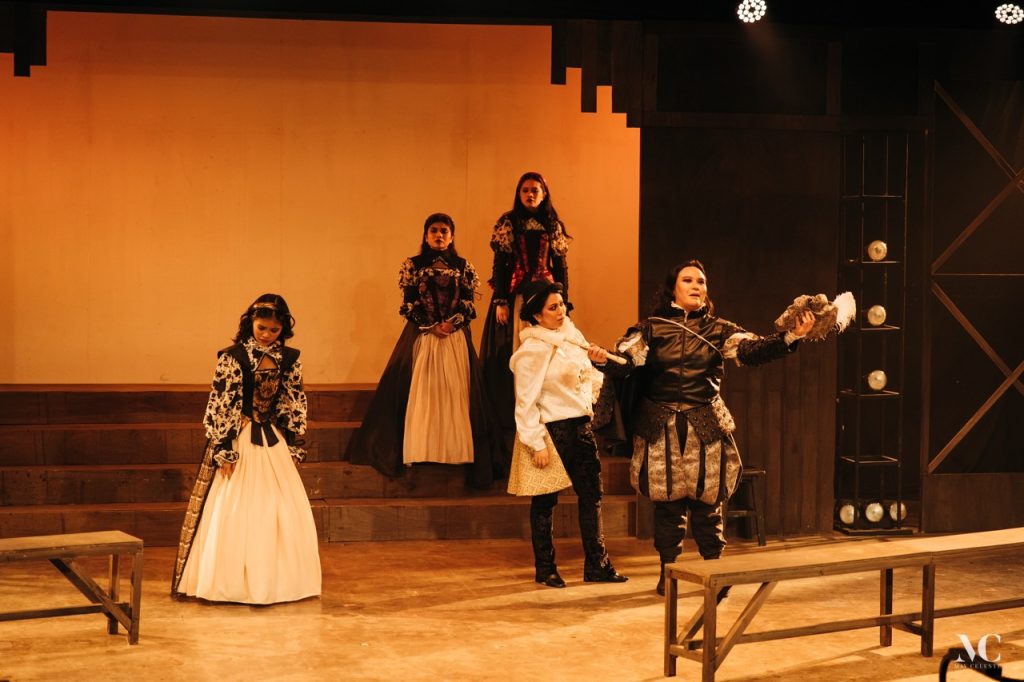
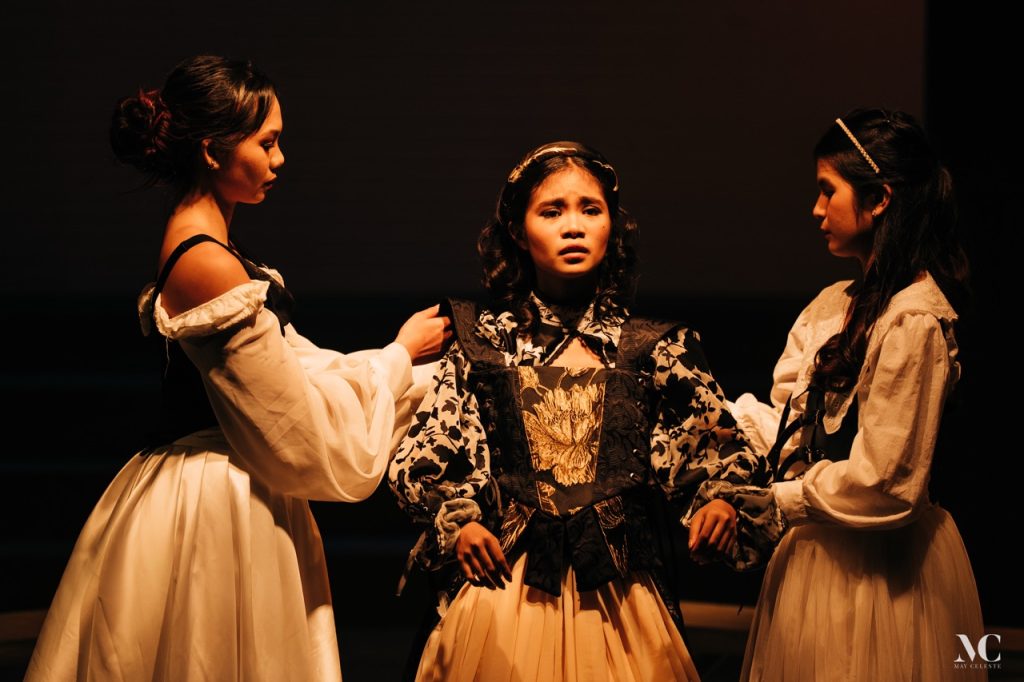
The costumes by Hershee Tantiado are exquisite, a deconstruction of 17th-century style that allows the translation to harken back to that era while remaining “broken” enough to operate on a figurative level, like the modern Filipino sensibilities that seep into the play. The lighting design of Jethro Nibaten allows for the play to shift from the dramatic to the comic seamlessly while highlighting what needs to be seen and amplifying the emotions that are already there.
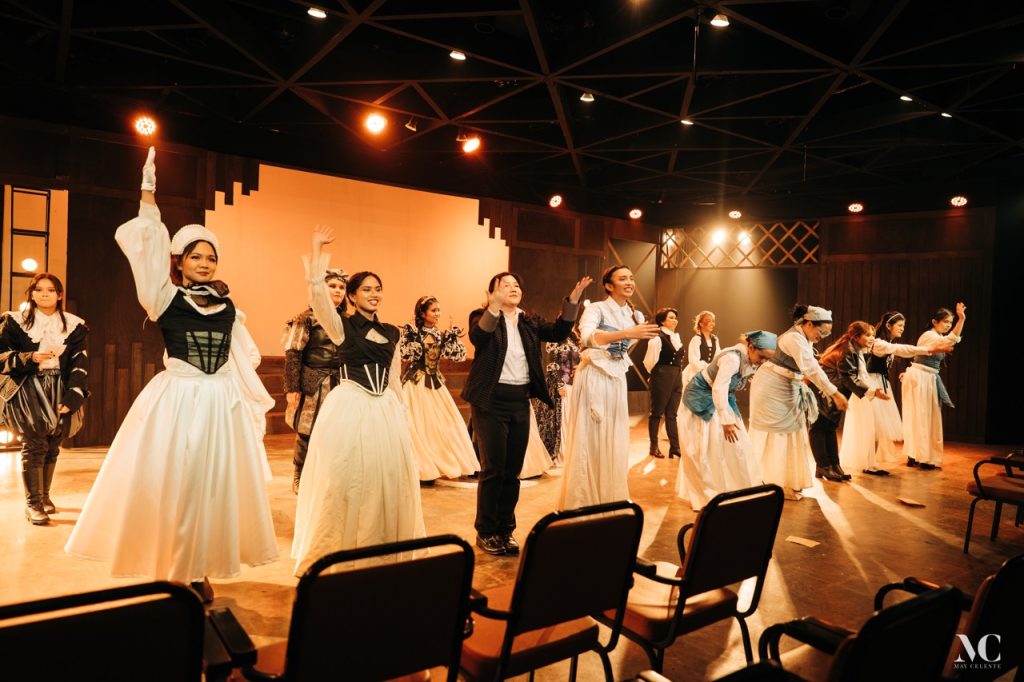
I cannot talk enough about how this production moved me; I haven’t stopped thinking about it since I watched it on its opening night. It is brash, daring, and bold, without sacrificing craft and nuance. Emilia is an incendiary piece of play that is a call to action for all women to reclaim their voices, the one that has been taken away – and continuously so – by the patriarchy. The final chant, with the ensemble speaking as one voice, sent shivers down my spine. Tanghalang Ateneo’s production of Emilia is one of the best shows I have ever seen.
My Rating: 5 Stars

Don’t let this story be erased again. Experience the raw, electric power of Tanghalang Ateneo’s Emilia before it closes. The production runs until April 26 at the Rizal Mini Theater, Ateneo de Manila University. Secure your seats now and witness what is easily one of the most vital shows of the season.
Leave a Reply
You must be logged in to post a comment.