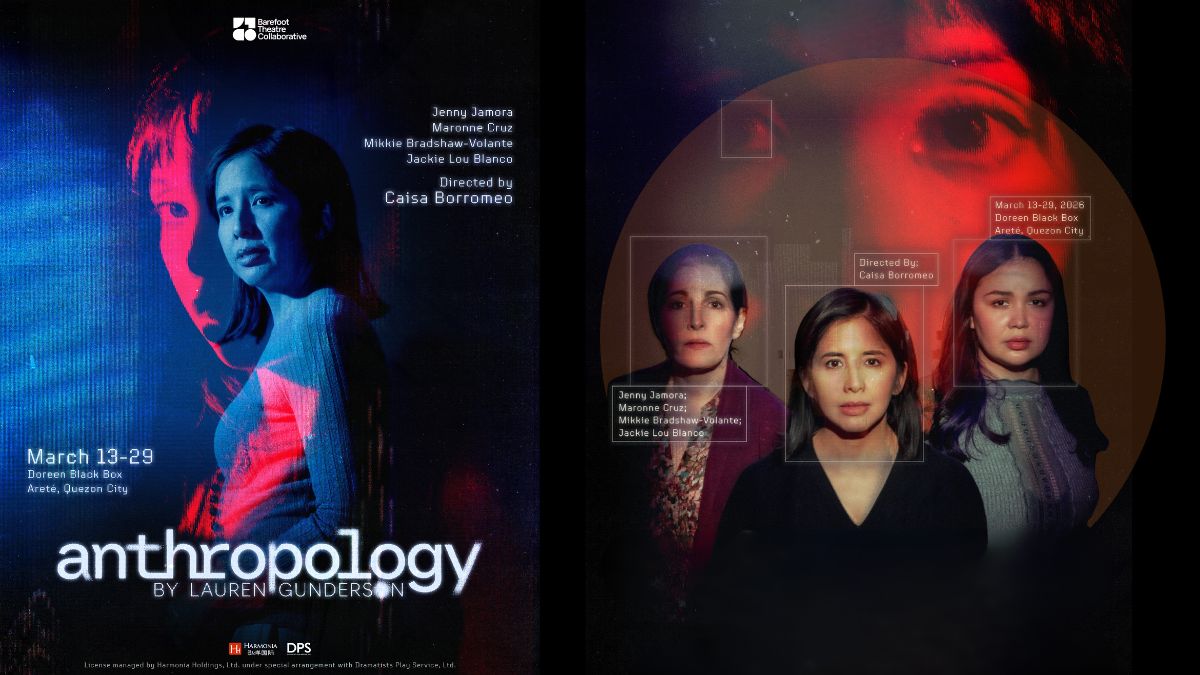
I’m not the biggest fan of AI – though I prefer to call it LLM, or Large Language Model, because it’s not really intelligent – and everything I read about it just makes me more and more angry and frustrated. The idea that Lauren Gunderson, a playwright I really admire, wrote a play about AI and grief is compelling: a story about a woman grieving her sister, who has been missing for over a year, and uploads all of her sister’s data and information into an algorithm, and invariably recreates her through a program. Gunderson, being an intelligent yet still emotionally accessible playwright, mines this dramatic situation for all it’s worth and presents the strengths and weaknesses, the rewards and consequences, of this technology.
The play is called anthropology, and it is staged by Barefoot Theater Collaborative under the direction of Caisa Borromeo. The all-women cast is led by Jenny Jamora, who plays Merril. Merril is highly skilled with computers and coding, and she uses her skills to create an AI program that resembles her missing sister, Angie, played by Maronne Cruz.
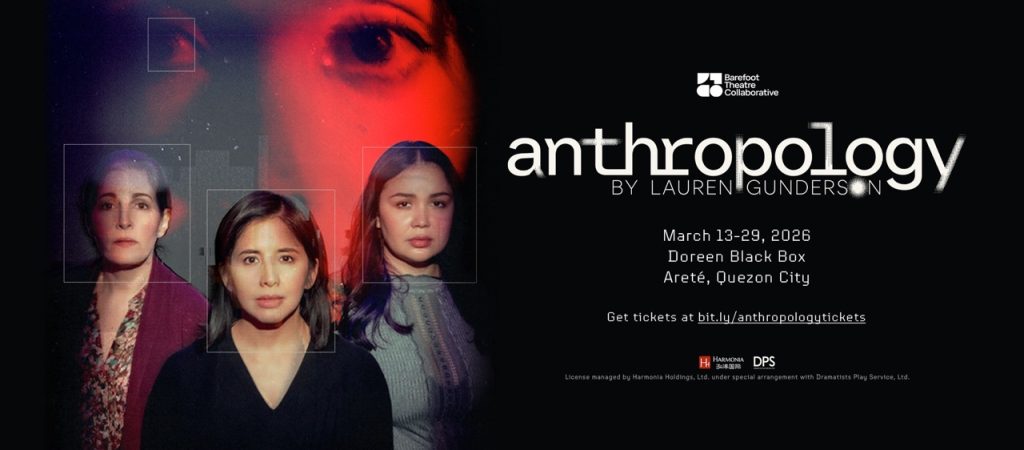
Through the initial interactions between Merril and the AI of Angie, we discover that Angie is quite a powder keg. She has a big personality, and because the AI is programmed to help Merril find some level of closure, she isn’t as mean as the real Angie. In fact, she insists on encouraging Merril to reconnect with her ex, Raquel, played by Mikkie Bradshaw-Volante, and insists on talking with Brie, their mother, played by Jackie Lou Blanco. From the conversations, we learn that Brie has caused much pain for the two sisters.
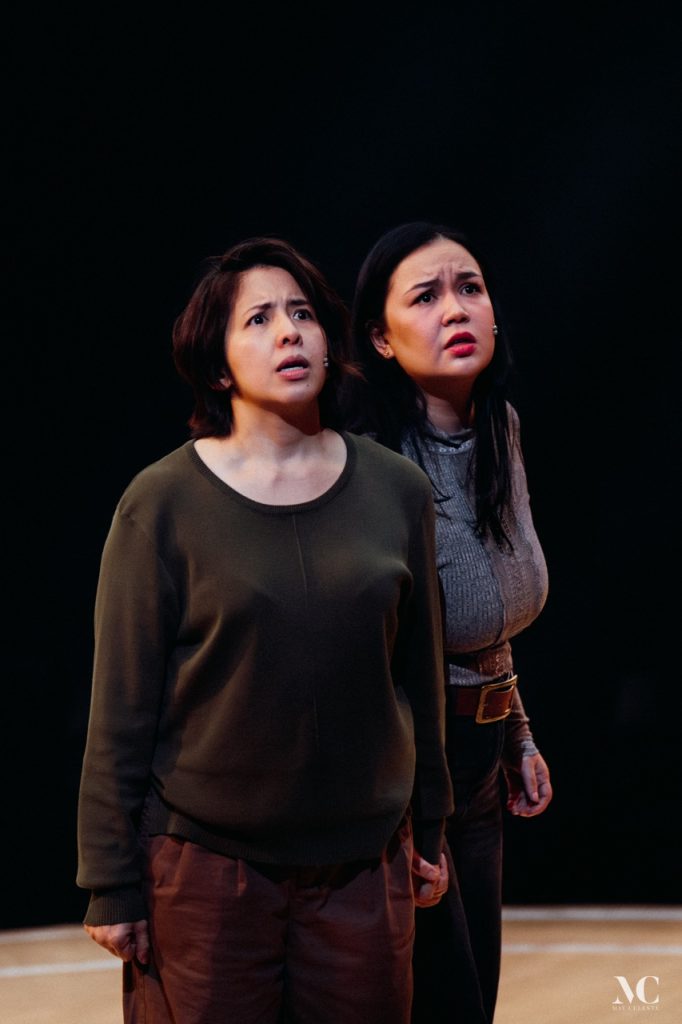
Performed in one straight act for roughly around 90 to 100 minutes, anthropology is a roller-coaster of emotions. Lauren Gunderson’s characters are clever, eloquent, and articulate, allowing Merril and Angie to go at it for a while, revealing so much about their past and what the sisters mean to each other. Eventually, Angie persuades Raquel to come to Merril’s home in the hope of rekindling their relationship, even though Raquel remembers that the real Angie never really liked her. Things take a more dramatic turn when Angie insists on speaking with their mother, and old wounds are torn open as the software reignites the hurt and the pain of Angie’s initial disappearance.
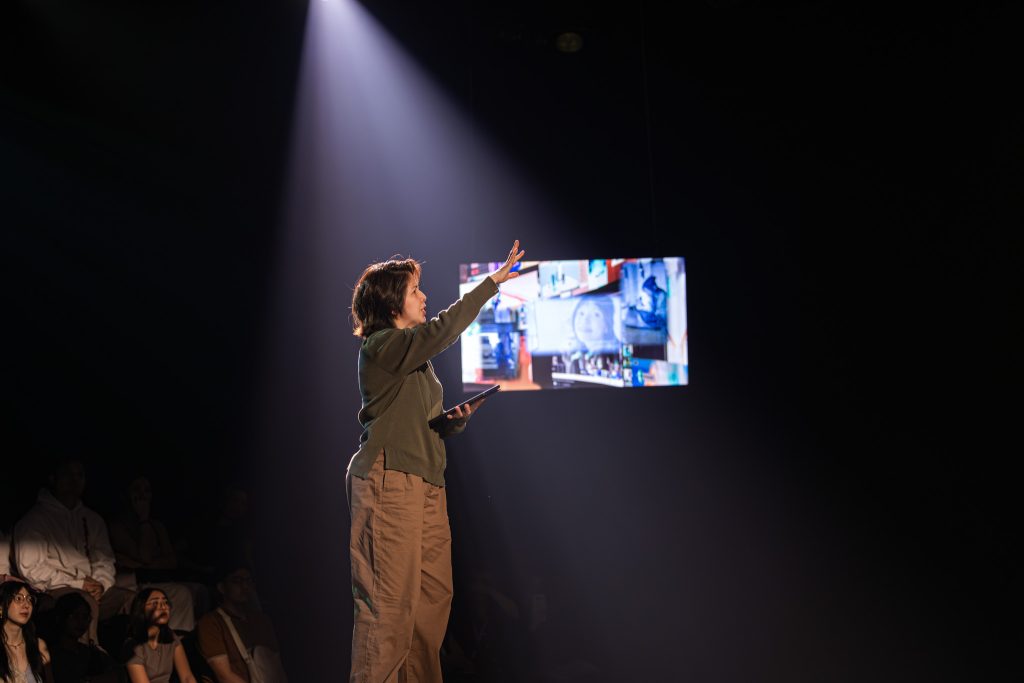
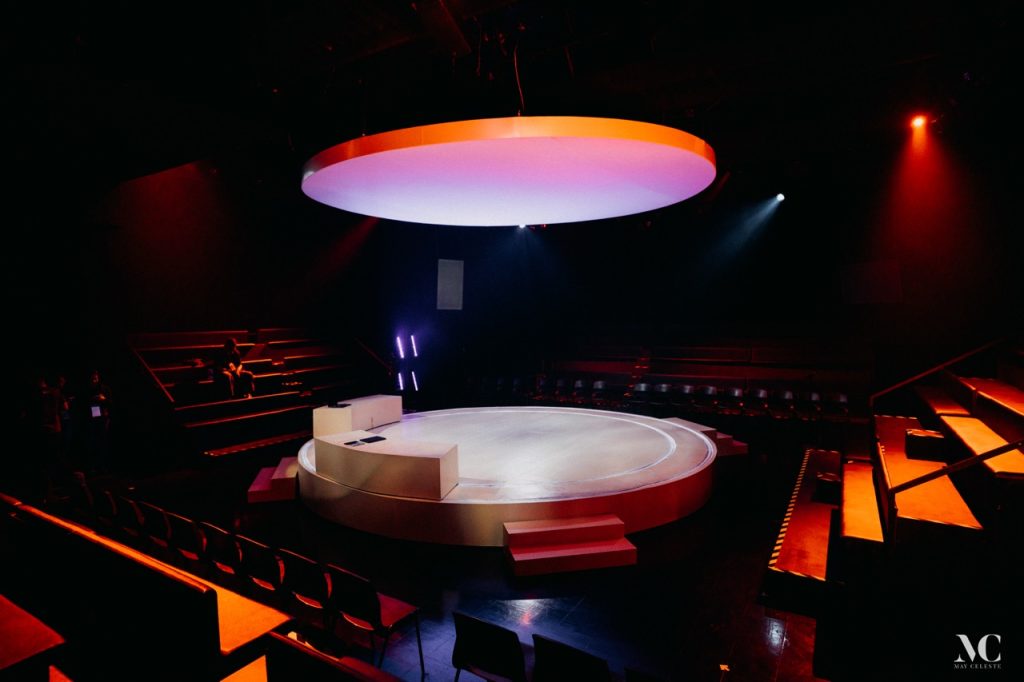
Caisa Borromeo does a great job of managing the dynamics of these characters. The play is staged in the round, with the audience completely surrounding the circular stage. The platform has two benches mounted on tracks, allowing it to revolve around the stage which allows the actors to sort of shift their positions. Funnily enough, it resembles the power button found on most machines.
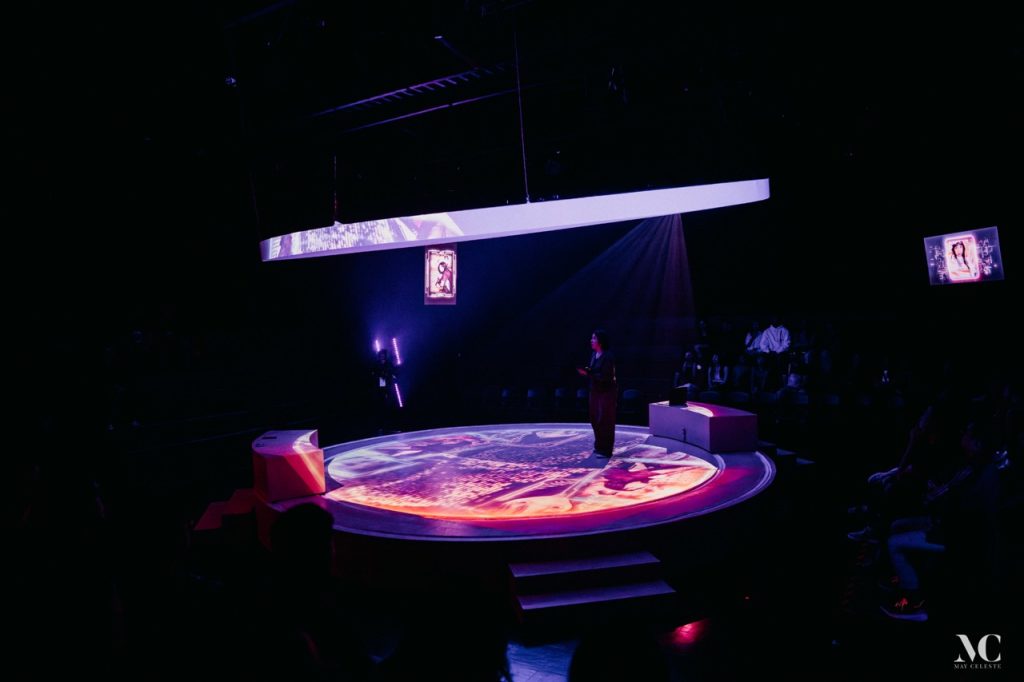
But production designer Sarah Facuri sets a circular disc right above the platform that ascends and descends depending on the current tension in the unfolding story. At some point, it feels as though the characters are under a microscope.
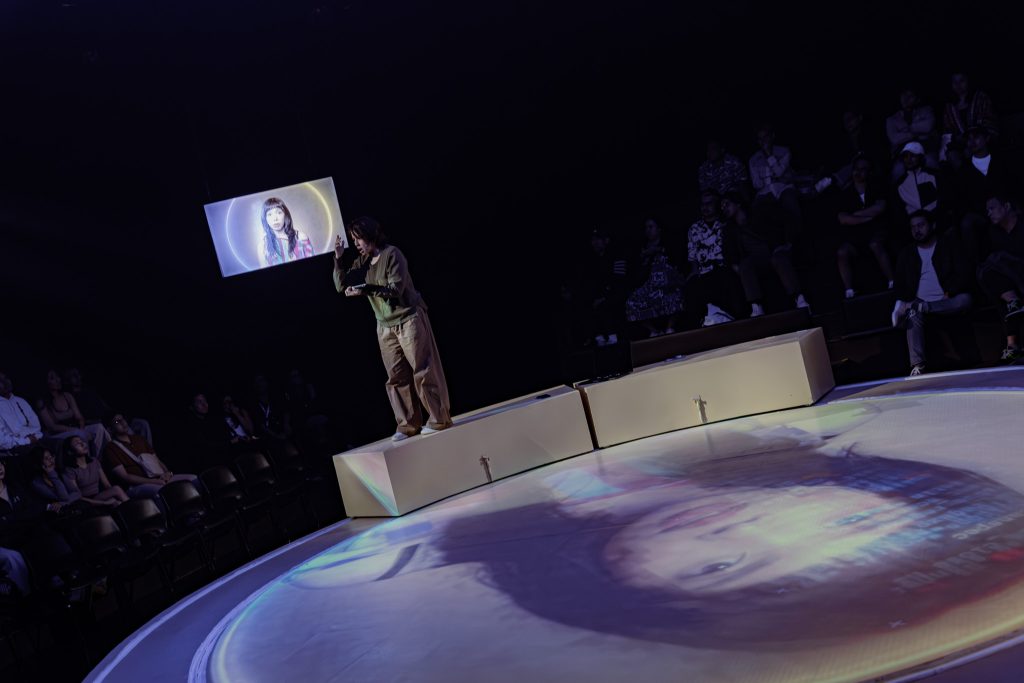
Maronne Cruz delivers the entire first 20 minutes of the play through voice-over offstage. Later, she appears on four screens for Jamora and the others to interact with. This is a difficult feat for any actor – to have to perform offstage – and Cruz manages to excellently portray the AI’s adaptation to its environment as it gathers more and more information about the person it is meant to represent.
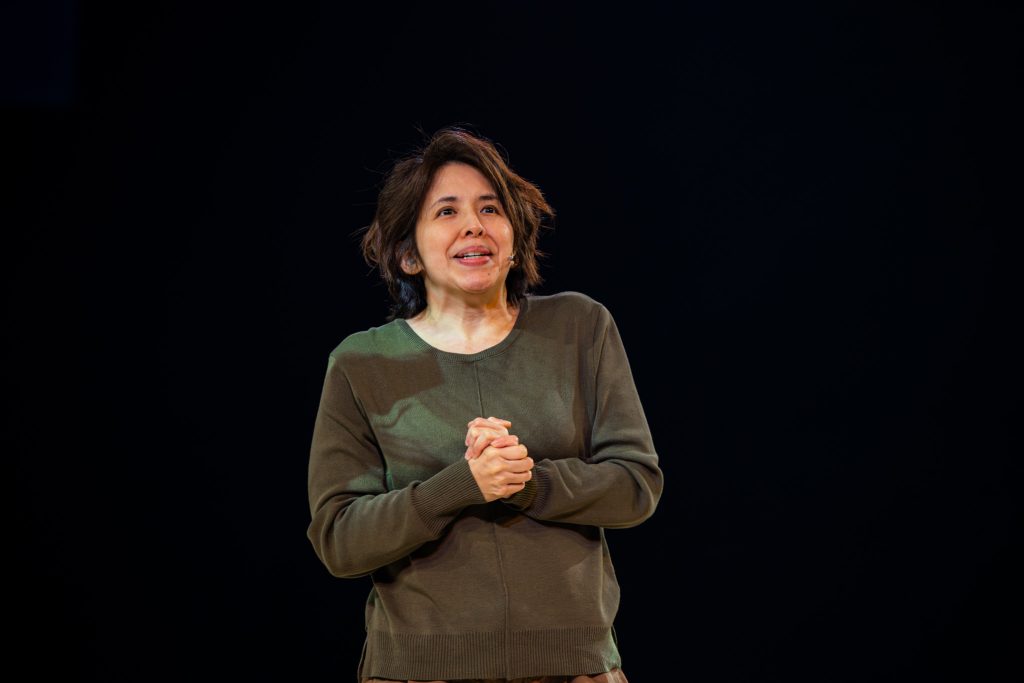
Everyone is so good. Jenny Jamora never plays for sympathy, despite carrying the show’s entire dramatic premise on her shoulders. Instead, she plays Merril as tough, stubborn, and almost charmless person. This becomes evident in her interactions with the AI version of her sister, and later when Raquel shows up, and we see Merril’s inability to keep her cool.
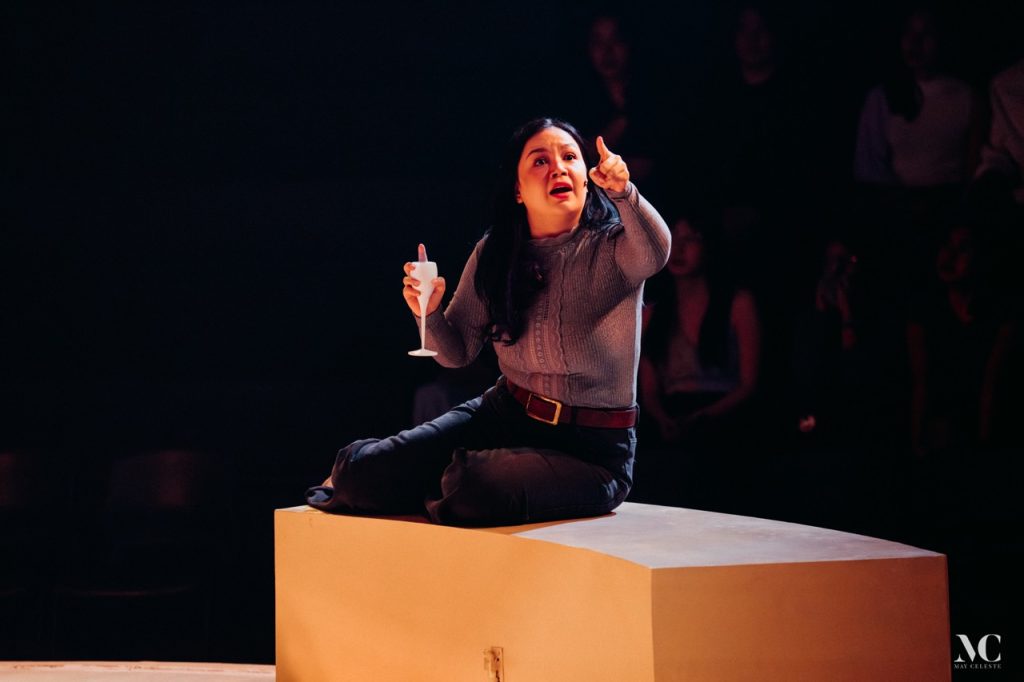
Mikkie Bradshaw-Volante is such a strong presence on stage. It’s great to see her in a non-musical role, as she delivers her dialogue like it’s the most spontaneous and most natural thing in the world. Her character’s inner world is read off of the way she delivers her lines.
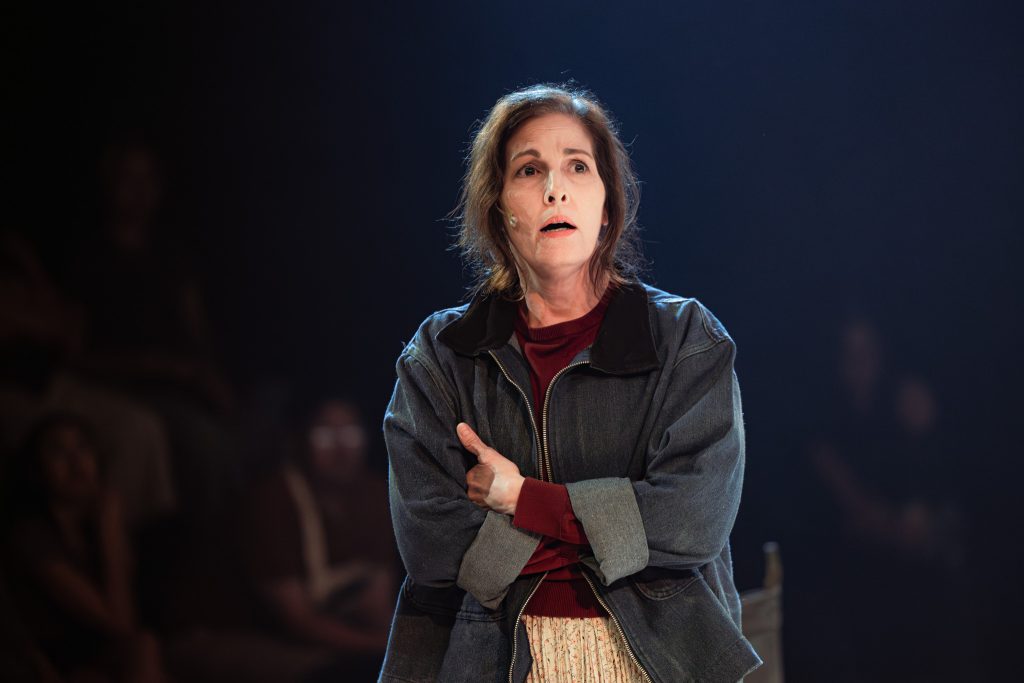
Jackie Lou Blanco, on the other hand, delivers her lines in the most natural of ways, and the accent added texture to her portrayal of Brie. With the accent, she sounded like an immigrant, adding nuance and depth to her character. This creates a tension, as the person we see is not the person from how Merril and Angie describe her, and that untold history expands a bigger world outside what’s already in the play.
But it is Maronne Cruz who truly steals the show. At some point, she gets to perform as the real Angie, and the differences between her portrayals are so subtle yet very clear that it’s a great reminder of how versatile and precise Cruz is as an actress. The glaring contrast between her two performances – the real Angie and the AI version of the character – further elevates this already good production into something that is so arresting.
But more than that, I’m also amazed by the way Lauren Gunderson explores the dangers of how we imagine AI as a tool for the future. The devil is in the details, and Gunderson manages to capture that within the tight 100-minute play. This is not just a play about AI; it is also about family and relationships. It’s a mystery that exposes our vulnerabilities – both real and virtual. It’s a powerful work of theater, and I hope more people get to see this.
My Rating: 4.5 Stars

Don’t miss the final 10 shows of anthropology. Experience this gripping, thought-provoking production before it closes on March 29 at the Doreen Black Box, Areté in Quezon City. Secure your seats now via ticket2me.
Leave a Reply
You must be logged in to post a comment.