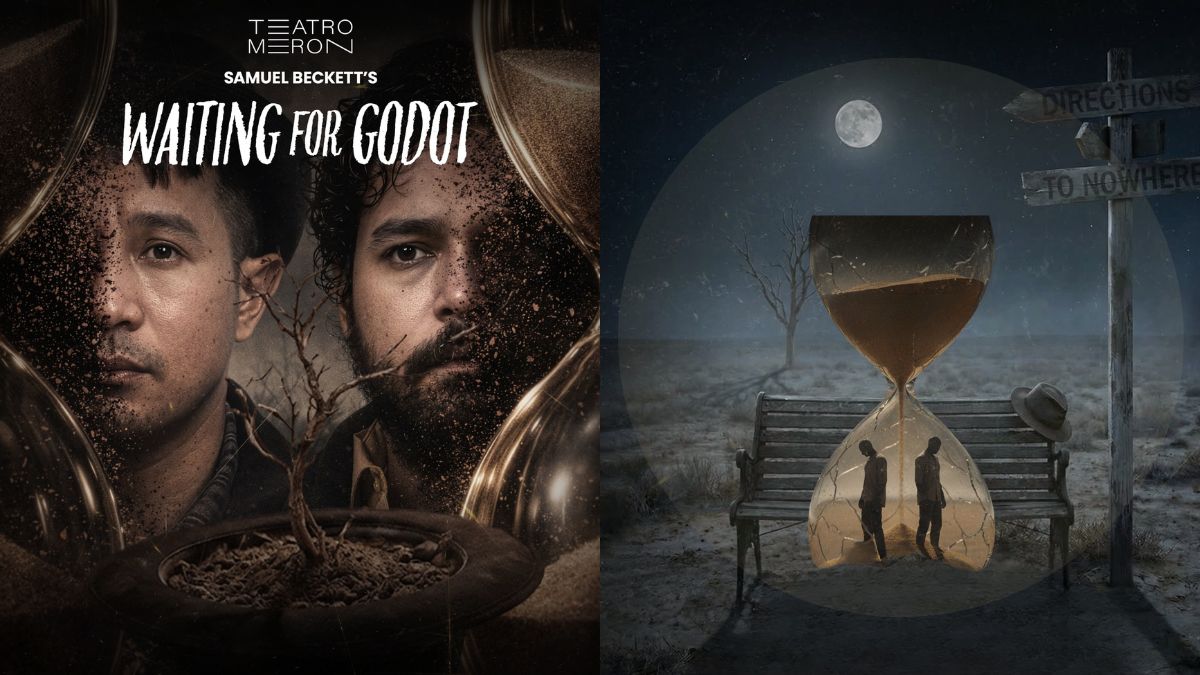
There’s something so urgent and real about staging Waiting for Godot at this time in the Philippines, and in the world. Ron Capinding, the director of Teatro Meron’s production of Samuel Beckett’s play, spoke about the timelessness of classics and how a great classic play can always be restaged because what it says about humanity and the human condition remains true. But there is something visceral about the timing of this production, which carries the subtitle “A tragicomedy in two acts.” Its philosophical rumination and its promise of a tomorrow that never comes feels so painfully true in this day and age.
Called “the most significant English-language play of the twentieth century” by a 1998 poll conducted by the Royal National Theater in London, Beckett’s play follows Vladimir and Estragon, two aging men who are hungry, thirsty, and suffering all kinds of ailments.
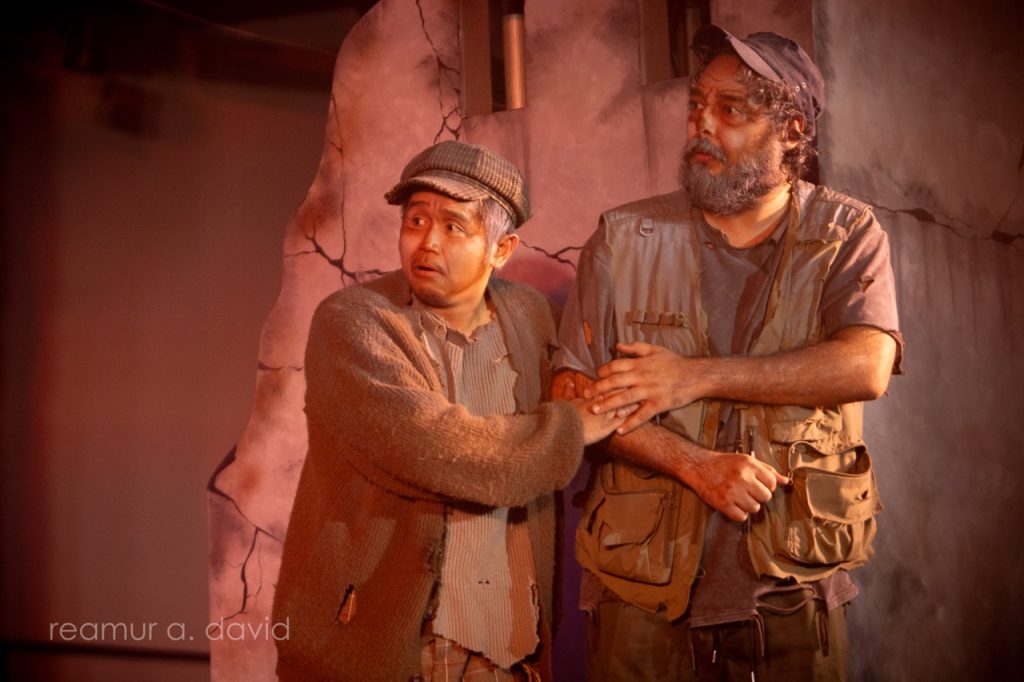
They pass the time talking about their troubles and how they are waiting for a man named Godot, a person they do not recall ever meeting nor are they sure that he will come.
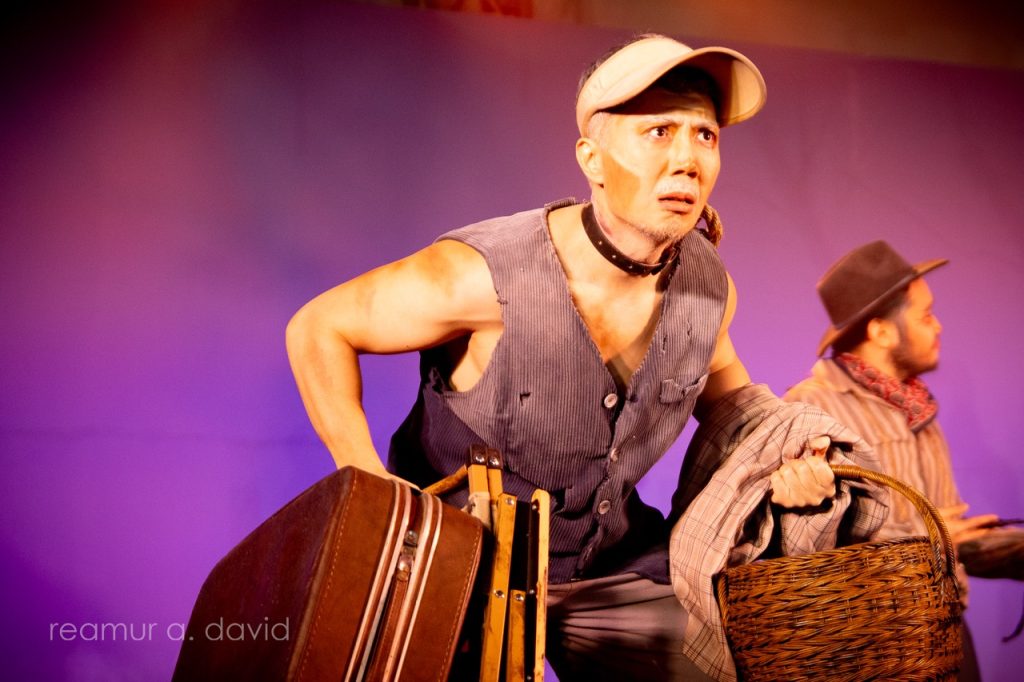
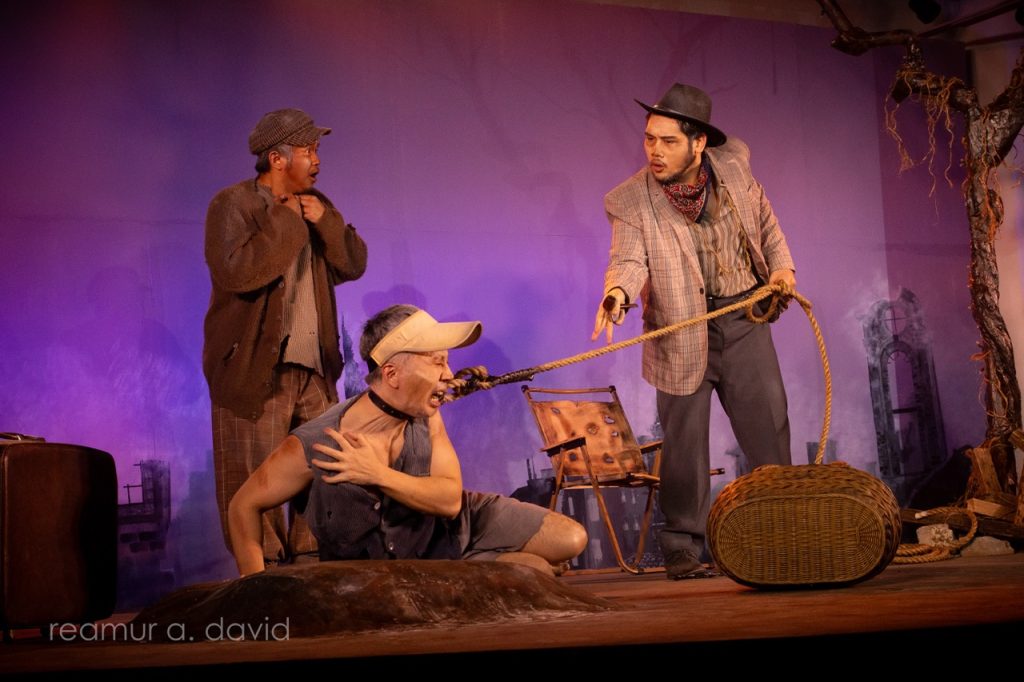
Their conversation is interrupted by Pozzo, a man with a slave called Lucky, who is tied to a rope. Pozzo plans to sell Lucky at the market but allows him one grandiose moment of performance before leaving Vladimir and Estrago behind. Leaving the two leads behind, still waiting for Godot, who never comes.
More happens, of course, with witty banter and slapstick comedy, but Waiting for Godot is famous for it being a story about waiting for something that never comes. Once immediately believed Godot as a metaphor for God, but Beckett has refuted this many times, though he later admitted there might have been some subconscious impulse that pushed him to use that word; though the play is an adaptation of his own French play so the word is French in origin. The idea is in the act of waiting itself. Beckett has been known to feel frustrated by people trying to make the play overcomplicated than it is, by ascribing more meaning than what is there.
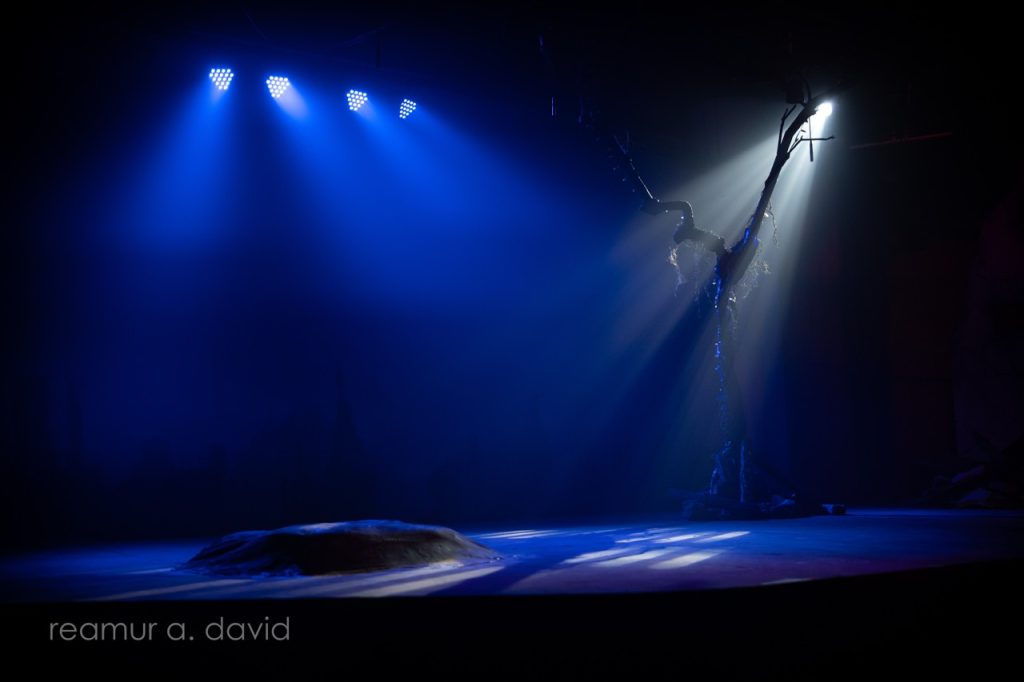
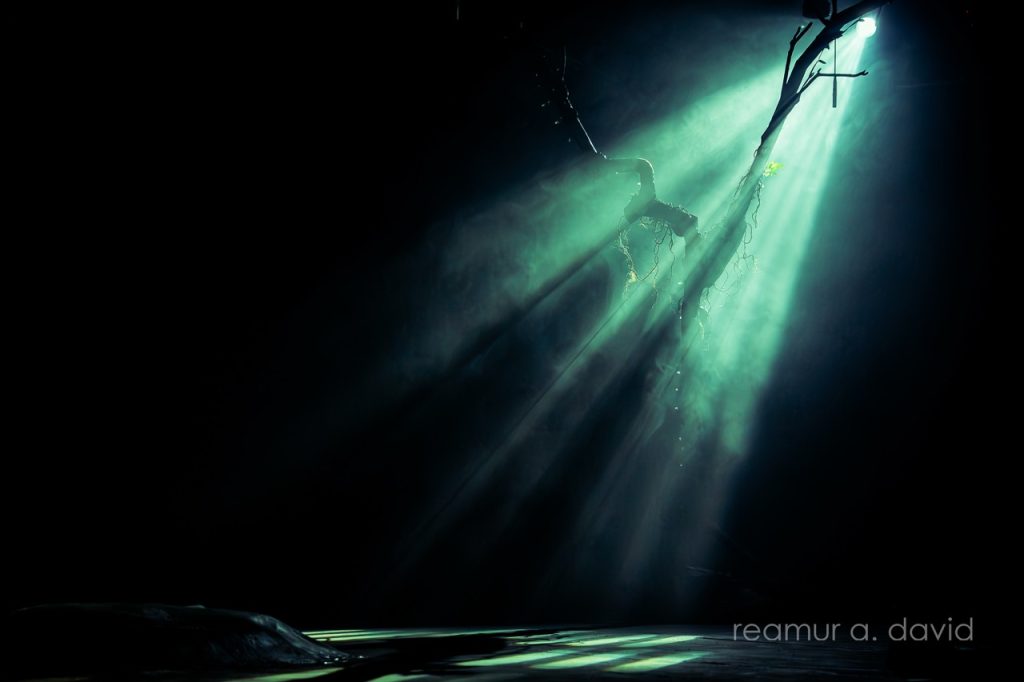
The set design by Tata Tuviera transforms the stage into a barren ruin, with a solitary dead tree a little off-center. The backdrop, painted to look post-apocalyptic (or perhaps post-war) so it adds upon the sense of hopelessness and despair surrounding Vladimir and Estragon’s waiting.
Played by Tarek El Tayech and JJ Ignacio respectively, the two leads are rather eloquent even at their most tired and they have the capacity for wit. But they are at their wit’s end as they have no direction, no purpose but to wait for someone they aren’t even sure is coming.
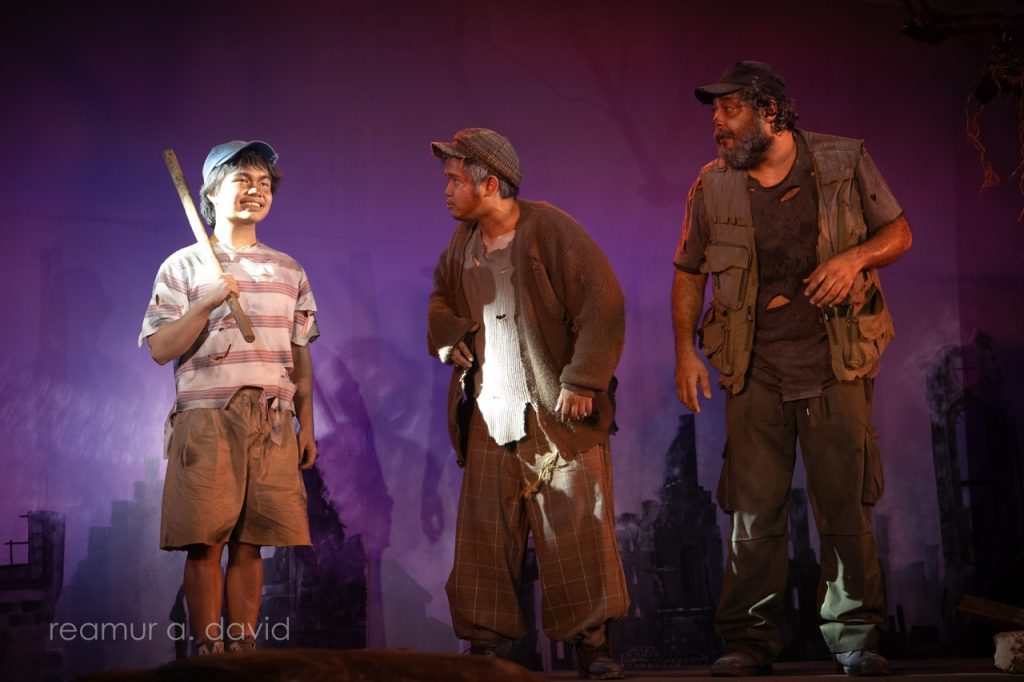
Though one character does come, a boy, portrayed by Yael Ledesma, who tells them that Godot is coming, but we all know the truth: he isn’t.
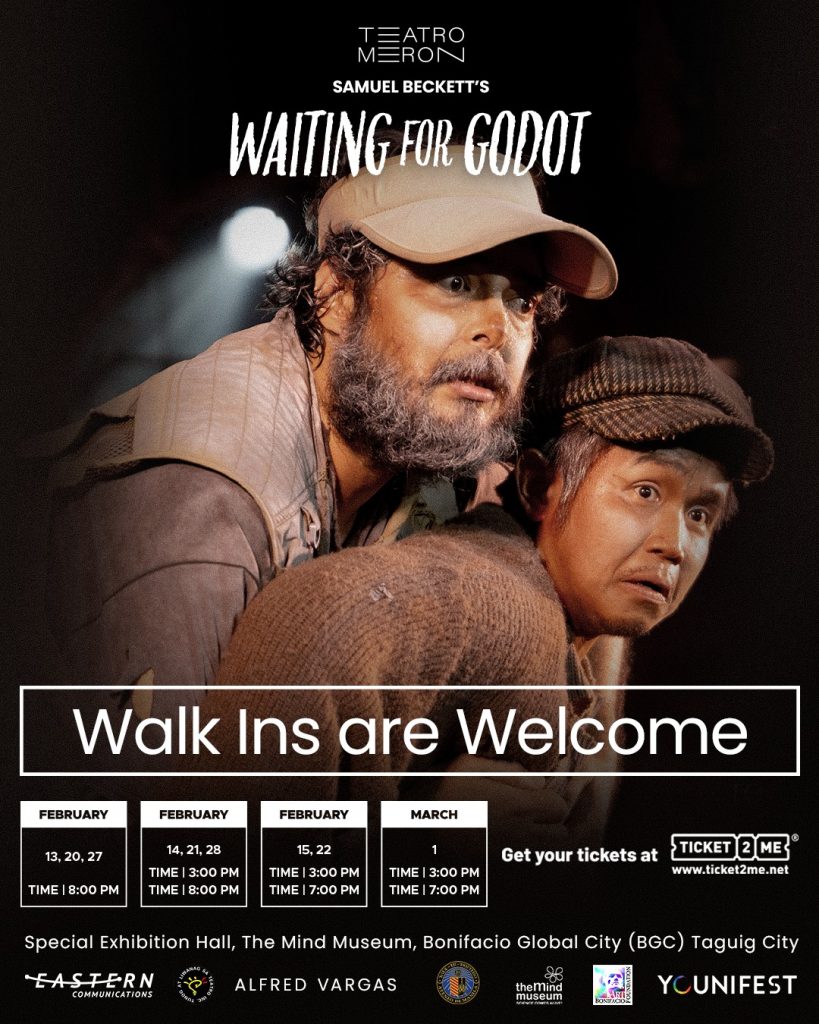
Tayech and Ignacio are incredibly gifted. Their comic timing is impeccable, and their chemistry brings out the textured dynamics of their relationship to come into play. They believably make us feel like they are old and tired, and I’ve seen Tayech in more vibrant roles, and his range here is remarkable. Rounding out the cast, John Bernard Sanchez and Lenard Tiongson as Pozzo and Lucky, respectively, also have such strong presence onstage that when their characters come in and intrude into the nothingness of Vladimir and Estragon’s conversations, the stage becomes awash with this electricity. Sanchez plays a wonderful contrast to Tayech and Ignacio, his Pozzo is full of life and bravado while Tiongson’s Lucky is a terrifying force. He remains completely unmoving – I don’t think he even blinked – and only moved when ordered. And when he performs, it’s a maelstrom of movement and voice that is filled with the kinetic energy that feels let loose like water from a dam breaking. Together, the four of them onstage create such humor that we are taken out of the moment of nothingness so that when Pozzo and Lucky leave and Vladimir and Estragon are back again where they started, the absence of that energy is palpable. The tragedy is made clear and evident.
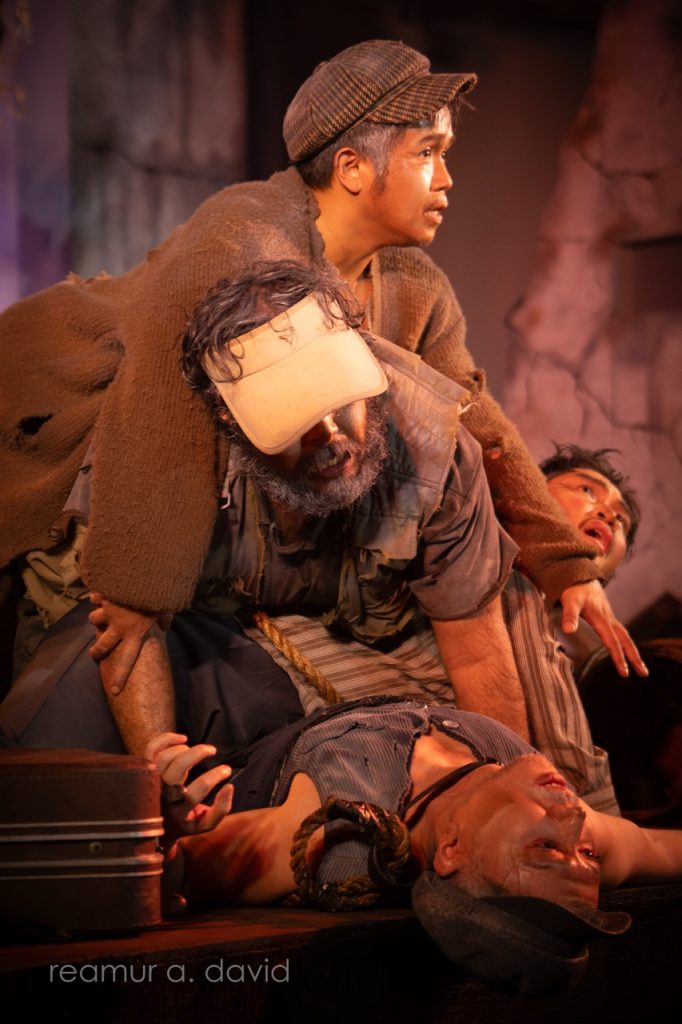
Capinding’s direction made me reflect on us, poor ordinary Filipinos, constantly waiting for something that never comes. The bleak, desolate backdrop made me think of our country, for some reason or another, barren and destroyed by undelivered promises. It’s ironic and hilarious at the same time, because the play was performed exactly as written, yet the convergence of the actors, setting, and the moment pulled me back to myself and my own reality.
Waiting for Godot is truly an incredible play, and this production brings out the best of it. It will make you laugh while watching and then leave you thinking deeply long after you’ve left the theater as you head home.
My Rating: 4.5 Stars

Don’t miss this brilliant production of Waiting for Godot! Catch it live until March 1 at the Special Exhibition Hall, The Mind Museum. Grab your tickets now at Ticket2Me and experience the laughter, the wit, and the unforgettable wait.
Leave a Reply
You must be logged in to post a comment.