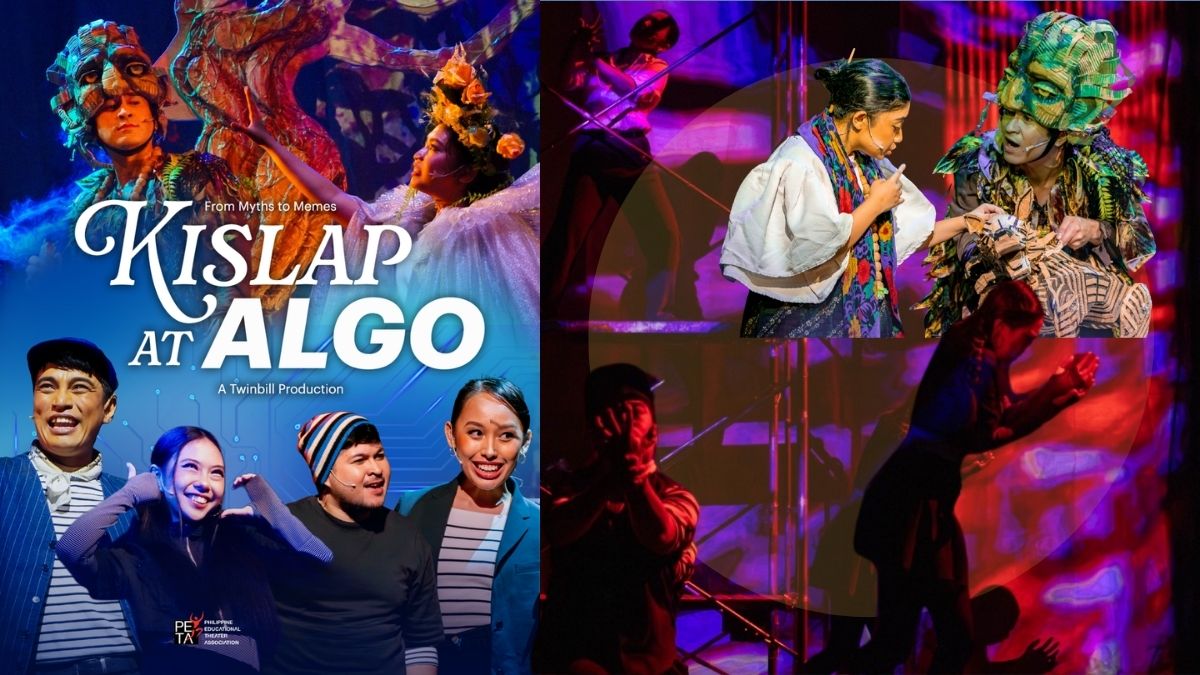
PETA’s twin bill – two one-act plays staged back-to-back – are both material that was tested at last year’s Control + Shift: Changing Narratives Festival 2025. The two plays, Kislap at Fuego and Children of the Algo, are now getting a revival that, according to PETA Artistic Director J-mee Katanyag, aims to “challenge dominant narratives, revisit Filipino values, and explore how stories, past and present, shape power, identity, and action.” Directed particularly toward the youth, the twin bill of Kislap at Algo is meant for a younger generation but can still be enjoyed by older audiences.
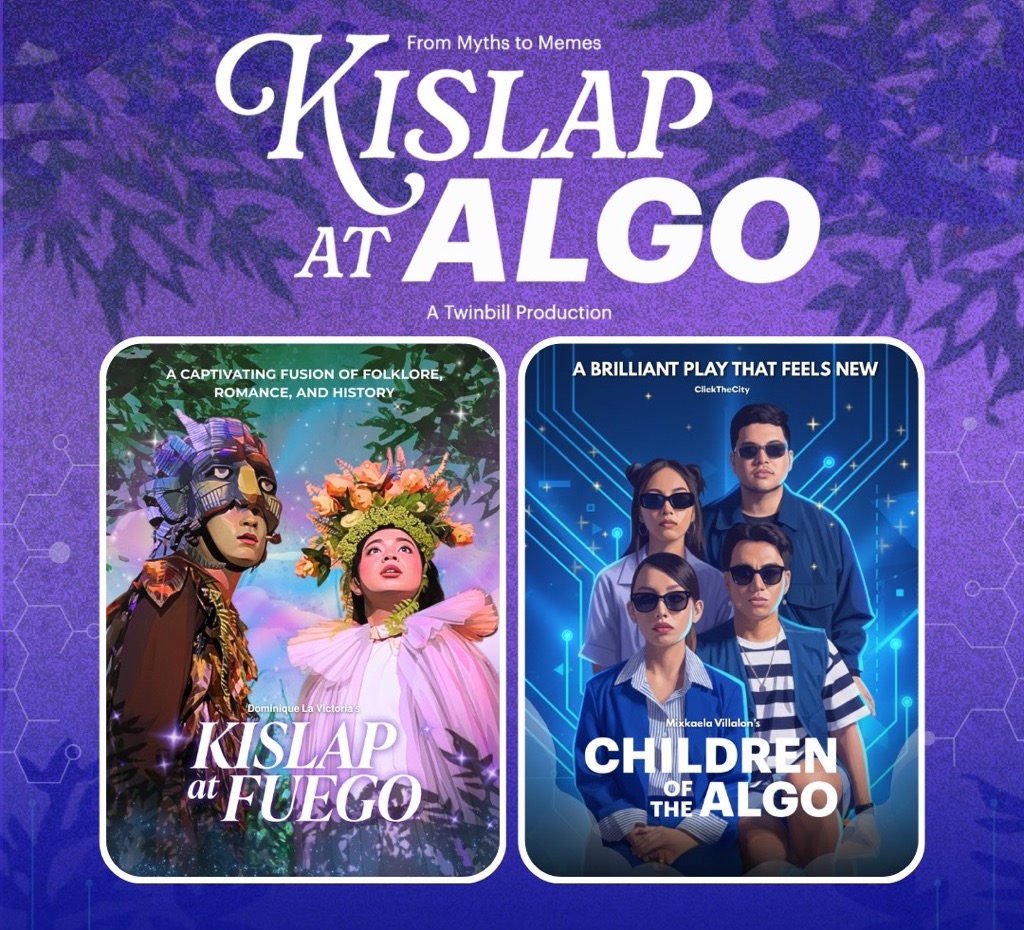
Kislap at Fuego is a translation of Dominique La Victoria’s Palanca Award-winning play, Toward the Fires of Revolution, translated by Gentle Mapagu and directed by Maribel Legarda and J-Mee Katanyag.
Set during the Spanish occupation, it tells the story of a young country girl escaping Spanish soldiers after being suspected of handing out seditious and subversive books.
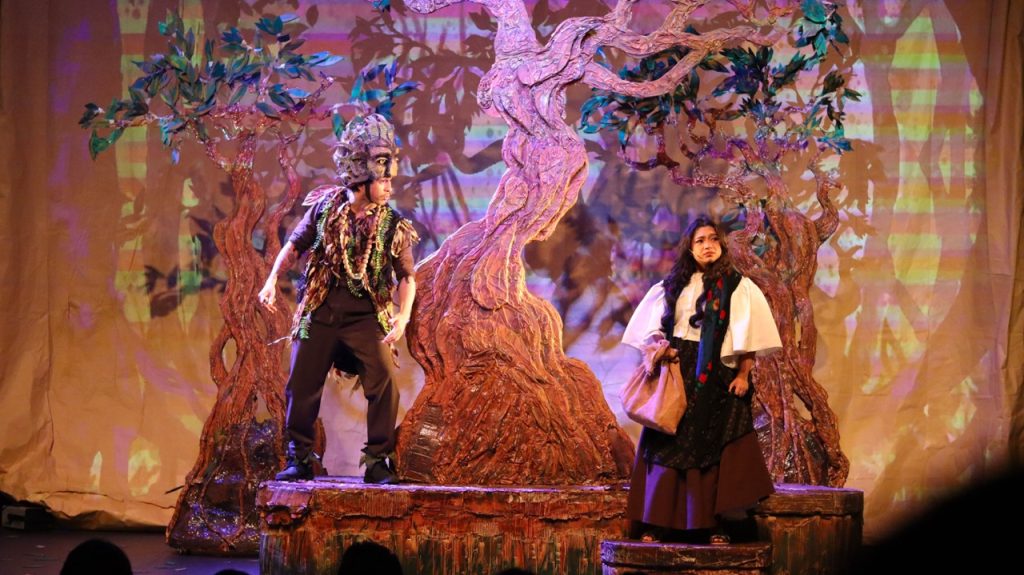
She hides in an enchanted forest, where she calls on a Kapre to whom her father owes a debt. She comes to repay that debt in exchange for sanctuary. What unfolds is a fairy-tale love story that realigns our perspective and references the contributions of women to our nationhood and revolutionary movement.
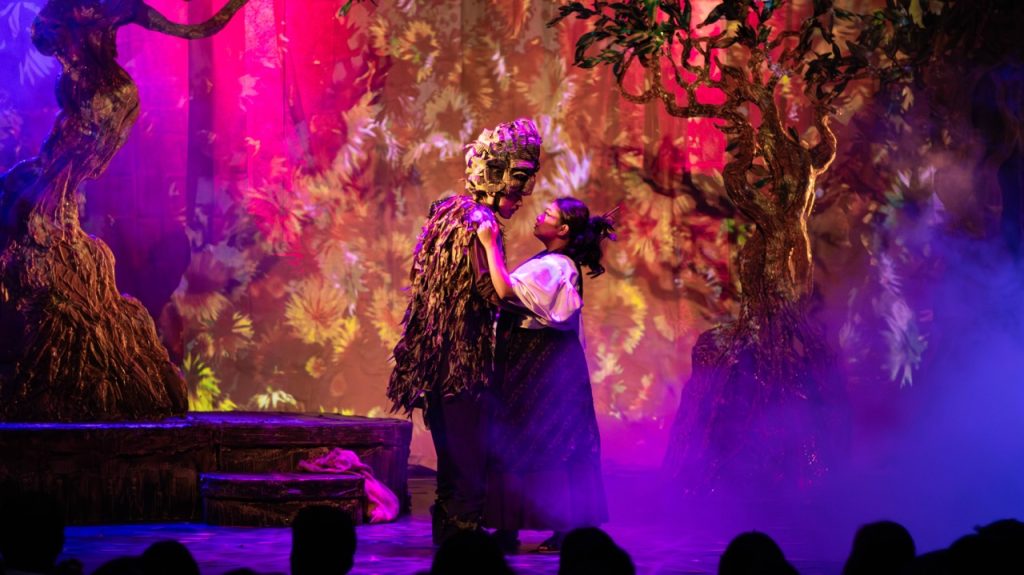
Led by Felicity Kyle Napuli and CJ Navato, Kislap at Fuego disguises its feminist message and call to action within a love story that excellently plays up to the Filipino sensibilities of the kilig. Napuli is a strong presence onstage and manages to shift from the romantic and comedic aspects to the dramatic parts effortlessly.
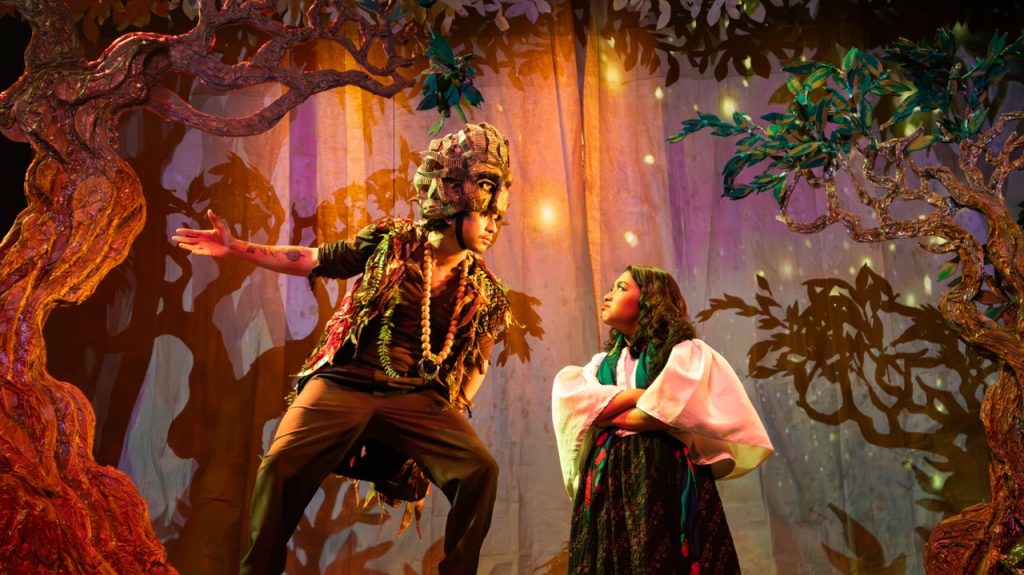
Navato also shares this duality, allowing his Kapre to feel menacing and powerful, while revealing a tenderness just beneath the surface.
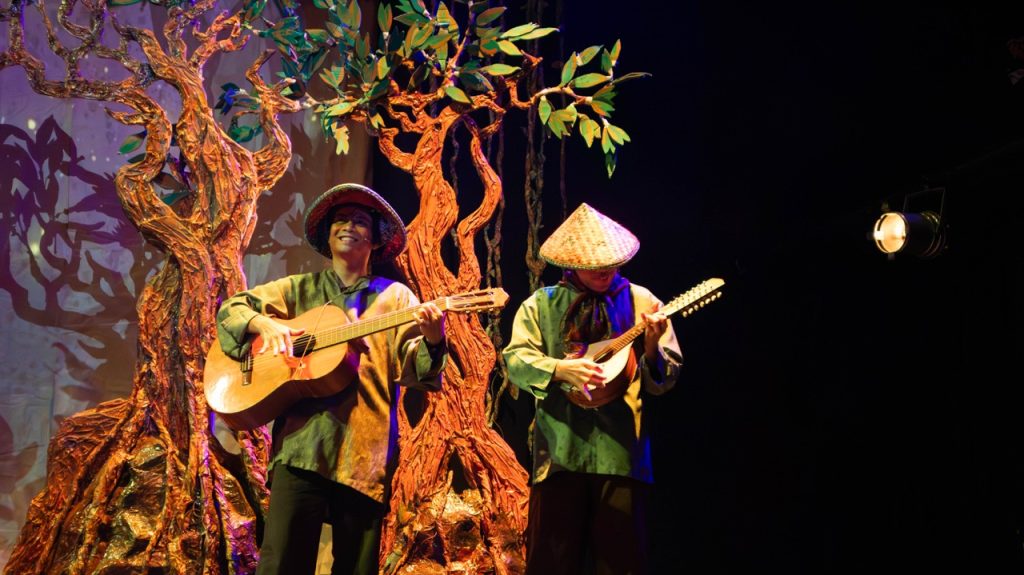
Their chemistry makes the show work, as the disguise of a love story becomes the hook that draws us in while setting upa powerful message about fighting back when needed.
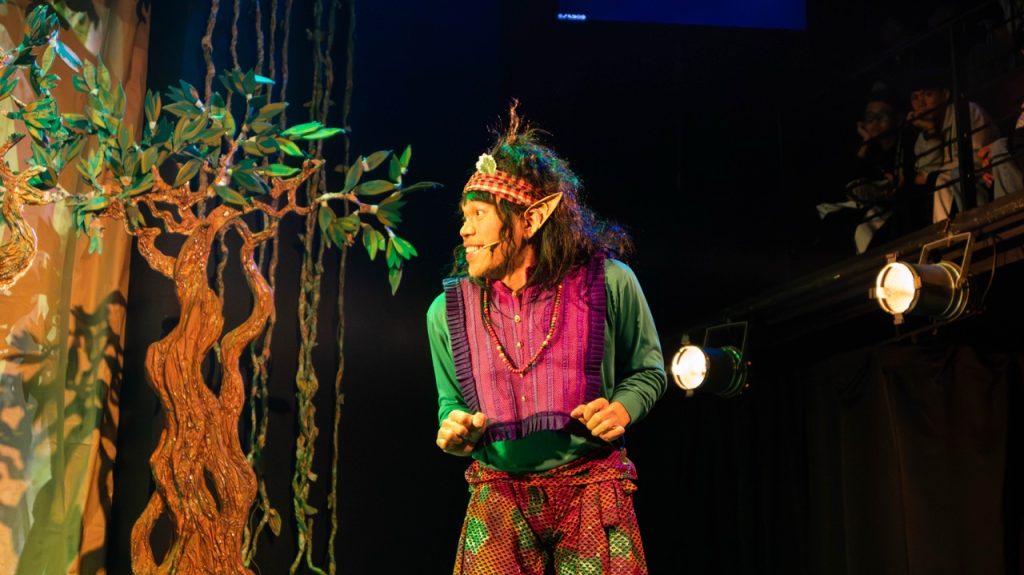
Legarda and Katanyag make full use of Boni Juan’s charming design. A great big tree stands tall on stage left, equipped with a mechanism that allows Navato to hang from the tree’s branches, effectively creating the image of a Kapre.
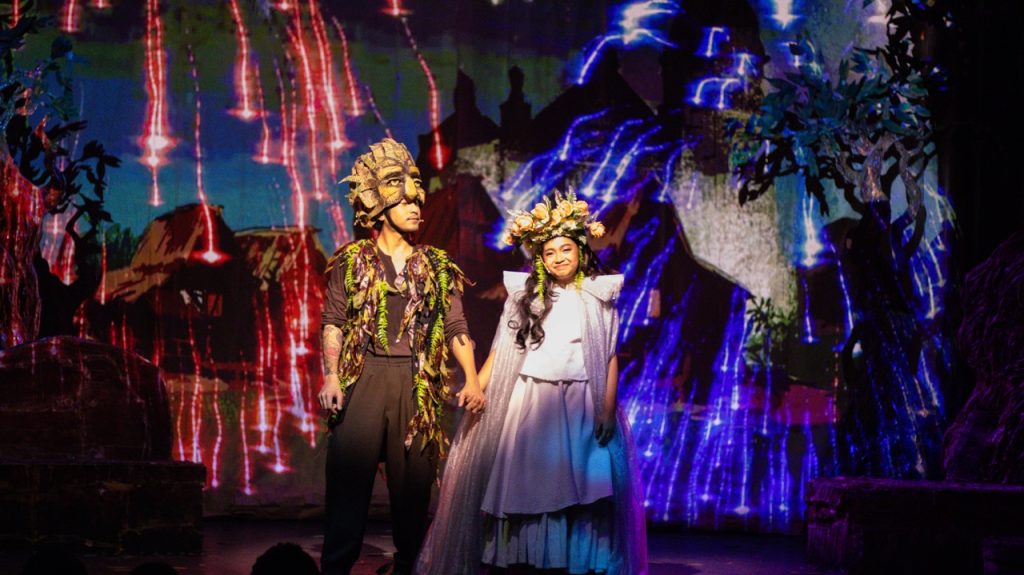
His mask further transforms him into the creature, as Navato seems to fully embody the role well, making full use of his costume to render himself otherwordly.
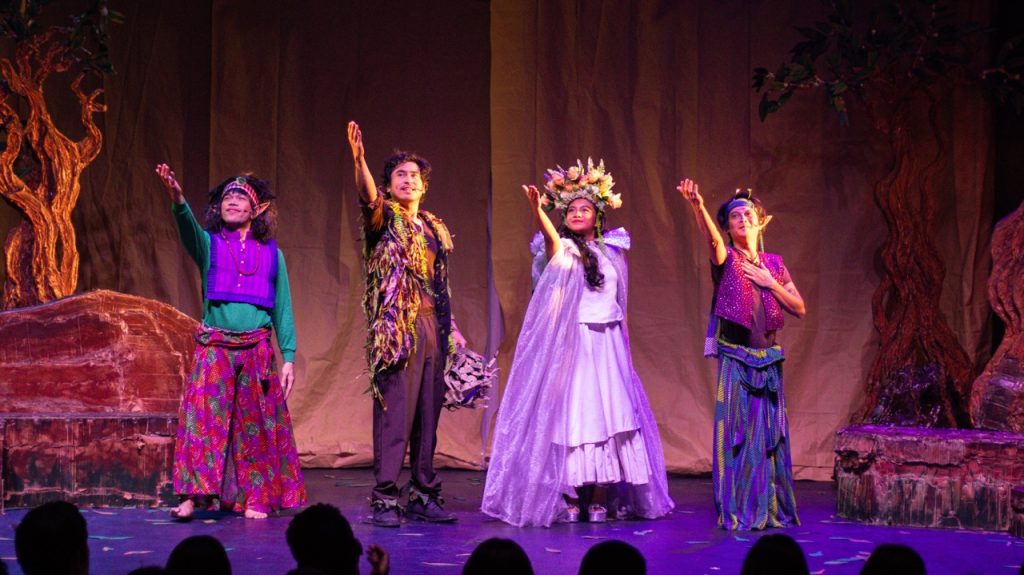
It’s a lovely use of traditional theater techniques, coming together in a charming play that has the entire audience reacting exactly where they wanted them to.
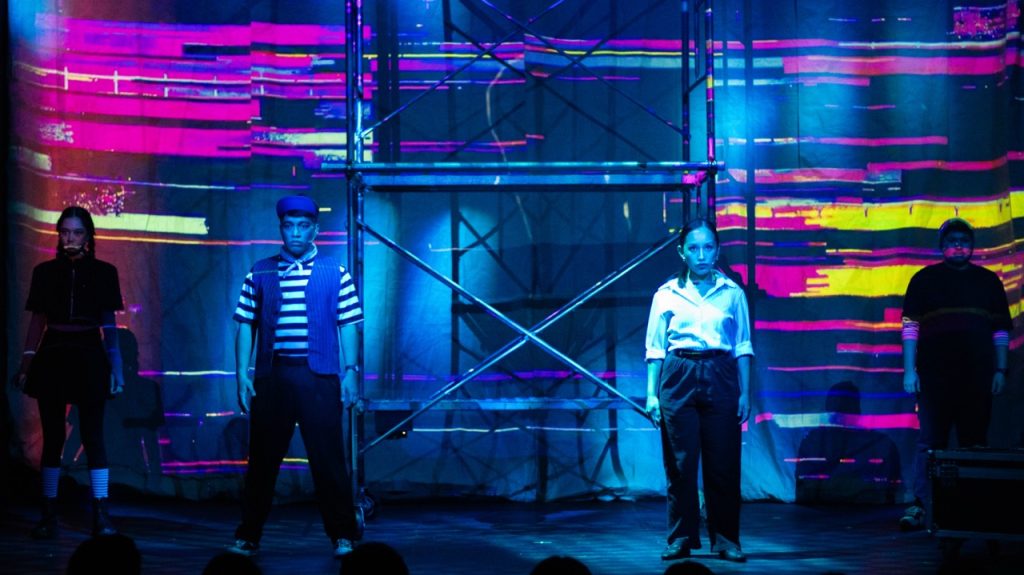
I actually saw an earlier version of Children of the Algo by Mixkaela Villa and director Johnnie Moran. Set in the world of social media, four content creators share video posts and even livestream their daily lives and curated thoughts. Performed by Otep Madriaga, Nyla Festejo, Frances Marie Akol, and James Pe Lim, the four characters jump from posts that resemble what we always see on our feeds – a day in the life, dating advice, a day at work, meditations, random thoughts – and there’s a dizzying effect as each scene shifts from one character to the next. The play truly feels like scrolling through your social media apps. Unfolding like a satire, it creates a commentary oh how we perceive the world through these curated posts. It all builds momentum toward a call to action that urges us to reexamine our social media habits and the content we consume online.
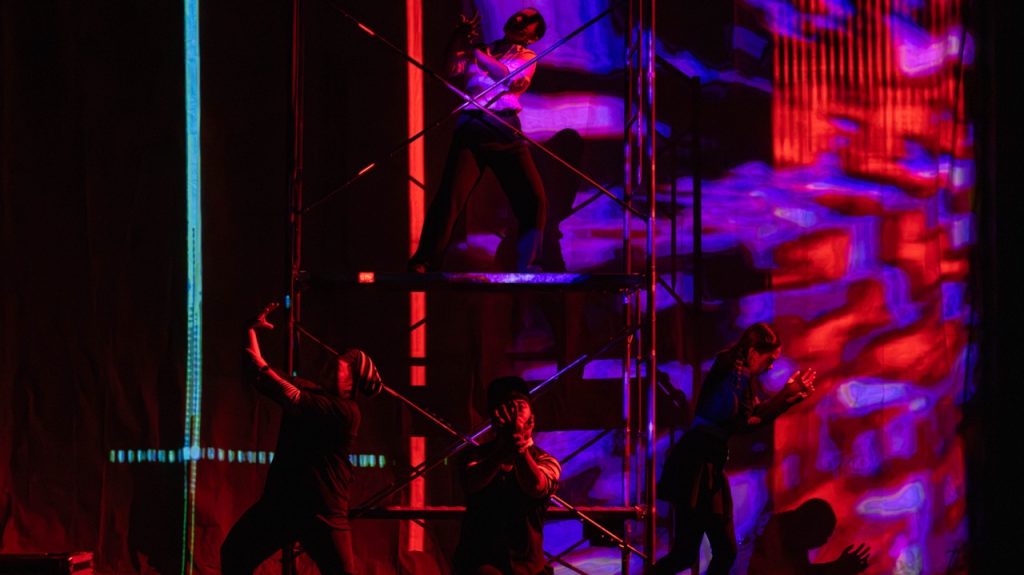
The play makes full use of video wall projections while the characters jump in and out of a wheeled, two-storey scaffold. This setup allows each performer to achieve height or cower into a confined space. It’s quite simple yet inventive. Unfortunately, the scaffold has a tendency to squeak and bend, so it doesn’t give us the security as the audience worry about the actors’ safety. I’m sure they have rehearsed extensively and can vouch for its safety, but it can get distracting, especially when the actors are jumping in and out of the scaffold or climbing up and down. It would be ideal if it were sturdier and drew less attention to itself.
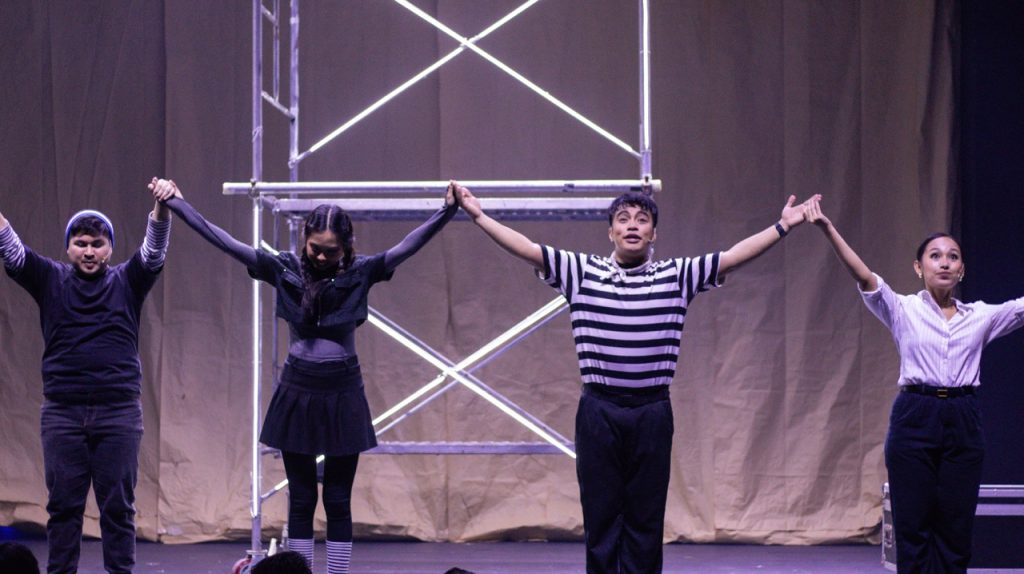
The four actors are strong, portraying their characters more as caricatures than real people. They exaggerate and over dramatize their lines, parodying the people we see online. The intended effect is apparent, but I wonder what the texture would be if they played it more grounded, more serious? Would it become a stronger commentary if performed with a little bit more serious? It might not be as crowd-pleasing if they did it that way. After all, the play targets a younger audience who quickly gets the parody.
My Rating: 4 Stars

The magic isn’t over yet! Don’t miss what PETA has lined up next, keep an eye out for their upcoming productions and experience theater that challenges, inspires, and captivates audiences of all ages!
Leave a Reply
You must be logged in to post a comment.