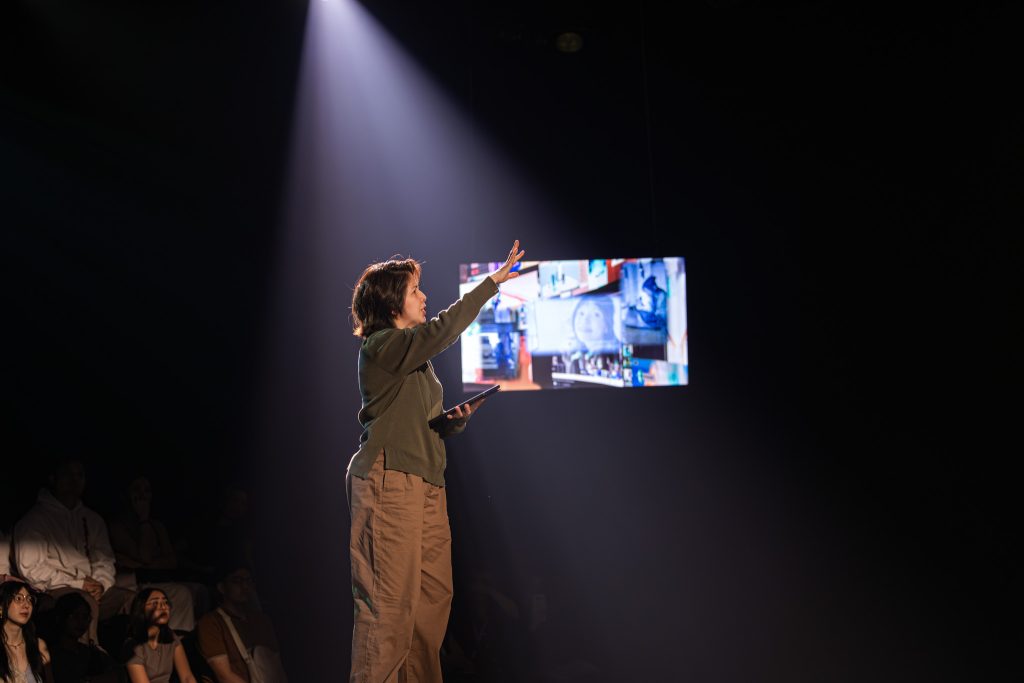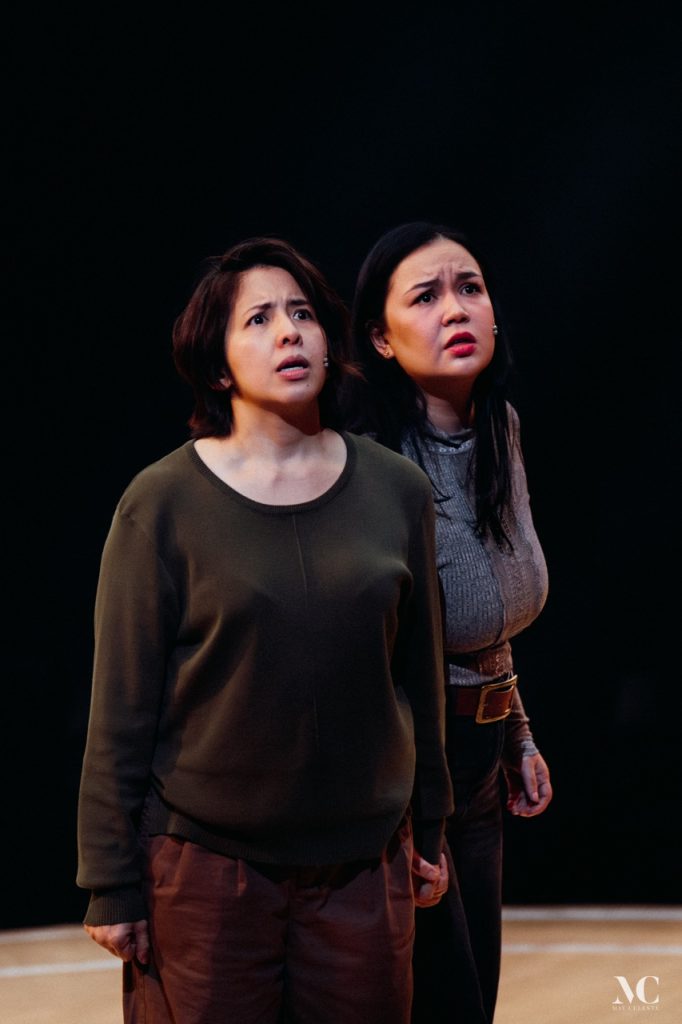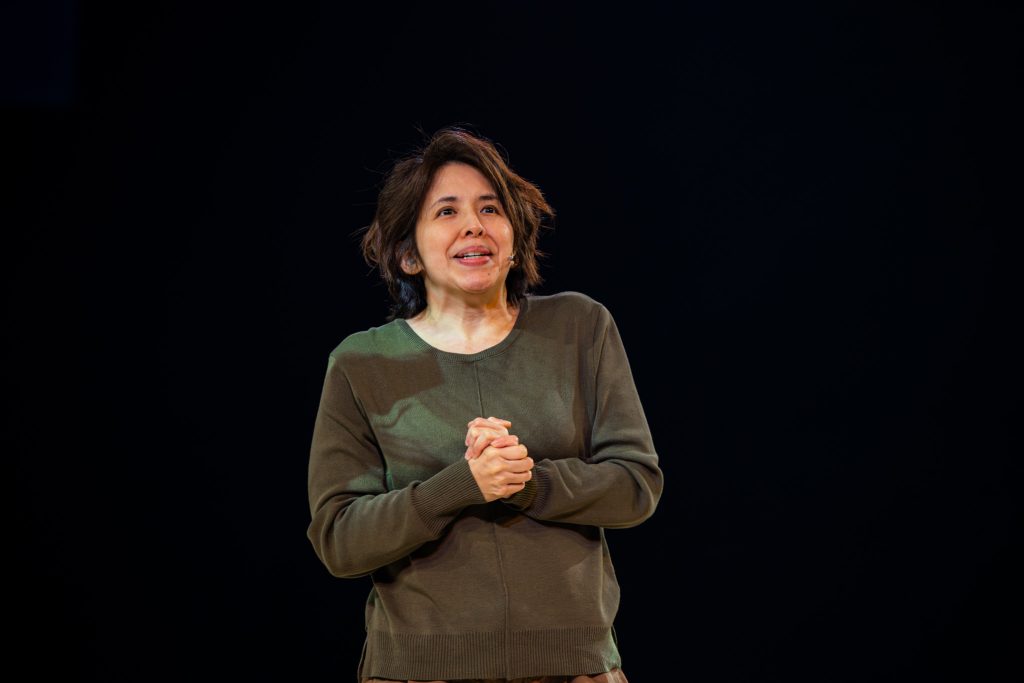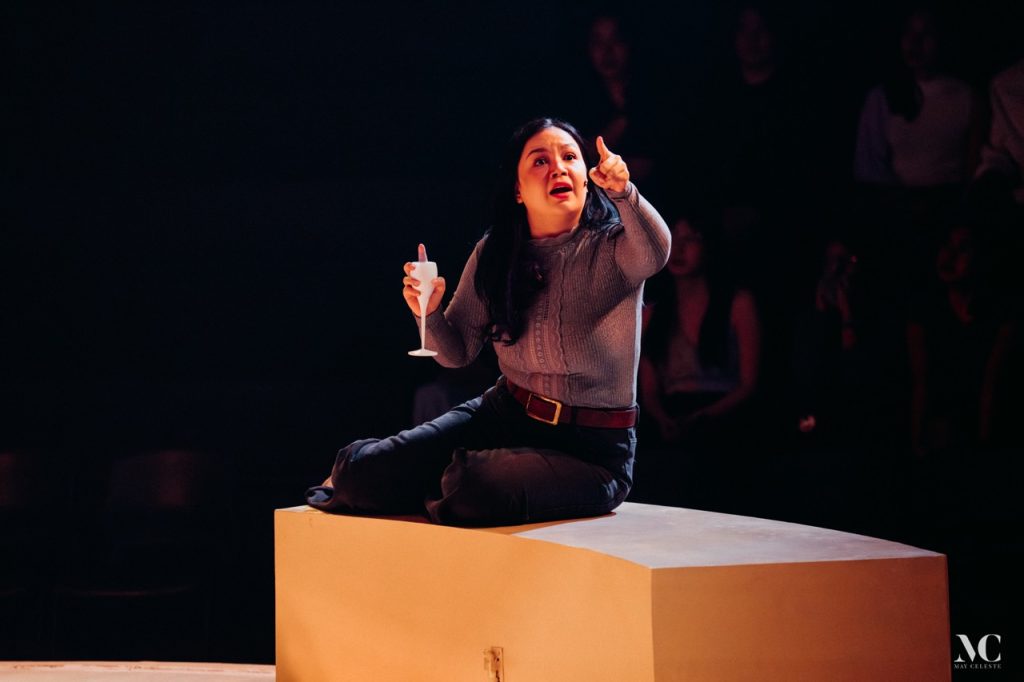
Tag: Theater Review

  • THEATER REVIEW: Dance Theater Takes a Big Leap Forward with Mari Dance’s Restaging of ‘A Dance in a Day in a Dance’

    THEATER REVIEW: Dance Theater Takes a Big Leap Forward with Mari Dance’s Restaging of ‘A Dance in a Day in a Dance’

    I’m a huge fan of contemporary dance. I love how expressive and emotional the movements are; it takes a lot of skill to make these seemingly random motions of the body look beautiful, but it always requires a level of storytelling and performance. Having not seen a contemporary dance ballet in a while, I’m thrilled that Mari Dance is bringing it back in a big way by pushing the medium forward and bringing it into the realm of theater. In dance theater, the narrative structure of a play is at work, but the story is communicated entirely through movement. It replaces spoken language with kinetic energy, requiring the audience to let go of the need for words to communicate and instead trust their eyes and ears to pick up the feelings of the story through the performance.
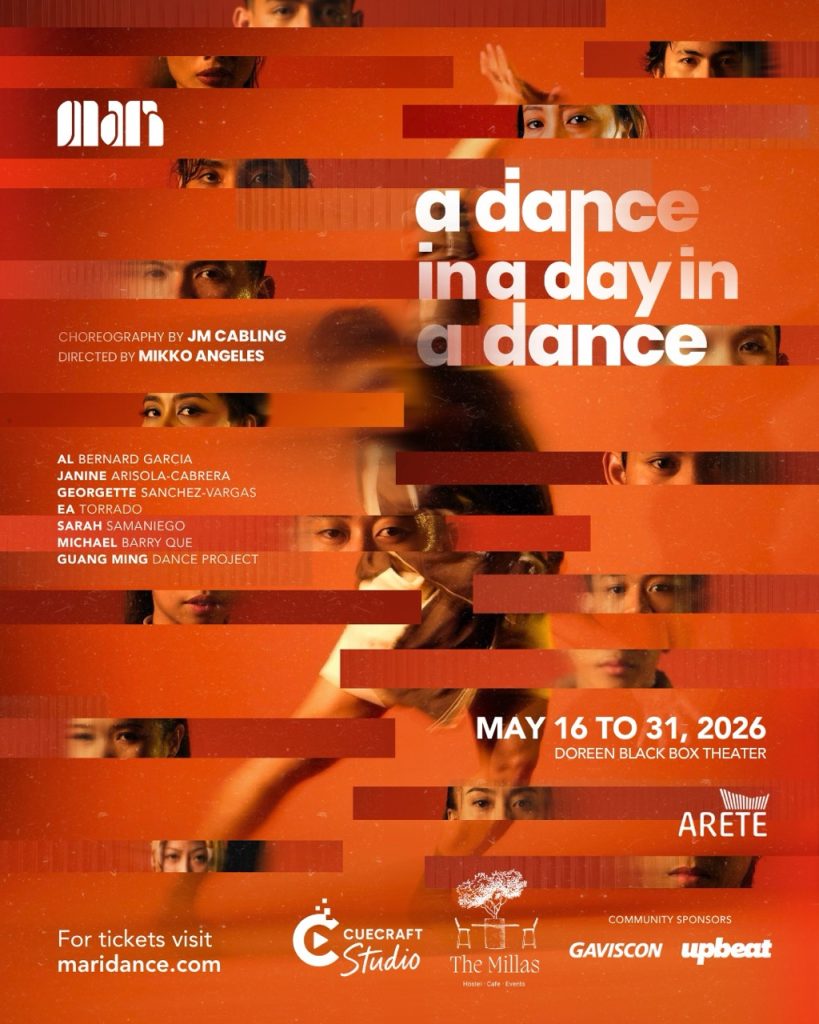
    MARI DANCE POSTER

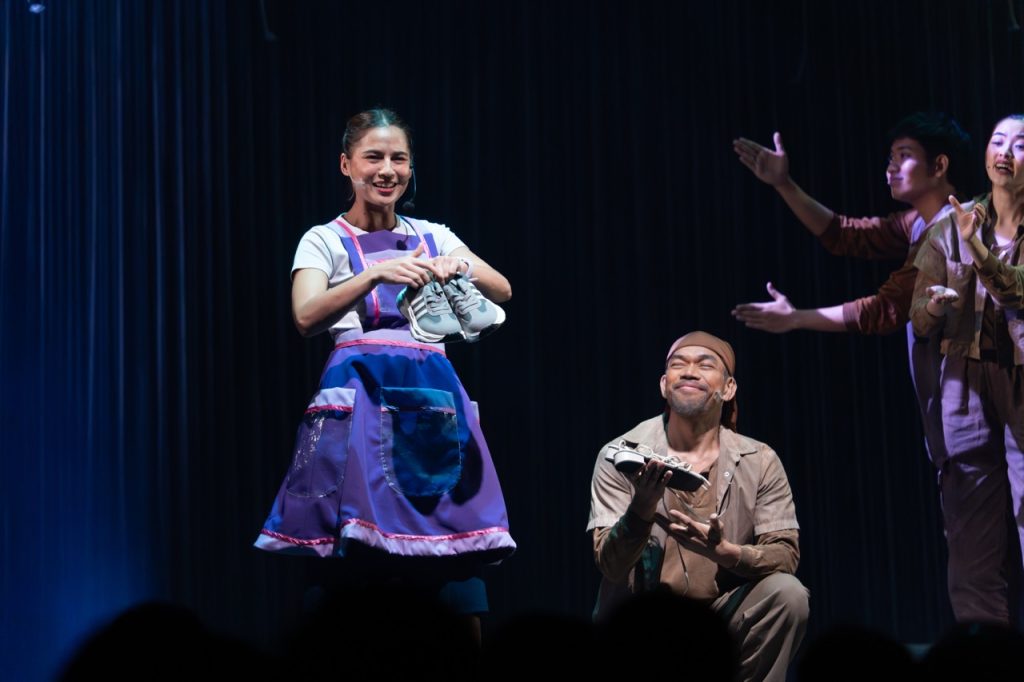
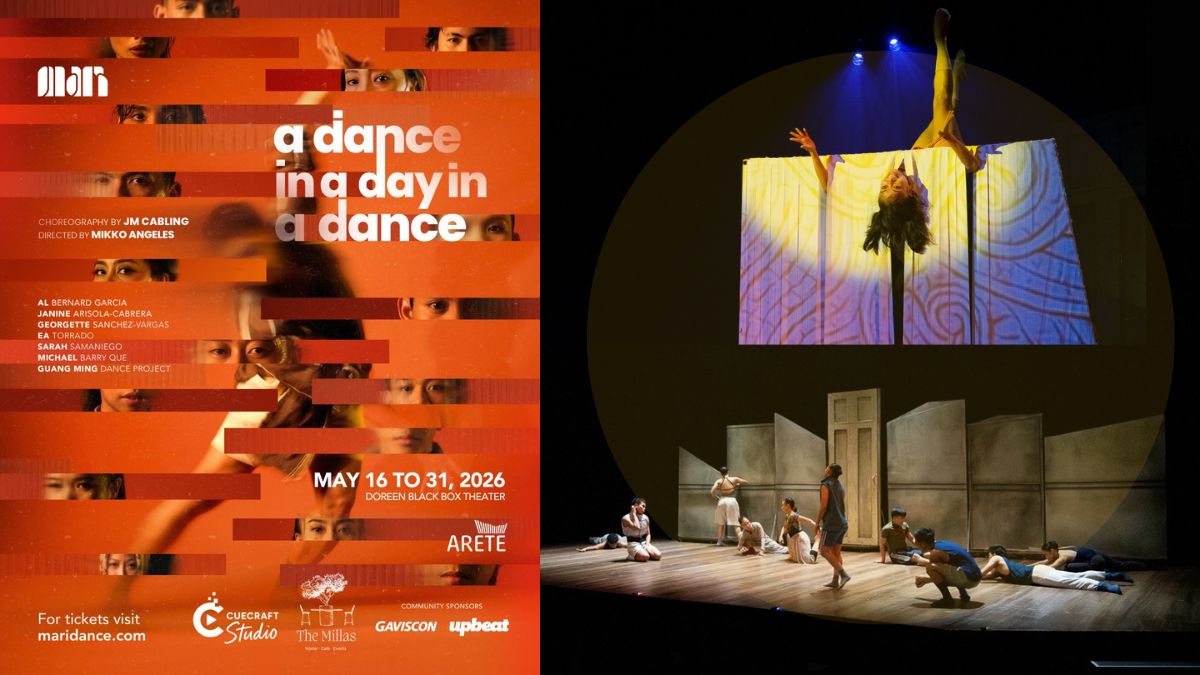
    Composed of five short, choreographed pieces by JM Cabling, A Dance in a Day in a Dance tracks the harrowing story of a rigid, abusive dance instructor and choreographer. Played by the terrific Al Bernard Garcia, as he uses capital punishment in the dance studio and terrorizes his students. This framing narrative serves as the transition points that link the five choreographed pieces together.

    It begins with Nothing Special, a piece about finding one’s voice amid a culture of silence, performed by featured dancer Michael Que, which mirrors the students trying to process the dance instructor’s abusive ways.
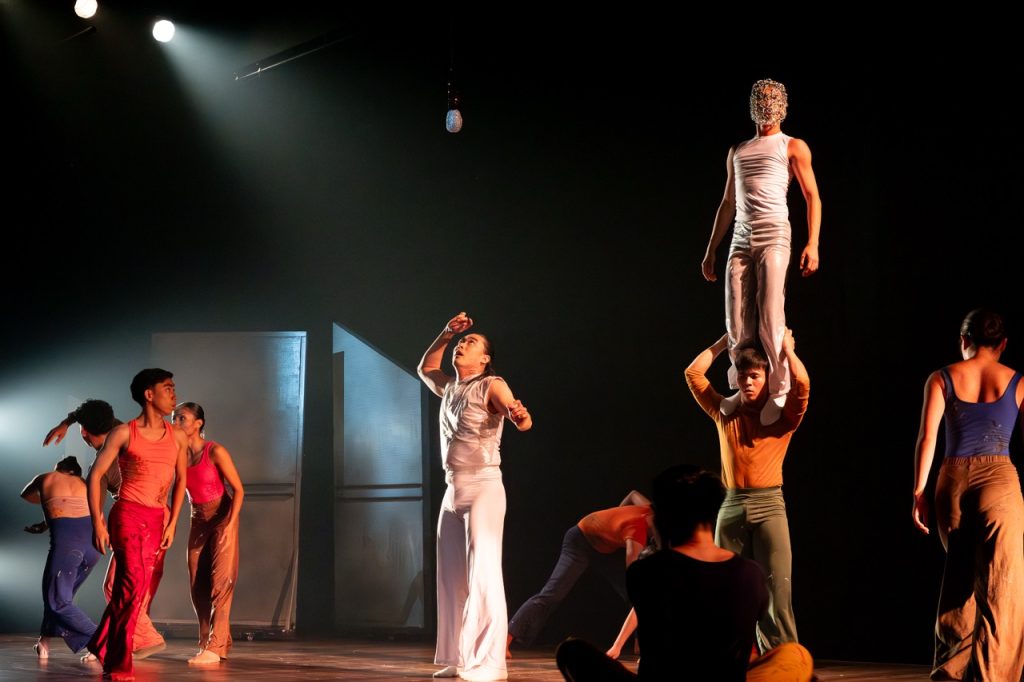
    ADIAD 26 Photo by Cesar Morales55
    A Dance in a Day in a Dance | Photo by Cesar Morales

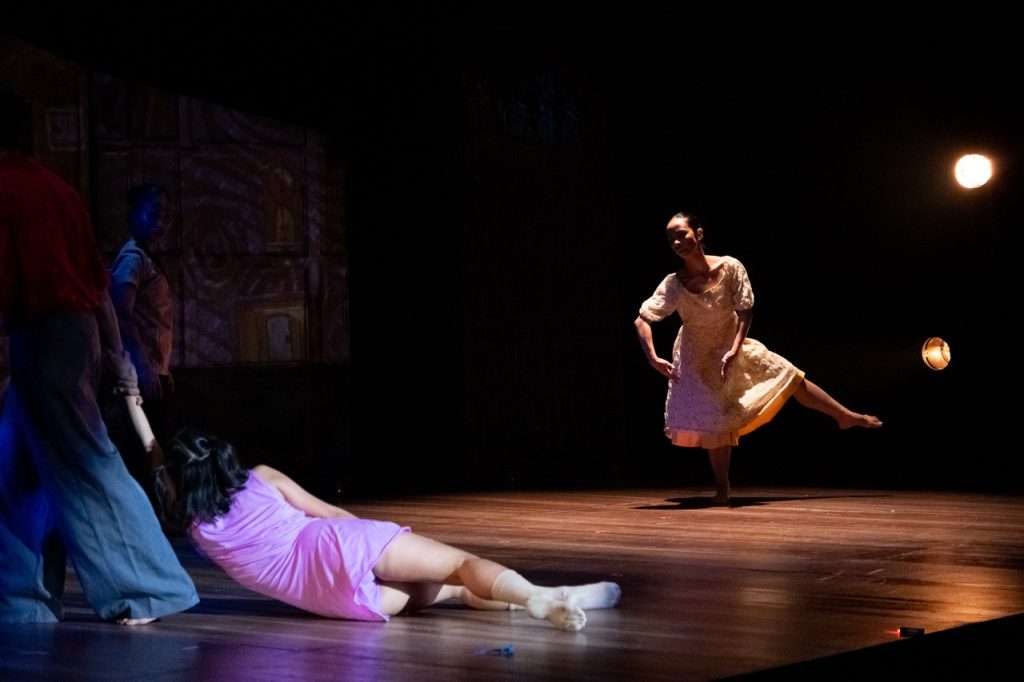
    At the midpoint, the company delivers a stunning performance of Ang Lihim ni Lea, an adaptation of Augie Rivera’s children’s book about a young girl who discovers she can walk through walls but the origins of this ability comes from a scary, dark place.
    A Dance in a Day in a Dance
    A Dance in a Day in a Dance | Photo by Cesar Morales

    Performed by Janine Arisola-Cabrera as Lea, this powerful piece features where the dancer actually goes through the walls of her home, which is realised by a frame wrapped in fabric with holes cut through them.

    A Dance in a Day in a Dance
    A Dance in a Day in a Dance | Photo by Cesar Morales

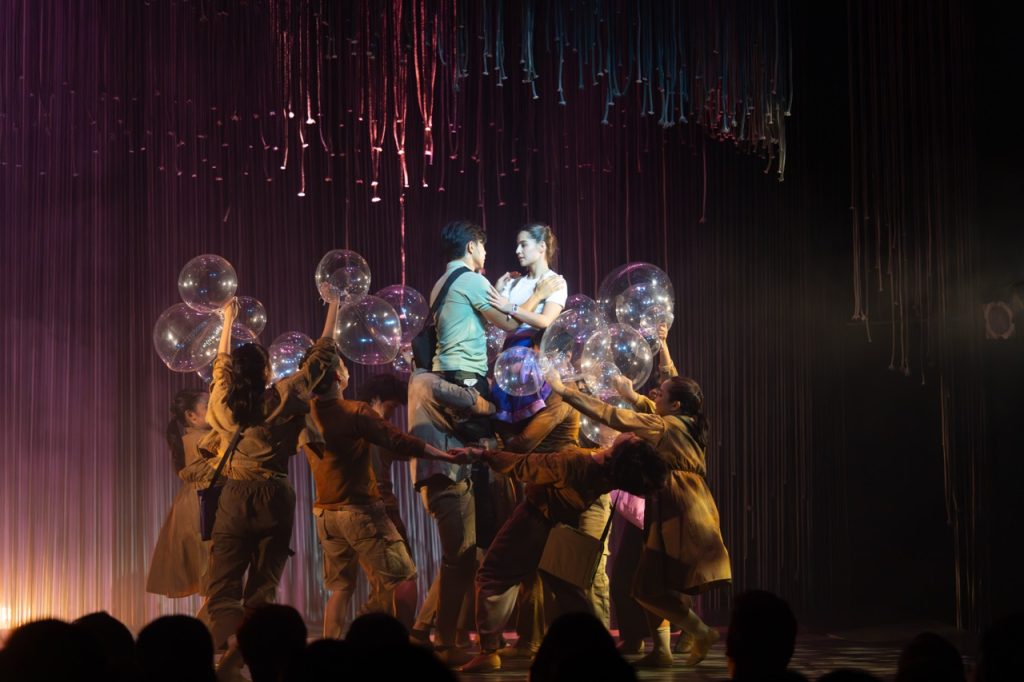
    The show then transitions to Bent, excellently executed by Arnel Sablas and Sheanne Montecarlos, about an accidental hook up between two dancers. It finishes with Nothing Special, performed by Garcia and Jenris Bernard Garcia, about a man rediscovering and reconciling with his younger self. It is the piece that leads to the transformation of Garcia’s problematic dance instructor that allows him to seek redemption withhis students.
    ADIAD 26 Photo by Cesar Morales18
    A Dance in a Day in a Dance | Photo by Cesar Morales

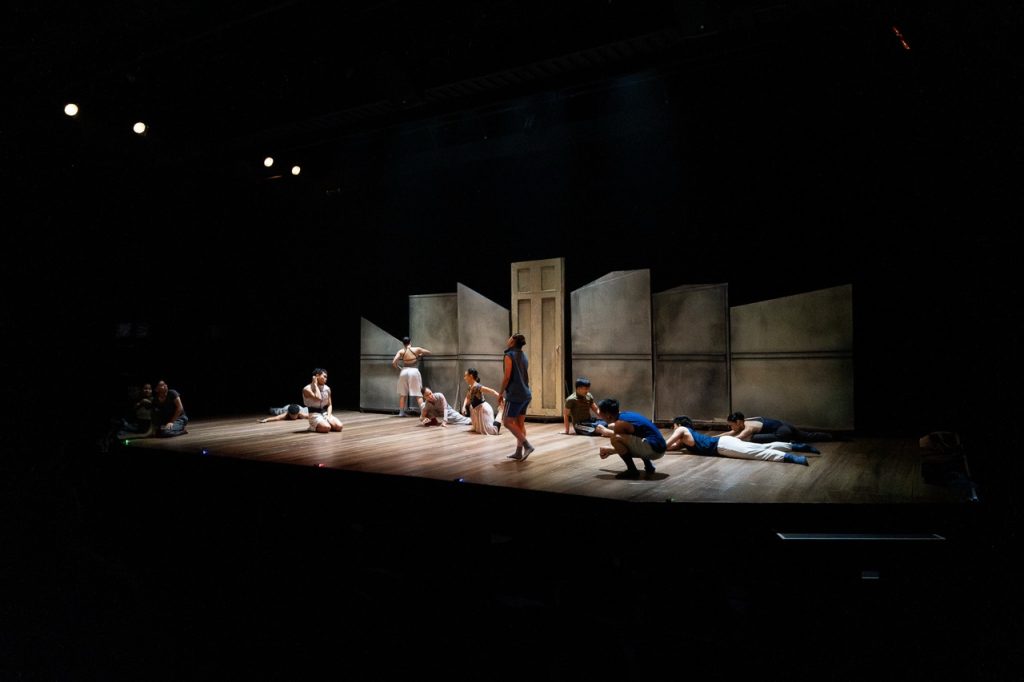
    Under Mikko Angeles’s astute direction and JM Cabling’s inventive choreography, the production transitions seamlessly between the world of the narrative to the world of the individual pieces, ensuring the emotional connection is carried through.
    ADIAD 26 Photo by Cesar Morales14
    A Dance in a Day in a Dance | Photo by Cesar Morales

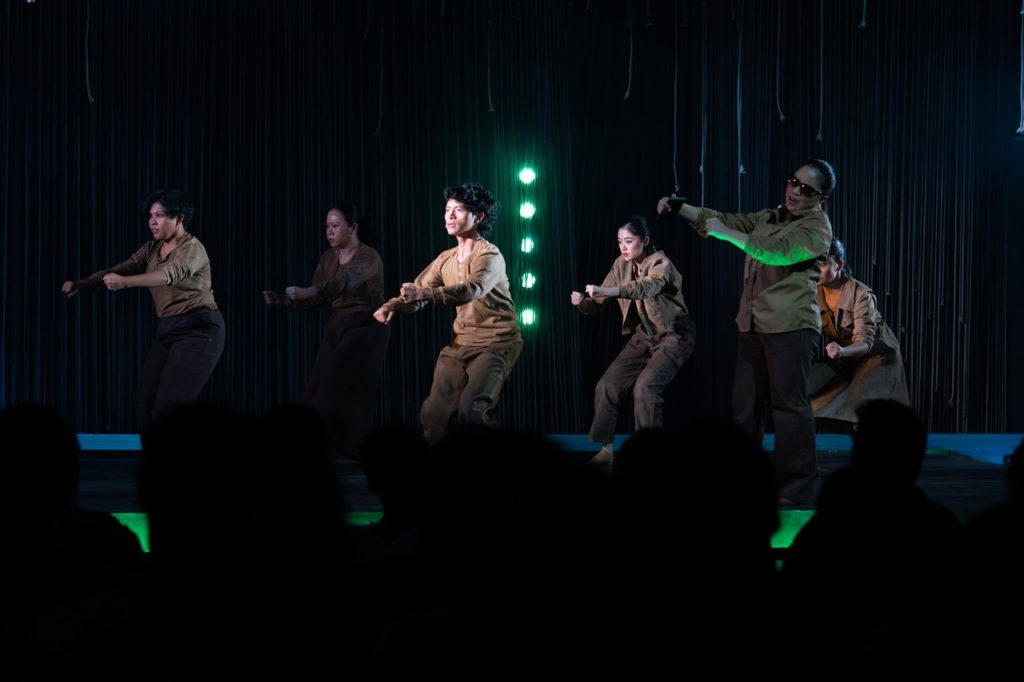
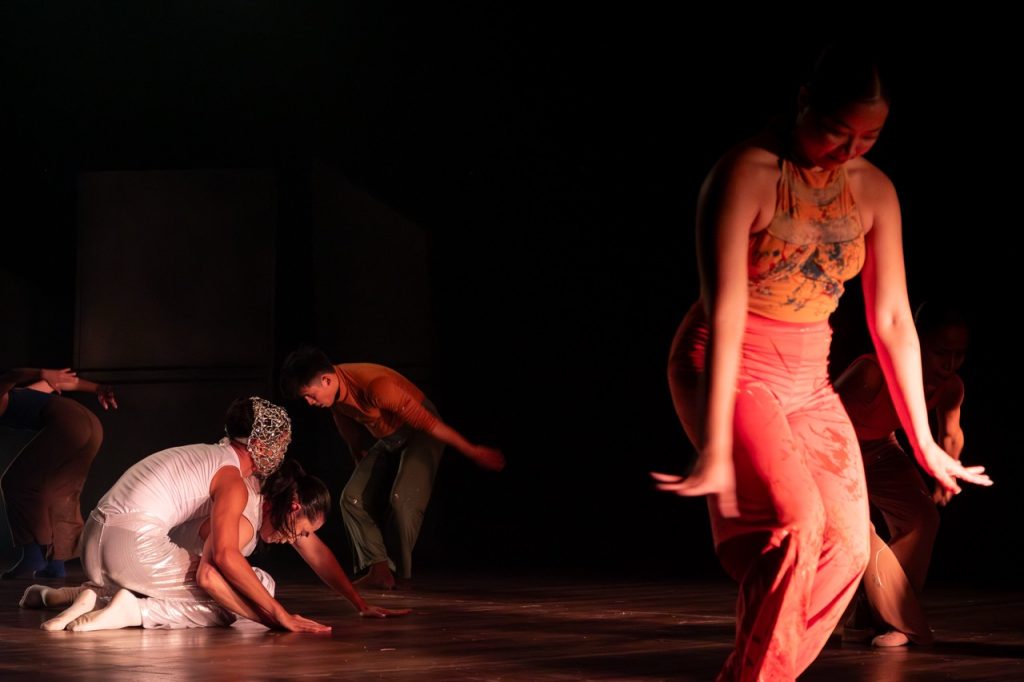
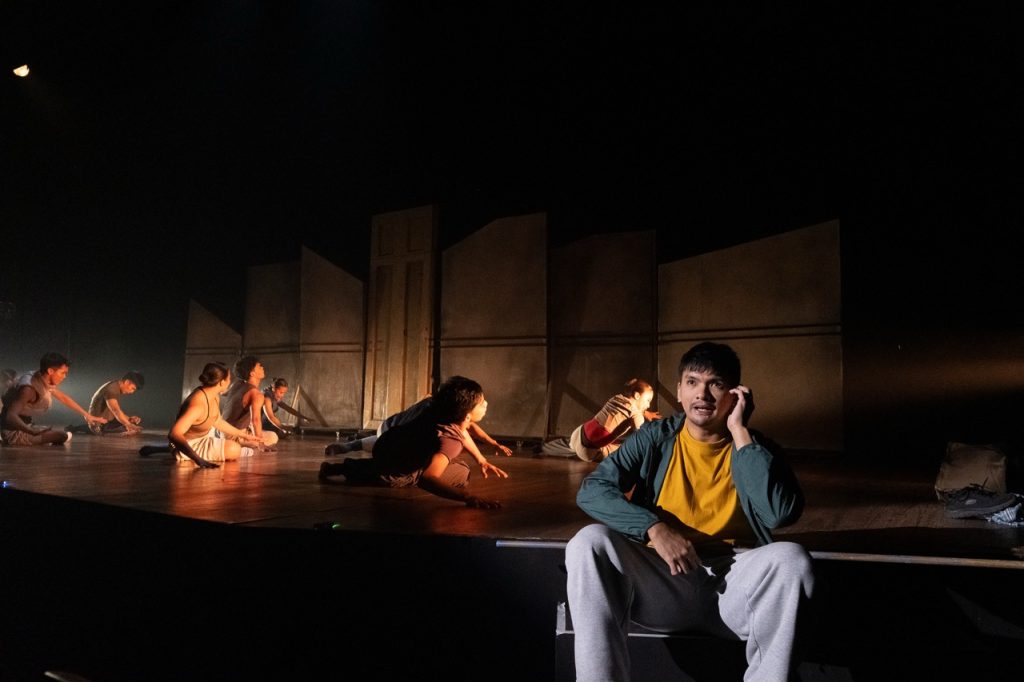
    D Cortezano’s lighting design is exquisite, dynamically shifting colour temperatures and brightness to highlight the emotional spectrum of each scene. In one particular sequence, Cortezano manages to keep Garcia in the spotlight as he dances throughout the entire stage, while the rest of the company of dancers shifts rhythmically in darkness behind him. It had such a powerful effect.
    ADIAD 26 Photo by Cesar Morales20
    A Dance in a Day in a Dance | Photo by Cesar Morales

    Complementing this is Wika Nadera’s set design involves panels on wheels so they can be dragged around, with one side made to look like doors and the other to look like artsy walls. The dancers would move them around to change the scene, using whichever side is best for the story at that moment.
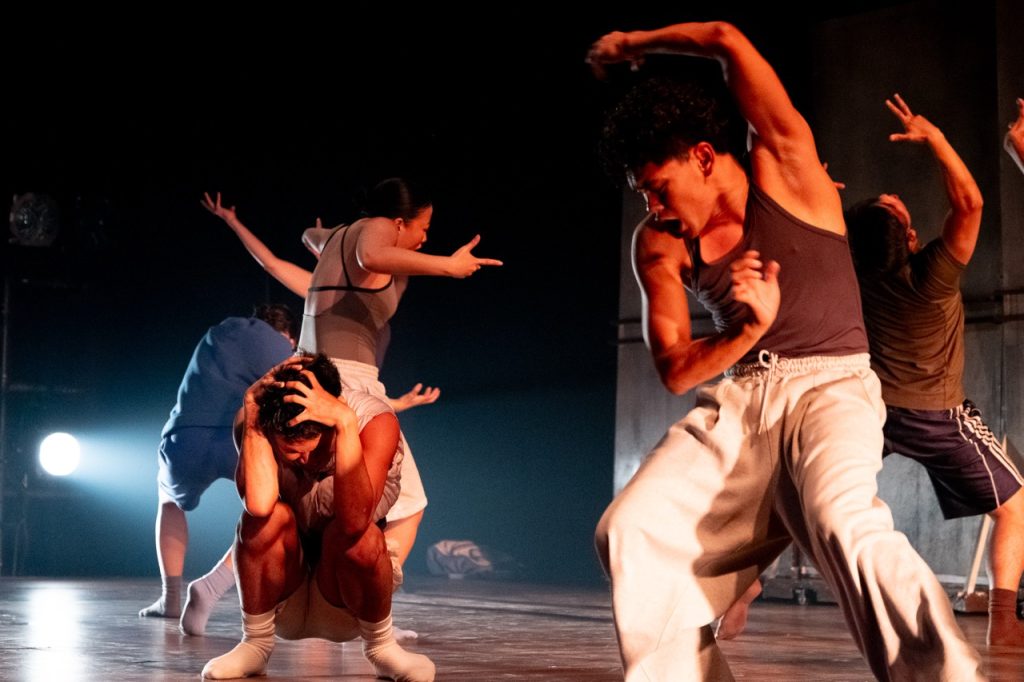
    ADIAD 26 Photo by Cesar Morales24
    A Dance in a Day in a Dance | Photo by Cesar Morales

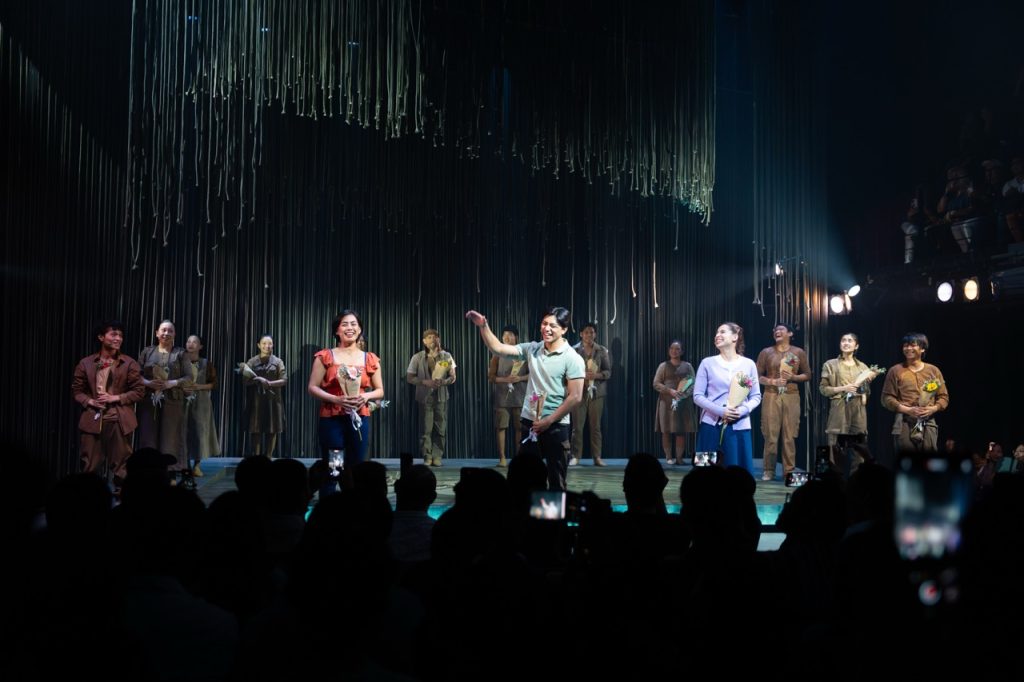
    The emotional ride of the entire production is matched by its production savvy and elevated by a host of incredible dancers. Led by Al Bernard Garcia, the ensemble and featured dancers are so strong. Their lines were beautiful. Their technique showed but each one was able to convey the story so well.
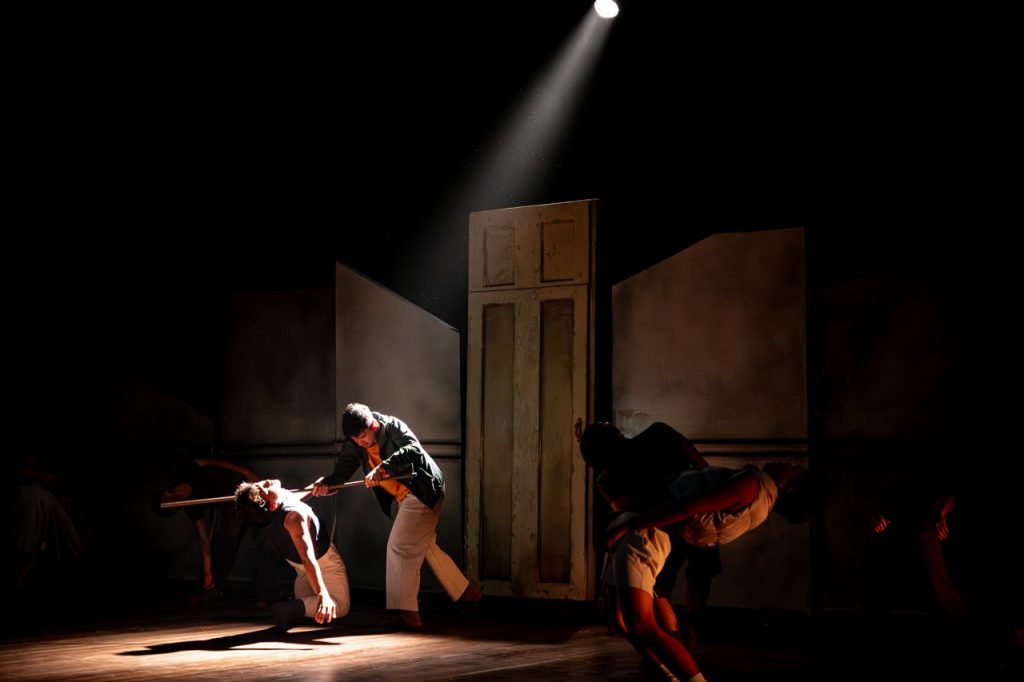
    ADIAD 26 Photo by Cesar Morales31
    A Dance in a Day in a Dance | Photo by Cesar Morales

    For me, the night’s true standouts, aside from Garcia who really anchored the whole production, were Arisola-Cabrera, whose portrayal of Lea is intricate and nuanced, and Montecarlos, whose performance in ‘Bent’ really showcased her talent and training and she brought in a lot of charm.
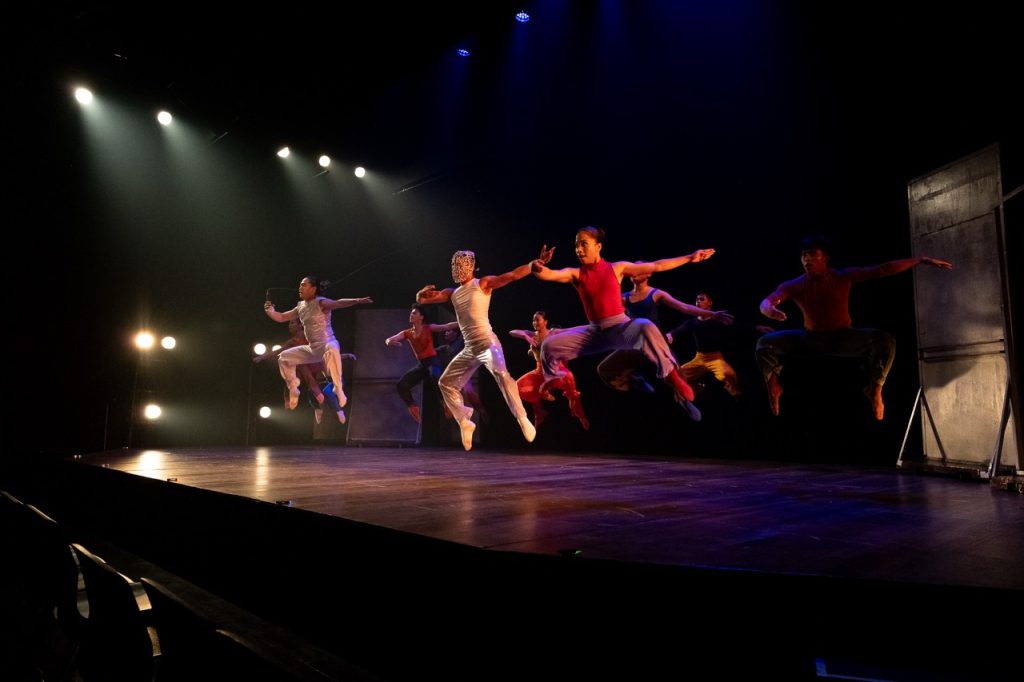
    ADIAD 26 Photo by Cesar Morales74 1
    A Dance in a Day in a Dance | Photo by Cesar Morales

    Among the ensemble, Evan Joe Asuela stood out for his grace and strength. He was just part of the ensemble, but his stage presence was so strong that I couldn’t stop watching him dance during the big numbers.
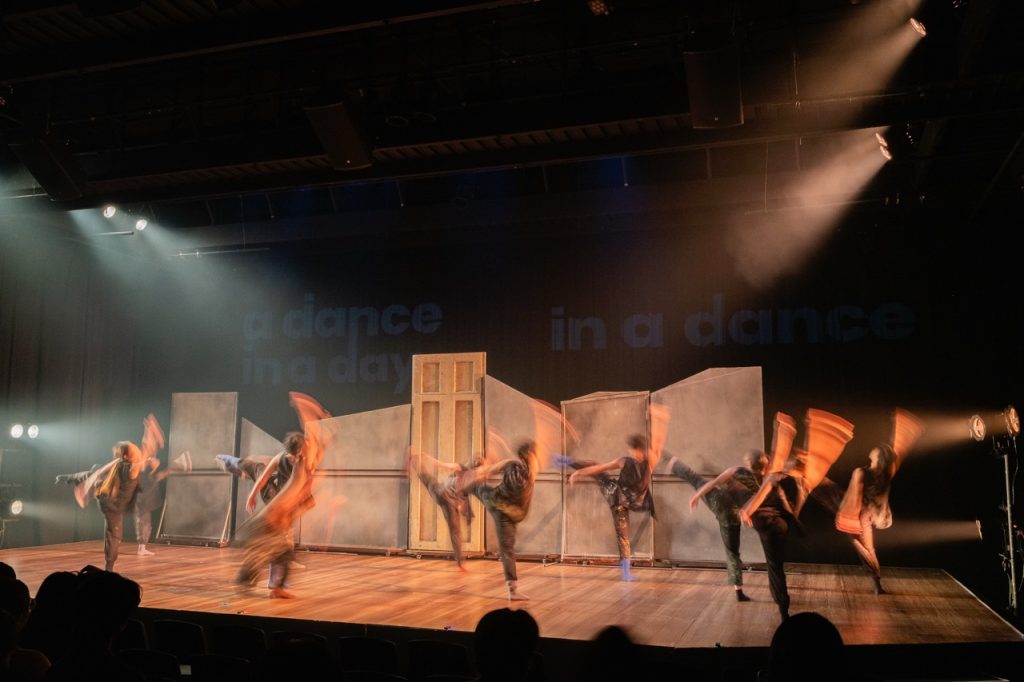
    ADIAD 26 Photo by Cesar Morales37
    A Dance in a Day in a Dance | Photo by Cesar Morales

    If you’re looking to get into watching ballet or contemporary dance, Mari Dance’s A Dance in a Day in a Dance is a wonderful starter show and its theatrical structure keeps it familiar.

    My Rating: 5 Stars

    stars 5 0


    Don’t miss this breathtaking leap forward in local dance theater! A Dance in a Day in a Dance runs until May 31 at the Doreen Black Box Theater, Areté, Quezon City. Experience the magic live, secure your tickets NOW at maridance.com!
  • THEATER REVIEW: ‘Jesus Christ Superstar’: A Very Modern Superstar

    THEATER REVIEW: ‘Jesus Christ Superstar’: A Very Modern Superstar

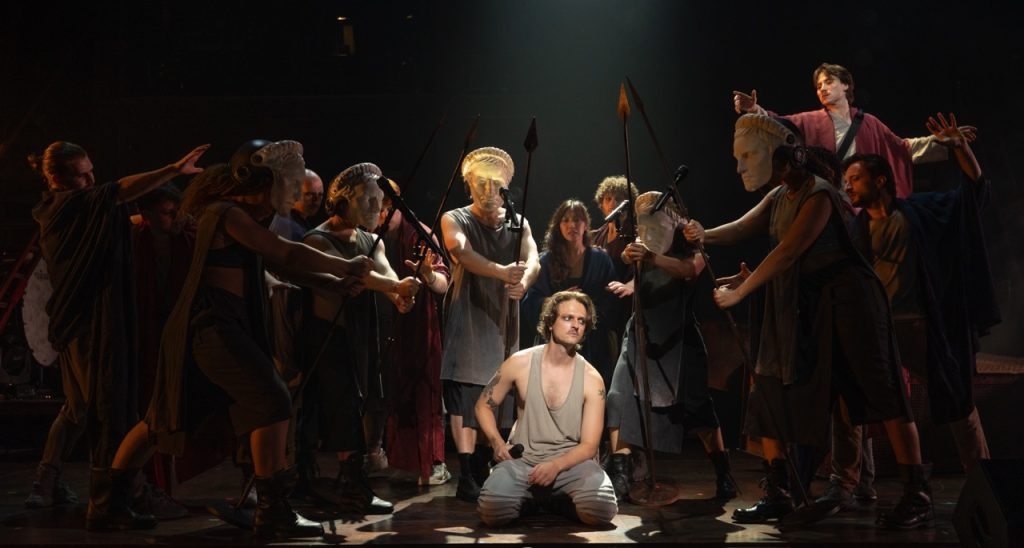
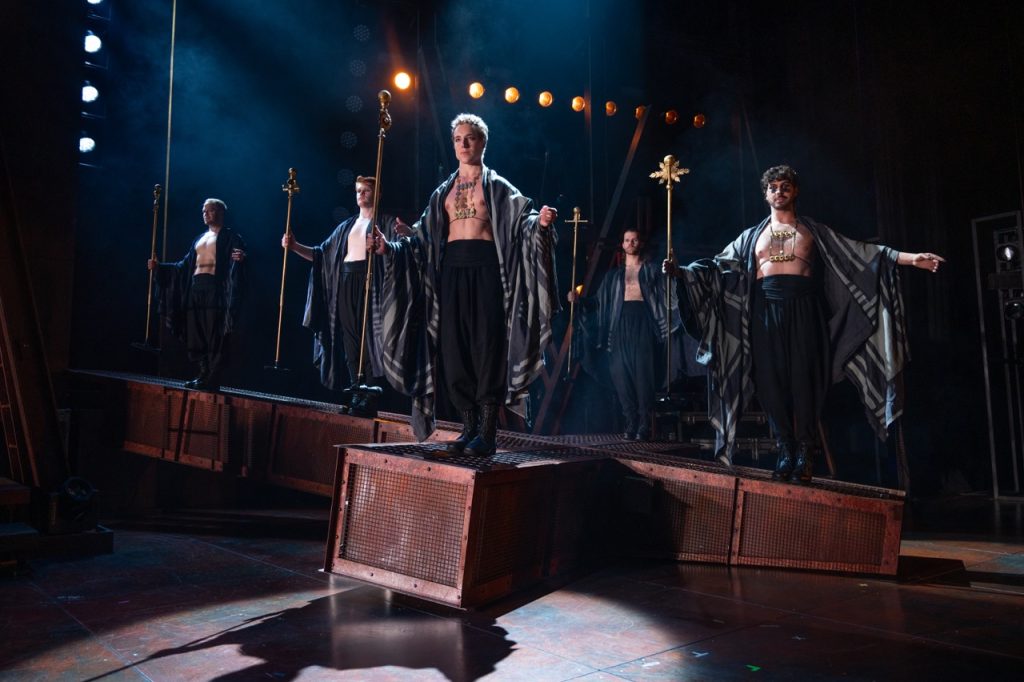
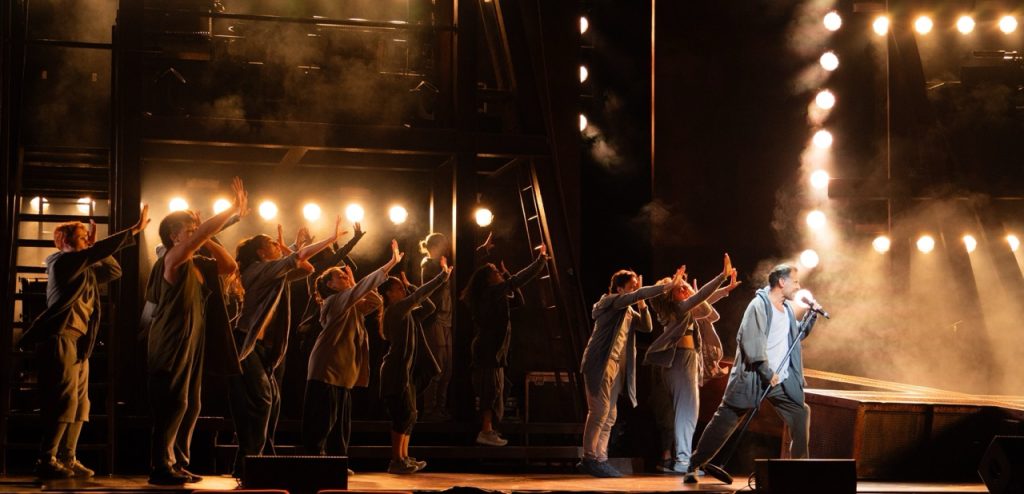
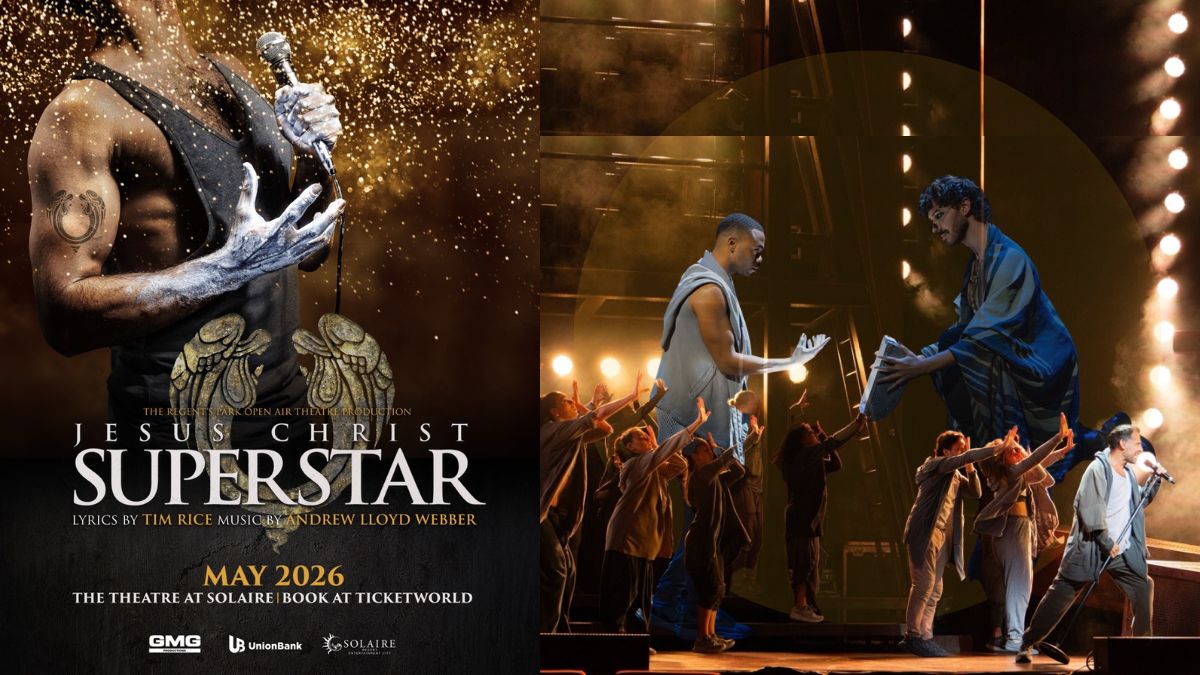
    Director Timothy Sheader’s concept for the revival of Andrew Lloyd Webber and Tim Rice’s Jesus Christ Superstar is an interesting interplay of 1970s rock opera with a lot of modern sensibilities, reimagining Jesus Christ as a sort of disinterested celebrity. The stage design is sparse and foreboding: on stage right stands a two-story structure made to look like wood, while on the left, a massive platform in the shape of a cross serves as a makeshift table or an elevated stage for other characters to come through. While lighting designer Lee Curran does wonders in shaping the atmosphere, it is Tom Scutt’s set design that truly makes you feel like something bad is about to happen.

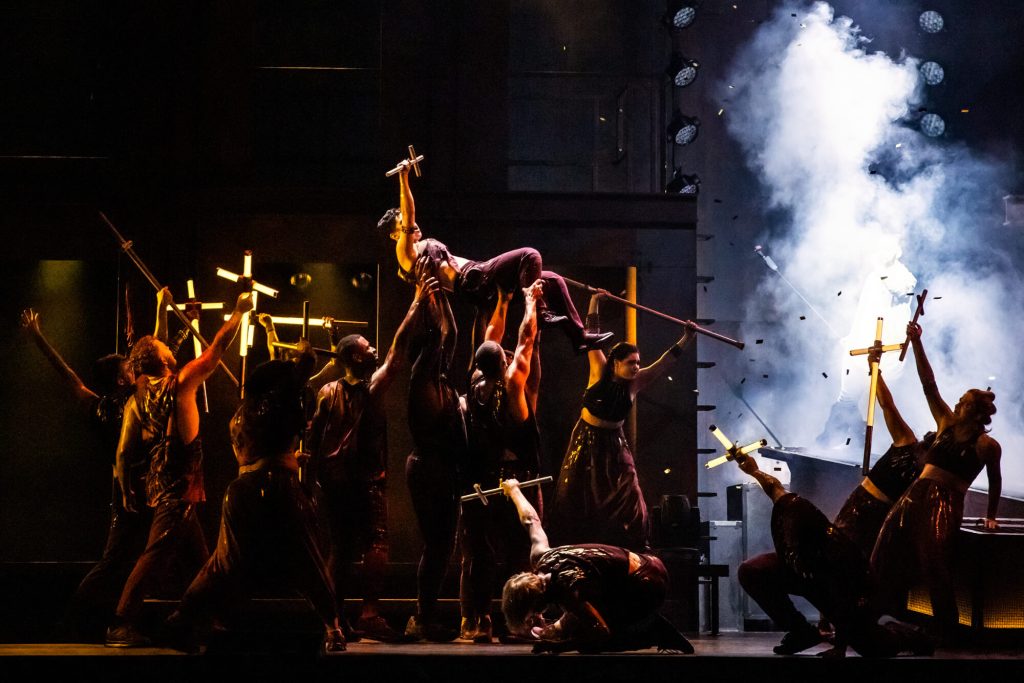
    Jesus Christ Superstar Manila Ricardo Afonso and the Jesus Christ Superstar Company photo by Zeus Martinez Photography Manila Production
    Jesus Christ Superstar Manila Production | Ricardo Afonso and the Jesus Christ Superstar Company | Photo by Zeus Martinez Photography

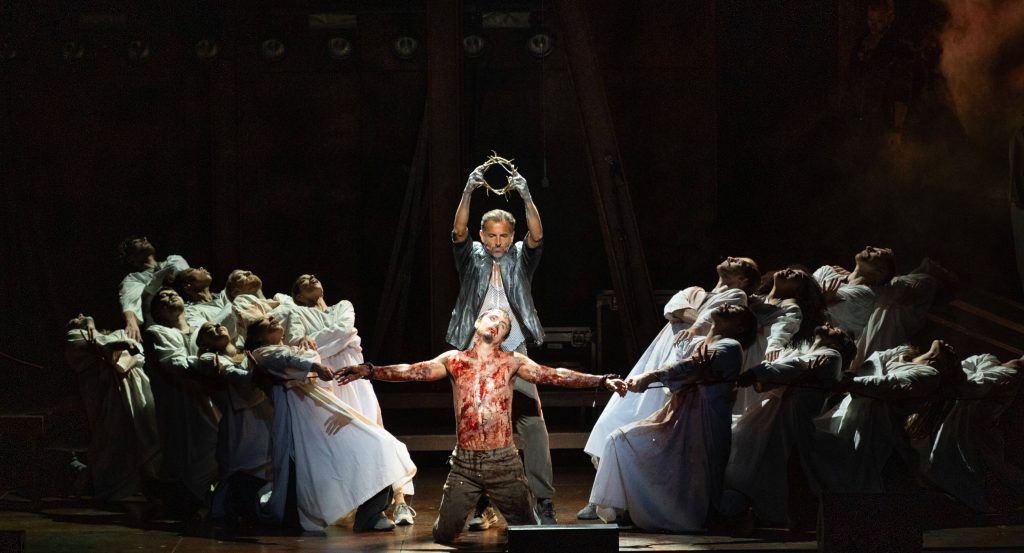
    The play pulls from Gospel passages to explore – entirely through rock music – Jesus’s relationships with his disciples and followers as his rising influence begins to frighten the Pharisees and priests. Told primarily from the point of view of Judas, who remains faithful yet deeply wary that Jesus is rocking the boat too much, it tracks his eventual betrayal leading up to Jesus’ crucifixion.

    Luke Street Ricardo Afonos and the Jesus Christ Superstar Company photo by Zeus Martinez Photography
    Jesus Christ Superstar Manila Production | Luke Street, Ricardo Afonos, and the Jesus Christ Superstar Company | Photo by Zeus Martinez Photography

    Completely sung-through, the musical relies on clarity of words and and the power of the emotions as told through song so the story and its emotional weight relies heavily on the performers and the way they interpret each song. Some treat the show like a concert – singing beautifully but losing out on the narrativity of the music – while others successfully carry the story through.

    Jesus Christ Superstar Manila Javon King and Grant Hodges photo by Vitt Salvador Manila Production
    Jesus Christ Superstar Manila Production | Javon King and Grant Hodges | Photo by Vitt Salvador

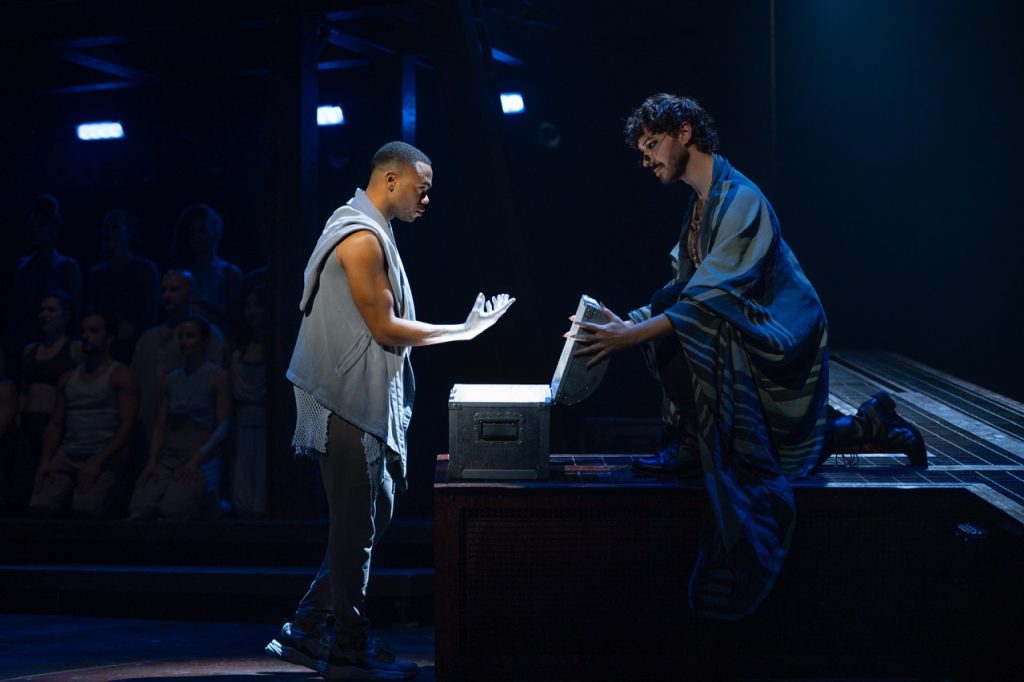
    On the gala night, Javon King’s Judas was an instant standout , singing magnificently while still breathing into the songs Judas’ anger, resentment, guilt, and pathos into the role. Meanwhile, Joshua Bess’ Jesus Christ struggled through the first act but found his voice in the second; however, he was ultimately outshined by many of his co-stars, tilting the production even more towards Judas’ story.

    Jesus Christ Superstar Manila Joshua Bess Gab Pangilinan and the Jesus Chris Superstar International Tour Company photo by Vitt Salvador Manila Production
    Jesus Christ Superstar Manila Production | Joshua Bess, Gab Pangilinan, and the Jesus Chris Superstar International Tour Company | Photo by Vitt Salvador

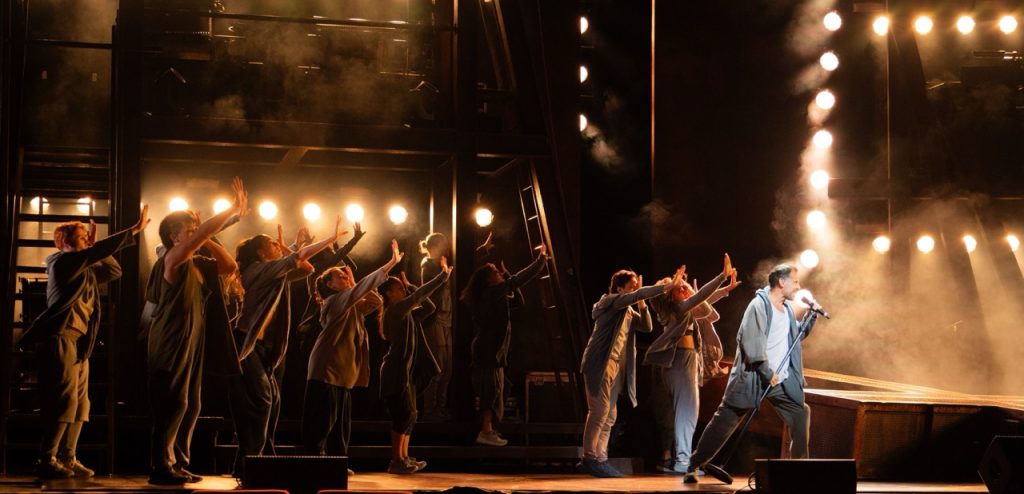
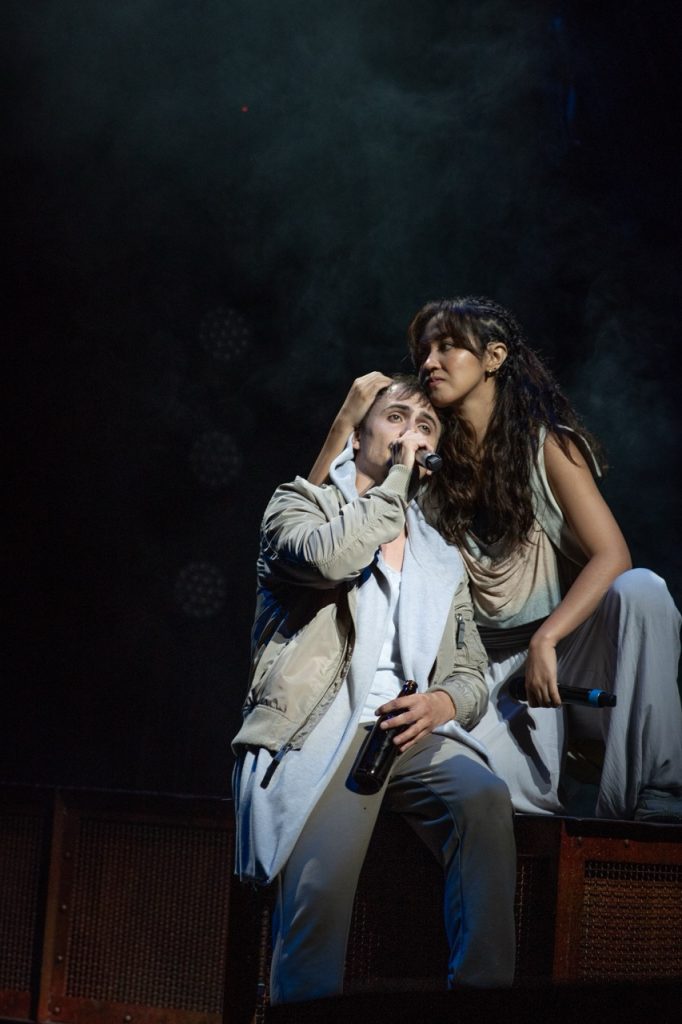
    The imagery of Sheader’s revival places Jesus and his disciples in gray sweatpants and hoodies – making them look like Millennials or even Gen Zers – evoking the vibe of social media radicals changing the world through Jesus’ progressive teachings. Bess’ Jesus has a tendency to mope and cast his anxiety onto his disciples, frequently reproaching them and complaining that none of them truly care for him. He comes off as a popular influencer who has grown exhausted by fame and the burden of leading his flock.

    Jesus Christ Superstar Manila Jesus Christ Superstar International Tour Company photo by Vitt Salvador Manila Production
    Jesus Christ Superstar Manila | Jesus Christ Superstar International Tour Company | Photo by Vitt Salvador

    On the other hand, Judas constantly pushes Jesus to be less radical, aware of how he is ruffling feathers, especially among the Pharisees and the priests. Dressed as they are, singing to rock music against a bleak, bare stage design, the production feels like a direct commentary on today’s society: the way that the youth are trying to bring down the old ways while the old guard does whatever it takes to stay in power.

    The North American Tour company of Jesus Christ Superstar. Photo by Evan Zimmerman for MurphyMade 1

    I really appreciated this tone and imagery. Drew McOnie’s demanding choreography is very hard-hitting and intensely physical, using ripple-effect movements that begin with a single dancer and then copied by one performer to the next. This creates a visual metaphor, making the energy of Jesus’ words feel infectious, moving from one person to the next.

    Jesus Christ Superstar Manila Gab Pangilinan photo by Vitt Salvador Manila Production
    Jesus Christ Superstar Manila Production | Gab Pangilinan | Photo by Vitt Salvador

    Other standouts included Gab Pangilinan as Mary Magdalene, who managed to find the right balance between the production’s message and the music’s over-the-topness.

    Jesus Christ Superstar Manila Luke Street Gab Pangilinan photo by Zeus Martinez Photography Manila Production
    Jesus Christ Superstar Manila Production | Luke Street & Gab Pangilinan | Photo by Zeus Martinez Photography

    She just melded quite well into Sheader’s vision and sang my favourite songs from the musical.

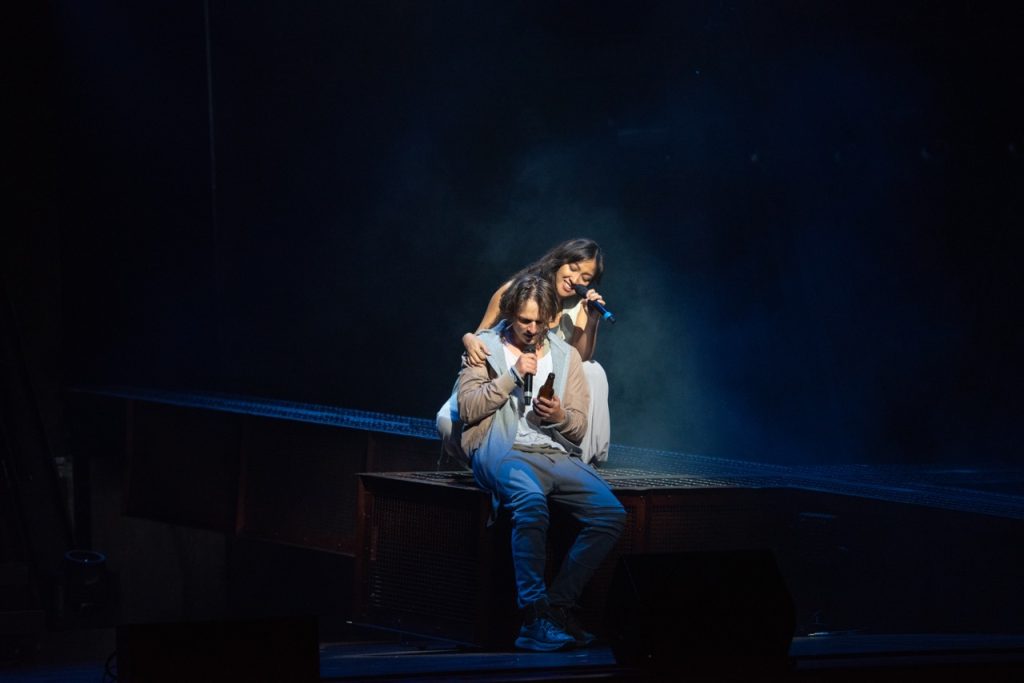
    Jesus Christ Superstar Manila Gab Pangilinan and Joshua Bess photo by Vitt Salvador Manila Production
    Jesus Christ Superstar Manila Production | Gab Pangilinan and Joshua Bess | Photo by Vitt Salvador

    The other stand out is Erick W. Schleck as King Herod. His lone number was a show-stopper with Herod in spectacular gold frock that feels very much like a drag queen, performed with such bravura that it rightfully deserved the thunderous applause that followed.

    Jesus Christ Superstar Manila Ricardo Afonso and the Jesus Christ Superstar Company photo by Zeus Martinez Photography Manila Production 1
    Jesus Christ Superstar Manila Production | Ricardo Afonso and the Jesus Christ Superstar Company | Photo by Zeus Martinez Photography

    On a personal level, Jesus Christ Superstar is not my favourite of musicals. Having grown up on the music of Neil Young, David Bowie, The Rolling Stones, and other 1970s rock bands, Andrew Lloyd Webber’s brand of 1970s rock doesn’t quite hit the mark for me – though I have always loved all of Mary Magdalene’s numbers. Because the show is entirely sung-through, the musical is dependent on the performers really carrying the story through the singing and if someone doesn’t do their part, the show struggles.

    Jesus Christ Superstar

    But it is a spectacular show. With King, Pangilinan, and Schleck on stage alongside a powerhouse ensemble – there’s a lot to see and enjoy. Sheader’s direction, especially of his striking treatment of Judas’ suicide and how he blocks and envisions the ending, is quite a theatrical feat. Ultimately, listen to the music and if 1970s rock opera is your jam, then this is a show you will enjoy.

    My Rating: 3.5 Stars

    stars 3 5


    Catch Jesus Christ Superstar on stage until May 31! Don’t miss this sleek, hard-hitting reinvention of a theater classic. Whether you’re a lifelong fan of the rock opera or looking to experience its brilliant modern staging for the first time, this production is a must-watch spectacle. Don’t miss the phenomenon, grab your tickets now at Ticketworld.

  • THEATER REVIEW: Marrying the Grounded With the Theatrical, PETA Plus’ ‘Endo’ Is Presented to Us as a Dark, Modern, Urban Fairy Tale

    THEATER REVIEW: Marrying the Grounded With the Theatrical, PETA Plus’ ‘Endo’ Is Presented to Us as a Dark, Modern, Urban Fairy Tale

    I never got to see the 2007 film ‘Endo’ by Jade Castro so I was coming in without preconceived expectations. I know that playwright Liza Magtoto made big changes in the premise when adapting and modernizing the material, focusing more on today’s gig economy rather than just on contractual workers.

    ENDO UPDATED BANNER

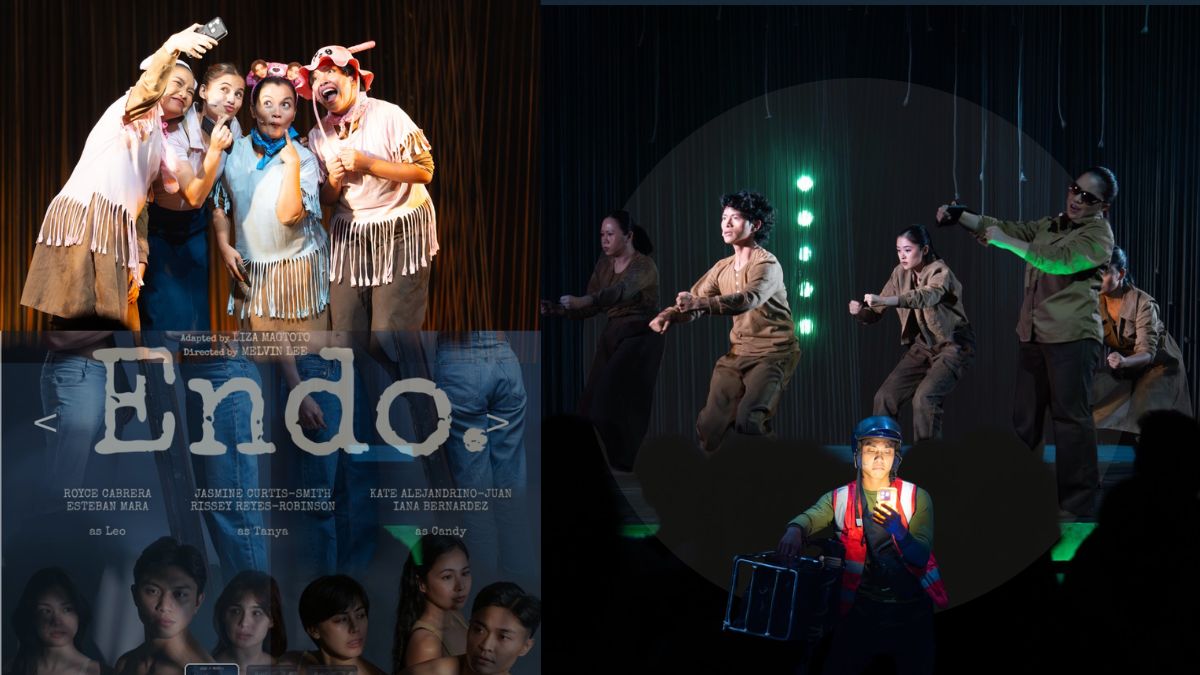
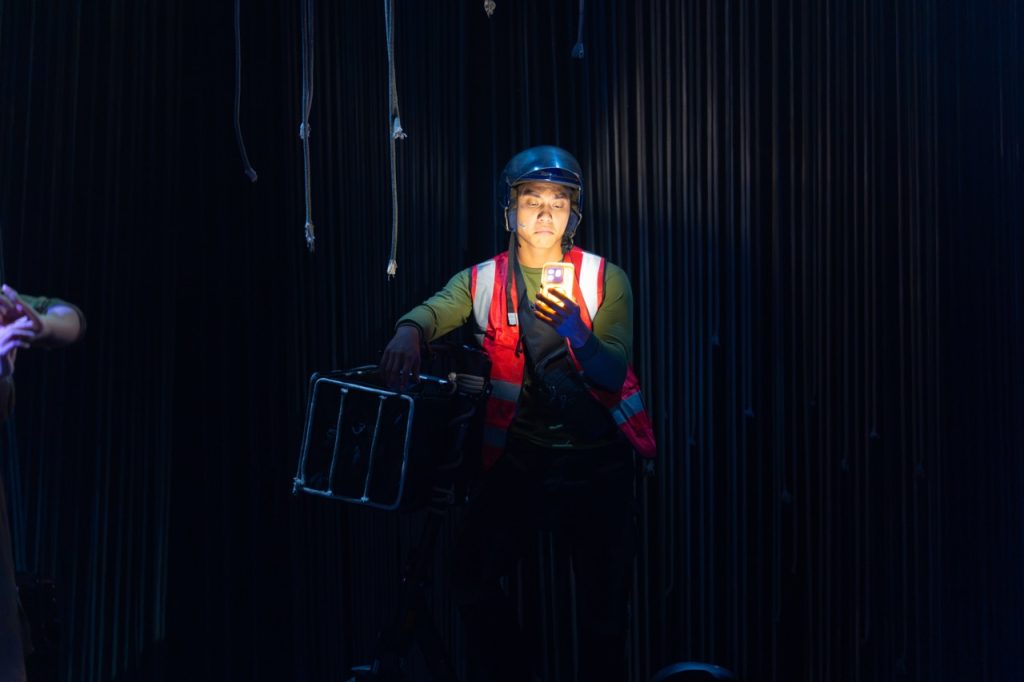
    Endo. The Stage Adaptation centers on Leo (played by Royce Cabrera or Esteban Mara), a rider juggling multiple odd jobs to provide for his father and younger brother. His girlfriend Candy (played by Iana Bernardez or Kate Alejandrino) quits her job to be a content creator, an ambition that ultimately leads her to a decision to break up with Leo.

    ENDO The Stage Adaptation DSC06689 by Shella Toledo
    PETA Plus’ Endo: The Stage Adaptation | Photo by Shella Toledo

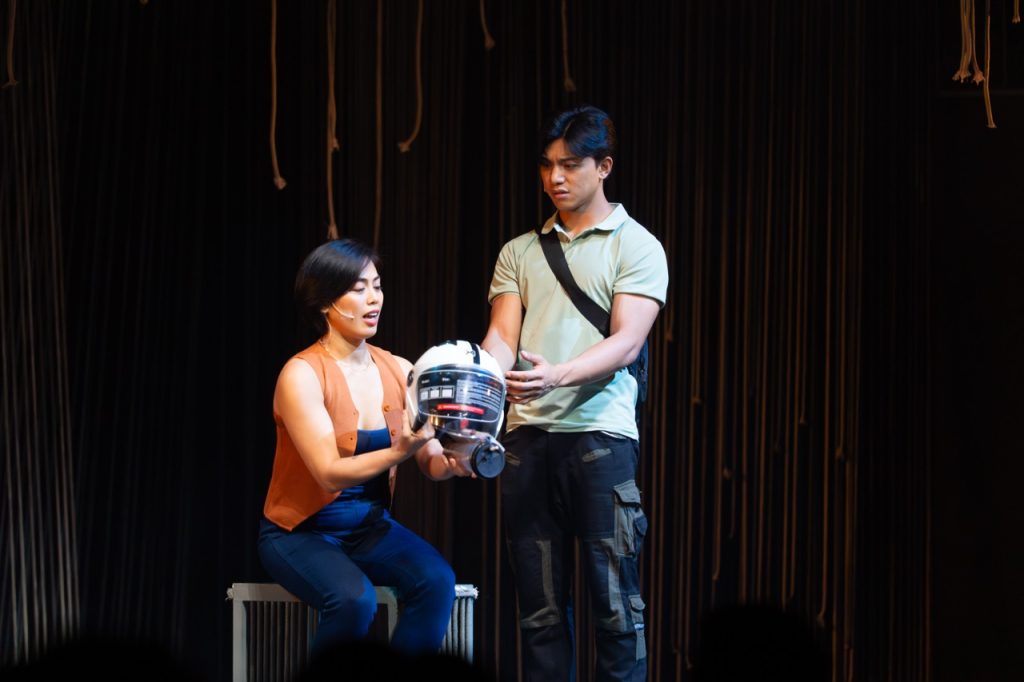
    Coincidentally, Leo keeps connecting with Tanya (played by Jasmine Curtis-Smith or Rissey Reyes-Robinson), a nursing graduate who does a multitude of jobs including online live-selling. Leo and Tanya catch feelings but their tenuous economic situation leaves very little room for planning a proper future. Tanya is more secured with an actual college degree and a plan, which runs counter to Leo’s own mindset of “just getting by” survivalist mindset.

    ENDO The Stage Adaptation DSC07206 by Shella Toledo
    PETA Plus’ Endo: The Stage Adaptation | Photo by Shella Toledo

    While the play deals with grounded, such real-world themes, playwright Magtoto and director Melvin Lee choose to present this version of End as a hyper-realistic modern theatrical fantasy. Leo, Tanya, and Candy feel more like archetypes than fully fleshed out characters; the narrative never really sinks too deep into them. Instead, they feel like representations and by doing so, the play creates allowances for improbable coincidences, heightened drama, and a plot that is teetering into the edge of melodrama: because of course, Leo’s father is a diabetic and this will play out later or how every other character they meet are hustlers of every shape and form. 

    ENDO The Stage Adaptation DSC06686 by Shella Toledo
    PETA Plus’ Endo: The Stage Adaptation | Photo by Shella Toledo

    Director Melvin Lee also imbues the whole play with a bit of a ballet as transitions. An ensemble that acts as “proteans” constantly shifting to play various characters that they meet or becoming physical embodiments of the social and economic forces that keep Leo away from Tanya. In one dramatic scene, Leo tries to reach out for Tanya in a crowded street and the ensemble, as the crowd, suddenly picks up Leo and carries him away.

    ENDO The Stage Adaptation DSC06772 by Shella Toledo
    PETA Plus’ Endo: The Stage Adaptation | Photo by Shella Toledo

    The set design is equally metaphorical: the whole center stage lifts up, buoyed by a spring that keeps it from ever feeling stable. It is definitely a metaphor on how unstable the lives of these characters are. Love scenes are portrayed as a choreographed duet between Leo and Tanya. 

    ENDO The Stage Adaptation DSC06828 by Shella Toledo
    PETA Plus’ Endo: The Stage Adaptation | Photo by Shella Toledo

    The overall effect of these theatrical techniques is that it takes this very grounded story and turns it into something like a dark, urban, modern fairytale. Leo, Tanya, and Candy are just characters in a story that is meant to show us how the system is failing these characters. This stylistic choice softens the inherent bleakness of the material – which it gets – making it more palatable and accessible to a larger audience rather than if it were a straight-up play in the realist mode.

    ENDO The Stage Adaptation DSC07332 by Shella Toledo
    PETA Plus’ Endo: The Stage Adaptation | Photo by Shella Toledo

    As a “pretentious” lover of theater, I don’t mind the heavy-handed serious stuff, but I understand why they took this approach. It allows for a younger audience – maybe kids as young as Senior High School students – to be able to come and watch this show. As realistic as it gets, it still has moments of humor, of romance, and of hope. 

    ENDO The Stage Adaptation DSC07078 by Shella Toledo
    PETA Plus’ Endo: The Stage Adaptation | Photo by Shella Toledo

    The show I attended featured Royce Cabrera as Leo, Jasmine Curtis-Smith as Tanya, and Iana Bernardez as Candy. These are incredibly fine actors, and it took me awhile to realise that they were working on archetypes, playing out the most identifiable features of their characters rather than working on nuanced levels. They each synced with the tone and aesthetics of the play, which helped bring out the intention of the play.

    ENDO The Stage Adaptation DSC07393 by Shella Toledo
    PETA Plus’ Endo: The Stage Adaptation | Photo by Shella Toledo

    Cabrera is a powerful presence on stage; capable of that tunnel vision of the typical Filipino male while also bringing out Leo’s vulnerability in the key moments. Curtis-Smith’s Tanya can appear looking very naive and Curtis-Smith is not afraid to put that on full display but there’s a strength that’s there inside which she is able to release at the play’s climax. Bernardez is all narcissistic, chaotic energy turning Candy into a storm that ruins Leo’s peace.

    It is an interesting approach to the material, and one which I understand. It talks about the inability of people who are lacking in any real job security to dream and hope. By turning it into a theatrical modern urban fairytale, PETA Plus successfully draws a crowd, keeping them entertained while subtly forcing them to ponder the systemic failures that leave so many of our countrymen behind.

    My Rating: 4 Stars

    stars 4 0


    Come for the star power of Cabrera, Curtis-Smith, and Bernardez; stay for the powerful story that refuses to be ignored. Book your tickets for Endo. The Adaptation. The show runs until May 10! Get your tickets via: ticket2me.net/Endo

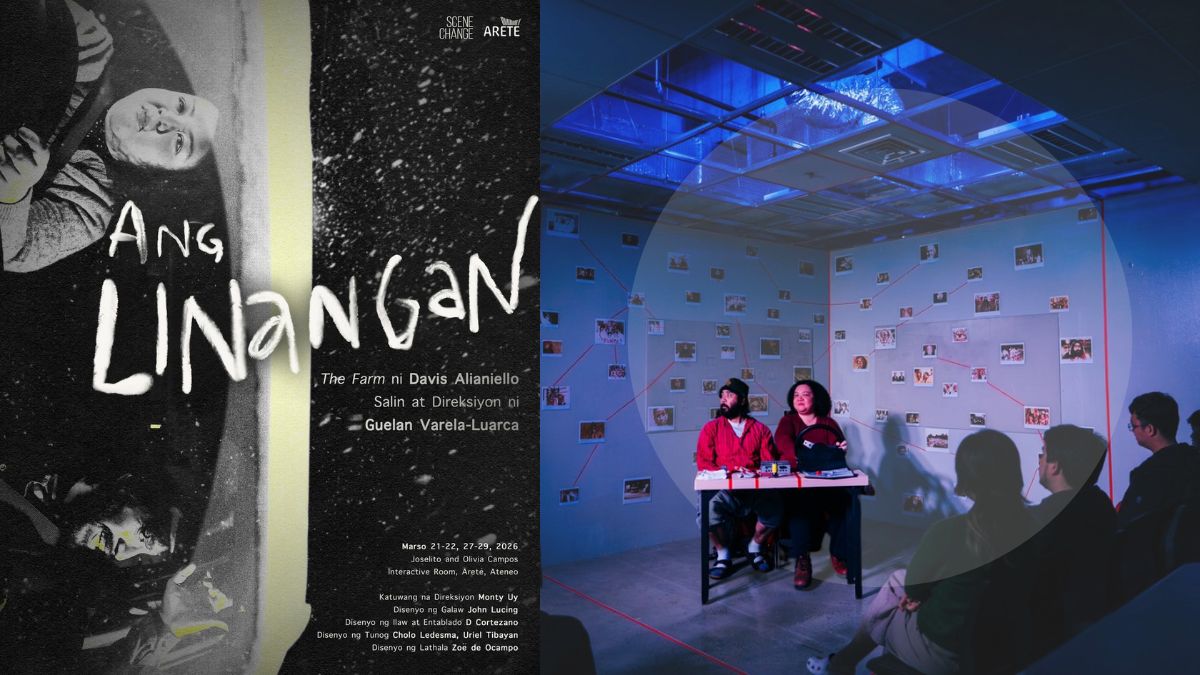
  • THEATER REVIEW: Scene Change’s ‘Ang Linangan,’ Directed by Guelan Varela-Luarca, Is a Deceptively Complex Study of Sibling Bonds

    THEATER REVIEW: Scene Change’s ‘Ang Linangan,’ Directed by Guelan Varela-Luarca, Is a Deceptively Complex Study of Sibling Bonds

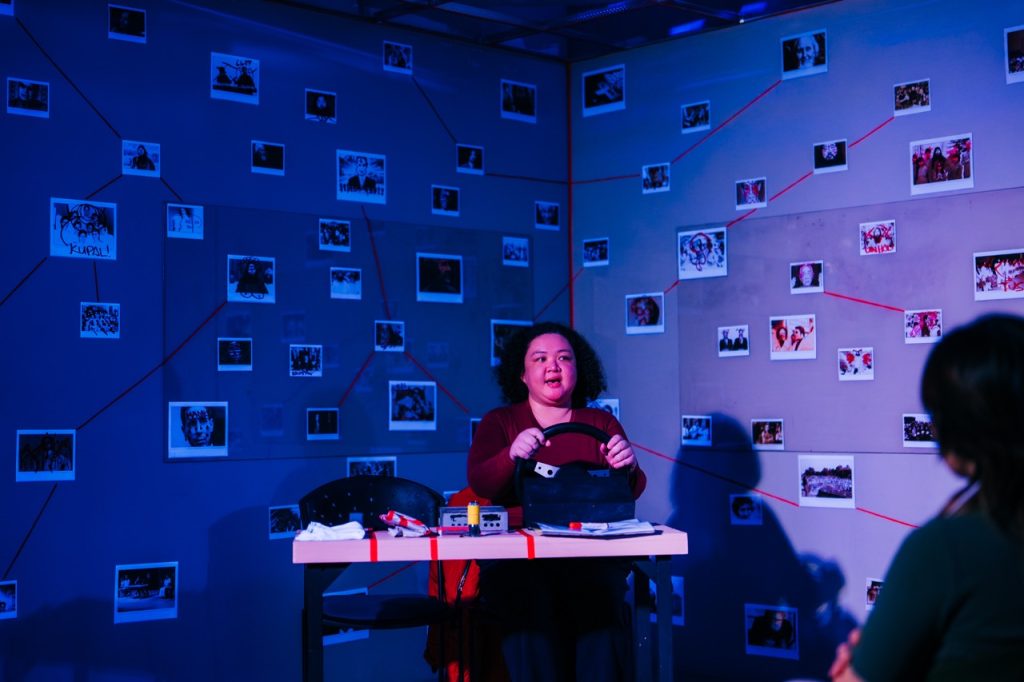
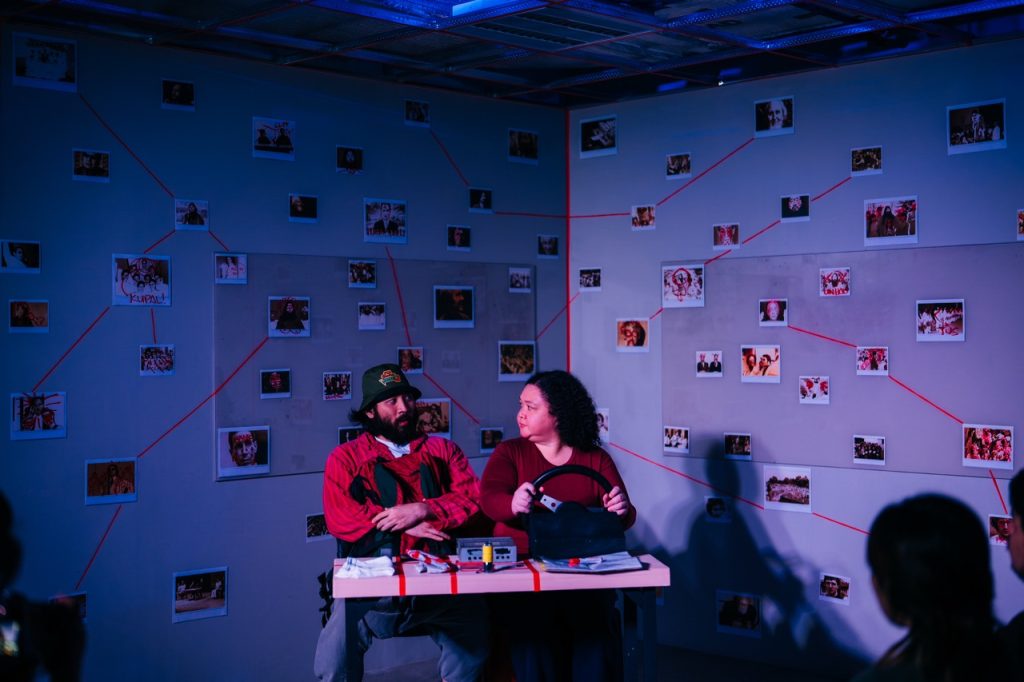
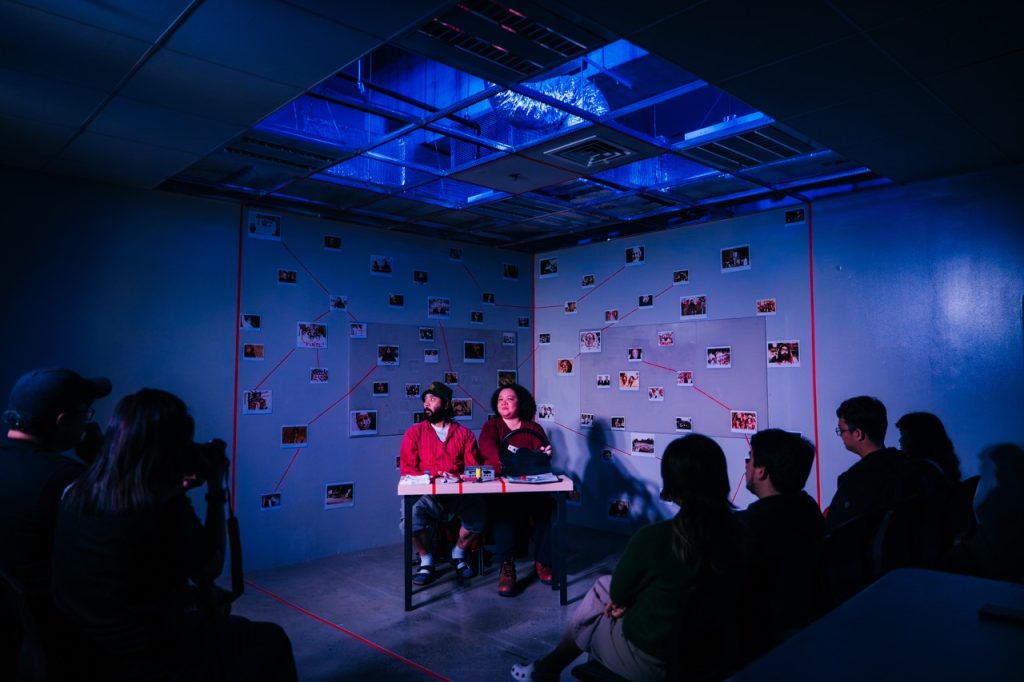
    Scene Change is doing really groundbreaking work in theater, creating productions in alternative theater spaces to keep the tone intimate and compact. This approach allows itself to work on plays where the spectacle and theatricality are found in the nuances that thrive in such close proximity. Last year’s 3 Upuan does exactly this and Guelan Varela-Luarca does it again, directing Ang Linangan, a translation of The Farm by New York-based playwright Davis Alianiello. The production transforms the Joselito and Olivia Campos Interactive Room at the third floor of Ateneo’s Areté into a space seating roughly 30 to 40 people. The stage is just one tiny corner of the room with only a table, two chairs arranged to resemble a car’s driver and passenger side, along with a backdrop of photos with red thread, resembling that of detective boards in a police movie or series. With the ceiling removed to expose the plumbing above, the design is simple yet filled with texture as we watch two actors, playing siblings, skirt around difficult subject matters.

    Ang Linangan

    Brian Sy and J-mee Katanyag play siblings Tyler and Sasha. The play begins in the middle of winter as Sasha picks up Tyler in her car. Tyler has been away for a long time in a place called “Linangan,” which we realise, as they converse, is a cult. Tyler appears to be the troubled sibling, lost and without direction, while Sasha is the older, more serious type who seemingly has her life together. Running for approximately 90 to 100 minutes in a single act without intermission, the majority of this is just the two siblings catching up. They are avoiding difficult subject matters (but they do get into it), and being exactly like brother and sister.

    ANG LINANGAN 6
    PHOTO CREDIT: MAY CELESTE

    At its heart, the play is simply just two people talking, yet the dramatic situation of the play is so interesting that you are caught up in the story. Sy and Katanyag manage to fully embody the sibling relationship so fully that I was brought back to my own exchanges with my own siblings. The shorthand way by which we speak, having a history together so that certain talking points can go by so quickly. There’s a lot of love and fear on that stage, and the two leads deliver the emotional weight of this play’s story in such a satisfactory way.

    ANG LINANGAN 10
    PHOTO CREDIT: MAY CELESTE

    They are completely alone in that car, vulnerable and isolated and it is so interesting to watch because what has happened to Tyler is not something we encounter all the time. Sasha serves as our entry point into the narrative: do we react the way she does? How kind should we be? How badly do we want to call our sibling “stupid” for doing something so silly? But you know you can’t because there’s a deep emptiness there if your sibling thought joining a cult would be the best way to fill it.

    ANG LINANGAN 23
    PHOTO CREDIT: MAY CELESTE

    The play is never loud or grand and Varela-Luarca is excellent at amplifying the little things that make this play pop. First, the way he had directed his actors to mine the scene for all its worth emotionally and theatrically. During their conversation, while Sasha is driving, Tyler would get up and stretch and walk around the car, yet we know he is still in it, telling his story, but as the audience we know he is finally relaxing. He is finally feeling comfortable and safe being alone in this space with his sister. The table and the chair that approximates the front half of the car suddenly becomes the whole stage; Varela-Luarca understands that when two people are on a drive and it’s just them, it’s a whole entire world there with just the two of them. D Cortezano’s lighting design punctuates these shifts, marking transitions as the characters go into flashbacks or imagined moments, while the symbolic yet grounded stage design further anchors the characters’ reality.

    Ang Linangan
    PHOTO CREDIT: MAY CELESTE

    Even the sound design, when the two actors mime putting on their seatbelts, the recorded clicking of the buckle is timed perfectly with the actor’s movements. The first fifteen minutes transports you from the Joselito and Olivia Campos Interactive Room and into Tyler and Sasha’s private world, and the rest of the time, you are just transfixed in that moment with them. The play is dense, heady, and complex yet it’s also funny, touching and moving. While Sy is always a reliable actor, Katanyag is a total powerhouse, delivering a bravura performance that is unforgettable. In her, I saw flashes of myself, my sister, in other moments, and in some snippets of dialogue, she is my two older brothers. She just captures it. 

    I’m glad someone is doing these plays that are left-of-center and are creating full Filipino translations of Western plays that don’t adapt the material; it just makes it accessible to a wider audience. There are moments when I forgot that these characters weren’t originally written as Filipino at all. The naturalism of the language confused me, but they could very much well have been our own. This is the universality of a great theatrical production. 

    I am so excited to see what else Scene Change has in store for us this year.

    My Rating: 5 Stars

    stars 5 0


    Ang Linangan was an unforgettable study of sibling bonds that set a high bar for Philippine theater this year. Although the run concluded this past March, its impact remains. Support local, “left-of-center” theater by keeping Scene Change on your radar for the rest of the 2026 season.

  • THEATER REVIEW: Dulaang UP’s “Ang Kaliitan ng Kasalukuyan” As an OFW Story That Never Arrives Home

    THEATER REVIEW: Dulaang UP’s “Ang Kaliitan ng Kasalukuyan” As an OFW Story That Never Arrives Home

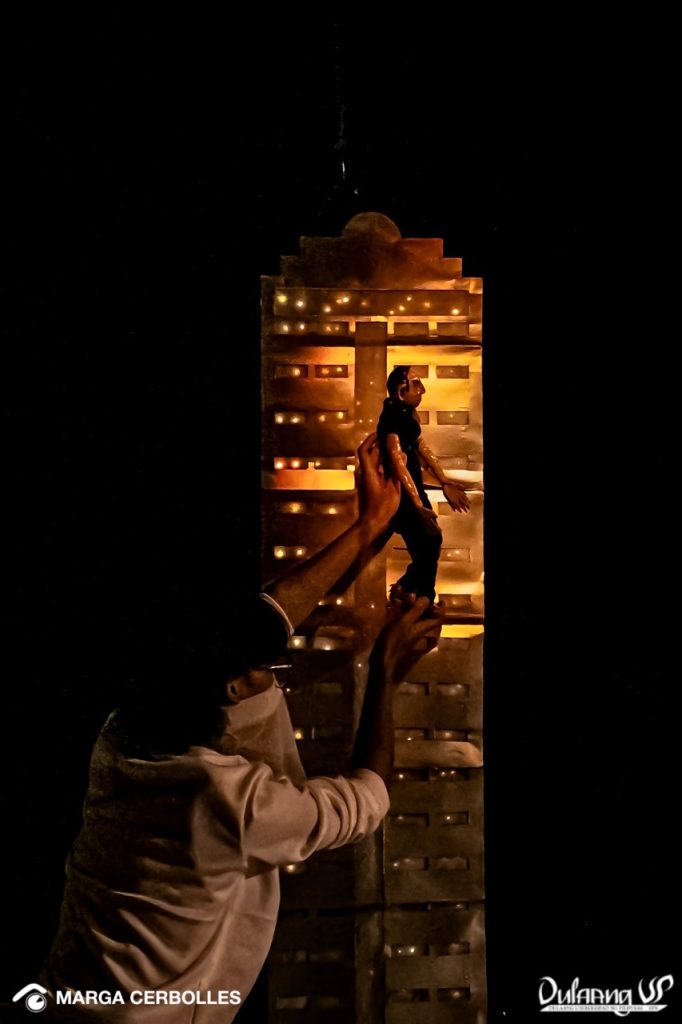
    From the moment you take your seats at the IBG-KAL Theater in UP Diliman, you will be intrigued by the stage design for Ang Kaliitan ng Kasalukuyan. Aaron Misayah’s scene design features an impressively large white ramp that serves as a traverse stage, with the audience seated on opposite sides. One colleague described it as a skateboard ramp and my first impression was that of a water slide. Later, I’d realise that my first impression rang true but more on that later. At the very end of the stage are seats that were meant to resemble a waiting area in an airport. Some cast members are already seated, in costume, waiting, as the audience trickles in. Hanging above is a tiled platform that opens up to bring down certain set design elements like a door. The amount of stage elements were actually quite commendable except that as the play unfolds, there’s just too much that it starts to feel comical. 

    Dulaang UP Ang Kaliitan ng Kasalukuyan 4843fee
    Dulaang UP Ang Kaliitan ng Kasalukuyan | Photo by Marga Cerbolles

    Written and directed by Dulaang UP’s new artistic director, Palanca winner Arlo De Guzman, Ang Kaliitan ng Kasalukuyan explores the story about OFW experience. Lead by Sandino Martin (playing Bulan), an OFW working in Dubai and the son of two former OFWs. In the first act, Bulan returns home and is surrounded (maybe even suffocated) by the love of his family who hail him as a hero. They rely on him for his remittances to help the family build a home and a business. As Bulan interacts with family members and old friends in his hometown, he longs to be able to return for good. But in the second act, he returns to Dubai and struggles with the burden of responsibility. He does not want this life that was handed down to him by his parents, he wants to break free from the Filipino custom that the child must repay the sacrifice of the parents. 

    Dulaang UP Ang Kaliitan ng Kasalukuyan 8
    Dulaang UP Ang Kaliitan ng Kasalukuyan | Photo by Pia Suarez

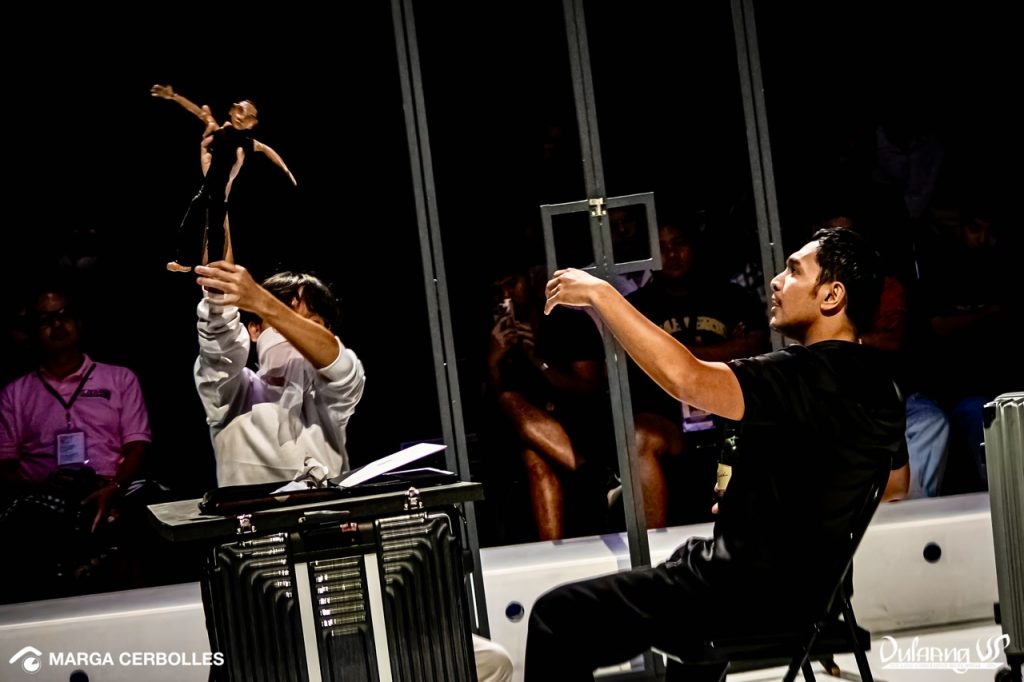
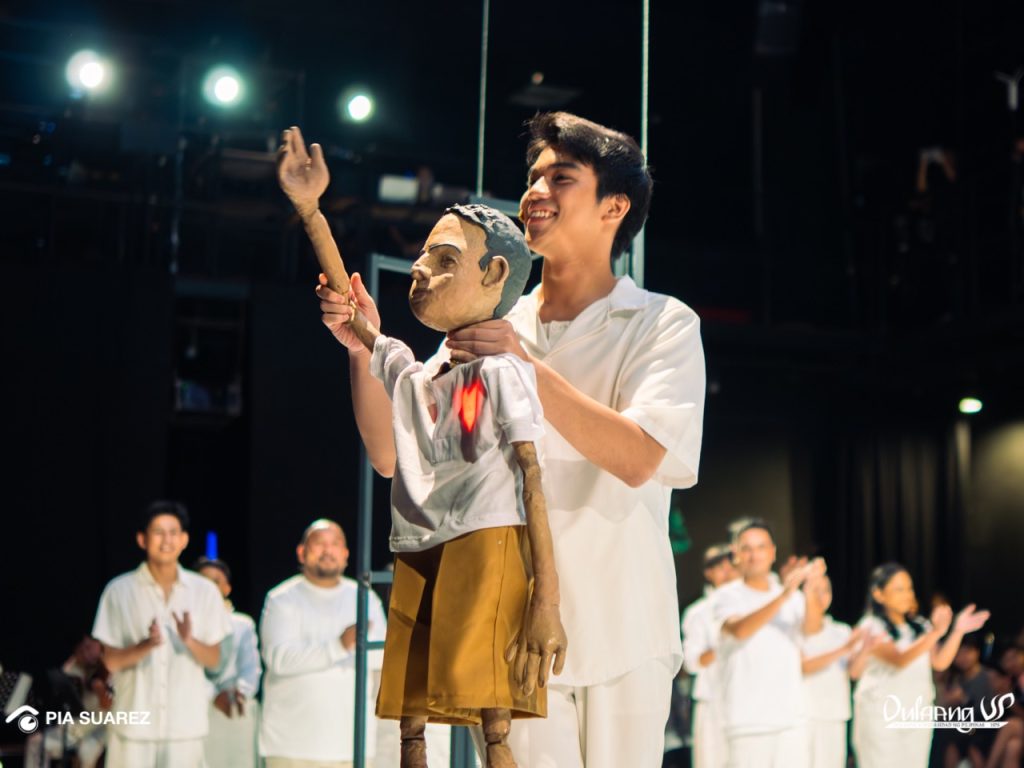
    There’s a whole lot of theater going on in Ang Kaliitan ng Kasalakuyan that both the play and performances are weighed down by all the stagecraft involved. The first act has a chorus, cast members all in white, narrating the story, providing the exposition before exiting and returning as other characters. This chorus does not return until the finale when they come back to moralize against Bulan’s own interrogation about his family obligations. There’s puppetry, a story told to Bulan as a child by his grandmother and the younger Bulan is portrayed as a puppet.

    Dulaang UP Ang Kaliitan ng Kasalukuyan be3
    Dulaang UP Ang Kaliitan ng Kasalukuyan | Photo by Marga Cerbolles

    Later, in act two, another puppet appears, a sort of like “Jiminy Cricket” character in Disney’s “Pinocchio,” who is about a foot and a half high and sits on Bulan’s shoulder and gives him someone to vent and rant to. As Bulan is picked up from the airport by his father, the cast members go on a ride on chairs meant to look like a car but a remote-control car precedes them. It’s a theatrical element that is used for only two minutes and does nothing really but distract us from the conversation Bulan has with his family. Later, a huge puppet made, the size of a truck maybe, with arms that grasps Bulan as a symbol of the Middle East’s hold over him. And the water slide design of the stage? At some point, water begins to flow, turning the stage into a little creek.

    Dulaang UP Ang Kaliitan ng Kasalukuyan 77a68d4

    Also, it’s sort of a musical with three or four songs sung in the first act and then no more in the second act until the finale.

    Dulaang UP Ang Kaliitan ng Kasalukuyan 11

    Aside from the remote-control car, all the theatrical devices are actually quite impressive if they were not mashed up together in one play that never really feels cohesive. A lot of the inner world of the characters are said out loud, giving nothing for the audience to stew on. The play, as written, feels so literal that the theatrical devices feel utilized to make the play seem more like a play than a weekend television movie. It’s because of how on-the-nose the writing is that I can’t really comment on the performances because there was no real subtext for the actors to really play out. The way the play was written, what you see and hear is exactly what you get. And these are OFW stories that are familiar to us; we have a lot of this already in film and television and in theater. The big theatrical devices made the play seem bigger but not necessarily weightier or meatier. 

    Dulaang UP Ang Kaliitan ng Kasalukuyan 16
    Dulaang UP Ang Kaliitan ng Kasalukuyan | Photo by Pia Suarez

    And all throughout the second act, we are presented with Bulan’s struggle. How his identity has been stripped away by family obligations, trapped in a foreign land that discriminates against him, away from home. Yet, the final song is a big, epic song that talks about how OFWs will continue to sacrifice their own happiness for their loved ones, for their country. These two ideological principles never feel settled by the play, and I left the IBG-KAL Theater a little perplexed rather than inspired.

    My Rating: 2 Stars

    stars 2 0


    While its run concluded in March, follow Dulaang UP‘s official social media channels to stay updated on future productions and the continued evolution of Philippine university theater.

  • THEATER REVIEW: Emmy Winner Karla Puno Garcia Directs Theater Group Asia’s “A Chorus Line” into a Triumphant Love Letter to the Ensemble

    THEATER REVIEW: Emmy Winner Karla Puno Garcia Directs Theater Group Asia’s “A Chorus Line” into a Triumphant Love Letter to the Ensemble

    A Chorus Line has won nine Tony Awards and a Pulitzer Prize for Drama, is set at a high-stakes audition for a Broadway show. It is intimate and personal, staged against a bare stage where seventeen actors are interviewed by a director searching for four men and four women to be a part of a powerhouse dancing chorus for his latest show. Conceived in 1975 by writer, director, and choreographer Michael Bennett with music by Marvin Hamlisch, lyrics by Edward Kleban, and book by James Kirkwood Jr. and Nicholas Dante, the musical was famously workshopped using the real-life stories of real members of the chorus to breathe life into the characters of “A Chorus Line.”

    Many of them get the chance to do monologues or perform based on real stories and the overall effect is incredible. Almost stripped of the usual grandiose staging typical of many musicals, we are left with the bare bones of a play and somehow, when executed well, it resonates stronger than ever as we get to see the interiority of many of these performers.

    A Chorus Line ONE FINALE

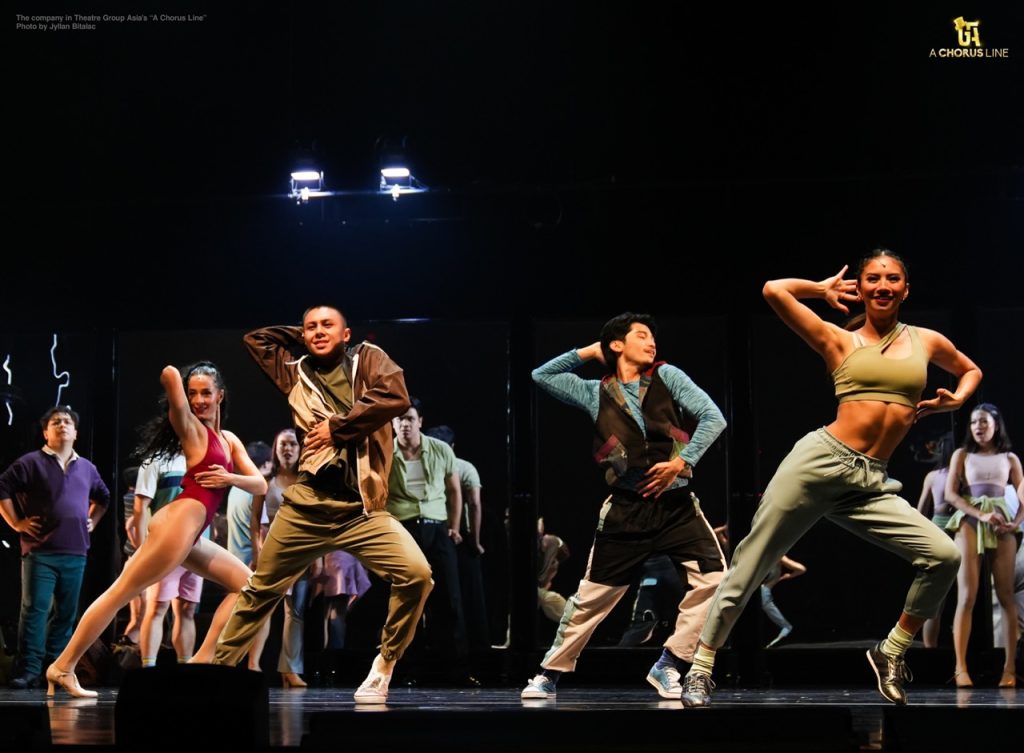
    Theater Group Asia’s staging of A Chorus Line is a magnificent production, fueled by a cast of extremely committed performers who lay themselves bare, for us to experience their strengths and weaknesses, both their guardedness and their vulnerabilities. During a recent press event, a cast member described the show’s appeal as universal, suggesting that one does not need to be a performer to relate to the narrative. Anyone who has ever desired to be a part of something can connect to these stories, in some shape or form.

    A Chorus Line DANCING

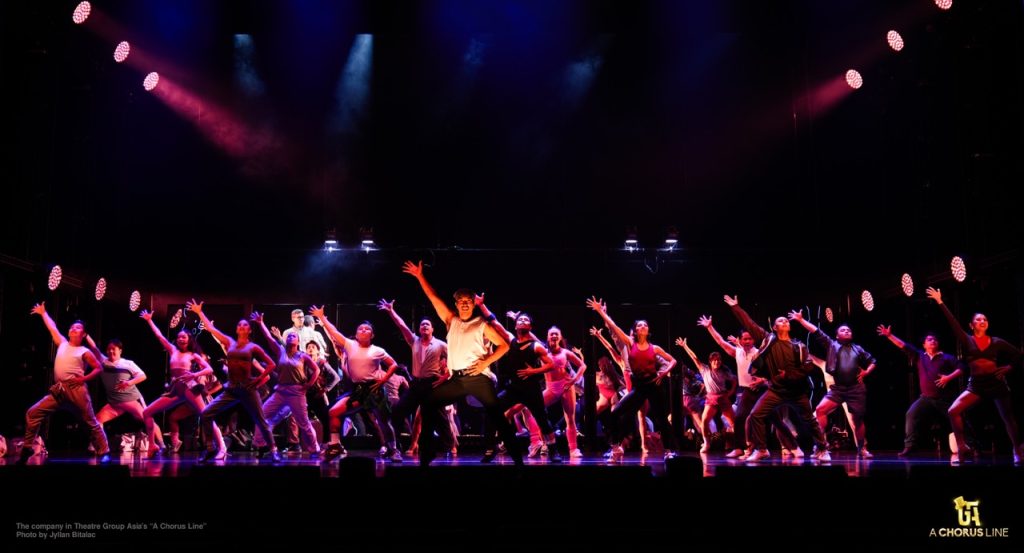
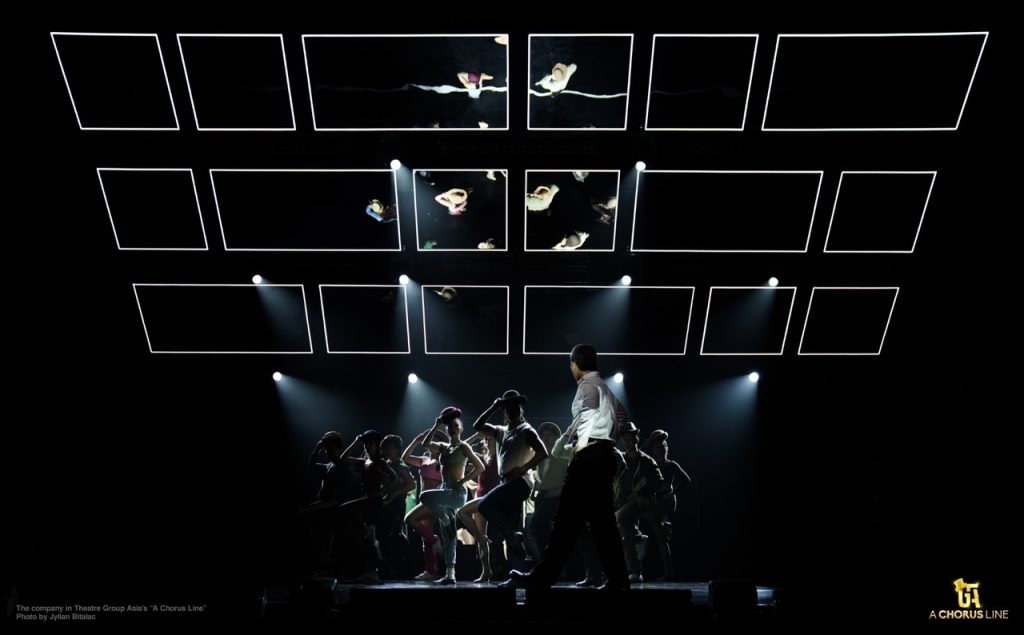
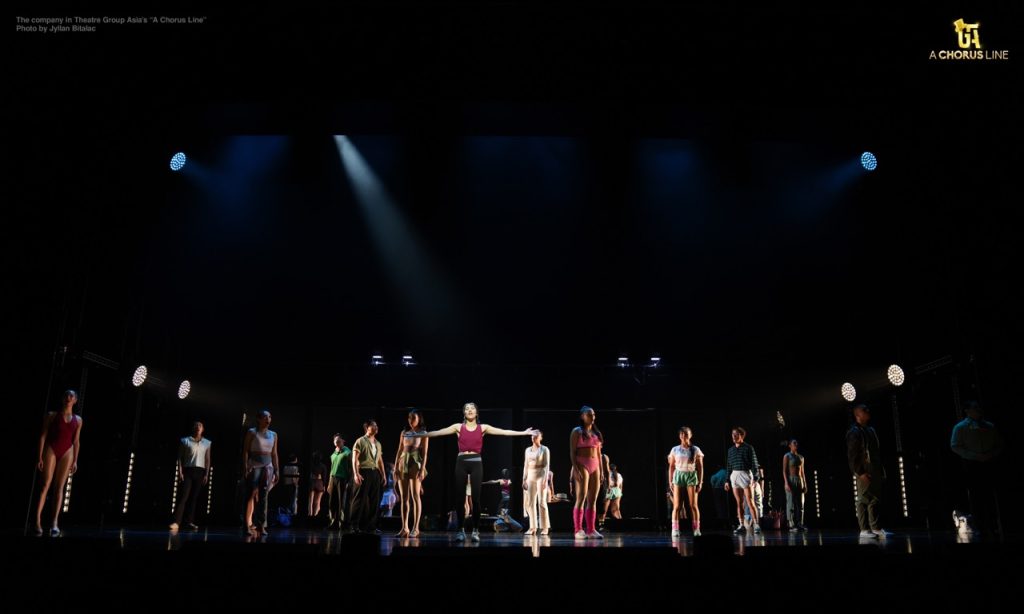
    Under the direction and choreography of Emmy award winner Karla Puno Garcia, she material is revitalized; she pays homage to the movements of the original production while injecting her own spin on things. By playing to her casts’ unique strength, Garcia creates a show that really gets down and dirty with all the hopes and fears of its performers. The opening number, “I Hope I Get It” is a huge dance number with the cast trying to learn the steps, each one adding their own personal flourishes based on their personality and skill. Some are better, some are lagging. We see the nerves; we see the determination. On stage, it’s absolute joy to watch these movements occupy the stage with the mirror right behind them creating a feeling of an even larger number of dancers than what is already on stage. The show, from its opening number, already sets you in the mood for things to come.

    A Chorus Line 5678

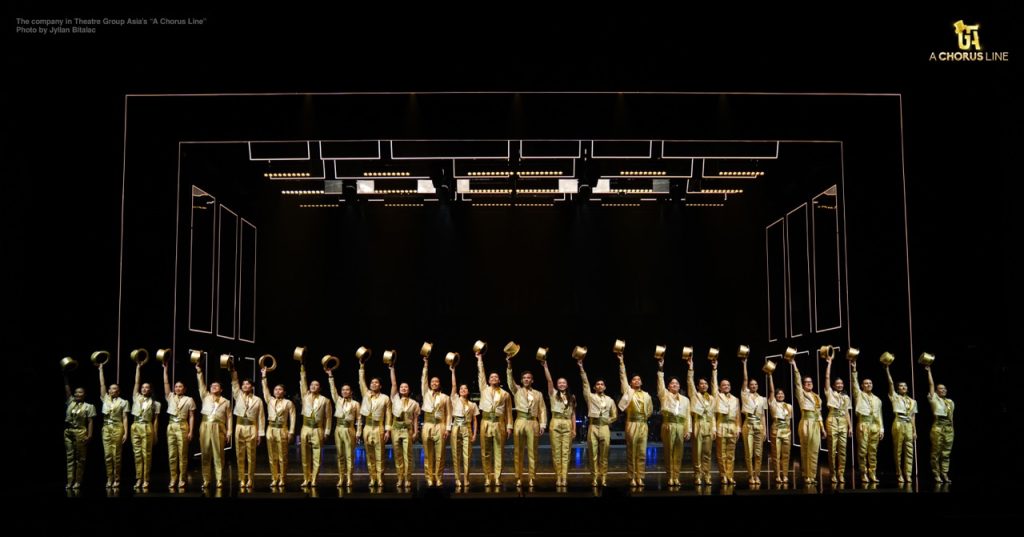
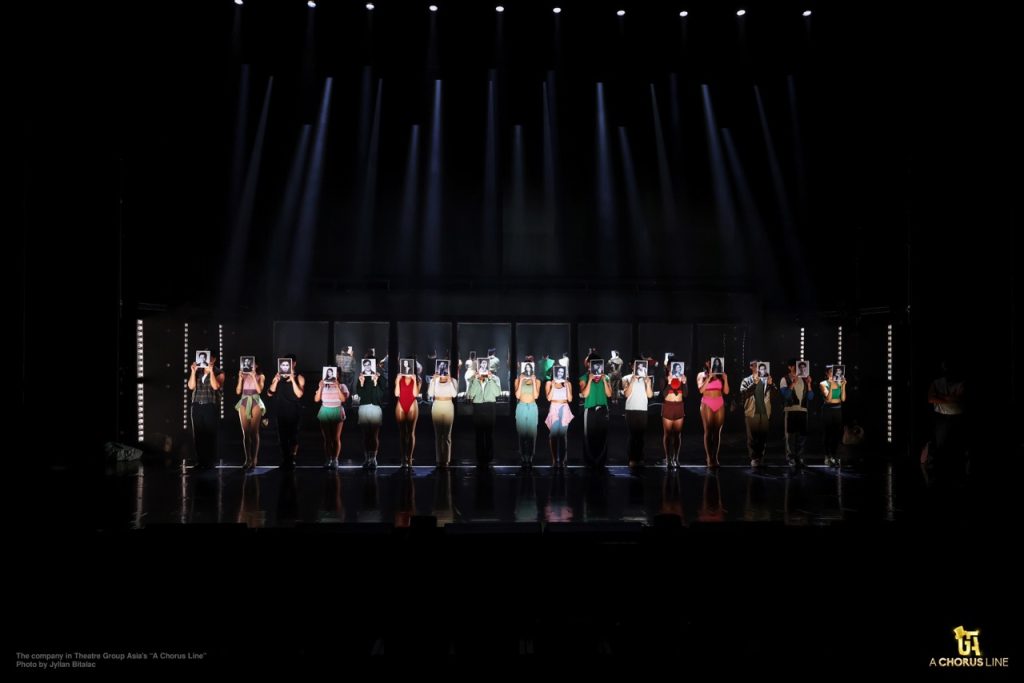
    What is truly remarkable about this piece is that it’s an audition for a chorus – for members of an ensemble that have to blend in and work as a unit so as to not steal focus from the star of whatever show they are going to be on – but the play itself, the interview that the director holds for each one brings to light each person’s individuality. The director, Zach, is searching for a team player but he needs to know who they are, as a unique person, to see if they fit together as a whole. By the end of the show, we get to see one big number where, despite having witnessed each actor’s personal story, they all blend in together, with no one outshining anyone else. They sing one of the show’s popular songs, ‘One,’ and it becomes a showstopper like no other.

    A Chorus Line

    The cast is incredible. Conrad Ricamora plays Zach, the director. Despite not having a song of his own, he propels the narrative forward, asking questions and breaking down each actors’ walls to try and get to see who they are inside. Ricamora is rarely on stage, instead goes down to the audience, reaches even up to the balcony seats. He’s acting primarily through his voice and it’s a commanding one. A powerful one. We can hear his frustrations and his interest. We can feel it when he cares and when he is calling out BS. It’s an incredible performance even when he is out of sight, his presence is always felt.

    A Chorus Line 2

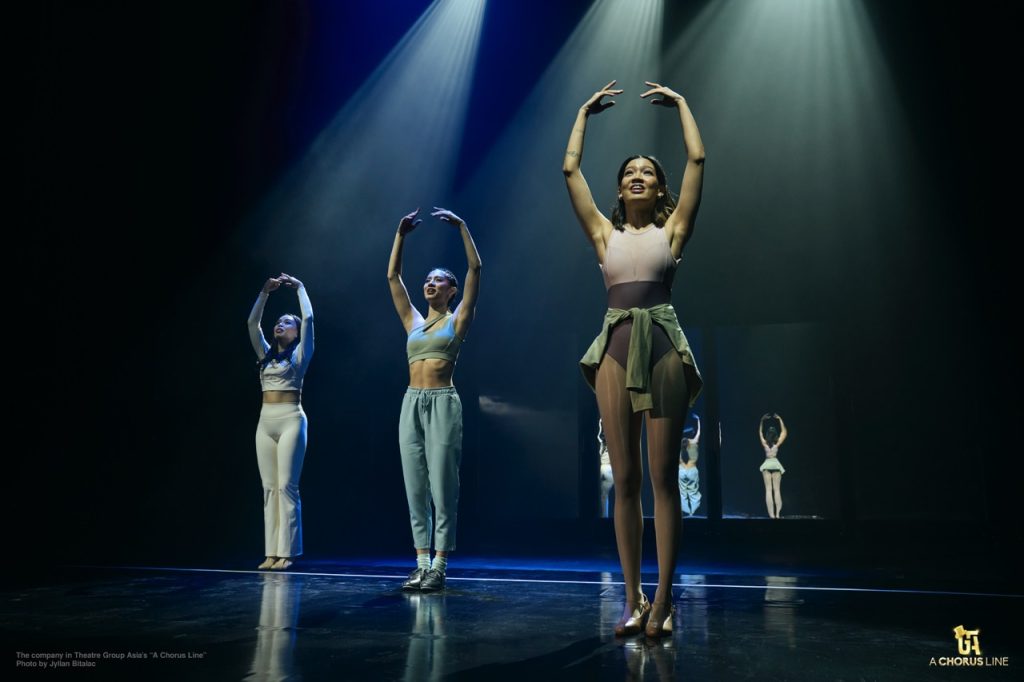
    There are so many great performances here but I’d like to call out the standouts. One song, “At the Ballet,” performed by Sheila (Mikaela Regis), Bebe (Michaela Marfori), and Maggie (Iya Villanueva), an early favourite. Marfori and Villanueva possess powerful, evocative voices, while Regis is acting through the piece and the way they harmonize together creates a strong imprint at the beginning. As Diana Morales, Christina Glur sings some of my favourite songs from the musical: “Nothing” and “What I Did For Love” and I’m so in love with the original Broadway cast recording but Glur makes these songs her own, finding ways to emphasize particular words in a song that adds layers and tension, which makes her Morales such a grounding force for the production. Universe Ramos, as Paul San Marco, delivers strong monologue that leaves him alone on stage, sharing a beautiful, intimate, and very personal story. All alone on that stage, he fills it up with his character’s story and it’s a high point of the show.

    A Chorus Line CASSIE

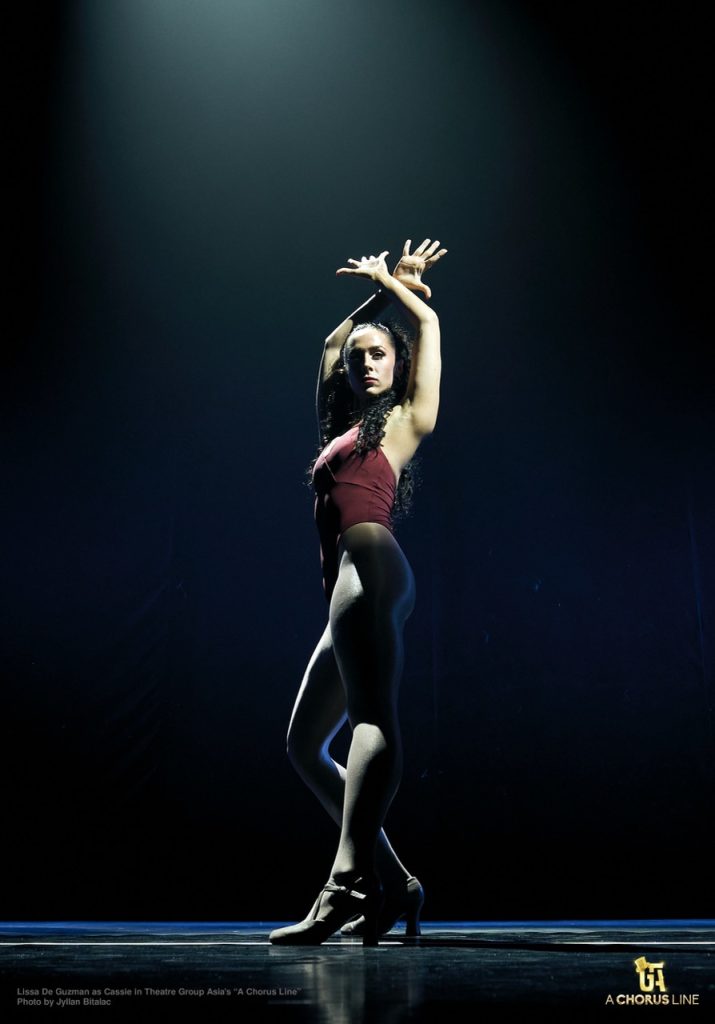
    What would constitute a lead in this show is Cassie, played by Lissa De Guzman. De Guzman is a powerhouse. She sings “Music and the Mirror,” which allows her to showcase her singing, acting, and dancing skills. There are so much presence and confidence that we cannot stop looking at her. She’s in full control of her body and her instrument that you can fully connect with Cassie’s struggle. What a truly exceptional performance.

    A Chorus Line LINE

    Theater Group Asia’s production of A Chorus Line is a fully realised show. The lighting design by Cha See is nothing short of exquisite, the use of mirrors is exciting – on some numbers, it moves around on stage as if it were dancing too and helps tell the story of that number – and a strong orchestra, led by musical director Farley Asuncion. 

    A Chorus Line RESUME

    The play was written in 1976, so there are certain aspects of it which don’t land just as well. The first act concludes with “Hello Twelve, Hello Thirteen, Hello Love,” a number about their different experiences reaching puberty. It is a hilarious song (featuring a great vocal moment from Rapah Manalo), though it didn’t seem to hit the audience as it did me. But I knew the songs by heart, and I knew the things that they were talking about (having grown up just a decade after the musical’s release). Another song that isn’t as strong as it was back in the 80s is “Dance Ten, Looks Three,” a song about one actor’s need for cosmetic surgery to stay competitive. Performed with a lot of personality by Brie Chappell, the song isn’t as shocking or surprising in 2026 with everyone so accustomed to cosmetic surgery. That song used to raise eyebrows and elicit gasps but now all it manages is a couple of chuckles, considering how well Chappell performed it.

    A Chorus Line

    But despite the show’s dated language and colloquialisms, it still is a lovely letter to everyone who has a dream, who faces challenges day-in and day-out to make that dream come true. Karla Puno Garcia’s direction brings this to the forefront, and the cast takes it home.

    I’m definitely watching this again.

    My Rating: 4.5 Stars

    stars 4 5


    Theater Group Asia’s A Chorus Line is a masterclass in ensemble storytelling that proves some dreams never go out of style. The production runs until March 29, 2026, at the Samsung Performing Arts Theater. Secure your seats at TicketWorld and see why this Pulitzer Prize winner remains a “singular sensation.”

  • THEATER REVIEW: Grappling with AI and Grief in Barefoot Theatre Collaborative’s “anthropology”

    THEATER REVIEW: Grappling with AI and Grief in Barefoot Theatre Collaborative’s “anthropology”

    I’m not the biggest fan of AI – though I prefer to call it LLM, or Large Language Model, because it’s not really intelligent – and everything I read about it just makes me more and more angry and frustrated. The idea that Lauren Gunderson, a playwright I really admire, wrote a play about AI and grief is compelling: a story about a woman grieving her sister, who has been missing for over a year, and uploads all of her sister’s data and information into an algorithm, and invariably recreates her through a program. Gunderson, being an intelligent yet still emotionally accessible playwright, mines this dramatic situation for all it’s worth and presents the strengths and weaknesses, the rewards and consequences, of this technology.

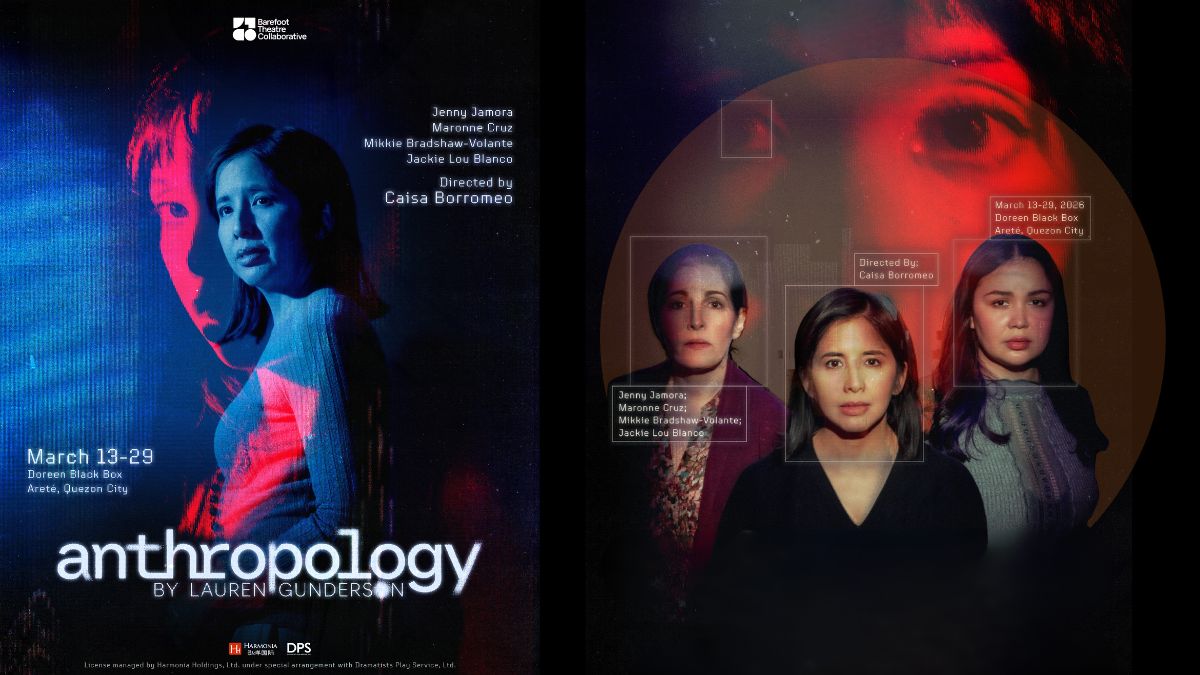
    The play is called anthropology, and it is staged by Barefoot Theater Collaborative under the direction of Caisa Borromeo. The all-women cast is led by Jenny Jamora, who plays Merril. Merril is highly skilled with computers and coding, and she uses her skills to create an AI program that resembles her missing sister, Angie, played by Maronne Cruz.

    anthropology

    Through the initial interactions between Merril and the AI of Angie, we discover that Angie is quite a powder keg. She has a big personality, and because the AI is programmed to help Merril find some level of closure, she isn’t as mean as the real Angie. In fact, she insists on encouraging Merril to reconnect with her ex, Raquel, played by Mikkie Bradshaw-Volante, and insists on talking with Brie, their mother, played by Jackie Lou Blanco. From the conversations, we learn that Brie has caused much pain for the two sisters. 

    anthropology
    anthropology | Photo by CJ Ochoa

    Performed in one straight act for roughly around 90 to 100 minutes, anthropology is a roller-coaster of emotions. Lauren Gunderson’s characters are clever, eloquent, and articulate, allowing Merril and Angie to go at it for a while, revealing so much about their past and what the sisters mean to each other. Eventually, Angie persuades Raquel to come to Merril’s home in the hope of rekindling their relationship, even though Raquel remembers that the real Angie never really liked her. Things take a more dramatic turn when Angie insists on speaking with their mother, and old wounds are torn open as the software reignites the hurt and the pain of Angie’s initial disappearance. 

    anthropology
    anthropology | Photo by May Celeste

    Caisa Borromeo does a great job of managing the dynamics of these characters. The play is staged in the round, with the audience completely surrounding the circular stage. The platform has two benches mounted on tracks, allowing it to revolve around the stage which allows the actors to sort of shift their positions. Funnily enough, it resembles the power button found on most machines.

    anthropology
    anthropology | Photo by May Celeste

    But production designer Sarah Facuri sets a circular disc right above the platform that ascends and descends depending on the current tension in the unfolding story. At some point, it feels as though the characters are under a microscope.

    anthropology by CJ Ochoa 11
    anthropology | Photo by CJ Ochoa

    Maronne Cruz delivers the entire first 20 minutes of the play through voice-over offstage. Later, she appears on four screens for Jamora and the others to interact with. This is a difficult feat for any actor – to have to perform offstage – and Cruz manages to excellently portray the AI’s adaptation to its environment as it gathers more and more information about the person it is meant to represent.

    anthropology
    anthropology | Photo by CJ Ochoa

    Everyone is so good. Jenny Jamora never plays for sympathy, despite carrying the show’s entire dramatic premise on her shoulders. Instead, she plays Merril as tough, stubborn, and almost charmless person. This becomes evident in her interactions with the AI version of her sister, and later when Raquel shows up, and we see Merril’s inability to keep her cool.

    anthropology by May Celeste 7
    anthropology | Photo by May Celeste

    Mikkie Bradshaw-Volante is such a strong presence on stage. It’s great to see her in a non-musical role, as she delivers her dialogue like it’s the most spontaneous and most natural thing in the world. Her character’s inner world is read off of the way she delivers her lines.

    anthropology by CJ Ochoa 6
    anthropology | Photo by CJ Ochoa

    Jackie Lou Blanco, on the other hand, delivers her lines in the most natural of ways, and the accent added texture to her portrayal of Brie. With the accent, she sounded like an immigrant, adding nuance and depth to her character. This creates a tension, as the person we see is not the person from how Merril and Angie describe her, and that untold history expands a bigger world outside what’s already in the play.

    But it is Maronne Cruz who truly steals the show. At some point, she gets to perform as the real Angie, and the differences between her portrayals are so subtle yet very clear that it’s a great reminder of how versatile and precise Cruz is as an actress. The glaring contrast between her two performances – the real Angie and the AI version of the character – further elevates this already good production into something that is so arresting.

    anthropology by May Celeste 1
    anthropology | Photo by May Celeste

    But more than that, I’m also amazed by the way Lauren Gunderson explores the dangers of how we imagine AI as a tool for the future. The devil is in the details, and Gunderson manages to capture that within the tight 100-minute play. This is not just a play about AI; it is also about family and relationships. It’s a mystery that exposes our vulnerabilities – both real and virtual. It’s a powerful work of theater, and I hope more people get to see this.

    My Rating: 4.5 Stars

    stars 4 5


    Don’t miss the final 10 shows of anthropology. Experience this gripping, thought-provoking production before it closes on March 29 at the Doreen Black Box, Areté in Quezon City. Secure your seats now via ticket2me.

  • THEATER REVIEW: Teatro Meron’s ‘Waiting for Godot’

    THEATER REVIEW: Teatro Meron’s ‘Waiting for Godot’

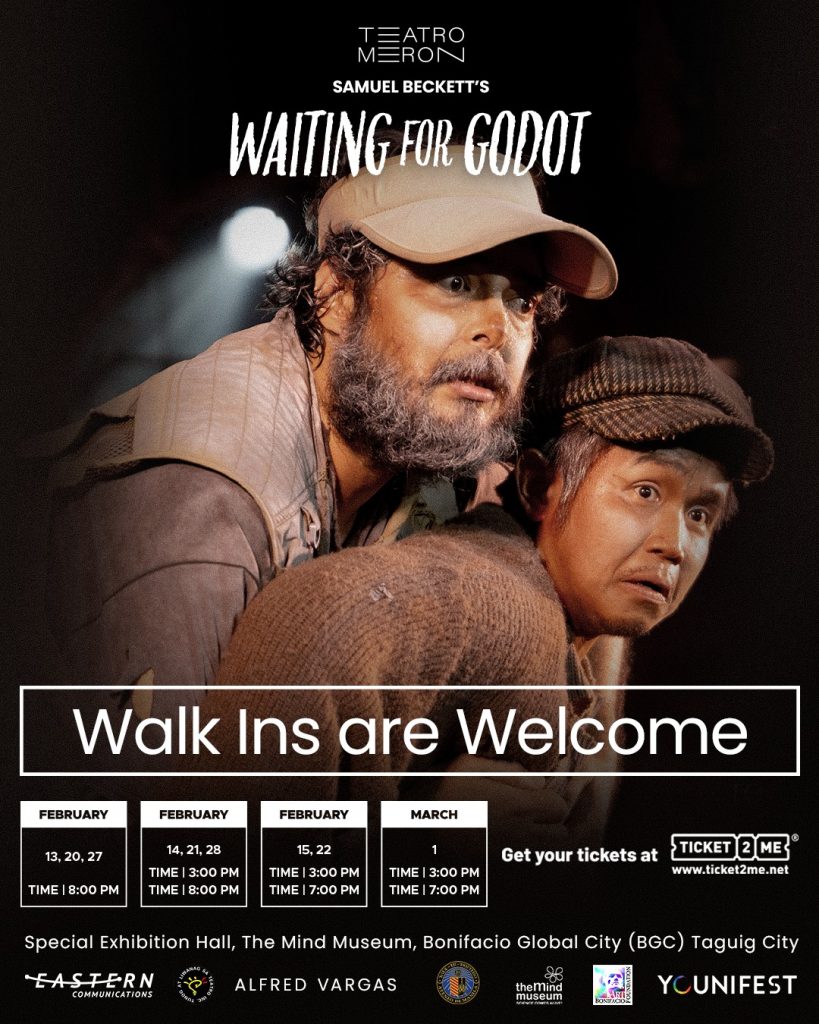
    There’s something so urgent and real about staging Waiting for Godot at this time in the Philippines, and in the world. Ron Capinding, the director of Teatro Meron’s production of Samuel Beckett’s play, spoke about the timelessness of classics and how a great classic play can always be restaged because what it says about humanity and the human condition remains true. But there is something visceral about the timing of this production, which carries the subtitle “A tragicomedy in two acts.” Its philosophical rumination and its promise of a tomorrow that never comes feels so painfully true in this day and age.

    Called “the most significant English-language play of the twentieth century” by a 1998 poll conducted by the Royal National Theater in London, Beckett’s play follows Vladimir and Estragon, two aging men who are hungry, thirsty, and suffering all kinds of ailments.

    Waiting for Godot
    Teatro Meron’s staging of Samuel Beckett’s Waiting for Godot | Photo by: Reamur A. David

    They pass the time talking about their troubles and how they are waiting for a man named Godot, a person they do not recall ever meeting nor are they sure that he will come.

    Waiting for Godot
    Teatro Meron’s staging of Samuel Beckett’s Waiting for Godot | Photo by: Reamur A. David

    Their conversation is interrupted by Pozzo, a man with a slave called Lucky, who is tied to a rope. Pozzo plans to sell Lucky at the market but allows him one grandiose moment of performance before leaving Vladimir and Estrago behind. Leaving the two leads behind, still waiting for Godot, who never comes.

    Waiting for Godot
    Teatro Meron’s staging of Samuel Beckett’s Waiting for Godot | Photo by: Reamur A. David

    More happens, of course, with witty banter and slapstick comedy, but Waiting for Godot is famous for it being a story about waiting for something that never comes. Once immediately believed Godot as a metaphor for God, but Beckett has refuted this many times, though he later admitted there might have been some subconscious impulse that pushed him to use that word; though the play is an adaptation of his own French play so the word is French in origin. The idea is in the act of waiting itself. Beckett has been known to feel frustrated by people trying to make the play overcomplicated than it is, by ascribing more meaning than what is there.

    Teatro Meron Waiting for Godot DSC00020
    Teatro Meron’s staging of Samuel Beckett’s Waiting for Godot | Photo by: Reamur A. David

    The set design by Tata Tuviera transforms the stage into a barren ruin, with a solitary dead tree a little off-center. The backdrop, painted to look post-apocalyptic (or perhaps post-war) so it adds upon the sense of hopelessness and despair surrounding Vladimir and Estragon’s waiting.

    Teatro Meron Waiting for Godot DSC00512
    Teatro Meron’s staging of Samuel Beckett’s Waiting for Godot | Photo by: Reamur A. David

    Played by Tarek El Tayech and JJ Ignacio respectively, the two leads are rather eloquent even at their most tired and they have the capacity for wit. But they are at their wit’s end as they have no direction, no purpose but to wait for someone they aren’t even sure is coming.

    Teatro Meron Waiting for Godot DSC00451
    Teatro Meron’s staging of Samuel Beckett’s Waiting for Godot | Photo by: Reamur A. David

    Though one character does come, a boy, portrayed by Yael Ledesma, who tells them that Godot is coming, but we all know the truth: he isn’t.

    Waiting for Godot Poster
    Teatro Meron’s staging of Samuel Beckett’s Waiting for Godot

    Tayech and Ignacio are incredibly gifted. Their comic timing is impeccable, and their chemistry brings out the textured dynamics of their relationship to come into play. They believably make us feel like they are old and tired, and I’ve seen Tayech in more vibrant roles, and his range here is remarkable. Rounding out the cast, John Bernard Sanchez and Lenard Tiongson as Pozzo and Lucky, respectively, also have such strong presence onstage that when their characters come in and intrude into the nothingness of Vladimir and Estragon’s conversations, the stage becomes awash with this electricity. Sanchez plays a wonderful contrast to Tayech and Ignacio, his Pozzo is full of life and bravado while Tiongson’s Lucky is a terrifying force. He remains completely unmoving – I don’t think he even blinked – and only moved when ordered. And when he performs, it’s a maelstrom of movement and voice that is filled with the kinetic energy that feels let loose like water from a dam breaking. Together, the four of them onstage create such humor that we are taken out of the moment of nothingness so that when Pozzo and Lucky leave and Vladimir and Estragon are back again where they started, the absence of that energy is palpable. The tragedy is made clear and evident.

    Waiting for Godot
    Teatro Meron’s staging of Samuel Beckett’s Waiting for Godot | Photo by: Reamur A. David

    Capinding’s direction made me reflect on us, poor ordinary Filipinos, constantly waiting for something that never comes. The bleak, desolate backdrop made me think of our country, for some reason or another, barren and destroyed by undelivered promises. It’s ironic and hilarious at the same time, because the play was performed exactly as written, yet the convergence of the actors, setting, and the moment pulled me back to myself and my own reality.

    Waiting for Godot is truly an incredible play, and this production brings out the best of it. It will make you laugh while watching and then leave you thinking deeply long after you’ve left the theater as you head home.

    My Rating: 4.5 Stars

    stars 4 5


    Don’t miss this brilliant production of Waiting for Godot! Catch it live until March 1 at the Special Exhibition Hall, The Mind Museum. Grab your tickets now at Ticket2Me and experience the laughter, the wit, and the unforgettable wait.

  • THEATER REVIEW: PETA’S Kislap at Algo

    THEATER REVIEW: PETA’S Kislap at Algo

    PETA’s twin bill – two one-act plays staged back-to-back – are both material that was tested at last year’s Control + Shift: Changing Narratives Festival 2025. The two plays, Kislap at Fuego and Children of the Algo, are now getting a revival that, according to PETA Artistic Director J-mee Katanyag, aims to “challenge dominant narratives, revisit Filipino values, and explore how stories, past and present, shape power, identity, and action.” Directed particularly toward the youth, the twin bill of Kislap at Algo is meant for a younger generation but can still be enjoyed by older audiences.

    PETA Kislap at Algo

    Kislap at Fuego is a translation of Dominique La Victoria’s Palanca Award-winning play, Toward the Fires of Revolution, translated by Gentle Mapagu and directed by Maribel Legarda and J-Mee Katanyag.

    Set during the Spanish occupation, it tells the story of a young country girl escaping Spanish soldiers after being suspected of handing out seditious and subversive books.

    PETA's Kislap at Fuego
    PETA’S Kislap at Fuego | CJ Navato and Kyle Napuli | Photo Courtesy of PETA Theater

    She hides in an enchanted forest, where she calls on a Kapre to whom her father owes a debt. She comes to repay that debt in exchange for sanctuary. What unfolds is a fairy-tale love story that realigns our perspective and references the contributions of women to our nationhood and revolutionary movement. 

    PETA 03 KAF CJ Navato and Kyle Napuli
    PETA’S Kislap at Fuego | CJ Navato and Kyle Napuli | Photo Courtesy of PETA Theater

    Led by Felicity Kyle Napuli and CJ Navato, Kislap at Fuego disguises its feminist message and call to action within a love story that excellently plays up to the Filipino sensibilities of the kilig. Napuli is a strong presence onstage and manages to shift from the romantic and comedic aspects to the dramatic parts effortlessly.

    PETA 06 KAF CJ Navato and Kyle Napuli
    PETA’S Kislap at Fuego | CJ Navato and Kyle Napuli | Photo Courtesy of PETA Theater

    Navato also shares this duality, allowing his Kapre to feel menacing and powerful, while revealing a tenderness just beneath the surface.

    PETA 12 Ekis Gimenez and Carlon Matobato
    PETA’S Kislap at Fuego | Ekis Gimenez and Carlon Matobato | Photo Courtesy of PETA Theater

    Their chemistry makes the show work, as the disguise of a love story becomes the hook that draws us in while setting upa powerful message about fighting back when needed.

    PETA 10 Carlon Matobato
    PETA”S Kislap at Ulap | Carlon Matobato | Photo Courtesy of PETA Theater

    Legarda and Katanyag make full use of Boni Juan’s charming design. A great big tree stands tall on stage left, equipped with a mechanism that allows Navato to hang from the tree’s branches, effectively creating the image of a Kapre.

    PETA 05 KAF CJ Navato and Kyle Napuli
    PETA’S Kislap at Fuego | CJ Navato and Kyle Napuli | Photo Courtesy of PETA Theater

    His mask further transforms him into the creature, as Navato seems to fully embody the role well, making full use of his costume to render himself otherwordly. 

    PETA 13 CJ Navato Kyle Napuli and Ensemble
    PETA’S Kislap at Fuego | CJ Navato, Kyle Napuli, and Ensemble | Photo Courtesy of PETA Theater

    It’s a lovely use of traditional theater techniques, coming together in a charming play that has the entire audience reacting exactly where they wanted them to.

    PETA 01 Otep Madriaga James Pe Lim Nyla Festejo Frances Akol
    PETA | Otep Madriaga, James Pe Lim, Nyla Festejo, Frances Akol | Photo Courtesy of PETA Theater

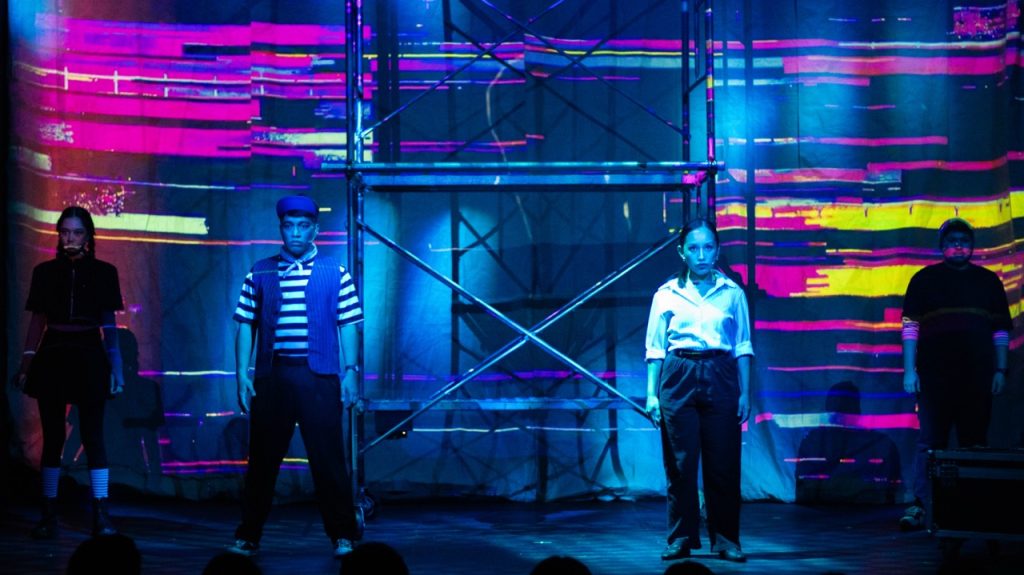
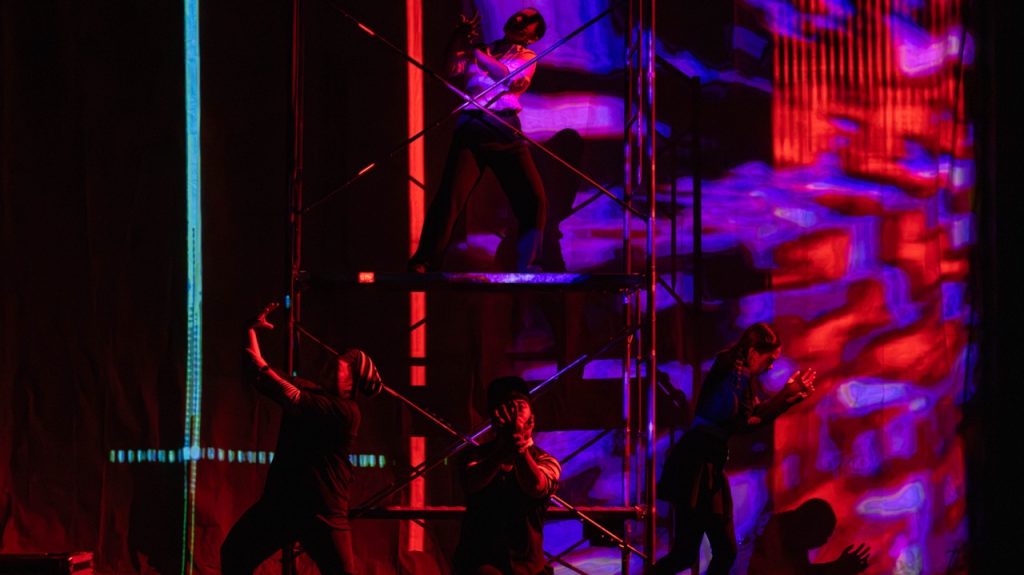
    I actually saw an earlier version of Children of the Algo by Mixkaela Villa and director Johnnie Moran. Set in the world of social media, four content creators share video posts and even livestream their daily lives and curated thoughts. Performed by Otep Madriaga, Nyla Festejo, Frances Marie Akol, and James Pe Lim, the four characters jump from posts that resemble what we always see on our feeds – a day in the life, dating advice, a day at work, meditations, random thoughts – and there’s a dizzying effect as each scene shifts from one character to the next. The play truly feels like scrolling through your social media apps. Unfolding like a satire, it creates a commentary oh how we perceive the world through these curated posts. It all builds momentum toward a call to action that urges us to reexamine our social media habits and the content we consume online.

    PETA 02 Otep Madriaga James Pe Lim Nyla Festejo Frances Akol
    PETA | Otep Madriaga, James Pe Lim, Nyla Festejo, Frances Akol | Photo Courtesy of PETA Theater

    The play makes full use of video wall projections while the characters jump in and out of a wheeled, two-storey scaffold. This setup allows each performer to achieve height or cower into a confined space. It’s quite simple yet inventive. Unfortunately, the scaffold has a tendency to squeak and bend, so it doesn’t give us the security as the audience worry about the actors’ safety. I’m sure they have rehearsed extensively and can vouch for its safety, but it can get distracting, especially when the actors are jumping in and out of the scaffold or climbing up and down. It would be ideal if it were sturdier and drew less attention to itself. 

    PETA 04 Otep Madriaga James Pe Lim Nyla Festejo Frances Akol
    Photo Courtesy of PETA theater

    The four actors are strong, portraying their characters more as caricatures than real people. They exaggerate and over dramatize their lines, parodying the people we see online. The intended effect is apparent, but I wonder what the texture would be if they played it more grounded, more serious? Would it become a stronger commentary if performed with a little bit more serious? It might not be as crowd-pleasing if they did it that way. After all, the play targets a younger audience who quickly gets the parody.

    My Rating: 4 Stars

    Springsteen Deliver Me from Nowhere


    The magic isn’t over yet! Don’t miss what PETA has lined up next, keep an eye out for their upcoming productions and experience theater that challenges, inspires, and captivates audiences of all ages!

  • THEATER REVIEW: Les Misérables World Tour Spectacular

    THEATER REVIEW: Les Misérables World Tour Spectacular

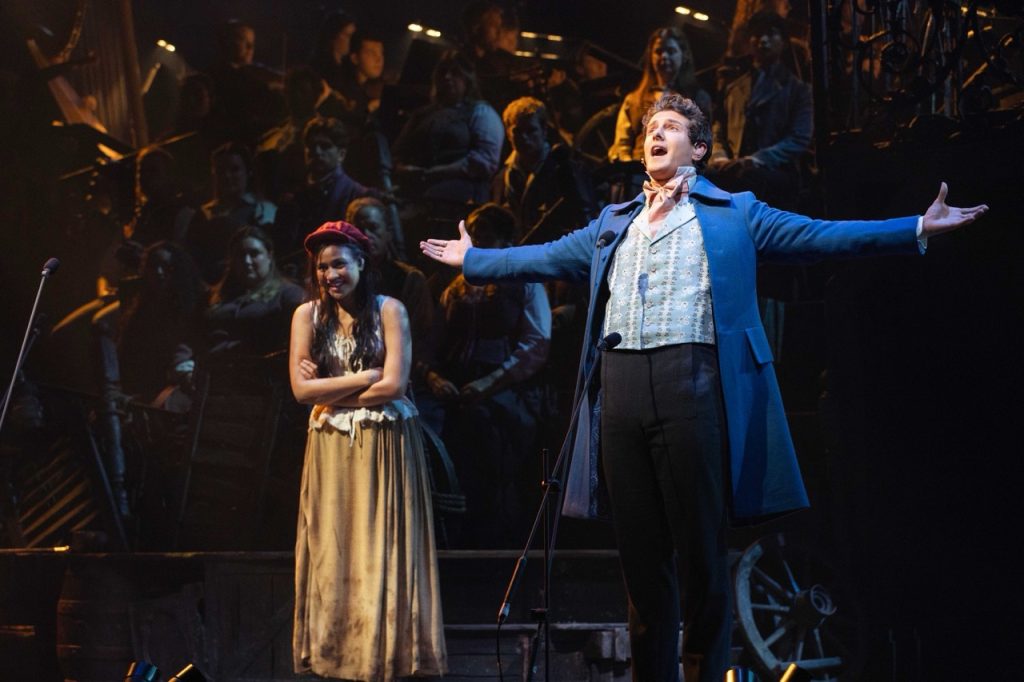
    There’s something powerful about watching Cameron Mackintosh’s production of Les Misérables live. Like many, I grew up with this musical, listening and learning the songs by heart as a kid. But also like many, I had never seen it performed live. I’ve watched the concerts, both on video – the 10th Anniversary and 25th Anniversary concerts, both featuring Lea Salonga as Eponine and Fantine, respectively – but after seeing Les Misérables: World Tour Spectacular at the Theater at Solaire last week, I must say my affection for this show has grown tremendously since.

    Les Miserables World Tour Spectacular theater review by Wanggo Gallaga

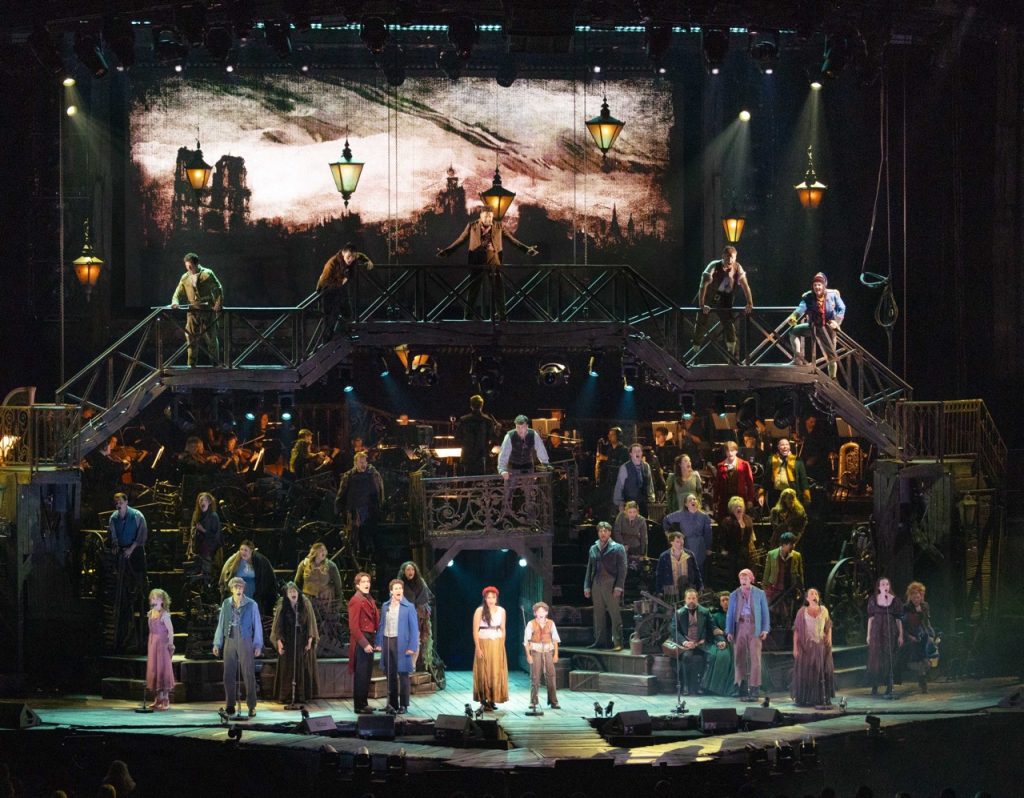
    The concert staging is directed by James Powell and Jean-Pierre Van Der Spuy. As a concert, the ensemble takes their seats on steps leading up to a second story, where the large orchestra performs, with orchestration by Stephen Metcalfe, Christopher Jahnke, and Stephen Brooker. Beneath the stage is an aperture where the main cast can make their entrances and exits.

    Les Miserables
    Les Miserables Ensemble | Photograph by Danny Kaan

    As the show opens, there is a huge barricade that blocks the view, but it is lifted into the air as the performance begins. Later, a bridge is brought, adding further size and scope to the whole production. The design by Matt Kinley is relatively simple but effective in creating an awe-inspiring effect.

    Les Miserables
    Les Miserables Enjolras (James D. Gish) and Ensemble | Photograph by Danny Kaan

    The cast walks up to the front of the stage to sing their parts in front of microphones. It’s definitely a concert rather than a fully staged production, but the whole story of Les Misérables is conveyed through the songs; it’s practically sung-through, so you still get the full range of the narrative, even when done this way. At the same time, many of the cast really perform these songs. Minimal stage directions can help the audience visualize what’s happening.

    The full power of this concert really gives you a pretty good sense of the show, as it is. For someone who has never seen it live, this was really the next best thing.

    Les Miserables World Tour MNL Cast

    Les Misérables tells the story of Jean Valjean (Geronimo Rauch), who has just completed a 19-year prison sentence, initially five years for stealing a loaf of bread for his sister’s sick son, extended due to multiple escape attempts. As he leaves, Javert (Jeremy Secomb), a police inspector, implies that men like him never truly change. He’s sure to see Valjean again.

    When Valjean steals from a bishop who had taken him in, he is caught and about to be returned to jail. But the bishop tells the police that he gave the silver to Valjean, and even gives him more. As the police leave, the bishop tells Valjean to lead an honest life. Valjean tears his parole ticket, changes his name, and vows to lead a righteous life.

    Ten years later, Valjean has become the mayor of a town but his crime of escaping parole is discovered by Javert. Before he can be taken in, Valjean escapes with Cosette (Lulu Mae Pears), the young daughter of Fantine (Rachelle Ann Go), a woman who has suffered much and who has asked Valjean to take care of her daughter Cosette.

    Now in hiding, Valjean and Cosette find themselves embroiled in a town where a revolution is about to start. A young student revolutionary, Marius (Will Callan), has fallen in love with Cosette but trouble is brewing. Javert is still on Valjean’s trail, and their part of the city is about to be drenched in blood.

    Les Miserables
    Les Miserables Ensemble | Photograph by Danny Kaan

    Les Misérables is an emotional roller coaster. With its large cast of characters and various storylines branching out in all directions, watching the concert live allowed me to see how the show’s various, multiple storylines paint a picture of an unjust and chaotic world. The law, as symbolized by Javert, has been used to favour the rich and to punish the poor. The youth are always fighting for radical change but are sorely outmatched, and while love still manages to bloom amid all this threat of destruction, these social ills make it challenging to find one’s happy ending.

    I’ve never really paid close attention to the musical’s story because I’ve only really listened to the songs – and while the whole story is there – without the imagery of a staged production (even if just a performed concert), the nuances and textures of the narrative get lost in Claude-Michel Schonberg’s gorgeous music. But here, with the ensemble right in front of you and with fantastic lighting design by Paule Constable and Warren Letton, all of that becomes clear.

    Les Miserables
    Les Miserables Lea Salonga and Red Concepción. Matt Crockett

    Les Misérables: World Tour Spectacular is a powerful theatrical experience. The orchestration is superb, and the performances are stellar – with Lea Salonga and Red Concepcion as the Thenardiers standing out, alongside Jeremy Secomb’s relentless and powerful performance as Javert. The whole ensemble brings the songs to life.

    I had much affection for this musical but I never really thought of it as more than anything but catchy. But now that I got to see it like this: performed live, excellently sung and orchestrated, and with the visuals completing the whole experience; I must say I finally understand why Les Miserables is an enduring musical, whose themes feel more relevant and powerful today than ever before.

    Les Miserables Marius Jac Yarrow Eponine Emily Bautista photograph by Danny Kaan
    Les Miserables Marius (Jac Yarrow) & Éponine (Emily Bautista) – photograph by Danny Kaan

    I felt that the video wall was not as effective as it could have been, often blocked by the raised barricade, it felt useless and unnecessary. And Lulu Mae Pears could have had more presence on stage as Colette, as she was outshined by another Filipina, Emily Bautista playing Eponine. These, however, are just nitpicks in what is otherwise an incredible show.

    My Rating: 4.5 Stars

    stars 4 5


    Whether you grew up with the music or are discovering it anew, Les Misérables: World Tour Spectacular is a moving reminder of the power of live theater. Performing at The Theater at Solaire, the show runs until March 1, and though tickets are sold out, this is the kind of unforgettable performance that truly showcases why Les Misérables has endured for generations.