Tag: Theater Review

  • Theater Review: In JC Santos’ Directorial Debut, “A Number” Is a Sci-Fi Play That Asks the Hard Questions

    Theater Review: In JC Santos’ Directorial Debut, “A Number” Is a Sci-Fi Play That Asks the Hard Questions

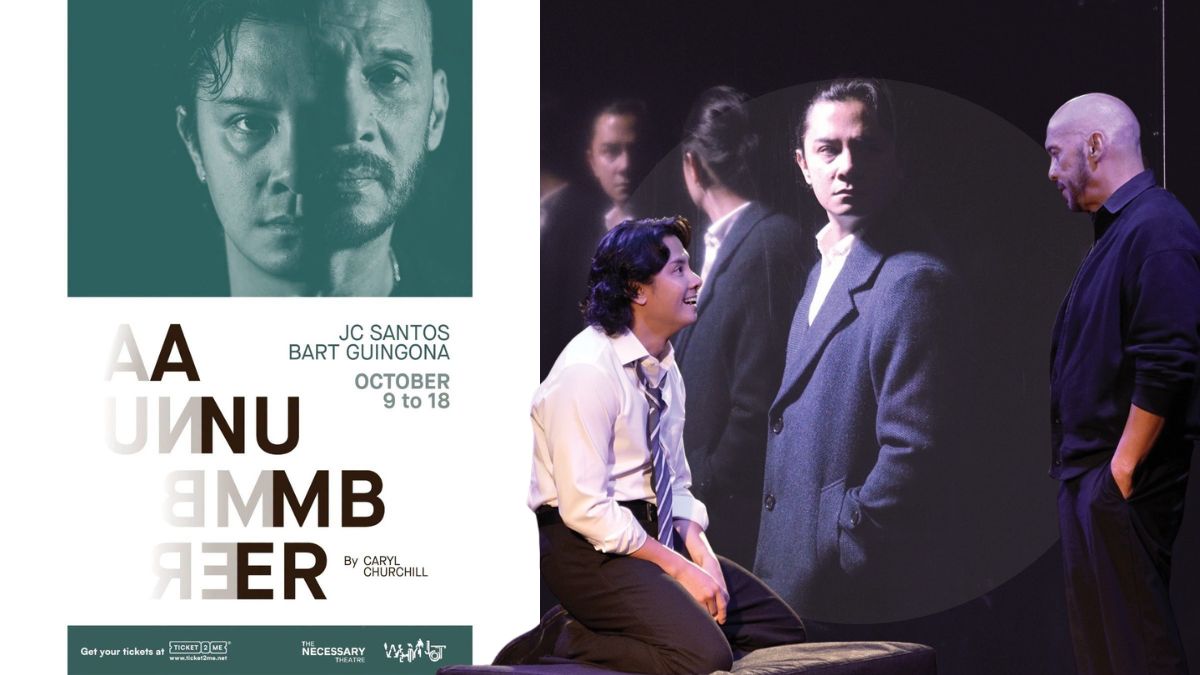
    Gripping and so unbelievably relevant today, Caryl Churchill’s play A Number tackles the emotional and moral ramifications of cloning. First produced in 2002, the play’s exploration of its theme hits very strongly to this day of advanced technology and generative AI, as it ask the hard questions of how far technology should be used when facing the harsh challenges of life.

    A Number

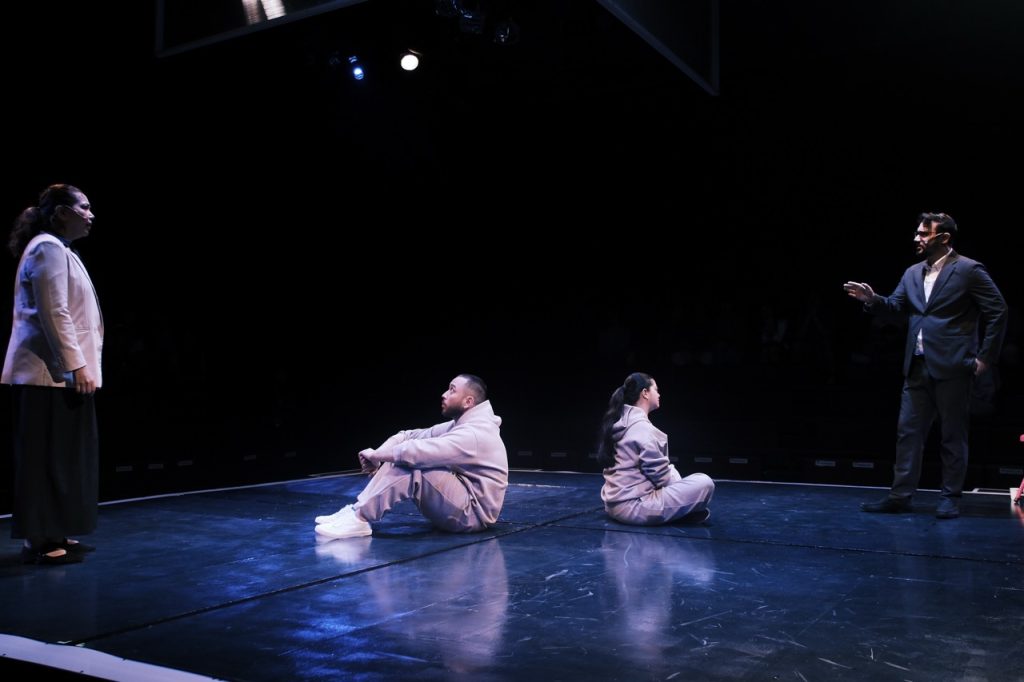
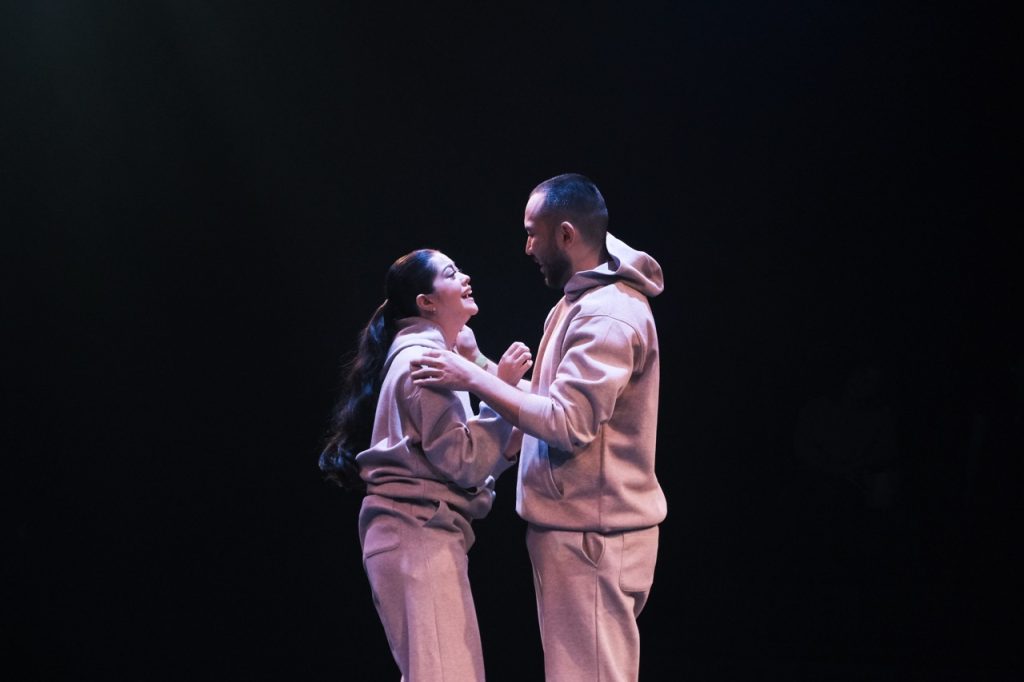
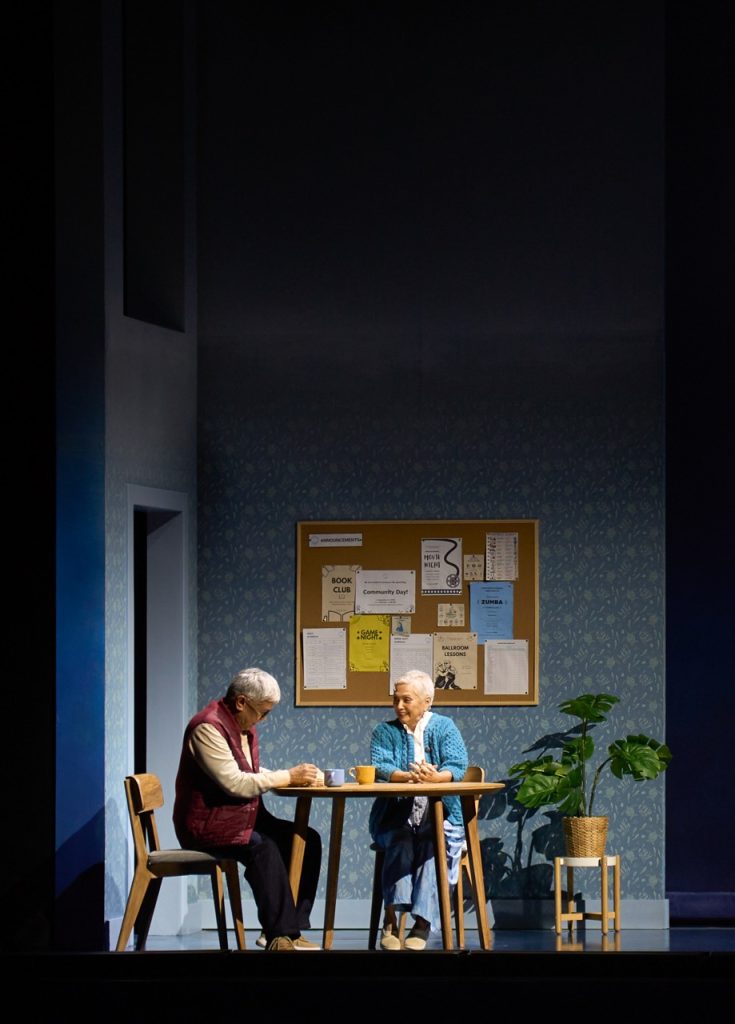
    This production marks the directorial debut of actor JC Santos, who also stars as three distinct characters in the play – three clones acting opposite Bart Guingona, playing the clone’s father. It’s a short play, spanning just a little over an hour, the tight narrative unfolds across five confrontation scenes between father and his offspring or a variation of such. Despite its sci-fi foundation, the play focuses on the heavy emotional weight of the effects of society towards the individual and to society. It is a heavy drama that requires the both actors to be wholly present at all times, with Santos having to change characters right before our eyes. It is a demanding piece for its actors and the players do an excellent job at it.
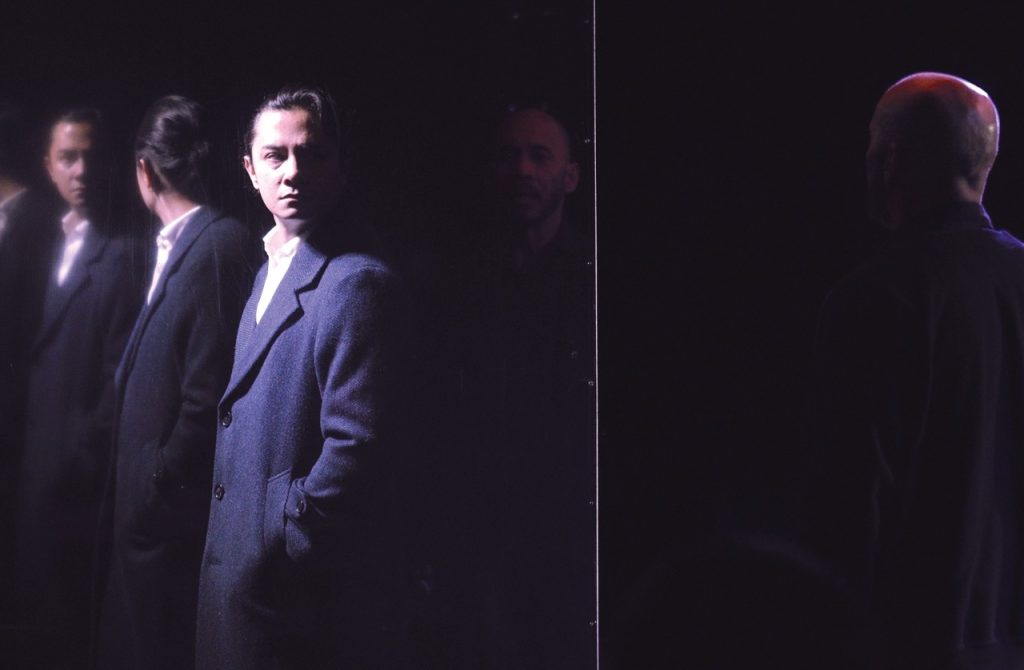
    A Number Press3 WHYNot
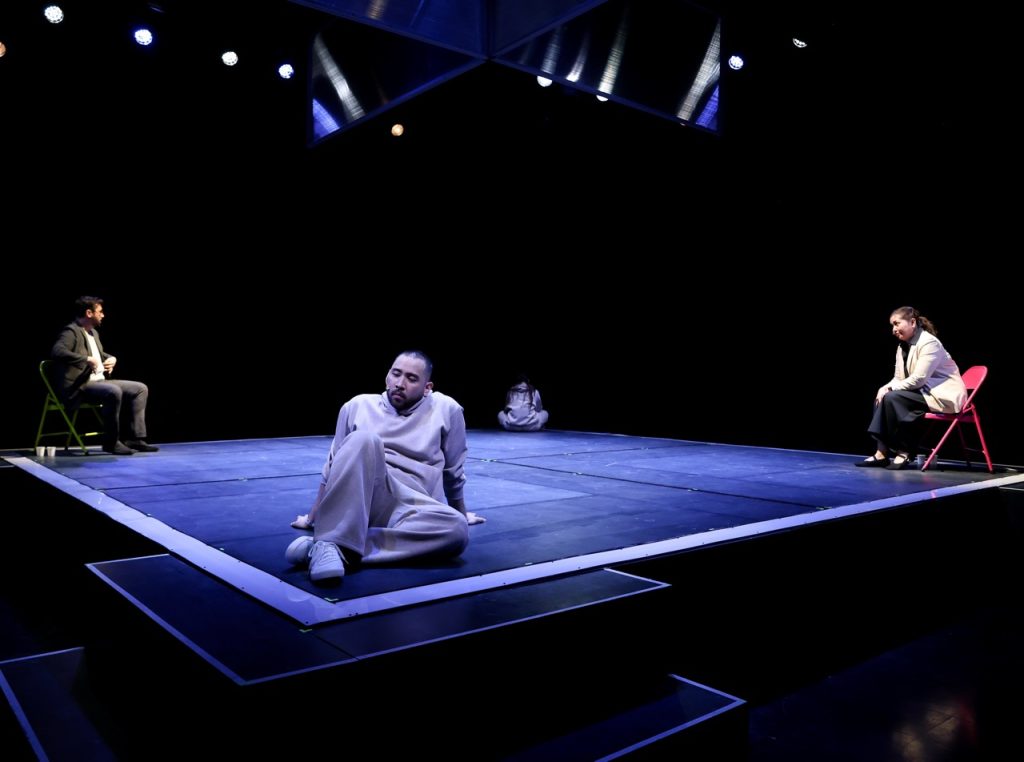
    A Number by Caryl Churchill | Image courtesy of WHYNoT

    The play opens with a son narrating his experience to his father of seeing his exact duplicate in public. They realise clones of him have been made, their conversation explores the effect of such a discovery on one’s identity. But as the story unfolds, we discover there are secrets that have been kept, dark secrets but with good intentions – if not twisted – behind them. With each encounter between the father and different variations of his son, he must reconcile his own actions, while the clones struggle to define the meaning in their existence when the question of their uniqueness is at stake.
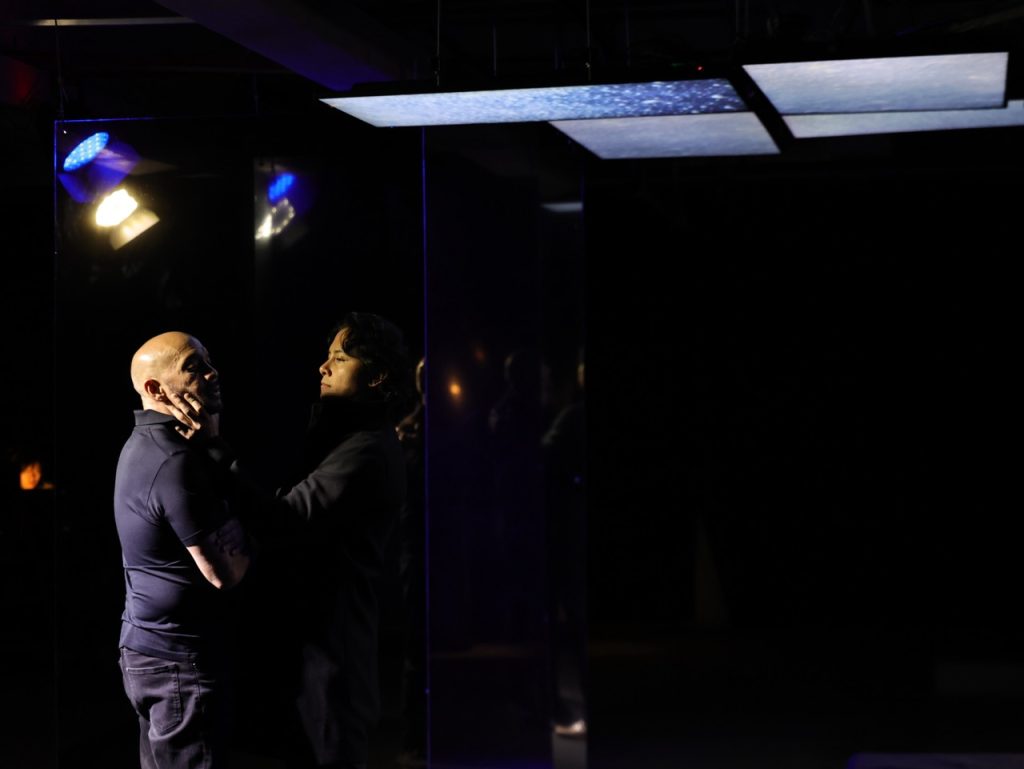
    A Number Photos by Miguel Uy 0P4A1761 WHYNot
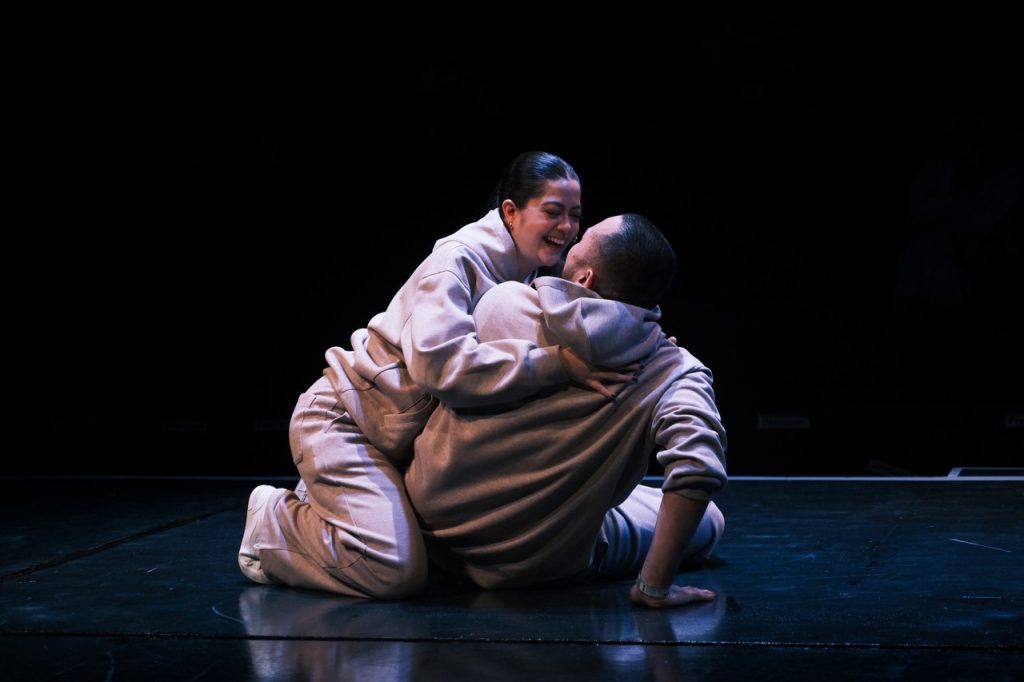
    A Number by Caryl Churchill | Photo by Miguel Uy, Courtesy of WHYNoT

    As a British play, there’s a sense of formality in the language, but Churchill writes characters who are not the most eloquent or articulate of people. They are so overwhelmed by the events and the discovery of the dramatic situation that they often can’t finish their lines. It is a constant back-and-forth between father and son as they try to piece some level of rationality to their reality, and it’s very grounded and real in the way it captures that human experience. As actors, Santos and Guingona have to embody the confusion and the maelstrom of feelings this situation creates, throwing lines back and forth without missing a beat. It’s a terrific display of each performer’s acting prowess, with Santos having shifting from one clone to the next right on stage, bathed in light with only a slight costume change and an adjustment of his hair. His gait, his posture, and his line delivery all shift seamlessly. It’s a standout performance.
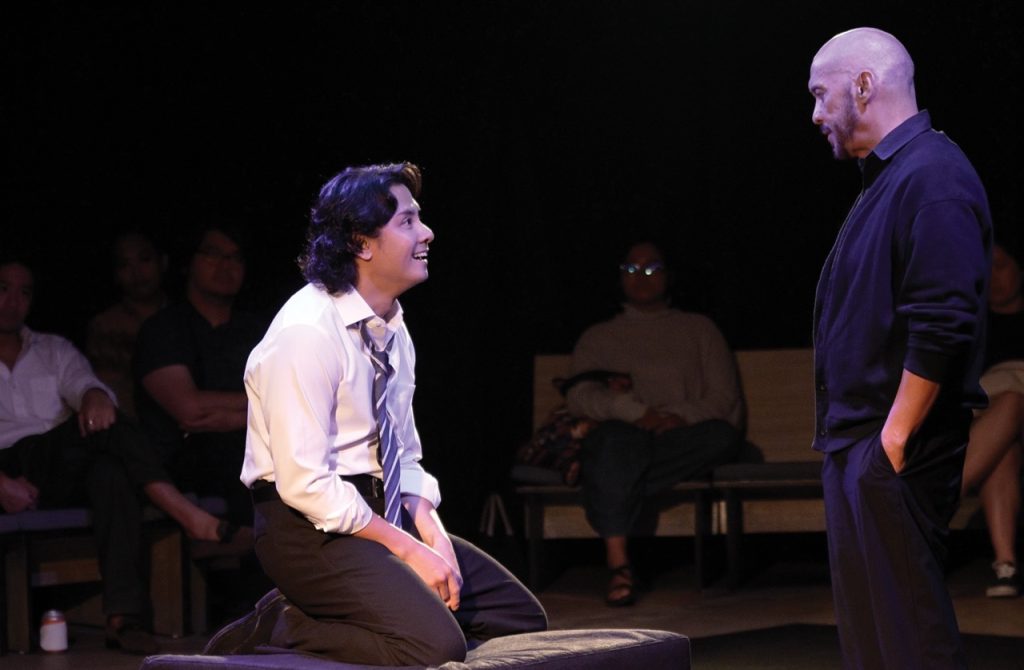
    A Number Press6 WHYNot
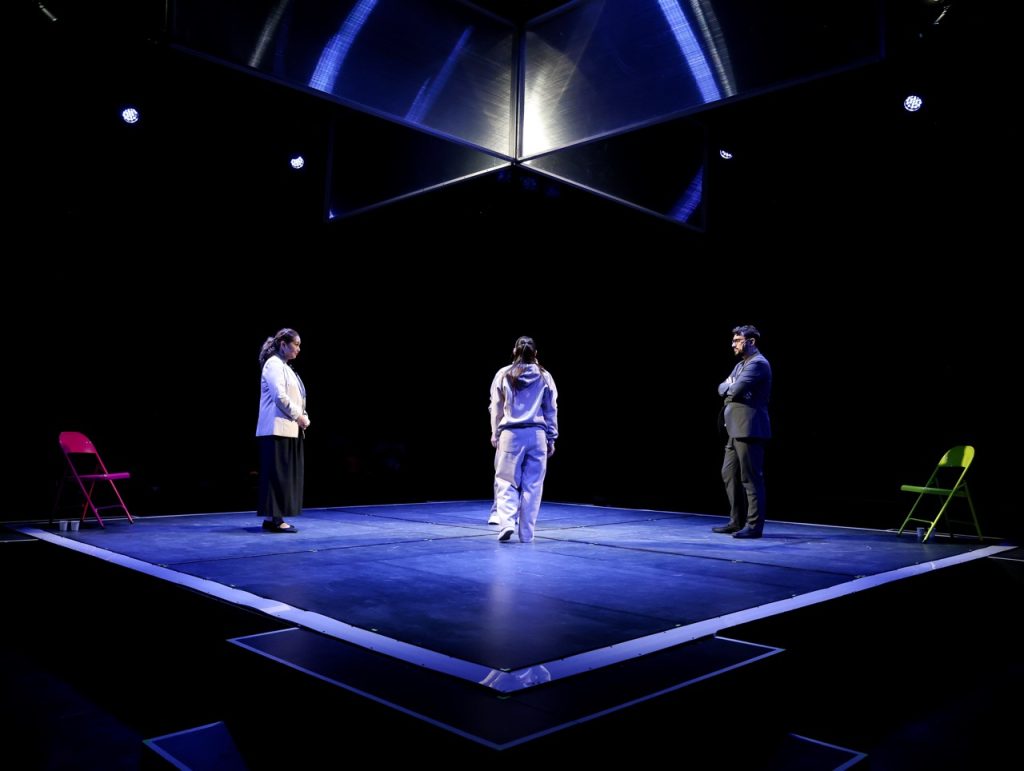
    A Number by Caryl Churchill | Image courtesy of WHYNoT

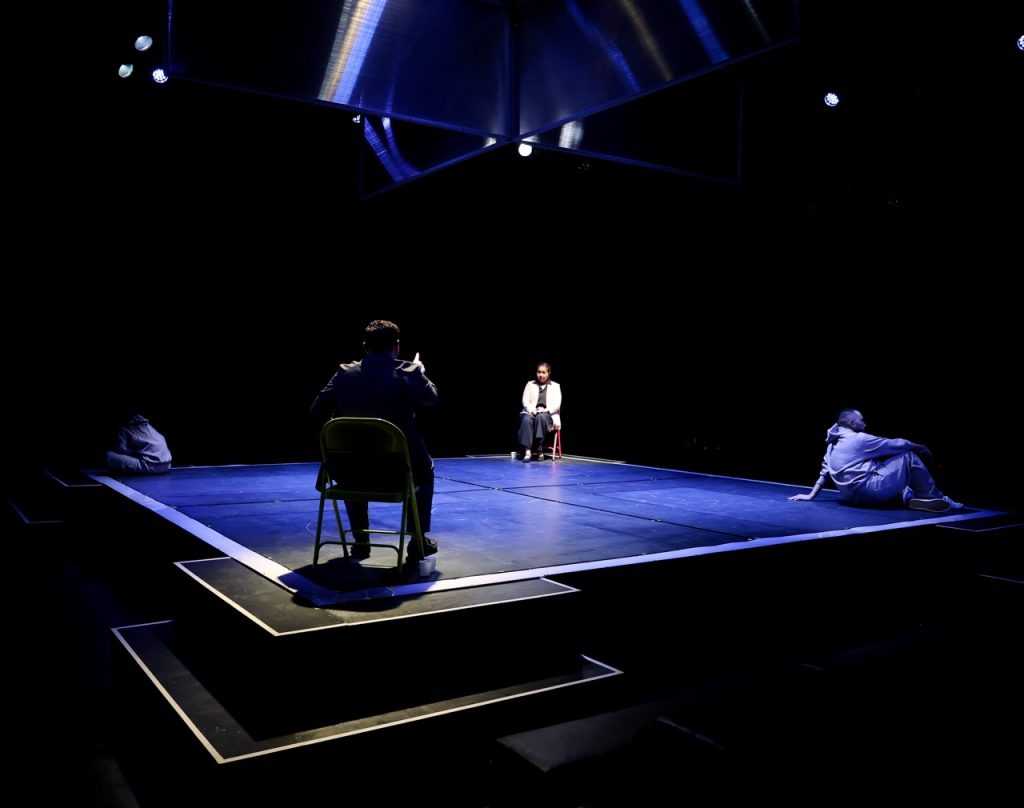
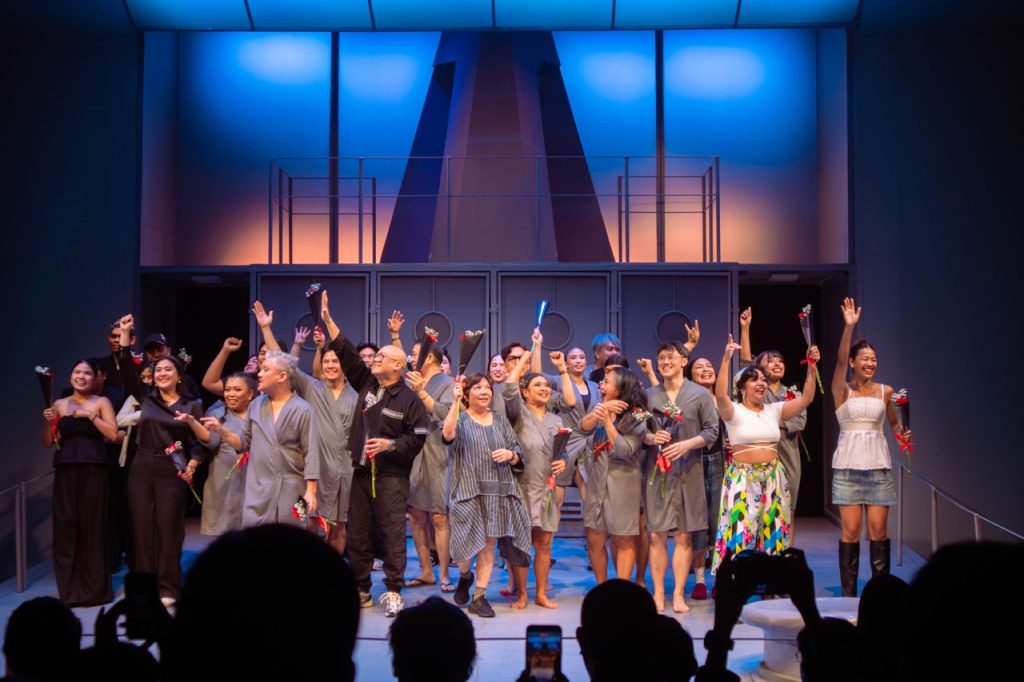
    The stage is set at the center – a theater in the round – with the audience watching from all sides. The venue, the artist space WhyNot in Karrivin Plaza, has good acoustics, so neither performer uses a mic, keeping the show intimate and personal. The stage is bare except for two sets of very short glass corridors, which either character uses as an entrance and where Santos makes his costume changes. Cushioned blocks at the center serve as chairs, and at the ceiling, shedding light into the confrontations are LCD screens with an abstract display, to which I imagined as strands of DNA, which I was later able to confirm. There is a drone scoring – I was told it was designed live by sound artist Frankie Lalunio – amplifies the emotions as Santos seems to have directed the performances at a lower register, choosing to let the situation and the words display all the emotions. Everything is kept bubbling inside, not playing for the drama. It’s the sound design that helps cue us there.
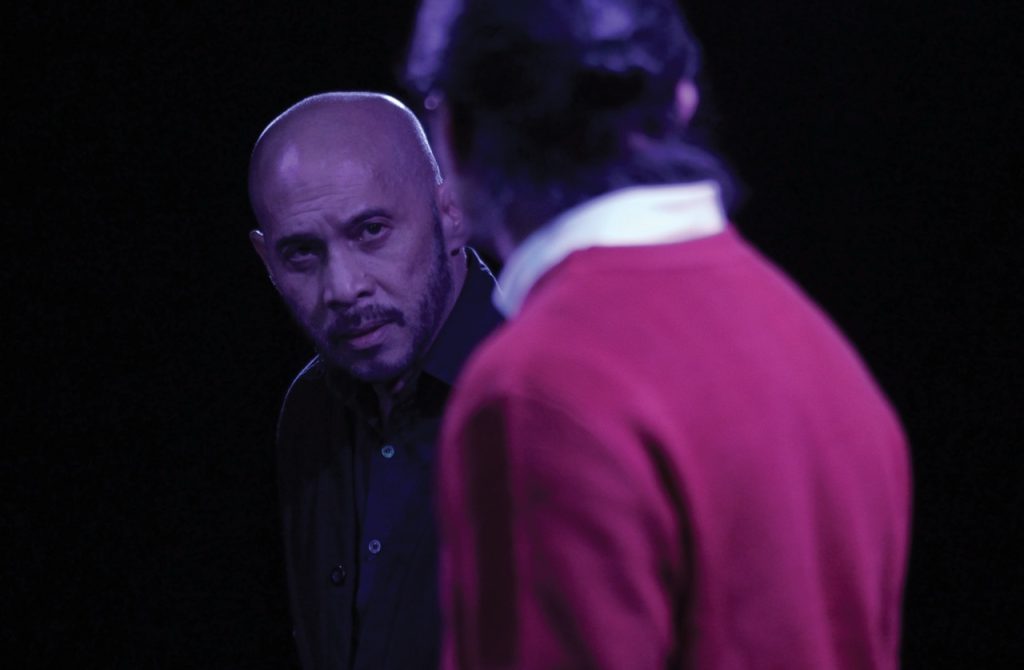
    A Number Press WHYNot
    A Number by Caryl Churchill | Image courtesy of WHYNoT

    With its minimalist approach, the play highlights all the confusion and existential questions that the narrative evokes. The question of how far we will go in using technology to make our lives “better” (quotation marks are necessary) becomes all the more biting as we see the dangerous effects of generative AI and social media on our society today. It’s a smart play. It’s a painful one. And it forces us to think, and hopefully, encourages us to act.

    My Rating: 4.5 Stars

    stars 4 5

    Presented by WHYNoT and The Necessary Theatre, A Number marks a compelling reunion for Bart Guingona and JC Santos following their sold-out 2023 hit Red, this time with Santos stepping into the director’s chair. The limited nine-show run plays from October 9–18, 2026 with performances at 3:00 PM and 8:00 PM at WHYNoT. Don’t miss this gripping sci-fi drama. Book your seats now at Ticket2Me.

  • Theater Review: Baring It All in “Last Dance – Hubo’t Hubad”

    Theater Review: Baring It All in “Last Dance – Hubo’t Hubad”

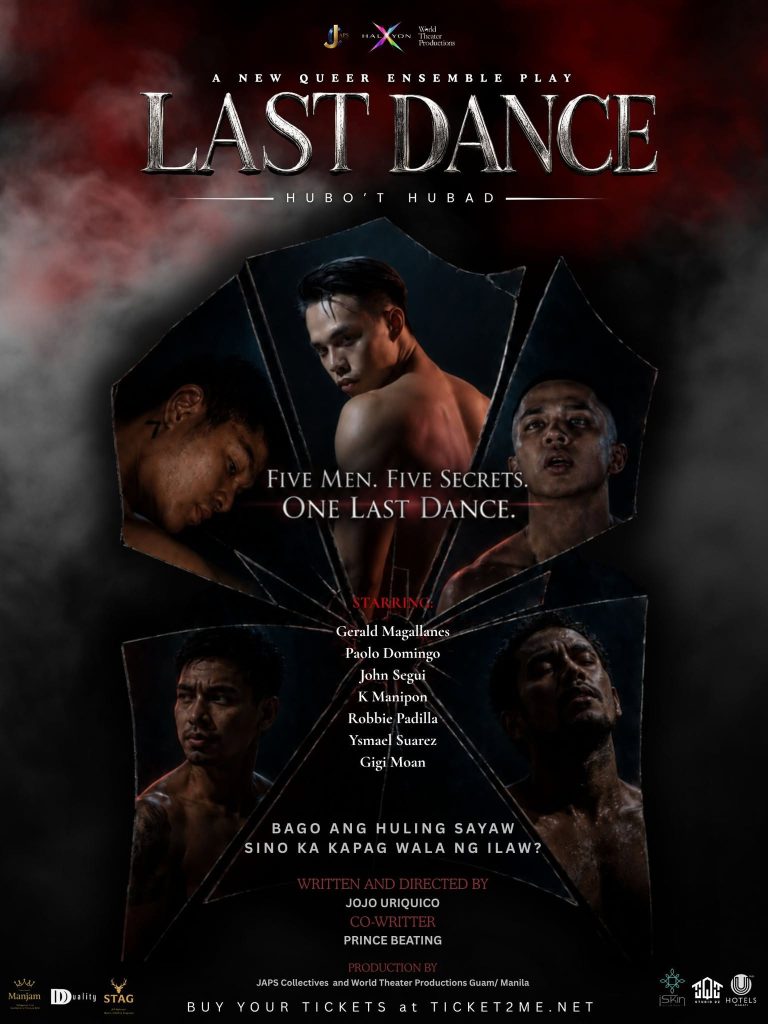
    It seems fitting that Jojo Urquico’s brand new play, “Last Dance – Hubo’t Hubad,” would run at a club in Poblacion. Halxyon Club in Poblacion, Makati transforms into a theater with a stage in thrust format for this story about male go-go dancers at a drag club. When a raid stops the show right as it begins, five male dancers share their stories with the newest member of the team. Halxyon Club gives an authentic sense of realism to the setting, though it is suggested to come prepared and wear something warm as the air conditioning is really cold and to get a seat near the front as the seats are monoblocs and you might not see what’s happening on stage if taller audience are sitting in front of you.

    Last Dance Hubot Hubad Poster
    Last Dance – Hubo’t Hubad | Image Source: Halxyon Club FB Page

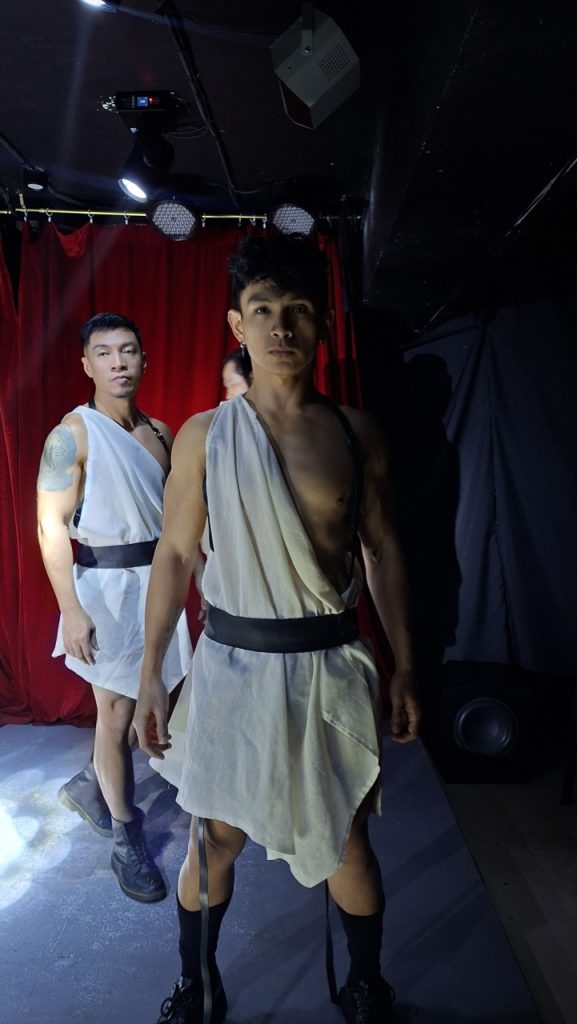
    And while the play opens with a drag performance, Fewsha Umb and Lexi Era perform in amazing outfits, the five actors takes the stage: Gerald Magallanes as Ace, Paolo Domingo as Jay, John Segui as Dodong, Kriszan Manipon as Mark, and Robbie Padilla as Rafa (with alternates Ysmael Suarez for Dodong and Lance Cabradilla for Ace). They deliver a striptease and provocative dance in Greek-inspired togas, later shedding them for nothing but black briefs and harnesses. When the raid happens, the men rush to their dressing room, where Mama Lou (played by Jem-jem Ria Lopez) assures them that it was a false alarm, though it would be prudent to close for the night.

    Last Dance - Hubo't Hubad
    Last Dance – Hubo’t Hubad | Photos courtesy of the JAPSCollectives Photo Team

    Left with nothing to do, the men begin to dress while questioning Jay, the youngest and newest member of the group. 

    Running approximately 90 minutes, the play takes “baring it all” to the next level. While catching their breath, the five actors are practically naked, with only their briefs keeping them from full nudity. But it is the stories they share that renders them vulnerable. The advice and insights woven into their individual stories expose each character naked in an emotional way. Every story paints a picture of desperate need, revealing this job as the only way out for these characters. 

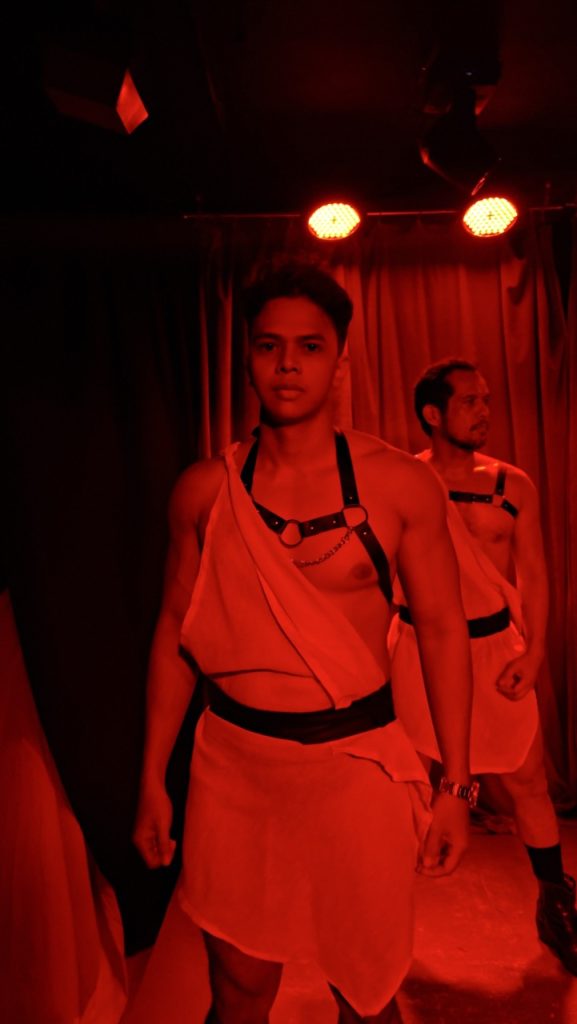
    Throughout their sharing, they truly bare it all, dressing down and then going into casual clothes. The night on stage is over, but for some of these characters, it has just begun.

    Of the cast, Magallanes is the only one with solid theatrical experience, and it shows. There’s a natural delivery of Ace’s rough and prickly exterior. His story is one of abandonment and a tough armor, one that is gruff and grim, serving as a safety mechanism. Yet Magallanes also subtly reveals Ace’s softer side in quiet moments. While others are deliver their stories, his expressions betray his character’s empathy. While others are doing their monologues, he’s still in character, reacting, keeping busy. He’s making it all feel real along with Manipon, whose portrayal of Mark has a job, but it isn’t enough to pay the bills and so he does this to provide for his family. There’s a sincerity to his portrayal that works well alongside Magallanes’.

    Last Dance – Hubot Hubad 20260928 104853
    Last Dance – Hubo’t Hubad | Photos courtesy of the JAPSCollectives Photo Team

    The rest of the ensemble is still finding its balance. Domingo captures Jay’s exuberance and innocence, but his performance feels timed. It feels forcibly pushed out rather than coming from a genuine place. There’s an old school theater style emanating from his line delivery that feels off when matched with the others who take a more naturalistic approach. Segui and Padilla are hitting their cues, but Sequi often feels rehearsed, while Padilla still needs to work on projection. He’s in the moment but his voice and emotions fail to carry beyond the edge of the stage. 

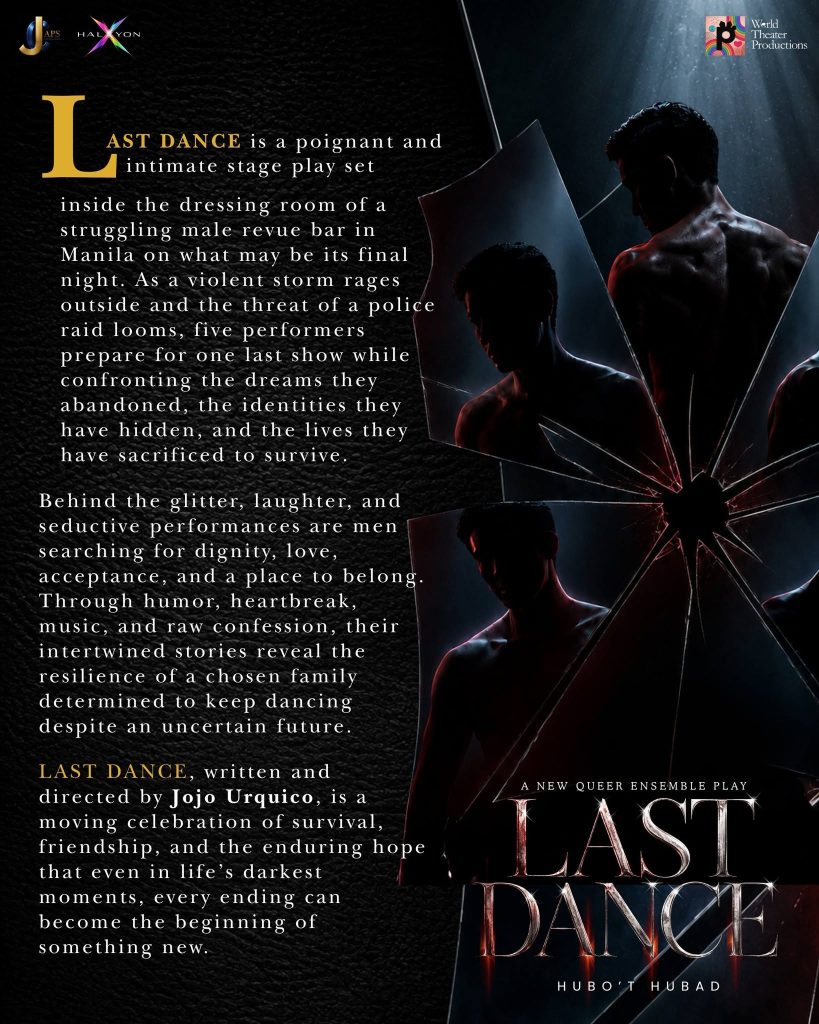
    I thought it was quite clever, to have the characters begin practically unclothed, only to dress in front of the audience as they prepare to head home, while sharing their personal stories that leave them even more vulnerable than being naked. The play asks us to truly see them – not just their bodies, but their humanity. This marks Jojo Urquico’s first foray into playwriting, and it shows in places. Some of the stories could be further fleshed out, and the dialogue could be drawn out a little further so the characters can build to their emotional peaks gradually rather than abruptly. Yet there is a cleverness in the direction, evident in how seamlessly the stage transforms from a club into a dressing room in a quick blackout. The blocking within that tiny space, as the actors shift seats, move toward lockers to change while one actor delivers a monologue feels entirely organic and natural.

    Last Dance - Hubo't Hubad
    Last Dance – Hubo’t Hubad | Image Source: JAPSCollectives FB Page

    This is not a new story, but it is one that will continue to be told until we can fix the system so that no one has to do this out of desperation, or at the very least, until we can afford to give them dignity in the profession. After all, people do come to watch these kinds of shows. They are entertainers, and this is a profession. “Last Dance – Hubo’t Hubad” pulls back the curtain, revealing what lies behind the stage.

    My Rating: 3 Stars

    stars 3 0

    Five men. Five secrets. One last dance. Don’t miss Jojo Urquico’s Last Dance – Hubo’t Hubad as it transforms Halxyon Club in Poblacion, Makati into a stage for raw human vulnerability. The show runs through October 29, tickets available at Ticket2Me.
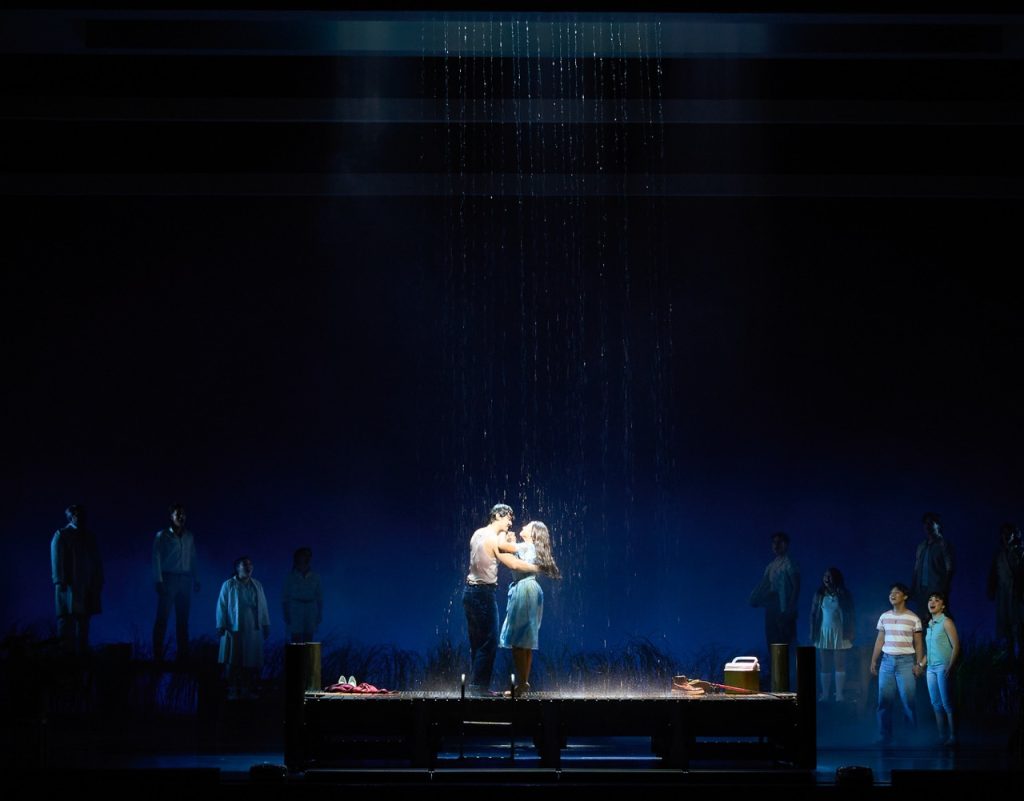
  • THEATER REVIEW: Love and Other Drugs: A Review of CAST’s “The Effect” by Lucy Prebble

    THEATER REVIEW: Love and Other Drugs: A Review of CAST’s “The Effect” by Lucy Prebble

    At the Doreen Black Box Theater in Arete, Ateneo, the stage design for Lucy Prebble’s The Effect, as imagined by director Sarah Facuri and set designer D. Cortezano places the stage right at the center, completely surrounded by the audience. On the raised platform sit two chairs, tucked into opposite corners of each other. The moment I saw it, I thought of a boxing ring sans ropes. I knew nothing coming into this play, having missed the successful staged reading of CAST which was the reason it was mounted as a full production. But the armbands handed to us with our tickets were fashioned like the hospital identification tags, which already prompted us for what was to follow.

    The Effect
    The Effect | Photos Courtesy of CAST PH by Myra Ho

    The Effect follows Connie and Tristan, played by Sue Ramirez and Brian Sy, two volunteers who have joined a clinical trial for a new antidepressant. They have to stay in a facility throughout the experiment with no contact with the outside world. They are monitored by Dr. Lorna James (Cathy Azanza-Dy), who reports her findings to Dr. Toby Sealy (Dean Daniel Rosen). As the trial runs, Connie and Tristan begin developing feelings for each other, which threatens to compromise the findings and results of the experiment. And as Dr. Lorna is trying to keep the integrity of the process intact, her personal history with Dr. Toby gets in the way.

    The Effect
    The Effect | Photos Courtesy of CAST PH by Ynah Garcia

    The Effect is a very modern examination of mental health and human connection. It tries to reduce the concepts of love and attachment to a scientific process that the body undergoes but the play understands that the whole thing is much messier than that. The science sounds believable but that’s not important, it helps dissect the trouble that is brewing between the characters. We see each rule of the clinical trial being broken one rule at a time, Connie and Tristan getting more and more entangled romantically, but also questioning if this is really love or just a side effect of the new drug. Meanwhile, Dr. Lorna has her own issues that are highlighted by the juxtaposition of Dr. Toby’s own success in the scientific community, of which she feels may be unearned.

    The Effect
    The Effect | Photos Courtesy of CAST PH by Myra Ho

    Director Sarah Facuri keeps the play casual and energetic. Everything feels spontaneous as Facuri and her cast steadily build emotions, pushing towards the play’s rather unexpected finale. Through the use of lights (designed by Jethro Nibaten) to play out scenes of the experiments to create a sort of order and then blacking out the stage during Connie and Tristan’s intimate – and forbidden – encounters. We get the feeling that we are losing control, much like the characters feel like they are losing control of their own emotions or rationality. The effect is arresting.

    The Effect
    The Effect | Photos Courtesy of CAST PH by Ynah Garcia

    The cast is completely committed to the performances. Sue Ramirez’s Connie is a bundle of nerves, hiding anxiety behind a tough exterior that questions everything in order to have some measure of control. Brian Sy’s Tristan is the total opposite: carefree, reckless, and aimless, he takes action regardless of the consequence. The dynamic is electric on stage, and you never question that they are falling in love right in front of you, despite the possibility it is all a chemical reaction. Dean Daniel Rosen embodies the smugness of a successful man who believes he knows better than everyone else. But there’s a charm to him that makes you believe how he got to where he is.

    The Effect
    The Effect | Photos Courtesy of CAST PH by Ynah Garcia

    It is Cathy Azanza-Dy’s Dr. Lorna, however, who proves to be a true force of nature. In the first act, she is all business, more like a guide for Connie and Tristan, but there are aspects to her character’s dark side just rumbling beneath the surface. But come Act II, Azanza-Dy’s character has a moment and steals the show. She owns her pivotal moment with a monologue so effectively delivered, it turns the entire play upside down.

    The Effect
    The Effect | Photos Courtesy of CAST PH by Myra Ho

    Facuri does not tone down the play’s distinct British sensibilities, recognizing that the themes that are tackled in The Effect are deeply universal regardless of culture. It is a hard-hitting piece that can make you laugh and tickle your romantic bone before it hits you with the cold, hard truths in its second act.

    My Rating: 4.5 Stars

    stars 4 5

    And that’s a wrap! The Effect by Lucy Prebble officially closed its run at Areté, Ateneo tonight. Missed the show or want to keep up with CAST’s next production? Stay tuned for more theater reviews, coverage, and upcoming show announcements!

  • THEATER REVIEW: Inadvertently, the Enjoyable ‘Muli’ Became The Kakki Teodoro Show

    THEATER REVIEW: Inadvertently, the Enjoyable ‘Muli’ Became The Kakki Teodoro Show

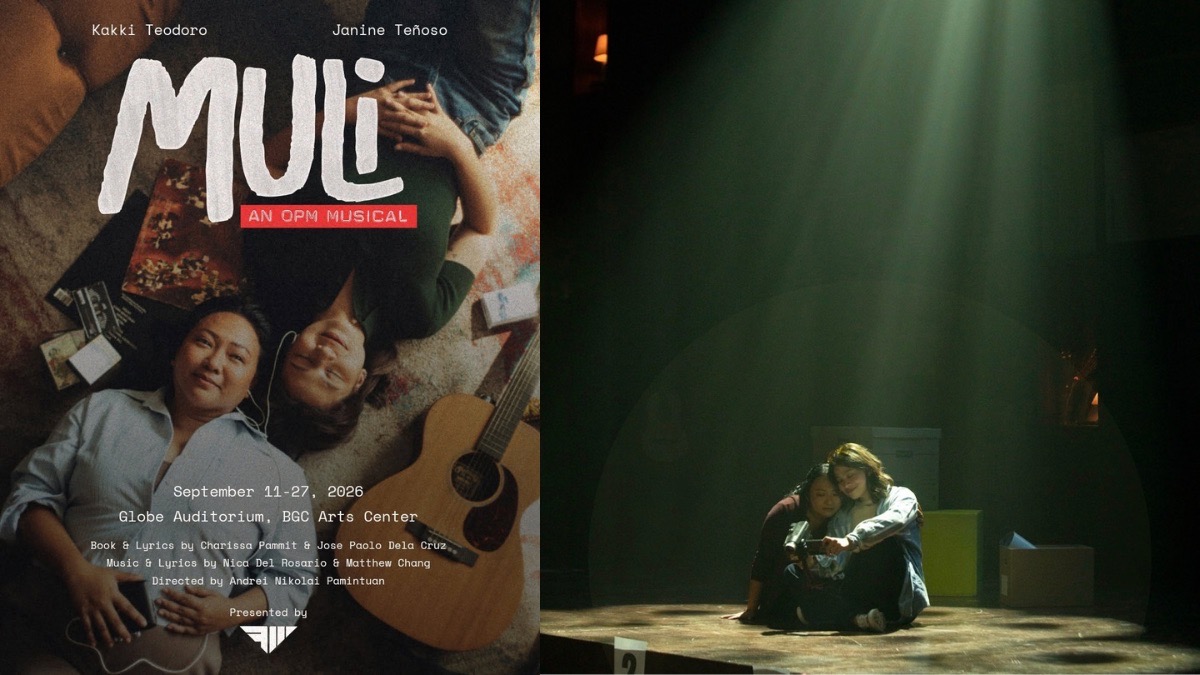
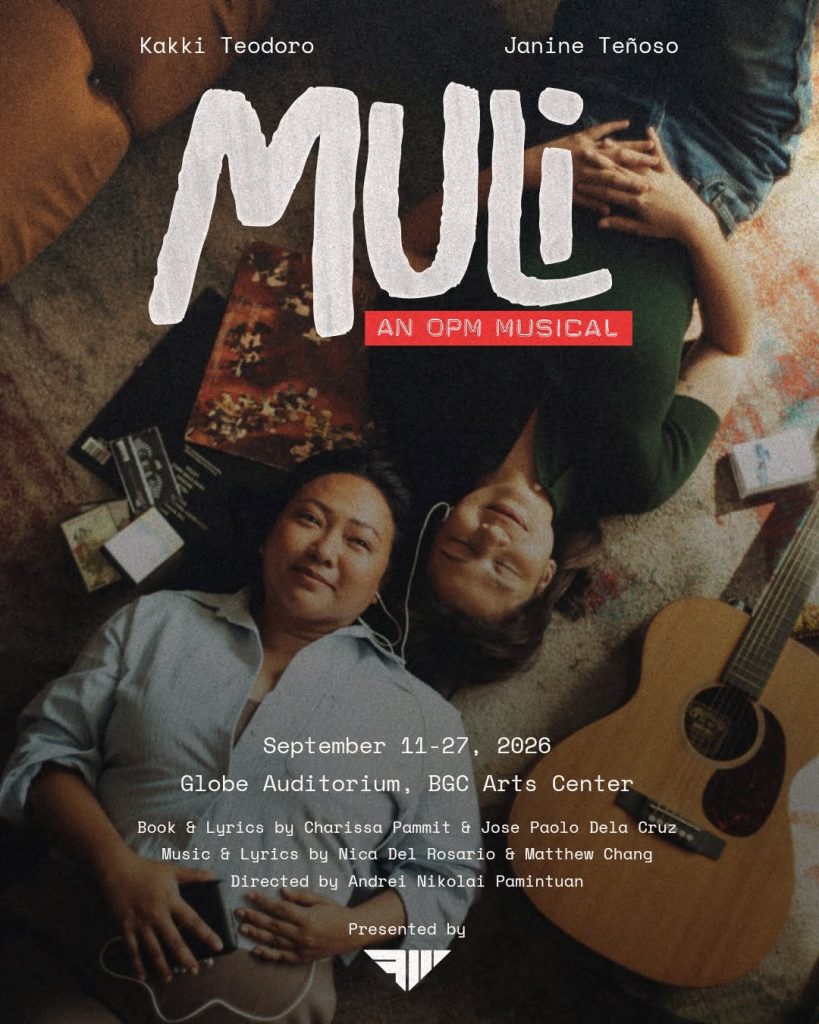
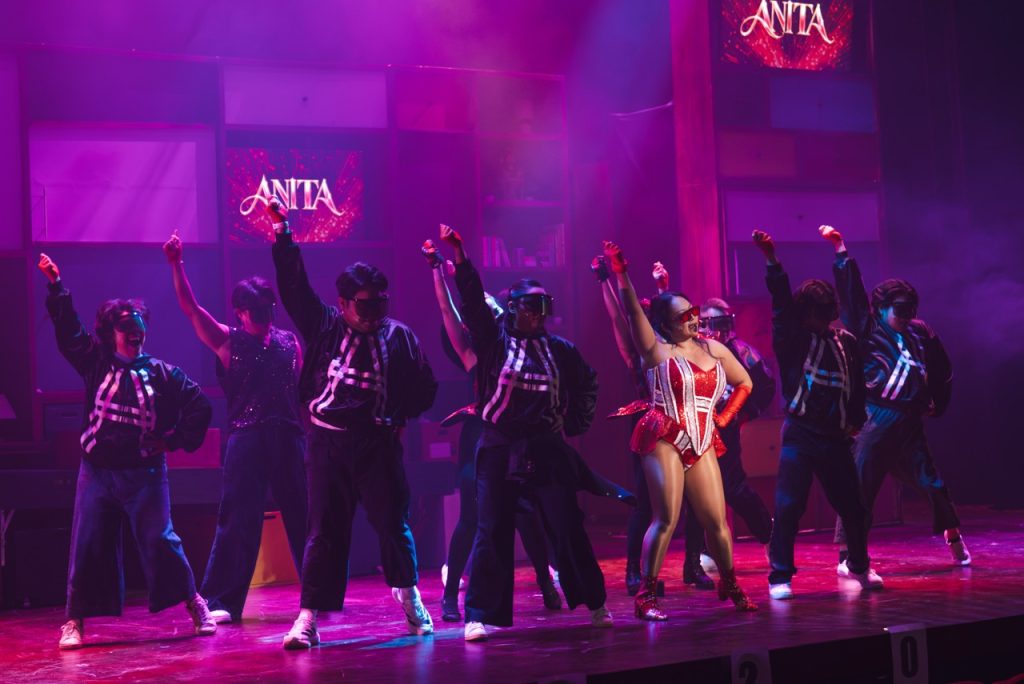
    I deeply miss original Filipino musical theater. While some jukebox musicals do good work, nothing beats new and original songs made composed specifically for the show. It’s one of the many good things about Muli, directed by Andrei Nikolai Pamintuan, written by Charissa Pammit and Jose Paolo dela Cruz, and featuring songs by Nica del Rosario and Matthew Chang. The songs are catchy and fresh. As the play travels back through time and explores dreams and “what-ifs,” the score plays skillfully with nostalgia. Certain tracks can sound very contemporary and very now while others can carry the sound of the ’90s. Hearing new original music by talented Filipino songwriters with a production that is vibrant and energetic is a pure delight.

    MULI An OPM Musical
    Image Source: MULI An OPM Musical FB Page

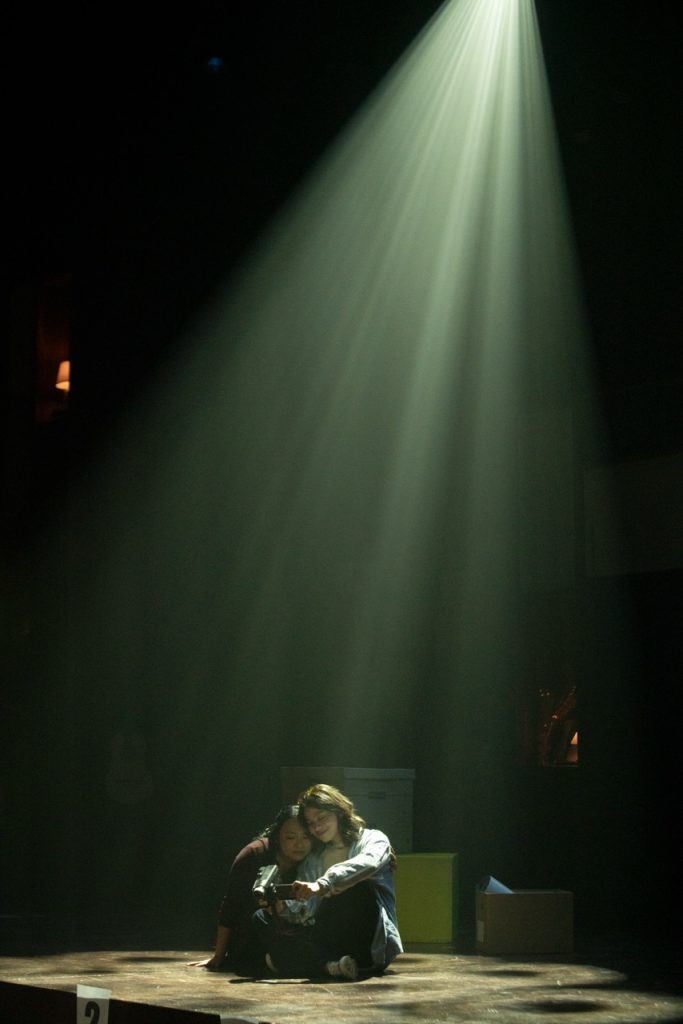
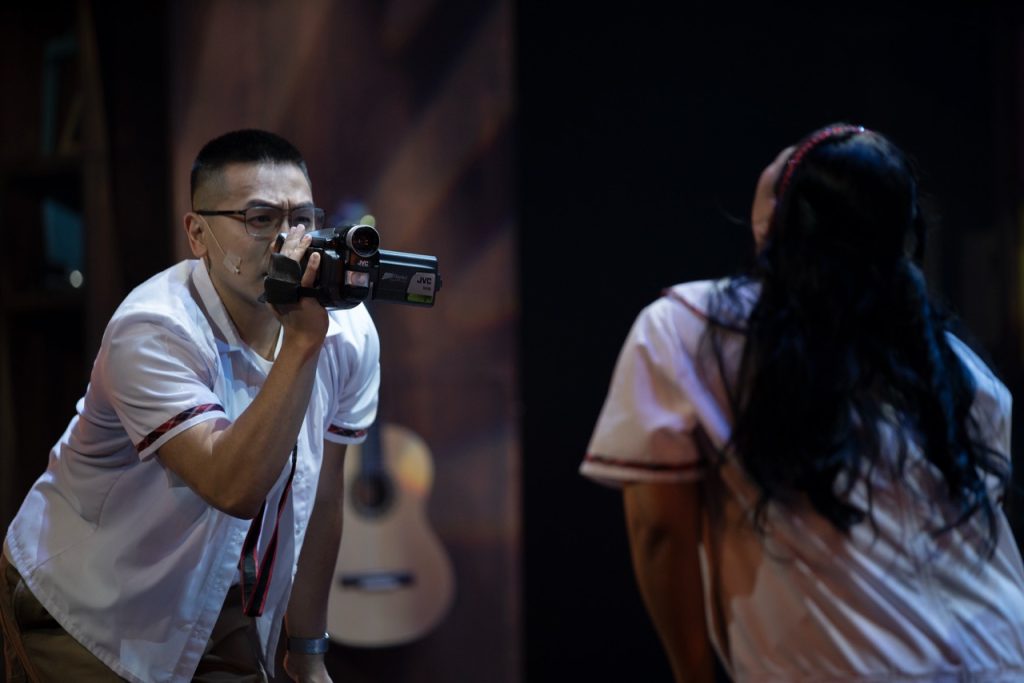
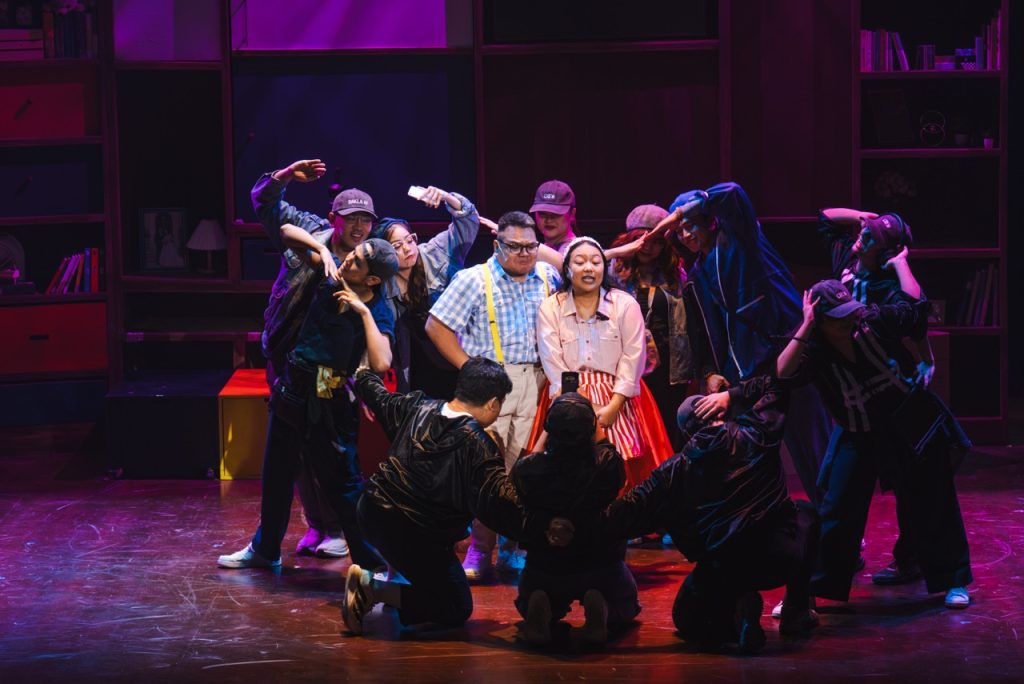
    Muli follows the story of Anita (Kakki Teodoro), a single mother whose dreams of becoming a pop star quickly ended when her daughter, Kath (Janine Teñoso), was born. As Kath urges her to declutter her home overflowing with decades of accumulated belongings (Kath calls her a “hoarder”), every single object brings back memories of a era when anything was still possible for Anita. With Kath preparing to move out, Anita has vivid dreams, alternate “what-if” realities, and just plain old trips down memory lane via a camcorder footage, all of which are acted out throughout most of the play. Yet beneath this nostalgia lies something being alluded to. Something that is amiss. Something fractured in the past has left Anita completely frozen in time and trapped in her dreams.

    Muli An OPM Musical
    Photo Courtesy of MULI, An OPM Musical

    Firstly, Andrei Pamintuan’s vision for the piece is genuinely thrilling. The stage, designed by D Cortezano (who also serves as the lighting director), features a wall of shelves filled with things that signal Anita’s hoarder tendencies. It doubles as an interactive space where actors retrieve props for every flashback, a dream sequence, or a fantasy. The shelves even swing open to reveal unexpected entrances and exits that manage to keep things surprising. At times, stagehands step in to roll out furniture pieces like desks and platforms, while other times, the actors and the ensemble handle the transitions themselves. This clever choreography creates a flow that allows the play to shift scenes seamlessly across time and memory.

    Muli Preview Night 3 An OPM Musical
    Photo Courtesy of MULI, An OPM Musical

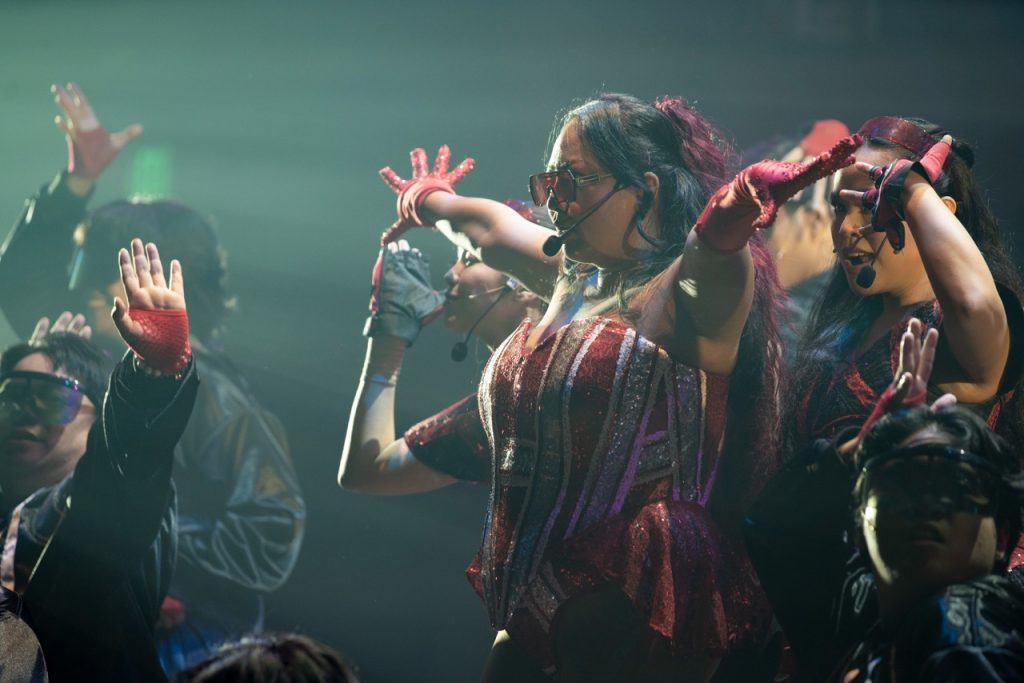
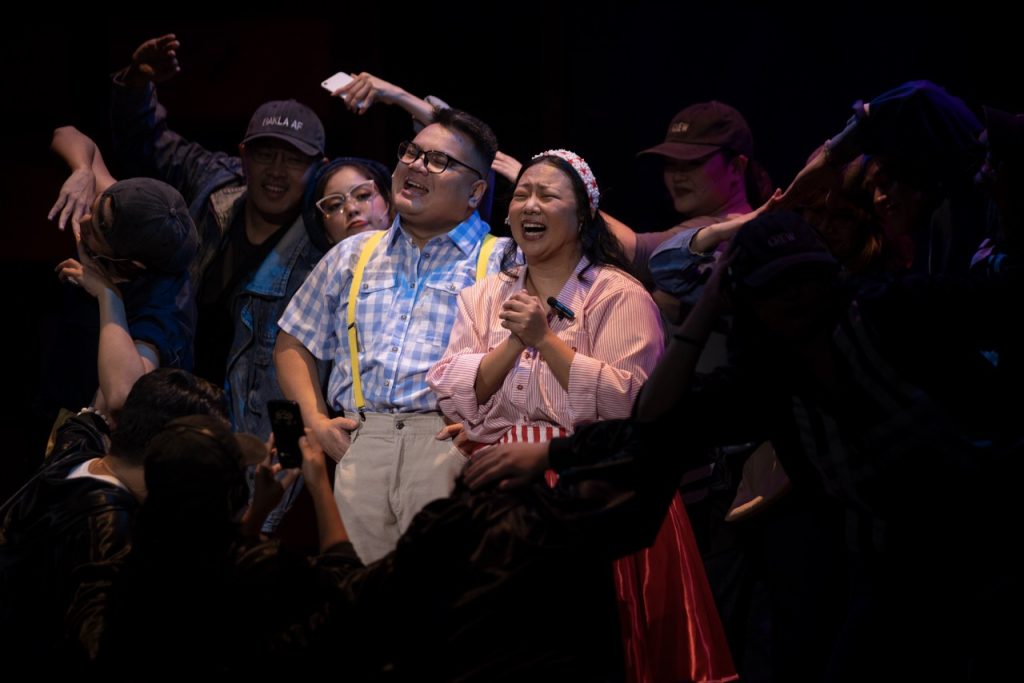
    Essentially, the play functions as an intemate two-hander between a mother and her daughter. Yet, there’s a bigger cast that is present, bringing to life figures from Anita’s past that sometimes call or exist within her dreams, fantasies, and flashbacks. This setup paves the way for big song numbers complete with energetic choreography by Julian Abuda, or bustling crowd scenes whenever Anita envisions alternate paths her life might have taken had she made different choices in high school.

    Muli Preview Night 6 An OPM Musical
    Photo Courtesy of MULI, An OPM Musical

    While everyone is fully committed to the madcap tone and feel of these alternate narratives or flashbacks – Baus Rufo, Marvin Ong, and Vien King are excellent at their roles, fitting them to a tee – there is no question that this is the Kakki Teodoro show. Not only must she embody the role of an exhausted single mother grappling with the prospect of an empty nest, but she also has to figuring out what to do with the rest of her life as her daughter leaves home. She has to play all the different facets of her. She turns into a full-pledged pop star, a sketchy CEO, a high schooler with crushes and big dreams. It is a mercurial, demanding lead role performance loaded with quick costume changes (and the costumes! Santi Obcena, take a bow!) and belting powerhouse songs across different genres and styles. Even performing while under the weather during the show I saw her in, Teodoro pulled out every single stop. She delivered every ounce of raw emotion needed for each number, and even if she was struggling with her condition, she carried through like the true veteran powerhouse she is. It’s what great performers are all about. I’m so happy to see her as a lead. It’s about time and well deserved.

    MULI An OPM Musical
    Photo Courtesy of MULI, An OPM Musical

    The production’s big secret is fairly easy to piece together if you pay close attention to the narrative clues along the way, something one can figure out if they ask the right questions as they are watching the show. I spotted it quickly, and while proven right, the reveal did not did not diminish the show’s ending. What it does, however, is raise valid questions about why certain choices of some fantasies and dreams were included in the first place. The diva pop star and the evil CEO personas feel strangely out of place for a character like Anita’s. In the real world, she has no malicious intent nor a dark side that foul for her to dream up of these characters. The CEO has the best song, though, one perfect for Teodoro, and a real highlight in terms of music and performance and direction, but it feels so off because it doesn’t come off as inherent in the character.

    Muli Preview Night 32 An OPM Musical
    Photo Courtesy of MULI, An OPM Musical

    Several of these dreams and fantasies are great when taken as is, without the rest of the narrative, but when included within the full context of the narrative, they inadvertently makes Anita appear that there’s a darker side of her that doesn’t quite fit her character at all. These moments feel disjointed, thrust into the story without real dramaturgical sense. While the political commentary related to the scene about the CEO is very much welcomed but doesn’t feel fully intrinsic to the core journey of the play. 

    Muli Preview Night 44 An OPM Musical
    Photo Courtesy of MULI, An OPM Musical

    At its core, Muli bursts with immense energy, vibrant creativity, a lot of great songs and exceptional performances. Hopefully, with a bit of fine-tuning in future runs, the play could be revisited so that all the dreams and fantasies could really integrate well with the play’s overall arching themes. Nevertheless, this was an enjoyable show and a great showcase for Kakki Teodoro.

    My Rating: 3.5 Stars

    stars 3 5

    Catch Muli, An OPM Musical live at the Globe Auditorium, Maybank Performing Arts Theater for its final weekend run this September 25 to 27! Check showtimes and get your tickets at TicketWorld before this extraordinary show takes its final bow!

  • THEATER REVIEW: A Polished Production with Great Performances, ‘The Notebook’ Struggles to Hit Its Emotional Zenith

    THEATER REVIEW: A Polished Production with Great Performances, ‘The Notebook’ Struggles to Hit Its Emotional Zenith

    I have never read The Notebook by Nicholas Sparks, but I have seen Nick Cassavetes’ film adaptation starring Rachel McAdams and Ryan Gosling. Surprisingly, I have watched a lot of movie adaptations of books written by Sparks; while I cannot say I enjoy them all, there is a distinct formula to them that I find comforting and somehow appeals to my closet-romantic nature. So I was excited to catch Theater Group Asia’s production of The Notebook The Musical, even without knowing much about the stage version itself. The songs were written by Ingrid Michaelson, a singer-songwriter whose music career I have been a fan of during her early record.

    The musical’s book, written by Bekah Brunstetter, follows a non-linear storyline depicting the main characters, Allie and Noah, across three distinct timelines. The story opens in a nursing home, where an elderly Allie lives with dementia while Noah refuses to leave her side.

    The Notebook The Musical
    Celeste Legaspi as Older Allie, Rody Vera as Older Noah | Photo: Jyllan Bitalac & Sherie Bolo | Courtesy of Theatre Group Asia’s The Notebook The Musical (Artistic Director: Clint Ramos; Executive Director: Christopher Mohnani)

    As he reads to her from her handwritten notebook, a diary she kept, the and this thrusts us into the past, where two different versions of Noah and Allie act out their youth. Young Noah and Young Allie portray their first meeting and their falling in love. While middle Noah and Middle Allie, after years of not having seen each other; Noah has returned from the war to fulfill a promise, while Allie finds herself engaged to be married to another man just as their paths cross once again. 

    The Notebook The Musical
    Photo: Jyllan Bitalac & Sherie Bolo | Courtesy of Theatre Group Asia’s The Notebook The Musical (Artistic Director: Clint Ramos; Executive Director: Christopher Mohnani)

    At its core, The Notebook is a classic love story about two lovers who meet each other and fall in love but their circumstances try to keep them apart, who nevertheless defy all odds and refuse to let each other go. 

    The Notebook The Musical
    Photo: Jyllan Bitalac & Sherie Bolo | Courtesy of Theatre Group Asia’s The Notebook The Musical (Artistic Director: Clint Ramos; Executive Director: Christopher Mohnani)

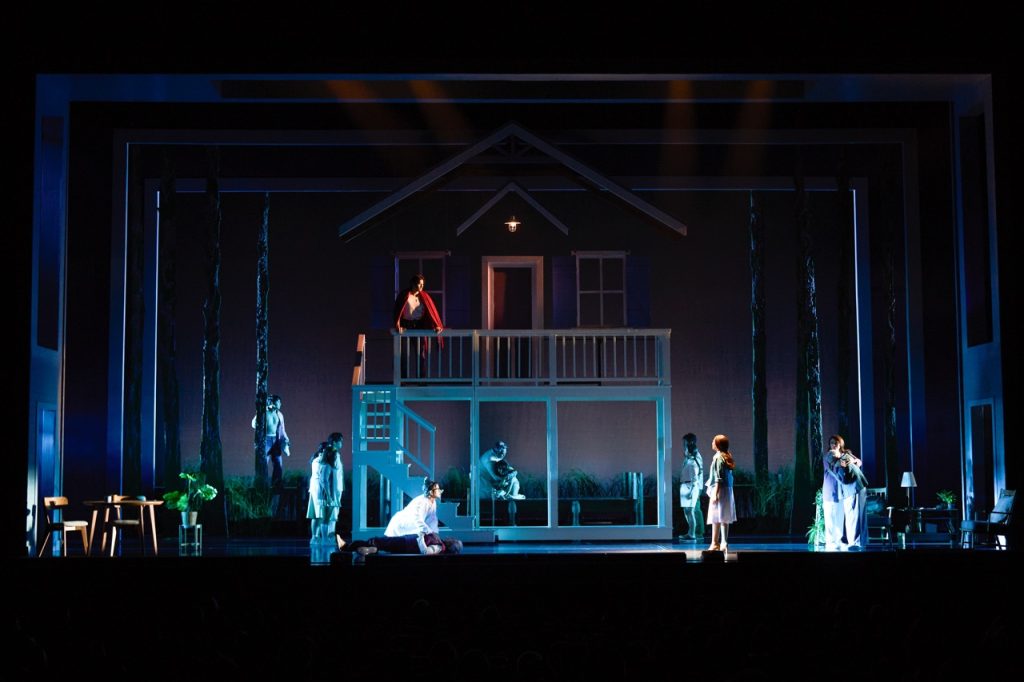
    Directed by Nicholas Polonio, The Notebook The Musical emerges as a very polished staging that showcases some really good vocal performances from its cast, most notably from Morissette, who bring incredible depth and vocal power to Middle Allie and a set design that’s dynamic and inventive. There’s a massive dropdown screen frames that allows Older Noah and Older Allie to have their scenes upstage in the nursing home and as they journey into memory of the past, the screen lifts up to give us some gorgeous set designs by Miguel Urbino.

    The Notebook The Musical

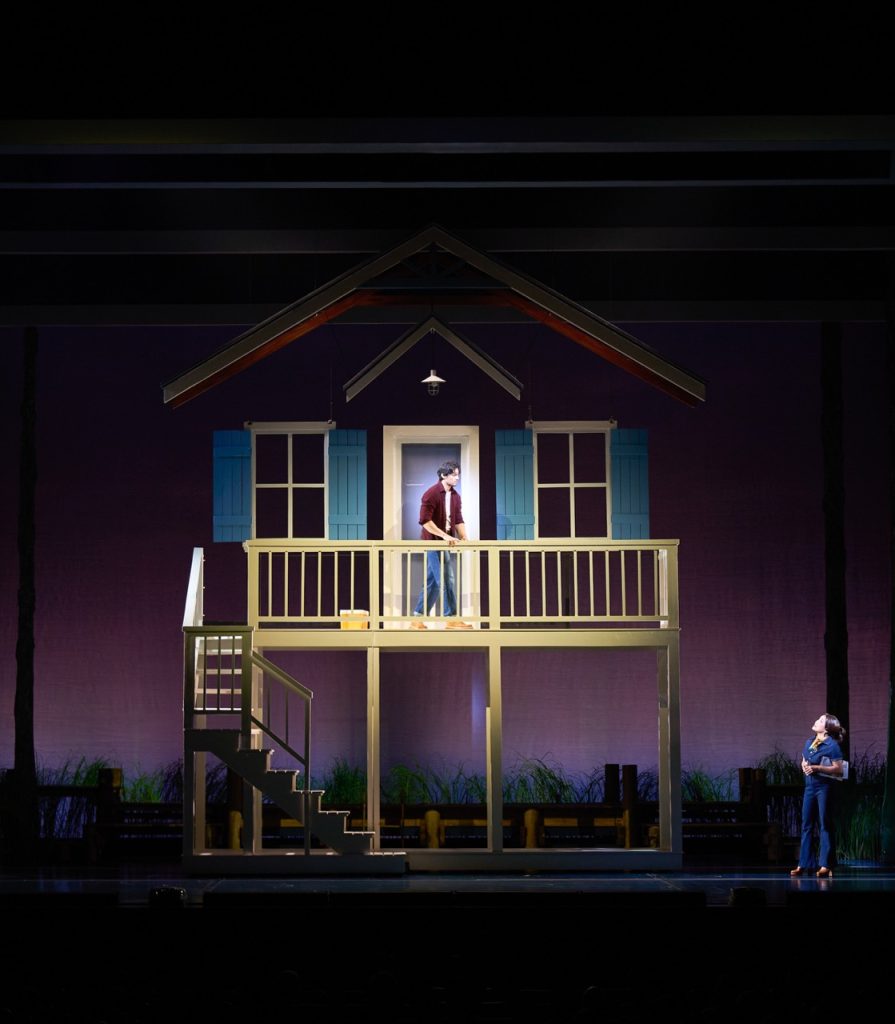
    The stage transitions between a dock, complete with a rowboat, a frame representing the “haunted house” (that carries a promise with immense story implications), a bedroom with a huge bed, and a two-story house with stairs and a balcony. These sets are incredible to look at and Polonio’s use of the dropdown projection screen and some additional sliding screens at the side allows him total cinematic command over the show’s overall imagery of each scene. It’s almost cinematic.

    The Notebook The Musical
    Laurence Mossman as Middle Noah, Jillian Ita-as as Georgie | Photo: Jyllan Bitalac & Sherie Bolo | Courtesy of Theatre Group Asia’s The Notebook The Musical (Artistic Director: Clint Ramos; Executive Director: Christopher Mohnani)

    Positioned behind the stage, the orchestra delivers a rich, lush soundscape that far surpasses the arrangements of earlier productions. Musical director Farley Asuncion brings out all the emotions from his arrangement. Later, the orchestra is revealed along with another set change at the height of one of the musical’s most emotional moments for full effect. It’s quite strong.

    Theatre Group Asia s The Notebook The Musical Morissette as Middle Allie Laurence Mossman as Middle Noah 1 TGA
    Morissette as Middle Allie, Laurence Mossman as Middle Noah | Photo: Jyllan Bitalac & Sherie Bolo | Courtesy of Theatre Group Asia’s The Notebook The Musical (Artistic Director: Clint Ramos; Executive Director: Christopher Mohnani)

    Without highlighting the root cause of their break-up, overshadowed by all the montages of Noah and Allie falling in love, the musical renders its central conflict feels manufactured rather than rooted in a relatable, universal truth. Hidden by all the romantic parts, the conflict (or lack of it) doesn’t really give the musical the tension to reach its emotional zenith. Yes, Older Allie has dementia but that’s also a conflict that cannot be won over by choice. 

    Theatre Group Asia s The Notebook The Musical Sheena Belarmino as Younger Allie Benedix Ramos as Younger Noah TGA
    Sheena Belarmino as Younger Allie, Benedix Ramos as Younger Noah | Photo: Jyllan Bitalac & Sherie Bolo | Courtesy of Theatre Group Asia’s The Notebook The Musical (Artistic Director: Clint Ramos; Executive Director: Christopher Mohnani)

    Yet despite its technical flourishes and a powerhouse performance from Morissette, I found the play to lack a certain tension that would amplify the narrative’s conflict. I feel the problem is in the book. Benedix Ramos, Laurence Mossman, and Rody Vera, playing Young Noah, Middle Noah, and Older Noah, respectively, do a great job at portraying the charming romantic lead. Their collective Noah is a bundle of goodness and devoted to his love for Allie. Because of the way he’s written and then performed, there seems to be no real reason why Allie’s parents would be against him other than class discrimination. There are no rough edges in this Noah; no brusque temper, and no underlying danger. Noah is simply a good man. It doesn’t help that Ingrid Michaelson’s songs give him a lot of high notes (which each actor sings well) to sing and he’s always longing for her that there seems to be no real reason for them to be apart except for this discrimination that doesn’t get enough moments to be fully realised.

    Theatre Group Asia s The Notebook The Musical Morissette as Middle Allie Sheena Belarmino as Younger Allie Celeste Legaspi as Older Allie TGA
    Morissette as Middle Allie, Sheena Belarmino as Younger Allie, Celeste Legaspi as Older Allie | Photo: Jyllan Bitalac & Sherie Bolo | Courtesy of Theatre Group Asia’s The Notebook The Musical (Artistic Director: Clint Ramos; Executive Director: Christopher Mohnani)

    The cast members, led by Sheena Belarmino, Morissette, and Celeste Legazpi, who embody the three versions of Allie, young, middle, and old, respectively – are also giving it their all but it’s a show that doesn’t fully maximize the elements of its story, especially its conflict.

    It still hit home for the ladies beside me when I watched; each one holding back tears and swooning at every romantic milestone. The Notebook The Musical is an impeccably polished production with a lot of great technical work involved and standout vocal performances. There is no question about that. Yet the material itself has its issues that hinder a good show from becoming a truly great one.

    My Rating: 3 Stars

    stars 3 0

    A story loved around the world, proudly built in the Philippines by Filipino artists, for Filipino audiences: Theatre Group Asia’s production of The Notebook The Musical must close on September 20 at the Samsung Performing Arts Theater. Experience the music and stellar performances for yourself before the run ends. Grab your tickets now via TicketWorld.

  • THEATER REVIEW: Eugene Domingo’s Second Skin: A Review of ‘Ang Babae sa Septic Tank 4: Oh Sh*t! It’s Live sa Cheter!’

    THEATER REVIEW: Eugene Domingo’s Second Skin: A Review of ‘Ang Babae sa Septic Tank 4: Oh Sh*t! It’s Live sa Cheter!’

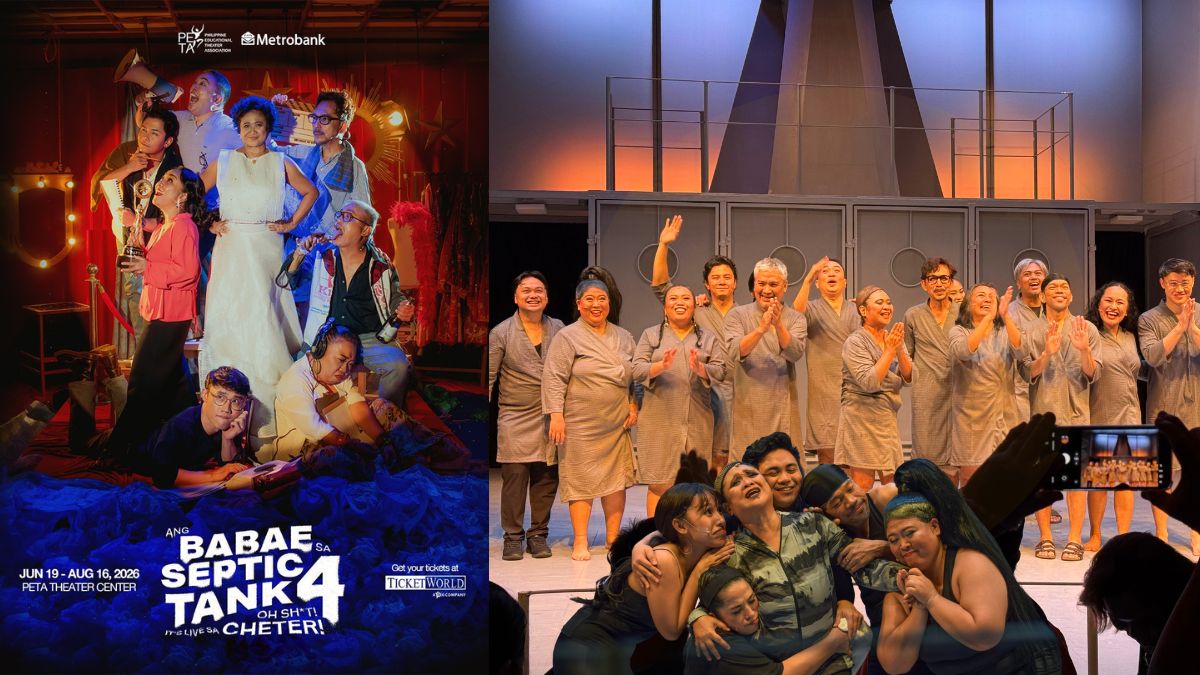
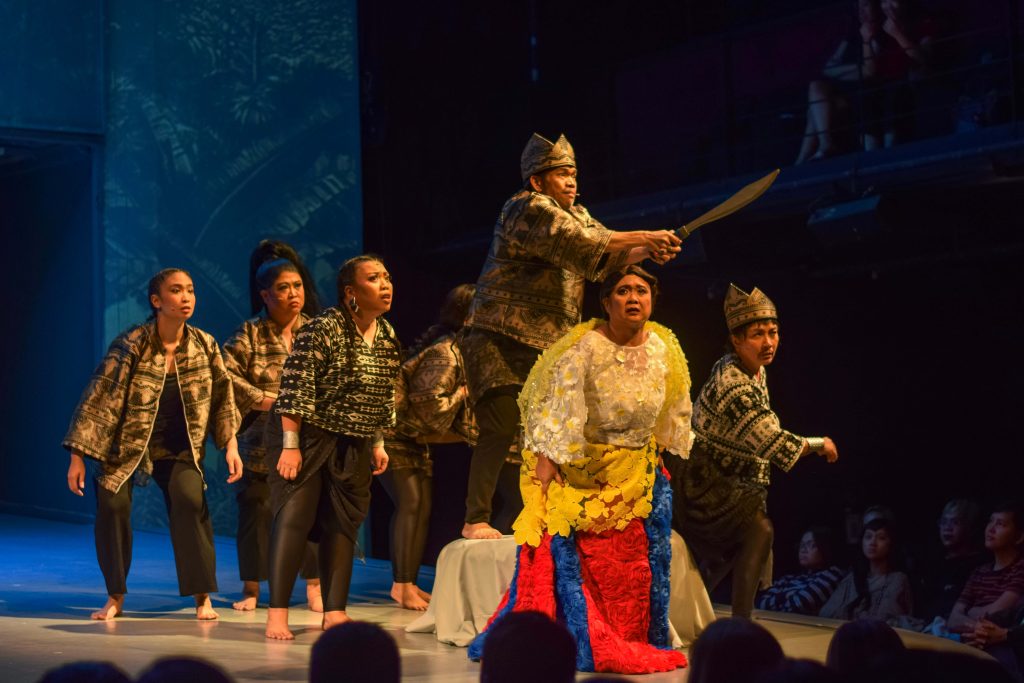
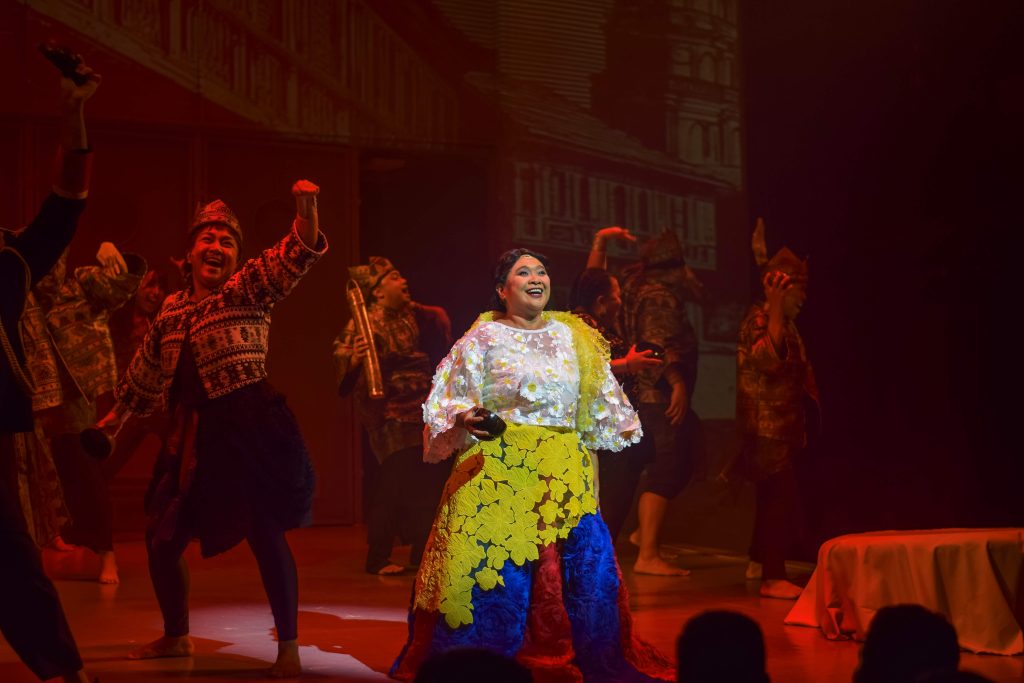
    After two movies and a streaming series, there is absolutely no question that Eugene Domingo has mastered playing a parody of herself, which she, Marlon Rivera, and Chris Martinez popularized in the Babae sa Septic Tank franchise. In its fourth installment, the meta-commentary and satirical series leaps onto the world of theater. Ang Babae sa Septic Tank 4: Oh Sh*t! It’s Live sa Cheter! takes the larger-than-life Domingo and sets her ambitious vision toward the world of live theater. Within the world of Septic Tank, Domingo’s character has become the ultimate symbol of artistic indulgence, where all the best (or worst) intentions of the industry are amplified to their most ridiculous extremes to expose the excesses of human nature in pursuit of the production and making art.

    Ang Babae sa Septic Tank 4: Oh Sh*t! It’s Live sa Cheter!
    Ang Babae sa Septic Tank 4: Oh Sht! It’s Live sa Cheter! | Photo Courtesy of PETA

    In this play, Domingo calls together a veritable who’s who of Philippine theater – including Melvin Lee, Stella Cañete-Mendoza, Andoy Ranay, Joshua Lim So, Meann Espinosa, JC Santos, and Marlon Rivera, all playing heightened versions of themselves – to mount an ambitious revival of Aurelio Tolentino’s Kahapon, Ngayon, at Bukas, which was first staged in 1903.

    Eugene Domingo
    Ang Babae sa Septic Tank 4: Oh Sht! It’s Live sa Cheter! | Photo Courtesy of PETA

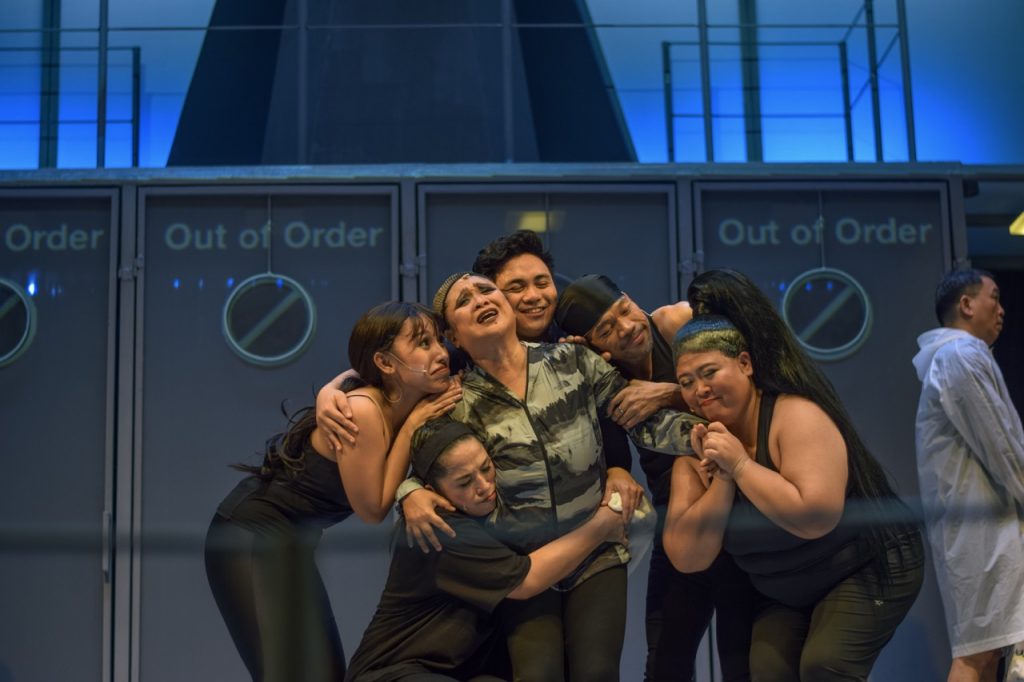
    The inherent stakes of this seditious, anti-colonial classic are taken to its extreme when Domingo wants to perform the piece on a boat in the middle of the disputed West Philippine Sea. Naturally, things take a turn for the madcap and campy when Domingo veers off course, and begins to make changes in the production, turning away from Tolentino’s original vision, and sailing the cast straight into a literal and figurative storm.

    Ang Babae sa Septic Tank 4 Ensemble 1
    Ang Babae sa Septic Tank 4: Oh Sht! It’s Live sa Cheter! | Photo Courtesy of PETA

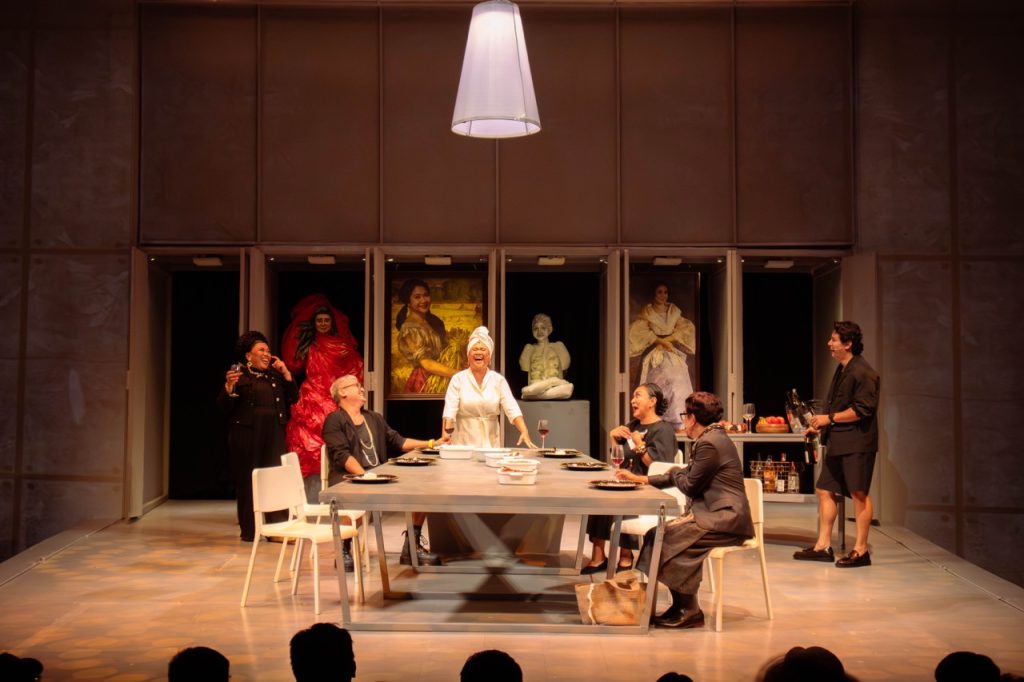
    Told in two acts, Babae sa Septic Tank 4… opens with a pitch. The cast arrives at Domingo’s home for a friendly dinner. The whole first act is exposition, allowing the characters to discuss the current state of theater, illuminating on some of the misconceptions (that it’s doing great, for example), while lamenting the amount of musicals in comparison to straight plays. It’s a highly didactic opening act that throws insights side-by-side with sharp punchlines as playwright Chris Martinez seizes every opportunity to land some hilarious, comic punches to the industry.

    Ang Babae sa Septic Tank 4 Ensemble 4
    Ang Babae sa Septic Tank 4: Oh Sht! It’s Live sa Cheter! | Photo Courtesy of PETA

    These comedic punches can be very funny if you are quite familiar with the world of theater. However, for a lot of people who are not “in the know,” they’ll find it funny because of the delivery alone. The majority of the cast has rightfully captured the rhythm and tonal qualities of the play for maximum comic effect; it’s funny because it sounds funny and delivered funny even if you don’t get it – though some jokes still land even if you are new to Philippine theater like when Eugene Domingo and her gang of Ugeng-gengs (an ensemble of theater-trained “youngstannas”) parody the different style of the different theater groups from PETA to UP Theater to Repertory Philippines. This nearly hour-long first act is just a setup for Act Two, where both plot and themes of which they would parody fully.

    Spain
    Ang Babae sa Septic Tank 4: Oh Sht! It’s Live sa Cheter! | Photo Courtesy of PETA

    In Act Two, the cast are rehearsing the play within the play, and we watch it transform from what was set up in Act One as a defiant act of protest, one carrying the true heart of theater, and turn into a modernized, contemporary revival that is far more musical than straight play, which was something the whole act one was lamenting on. Through this, Babae sa Septic Tank 4… parodies theater’s current “golden age” by dramatizing the worst impulses of theater practitioners: prioritizing spectacle over truth; accessibility over authenticity. It doesn’t always stick the landing: the fictionalized version of theater feels too big, too campy to make any real harsh criticism. While it is undeniably funny, for sure, but the comedy and the hilarity ultimately overshadow the social commentary.

    Grand Curtain Call
    Ang Babae sa Septic Tank 4: Oh Sht! It’s Live sa Cheter! | Photo Courtesy of PETA

    If anything, though, everyone on stage is clearly having a good time. Eugene Domingo remains a commanding presence, and the entire production revolves around her. JC Santos fires on all cylinders, fully deploying his complete arsenal of talents – singing, dancing, comedy – and does a stellar performance that matches Domingo’s energy in every scene. Meanwhile, the ensemble playing the Ugeng-gengs is a total blast, filling the stage to create the kind of ordered chaos that keeps the pacing fast and energetic. The costumes and the stage design help us realise the state of camp that we’re experiencing here. It is a humongous undertaking, but director Maribel Legarda keeps it all moving and flowing.

    Ang Babae sa Septic Tank 4 Grand Curtain Call Large
    Ang Babae sa Septic Tank 4: Oh Sht! It’s Live sa Cheter! | Photo Courtesy of PETA

    Ultimately, the play is a success by the very nature of how fun and funny it is. While I wish it could have been as insightful and precise with its commentary and theatrical satire as the original Ang Babae sa Septic Tank film was for cinema, it remains, regardless, a truly great time at the theater.

    My Rating: 3.5 Stars

    stars 3 5


    Catch Eugene Domingo’s latest meta-comedy live on stage! Ang Babae Sa Septic Tank 4: Oh Sh*t! It’s Live Sa Cheter! runs until August 16, 2026, only at the PETA Theater Center. Tickets are available at bit.ly/SepticTank4Tickets.

  • THEATER REVIEW: The Uneven Set D ‘Pusong Mamon’ of the Virgin Labfest Starts Muddled but Ends with a Bang

    THEATER REVIEW: The Uneven Set D ‘Pusong Mamon’ of the Virgin Labfest Starts Muddled but Ends with a Bang

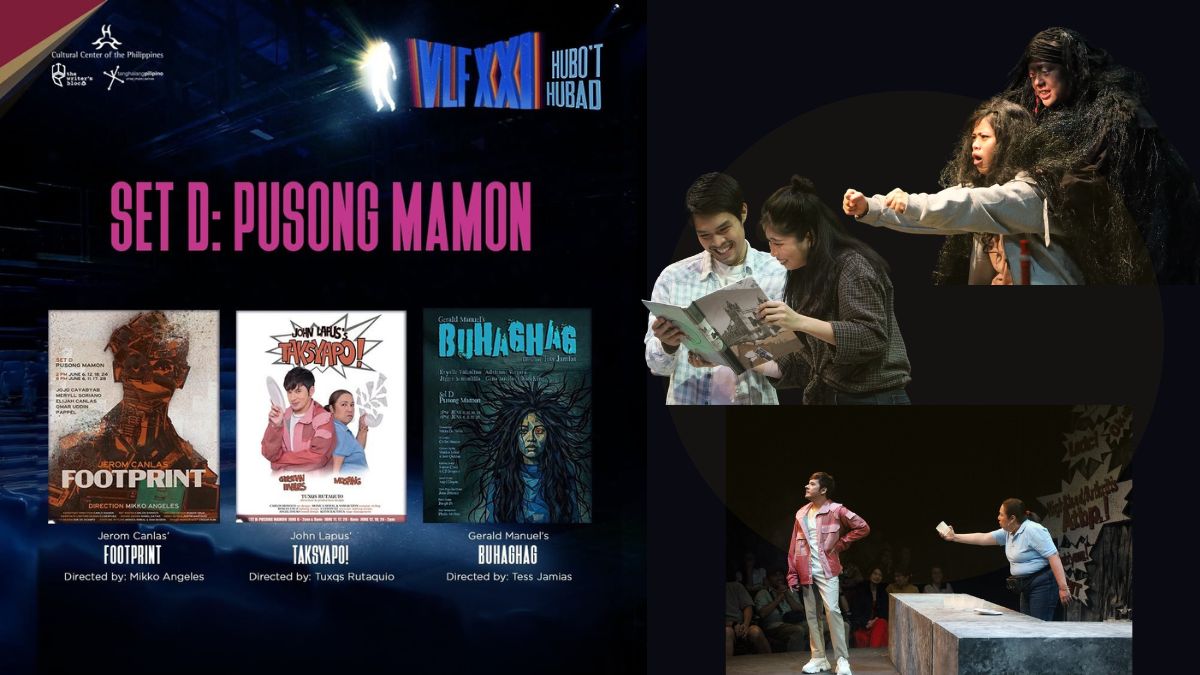
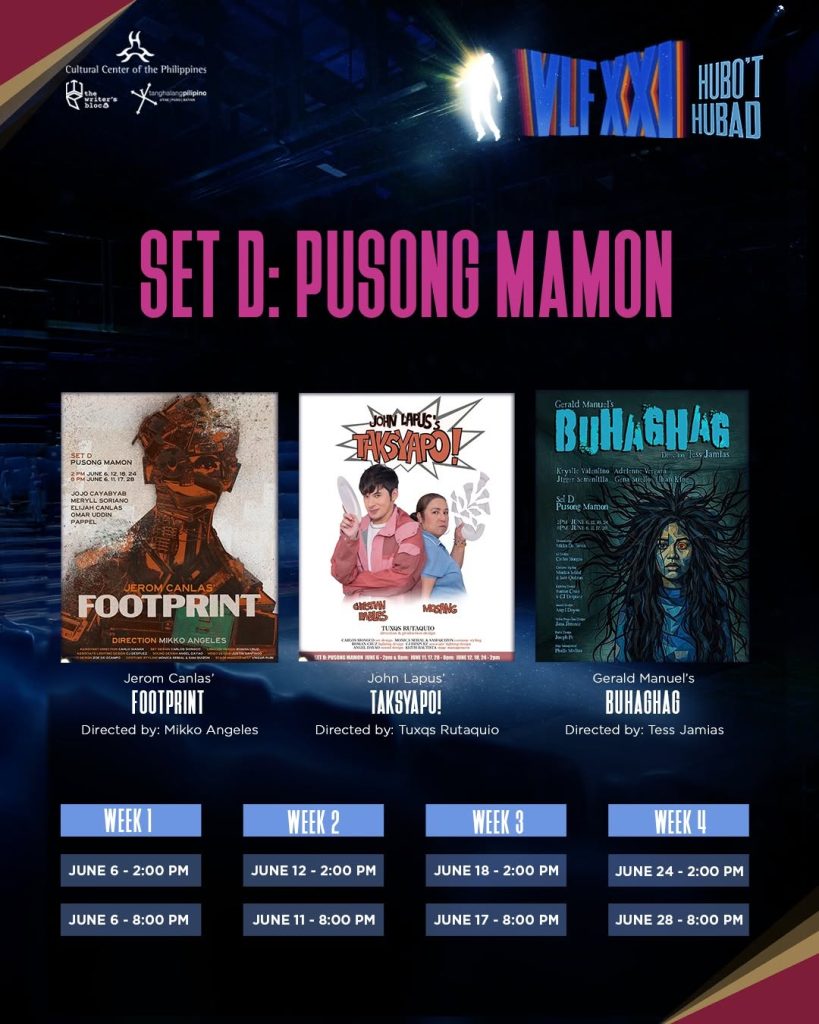
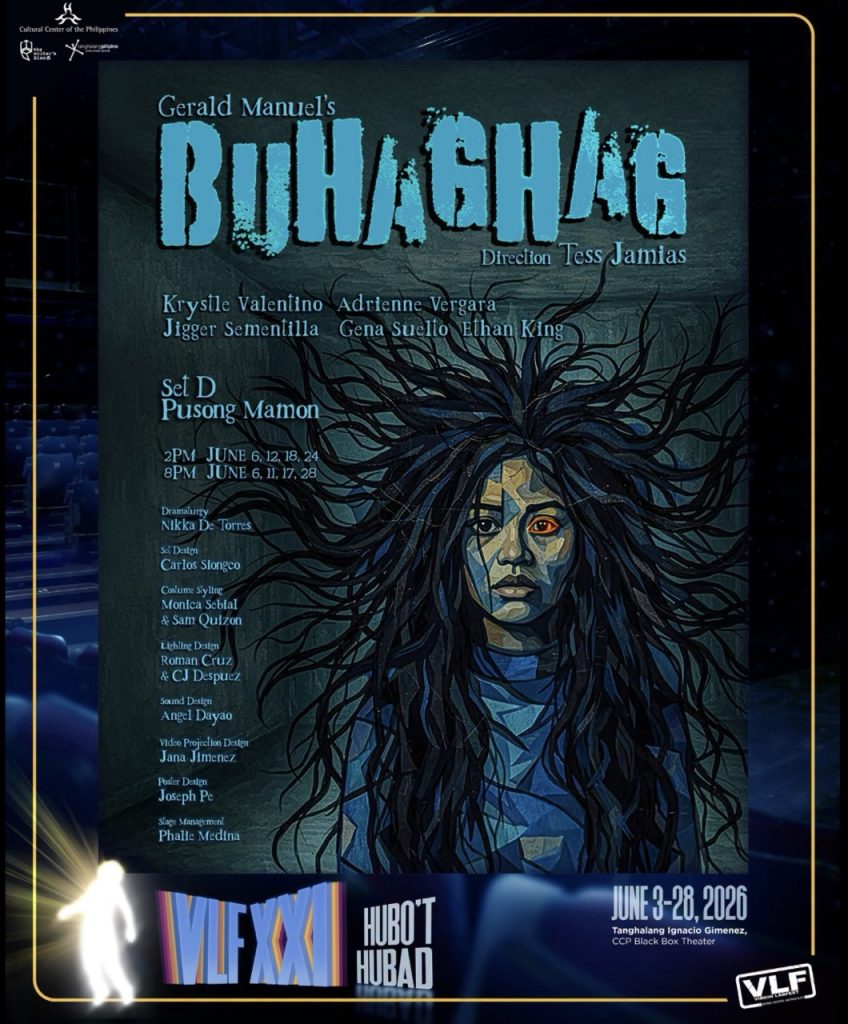
    Set D of the Virgin Labfest, titled “Pusong Mamon,” presents an uneven trilogy of plays. The opener, Gerald Manuel’s ‘Buhaghag,’ utilizes exceptionally really good theatrical devices to help energize an otherwise didactic script. This leads into to Jerom Canlas’s emotionally-strong ‘Footprint’ and ends on a high with John Lapus’ comedic ‘Taksyapo!.’ While the set starts out muddled, it quickly finds it footing in the second play before delivering a rip-roaring, laugh trip of an experience in its finale.

    VLF XXI Set D

    Buhaghag
    By Gerald Manuel
    Directed by Tess Jamias

    Set D Buhaghag Orly Daquipil 46 1
    Production photos for “Buhaghag,” “Footprint,” and “Taksyapo!” by Orly Daquipil

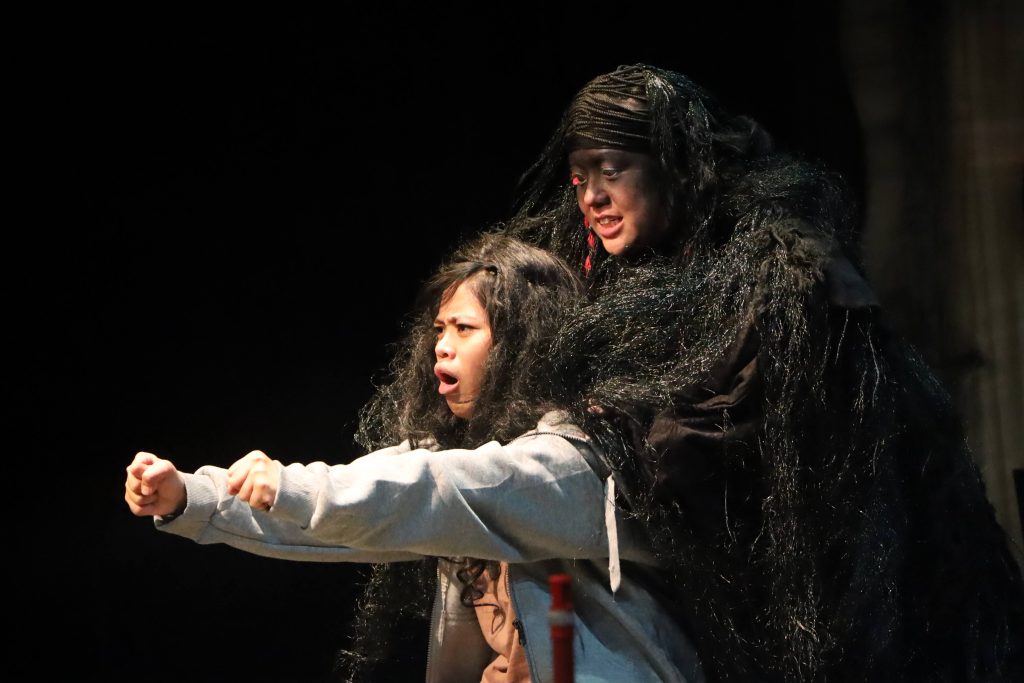
    Didactic in its execution, ‘Buhaghag’ spends most of its time explaining what is happening rather than dynamically showing us the lead character’s problem. Phoebe (played by Krysytle Valentino) is so busy that she is chronically sleep-deprived and no time to see friends and family. Her room is filled with black vines that resemble hair, and bursting through the walls comes a creature made entirely of hair (played by Adrienne Vergara), who offers Phoebe a deal to give her the rest she needs. Director Tess Jamias does a wonderful job of trying to keep the performance energy high, with huge credit going to Set Designer Carlos Siongco and Costume Stylists Monica Sebial and Sam Quizon for bringing this surreal nightmare to life..

    VLF XXI SET D PUSONG MAMON Buhaghag
    VLF XXI – SET D [PUSONG MAMON]: BUHAGHAG

    Unfortunately, all the visual theatrics cannot alleviate the play’s issue which could have been solved by  the lesson: show, don’t tell. We need to actually see Phoebe working; we need to witness her missing out on life because of her obligations. Because Vergara’s entity comes far too soon, the remainder of the play relies almost on the two characters simply talking about the play’s plot. It doesn’t help matters that Valentino struggles to match Vergara’s powerful presence. As a result, she disappears underneath all that theatrics – the set, the costumes, the stage design – making it incredibly difficult to connect with the protagonist.

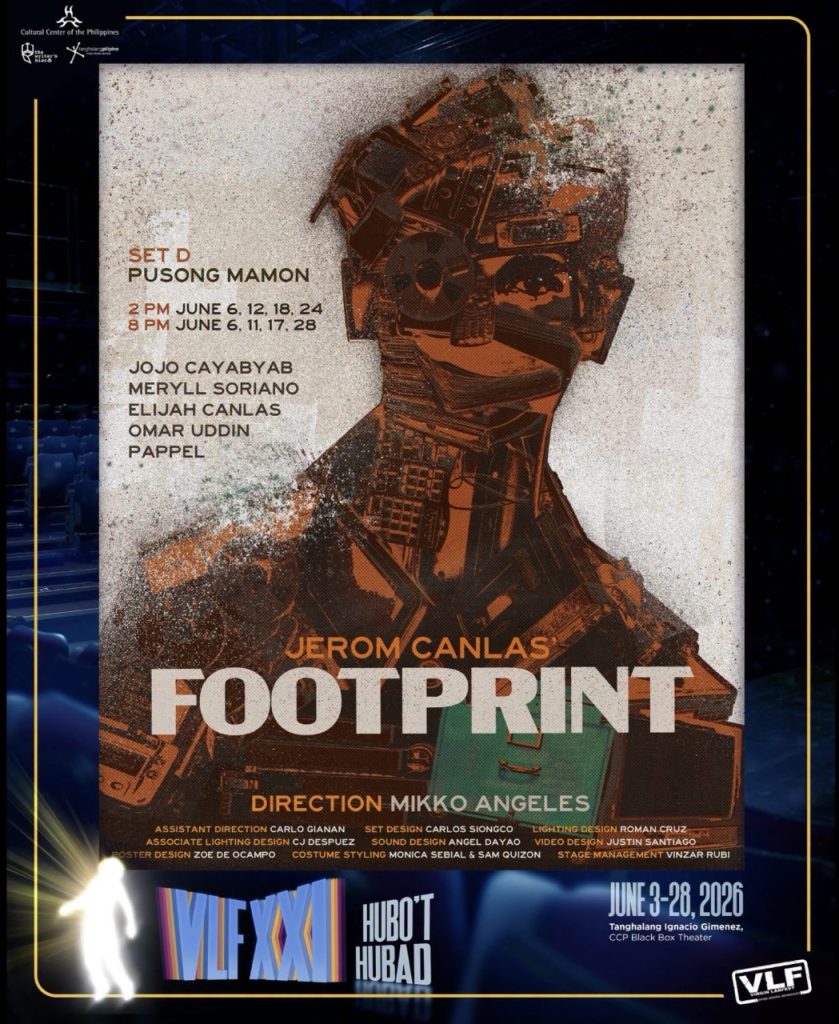
    Footprint
    By Jerom Canlas
    Directed by Mikko Angeles

    Set D Footprint Orly Daquipil 17 1
    Production photos for “Buhaghag,” “Footprint,” and “Taksyapo!” by Orly Daquipil

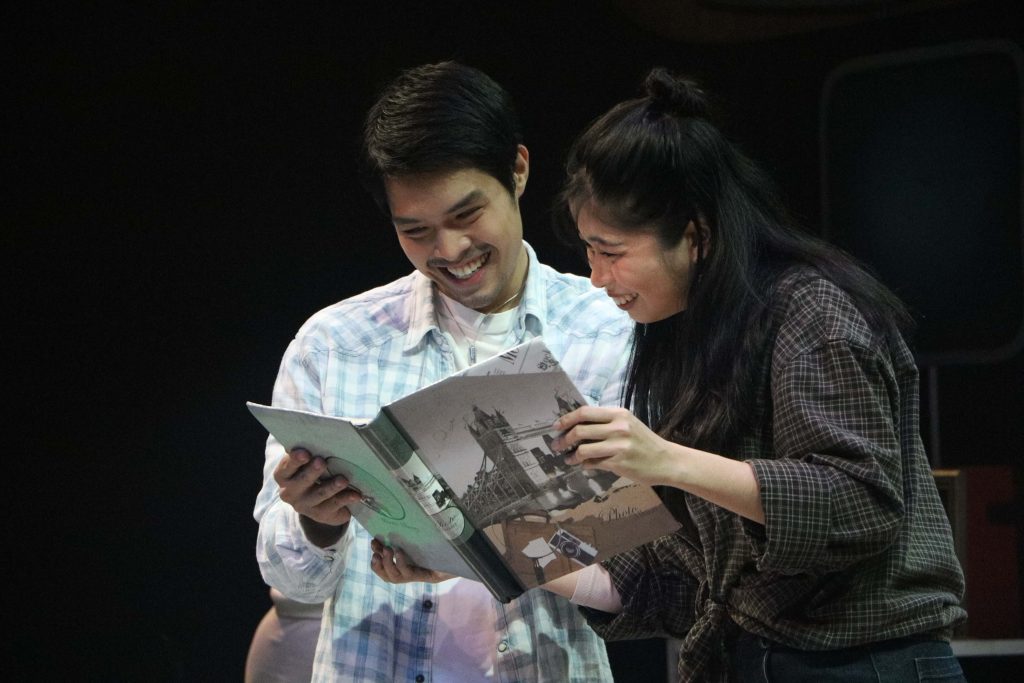
    In a near-future world, Jerom Canlas’s ‘Footprint’ follows a family who regularly visits the virtual digital archive containing the memories of Ram, a teenager who committed suicide. Within this virtual space, his father, mother, older brother, and girlfriend find each other and deal with the loss of a loved one and the painful realisation: they will never truly understand why Ram did what he did.

    Director Mikko Angeles has the unenviable task of conceptualizing what this future looks like. Collaborating with set designer Carlos Siongco, the stage resembles an abstract drawing of a library, but its cool, slick design makes it look futuristic. Enhanced by a sharp projection mapping and immersive lighting and sound effects, the aesthetic and feel of the future is clearly palpable. If it was really needed, I’m not sure because the weight of the performances are enough to carry this play through. If it was an empty stage and the actors just spoke the lines in some oblivion-like space, the effect would have been just as powerful.

    VLF XXI SET D PUSONG MAMON Footprint Poster
    Screenshot

    The ensemble, played by Elijah Canlas, Meryl Soriano, Jojo Cayabyab, and Pappel, delve so deeply into their emotional space that the audience really felt it. Everyone around me was crying. The rawness of the unearthed emotions and the sensitive issue of suicide – never romanticized, but carefully contextualized for the sake of the survivors – hit in a different way. When Omar Uddin, who has been exceptionally strong in all of his recent performances, comes up to do a monologue as Ram, the play reaches its absolute emotional peak and completely kills it.

    Ultimately, while the heavy theatrics were undeniably well-executed and helped sell the idea of the play; it was executed well but felt unnecessary.

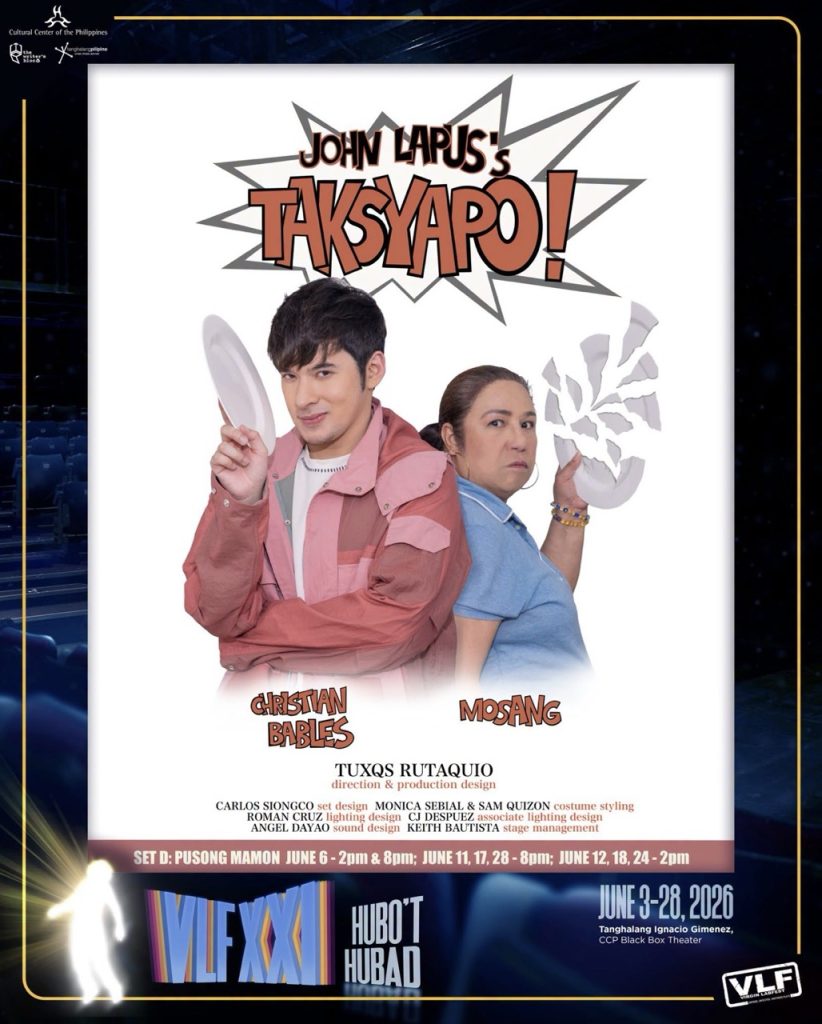
    Taksyapo!
    By John Lapus
    Directed by Tuxqs Rutaquio

    Set D Taksyapo Orly Daquipil 23 1
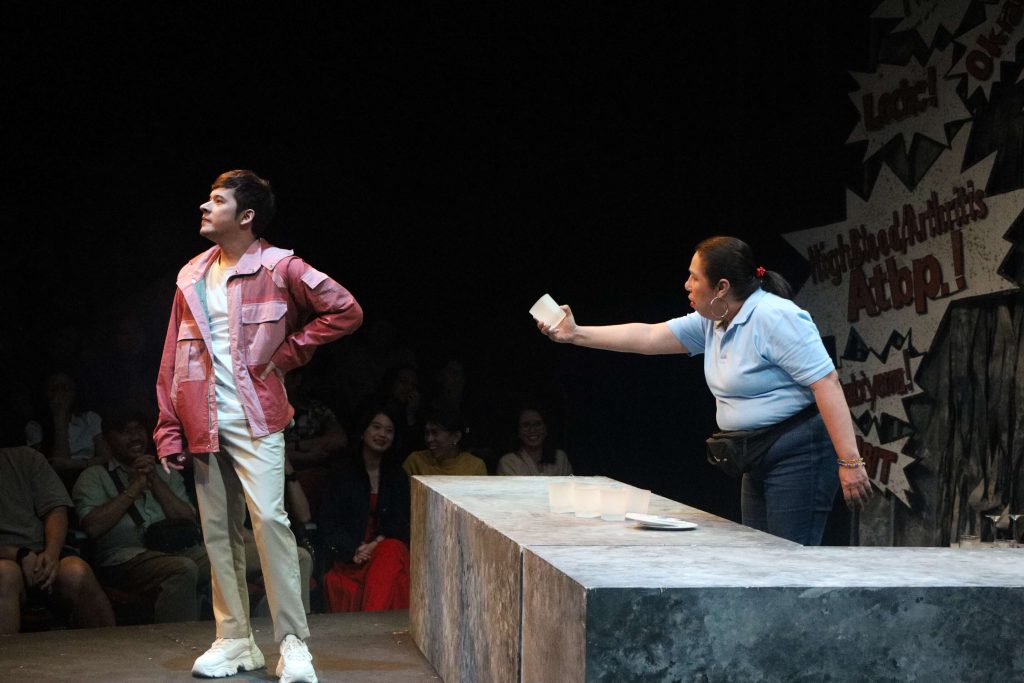
    Mosang and Christian Bables in “Taksyapo!.” (Photo by Orly Daquipil)

    A play centered around the famous rage booth in Tarlac, where one buy plates and mugs and throw them against the wall to elease their pent-up anger and frustration, is an interesting idea. John Lapus’s ‘Taksyapo!’ is a two-hander featuring booth clerk Maya (played by Mosang), and a gay patron, JM (played by Christian Bables). Through their banter, we see a world that is deeply painful to live in. Maya is a woman whose husband has left her, while JM is a gay man reeling from a recent a breakup. Both characters find themselves in the absolute perfect space to let out some steam.

    VLF XXI SET D PUSONG MAMON Taksyapo
    VLF XXI – SET D [PUSONG MAMON]: TAKSYAPO!

    And let off steam they do, to fantastic effect. The immersive sound effects of the shattering glass and plates add to the energy of the play as the actors hurl their frustrations through a cleverly designed fake wall. However, the play’s frustration goes beyond the personal. It extends to other things that bother them until the whole play becomes a litany of actions and people who piss us off. Of course, it gets political, but at the same time serves as a mirror to our society in general.

    Ultimately, ‘Taksyapo!’ feels destined to become an instant classic – something that will be added into a line-up of short plays that will serve to end the show with a good laugh and a chance to call out the troubles and ills of the day. It is a brilliant piece that will unboubtedly be easily revived time and time again.

    My Rating: 4 Stars

    stars 4 0


    Virgin Labfest XXI runs until June 28 at the Tanghalang Ignacio Gimenez (CCP Black Box Theater). Don’t miss your chance to witness the raw emotional power and explosive comedy of Set D ‘Pusong Mamon’ for yourself, grab your tickets before the festival wraps up. For tickets, visit Ticket World and Ticket 2 Me.

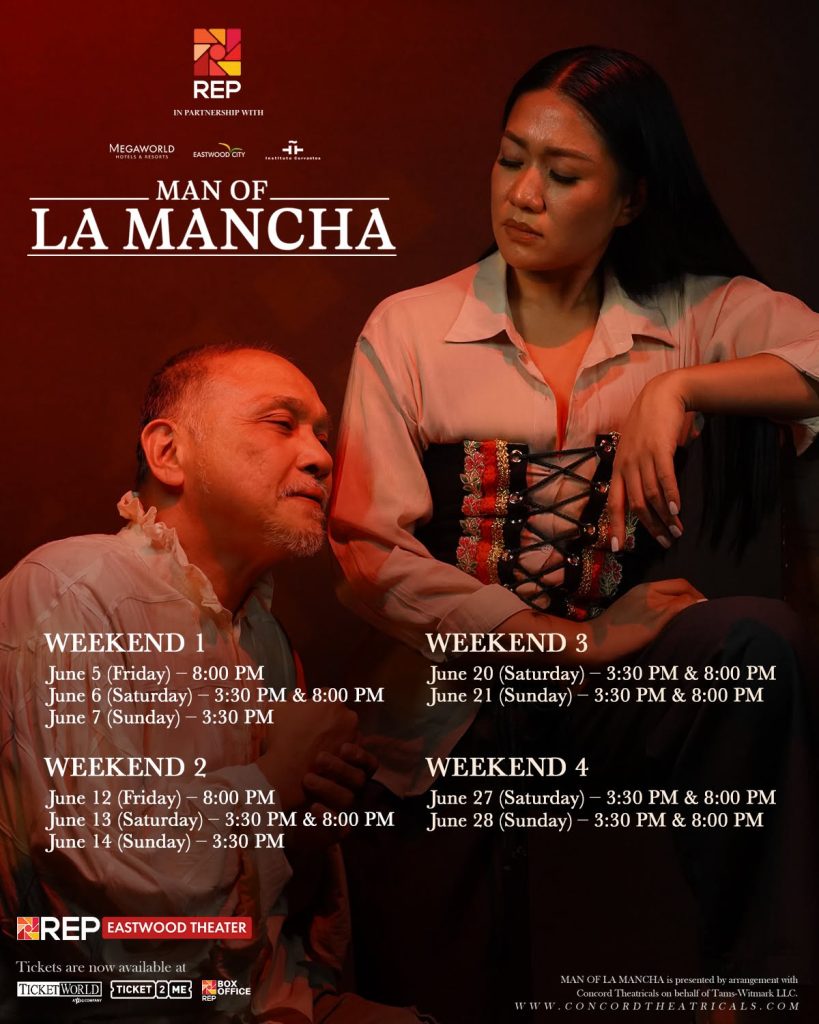
  • THEATER REVIEW: Repertory Philippines’ ‘Man of La Mancha’ Finds New Life in Incredible Staging and Quicker Tempo

    THEATER REVIEW: Repertory Philippines’ ‘Man of La Mancha’ Finds New Life in Incredible Staging and Quicker Tempo

    I grew up listening to the Broadway cast recording of Man of La Mancha, the 1965 musical with music by Mitch Leigh, lyrics by Joe Darion, and a book by Dale Wasserman. The musical is the source of the famous song “The Impossible Dream,” and for some reason, I always thought the name Dulcinea originated from this musical. I also caught the 1972 film adaptation starring Peter O’Toole and Sophia Loren.

    So while I was happy to learn that Repertory Philippines was staging a new revival, helmed by Nelsito Gomez as director and starring Nonie Buencamino as Miguel Cervantes/Don Quixote, I worried about whether the play could resonate with a modern audience. Does its light, whimsical touch on madness and positivity reflect our contemporary issues? Does it treat too lightly things we do not play around with so easily in 2026, like mental health and sexual assault? 

    01 REP officially stages the seminal classic Man of La Mancha as reimagined by director Nelsito Gomez. Man of La Mancha
    REP officially stages the seminal classic Man of La Mancha, as reimagined by director Nelsito Gomez. The musical will have a limited run until June 28 at REP Eastwood Theater | Photo credit: Krizhal Daryl Ordas of Indio Creatives

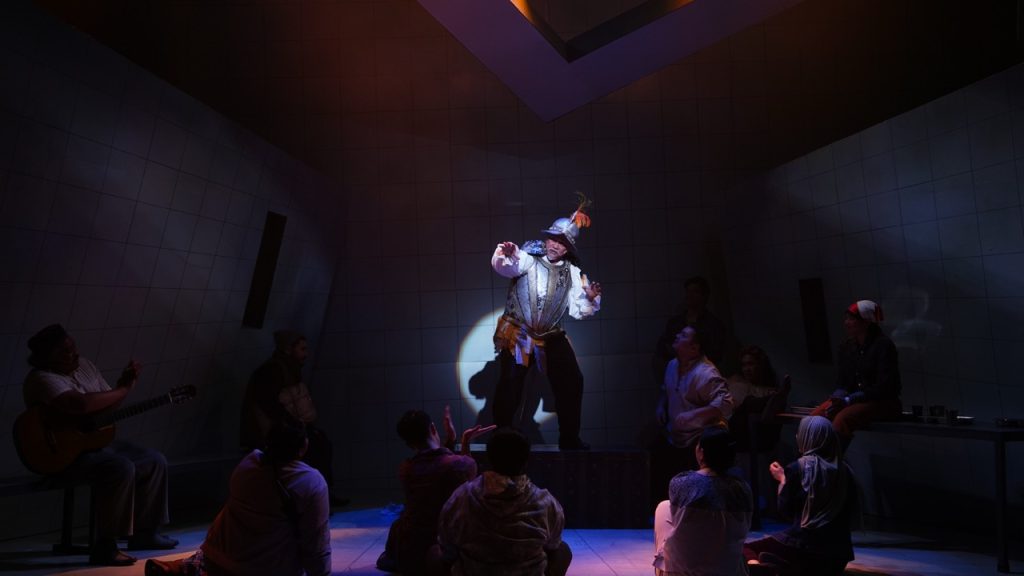
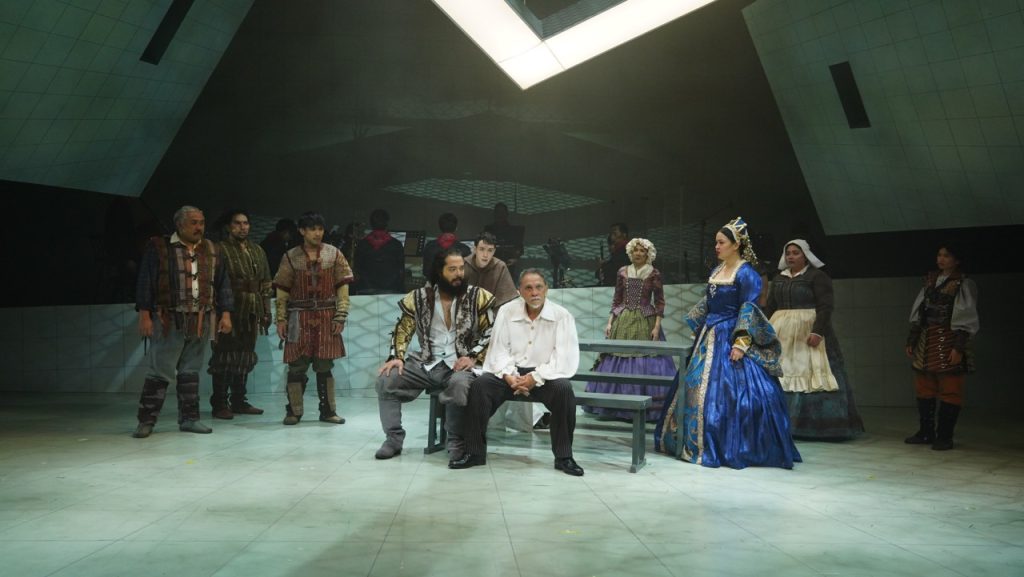
    Set in the late 16th Century during the Spanish Inquisition, Man of La Mancha begins as Miguel de Cervantes and his manservant, Sancho, are brought to prison to await trial. But in prison, the other prisoners there conduct their own mock trial.

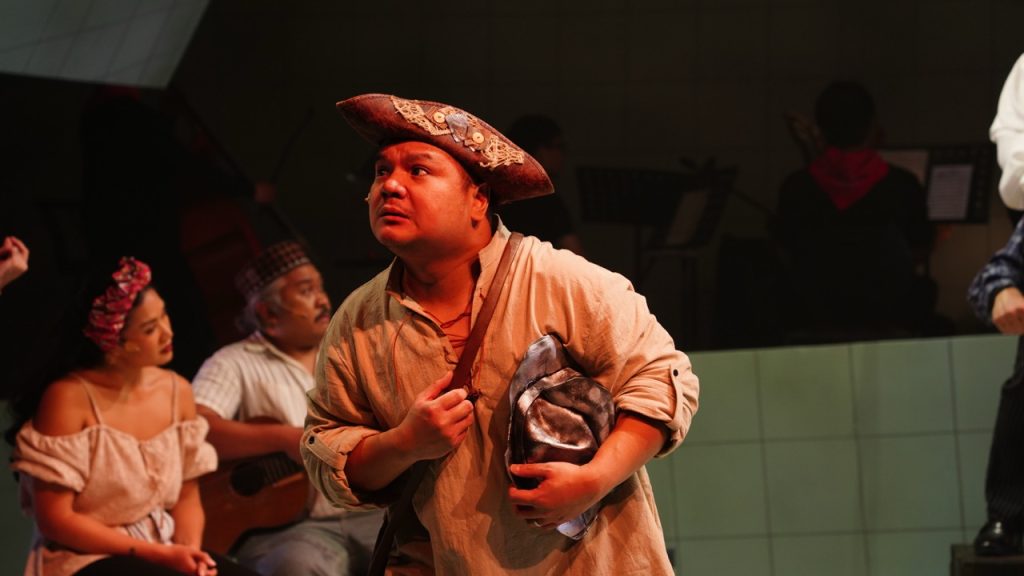
    04 Gawad Buhay winner Marvin Ong plays Don Quixotes faithful squire Sancho Panza. Man of La Mancha
    Gawad Buhay winner Marvin Ong plays Don Quixote’s faithful squire, Sancho Panza, joining his master in his many adventures.
     Photo credit: Krizhal Daryl Ordas of Indio Creatives

    Because Cervantes is not just a former tax collector but a failed poet and author, the inmates quickly deemed him guilty. But Cervantes demands that he be given a chance to defend himself and presents his defense by performing a play.

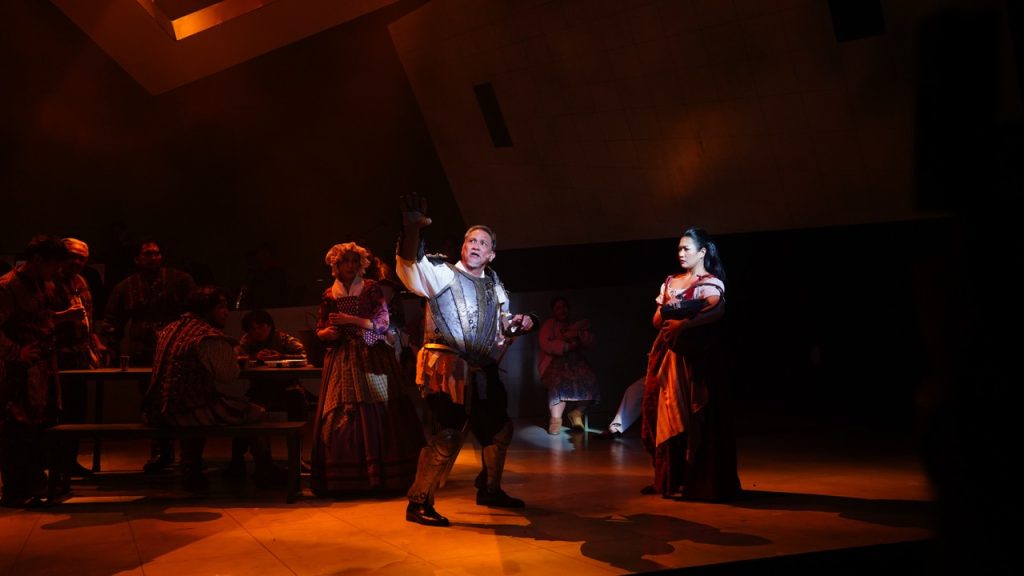
    02 Nonie Buencamino makes his grand musical comeback. Man of La Mancha
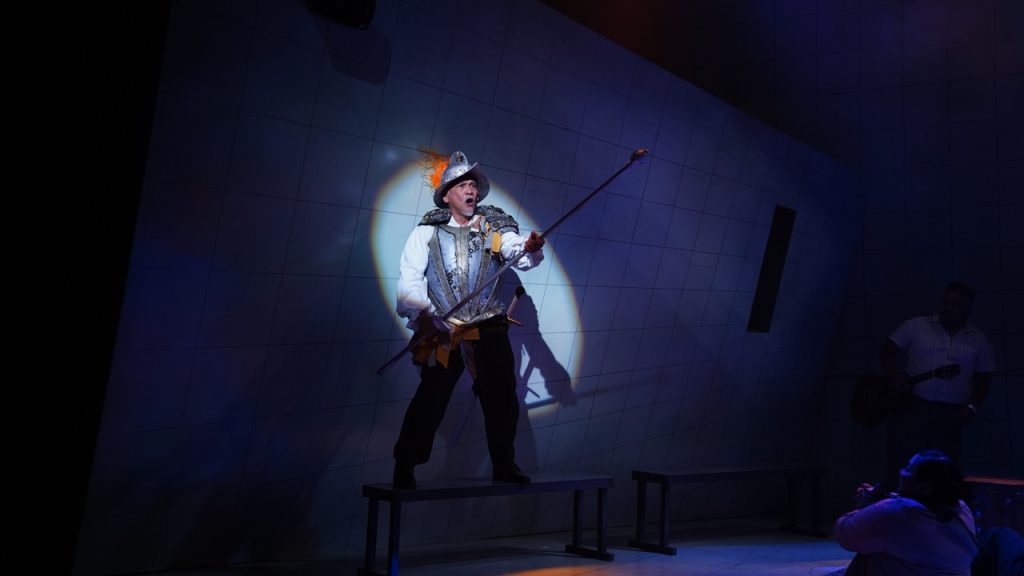
    In REP’s Man of La Mancha, Nonie Buencamino makes his grand musical comeback playing three characters: the fictionalized version of the famed writer Miguel de Cervantes, and his characters the old gentleman Alonso Quijano and the iconic knight-errant Don Quixote. | Photo credit: Krizhal Daryl Ordas of Indio Creatives

    He invites the other prisoners to take on roles in the story of Don Quixote, played by Cervantes himself, a noble who, driven by madness, believes he is a knight. Quixote renames Aldonza, a waitress and part-time sex worker, calling her by the name Dulcinea and insisting she is a noble lady.

    Man of La Mancha
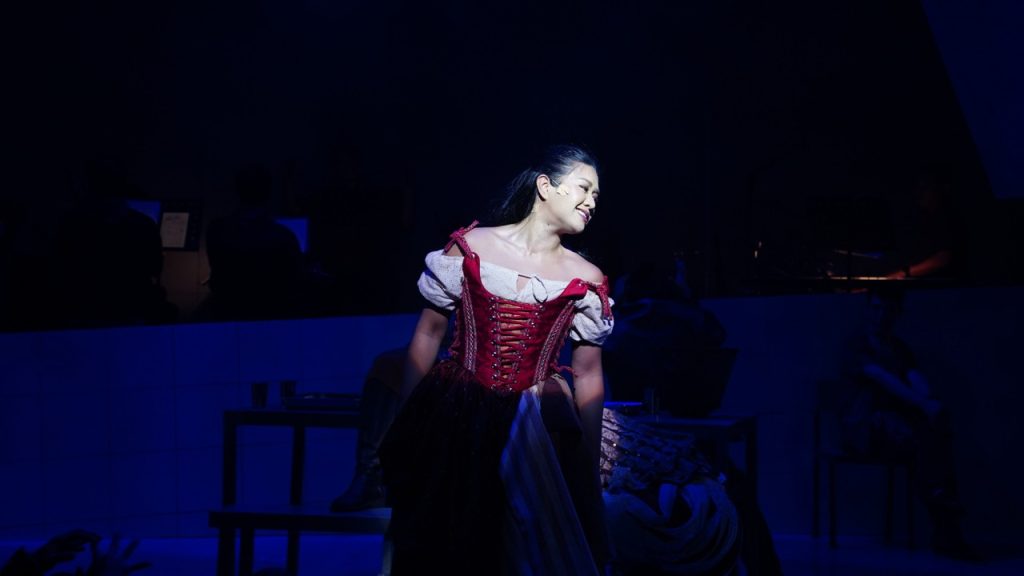
    Esteemed classical singer and actress Katrine Sunga takes the role of Don Quixote’s muse, Aldonza, in Man of La Mancha. 
    Photo credit: Krizhal Daryl Ordas of Indio Creatives

    Though he is widely ridiculed, his delusion begins to transform those around him, inspiring them to see the best versions of themselves. Yet, as Don Quixote wants to fight for a better world, his family tracks him down as his exploits have become the talk of the town and brought shame to their name.

    Man of La Mancha
    Man of La Mancha features the timeless classic, “Dulcinea,” a song Don Quixote sings to Aldonza, a barmaid. 
    Photo credit: Krizhal Daryl Ordas of Indio Creatives

    Much of Quixote’s delusions were originally meant to be taken as a comic relief; it was written in 1965, after all, an era with a far more flippant attitude toward about how mental health is treated in this musical. What makes Gomez’s direction is so compelling is that he does not shy away from it. He never treats madness for mere comic effect, choosing instead to explore the very real, harrowing ramifications of Quixote’s delusions. Aldonza, for instance, is placed in harm’s way by his virtue-signaling, having been lured into believing Quixote’s idealistic vision of the world. There’s a hardness to Gomez’s direction that amplifies the other characters’ distaste for Quixote’s ramblings. Yet, there are moments of grace hit even harder. such when Quixote gives an innkeeper with dignity and honour, when Aldonza begins to desire the noble woman Quixote sees in her, and in the profound way Quixote wants the best for himself.

    Man of La Mancha
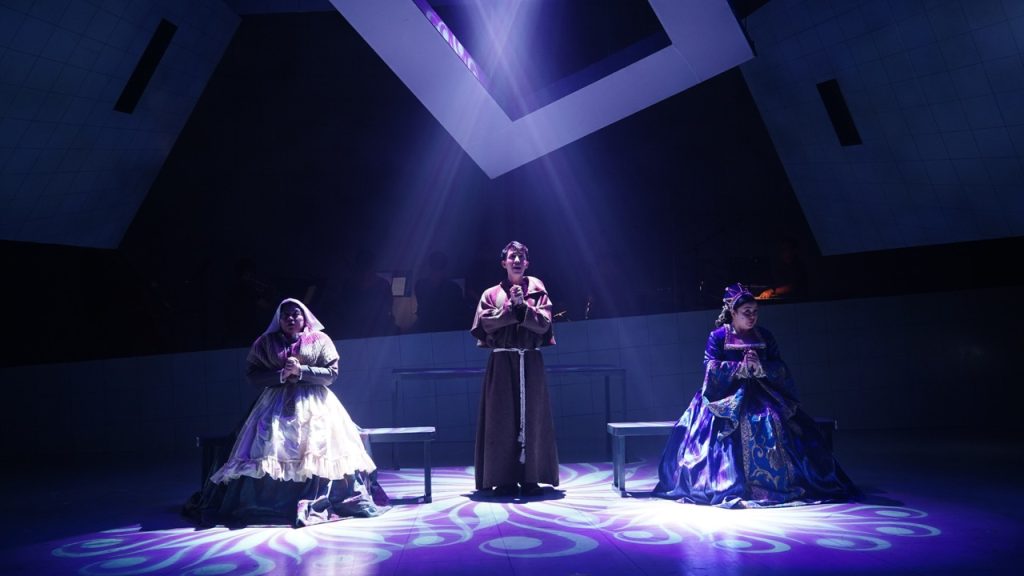
    Sarah Facuri as Housekeeper, Steven Hotchkiss as Padre, and Mikkie Bradshaw-Volante as Quijano’s niece Antonia share their worry for the old gentleman’s mental state in “I’m Only Thinking of Him.”  | Photo credit: Krizhal Daryl Ordas of Indio Creative

    That is the delicate tightrope Gomez walks in this staging. Rather than shying away from the age of the material, he highlights how our perspective is different now. He speeds up the tempo of certain songs – such as “I’m Only Thinking of Him,” which is traditionally one of my least favourite songs in the musical, but here in the new arrangement, the song is vibrant and funny, especially with Mikkie Bradshaw-Volante and Sarah Facuri eating up that song – keeping the show from ever feeling too rigid or slow. His vision for the stage, realized alongside set designer Julio Garcia, initially presents an ICE detention center, a huge chained fence trapping the actors within and partly obscured to the audience. But as Cervantes begins his defense and tells the story of Don Quixote, the fence lifts, the walls break open and suspend into the air and the stage opens up for the play. Even the backdrop opens up to reveal the live band. It is such a strong use of stage imagery that visualizes how art opens up the world and allows us a new way of looking at things.

    Man of La Mancha
    A favorite among REP audiences, Man of La Mancha in its third restaging dares audiences to believe in hope.  
    Photo credit: Krizhal Daryl Ordas of Indio Creatives

    In today’s world, there is a bit of misplaced idealism to Man of La Mancha that can make it feel like a time capsule from a more innocent and pure era. Yet, Gomez, his amazing cast, and his artistic team manage to critique the elements that have aged poorly while still allowing the spirit and profound hope of the play’s core message to shine through. 

    710813109 1311630684411881 877869560508839455 n

    Though there were noticeable technical difficulties, particularly with sound and lighting cues on opening night, these are easily remedied. The cast is incredible, with Buencamino leading the ensemble into a delightful frenzy. Marvin Ong’s Sancho is a breath of fresh air, while Katrine Sunga is utterly breathtaking as Aldonza. She is all power and forceful, Sunga commands a strong stage presence that matches Buencamino line for line. Meanwhile, Farley Asuncion’s musical arrangement is incredible, and Julio Garcia’s stage design is a theatrical revelation. Ultimately, this is a thoroughly engaging night at the theater and an interesting approach to reviving classic musicals. 

    My Rating: 4 Stars

    stars 4 0


    Don’t miss this striking revival! Repertory Philippines’ Man of La Mancha runs at the REP Eastwood Theater until June 28. Secure your tickets now via TicketWorld or Ticket2Me visit Repertory Philippines’ official social media pages for updates and show schedules.

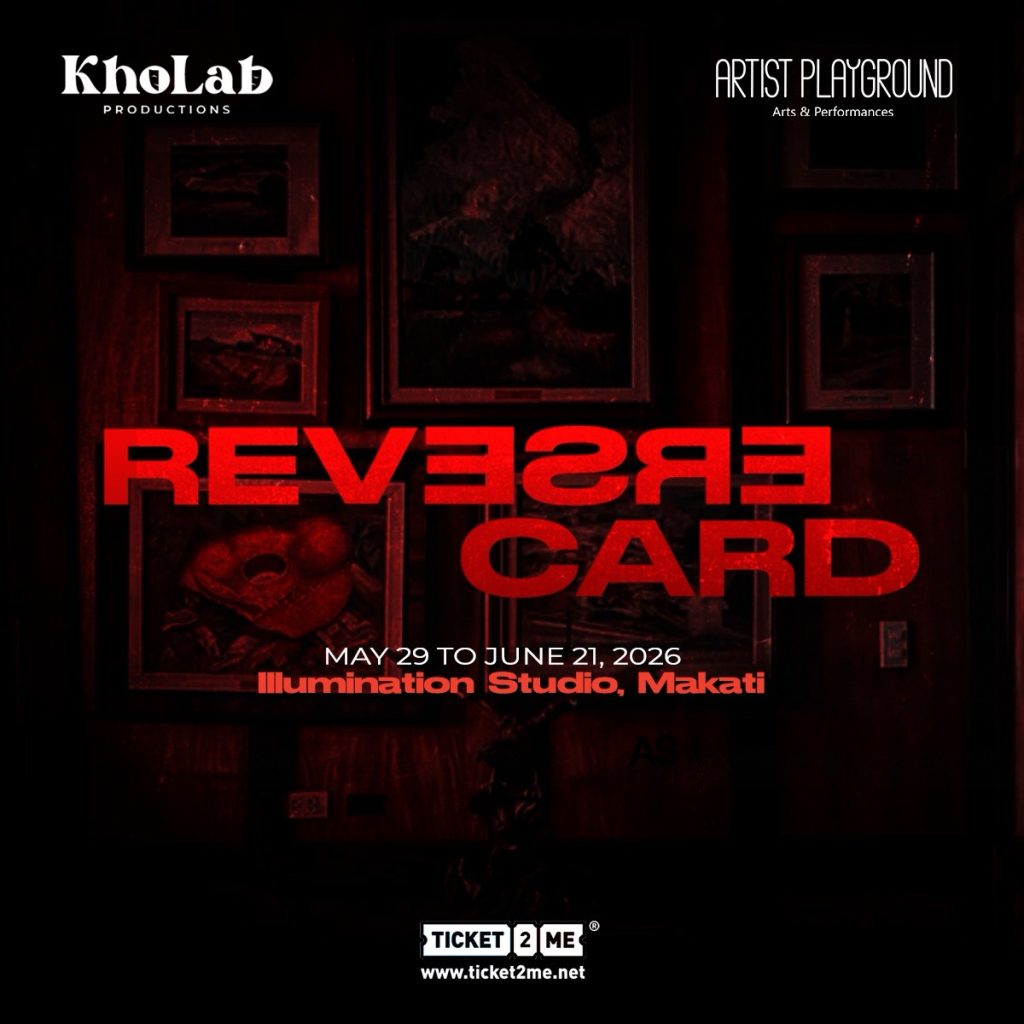
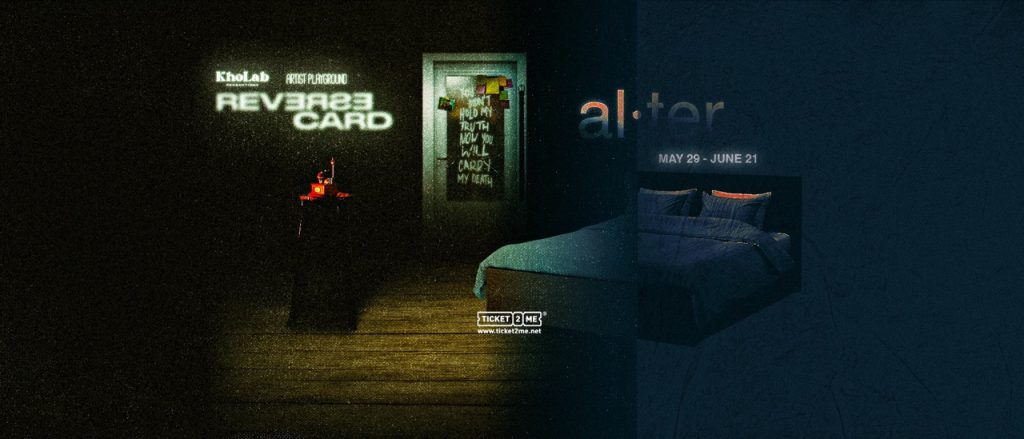
  • THEATER REVIEW: The Restaging of Artist Playground’s ‘Reverse Card’ Brings Along a Friend in ‘Al.Ter’ in a Twin-Bill Presentation Called ‘Double Take’

    THEATER REVIEW: The Restaging of Artist Playground’s ‘Reverse Card’ Brings Along a Friend in ‘Al.Ter’ in a Twin-Bill Presentation Called ‘Double Take’

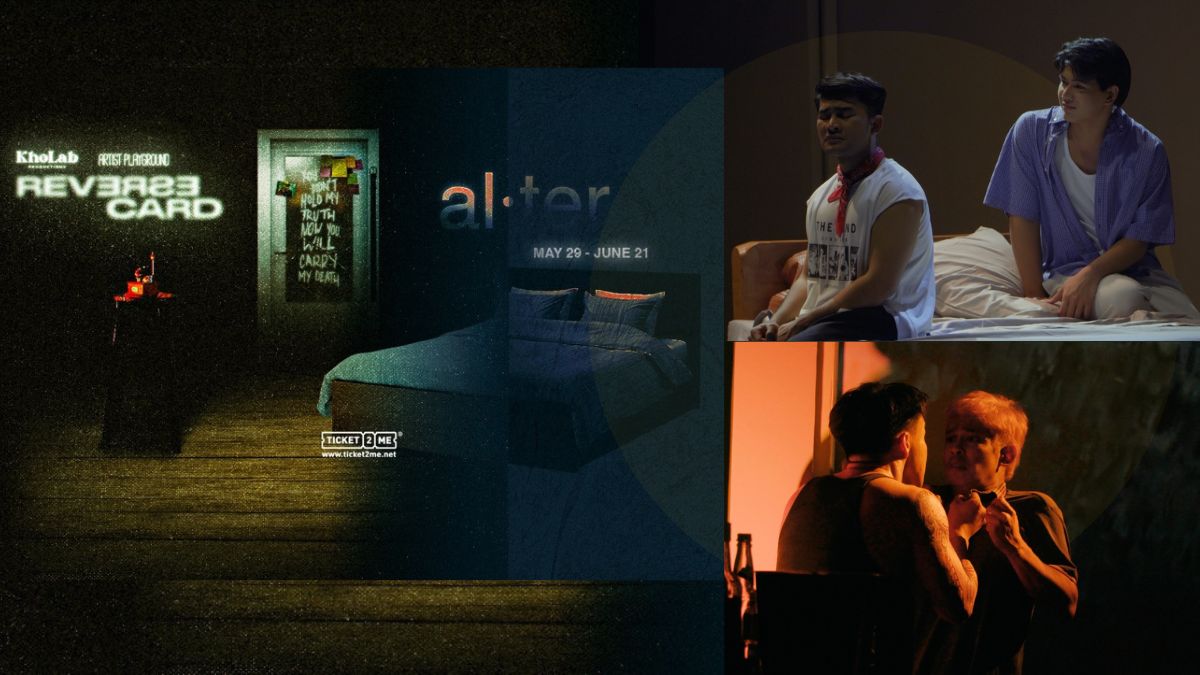
    Artist Playground, in cooperation with Kho-lab Productions, presents the twin bill Double Take: Reverse Card and Al.Ter. The two one-act plays, written by Chase Kyl Loza and Pablo Joaquin respectively, are directed by Paul Jake Paule. Performed by a plethora of performers with alternates for each role, the production is slated for a stunning 20 shows over four weeks. This run cuts directly through Pride Month, a fitting backdrop since both plays revolve around queer stories.

    ALTER MAIN POSTER
    al.ter | ARTIST PLAYGROUND

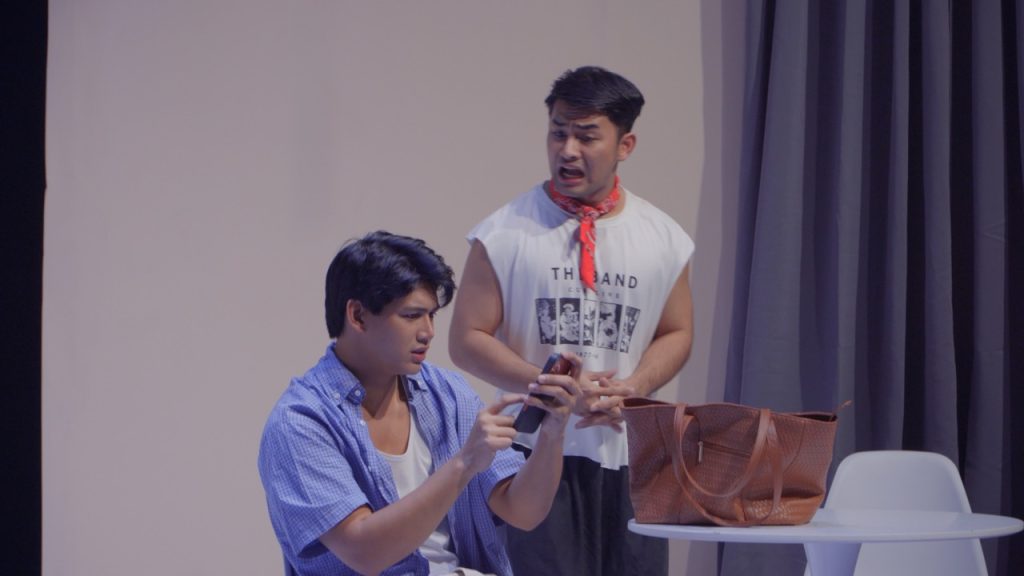
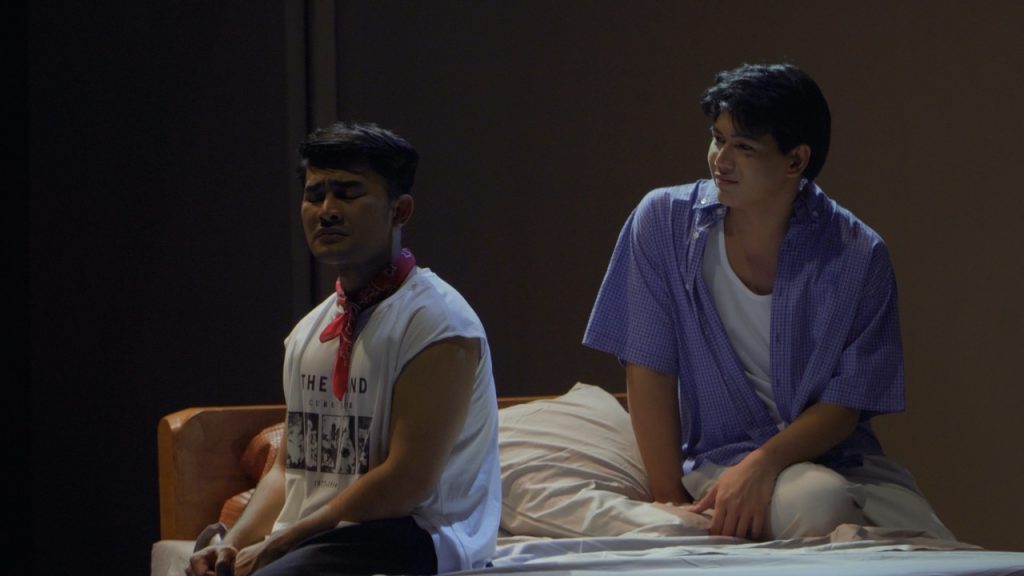
    The show opens with Al.Ter, which follows Al as he loses his live-in partner, Lester (nicknamed Ter), the morning after an argument. While wandering through the furniture section of a department store, a heartbroken Al meets Terrence, who also goes by Ter and looks exactly like Lester. Al befriends Terrence and asks him to roleplay as his deceased lover, desperate for a chance to find closure.

    Al.Ter opens provocatively with Al and two other actors acting out a threesome in the dark, recording it for publication on Al’s “alter” account. It’s daring, sexy, and shot in minimal light, giving the distinctimpression that one or two of them are actually naked. However, that provocative opening is merely a hook, from there on, Al must deal with the consequences of being caught living a double life.

    AlTer 1 Double Take
    al.ter | ARTIST PLAYGROUND

    It is through Ter’s double, played by the same actor, that Al ultimately finds some level of closure. The one-act play is poignant and bittersweet, cleverly incorporating the idea of doppelgangers and the theory of genetic variation and use it to push for a moving story about forgiveness.

    al.ter
    al.ter | ARTIST PLAYGROUND

    On opening night, Al.Ter was performed by Johnrey Rivas and Drei Arias as Al and Ter, respectively. I also had the opportunity to see an open rehearsal featuring Rivas alongside James Ramada, as Ter. Both Arias and Ramada have shown great skill in bringing Ter to life. Arias easily shifts from one version of Ter to the other, crafting distinct mannerisms and delivery of lines for each character; the fact that he switches between both roles in a split second on stage is quite a feat. Ramada’s approach relies on a much more internal switch.

    While there’s barely a visible difference between his two iterations, his Lester is softer and warmer, whereas his Terrence is all “bro” and macho energy. Ultimately, both actors do an excellent job at finding the nuances that allow the plays’s themes of forgiveness to flow, providing a grounded emotional core. Unfortunately, Rivas’ performance feels a bit too scripted and measured. It feels less natural than that of his co-actors. There’s a predictable pace and rhythm that gets in the way of the storytelling. 

    REVERSE CARD MAIN POSTER
    Reverse Card | ARTIST PLAYGROUND

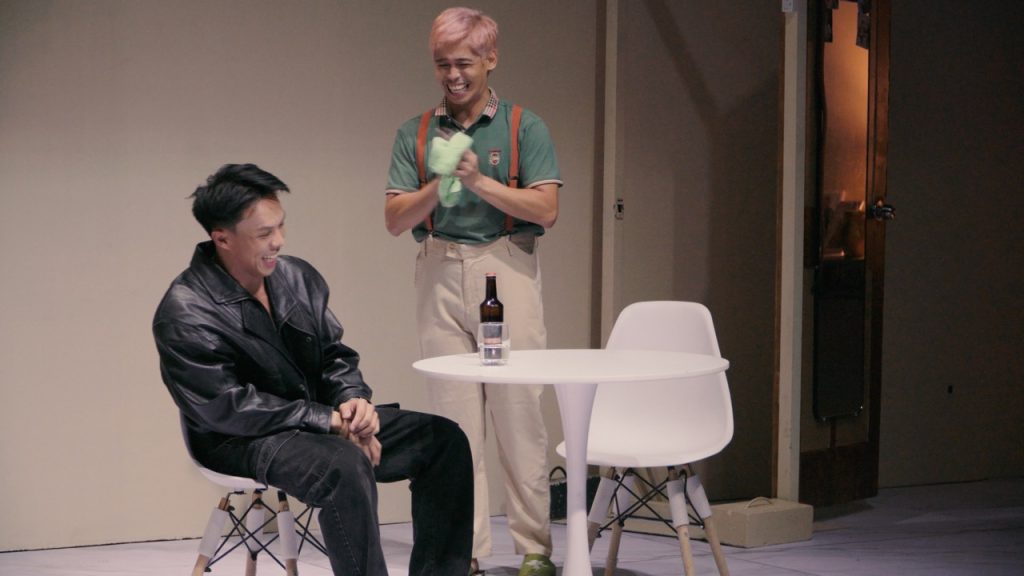
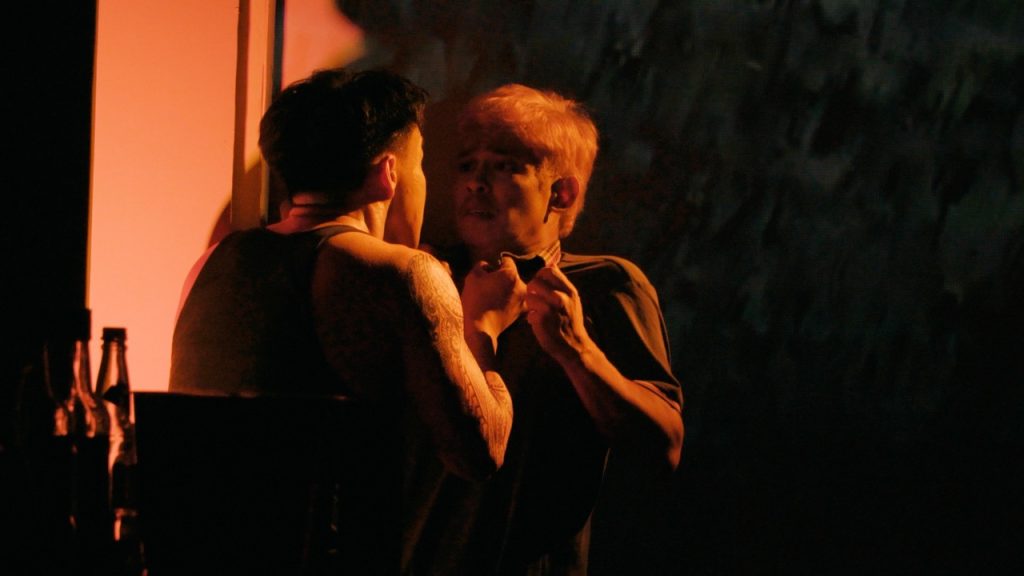
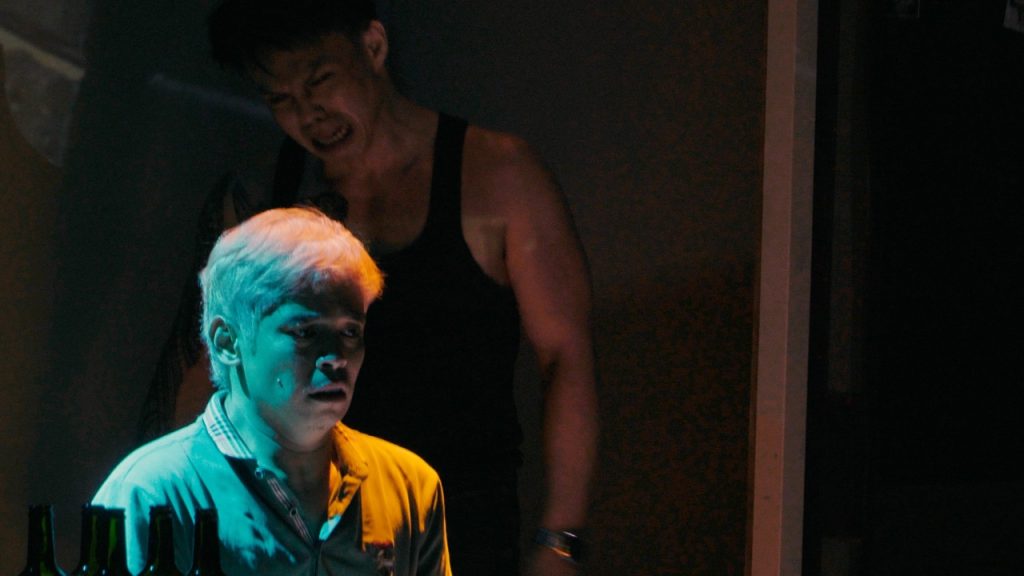
    Reverse Card, on the other hand, is a tense cat-and-mouse game between Marvin, a gay aspiring writer who was bullied in school, and John, former tormentor. As the play opens, Marvin is visibly excited because John is coming over to his house. While the encounter initially feels friendly, but as the night progresses, we realise there is far more to this meeting than a simple paid hookup. With secrets waiting to be revealed and mind games to be played, the atmosphere shifts from friendly to terrifying really quickly and it opens up a lot of emotions for both characters to unearth.

    RC 1 Double Take
    Reverse Card | ARTIST PLAYGROUND

    On opening night, Reverse Card starred Gerhard Krysstopher as Marvin and Gerald Magallanes as John. Both delivered incredibly strong performances. Krysstopher playing out a wide range of tones and styles for the more eccentric Marvin, who turns out to be playing a much darker game than John.

    RC 2 Double Take
    Reverse Card | ARTIST PLAYGROUND

    Meanwhile, Magallanes anchors the stage with a brusque, macho energy; he projects a frightening presence that makes you fear for Marvin except Marvin is not an easy character to break. I also had the opportunity to see Inah Evans and Drei Arias at the open rehearsal, and duo shared very good chemistry as well. Evans cleverly hides Marvin’s darker side behind a layer of comedy, which offers a refreshing contrast. Arias, not the other hand, brings a softer, more charming side to John that makes his John more charming and irresistible that it leads you to not question why Marvin would invite him to his home in the first place.

    Reverse Card

    My issue with Reverse Card is how it takes the collective anger and frustration of gay people who have been bullied and mistreated poorly by their families, and channels it entirely into a spirit of vengeance. It problematizes and subverts a common trope, but instead of offering empowerment, the narrative resorts to violence and harm.

    Double Take

    Dramaturgically, Double Take: Reverse Card and Al.Ter tackles the contrasting themes of retribution and forgiveness. The twin bill explores our shared humanity through the suffering inflicted upon us by others, alongside the suffering we inflict upon ourselves in relation to grief. However, by choosing to end it with Reverse Card, the production leaves us with such a sour note, considering that this is Pride Month. It’s not the best look.

    My Rating: 3.5 Stars

    stars 3 5


    Don’t miss out on this bold Pride Month twin bill. Experience the complex storytelling and powerhouse acting of Double Take live at the Illumination Studio, Makati. The production runs until June 21, 2026. Book your slots online via Ticket2Me.
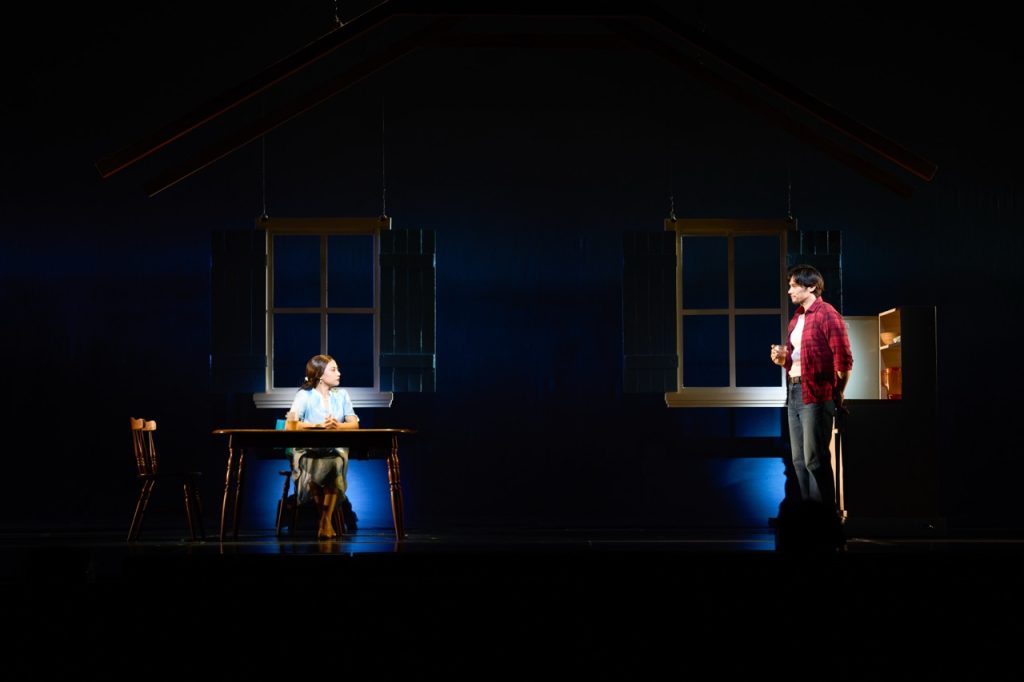
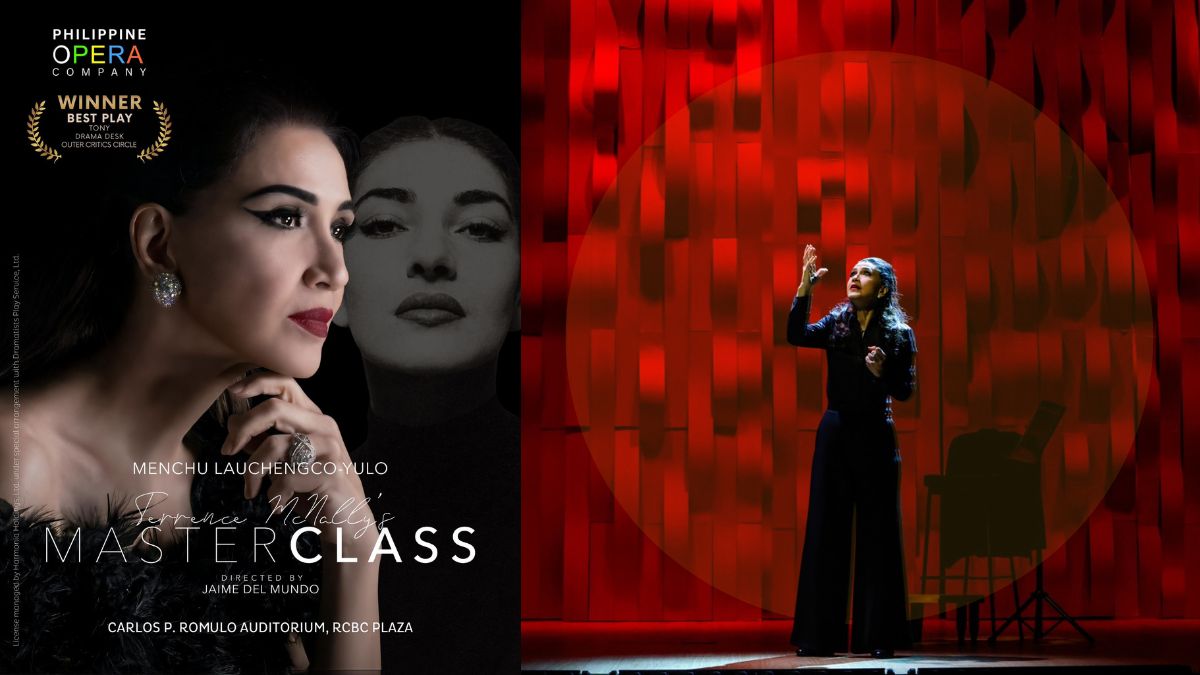
  • THEATER REVIEW: Menchu Lauchengco-Yulo Delivers a Powerhouse Performance as Maria Callas in Philippine Opera Company Production of ‘Master Class’

    THEATER REVIEW: Menchu Lauchengco-Yulo Delivers a Powerhouse Performance as Maria Callas in Philippine Opera Company Production of ‘Master Class’

    Terrence McNally’s play Master Class is an imagining of one of the sessions of famed opera diva Maria Callas’ master class, which she held a few years before she died, after her voice had given out and her retirement. It is a fictional account of what a master class would be like with someone so important and revolutionary in the world of opera that her teachings would give way to asides that would talk about art, discipline, fame, and her own personal life. It is funny and brutal, it’s casual and accessible and yet it reaches out and engages thoroughly with the sophisticated world of an elite art practice. In efforts to demystify and humanize Callas, McNally allows humour – formed by Callas’ self-confidence and belief in herself and her brutally honest and frank way of critiquing the students and anybody else who catches her attention – into the script and interweaves it with explorations of what it takes to truly express the truth in art while also wrestling with Callas’ own personal demons.
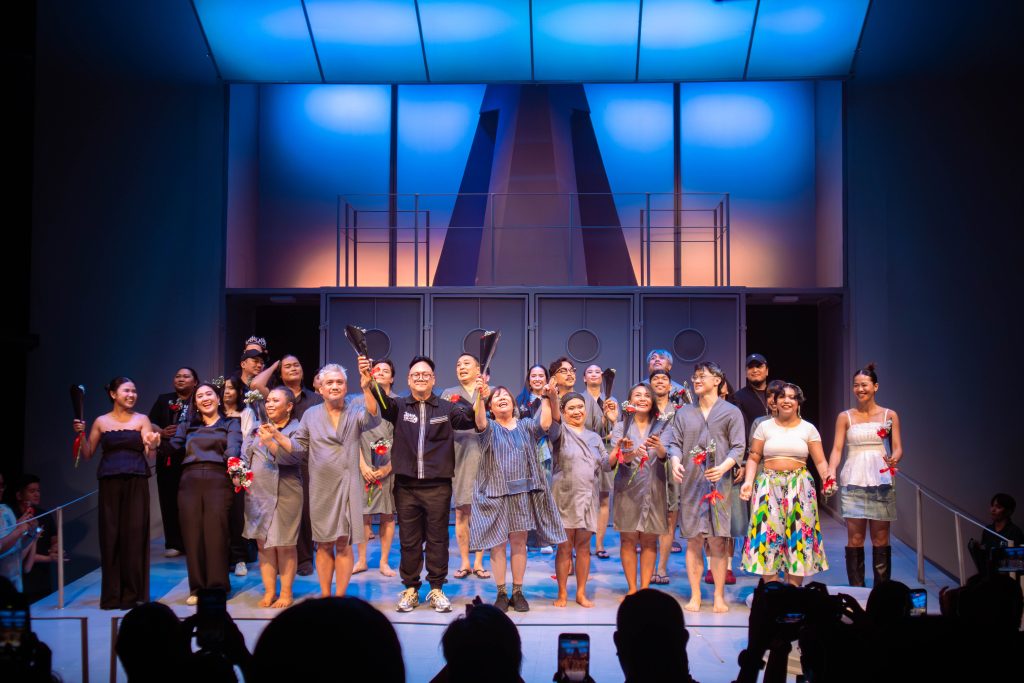
    Philippine Opera Company Master Class

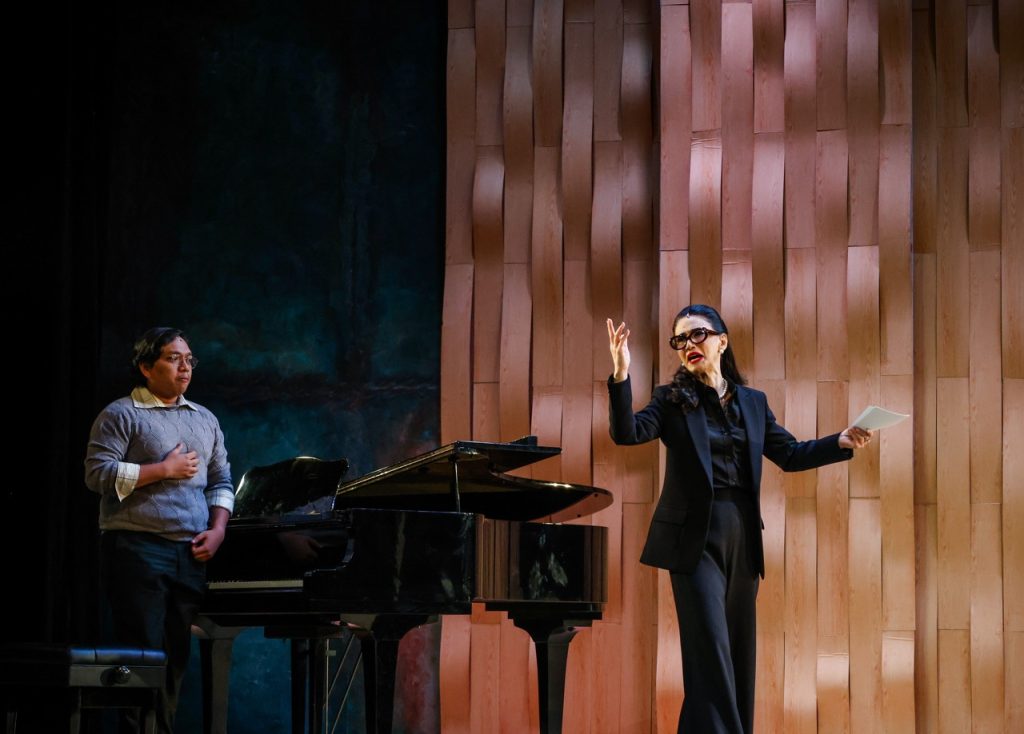
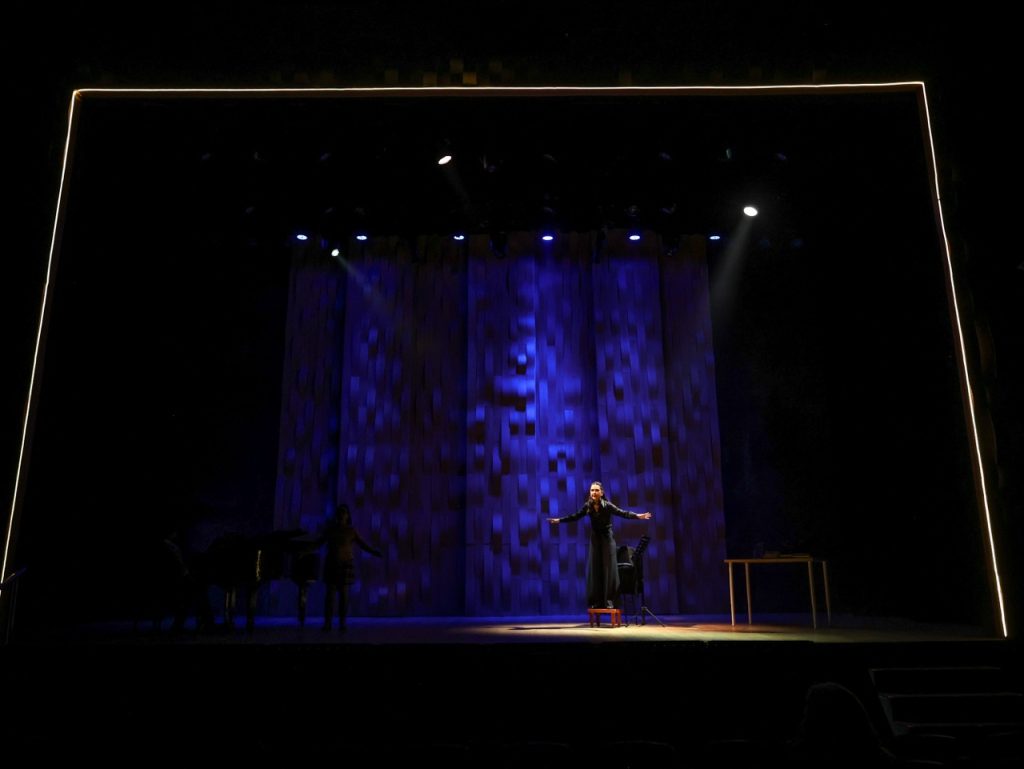
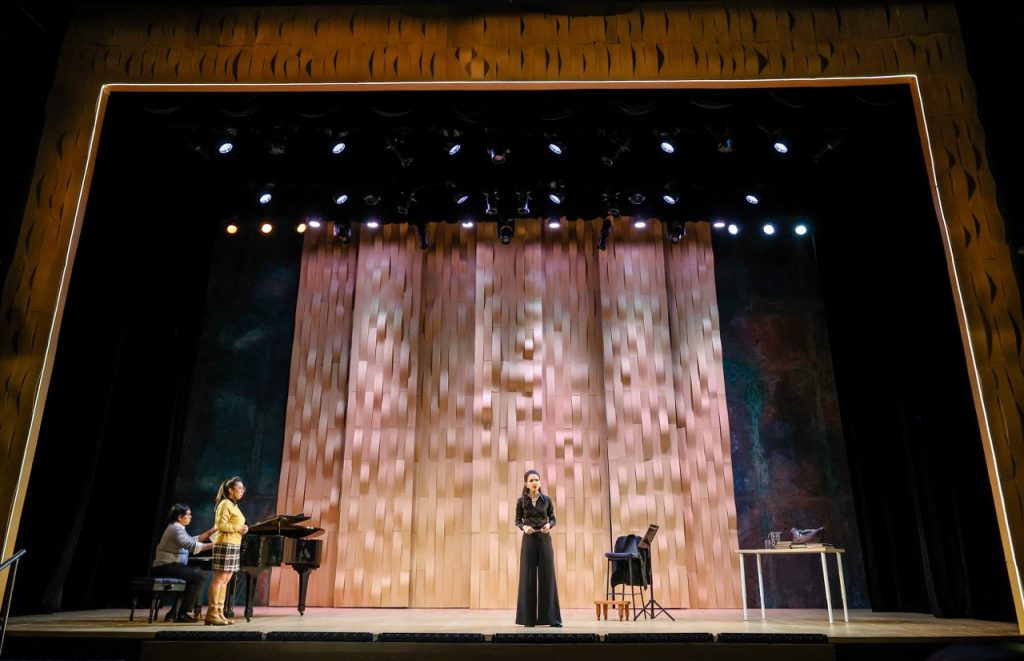
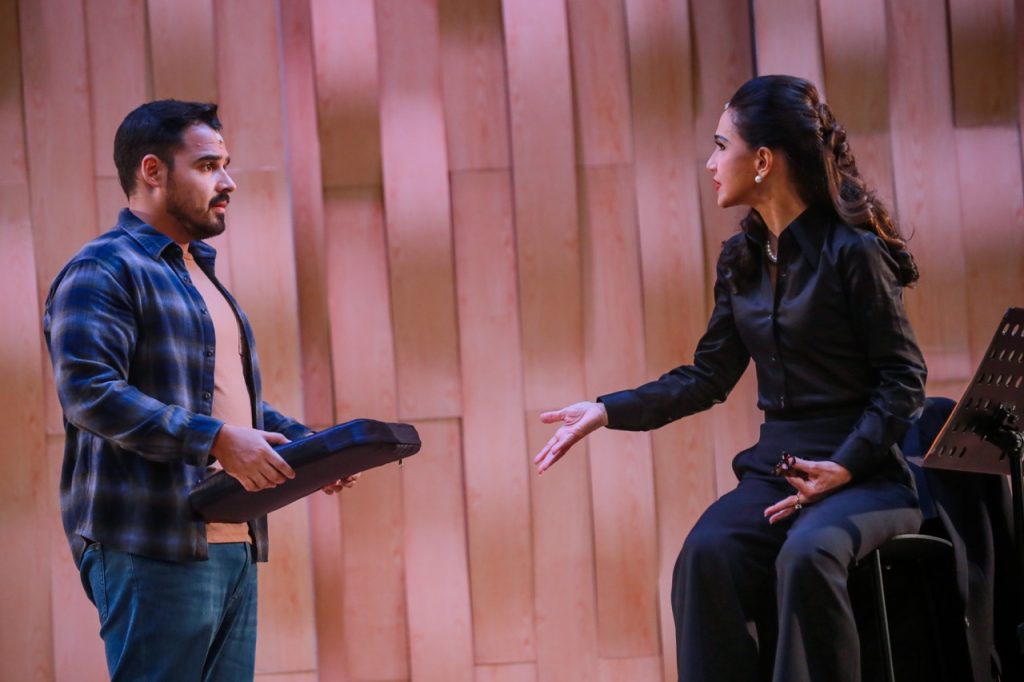
    The Philippine Opera Company’s latest staging of Master Class has Jaime Del Mundo in the director’s chair, and he strips away the theatrics of the Carlos P. Romulo Theater at the RCBC Plaza and turns the stage into a rather simple venue for a master class.

    Master Class Myra Ho B80A2228
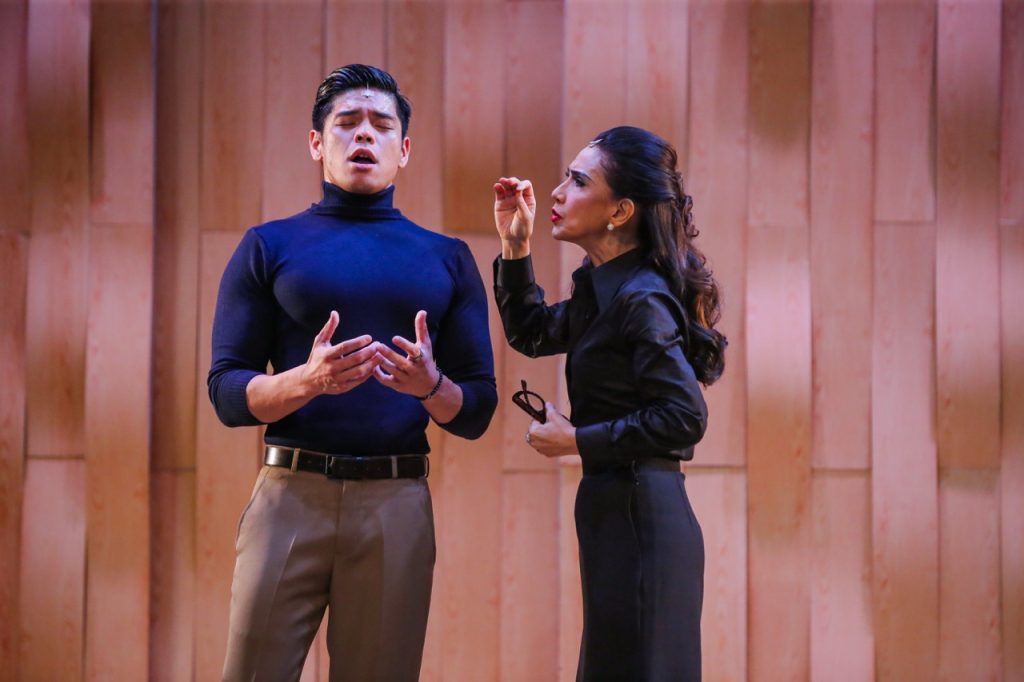
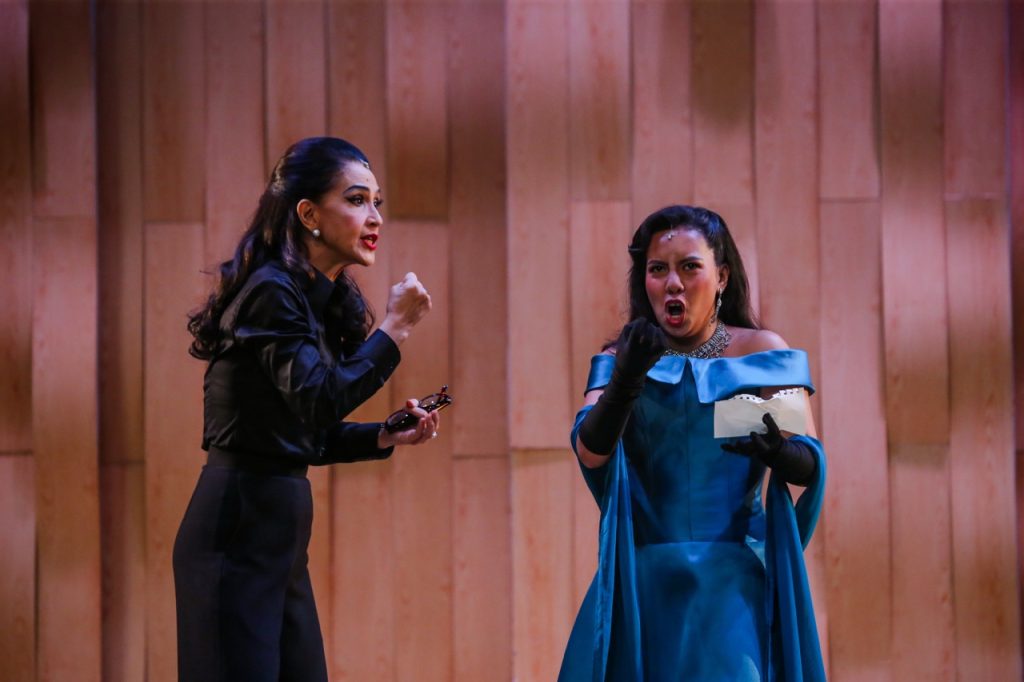
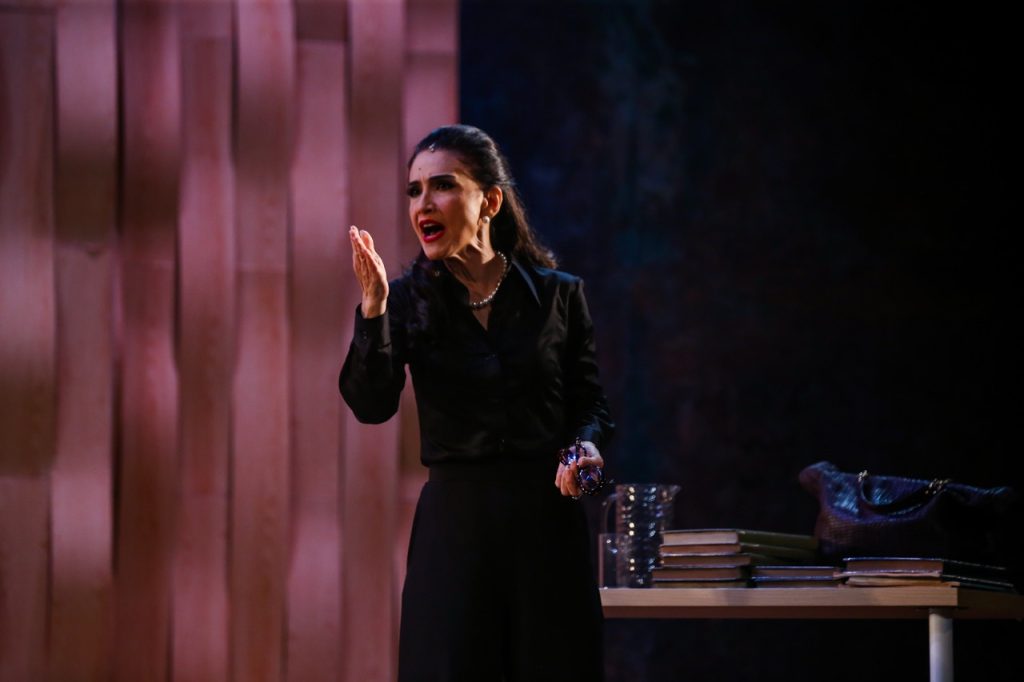
    Terrence McNally’s Master Class by The Philippine Opera Company | Photos by Myra Ho

    There’s a piano, a high chair with a music stand, and a table filled with books at the back. Before the start of the play, a projection of Maria Callas is screened on the backdrop, a textured screen that remains dormant until the finale, which gives way to the only spectacle Del Mundo allows for this play.

    Master Class Myra Ho B80A2439
    Terrence McNally’s Master Class by The Philippine Opera Company | Photos by Myra Ho

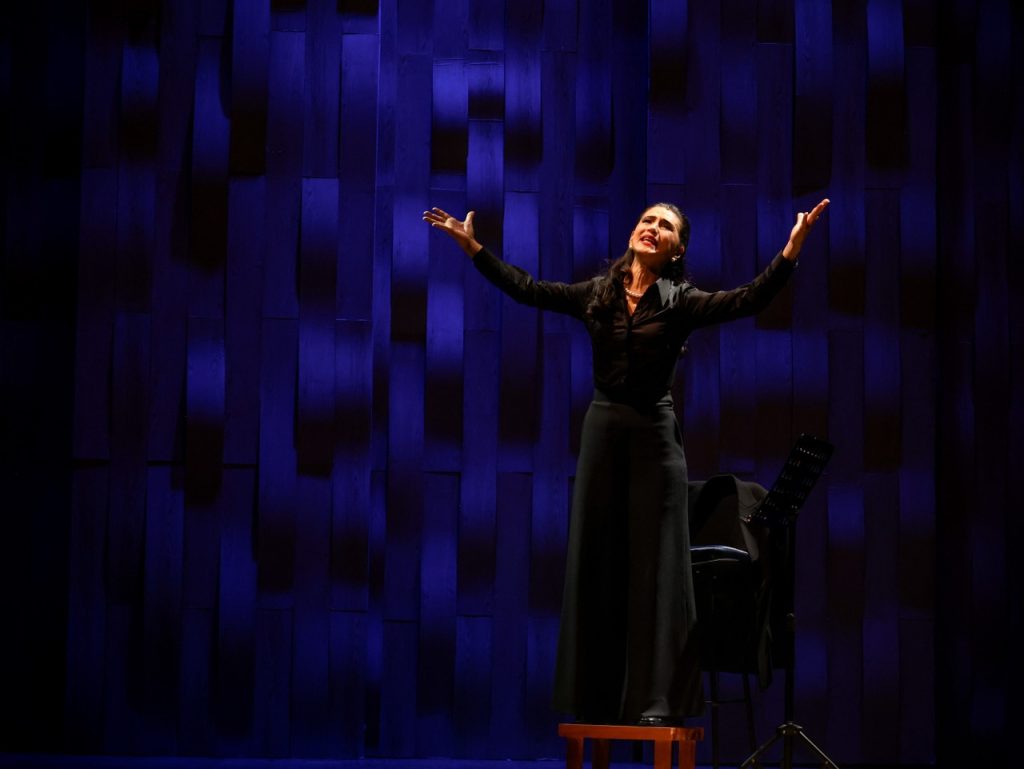
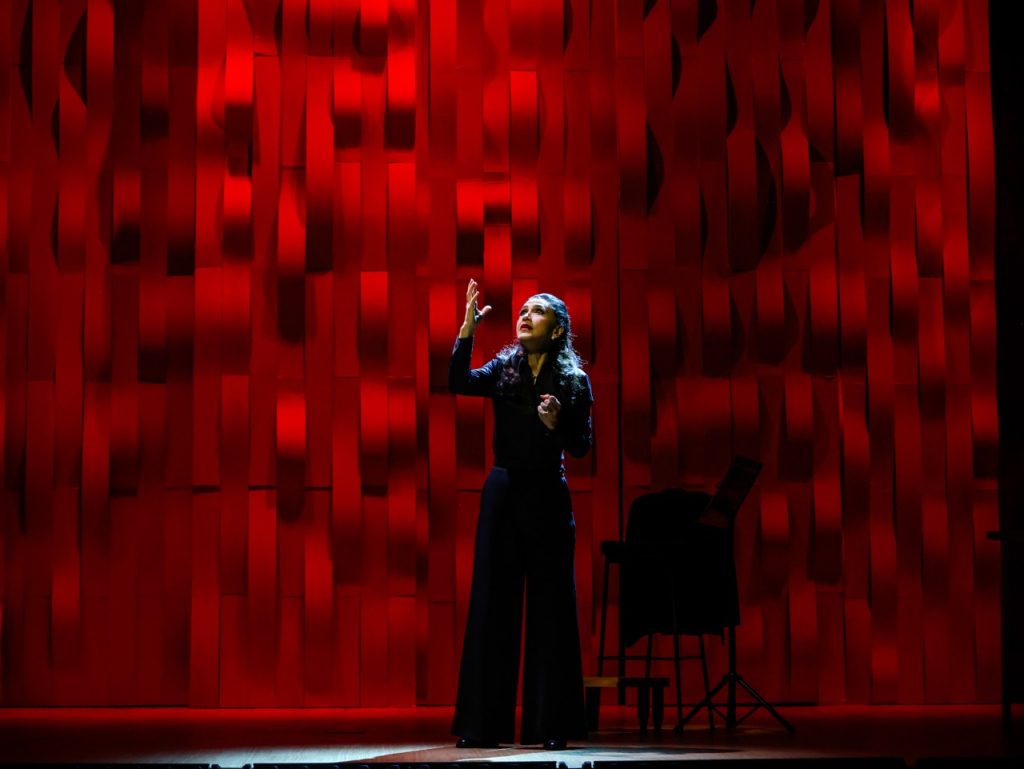
    There are no theatrics here. The spectacle is the performance of Menchu Lauchengco-Yulo as Maria Callas, a force of nature walking in from the audience’s side who, through sheer aura and stage presence alone, grabs all of our attention.

    Master Class Myra Ho B80A2445
    Terrence McNally’s Master Class by The Philippine Opera Company | Photos by Myra Ho

    Lauchengco-Yulo does not try to mimic or imitate Callas. Instead, she takes all of the opera diva’s essence and truth and presents it in her line delivery, her posture, and her facial expressions. It’s a commanding role, with the majority of the play’s two acts centered around her. Callas knows she’s a star and that this class is filled with people who want to be like her, and Lauchengco-Yulo runs with it but, at the same time, is hiding something deep inside.

    Master Class Myra Ho B80A2725 1
    Terrence McNally’s Master Class by The Philippine Opera Company | Photos by Myra Ho

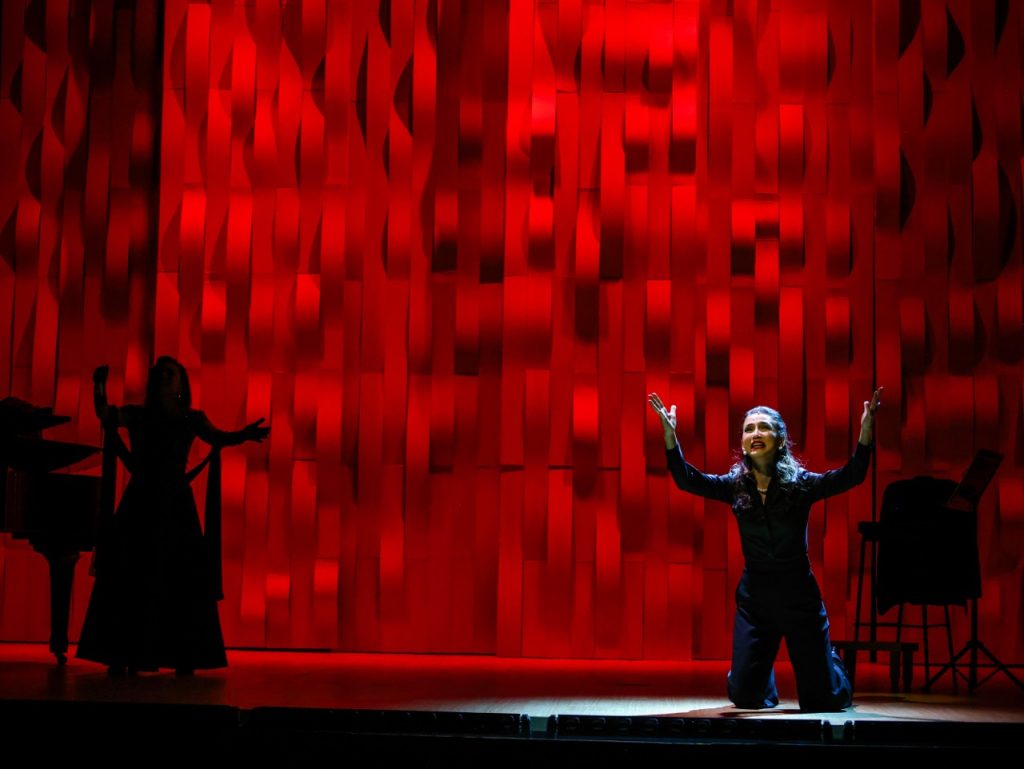
    This is presented in moments while her students are singing; she enters into her own interiority, and delivers a gut-wrenching monologue that mines all of the character’s emotional struggles into a powerful moment for Lauchengco-Yulo.

    Master Class Myra Ho B80A2743 1
    Terrence McNally’s Master Class by The Philippine Opera Company | Photos by Myra Ho

    She does this twice – once before the end of act one and a second time before the end of act two – and it’s really the highlight of the show.

    Master Class Myra Ho B80A2379
    Terrence McNally’s Master Class by The Philippine Opera Company | Photos by Myra Ho

    The cast surrounding her – her accompanist on the piano, Manny (Louie Angelo Oca), the three students, Sophie de Palma (Alexandra Bernas), Anthony Candolino (Arman Ferrer), and Sharon Graham (Angeli Benipayo), and a stagehand (Nelsito Gomez) – feels directed to play in total contrast to Lauchengco-Yulo’s Callas.

    Master Class Myra Ho IMG 7092
    Terrence McNally’s Master Class by The Philippine Opera Company | Photos by Myra Ho

    As she is grounded in emotion, the supporting cast feel exaggerated and hyper-real; as Callas is striving for truth, the people around her are playing to people’s expectations.

    Terrence McNally’s Master Class by The Philippine Opera Company | Photos by Myra Ho
    Terrence McNally’s Master Class by The Philippine Opera Company | Photos by Myra Ho

    The contrast is apparent, and the magic really happens when Ferrer and Benipayo have to sing, with Lauchengco-Yulo, in character, directing them through the songs. I grew up listening to opera arias when my dad would play them while working. I know very little about it, but I could hear the shifts and tones when Ferrer and Benipayo began to imbibe Callas’ teachings.

    Master Class
    Terrence McNally’s Master Class by The Philippine Opera Company | Photos by Myra Ho

    They are singing difficult pieces – one from Turandot and the other from Verdi’s MacBeth – and they are acting through them. The largeness of their spoken scenes is given nuance and texture as they sing their arias and learn how to find truth in the performance. By the time they exit the stage, Ferrer and Benipayo have changed their approach and Callas has done her work.

    Master Class
    Terrence McNally’s Master Class by The Philippine Opera Company | Photos by Myra Ho

    Maria Callas, as a character, is not easy to like, though you can admire her. She’s abrasive and self-possessed and we can hang on to her story because she has lived a truly remarkable life. Lauchengco-Yulo plays her head on, without begging for sympathy, and the result hits like a hammer to the head. It’s a bravura performance from Lauchengco-Yulo that realises the full extent of McNally’s play, but it also makes the piece feel somewhat inaccessible unless you truly love the practice of art like I do. There were people around me who couldn’t grasp the full nature of the show; taking the master class tone and setting to mean they were not in the theater, they began talking incessantly from the middle of the first act.

    My Rating: 3.5 Stars

    stars 3 5


    Driven by a commanding, bravura performance from Menchu Lauchengco-Yulo, this production is a must-see for true lovers of the craft. Don’t miss the final weekend of Terrence McNally’s award-winning masterpiece, Master Class. The final shows will run on May 30 at 3 PM and 8 PM at the Carlos P. Romulo Auditorium, RCBC Plaza, Makati. You can secure your tickets now by calling 09176452946 or by visiting Ticket2Me.