Tag: movie review

  • Movie Review —  Demystifying the Hero: a Review of ‘Quezon’

    Movie Review — Demystifying the Hero: a Review of ‘Quezon’

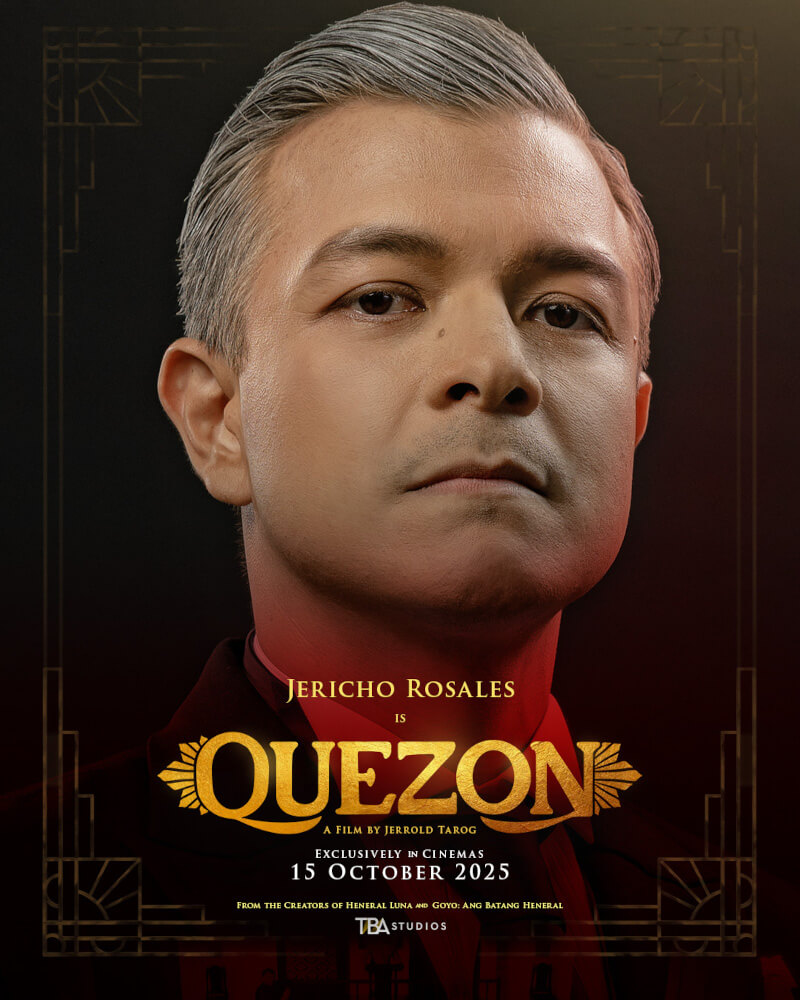
    The final installment of Jerrold Tarog’s Bayaniverse is a powerful political drama that details the cunning machinations of Manuel Quezon and his bid for being the first Filipino president of the Republic of the Philippines, outside of American colonial rule. ‘Quezon’ unabashedly paints the Philippine president as a manipulator and somewhat of a narcissist, quite adept at playing the political game and creating a system that allowed him to fulfill his agenda at the price of creating today’s patronage political system.

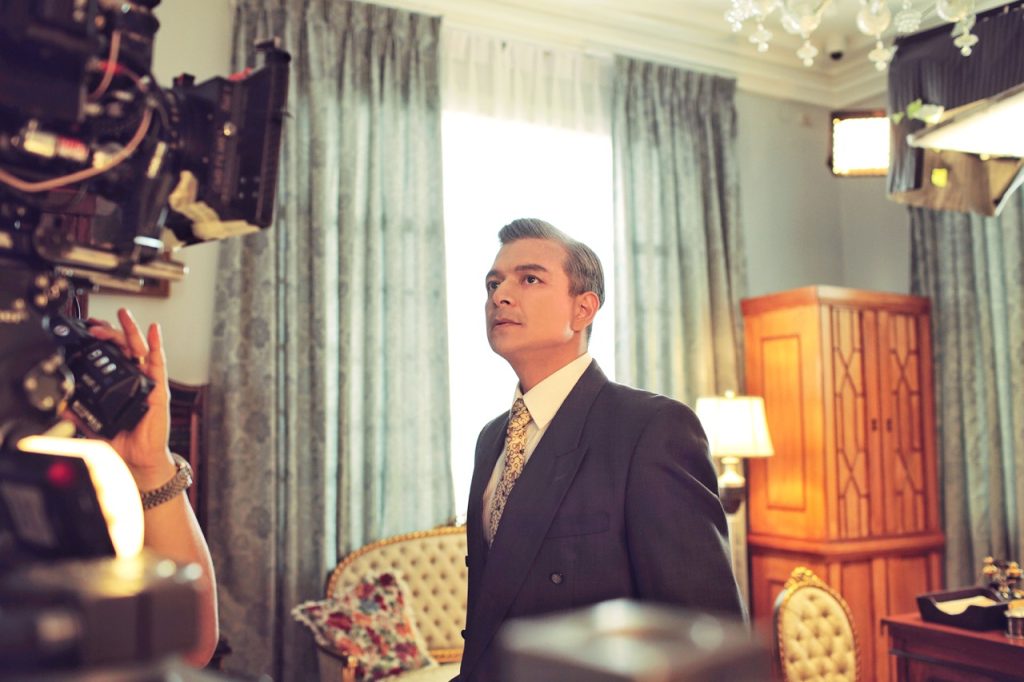
    Jericho Rosales is completely transformed as the charming, cutthroat Manuel Quezon. He uses his full superstar onscreen presence to showcase Quezon’s ability to broker deals, convince rivals to join forces, and to outwit the American colonial forces. His posture, his intonation and line delivery is so affected that it almost feels comical, put-on but as the film continues to unfold and the consistency of his performance wins you over, you stop seeing Rosales and he becomes this political mastermind.
    Quezon

    Co-written with Rody Vera, director Jerold Tarog makes full use of the medium of film, creating a film within the film to showcase Quezon’s use of the platform to help create a myth of his persona. Tarog employs the character of Nadia Hernando (Therese Malvar), who is a director and puts together Quezon’s propaganda films. The films are so successful that it helps catapults Quezon’s popularity but Nadia and her father, the journalist Joven Hernando (played by Cris Villanueva as the older Joven and Arron Villaflor as the younger Joven in flashbacks), know the truth behind the myth they’ve made.

    While the films paint Quezon as a hero, a secret cut of the film made by Nadia shows the truth she and her father know. It details the way Quezon has run circles around the American governor-general Leonard Wood (Iain Glen) and Quezon’s own rival and, later, his vice-president Sergio Osmena (Romnick Sarmenta). It details all the ugly politicking that transpired during the eventual presidential campaign when he goes toe-to-toe with Emilio Aguinaldo (Mon Confiado) for the presidency.

    Throughout the film’s 139-minute run time, what we see is the origins of personality politics in the country and the establishing of our patronage system. The veil has been lifted and the story that Tarog and Vera weave is one of dirty politics, all in the name of winning freedom and independence from the colonial hold of the United States.

    No matter how charming and effective Jericho Rosales is in his portrayal of Quezon, what really comes to light is how powerful media is in our game of politics, that in order to win in that field one must be willing to do whatever it takes, and like Quezon’s wife, Aurora (Karylle) tells him when he asks her if what he’s doing is right, her response is as honest as it can be: “I believe you believe what you are doing is right.”
    Quezon

    ‘Quezon’ is grand and epic in scale and scope. Tarog imagines for us what the campaign during this period would be like: large-scale crowd scenes, gorgeous scenery of colonial architecture, and striking costumes that highlight our American and Spanish colonial roots while interplaying this with that of our folk and local sensibilities when portraying the people whose very nation Quezon is fighting for.

    Quezon

    The movie is thrilling, never dawdling. The pace is quick and brutal, and its imagery is playful and dynamic. At one moment, it captures Quezon in mid-manipulation, sly and cunning; in another scene, he comically loses his temper (which funnily enough happens quite a lot). Other times, the backstory is filled in the form of a silent film that Nadia creates for us to see their perception of Quezon’s truth.

    But the most powerful thematic idea that really comes to the forefront, is in the midst of fighting for our independence, Quezon gets lost in the battle and makes this about himself; or maybe it has been about him all this time. It underscores that our political history has always been the battlefield of narcissists who crave for power, to direct the course of our nation’s history whether with the best of intentions or not. Watching the film, I’m amazed at its technical flourish, its bravado and ambition. But as the film ends, I’m feeling rage and anger, seeing the root cause of our issues with our government as detailed by the news and social media these past few weeks. The film’s timing couldn’t have been any better.

    My Rating:

    A Big Bold Beautiful Journey


    Catch Quezon on the big screen and witness how history, ambition, and myth collide in Jerrold Tarog’s bold reimagining of Philippine independence. Check showtimes near you.
  • Movie Review — Cinemalaya XXI: The Rewards of ‘Cinemartyrs’ Are Immense If You Can Get Through Its Digressive Experimental Narrative

    Movie Review — Cinemalaya XXI: The Rewards of ‘Cinemartyrs’ Are Immense If You Can Get Through Its Digressive Experimental Narrative

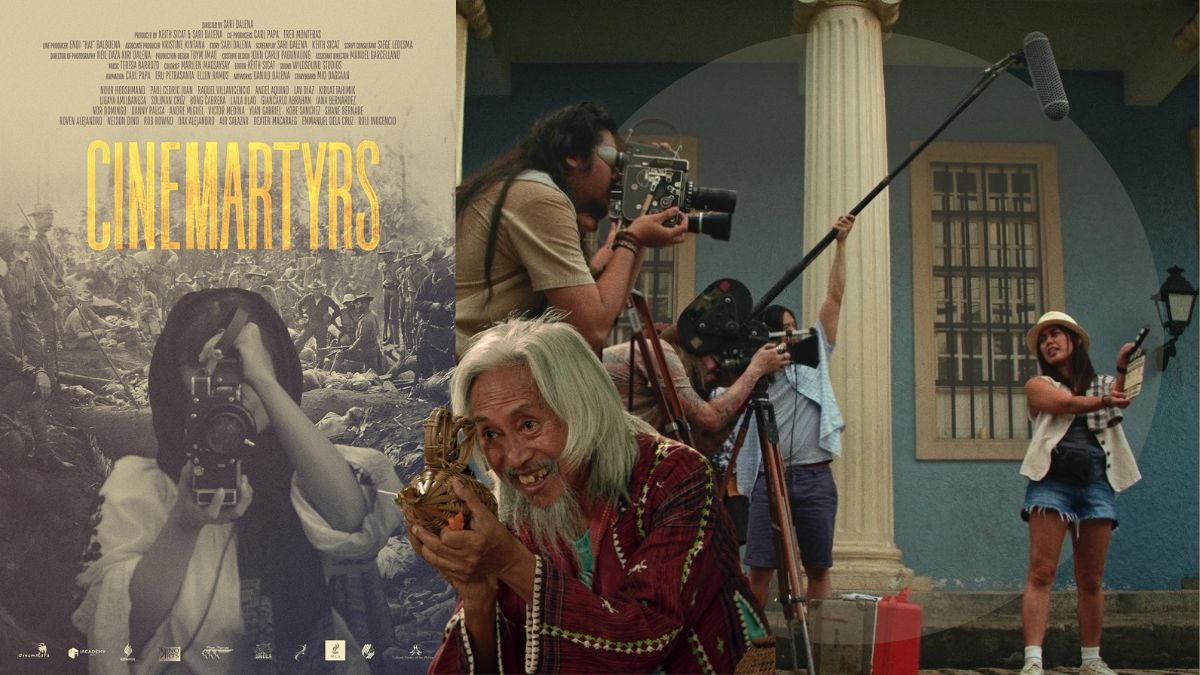
    The conceptual conceit of Sari Dalena’s ‘Cinemartyrs’ creates a fantastic moment of catharsis at her film’s end that sort of rewards the audience from being able to muster the labyrinthine first half of her film. It’s a personal essay, a narrative historical rumination, and an artist’s statement about the power of film, all rolled into one experimental movie. The film meanders and strays from its plot, building a world that picks up all the elements it juggles into the air and creates a collision that can leave you breathless. It wasn’t an easy film for its first hour but once we reach the point of intersection, the film becomes a celebration of all that is wonderful about film and filmmaking.

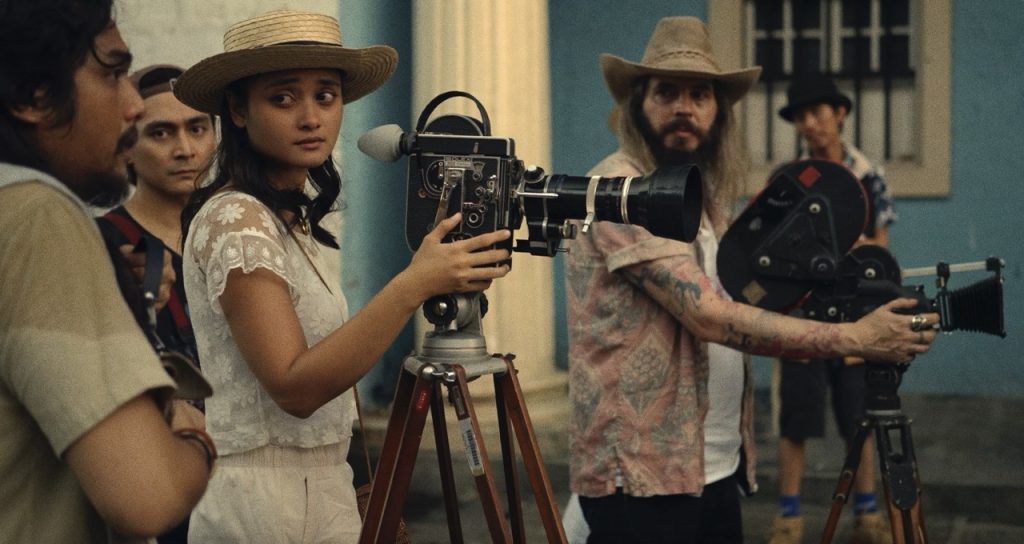
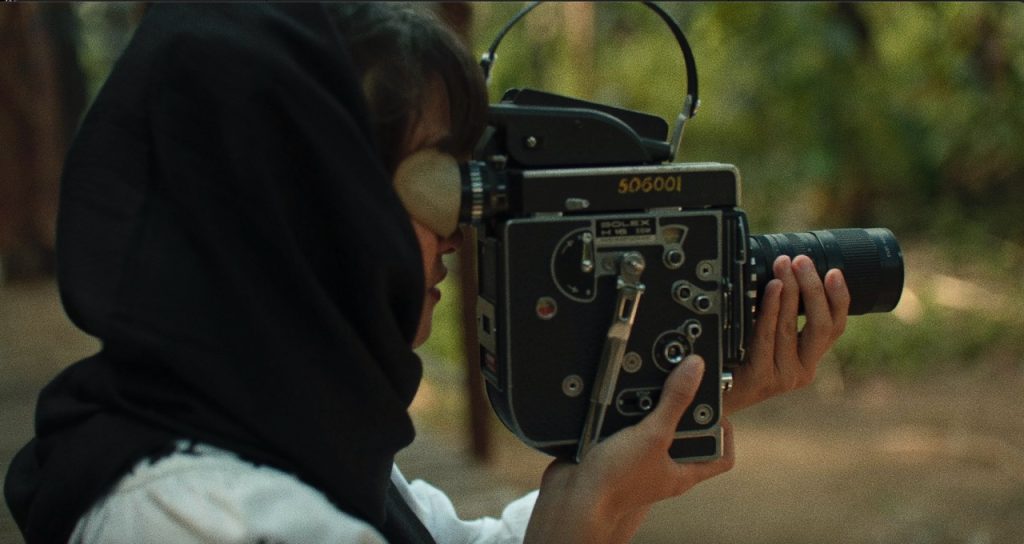
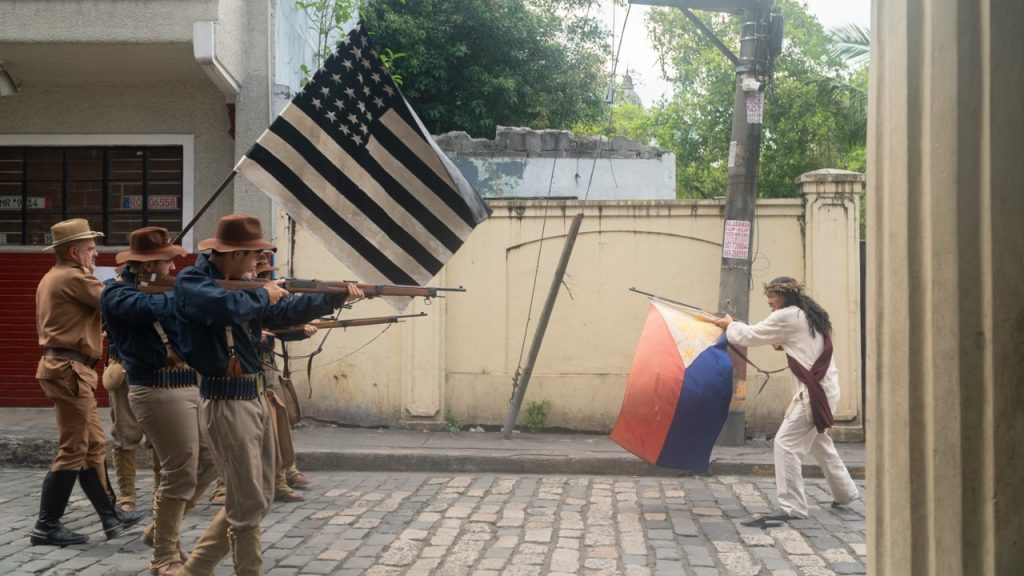
    ‘Cinemartyrs’ follows Shirin (Nour Houshmand), a young filmmaker shooting a documentary that reenacts massacres from the Philippine-American war. When she shows her progress to the grant-giving body, they belittle her and the footage she has presented calling it incomplete.

    Cinemartyrs
    Cinemartyrs | Photo courtesy of Cinemalaya / CCP Corporate Communications Division’

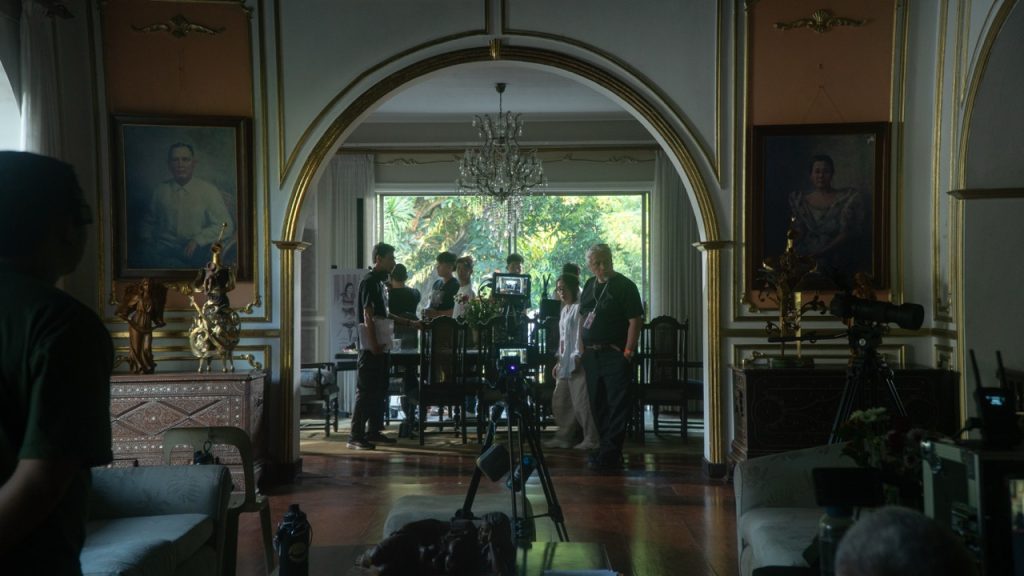
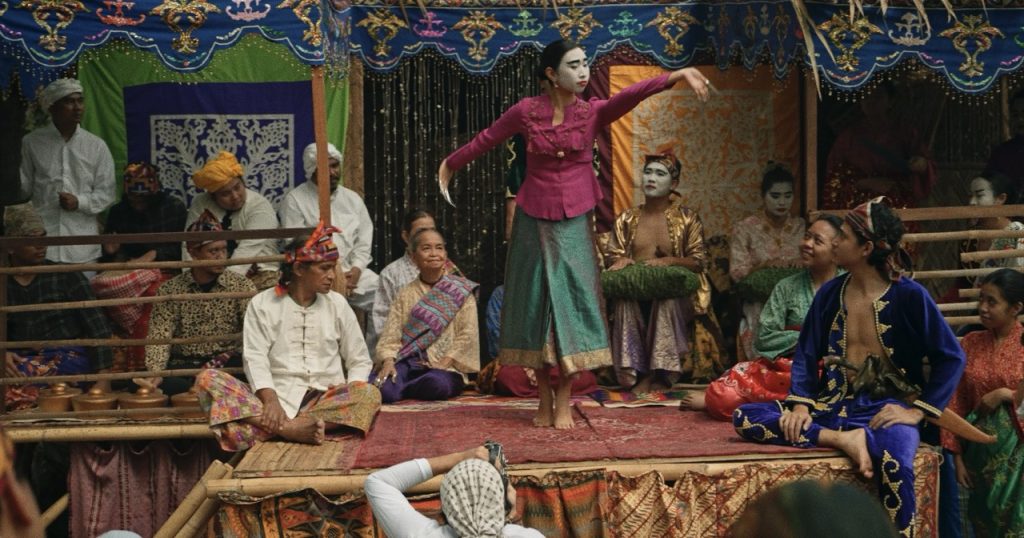
    She is then asked to include historical events that happened in Mindanao and Shirin takes her small crew to Jolo to document and revisit an American surprise attack on a Tausug village during a wedding. But as she begins filming on site, she touches upon something profound and metaphysical.

    Cinemartyrs
    Cinemartyrs | Photo courtesy of Cinemalaya / CCP Corporate Communications Division’

    ‘Cinemartyrs’ is an experimental film that uses the medium to remember fragments of history that is lost, to comment on them, and at the same time, make a commentary on the medium itself as a convergence point of history, geography, and culture.

    BTS 3 CINEMARTYRS
    Cinemartyrs | Photo courtesy of Cinemalaya / CCP Corporate Communications Division’

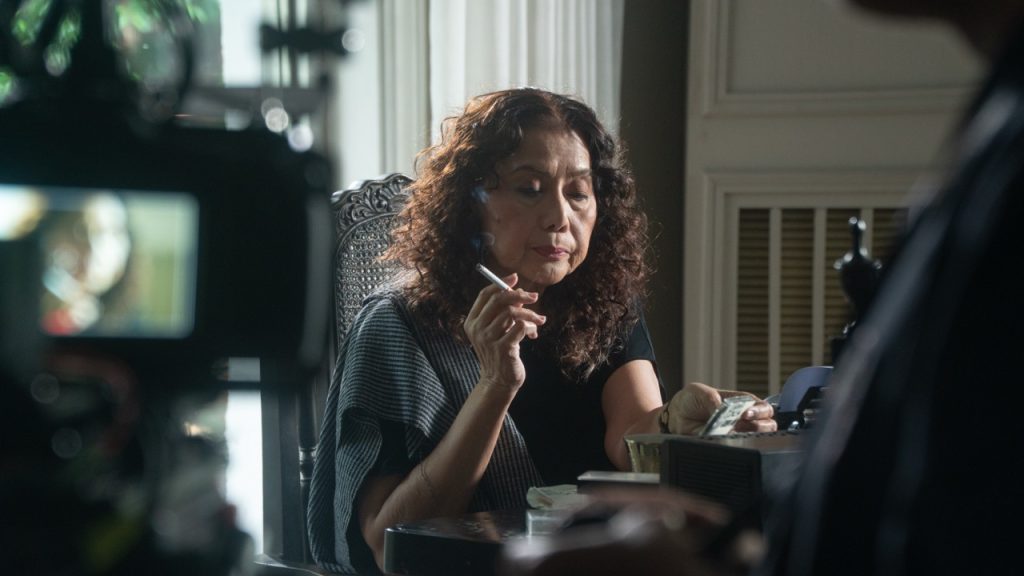
    Time operates differently in the film, such as a wonderful scene showing Shirin’s mom (Raquel Villavicencio) working on research about Filipina directors and screenwriters from the early days of the Philippine film industry.

    Cinemartyrs
    Cinemartyrs | Photo courtesy of Cinemalaya / CCP Corporate Communications Division’

    She is rediscovering them, engaging with them and their contributions to Philippine cinema and thus is able to bring back their spirit and have a conversation with them. This scene occurs within the first hour and diverts the narrative plot but becomes an essential element that plays on hard later on in the film.

    Cinemartyrs
    Cinemartyrs | Photo courtesy of Cinemalaya / CCP Corporate Communications Division’

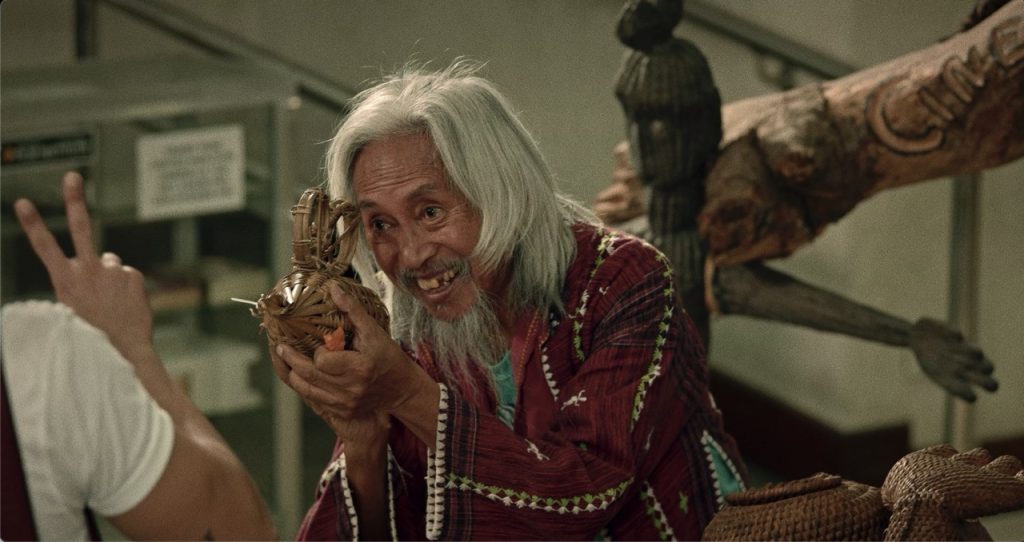
    But there are many digressions such as these in the film that can make the viewing of it a bit strained. It starts and stops and sometimes it works marvelously, like the scene of Villavicencio, but it can also appear indulgent and unnecessary as when Shirin and her husband, Kevin (Cedrick Juan) meet and have a sit down with Kidlat Tahimik (playing himself) talking about the duende, which Tahimik has discussed in many venues. Its repetition in the film feels out of place, so ordinary in a film that’s operating in the realm of the metaphysical.

    Cinemartyrs
    Cinemartyrs | Photo courtesy of Cinemalaya / CCP Corporate Communications Division’

    Things don’t fully come together until the third act, when Shirin and her small team arrive at the Tausug village to reenact the massacre, and that’s when the film’s thesis finally comes into play. All the disparate subplots and digressions start to come together to create a climax that’s as visually stunning as it is profoundly moving.

    Cinemartyrs
    Cinemartyrs | Photo courtesy of Cinemalaya / CCP Corporate Communications Division’

    The past is thrust into the present, the present is engaging with the past in a way that may be impossible and in the final scene of the film, the future is made clear. At the center of all of this is the medium of film as a gateway for this intersection. 

    Cinemartyrs
    Cinemartyrs | Photo courtesy of Cinemalaya / CCP Corporate Communications Division’

    The film is definitely a personal one, with certain character interactions and dynamics feeling less universal and more distinct and unique; an inside joke we are made privy to but not included in. But what Dalena ends up creating is a love letter to Filipino women filmmakers who have paved the way in the industry and the way that they continue to break boundaries. Their very existence – and in the process of remembering them – is an opposition to the patriarchal hold of oppression our colonial past has left us. This is an immense work that requires a lot from its audience but also gives back tenfold.

    A Big Bold Beautiful Journey


    Cinemartyrs is showing on the big screen. Check cinema showtimes near you and grab your tickets today.

    This year, don’t miss Cinemalaya 21: LAYAG sa Alon, Hangin, at Unos happening from October 3-12, 2025! Witness another stellar lineup of stories that will move you and showcase the brilliance of Philippine cinema. Follow the Cultural Center of the Philippines and Cinemalaya for updates.

  • Movie Review: The Future is Pretty but One-Dimensional: A Review of ‘Tron: Ares’ 

    Movie Review: The Future is Pretty but One-Dimensional: A Review of ‘Tron: Ares’ 

    Set in an unspecified near future where tech companies now have the technology to transfer programs from a virtual, computerized world and give it physical form in the real world, ‘Tron: Ares’ creates many reasons for and against the future of AI technology but never really saying any one thing conclusive about it. It opens a lot of questions and points of discussion, but seems more interested with its gorgeous visual effects and a tedious, overcomplicated plot revolving around an errant AI program and a tech CEO determined to save the world.

    The film is billed as a “standalone sequel” to ‘Tron: Legacy,’ which came out 15 years ago. You don’t have to see the last film (or the first) to pick up what’s going on. I’ve seen both ‘Tron’ and ‘Tron: Legacy’ and barely remember much of both but didn’t really need that info to follow ‘Tron: Ares.’ What’s established is that there is a virtual world called The Grid, which a human was able to enter in the first two movies.

    TRON: Ares
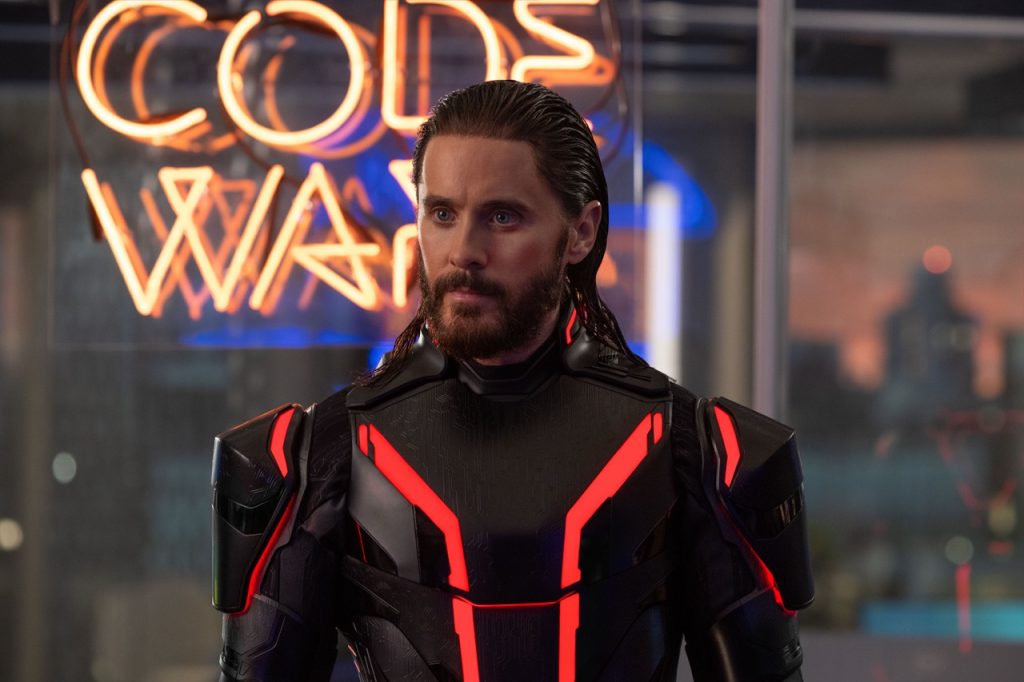
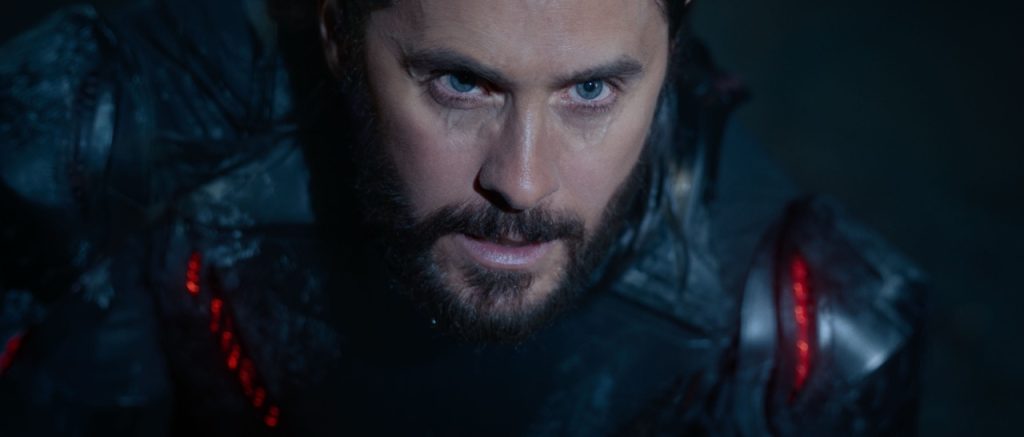
    Jared Leto as Ares in Disney’s TRON: ARES. Photo Courtesey of DIsney. © 2024 Disney Enterprises, Inc. All Rights Reserved.

    But in the third installment, two rival tech companies are competing to find a code that can make programs they laser-printed from The Grid into the real world permanent.

    TRON: Ares
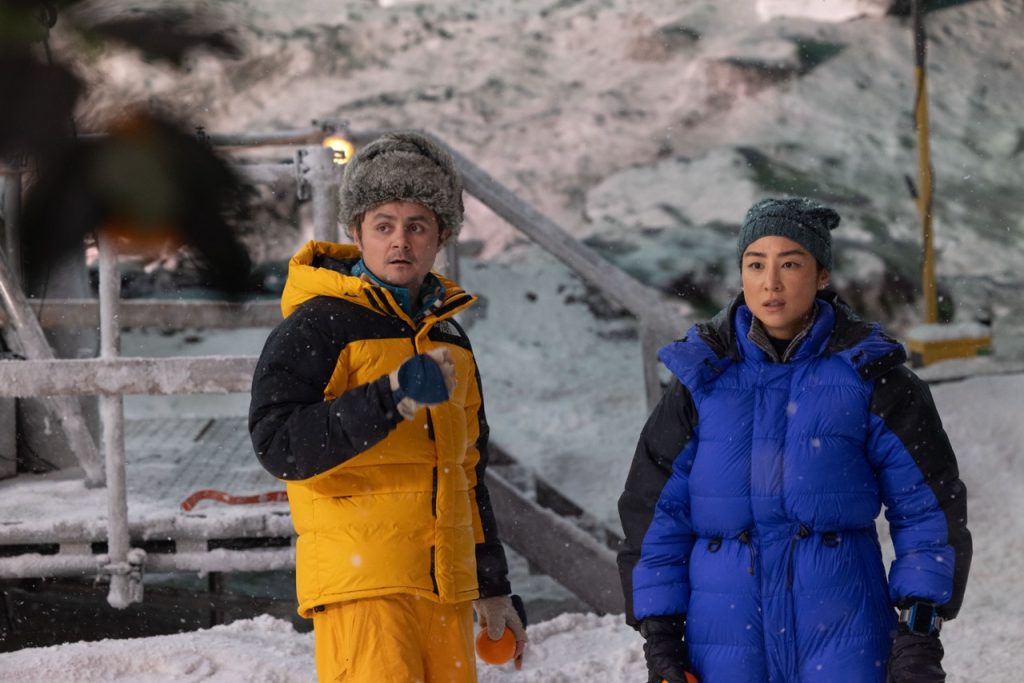
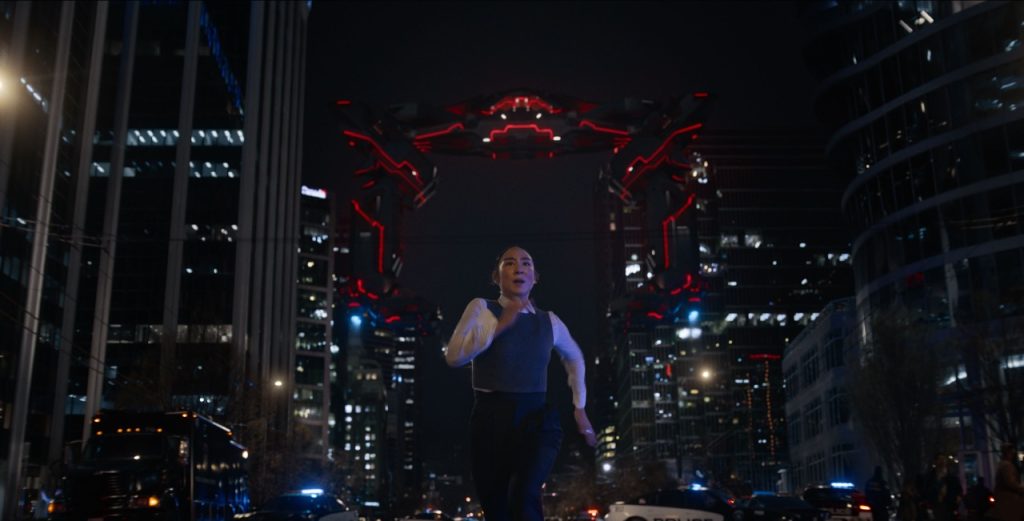
    (L-R) Arturo Castro as Seth Flores and Greta Lee as Eve Kim in Disney’s Live Action TRON: ARES. Photo by Leah Gallo. © 2025 Disney Enterprises, Inc. All Rights Reserved.

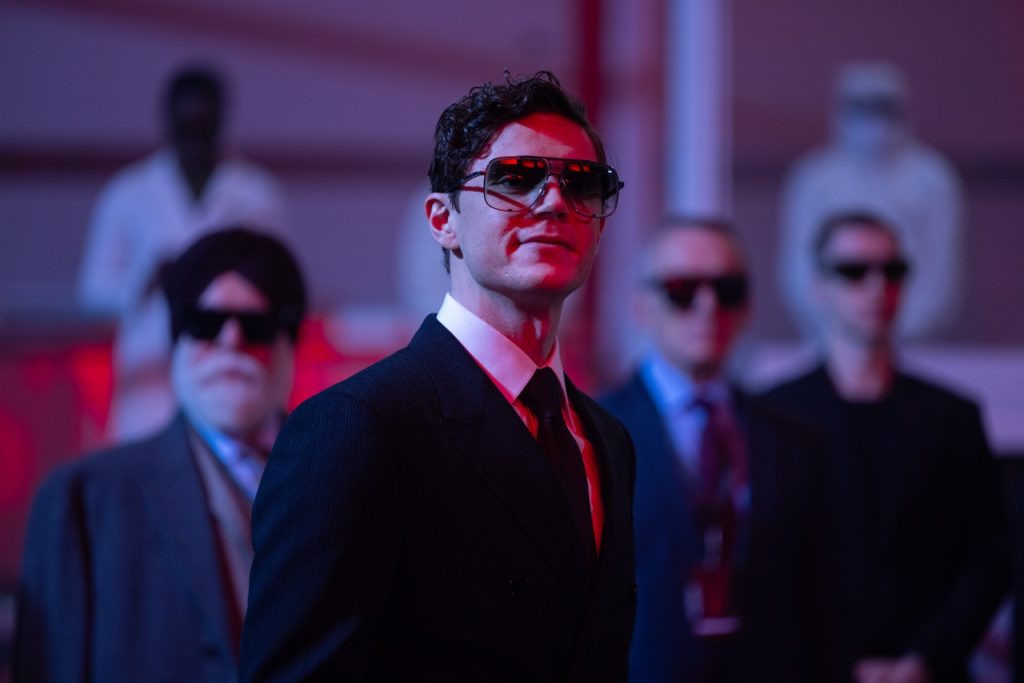
    Eve Kim (Greta Lee), CEO of ENCOM, wants to use the code improve human civilization while Julian Dillinger (Evan Peters), CEO of Dillinger Systems, wants to transfer programs from The Grid to make weapons and soldiers to sell for defense contracts with the government.

    TRON: Ares
    Hasan Minhaj as Ajay Singh in Disney’s Live Action TRON: ARES. Photo by Leah Gallo. © 2025 Disney Enterprises, Inc. All Rights Reserved.
    TRON: Ares
    Jared Leto as Ares in Disney’s TRON: ARES. Photo by Leah Gallo. © 2025 Disney Enterprises, Inc. All Rights Reserved.

    In the midst of this rivalry, Julian creates a program, Ares (Jared Leto), and trains it to be the best and sends it to follow and capture Eve Kim as she seems the closest to finding the permanence code. But in the process of research about Eve, Ares develop sentience and veers off his programming, setting out on his own agenda.

    TRON: Ares
    Evan Peters as Julian Dillinger in Disney’s Live Action TRON: ARES. Photo by Leah Gallo. © 2025 Disney Enterprises, Inc. All Rights Reserved.

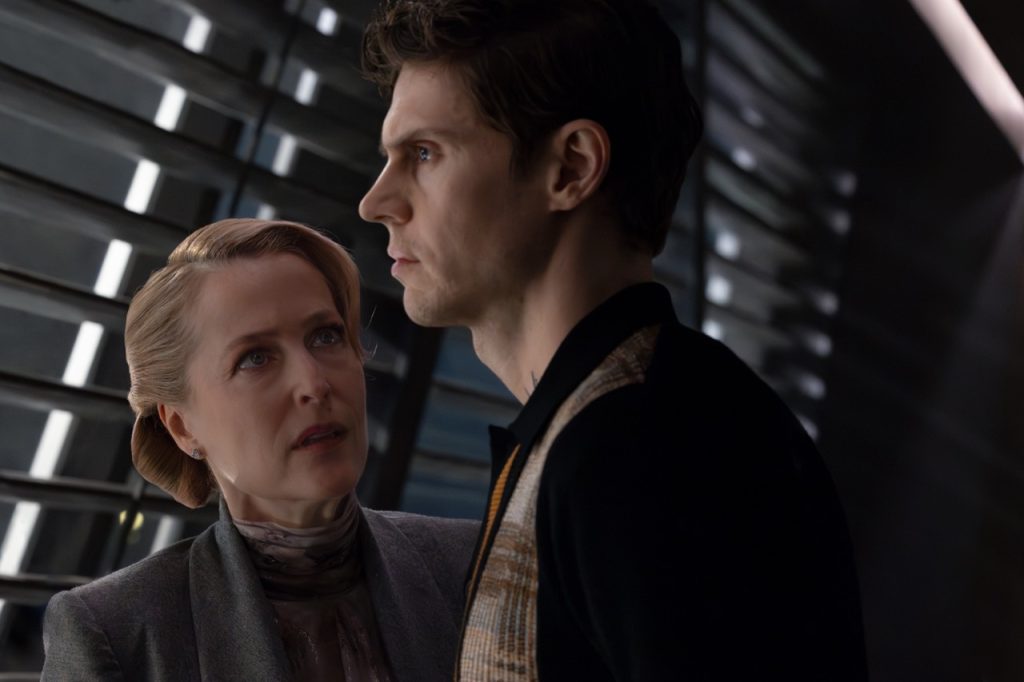
    The permanence code becomes the film’s McGuffin, the object everybody wants and needs to complete their task and goal. It’s what brings Ares and Eve cross paths and join forces while the maniacal Julian sends more and more programs after the two even against the wishes of his mother, Elisabeth Dillinger (Gillian Anderson).

    TRON: Ares
    Gillian Anderson as Elisabeth Dillinger and Evan Peters as Julian Dillinger in Disney’s Live Action TRON: ARES. Photo by Leah Gallo. © 2025 Disney Enterprises, Inc. All Rights Reserved.

    Almost all the characters here feel incomplete and one-dimensional. Eve wants to fix the world through this technology because of a promise she had with her sister, Julian is taken straight out of the evil villain trope, acting loud and proud for the work his programs do (not for anything he did in particular), while Ares wants permanence to continue his curiosity about living. None of these storylines ever fully develop, as the film moves from chase sequence after the next, showing off one gorgeous special effect after another.

    TRON: Ares
    A scene from Disney’s Live Action TRON: ARES. Photo Courtesey of DIsney. © 2025 Disney Enterprises, Inc. All Rights Reserved.

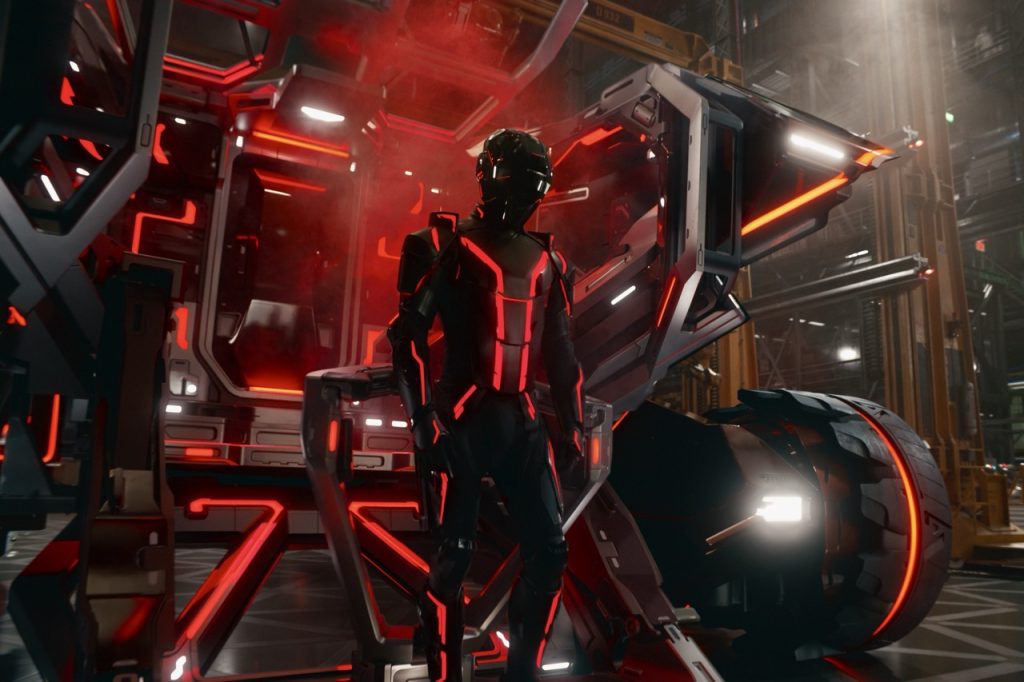
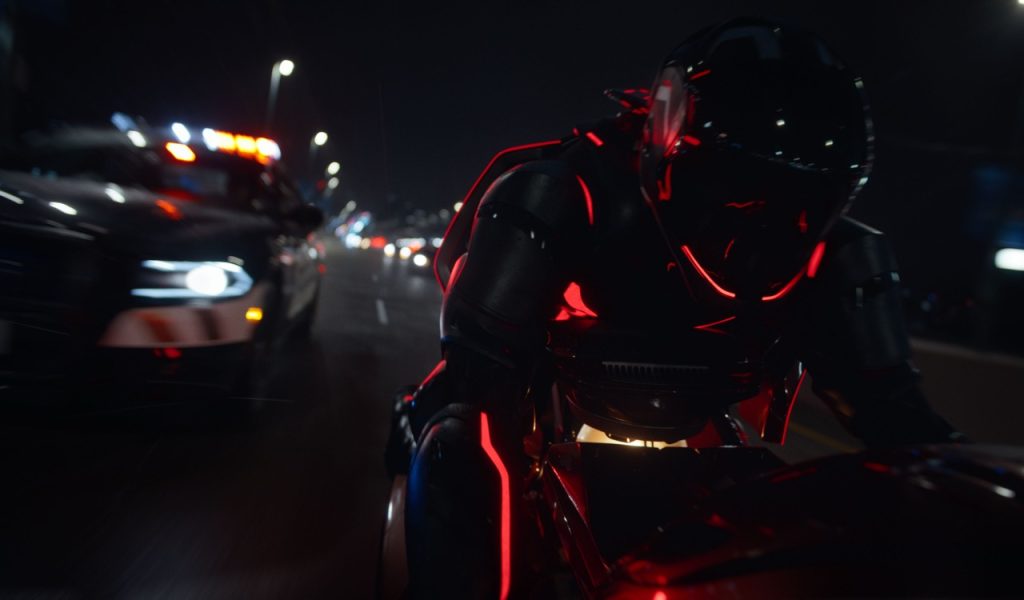
    While the story is paper thin, what makes ‘Tron: Ares’ watchable is the gorgeous CGI effects that bring these programs into the real world. There’s a bike chase sequence that’s high-speed and high-stakes.

    TRON: Ares
    A scene from Disney’s TRON: ARES. Photo courtesy of Disney. © 2025 Disney Enterprises, Inc. All Rights Reserved.

    The bikes from The Grid leaves a trail that takes physical shape and the choreography that director Joachim Ronning employs allows for excellent visuals. Later on in the film, they introduce planes and drones with a similar effect, and on 3D IMAX, the imagery is gorgeous. Amplified by a thrilling soundtrack of Nine Inch Nails, and there are some moments in the cinema that feel quite lovely to watch.

    TRON: Ares
    Greta Lee as Kim in Disney’s Live Action TRON: ARES. Photo Courtesey of DIsney. © 2025 Disney Enterprises, Inc. All Rights Reserved.

    But the story is so thin that even some of the best actors in the movie don’t seem to know what to do with their characters. I love Lee since ‘Past Lives’ and ‘The Morning Show,’ but she feels so out of place here, working with a character without any real depth.

    Evans is chewing scenery and looks like he’s having fun, while Anderson is able to create some level of layer in Elisabeth but even, she seems lost in all of this. I’m not a fan of Leto or his offscreen persona and identity, so it was hard to watch the film with him as the lead knowing this but even his acting talents (he did win an Oscar, after all) couldn’t do much to make Ares an interesting character.

    TRON: Ares
    Jared Leto as Ares in Disney’s Live Action TRON: ARES. Photo Courtesey of DIsney. © 2025 Disney Enterprises, Inc. All Rights Reserved.

    Leto looks unsure about how sentient Ares could be. He tried stoicism, but the script forces him to try and attempt at humor. He seems interested in Eve Kim but is struggling to find out how that appears on a program turned real. Leto’s uncertainty makes Ares the least interesting character in the film, and this is strongly noted when his character finds himself separated from the main plot and you realise you’re not interested in his side quest.

    TRON Ares dtrl2 v26oc 240ce t 250707 g r709f.089406
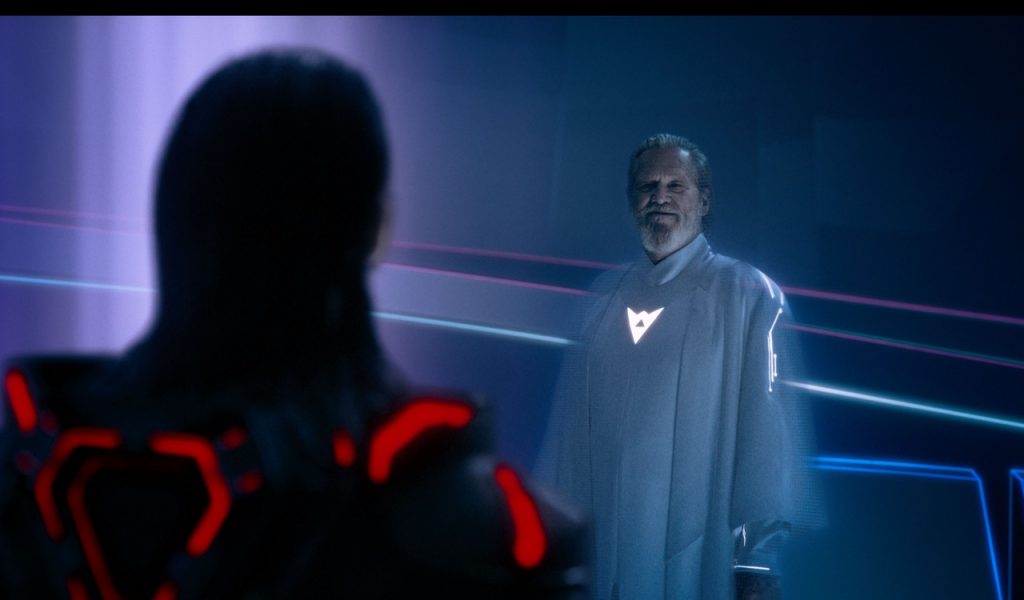
    (L-R) Jared Leto as Ares and Jeff BRidges as Flynn in Disney’s Live Action TRON: ARES. Photo by Leah Gallo. © 2025 Disney Enterprises, Inc. All Rights Reserved.

    The film tries to balance out both sides of the vision of future technology. Eve Kim wants to use this tech to create food, housing and cure diseases, but Julian wants it to build weapons and soldiers he can sell. We already know how damaging AI technology can be to the environment and we can’t imagine the cost to laser-print into existence all the things the film is showing us the future could hold. All that we see in the movie uses up a massive power, but the film takes it for granted, as it is more involved in its plot. It never really makes any sort of stand for whether any of this is good or bad. It gives a “good” AI (Ares) and a “bad” AI (Athena, played by Jodie Turner-Smith) but doesn’t say anything about this other than it seems to push for us to appreciate Ares’ bid for humanity. It feels like a platitude and an attempt to inject some humanity into what maybe an action thriller.

    My Rating:

    A Big Bold Beautiful Journey


    Experience the future like never before. Catch TRON: Ares on the big screen and get lost in its stunning visuals, electrifying soundtrack, and high-speed action. See it now in cinemas and feel the Grid come alive in 3D IMAX!

  • Cinemalaya XXI: The Invisible Craftsmanship of ‘Open Endings’ Makes It a Charming, Loveable Movie

    Cinemalaya XXI: The Invisible Craftsmanship of ‘Open Endings’ Makes It a Charming, Loveable Movie

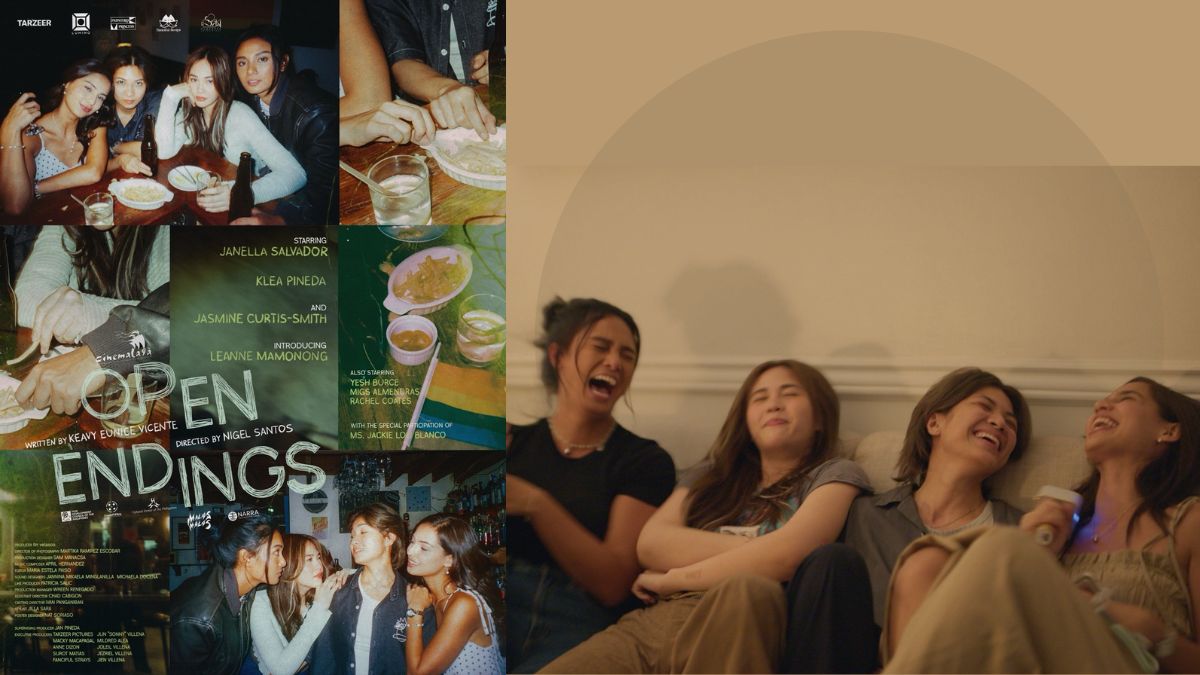
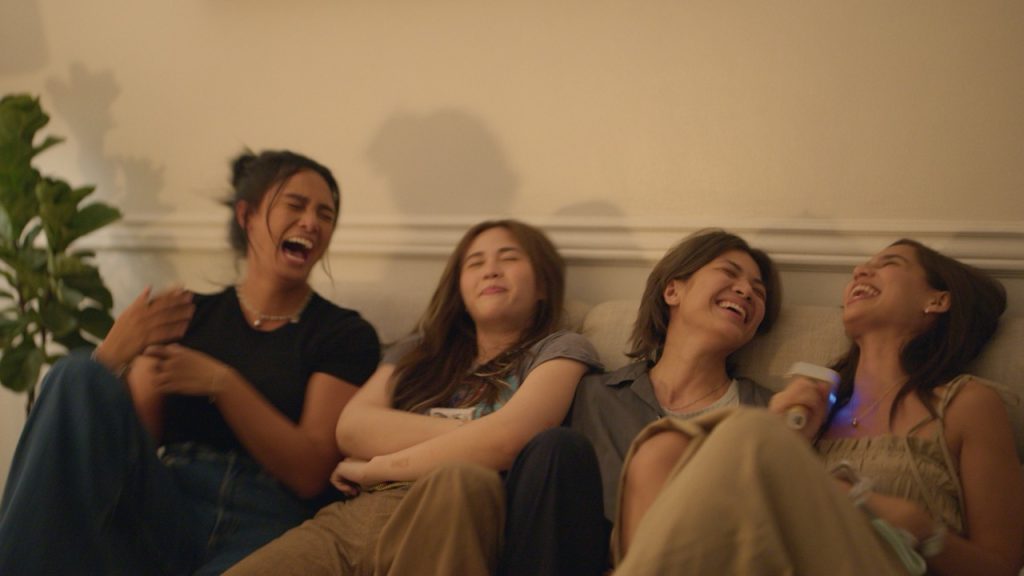
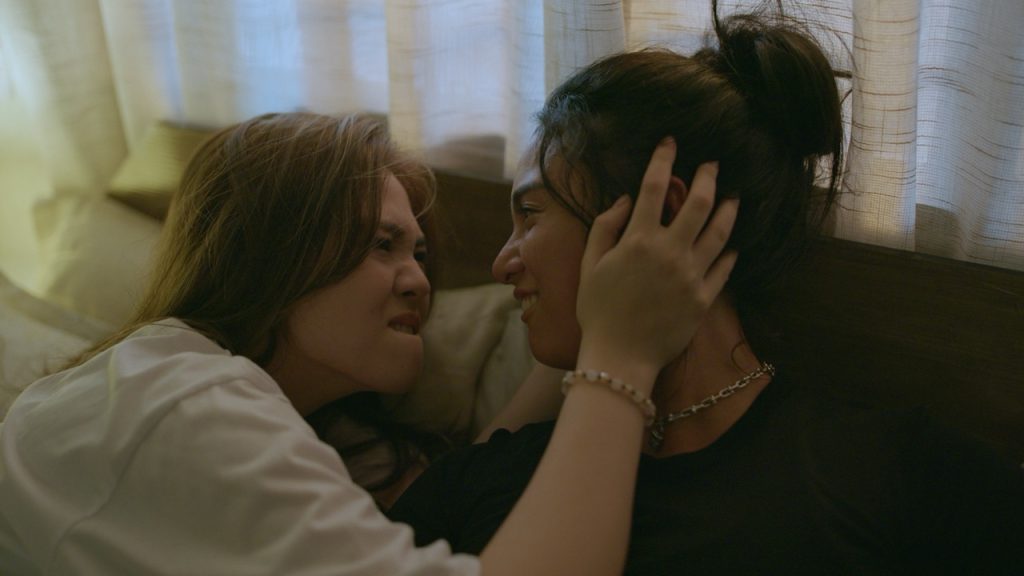
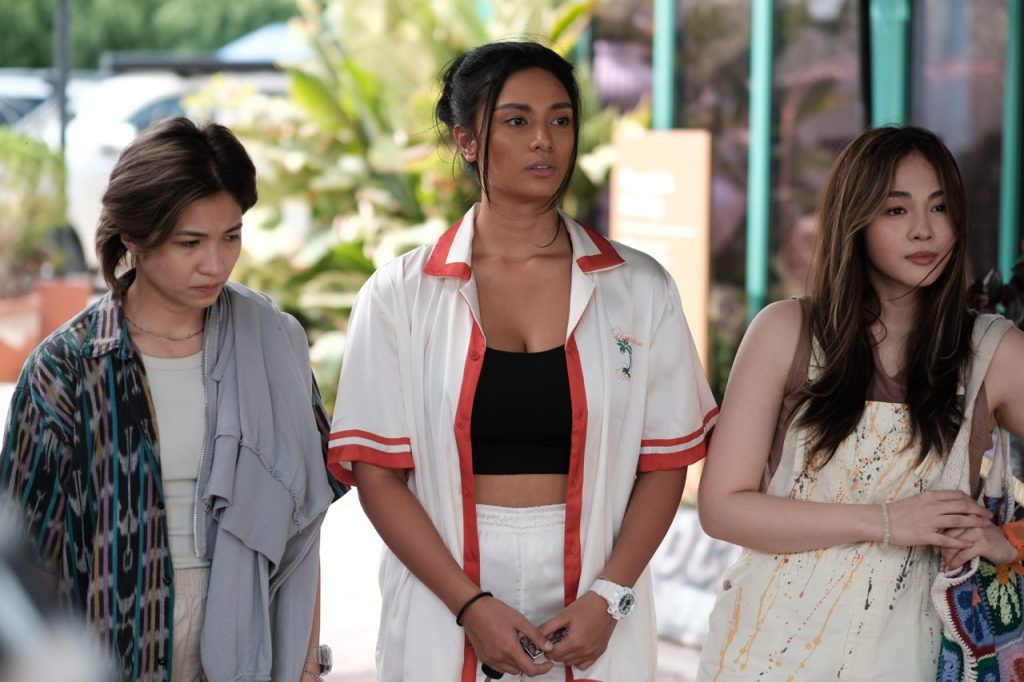
    There’s something magical about how natural and organic ‘Open Endings’ feels as a film. There’s a rhythm and flow to this slice-of-life story about four queer women who happen to be best friends while having had some romantic or sexual entanglement with each other at one point in their lives. The fact that they all consider themselves exes at some point is the film’s hook, but ‘Open Endings’ goes beyond a simple rom-com movie by also detailing how these four women navigate adulthood and try to reconcile their rather messy feelings without disrupting their friendship and their own sense of safety.

    Director Nigel Santos and screenwriter Keavy Eunice Vicente don’t try to make broad, sweeping generalizations about being a queer woman in the Philippines and by doing so, they manage expectations and go beyond it.

    Open Endings
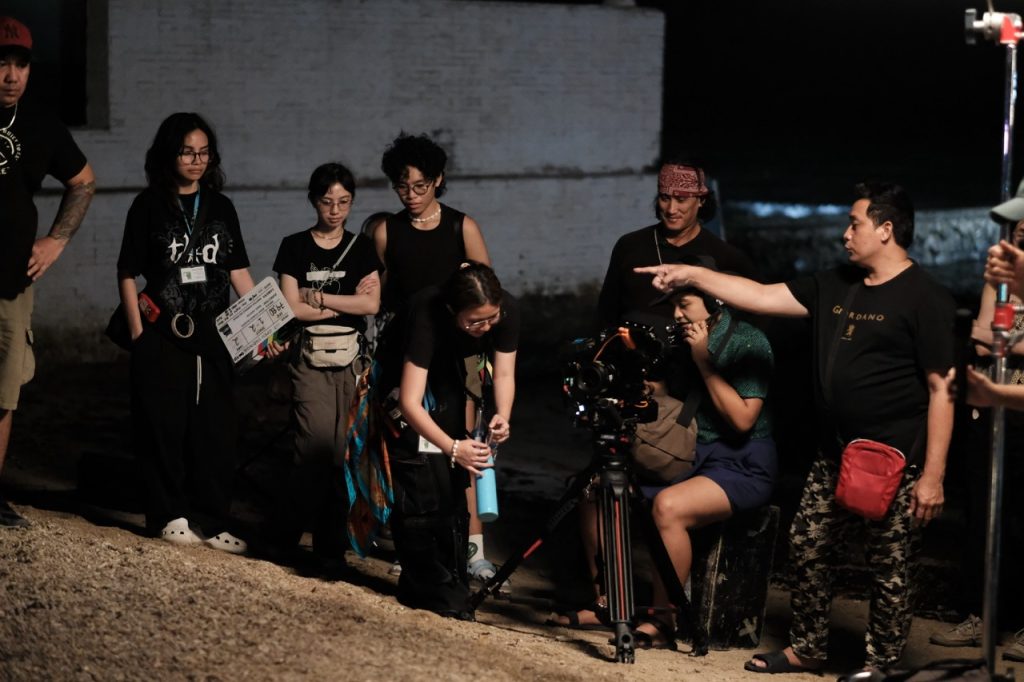
    BTS Open Endings | Photo courtesy of Cinemalaya / CCP Corporate Communications Division

    The film’s issues involved become relatable and universal in the treatment of these women as individuals rather than some big allegory about the queer woman struggle. By keeping it personal and intimate, the film feels of this world. The characters become familiar and recognizable, and the audience then finds their own insights about the struggles of queer women today. It’s not force-fed and that’s where I found its charm.

    Open Endings
    Open Endings | Photo courtesy of Cinemalaya / CCP Corporate Communications Division

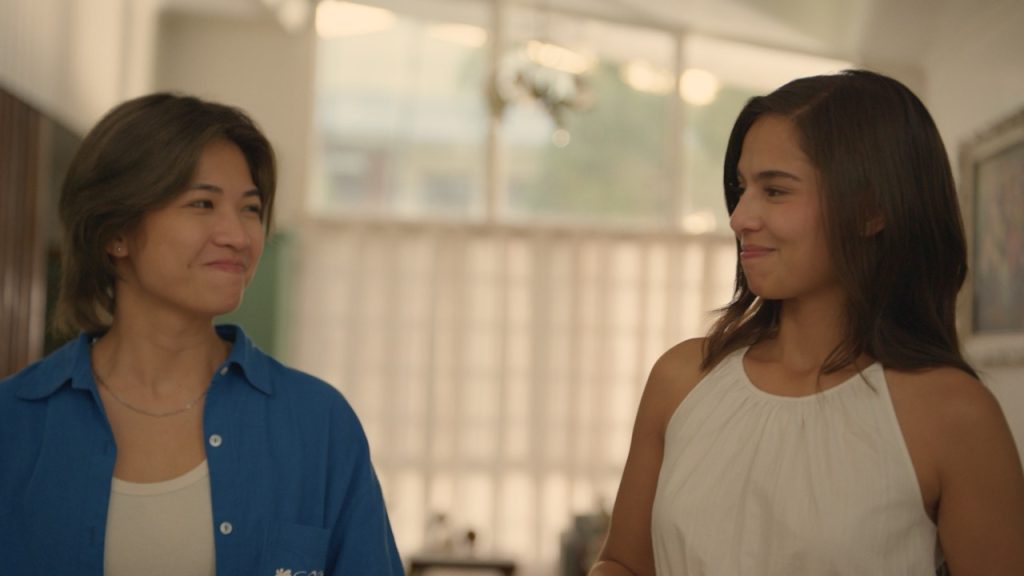
    The film focuses on four queer women – Hannah (Jasmine Curtis-Smith), Charlie (Janella Salvador), Kit (Klea Pineda), and Mihan (Leanne Mamonong) – who gather every Sunday at Hannah’s house while going through their own issues with adulthood. Hannah is ready to move on after two years of grieving her late lover.

    Open Endings
    Open Endings | Photo courtesy of Cinemalaya / CCP Corporate Communications Division

    Kit comes off as a player, regularly hooking up with other women, finds herself challenged by a growing tension with the mother of one of her students holds the key to unlocking her own free-spirited nature. Mihan still carries the torch for Hannah, whom she had been with for five years, but has commitment issues. While Charlie begins the story with her newly-formed-relationship having issues with Charlie being friends with her exes.

    Open Endings
    Open Endings | Photo courtesy of Cinemalaya / CCP Corporate Communications Division

    Santos, Vicente, along with cinematographer Martika Ramirez Escobar and editor Maria Estela Paiso, keep the film from slipping into the realm of melodrama by avoiding the usual pitfalls of unnecessary overdramatic tropes. Paiso’s editing flows smoothly from one character to the next, never lingering or over-staying in a scene so that it doesn’t emphasize the drama but still highlights the character the conflict.

    Open Endings
    BTS Open Endings | Photo courtesy of Cinemalaya / CCP Corporate Communications Division

    Escobar’s cinematography pushes in, so we see each character reacting, making decisions, taking all of it in and then pulling out to put them in context of time and space. This world – one which I’m not a part of or privy to – becomes so clear and inviting. I don’t have to be a queer woman to enjoy the humor and the pathos that the film portrays. 

    Open Endings
    Open Endings | Photo courtesy of Cinemalaya / CCP Corporate Communications Division

    And the ensemble carries a natural charm and comfort in their roles, giving the film a grounded edge that makes the film all the more accessible. Salvador and Curtis-Smith are excellent as Charlie and Hannah, with Curtis-Smith doing that difficult task of not making the nurturing and loving Hannah a stereotypical nice girl.

    Open Endings
    Open Endings | Photo courtesy of Cinemalaya / CCP Corporate Communications Division

    As written, Hannah can be the most boring character of the bunch – a grieving woman who loves and takes care of her friends, sometimes to her own detriment – but Curtis-Smith doesn’t make her a caricature or a saint. It’s well done.

    Open Endings
    Open Endings | Photo courtesy of Cinemalaya / CCP Corporate Communications Division

    Pineda is a powerful screen presence and manages to go against her gorgeous appearance for some truly funny moments. There’s a silliness that she can tap into that goes contrary to her amazing physicality that creates a nice tension and makes her more interesting to watch.

    Open Endings
    Open Endings | Photo courtesy of Cinemalaya / CCP Corporate Communications Division

    But while all the performances are great, it is Mamonong who steals the show. She is the most comfortable in her character (despite having the heaviest conflict to portray) and she is the most natural in her delivery of her dialogue and her character’s quirks and eccentricities. It never feels like acting. Mamonong makes Mihan feel like a fully formed person. It’s really a breakthrough performance.

    Open Endings
    BTS Open Endings | Photo courtesy of Cinemalaya / CCP Corporate Communications Division

    There’s so much heart in ‘Open Endings,’ and the way the whole theater reacted to every story beat shows how the film holds down all the technical flourish to allow the story and the humanity of this film rise. Sometimes, the best craftsman are the ones that hide their skill that you only see the thing. All the elements – cinematography, writing, acting, editing, production design, music – just disappears and blends together that all I see is this lovely story of a messy but loveable group of friends navigating adulthood with all its open endings, as the film’s title suggests.

    A Big Bold Beautiful Journey


    Open Endings is showing on the big screen. Check cinema showtimes near you and grab your tickets today.

    This year, don’t miss Cinemalaya 21: LAYAG sa Alon, Hangin, at Unos happening from October 3-12, 2025! Witness another stellar lineup of stories that will move you and showcase the brilliance of Philippine cinema. Follow the Cultural Center of the Philippines and Cinemalaya for updates.

  • Movie Review — Cinemalaya XXI: The Weight of the Tragedy Keeps ‘Padamlagan’ from Finding Its Feet

    Movie Review — Cinemalaya XXI: The Weight of the Tragedy Keeps ‘Padamlagan’ from Finding Its Feet

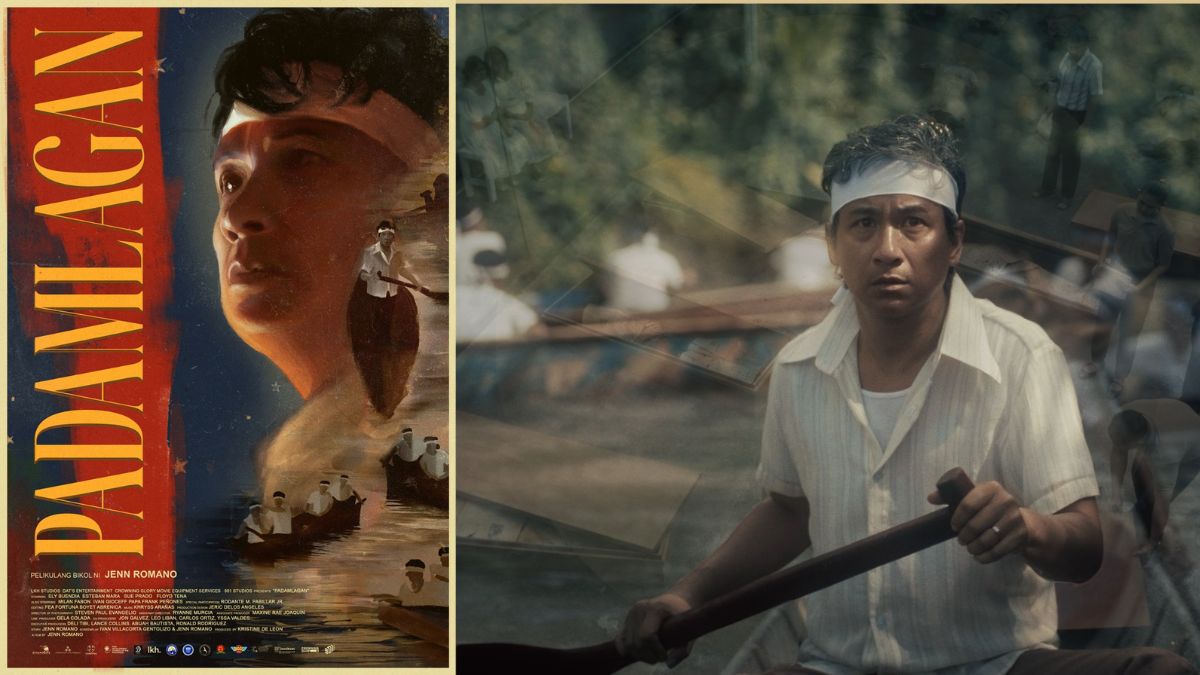
    Jenn Romano’s ‘Padamlagan’ uses film to remember, stitching together interviews about the Naga tragedy using photographs to reimagine that era, while weaving in a narrative about a father whose son goes missing to encapsulate that feeling and making it tangible. The blurring of reality and fiction is an interesting use of the medium and pushes Romano’s message that the victims of the tragedy must not be forgotten. But Romano’s film aesthetic and style linger, is a quiet remembering but the story she is trying to tell needs a bit more volume.

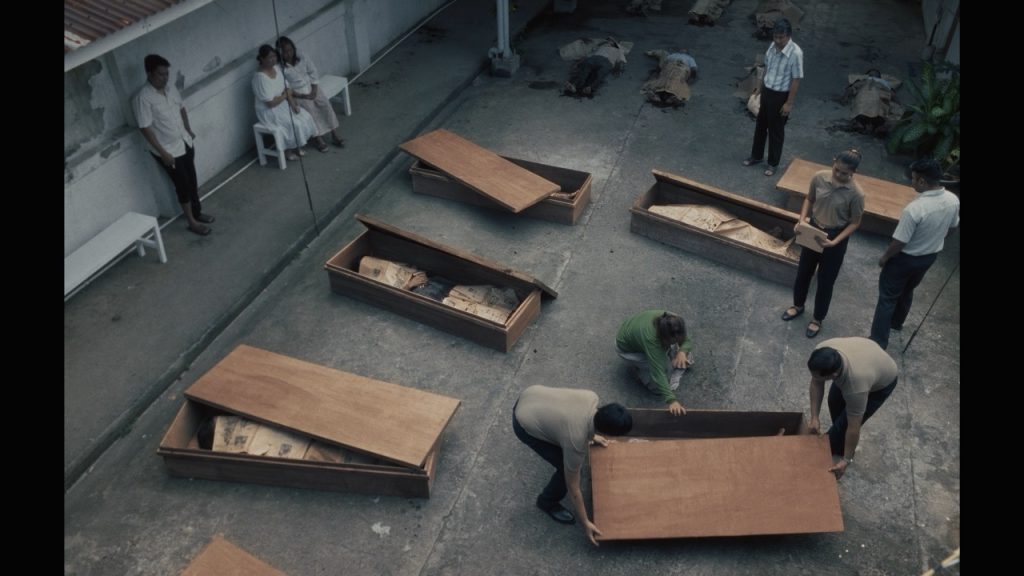
    The story in the middle of the retelling revolves around a father, Doring (Ely Buendia), who seems out of sorts, not fully in the present. He lives with his in-laws (Sue Prado and Floy Tena) while his son, Ivan (Esteban Mara), grows up and distant after a stint studying in Manila. The city of Naga is a buzz due to the fluvial procession for Our Lady of Peñafrancia. Ivan is at odds with his uncle and his father, unwilling to take part in the family going-ons and earning a reputation for being a troublemaker. When the Colgante Bridge collapses and hundreds die, Ivan goes missing. Doring spends the rest of the film looking for his son and witnessing the effects of that tragedy on the lives of the people around him.

    Padamlagan
    Padamlagan | Photo courtesy of Cinemalaya / CCP Corporate Communications Division’

    In order to create that feeling of remembrance, Romano uses a lot of still shots. Her camera, lensed by Steven Paul Evangelio, barely moves while the world enters and exits the frame. Most of the time, the film takes a long shot keeping us distant from the characters and their business. This aesthetic can leave the audience cold because we don’t really get to see the full scope of the strains of the relationship between Doring and Ivan and Ivan with the rest of his family, especially his soldier uncle.

    Padamlagan
    Padamlagan | Photo courtesy of Cinemalaya / CCP Corporate Communications Division’

    By using a still shot, the characters have to come into place, and this creates a lingering feeling. It slows down the pace and the energy of the film. It’s actually a standard 90-minute film but it can feel much longer. Except for a few actors, most of the dialogue in the narrative are delivered in short bursts with pauses or silences in-between lines. The dialogue doesn’t flow like conversational language, so the energy of the scene never really pushes through. Floyd Tena is the most conversational of the actors, delivering his dialogue (all of which is in Bicolano) with the most ease that his scenes are always the strongest, the most natural. Everyone else seems to be going through an emotional moment. Instead of nostalgia or emphasis, it makes the film feel over-dramatic.

    Padamlagan
    Padamlagan | Photo courtesy of Cinemalaya / CCP Corporate Communications Division’
    Padamlagan
    Padamlagan | Photo courtesy of Cinemalaya / CCP Corporate Communications Division’

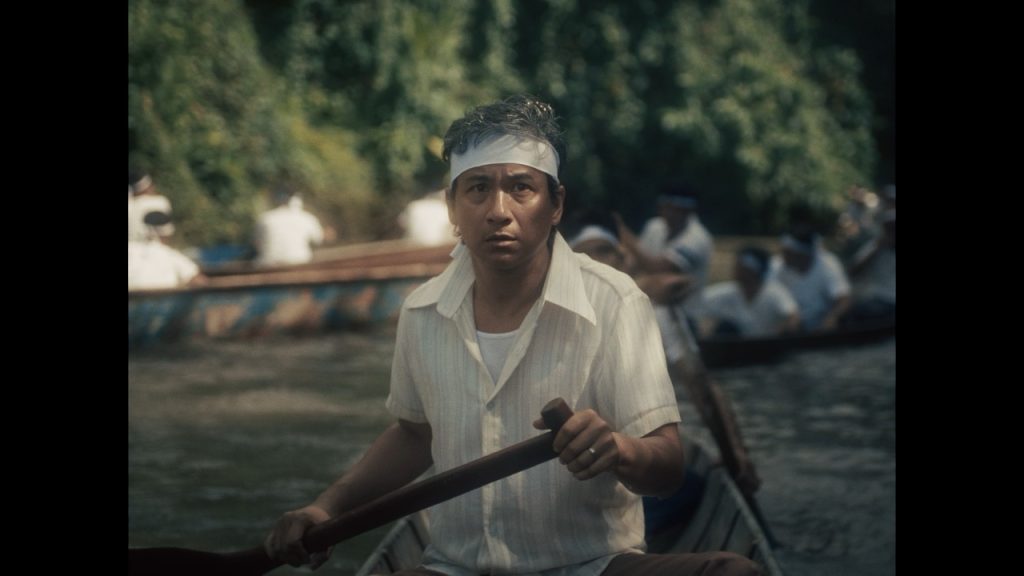
    As the main character, Buendia gets the most close-ups (followed by Mara), but unfortunately, Buendia has such a stoicism that he fails to really bring out his character’s interior world. The most telling of this is during the fluvial parade, where Doring is paddling surrounded by other paddlers on boats. Through sound effects, we realise the bridge is collapsing and all the other characters around him are panicking, their faces awash with horror. But Buendia’s face remains the same. There’s a slight tension in the jaw, but no other emotion comes out. His paddling doesn’t even change that much and so the effect of the tragedy is slightly diminished. And this is an issue I have throughout the rest of the film with him. He’s our foil, our way of understanding the story and the immense grief that followed the collapse of the bridge, but we never really get to feel it. On Mara’s close-ups, there is a world of hurt and pain there that’s hidden just below the eyes.

    Padamlagan
    Padamlagan | Photo courtesy of Cinemalaya / CCP Corporate Communications Division’

    The film talks about the tragedy in detail but only slightly implies its effect and connection to the declaration of Martial Law just a few days after the tragedy. There are implications of Ivan’s possible engagement with the communist party and there are one or two scenes of police and military brutality but it’s not enough for the film to truly make any link between the tragedy of Colgante in 1972 and the declaration of Martial Law and all the tragedies that happened due to that declaration. There’s a causality that the film attempts at establishing but doesn’t quite hunker down in any real detail. The Colgante Bridge tragedy is an event entirely of its own and by mentioning that Martial Law was declared just days after bears no meaning.

    Padamlagan
    Padamlagan | Photo courtesy of Cinemalaya / CCP Corporate Communications Division’

    The weight of memory bears down on ‘Padamlagan’ that the film doesn’t find its own two feet. There’s no catharsis in this film, a bold choice, but without a fuller understanding of Doring as a character or a means to visually grasp what he’s feeling, the film’s attempt to turn the feeling tangible escapes me. It’s strongest when it acts as memory, recounting real-life stories and showing photos of the event. That was more affecting than the film.

    A Big Bold Beautiful Journey


    Padamlagan is showing on the big screen. Check cinema showtimes near you and grab your tickets today.

    This year, don’t miss Cinemalaya 21: LAYAG sa Alon, Hangin, at Unos happening from October 3-12, 2025! Witness another stellar lineup of stories that will move you and showcase the brilliance of Philippine cinema. Follow the Cultural Center of the Philippines and Cinemalaya for updates.

  • Movie Review: Cinemalaya XXI: ‘Habang Nilalamon ng Hydra ang Kasaysayan’ Is a Politically-Charged Love Letter 

    Movie Review: Cinemalaya XXI: ‘Habang Nilalamon ng Hydra ang Kasaysayan’ Is a Politically-Charged Love Letter 

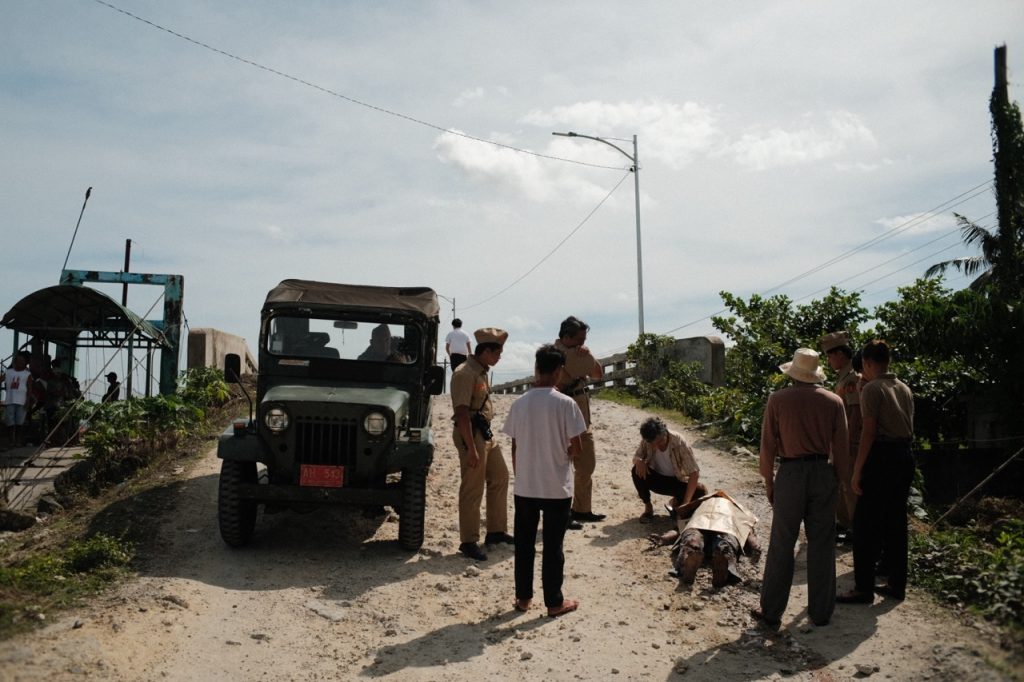
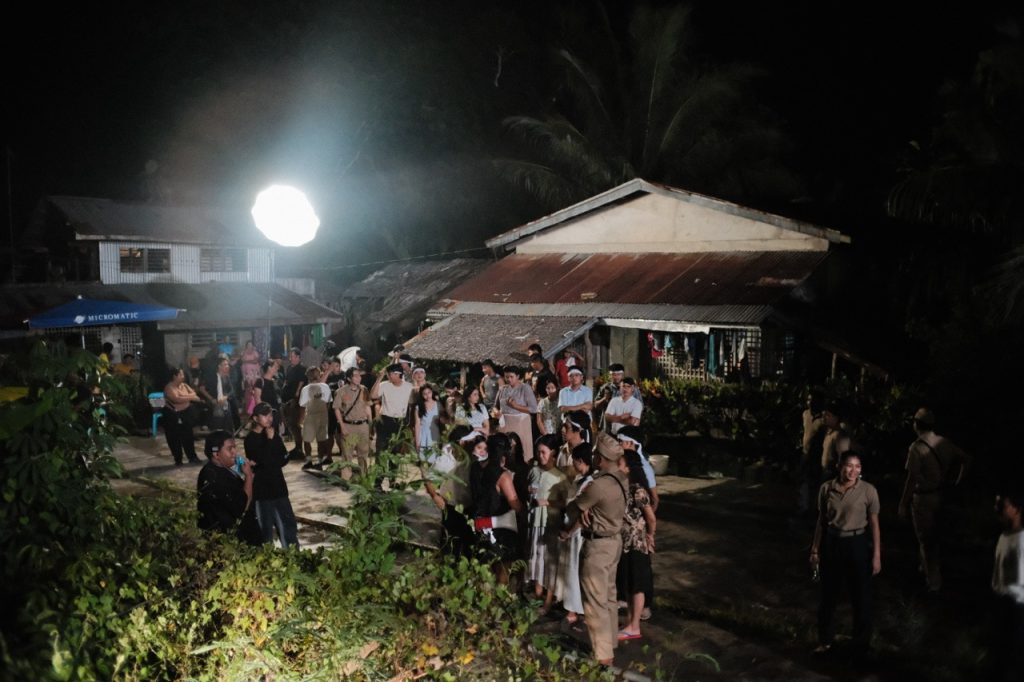
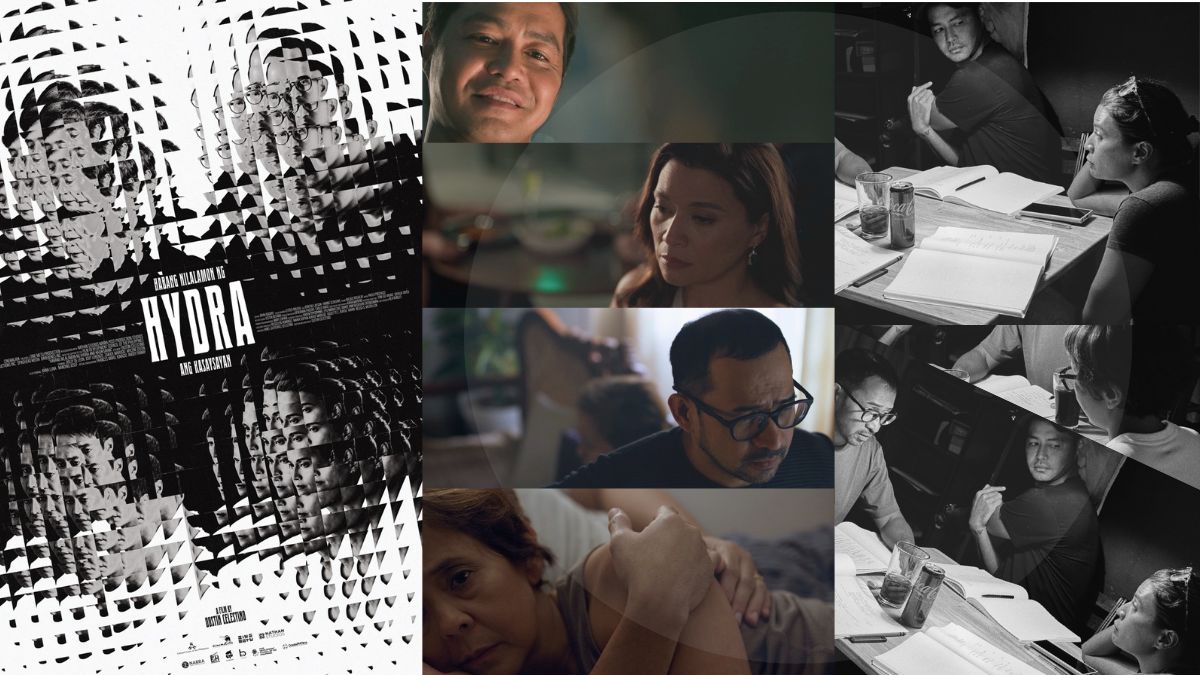
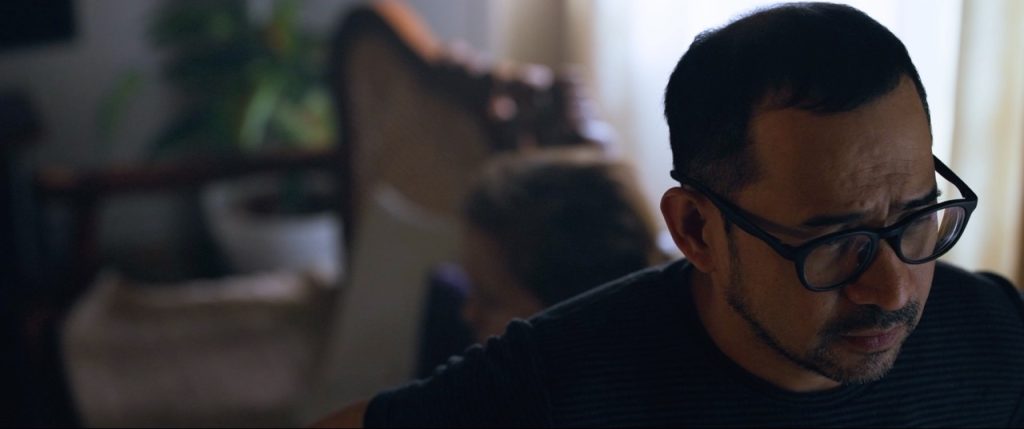
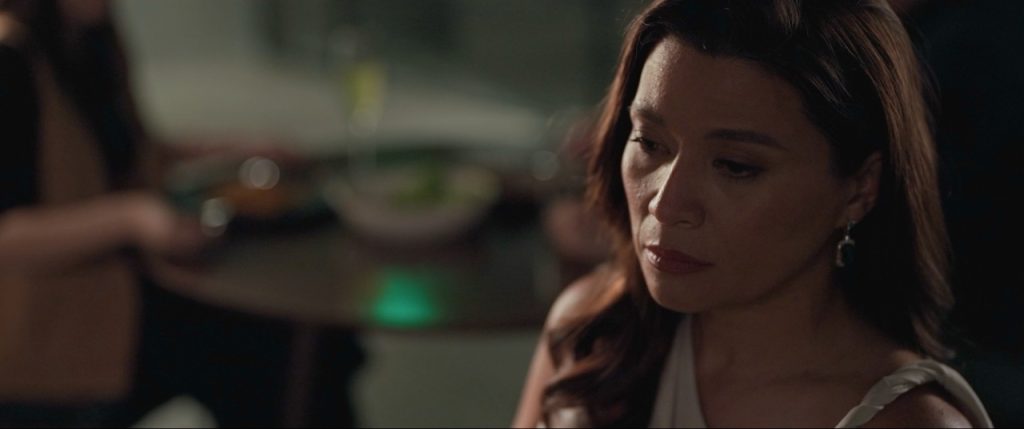
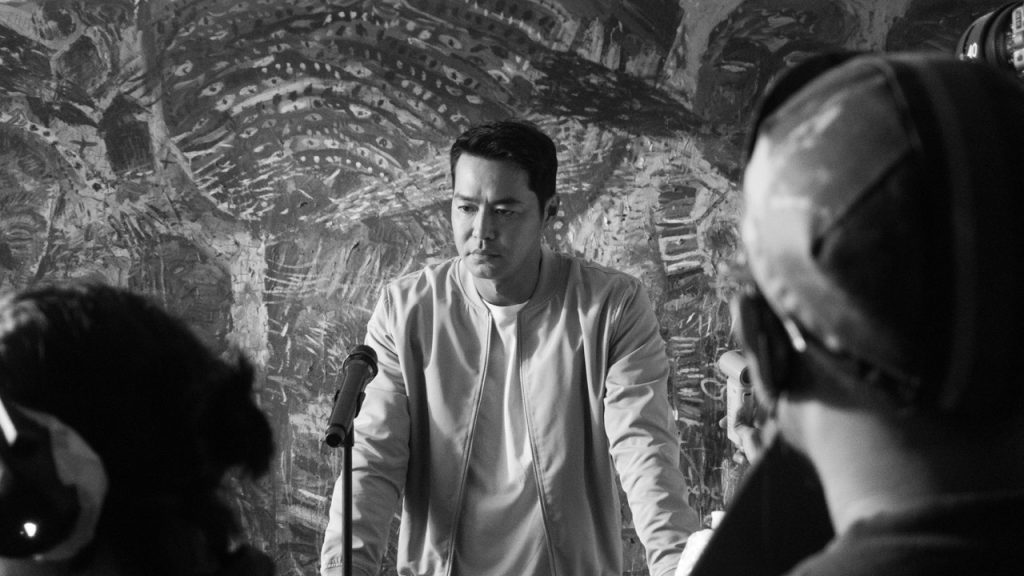
    While the film opens with a disclaimer that the events and characters depicted in ‘Habang Nilalamon ng Hydra ang Kasaysayan’ are purely fictional, there’s no doubt on the event that director and writer Dustin Celestino is exploring in his movie. The narrative begins during an election, where a woman candidate loses, leaving her campaign team, Kiko (Jojit Lorenzo) and David (Zanjoe Marudo) to deal with the crushing blow of defeat. Kiko’s wife, Bea (Dolly De Leon), a history professor, begins to spiral after the winning candidate turns out to be the son of the former president whose regime caused the disappearance of her father decades prior. In the midst of this, David begins dating Mela (Mylene Dizon), a constitutional lawyer and the daughter of the general who is suspected of being the executioner of that same president.

    Habang Nilalamon ng Hydra ang Kasaysayan
    BTS HABANG NILALAMON NG HYDRA ANG KASAYSAYAN | Photo courtesy of Cinemalaya / CCP Corporate Communications Division’

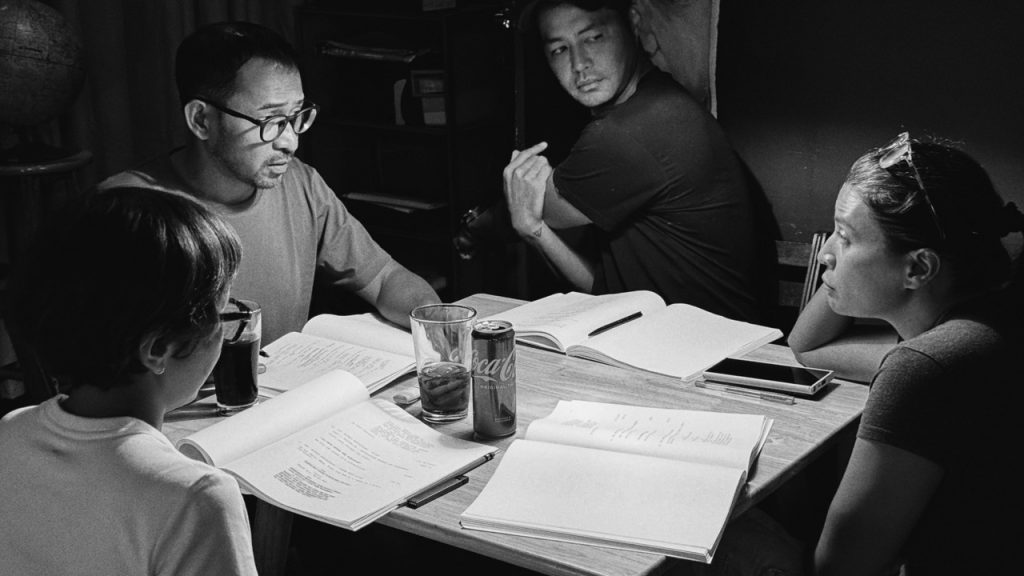
    These four characters wrestle and struggle with the shifting political landscape, dissecting the loss of history through technology and changing social norms, while desperately trying figure out where hopes lies when the truth no longer holds power.

    Habang Nilalamon ng Hydra ang Kasaysayan
    HABANG NILALAMON NG HYDRA ANG KASAYSAYAN | Photo courtesy of Cinemalaya / CCP Corporate Communications Division’

    Once again, Celestino takes what is essentially a theatrical narrative and manages to turn it cinematic by his dynamic use of camerawork, lensed by the incredible Kara Moreno. Each duet (as most of the scenes happen with only two people talking) or the powerful dinner sequence with all four leads together, can be imagined as scenes from a play. They are verbose, the characters figuring out the world through dialogue. It’s didactic, for sure, but the setup is so precise that allows for these conversations to happen.

    Habang Nilalamon ng Hydra ang Kasaysayan
    HABANG NILALAMON NG HYDRA ANG KASAYSAYAN | Photo courtesy of Cinemalaya / CCP Corporate Communications Division’
    Habang Nilalamon ng Hydra ang Kasaysayan

    HABANG NILALAMON NG HYDRA ANG KASAYSAYAN | Photo courtesy of Cinemalaya / CCP Corporate Communications Division’

    Kiko and David, former speechwriters for the female presidential candidate, are articulate and intelligent. David even being a professor of Greek mythology before joining the campaign. Kiko and Bea are also intelligent and articulate people, with Bea being a history professor. All their conversations echo the kind of conversations that might have transpired back in 2022, on the actual election that this film is obviously inspired from.

    Habang Nilalamon ng Hydra ang Kasaysayan
    HABANG NILALAMON NG HYDRA ANG KASAYSAYAN | Photo courtesy of Cinemalaya / CCP Corporate Communications Division’

    Adding to the mix is Mela (Mylene Dizon), the mercenary constitutional lawyer who grew up in privilege and possesses the strength and confidence to speak her mind. She, too, is a forced to be reckoned with. These characters and the situations Celestino chooses to portray onscreen is permissible for his exercise in exploring the issues of disinformation and the absence of truth (or the lack of power of truth) in today’s socio-political discourse.

    Habang Nilalamon ng Hydra ang Kasaysayan
    BTS HABANG NILALAMON NG HYDRA ANG KASAYSAYAN | Photo courtesy of Cinemalaya / CCP Corporate Communications Division’

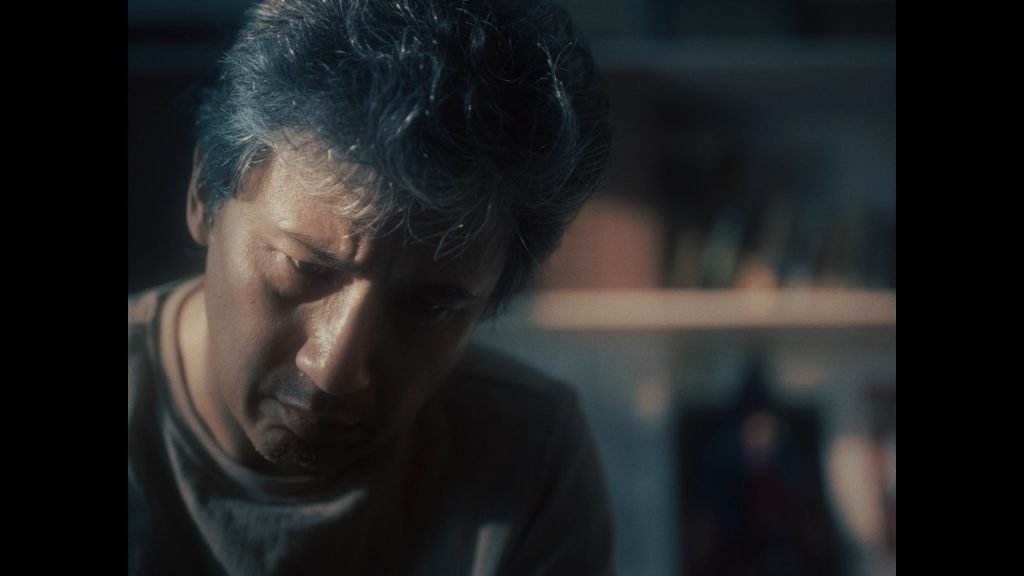
    Moreno’s close-ups are strikingly intense, they move in really close, oftentimes cutting off the headroom at the top of the frame, as Celestino is putting equal emphasis on their emotions as well as their reasoning; even when emotions sometimes overcome reason. It is so close, almost claustrophobic, that I feel that a story that is talking about real-world events needs a shot of the world being discussed.

    Habang Nilalamon ng Hydra ang Kasaysayan
    BTS HABANG NILALAMON NG HYDRA ANG KASAYSAYAN | Photo courtesy of Cinemalaya / CCP Corporate Communications Division’

    As I’m watching this film, and enjoying this philosophical debate, I found myself looking for the world that they are talking about. Maybe some exterior shots, some long shots of the characters within that milieu. By keeping everything so close and so intimate and personal, I do not see the world that the characters are struggling so hard to save. 
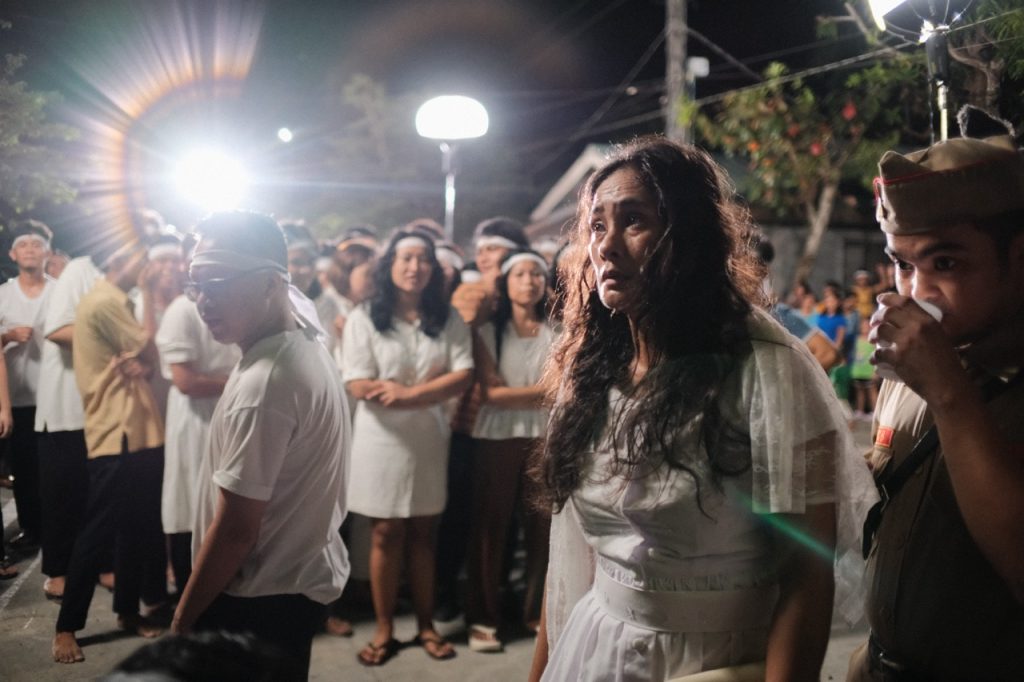
    Habang Nilalamon ng Hydra ang Kasaysayan
    BTS HABANG NILALAMON NG HYDRA ANG KASAYSAYAN | Photo courtesy of Cinemalaya / CCP Corporate Communications Division’
    Habang Nilalamon ng Hydra ang Kasaysayan
    BTS HABANG NILALAMON NG HYDRA ANG KASAYSAYAN | Photo courtesy of Cinemalaya / CCP Corporate Communications Division’

    With this powerhouse cast, though, the acting is superb. It’s an ensemble piece that also features Anna Luna as Mela’s sister, Nanding Josef as Mela’s father, Frances Makil-Ignacio as the female presidential candidate, and Andoy Ranay as the newly elected president. Each one delivers a nuanced performance, barely acting, just being their characters. They throw the lines so effortlessly, truly encapsulating the character’s milieu, their intelligence.

    Habang Nilalamon ng Hydra ang Kasaysayan
    BTS HABANG NILALAMON NG HYDRA ANG KASAYSAYAN | Photo courtesy of Cinemalaya / CCP Corporate Communications Division’

    But the scene-stealer here is Mylene Dizon. Her character is so complex and is right at the point of realisation, as she is dating the activist, David. She balances between indifference and waking up to the horrors of her family’s past. It’s such a delicate moment for her character, and Dizon nails the performance to a tee.

    Habang Nilalamon ng Hydra ang Kasaysayan
    BTS HABANG NILALAMON NG HYDRA ANG KASAYSAYAN | Photo courtesy of Cinemalaya / CCP Corporate Communications Division’

    On a technical level, ‘Habang Nilalamon ng Hydra ang Kasaysayan’ is an exquisitely crafted film. Its movement between characters, crisp dialogue, and masterful shots and framing are all executed to perfection. The performances are exemplary (and may win the film an acting ensemble award). However, its focus on just its characters can make the film feel small when it’s talking about a society that is crumbling apart. It’s intelligent but its emotions can feel stifled by having it focused solely on the characters. What is sure is that this film has an intended audience, a cinematic group hug for people who underwent the same thoughts and emotions these characters are going through. 

    POSTER Habang Nilalamon ng Hydra ang Kasaysayan

    A Big Bold Beautiful Journey


    Habang Nilalamon ng Hydra ang Kasaysayan is showing on the big screen! Check cinema showtimes near you and grab your tickets today!

    This year, don’t miss Cinemalaya 21: LAYAG sa Alon, Hangin, at Unos happening from October 3-12, 2025! Witness another stellar lineup of stories that will move you and showcase the brilliance of Philippine cinema. Follow the Cultural Center of the Philippines and Cinemalaya for updates!

  • Movie Review — Endings and Beginnings: A Review of Cinemalaya XXI Opening Film ‘The Elysian Field’

    Movie Review — Endings and Beginnings: A Review of Cinemalaya XXI Opening Film ‘The Elysian Field’

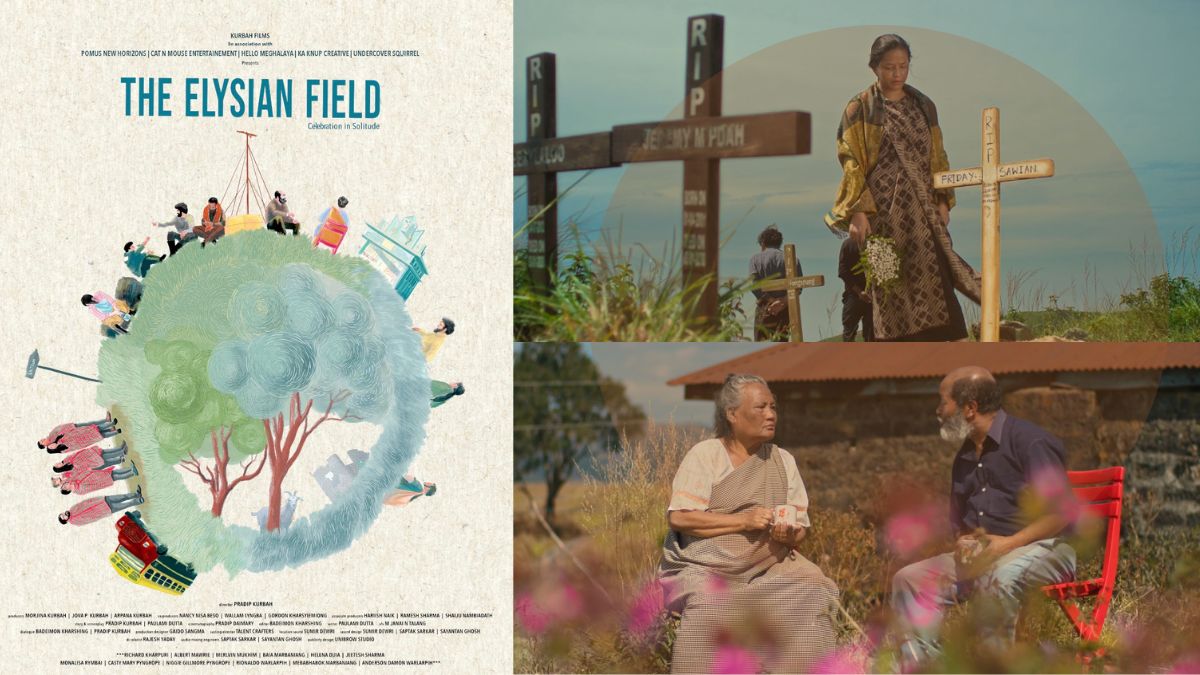
    The Indian film ‘The Elysian Field’ opens Cinemalaya XXI with a poignant story about how the modern world is slowly wiping away small villages and what that looks like. This slice-of-life story gives us a peak at a secluded village in Meghalaya in the northeastern region of India. The village has only six inhabitants left and their lives are completely intertwined.

    The Elysian Field
    Photo courtesy of Cinemalaya / CCP Corporate Communications Division

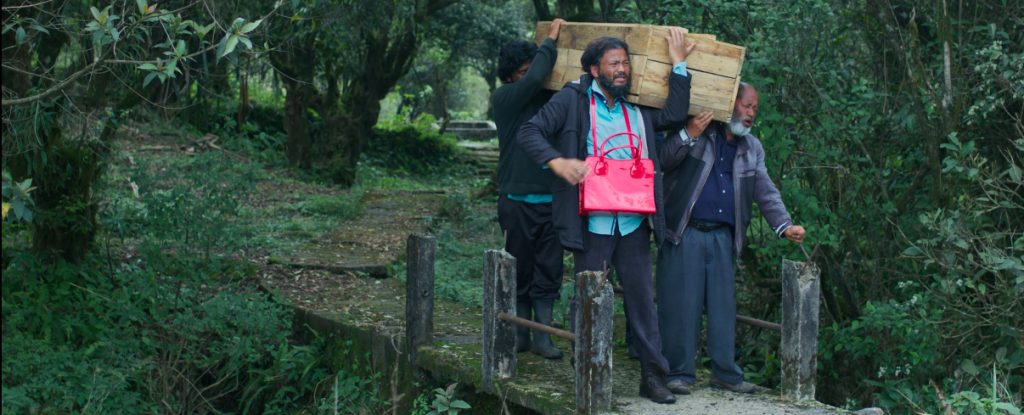
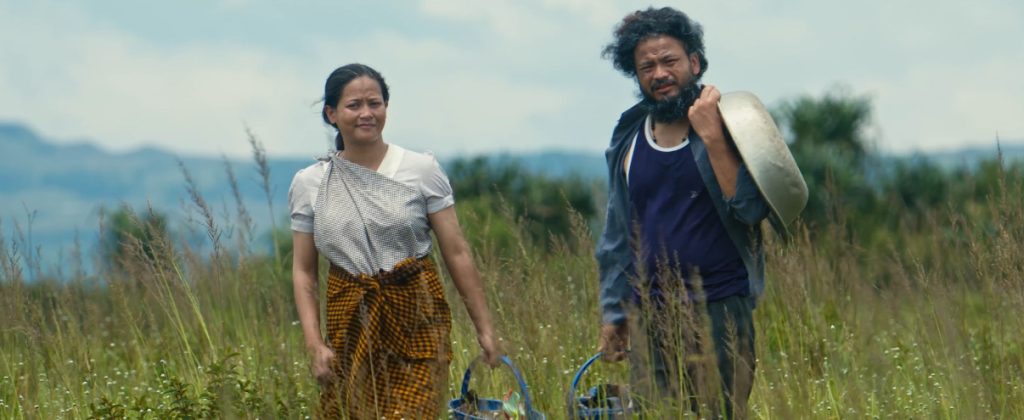
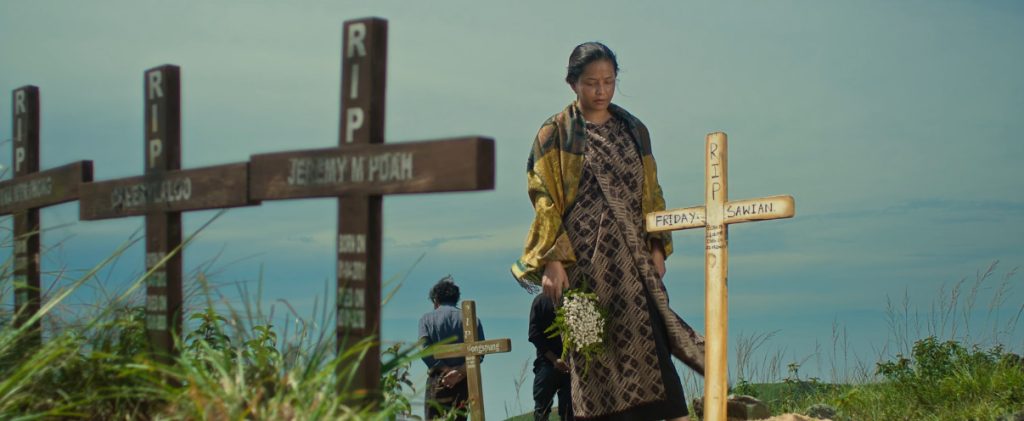
    The film opens with Livingstone (Albert Mawrie), who is coming home on a bus with the coffin of his recently deceased wife, Belinda. As he arrives, the three remaining men of the village – Complete (Richard Kharpuri), Promise (Merlvin Mukhim), and Friday (Jeetesh Sharma) – help carry the coffin down across a huge field, two bridges, a hill, and further along back to their secluded village. There they are joined by Maia (Baia Marbanjang) and Miss Helen (Helen Duiia), Livingstone’s mother. Over the course of the film, we see how life fares in this empty town that is surprisingly filled with life. We see them struggle with electricity, gossip about each other, a romance begins to bloom, and the spectre of death hangs above them in their little village filled with empty houses and ruins.

    The Elysian Field
    Photo courtesy of Cinemalaya / CCP Corporate Communications Division

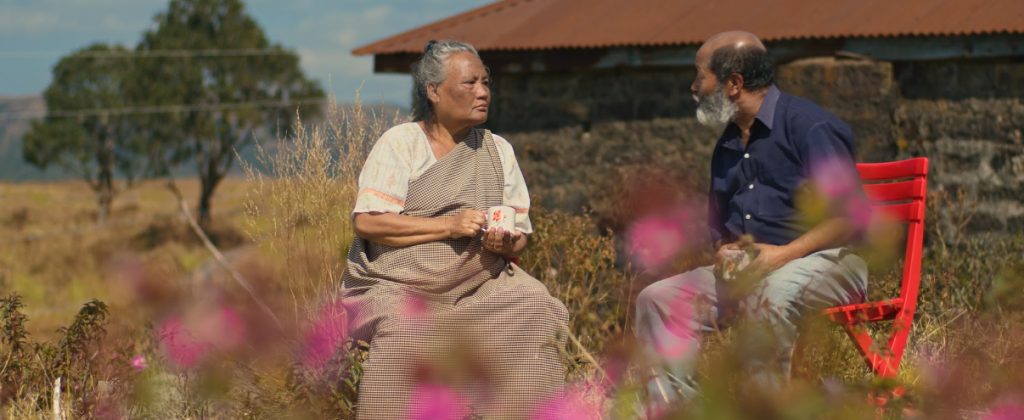
    Written by Paulami Duttagupta and directed by Pradip Kurbah, the film immerses us in a world that is slowly fading away. Set against the gorgeous Meghalaya landscape, we are transported to a place seemingly beyond time and geography. To be able to resupply, the villagers must take the one and only bus back to the city (of which there are no scenes) and the impression is given that this is a whole day affair. The rest of the time is spent living out their days in the empty village, cooking food for each other, drinking at nights, and living truly as one community. 

    There are story elements that pop up: Belinda’s children from before her marriage to Livingstone are contesting her will and Livingstone must deal with the litigation and go to the city every now and then, Complete is fighting with the government for not providing service to their tiny village, Promise must continue to fix every issue involving electricity and electronics, while Maia finds herself wooed by some of the men in the village.

    The Elysian Field
    Photo courtesy of Cinemalaya / CCP Corporate Communications Division

    But none of these take center stage in the story. These are just activities in the lives of the people of this secluded little town, and the film manages to show us this burst of live despite the fact that it is also dying right in front of us. There’s no future here. At some points, the men begin to dig graves for all of the inhabitants so that it wouldn’t be left to the women if the men died first. But while the threat of extinction hangs above them, they are just filled with life.

    The Elysian Field
    Photo courtesy of Cinemalaya / CCP Corporate Communications Division

    It’s a gorgeous movie once you allow its languid, almost dreamlike pace to sink in. The way by which this small community engages with one another is very Filipino in spirit and in values. It’s a love letter, for sure, to a way of life that is slowly disappearing and while this may be a Northeastern Indian issue, this could very well be a small town in Northern Luzon or in the mountains of Mindanao. While being inherently Meghalayan in culture, the way director Pradib Kurbah puts it in his camera frame makes it utterly universal.

    The Elysian Field

    The performances are exquisite, with Marbanjang being the heart and soul of this ensemble. Her warmth is the center of which the community revolves around. The acting is so natural, so subtle and layered. It makes the film poignant and funny all at the same time.

    A Big Bold Beautiful Journey


    The Elysian Field is showing on the big screen! Check cinema showtimes near you and grab your tickets today!

    This year, don’t miss Cinemalaya 21: LAYAG sa Alon, Hangin, at Unos happening from October 3-12, 2025! Witness another stellar lineup of stories that will move you and showcase the brilliance of Philippine cinema. Follow the Cultural Center of the Philippines and Cinemalaya for updates!

  • Movie Review: The Relentless ‘One Battle After Another’ Utilizes Great Filmmaking to Distract From Its Political Commentary

    Movie Review: The Relentless ‘One Battle After Another’ Utilizes Great Filmmaking to Distract From Its Political Commentary

    Paul Thomas Anderson’s ‘One Battle After Another’ is a satirical action thriller that never takes a moment to breathe. It reminds me of his earlier work, one of my favourite films, ‘Magnolia,’ where throughout the film’s 188-minute runtime we witness a multi-character drama that never ends and never lets up. For 188-minutes, ‘Magnolia’ gives us scene-after-scene of high drama, characters at their lowest point, one after the other that leaves you breathless. ‘One Battle After Another’ feels exactly like this but instead of drama, it is danger, it is action, it is comic, and it is relentless.

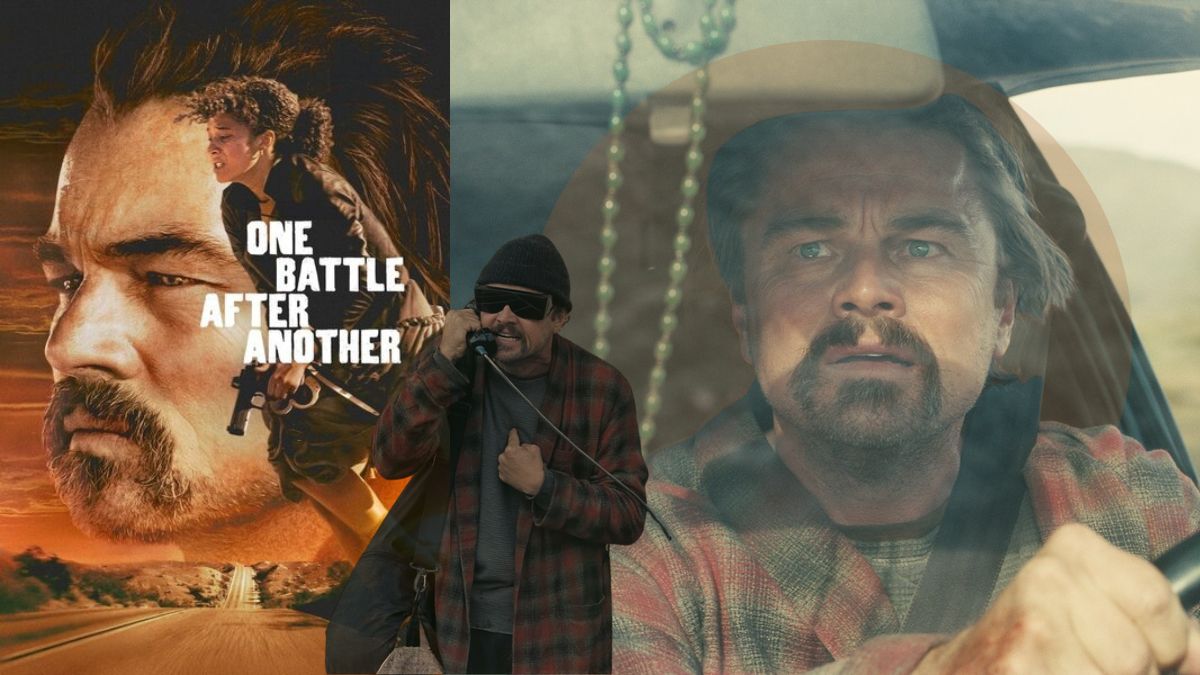
    The story revolves around Pat Calhoun (Leonardo DiCaprio), an explosives expert who is part of a revolutionary group called French 75. Alongside his partner Parfidia Beverly Hills (Teyanna Taylor), they commit robberies, armed breakouts of illegal detained immigrants, shut down power grids, and the like all in the name of toppling the capitalist overlords of America. Pat and Parfidia fall in love and become a couple but Parfidia is also the obsession of Steven Lockjaw (Sean Penn), a high-ranking soldier whom she humiliates during one of their revolutionary attacks. When one of their missions go astray, Parfidia is taken into custody and Pat changes his name to Bob and he takes their daughter, now called Willa (Chase Infiniti) and escapes into a sanctuary town. But Lockjaw is not done, he goes after Willa and Pat/Bob must rescue his daughter as the world continues the fight he has left behind when he went into hiding.

    One Battle After Another Leonardo DiCaprio
    Leonardo DiCaprio in Paul Thomas Anderson’s “One Battle After Another”
    Photo courtesy of Warner Bros. Pictures

    ‘One Battle After Another’ is a dark, cynical look at today’s world, written by Anderson, who was inspired by Thomas Pynchon’s novel ‘Vineland’. The world he creates in this movie satirizes both revolutionary movements as well as the conservative people in power as the film tangentially tackles racism, immigration, and different forms of oppression. I say tangentially, because the film takes the point-of-view of Pat/Bob, who we get the impression is a middling revolutionary at best. When he moves to the sanctuary town, he becomes addicted to weed and is a drunk and has left that whole world behind. When his daughter gets taken, he must return to the movement, but the movement has continued on without him. As Lockjaw practically invades the sanctuary town and its primarily Latin American population, the people of the town are ready to fight back but all of this goes over Pat/Bob’s head. He only has one thing in mind: getting Willa back.

    One Battle After Another
    Leonardo DiCaprio in Paul Thomas Anderson’s “One Battle After Another”
    Photo courtesy of Warner Bros. Pictures

    What’s incredible about Anderson’s direction and writing is how he put together a feisty film criticizing American politics while distracting us from it with humor, fast-paced suspense and action, and an incredible filmmaking style that has us at the edge of our seat throughout the entire film. Shot magnificently in IMAX by cinematographer Michael Bauman. He shifts from a handheld to wonderfully cinematic long shots that truly capture the scope of Anderson’s vision. The film is also scored by the incredible Jonny Greenwood, who uses a jazz score to constantly keep us from ever feeling settled. The syncopated, discordant notes are always keeping us on our toes, never allowing us to breathe.

    Everyone in the film is incredible. Leonardo DiCaprio and Sean Penn remind us why they are Oscar winners by completely inhabiting their characters and are playing it to the hilt and allowing for both the seriousness and the silliness of their characters to its full measure. Teyana Taylor is a force of nature as Perfidia. She’s commanding. Her permanent scowl evokes a fierceness that she brings with her to every scene.

    Chase Infiniti never gets swallowed by the sheer talent that surrounds her, standing on her own two feet, and shows off a powerful screen presence. Benicio Del Toro is such a wonderful presence as Pat/Bob’s only friend and the de facto leader of the Latin American community in the sanctuary town. 

    One Battle After Another DUS 250113 0050 7
    Leonardo DiCaprio in Paul Thomas Anderson’s “One Battle After Another”
    Photo courtesy of Warner Bros. Pictures

    The film is equal parts funny and thrilling, there’s very little to not enjoy in this movie. But what I love most about it is the way Anderson centers the film on two white people in a predominantly Hispanic and black and female, where one (Lockjaw) is the epitome of the conservative American white supremacist and the other (Pat/Bob), who is completely disconnected from the greater battle that surrounds the film as he only cares for his own personal mission to save his daughter. The way the film represents the current racial crisis in America is so obvious to me despite it not being in the front and center of the narrative. There’s no preaching or moralizing here. The film takes a whole hour to set up the backstory of Pat, Perfidia, and Lockjaw and then the next hour to have Willa taken and Pat-now-Bob chase after her. It’s clever and well-hidden in a flurry of great filmmaking.There’s no question this will to be a front-runner come awards season and it’s definitely one of my favourite cinematic experiences this year.

    My Rating:

    A Big Bold Beautiful Journey


    One Battle After Another is showing on the big screen! Experience Thomas Anderson’s relentless, thrilling vision the way it’s meant to be seen. Check cinema showtimes near you and grab your tickets today!

  • Movie Review: Too Big but Not Too Bold in ‘A Big Bold Beautiful Journey’

    Movie Review: Too Big but Not Too Bold in ‘A Big Bold Beautiful Journey’

    It’s a strange thing to know that a film is bad, but it hits you hard anyway. That was my experience watching ‘A Big Bold Beautiful Journey.’ The film directed by Kogonada and written by Seth Reiss and starring Margot Robbie and Colin Farrell is beautifully shot and well-acted, but the film’s story is bogged down by an earnestness that leans towards the contrived. The whole film feels manipulative, blasting you with a lush musical score and wall-to-wall songs, trying to elicit an emotional reaction while providing simplistic and easy answers for the challenges that face its complicated characters.

    David and Sarah (Farrell and Robbie) are strangers on the way to attend a friend’s wedding. David’s car is indisposed, and he spots a poster for a car rental service on the wall where he parked. It leads him to an empty warehouse where two attendants (Kevin Kline and Phoebe Waller-Bridge) ask very strange questions before renting him a car with a GPS. We see him arrive at the wedding along with Sarah, also driving the same car model. They are introduced at the party and immediately enter a flirting game with Sarah coming in strong and David, quickly shying away. As they leave the following day, David’s GPS begins to talk to him and asks him if he wants to take a “a big, bold, beautiful journey” to which he answers “yes.” This journey leads him to Sarah, whose car has broken down, and together they follow the navigation that leads them to doors that lead them into their past.

    A Big Bold Beautiful Journey car
    Photo Courtesy of Columbia Pictures

    There’s a lot of promise here as we discover how David and Sarah have remained single – David, who seems to be afraid to take the leap, and Sarah is constantly sabotaging her relationships – and the two are navigating each other’s traumas to try and get the other to take the plunge. It’s a very verbose film where these two characters are saying exactly what they feel without inhibition. At times, it can get charming, but that’s because Farrell and Robbie are acting the hell out of this script, but as the narrative draws out, it starts to become cloying and tired. It never seems to progress to something concrete.

    A Big Bold Beautiful Journey door
    Photo Courtesy of Columbia Pictures

    And Reiss’ script creates a very simple formula for these two characters: key moments in their past has led them to this and the depths of David and Sarah’s complications seems too great for something than what is presented. Maybe it could work if it were a simple direct-to-streaming film with actors who weren’t putting too much into their characters, but this movie is trying to live up to its title: it’s big and bold and beautiful. The imagery and grandeur of its filmmaking make the simplistic writing really come off as weak and easy.

    A Big Bold Beautiful Journey standing
    Photo Courtesy of Columbia Pictures

    But for some reason, the film got to me. The majestic score by Joe Hisaishi and the cinematography by Benjamin Loeb just worked magic. It was manipulative, for sure, trying to hit all the emotional peaks but it’s also the sincerity of Robbie and Farrell that hit me in my tender spots. The way the film asks us to take a risk for love resonated with me. I am not exactly sold on the writing, but the message was loud and clear.

    A Big Bold Beautiful Journey lighthouse
    Photo Courtesy of Columbia Pictures

    I left the cinema torn. I could tell that the writing was bad and that the director was doing too much to land the emotional beats but because it spoke to me on a personal level, it still did the trick. I wonder if I watch this film again when I’m more settled with my own issues if that magic would still work. Films can do that sometimes and I love that about it. You could like a movie even if you know it’s not good.

    My Rating:

    A Big Bold Beautiful Journey


    A Big Bold Beautiful Journey is still showing on the big screen! Don’t miss the chance to experience this heartwarming adventure on film. Check cinema showtimes near you and grab your tickets today!

  • Movie Review: Gorgeously Shot, Lav Diaz’s ‘Magellan’ Invokes Thoughts but Can Leave You Emotionally Blank

    Movie Review: Gorgeously Shot, Lav Diaz’s ‘Magellan’ Invokes Thoughts but Can Leave You Emotionally Blank

    I still haven’t really found my way into fully grasping slow cinema, and Lav Diaz’s ‘Magellan’ continues to revel in the qualities of that cinematic mode. With the gorgeous cinematography of Artur Tort, ‘Magellan’ is filled with lush imagery and exquisite framing that forces us to look at nature, its sheer beauty, and then juxtapose it with the violence of colonization. I find that Diaz’s work is very cerebral, something that demands your attention and immersion; and this film has a thin narrative (which is my bailiwick), leaving all of the work that we want from the story for the image to deliver. 

    On the surface, the film follows Portuguese explorer Ferdinand Magellan (Gael Garcia Bernal) coming back to Portugal after his participation in the capture of Malacca, where he buys a Filipino slave whom he calls Enrique (Amado Arjay Babon). Our protagonist tries to convince the king to allow him to circumnavigate the globe to find a different route to Asia in order to find new trade routes without competition.

    Magellan MAGALHAES Still004

    When his proposal is rejected, he brings this to Spain who then gives him a ship to find that new pathway to the unconquered lands. At sea, he must face storms, mutiny, and even starvation but soon they arrive on the shores of Cebu. 

    We all know what happens next.

    Magellan MAGALHAES Still018

    As straightforward as this narrative seems, Diaz takes his usual distance from his subjects, allowing his camera to contextualize his characters in the vastness of their ambitions and their place in the world. We don’t even get to see Gael Garcia Bernal’s face until one hour into the film (I know, I checked) when he gets his first close-up. At the distance that he takes, we see these images like paintings, depicting moments of great import – the capture of Malacca, the mutiny on the ships, the arrival at Cebu, the blood compact between Magellan and Raja Humabon (Ronnie Lazaro) – we witness its epic scale, but I feel unable to grasp what he’s trying to say. 

    Magellan MAGALHAES Still009

    He makes no hero of Magellan. We see him marry his nurse (Angela Avezedo) and leave for his expedition while she is pregnant. He sentences two of his crew to death after being caught in a homosexual affair below deck. In the shores of Cebu, he quickly converts natives into Christians and destroys their idols and wooden statues of their gods. But never does he explore his hero’s interiority.

    Magellan MAGALHAES Still013

    We have long, still shots of Magellan in rumination – about what exactly, we do not know – and this is juxtaposed by stunning shots of the nature that surrounds him in his voyage. Maybe colonization is a force as powerful as nature, which makes the pushback of the Filipinos at the end of act three its own show of force.

    Magellan MAGALHAES Still017

    Still, this is Magellan’s story, not the Philippines’. Enrique barely gets to have a moment for himself until his own participation is revealed at the end of the film through a voice over. No contrast or juxtaposition between these two characters that could somehow contextualize Diaz’s stand about these events in the film.

    Magellan

    While I’m left emotionally empty after watching the movie, I have to give kudos to how beautifully shot ‘Magellan’ is. Diaz’s mise-en-scène, paired with Artur Tort’s exquisite handling of light and color, draws you into the metaphysical nature of Diaz’s films. It forces you to really look and what I saw was the violence of colonization and Magellan’s own ambitions that led to his own demise. It’s undeniably thought-provoking, but at 160 minutes, and leaving me feeling emotionally blank, I feel it’s not my favourite of Diaz’s works.

    My Rating:

    stars 3 5


    Lav Diaz’s Magellan is still showing in cinemas. Don’t miss the chance to experience it on the big screen, check showtimes and get your tickets here.