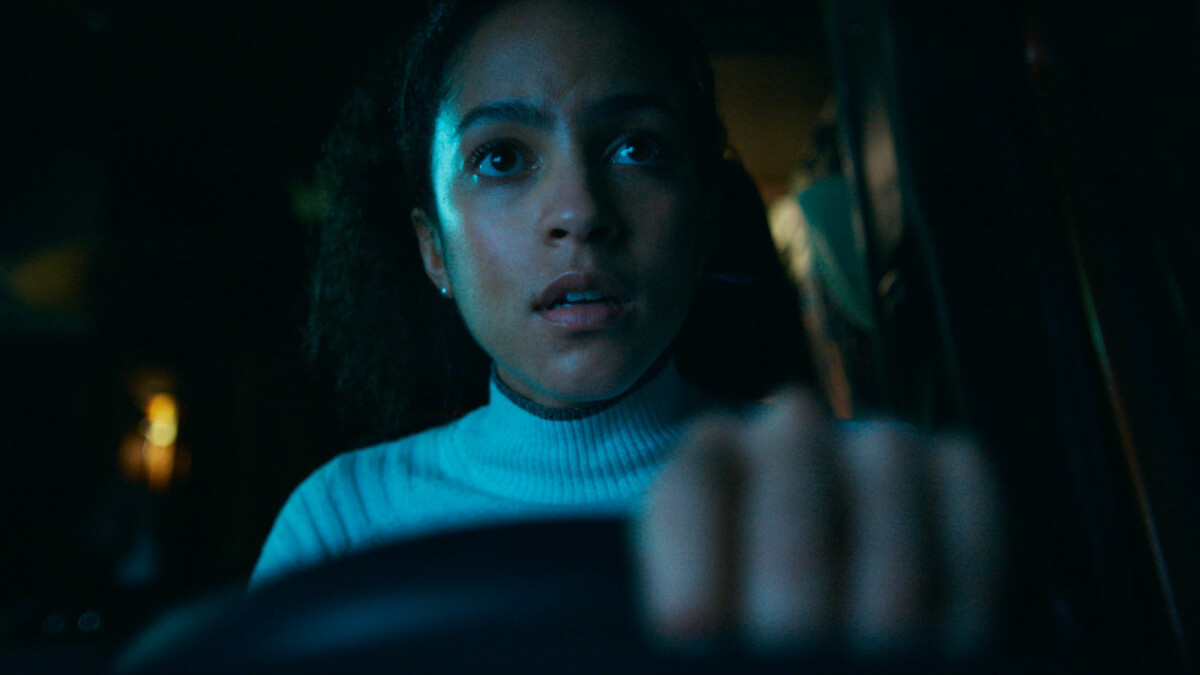
What If Every Highway Was Haunted?
Road trip horror stories have long been part of folklore around the world. From ghostly hitchhikers to cursed stretches of highway, the open road has always carried a sense of mystery. But the creators of Passenger wanted to take that fear to an entirely new level.
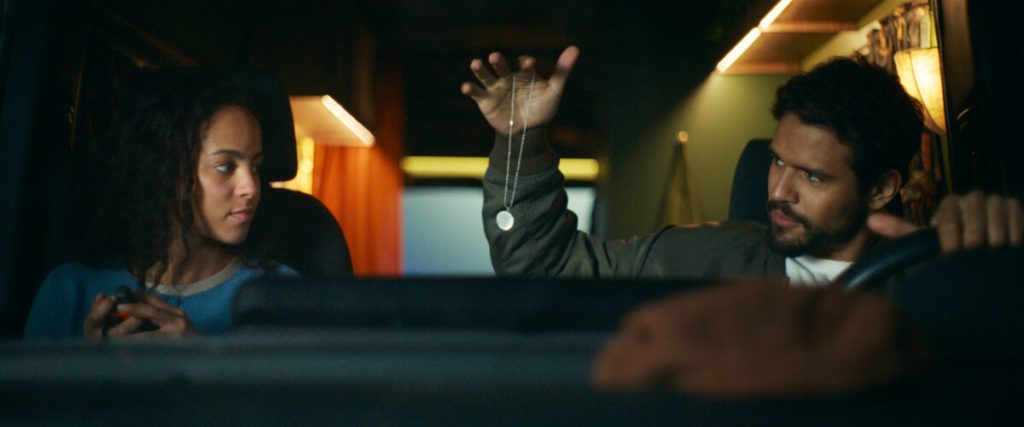
Writers Zachary Donohue (The Den) and T.W. Burgess (Early Haunts, Malevolents) imagined a terrifying reality where no road is safe.
“Usually these haunted road stories are about someone who died on that road and is now haunting it – about a specific haunted road,” shares Donohue. “We wanted to make it broader, something scarier, and just demonic. Where every road is haunted, and they’ve always been haunted.”
For Burgess, the goal was to move beyond familiar ghost stories.
“We wanted to do something totally different. It’s not just a ghost of a road, but something more malevolent and more all-encompassing.”
Their approach led them to examine everyday driving experiences, from getting lost and losing track of time to dealing with unexpected vehicle trouble, and imagine how those situations could become sources of fear.
A Road Trip Turns Into a Living Nightmare
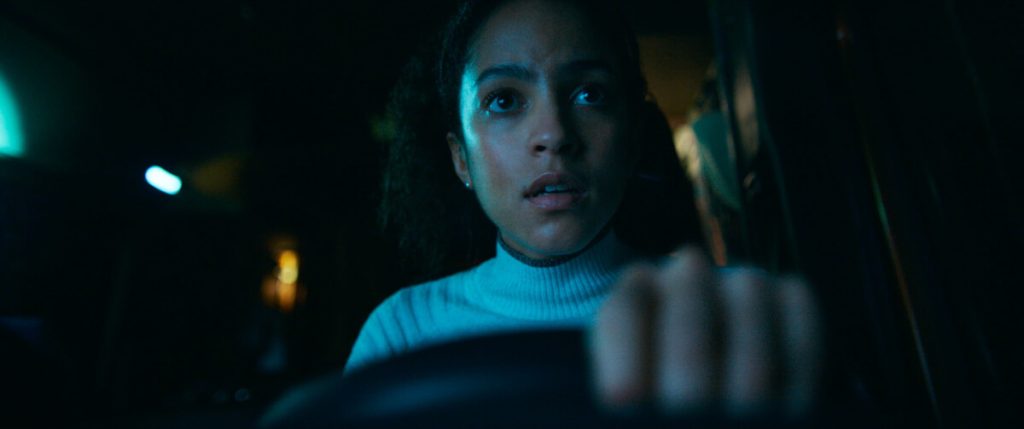
In Passenger, a young couple’s van-life adventure takes a horrifying turn after they witness a gruesome accident on the highway.
Soon, they realize they have unknowingly brought something home from the crash site.
A sinister demonic force known as The Passenger begins stalking them, refusing to let go until it claims them both. As the entity tightens its grip, the couple must confront a terrifying evil that seems impossible to escape.
The film stars Lou Llobell (Foundation), Jacob Scipio (Bad Boys for Life, Bad Boys: Ride or Die), and Academy Award winner Melissa Leo (The Fighter).
Watch the Trailer:
Horror Hidden in Everyday Moments
One of the film’s most unsettling ideas is its ability to transform ordinary road trip experiences into terrifying encounters.
Producer Walter Hamada, known for blockbuster horror hits such as The Conjuring and It, praised the screenplay’s inventive approach.
“They did a great job picking out the kinds of iconic road trip moments, things you take for granted – putting on a seat belt, rearview cameras, fixing a flat tire – and subverting them,” says Hamada.
“Basically, what we strove for was how to ruin a road trip for people everywhere. How do we make people think twice, if they’re going to go on a road trip?”
After watching Passenger, even the most routine drive may feel a little different.
A Haunted House That Never Stops Moving
Director André Øvredal was immediately drawn to the film’s unique concept and atmosphere.
“The horror and suspense scenes were very inspiring – the tension, the mood and the tone. The fact that we’re doing a haunted house with a moving home!” he laughs.
For Øvredal, the film’s central idea extends beyond supernatural scares.
“Just the idea of this highway myth, that can affect anybody who’s driving on highways, how it can infiltrate their lives – and become not only an obstacle, but a symbol of the obstacles in their relationship, as well.”
The result is a horror story that blends frightening encounters with emotional tension, creating a more personal journey for its characters.
An Ancient Evil With a Dark Purpose
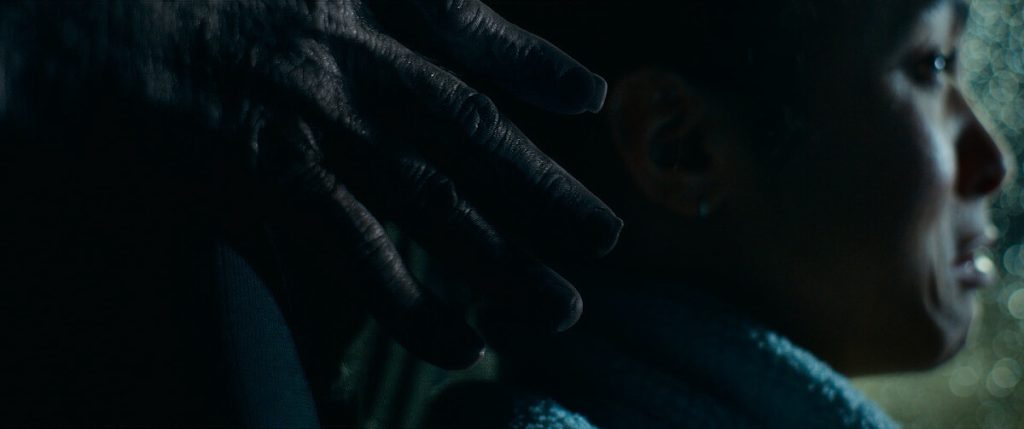
Unlike traditional horror villains, The Passenger does not simply hunt its victims.
According to Donohue, the entity prefers something far more disturbing.
“He doesn’t just come out and kill you. Part of his mythos is that he wants to torment you, to ride you the whole distance you can go, until you break down, literally.”
The demon manipulates, pressures, and terrorizes its targets, often driving them toward their own destruction.
That psychological approach helps make the threat feel relentless and deeply unsettling.
The Meaning Behind the Mark
A crucial element of the story is the mysterious mark The Passenger leaves behind.
The creative team spent considerable time deciding what form this warning would take.
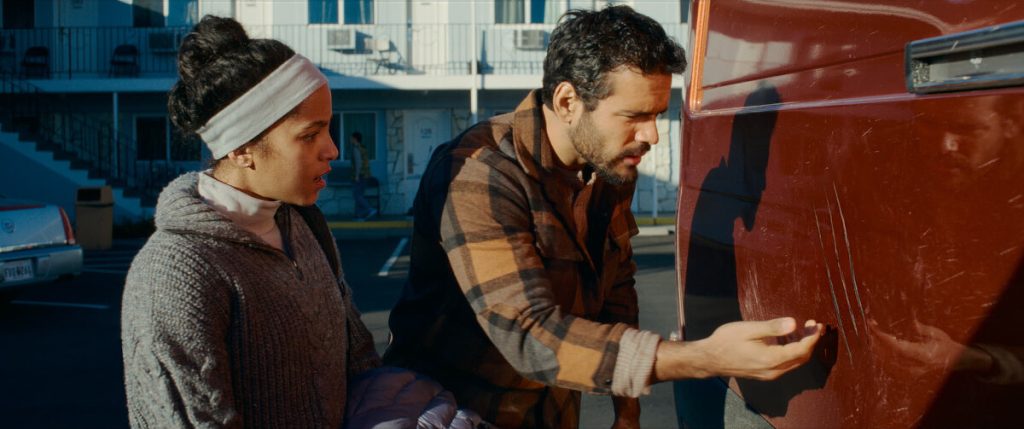
“We were always trying to figure out how that would look,” explains Donohue. “The Passenger will mark the car with something – but we didn’t know what that mark would look like. In an early version, it’s just a marking. Then Walter [Hamada] was pushing us about, ‘Well, what is that marking?’ And then he just came up with the idea of three scratches.”
The answer eventually came in the form of three scratches.
Hamada explains that the symbol carries deeper meaning.
“So if you stumble upon these scratches on your vehicle, you’ve been marked by The Passenger. It’s demonic, like a signature. The three slashes are sort of an affront to the Holy Trinity. It shows up in a lot of stories about exorcism and demonic.”
A Battle Beyond the Physical World
Another aspect that captivated Øvredal was the film’s spiritual dimension.
“It’s about two people just trying to fit together, in a way, and make life work for them together,” he says.
“But then to have this kind of religious battle going on between St. Christopher and this demonic entity, in over their heads, is like an eternal battle. It was a really intriguing aspect to the film that was always there, but that we leaned into, as we were developing it.”
That clash between faith and darkness adds another layer to the story, raising the stakes beyond simple survival.
Hit the Road If You Dare
Combining supernatural horror, psychological tension, and a fresh spin on road trip legends, Passenger transforms familiar highways into places of dread.
The next time you fasten your seatbelt, glance in the rearview mirror, or pull over to fix a flat tire, you might think twice.
Catch Passenger when it opens only in cinemas on May 27. Distributed locally by Paramount Pictures PH.
Leave a Reply
You must be logged in to post a comment.