Author: Wanggo Gallaga

  • THEATER REVIEW: Eugene Domingo’s Second Skin: A Review of ‘Ang Babae sa Septic Tank 4: Oh Sh*t! It’s Live sa Cheter!’

    THEATER REVIEW: Eugene Domingo’s Second Skin: A Review of ‘Ang Babae sa Septic Tank 4: Oh Sh*t! It’s Live sa Cheter!’

    After two movies and a streaming series, there is absolutely no question that Eugene Domingo has mastered playing a parody of herself, which she, Marlon Rivera, and Chris Martinez popularized in the Babae sa Septic Tank franchise. In its fourth installment, the meta-commentary and satirical series leaps onto the world of theater. Ang Babae sa Septic Tank 4: Oh Sh*t! It’s Live sa Cheter! takes the larger-than-life Domingo and sets her ambitious vision toward the world of live theater. Within the world of Septic Tank, Domingo’s character has become the ultimate symbol of artistic indulgence, where all the best (or worst) intentions of the industry are amplified to their most ridiculous extremes to expose the excesses of human nature in pursuit of the production and making art.

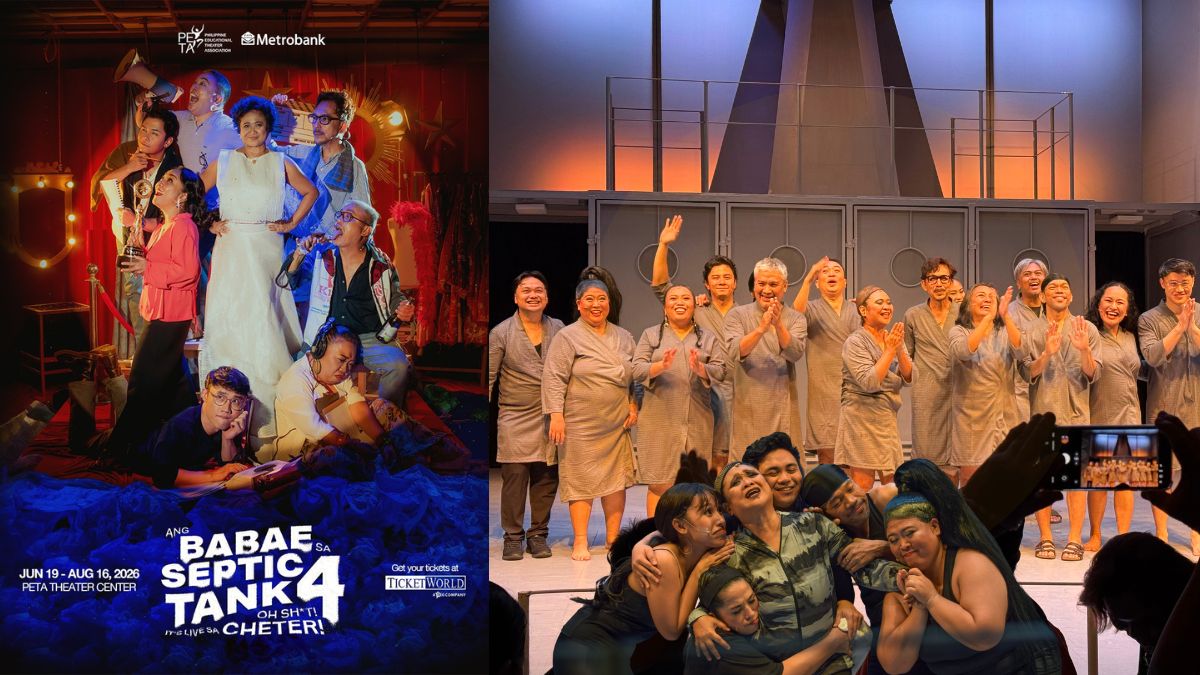
    Ang Babae sa Septic Tank 4: Oh Sh*t! It’s Live sa Cheter!
    Ang Babae sa Septic Tank 4: Oh Sht! It’s Live sa Cheter! | Photo Courtesy of PETA

    In this play, Domingo calls together a veritable who’s who of Philippine theater – including Melvin Lee, Stella Cañete-Mendoza, Andoy Ranay, Joshua Lim So, Meann Espinosa, JC Santos, and Marlon Rivera, all playing heightened versions of themselves – to mount an ambitious revival of Aurelio Tolentino’s Kahapon, Ngayon, at Bukas, which was first staged in 1903.
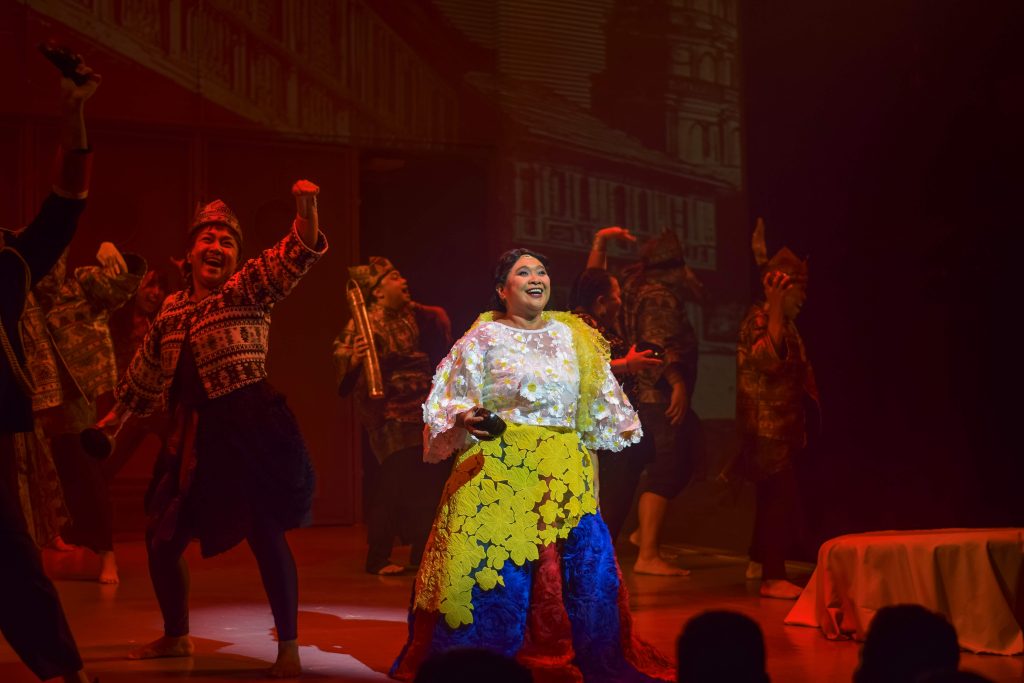
    Eugene Domingo
    Ang Babae sa Septic Tank 4: Oh Sht! It’s Live sa Cheter! | Photo Courtesy of PETA

    The inherent stakes of this seditious, anti-colonial classic are taken to its extreme when Domingo wants to perform the piece on a boat in the middle of the disputed West Philippine Sea. Naturally, things take a turn for the madcap and campy when Domingo veers off course, and begins to make changes in the production, turning away from Tolentino’s original vision, and sailing the cast straight into a literal and figurative storm.
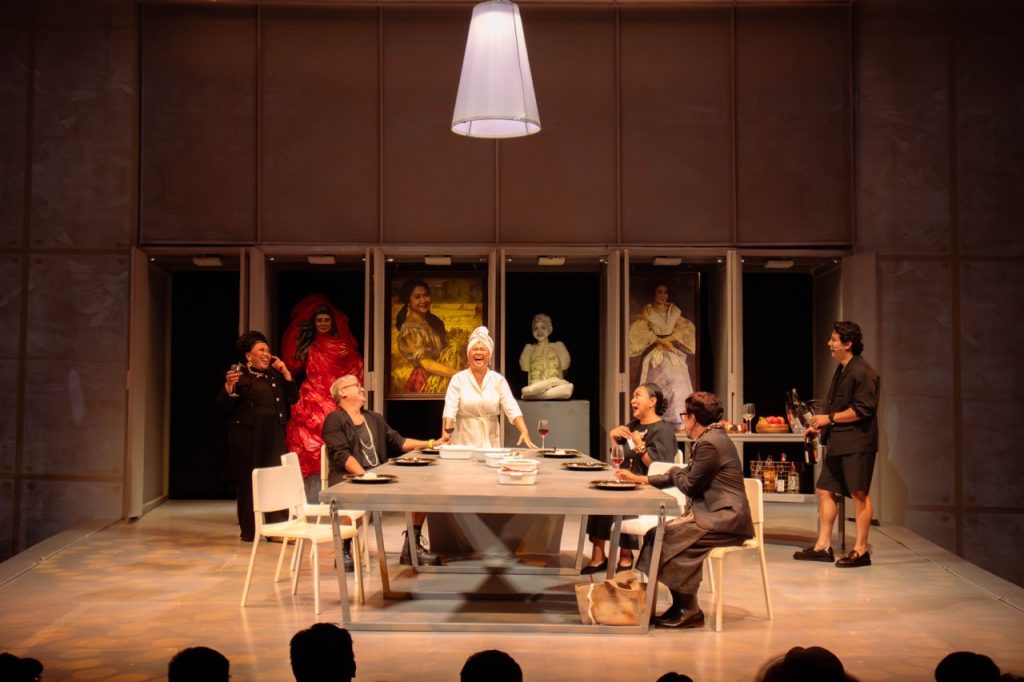
    Ang Babae sa Septic Tank 4 Ensemble 1
    Ang Babae sa Septic Tank 4: Oh Sht! It’s Live sa Cheter! | Photo Courtesy of PETA

    Told in two acts, Babae sa Septic Tank 4… opens with a pitch. The cast arrives at Domingo’s home for a friendly dinner. The whole first act is exposition, allowing the characters to discuss the current state of theater, illuminating on some of the misconceptions (that it’s doing great, for example), while lamenting the amount of musicals in comparison to straight plays. It’s a highly didactic opening act that throws insights side-by-side with sharp punchlines as playwright Chris Martinez seizes every opportunity to land some hilarious, comic punches to the industry.
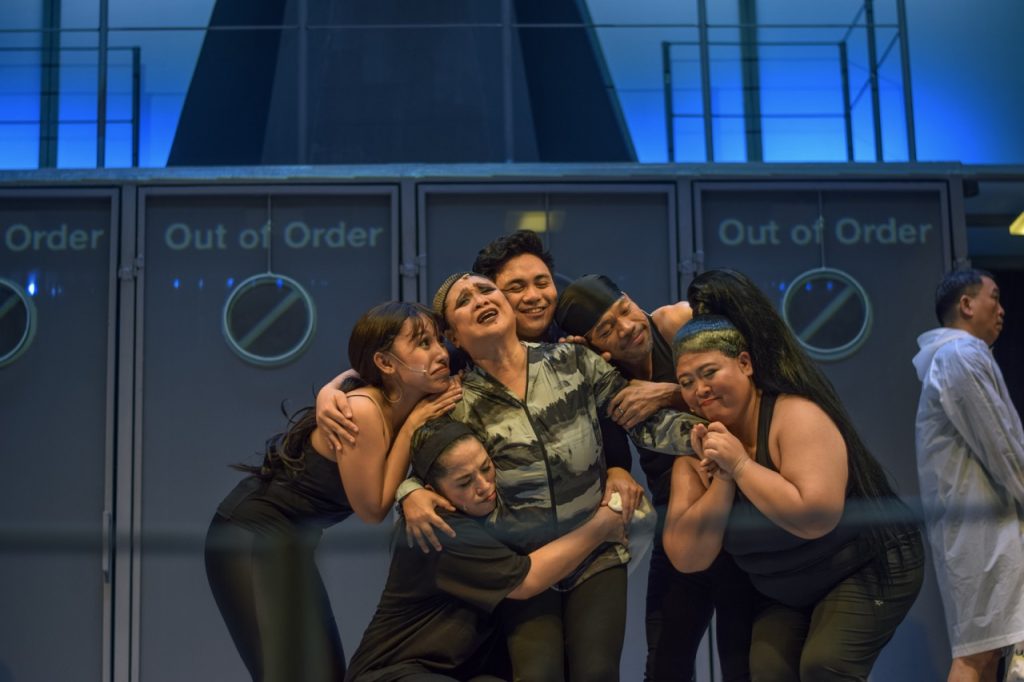
    Ang Babae sa Septic Tank 4 Ensemble 4
    Ang Babae sa Septic Tank 4: Oh Sht! It’s Live sa Cheter! | Photo Courtesy of PETA

    These comedic punches can be very funny if you are quite familiar with the world of theater. However, for a lot of people who are not “in the know,” they’ll find it funny because of the delivery alone. The majority of the cast has rightfully captured the rhythm and tonal qualities of the play for maximum comic effect; it’s funny because it sounds funny and delivered funny even if you don’t get it – though some jokes still land even if you are new to Philippine theater like when Eugene Domingo and her gang of Ugeng-gengs (an ensemble of theater-trained “youngstannas”) parody the different style of the different theater groups from PETA to UP Theater to Repertory Philippines. This nearly hour-long first act is just a setup for Act Two, where both plot and themes of which they would parody fully.
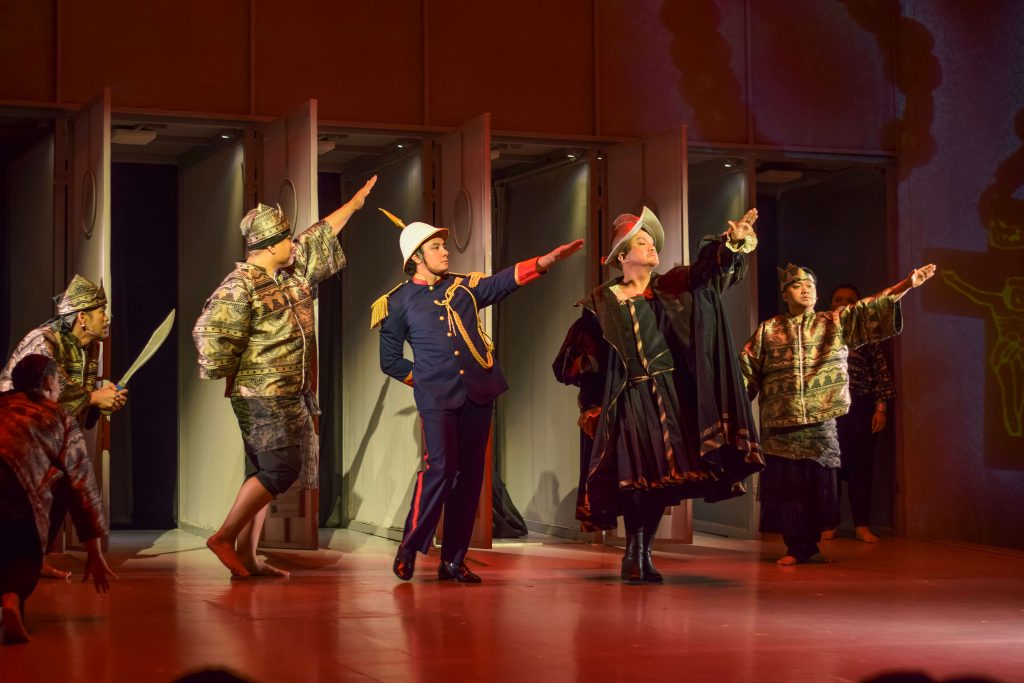
    Spain
    Ang Babae sa Septic Tank 4: Oh Sht! It’s Live sa Cheter! | Photo Courtesy of PETA

    In Act Two, the cast are rehearsing the play within the play, and we watch it transform from what was set up in Act One as a defiant act of protest, one carrying the true heart of theater, and turn into a modernized, contemporary revival that is far more musical than straight play, which was something the whole act one was lamenting on. Through this, Babae sa Septic Tank 4… parodies theater’s current “golden age” by dramatizing the worst impulses of theater practitioners: prioritizing spectacle over truth; accessibility over authenticity. It doesn’t always stick the landing: the fictionalized version of theater feels too big, too campy to make any real harsh criticism. While it is undeniably funny, for sure, but the comedy and the hilarity ultimately overshadow the social commentary.
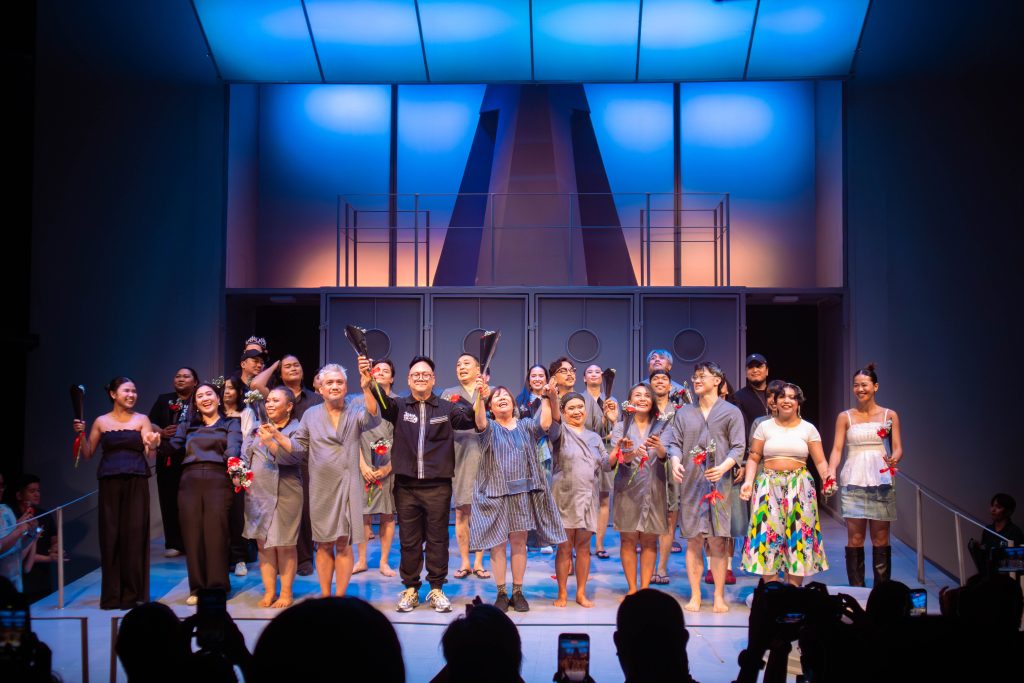
    Grand Curtain Call
    Ang Babae sa Septic Tank 4: Oh Sht! It’s Live sa Cheter! | Photo Courtesy of PETA

    If anything, though, everyone on stage is clearly having a good time. Eugene Domingo remains a commanding presence, and the entire production revolves around her. JC Santos fires on all cylinders, fully deploying his complete arsenal of talents – singing, dancing, comedy – and does a stellar performance that matches Domingo’s energy in every scene. Meanwhile, the ensemble playing the Ugeng-gengs is a total blast, filling the stage to create the kind of ordered chaos that keeps the pacing fast and energetic. The costumes and the stage design help us realise the state of camp that we’re experiencing here. It is a humongous undertaking, but director Maribel Legarda keeps it all moving and flowing.
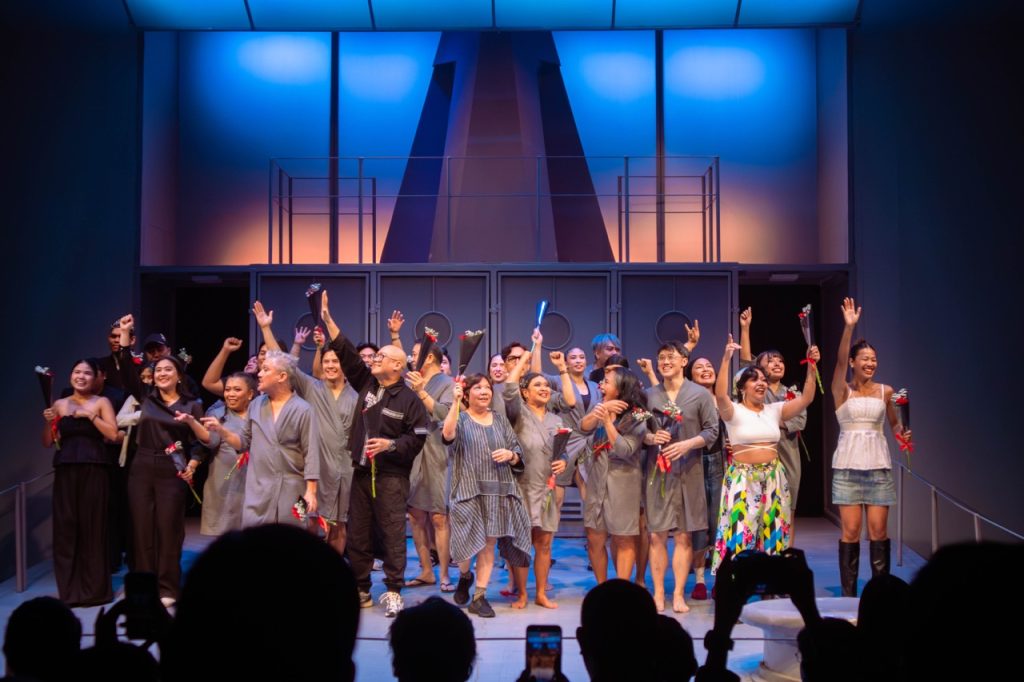
    Ang Babae sa Septic Tank 4 Grand Curtain Call Large
    Ang Babae sa Septic Tank 4: Oh Sht! It’s Live sa Cheter! | Photo Courtesy of PETA

    Ultimately, the play is a success by the very nature of how fun and funny it is. While I wish it could have been as insightful and precise with its commentary and theatrical satire as the original Ang Babae sa Septic Tank film was for cinema, it remains, regardless, a truly great time at the theater.

    My Rating: 3.5 Stars

    stars 3 5


    Catch Eugene Domingo’s latest meta-comedy live on stage! Ang Babae Sa Septic Tank 4: Oh Sh*t! It’s Live Sa Cheter! runs until August 16, 2026, only at the PETA Theater Center. Tickets are available at bit.ly/SepticTank4Tickets.
  • MOVIE REVIEW: Though a Little Tired and Old, ‘Toy Story 5’ Still Has That Charm and Warmth

    MOVIE REVIEW: Though a Little Tired and Old, ‘Toy Story 5’ Still Has That Charm and Warmth

    I am consistently surprised by how resilient, wonderful, and relevant the Toy Story franchise has remained over the years. As critics and audiences have said many times before, the creators realised the fans of the original movie have grown up and may now have children of their own. So the stories always reflected that of the first audience of the first film and reflected their own relationship with youth, play, and toys. I even enjoyed the fourth installment, despite it not being remembered as fondly. I felt that the story of Woody (Tom Hanks), and his realisation that he had to move on to other things, to pursue a different purpose separate from the one he fought so hard for in previous installments was such a fitting life lesson for me, when I watched it seven years ago; as a man who just turned forty.

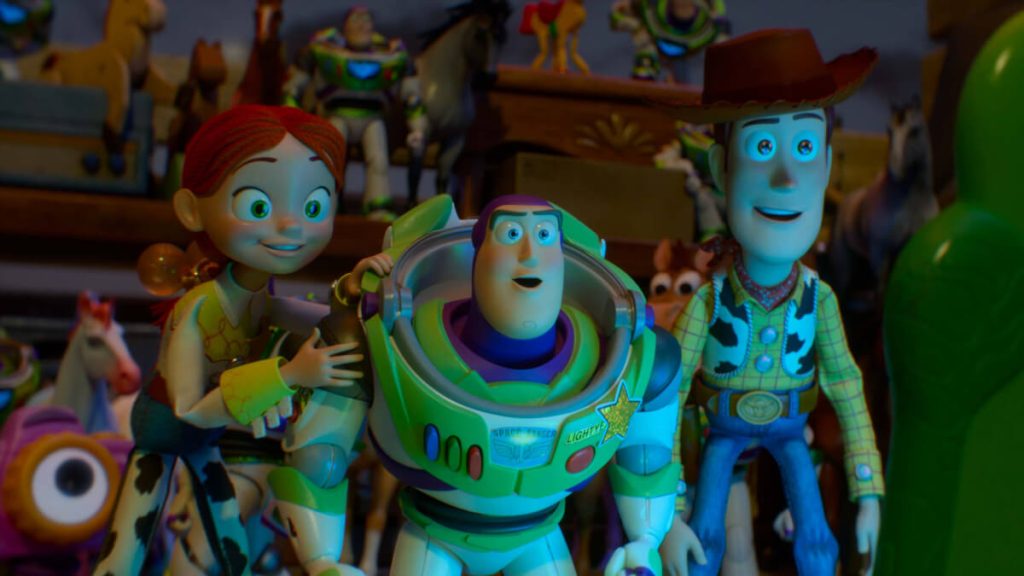
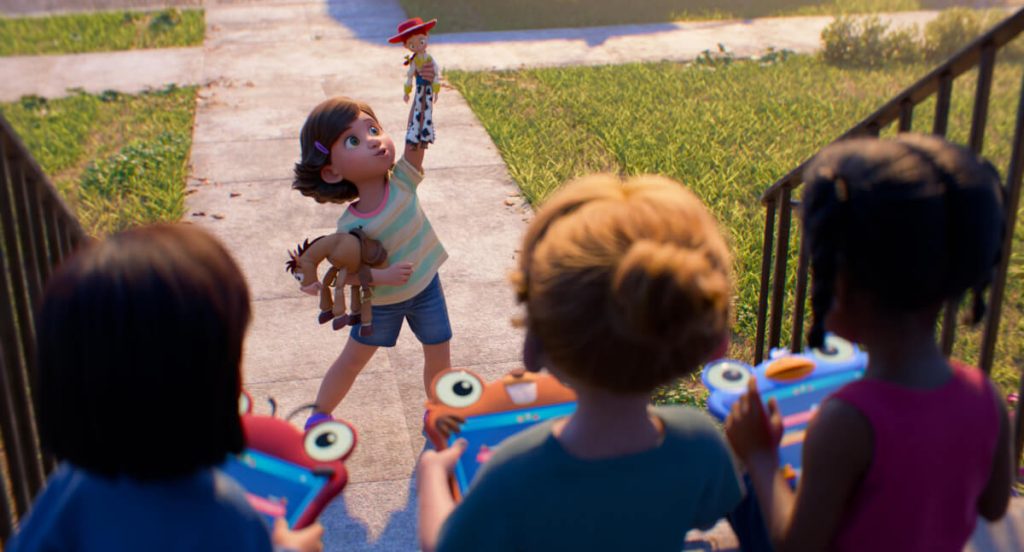
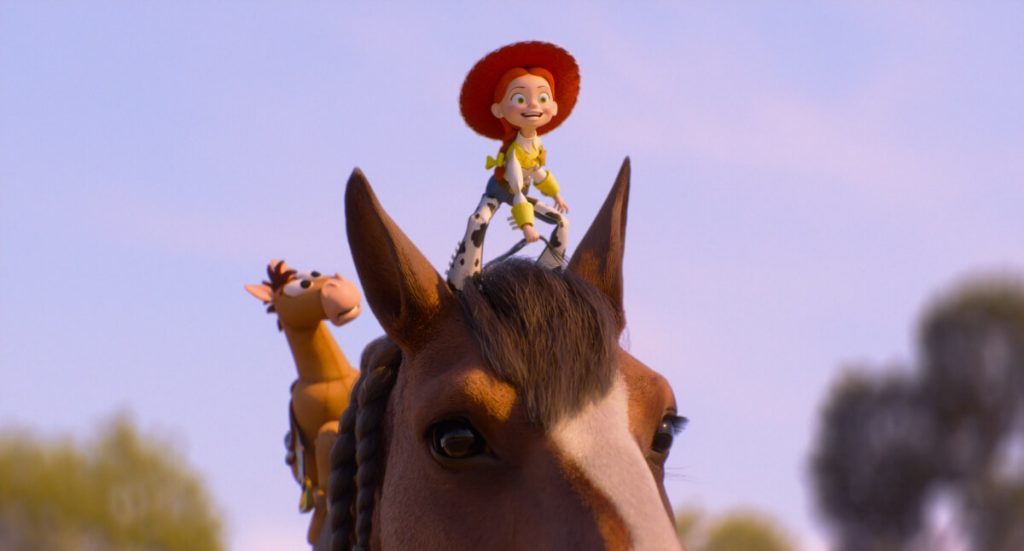
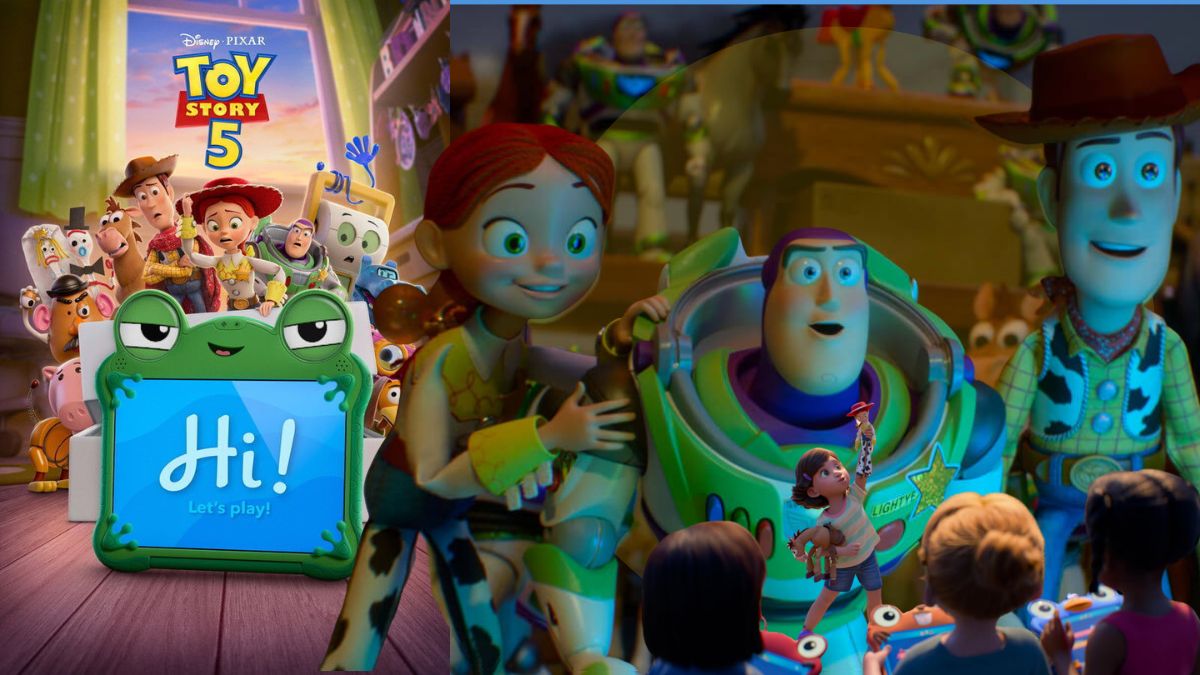
    The fifth installment sidelines Woody and Buzz Lightyear (Tim Allen) to center its focus now on Jessie (Joan Cusack), the new sheriff of the children’s room. Having experienced being given away twice before – first by Emily and later by Andy as he outgrew his childhood – Jessie serves as the main protagonist of this story that directly deals with her trauma of being replaced. This time, however, the threat isn’t that their new owner, Bonnie, has outgrown them, at eight years old, she is still young enough to play. Instead, Jessie and the rest of the gang are being displaced by modern tech toys. Joining the franchise is Lily (Greta Lee), a sleek tablet short for “Lilypad”, who promises to help Bonnie make friends.

    Toy Story 5 thumb nail

    Toy Story 5 deals with the impersonal world of tech and the changing nature of social interactions, making a good case for how digital screens can arrest a child’s social development. This leaves Jessie fighting a battle on two fronts: first, for the emotional well-being of her child, Bonnie; and second, against her own unresolved issue of abandonment. Cusack is wonderful in the role, imbuing Jessie with an urgency. This heightened emotional tension is brilliantly articulated through both Cusack’s frantic voice acting and the animators’ incredible character design work and expressive animation.

    Toy Story 5 Bonnie

    However, director and writer Andrew Stanton (alongside co-writer Kenna Harris), doesn’t quite capture the same magic found in the previous installments, considering he co-wrote the first two films, the fourth, and wrote a draft of the story for the third. Despite knowing this material so well but somehow Stanton struggles with the movie’s first half, creating a heightened sense of drama when a subtler, more grounded approach might have eased us into the world more effectively. It feels as though Stanton and his team were overcompensating for switching the protagonist to Jessie and sidelining Buzz and Woody in this sequel.

    Once the story gets into full swing and the characters are fully established, the second half feels a lot more secure as the film’s emotional weight starts to carry through. Jessie finds herself at the home of Emily, her original owner. While Emily is no longer there, Jessie meets a new child alongside an older generation of tech, which beautifully deepens the ongoing toys-versus-tech debate. I am not surprised that Pixar and Disney chose to find a middle ground here. As someone who is inherently wary and cautious of technology, especially for children, I feel this balanced point-of-view to be the safe choice, though not necessarily the strongest one. But, of course, that is just my own prejudice talking.

    Toy Story 5
    Toy Story 5

    There is an undeniable predictability to Toy Story 5. While it still hits narrative beats that surprise us, the ending is signaled loud and clear; at a certain point, you can practically see Stanton, Harris, and Pixar steering the story toward the safer choice. What keeps the film interesting, however, is a gripping subplot involving a wrecked container filled with new versions of Buzz Lightyear toys. Serving as transitional sequences throughout the movie, this subplot delivers the most surprising plot insertion in the entire film. But before it reaches that point, it builds a sense of tension and mystery that keeps the movie’s energy running. That sort of energy could have also been afforded to Jessie’s storyline as well.

    Ultimately, while this is not the strongest entry in the franchise, it is still a good movie. It is charming and poignant that I even caught myself holding back tears. The classic Pixar magic still has that charm, but like the very first generation of children who watched the original ‘Toy Story’ as kids in 1995, this franchise is getting old. Five is a good number to end on.

    My Rating: 3.5 Stars

    stars 3 5

    Toy Story 5 is still playing exclusively in theaters! Check showtimes and grab your tickets today to see Jessie take the reins in the gang’s latest battle against tech, then head back here and drop a comment to share your thoughts on the new sequel!

  • MOVIE REVIEW: Luca Guadagnino’s ‘Queer’ Shines a Spotlight on the Sadness of the Gay Man

    MOVIE REVIEW: Luca Guadagnino’s ‘Queer’ Shines a Spotlight on the Sadness of the Gay Man

    I’m a huge Luca Guadagnino fan. I have always found his work to be visually stimulating while cutting through the complexities of human emotions. We see this in his in drama like Challengers or Call Me by Your Name. and even when h e filters intimacy through the lens of the paranormal or supernatural, like in Suspiria and Bones and All. There is a sensuality to his filmmaking that really gets my attention. Because of this, I am always eager to see what new thing he puts out, even if it is less than stellar, as was in the case with After the Hunt, which I still enjoyed but not as much as the others.

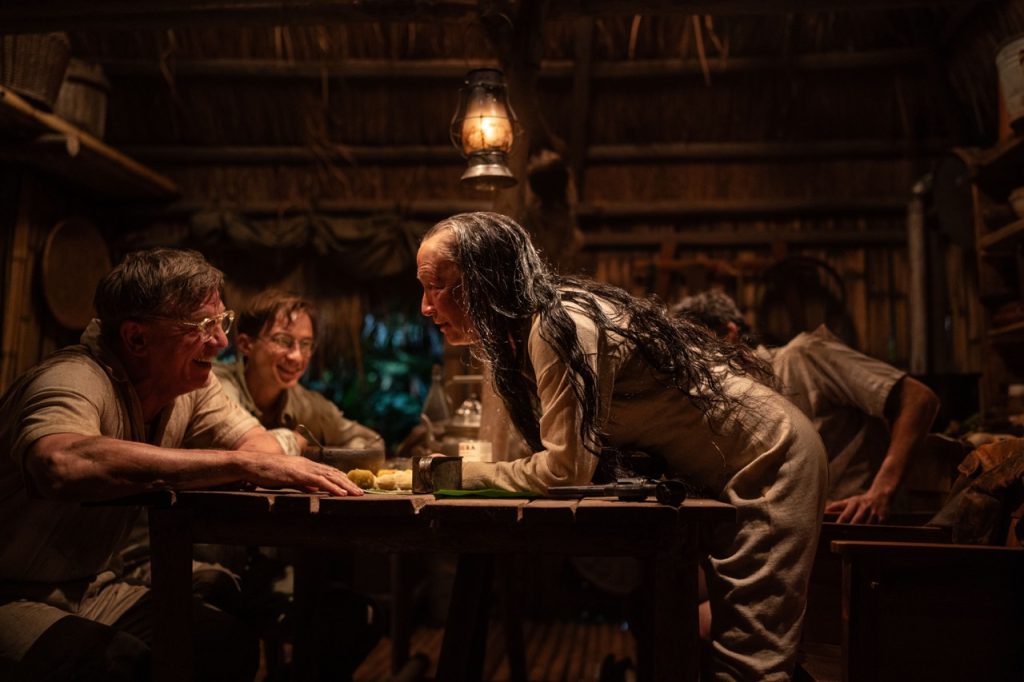
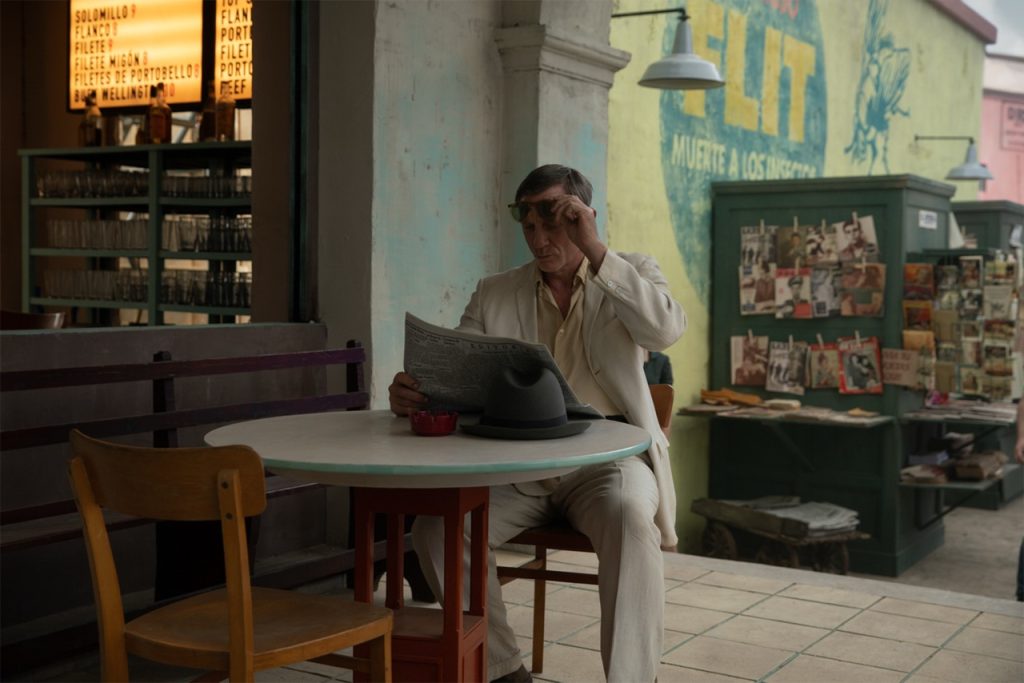
    Naturally, my anticipation for Queer was incredibly hight. When I saw it, I was completely unaware that the film was an adaptation of a William S. Burroughs novella. While I have previously read some of Burroughs’ essays and watched the film adaptation of Naked Lunch, which was based on his landmark novels, not realising the source material here left me entirely unprepared for the for the emotional coldness of the characters and the deeply trippy third act of the film.

    Queer
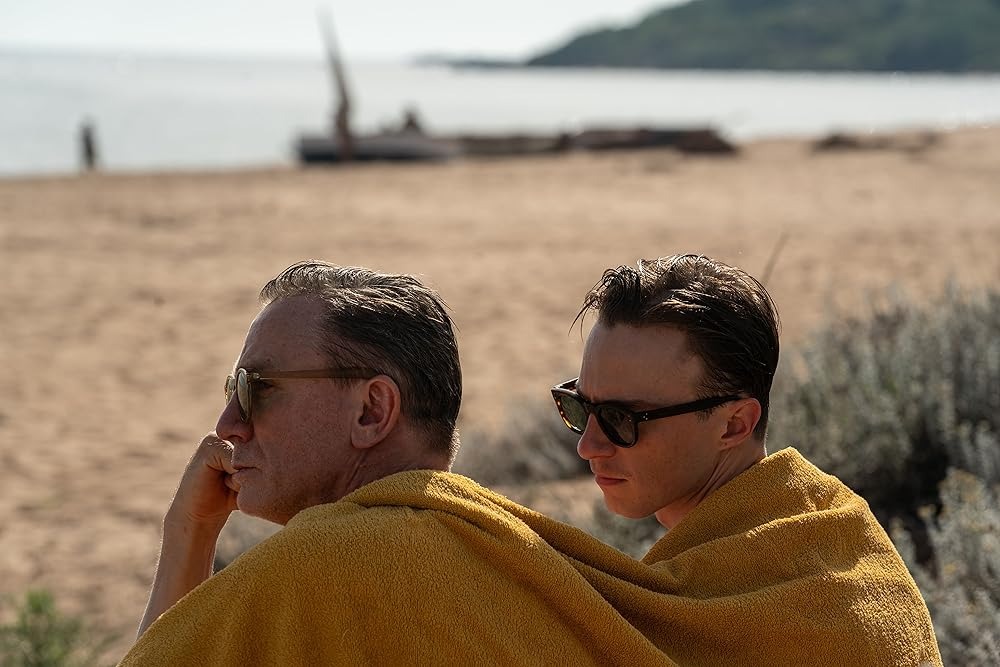
    (left) Daniel Craig as William Lee, (right) Drew Starkey as Eugene in Queer | Photo credit: A24

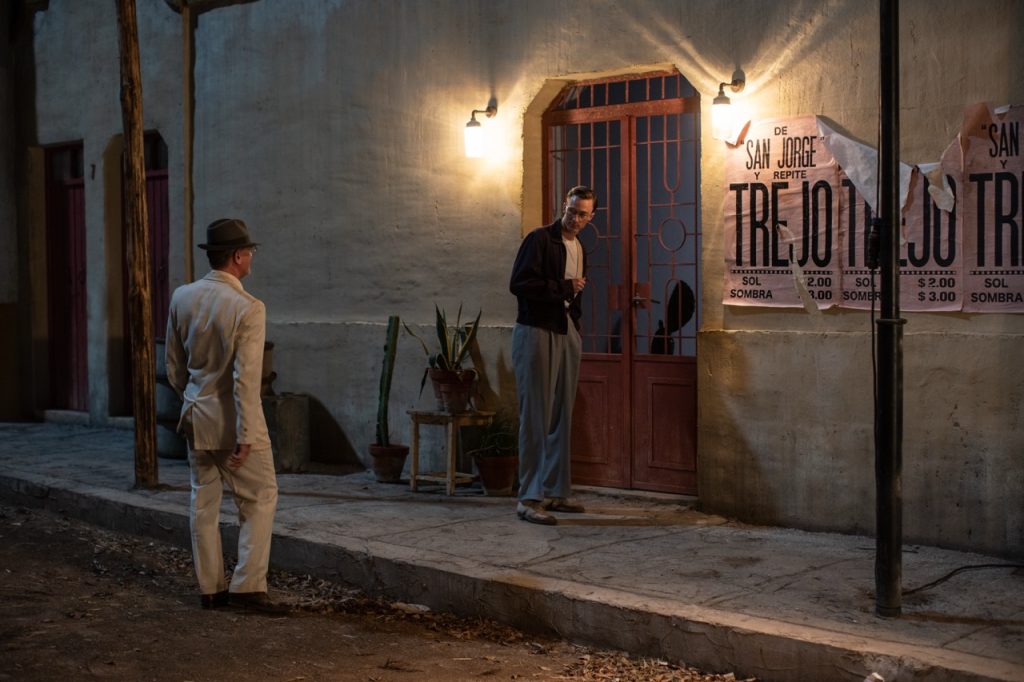
    Set in the 1950s Mexico City, Queer follows William Lee (Daniel Craig), an American expatriate who spends his days and nights drifting through bars and sleeping with younger men. His routine was disrupted when he meets Eugene Allerton (Drew Starkey), a. younger American expat and recently discharged serviceman. William quickly becomes infatuated with Allergen and follows him around, trying to get his affection. While the tow men form a bond, Allerton remains intentionally distant, insisting he does not view his own sexuality in the same “queer” light as William’s. In order to push their relationship further, the drug-addicted William convinces Allerton to join him on a journey search for a psychotropic plant that promises telepathic communication and a higher state of consciousness.

    Queer
    Queer | Photo credit: A24

    What is so striking about Queer is how Guadagnino alongside cinematographer Sayombhu Mukdeeprom and regular collaborators Trent Reznor and Atticus Rose working on the musical score, captures the profound loneliness of older gay men, particularly during that era. It is a time that offered them no recourse for building a traditional home or family. Ostracized and despised in their homeland, they often sought solace in foreign countries to enjoy the shield of anonymity, escaping the burden of bringing shame upon themselves or their families. On the surface, William lives vicariously, talks big, and projects an aura of sophistication at every turn; beneath it all, however, he is a lonely man. Guadagnino and his team are so precise in how they translate this internal desolation onto the screen for all of us to witness.

    Queer
    Daniel Craig as William Lee in Queer | Photo credit: A24

    Craig is incredible – throwing himself into the role with so much commitment that one completely forgets he ever played James Bond (and he is easily my personal favourite Bond). There is a palpable neediness to the way he looks at Drew Starkey’s Allerton, who does a solid job of standing on his own two feet opposite an acting powerhouse like Craig on the opposite side of the screen. The tension between them is electric, and continues to highlight the epidemic of loneliness that a forced relationship and mind-altering drugs appear to be the only recourse William has left to feel whole.

    Queer
    (left) Daniel Craig as William Lee, (right) Drew Starkey as Eugene in Queer | Photo credit: A24

    Watching Queer serves as a poignant reminder of how precarious a gay man’s life can be, even in the modern world. It explores how one can conflate sex with true emotional intimacy, and that sometimes, just being able to hold someone is a far more powerful act than a sexual one. The film’s incredible, hallucinogenic third-act trip that William and Allerton take becomes a metaphor for something deeply abstract – what a relationship needs to feel like for persecuted people like queer people are. Ultimately, this melding of bodies stands as a striking form of pure intimacy.

    It is a categorically sad film and a stark reminder of what it means to feel rejected and isolated from the rest of the world. Yet, despite its cold and distant nature, Queer remains a beautiful film. What I saw on the screen is a portent of a long, frightening life of being alone as a gay man. It is not a pretty picture, but then again, not all of art has to be. 

    My Rating: 3.5 Stars

    stars 3 5

    What are your thoughts on Luca Guadagnino’s haunting new vision? Whether you caught the film or are just following Wanggo’s cinematic reviews, drop a comment to share your take on Daniel Craig’s fearless performance and this devastating portrait of isolation.


  • THEATER REVIEW: The Uneven Set D ‘Pusong Mamon’ of the Virgin Labfest Starts Muddled but Ends with a Bang

    THEATER REVIEW: The Uneven Set D ‘Pusong Mamon’ of the Virgin Labfest Starts Muddled but Ends with a Bang

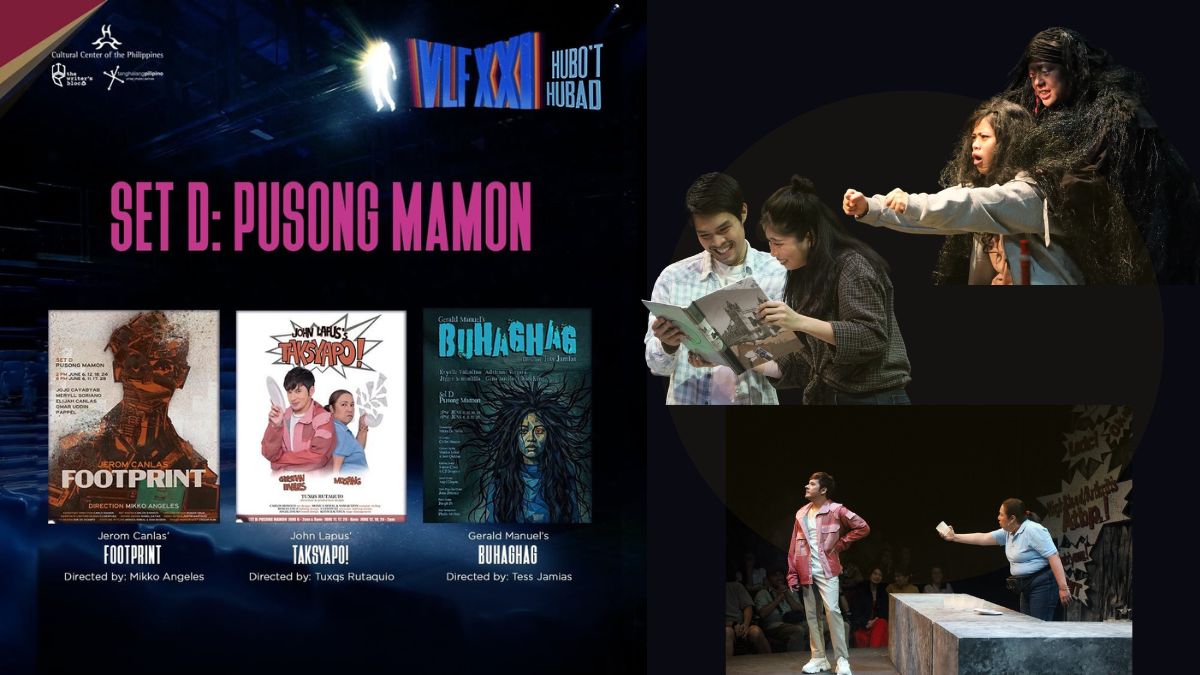
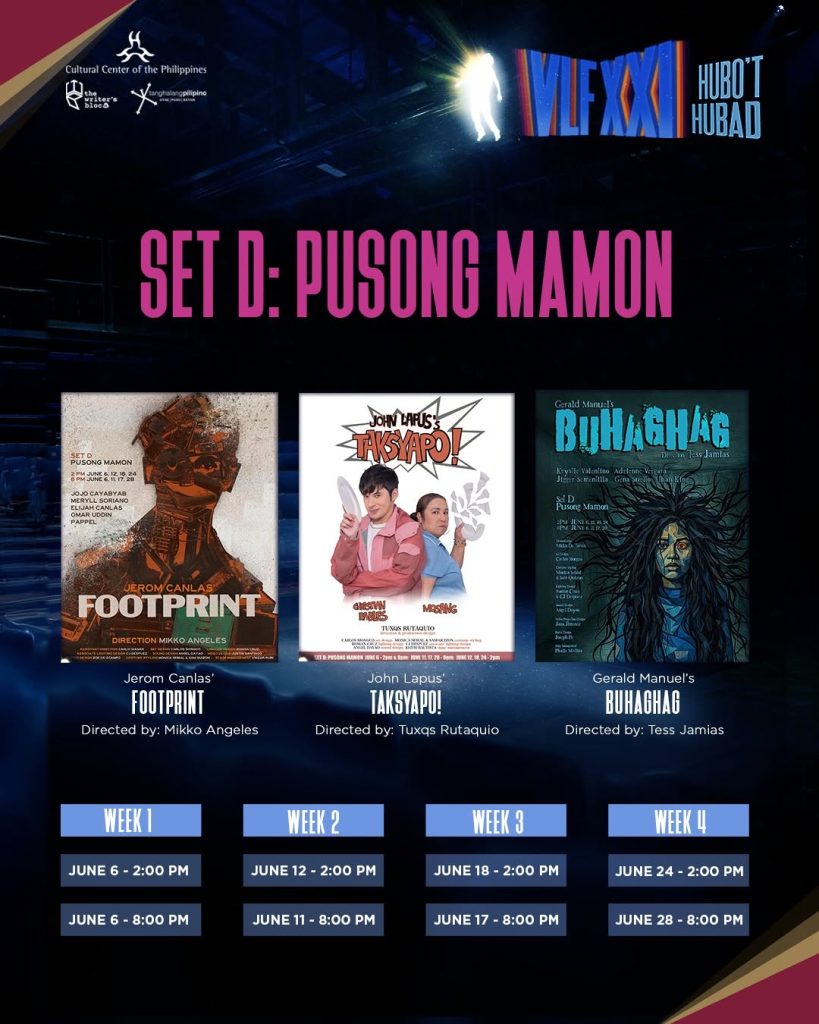
    Set D of the Virgin Labfest, titled “Pusong Mamon,” presents an uneven trilogy of plays. The opener, Gerald Manuel’s ‘Buhaghag,’ utilizes exceptionally really good theatrical devices to help energize an otherwise didactic script. This leads into to Jerom Canlas’s emotionally-strong ‘Footprint’ and ends on a high with John Lapus’ comedic ‘Taksyapo!.’ While the set starts out muddled, it quickly finds it footing in the second play before delivering a rip-roaring, laugh trip of an experience in its finale.

    VLF XXI Set D

    Buhaghag
    By Gerald Manuel
    Directed by Tess Jamias

    Set D Buhaghag Orly Daquipil 46 1
    Production photos for “Buhaghag,” “Footprint,” and “Taksyapo!” by Orly Daquipil

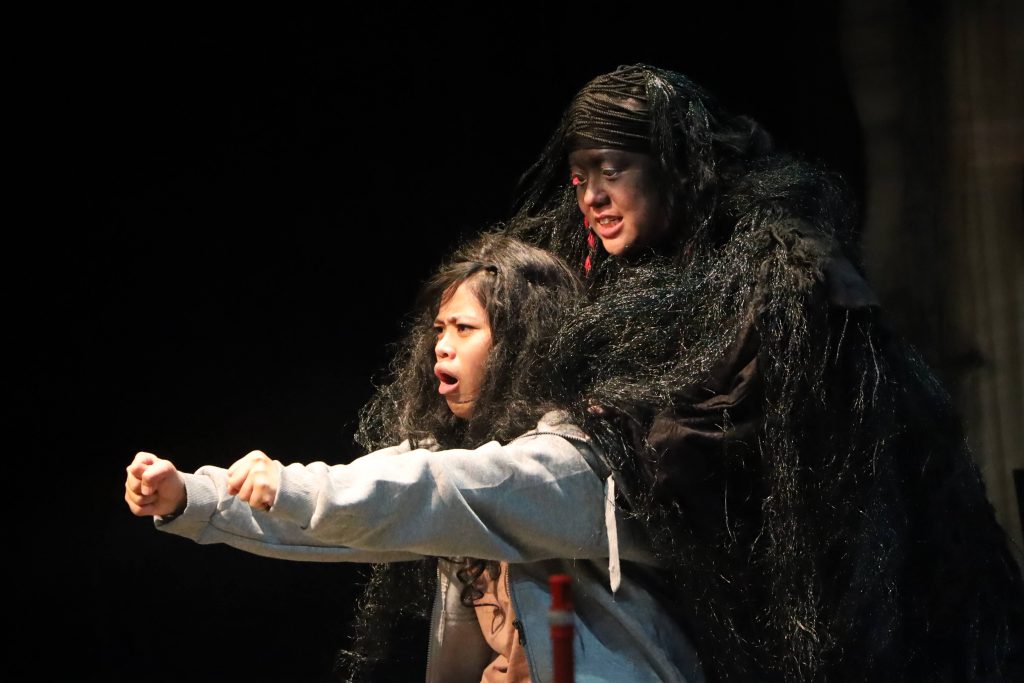
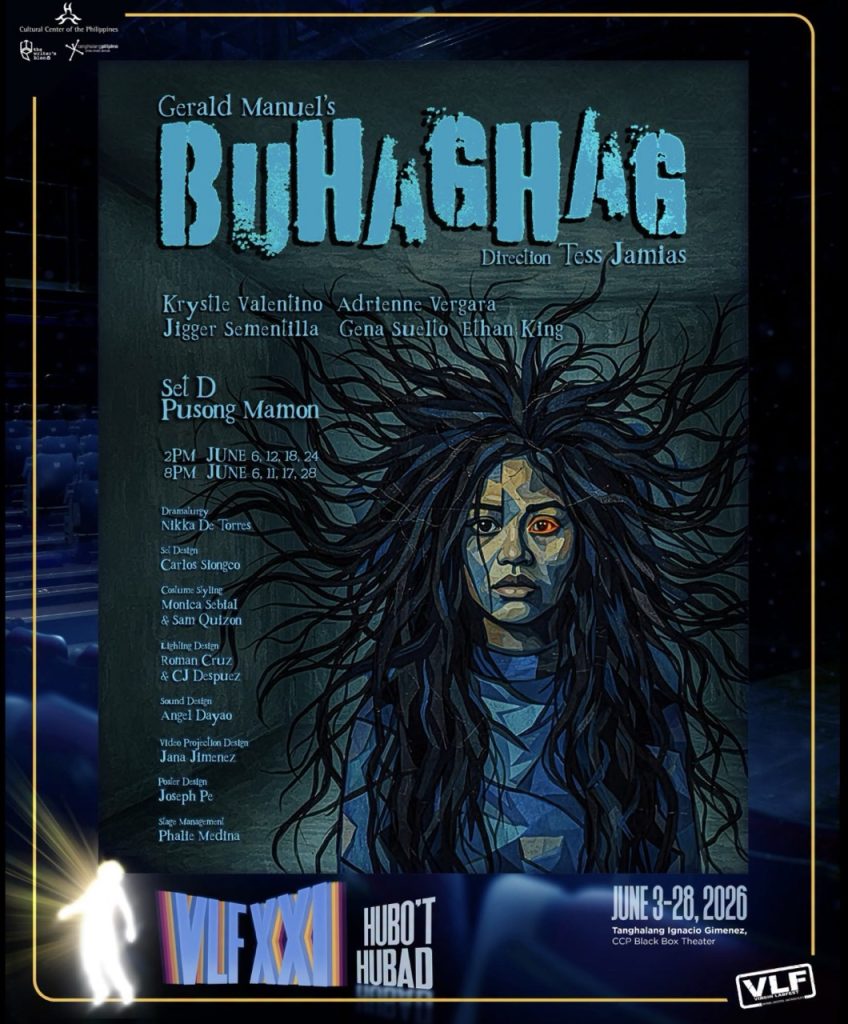
    Didactic in its execution, ‘Buhaghag’ spends most of its time explaining what is happening rather than dynamically showing us the lead character’s problem. Phoebe (played by Krysytle Valentino) is so busy that she is chronically sleep-deprived and no time to see friends and family. Her room is filled with black vines that resemble hair, and bursting through the walls comes a creature made entirely of hair (played by Adrienne Vergara), who offers Phoebe a deal to give her the rest she needs. Director Tess Jamias does a wonderful job of trying to keep the performance energy high, with huge credit going to Set Designer Carlos Siongco and Costume Stylists Monica Sebial and Sam Quizon for bringing this surreal nightmare to life..

    VLF XXI SET D PUSONG MAMON Buhaghag
    VLF XXI – SET D [PUSONG MAMON]: BUHAGHAG

    Unfortunately, all the visual theatrics cannot alleviate the play’s issue which could have been solved by  the lesson: show, don’t tell. We need to actually see Phoebe working; we need to witness her missing out on life because of her obligations. Because Vergara’s entity comes far too soon, the remainder of the play relies almost on the two characters simply talking about the play’s plot. It doesn’t help matters that Valentino struggles to match Vergara’s powerful presence. As a result, she disappears underneath all that theatrics – the set, the costumes, the stage design – making it incredibly difficult to connect with the protagonist.

    Footprint
    By Jerom Canlas
    Directed by Mikko Angeles

    Set D Footprint Orly Daquipil 17 1
    Production photos for “Buhaghag,” “Footprint,” and “Taksyapo!” by Orly Daquipil

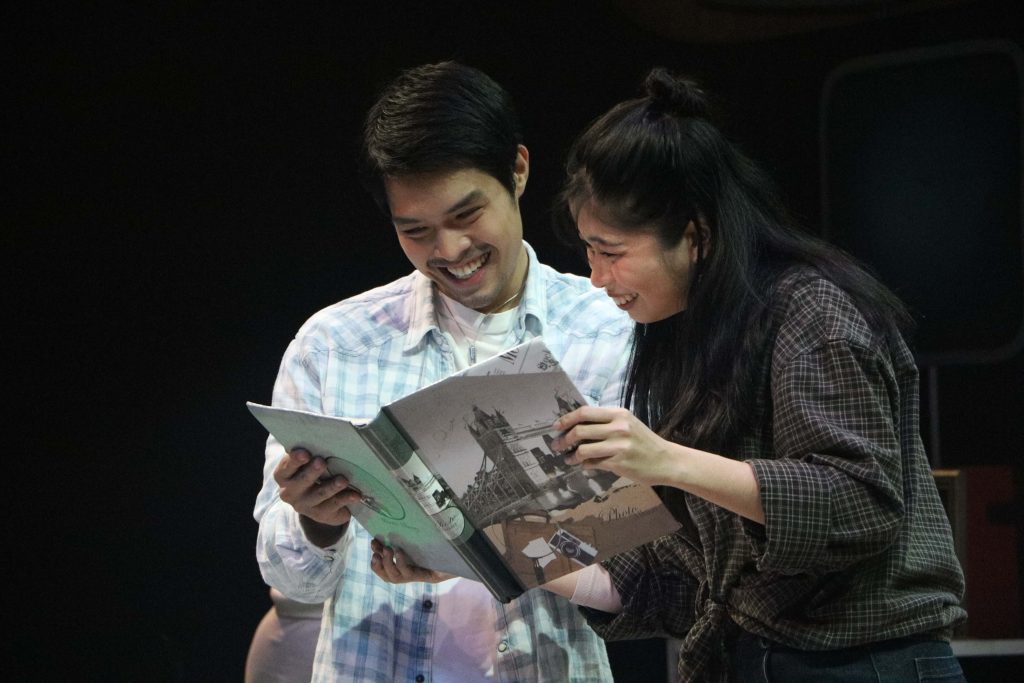
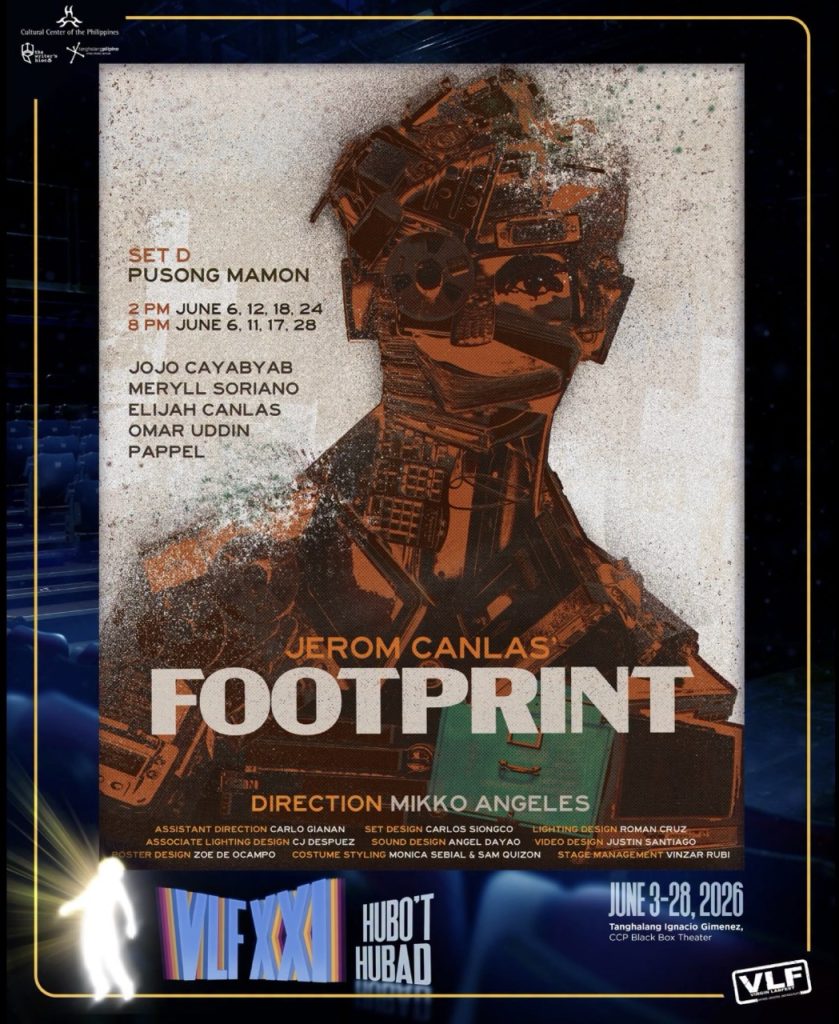
    In a near-future world, Jerom Canlas’s ‘Footprint’ follows a family who regularly visits the virtual digital archive containing the memories of Ram, a teenager who committed suicide. Within this virtual space, his father, mother, older brother, and girlfriend find each other and deal with the loss of a loved one and the painful realisation: they will never truly understand why Ram did what he did.

    Director Mikko Angeles has the unenviable task of conceptualizing what this future looks like. Collaborating with set designer Carlos Siongco, the stage resembles an abstract drawing of a library, but its cool, slick design makes it look futuristic. Enhanced by a sharp projection mapping and immersive lighting and sound effects, the aesthetic and feel of the future is clearly palpable. If it was really needed, I’m not sure because the weight of the performances are enough to carry this play through. If it was an empty stage and the actors just spoke the lines in some oblivion-like space, the effect would have been just as powerful.

    VLF XXI SET D PUSONG MAMON Footprint Poster
    Screenshot

    The ensemble, played by Elijah Canlas, Meryl Soriano, Jojo Cayabyab, and Pappel, delve so deeply into their emotional space that the audience really felt it. Everyone around me was crying. The rawness of the unearthed emotions and the sensitive issue of suicide – never romanticized, but carefully contextualized for the sake of the survivors – hit in a different way. When Omar Uddin, who has been exceptionally strong in all of his recent performances, comes up to do a monologue as Ram, the play reaches its absolute emotional peak and completely kills it.

    Ultimately, while the heavy theatrics were undeniably well-executed and helped sell the idea of the play; it was executed well but felt unnecessary.

    Taksyapo!
    By John Lapus
    Directed by Tuxqs Rutaquio

    Set D Taksyapo Orly Daquipil 23 1
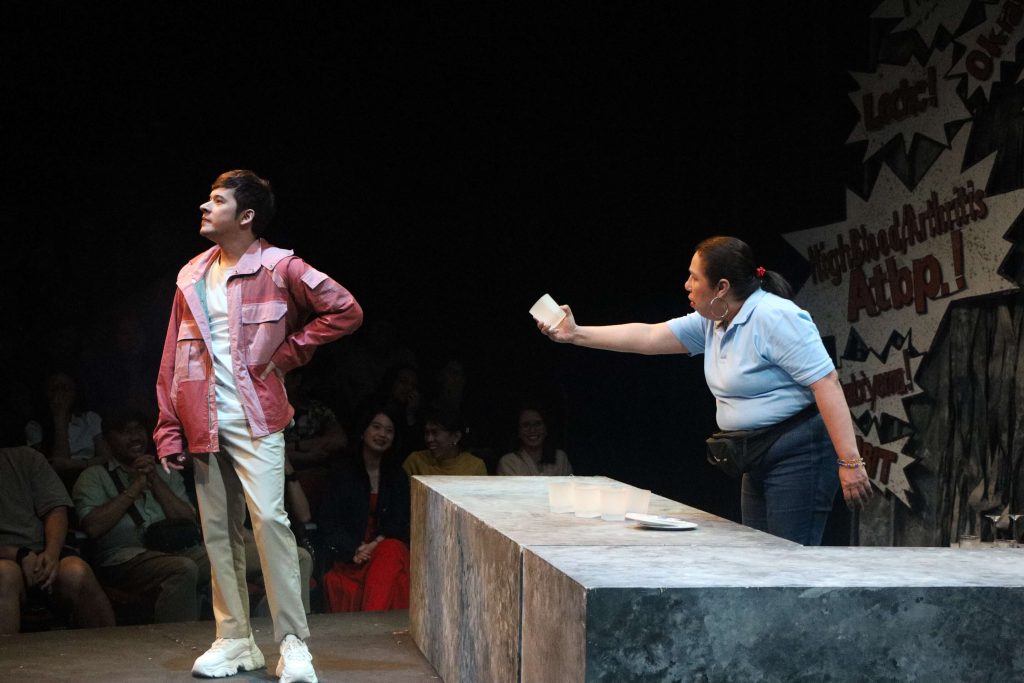
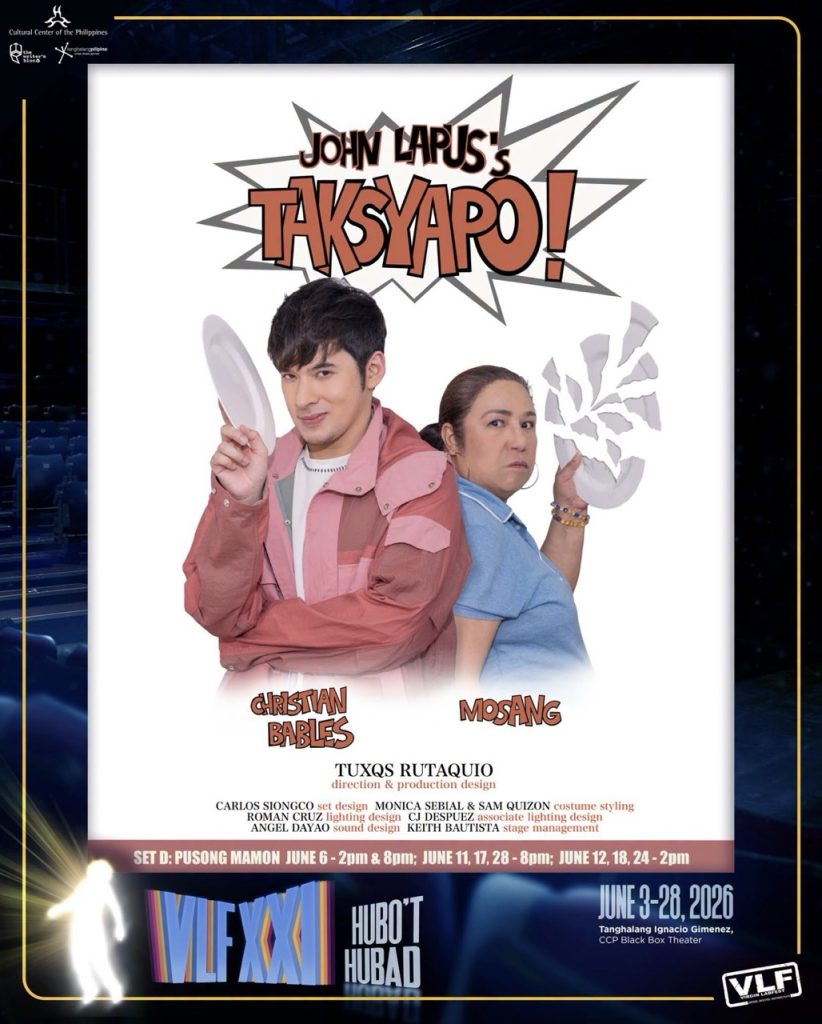
    Mosang and Christian Bables in “Taksyapo!.” (Photo by Orly Daquipil)

    A play centered around the famous rage booth in Tarlac, where one buy plates and mugs and throw them against the wall to elease their pent-up anger and frustration, is an interesting idea. John Lapus’s ‘Taksyapo!’ is a two-hander featuring booth clerk Maya (played by Mosang), and a gay patron, JM (played by Christian Bables). Through their banter, we see a world that is deeply painful to live in. Maya is a woman whose husband has left her, while JM is a gay man reeling from a recent a breakup. Both characters find themselves in the absolute perfect space to let out some steam.

    VLF XXI SET D PUSONG MAMON Taksyapo
    VLF XXI – SET D [PUSONG MAMON]: TAKSYAPO!

    And let off steam they do, to fantastic effect. The immersive sound effects of the shattering glass and plates add to the energy of the play as the actors hurl their frustrations through a cleverly designed fake wall. However, the play’s frustration goes beyond the personal. It extends to other things that bother them until the whole play becomes a litany of actions and people who piss us off. Of course, it gets political, but at the same time serves as a mirror to our society in general.

    Ultimately, ‘Taksyapo!’ feels destined to become an instant classic – something that will be added into a line-up of short plays that will serve to end the show with a good laugh and a chance to call out the troubles and ills of the day. It is a brilliant piece that will unboubtedly be easily revived time and time again.

    My Rating: 4 Stars

    stars 4 0


    Virgin Labfest XXI runs until June 28 at the Tanghalang Ignacio Gimenez (CCP Black Box Theater). Don’t miss your chance to witness the raw emotional power and explosive comedy of Set D ‘Pusong Mamon’ for yourself, grab your tickets before the festival wraps up. For tickets, visit Ticket World and Ticket 2 Me.

  • MOVIE REVIEW: ‘Backrooms’ Is a Confident Full-Length Feature Debut for YouTuber Kane Parsons

    MOVIE REVIEW: ‘Backrooms’ Is a Confident Full-Length Feature Debut for YouTuber Kane Parsons

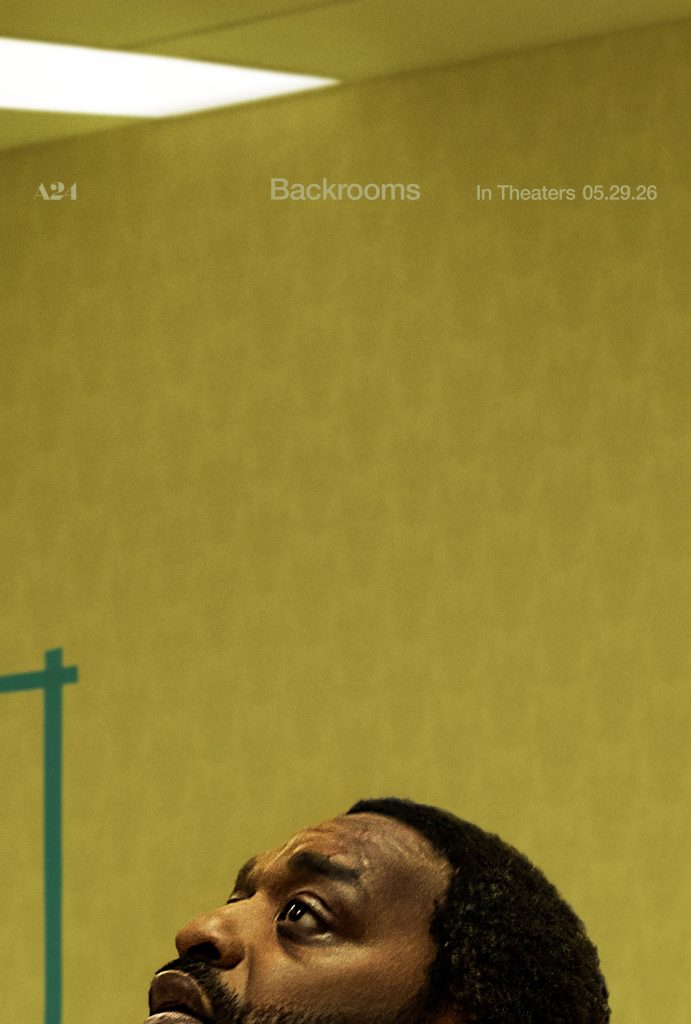
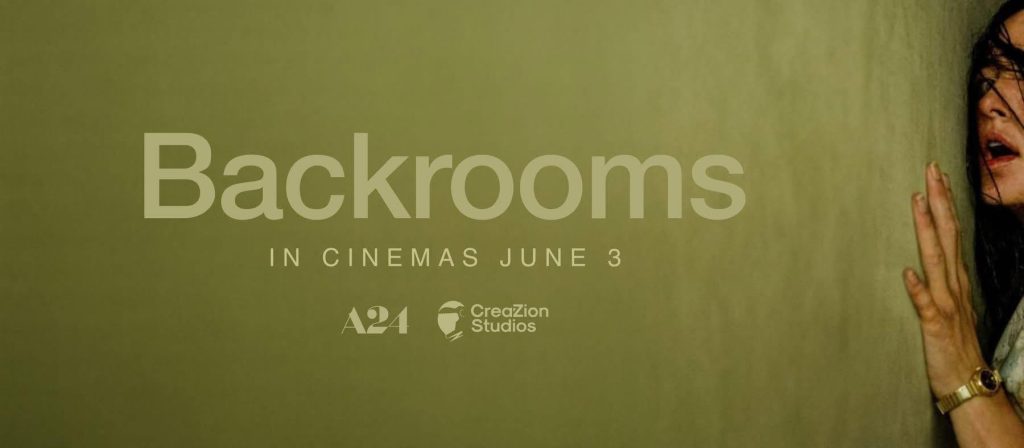
    What I liked about Backrooms, the full-length feature film debut of YouTuber Kane Parsons, is its resistance to fully explaining the strangeness and supernatural elements of the story. There is pivotal moment when Clark (Chiwetel Ejiofor) shares his understanding of what this labyrinth found in a literal tear in space and time within the basement of his furniture shop with his therapist, Mary (Renate Reinsve). It is a necessary scene that helps stamp out the final images of the film, yet it never discusses the why. The Backrooms – that endless, uncanny space found through a mystical doorway – just exists. It just is. And that may very well be one of the most terrifying aspects of the movie.
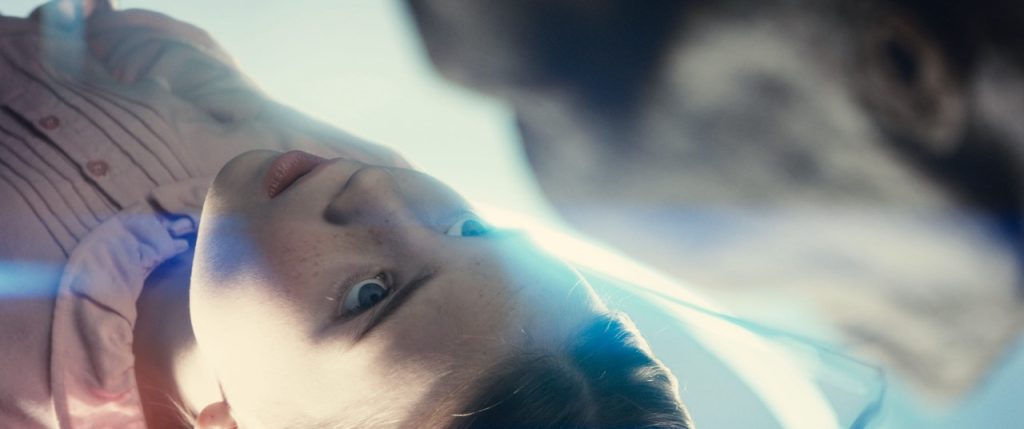
    So much of Western horror is ruined by the compulsive need to explain everything. In a world driven by the practical and the modern, everything needs to make sense. That the lore be perfectly complete. It is actually a very boring exercise, one that robs us of our imagination. As Asians, however, we are inherently attuned to cosmic and supernatural forces; they are deeply woven into our culture and social design. So we are not bothered or bogged down by the unexplained mystery.

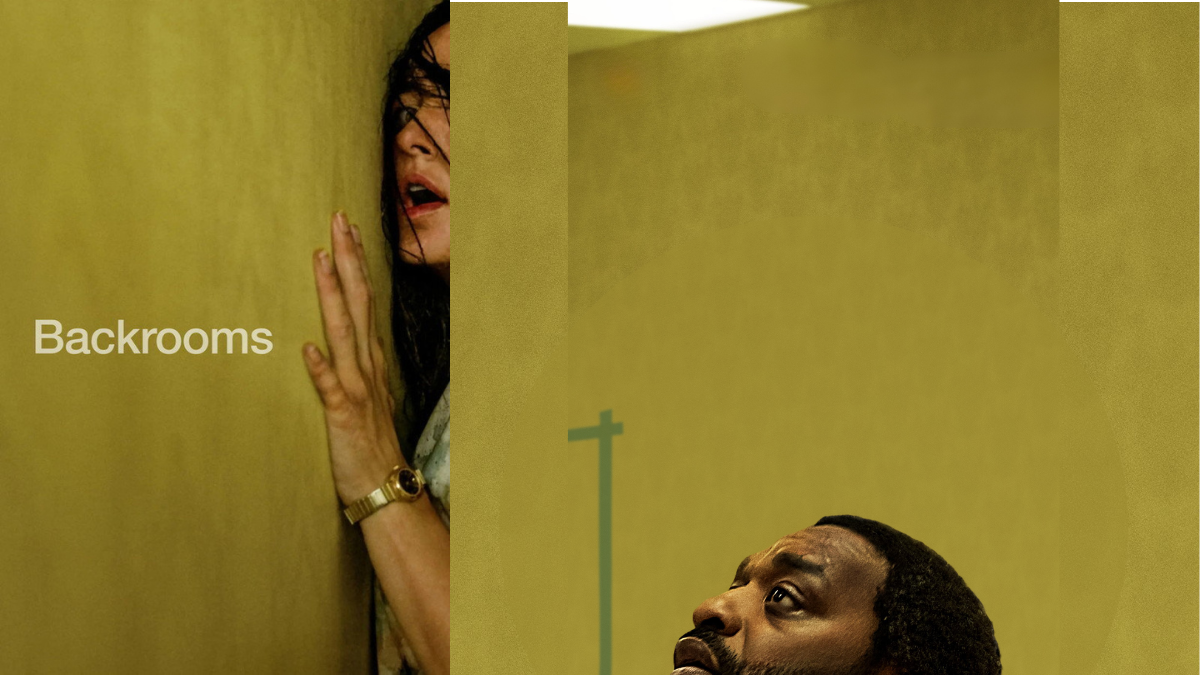
    In Backrooms, that mystery can kill. The film follows Clark, an unhappy man living in his failing furniture store after being kicked out by his wife. He is an alcoholic and a frustrated architect, details we learn through his tense therapy sessions with Mary, who is quietly battling her own trauma about her mother and her childhood home. Things take a surreal turn when Clark discovers a doorway into another dimension within his basement: a liminal space that is made up of an endless, maddening array of yellow rooms. As he decides to explore it, he discovers that something else lives in that space. Something dark, sinister, something that kills.

    BACKROOMS Digi 1 Sheet 2025x3000 Chiwetel W6 FIN03
    Image Source: a24films.com

    Set in the 1990s, the film utilizes a heavily saturated, grainy aesthetic to its cinematography. It adds to the existential dread hoveriing over our two leads. This analog texture also adds to the ambiguity and mystery of the Backrooms. Oftentimes, the film switches to a first person point-of-view, seeing from the lens of the person holding a 90s camcorder. The film opens with a chilling prologue establishing that someone else was in the Backrooms long before Clark’s discovery, and the use of this vintage footage increases the tension. The conceit of a found footage aesthetic means that the film can’t just cut to show us what we need to see. Instead, the character must physically turn and and point the camera where the audience needs it to point so we can follow the story – or in this case, the horror – and the limited perspective adds to the tension and the fear.

    700708361 981283334544524 2584726932059409977 n

    But there’s another scene midway through the film, when Clark is now exploring the labyrinth, using a camcorder to record evidence that the Backrooms is real and there’s a frightening sequence that is excellently executed – I caught myself cursing and screaming out loud – but it doesn’t make sense at that point in the narrative for Clark to take the camera and continue recording his escape. That one scene, a pivotal one, is what took me out of the whole film. It’s why found footage is such a difficult and delicate film mode to undertake because one false intention can ruin the illusion.

    This is a remarkably confident debut from a first-time feature director – even if he has been directing YouTube shorts for a while now – and it will be interesting to see what else Kane Parsons is capable of next. Backrooms is utterly terrifying, weird, deliberately slow, and confident. A very strong debut indeed.

    My Rating: 4 Stars

    stars 4 0


    Wonderfully weird, deliberately slow, and utterly terrifying. Discover why Kane Parsons’ Backrooms is a masterclass in tension and a formidable debut. Check showtimes here.

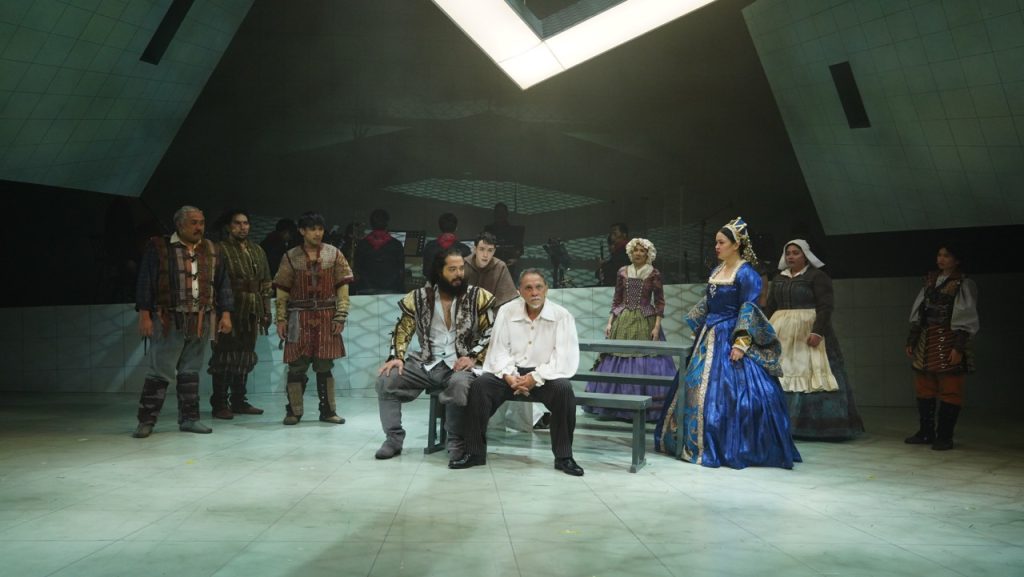
  • THEATER REVIEW: Repertory Philippines’ ‘Man of La Mancha’ Finds New Life in Incredible Staging and Quicker Tempo

    THEATER REVIEW: Repertory Philippines’ ‘Man of La Mancha’ Finds New Life in Incredible Staging and Quicker Tempo

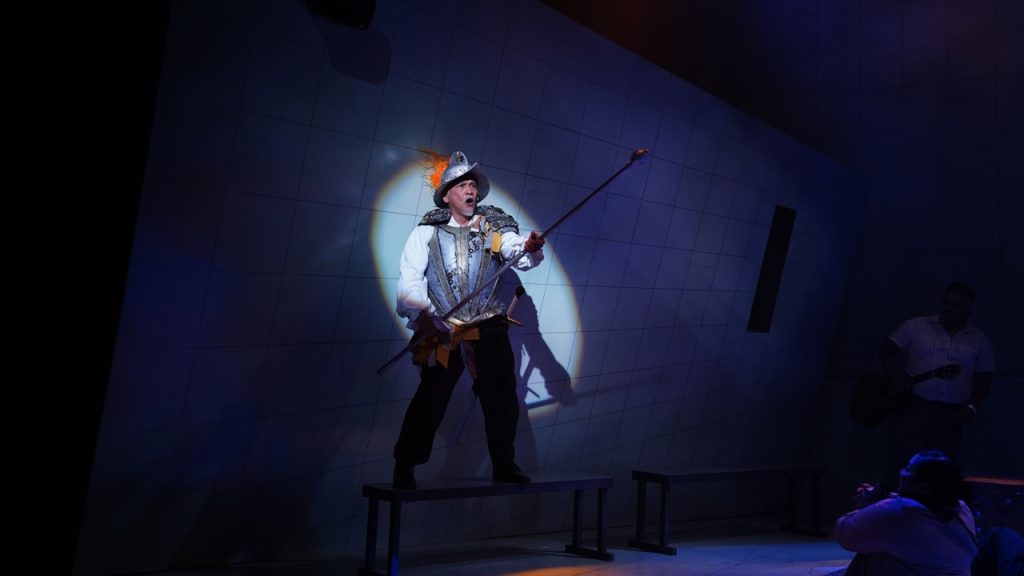
    I grew up listening to the Broadway cast recording of Man of La Mancha, the 1965 musical with music by Mitch Leigh, lyrics by Joe Darion, and a book by Dale Wasserman. The musical is the source of the famous song “The Impossible Dream,” and for some reason, I always thought the name Dulcinea originated from this musical. I also caught the 1972 film adaptation starring Peter O’Toole and Sophia Loren.

    So while I was happy to learn that Repertory Philippines was staging a new revival, helmed by Nelsito Gomez as director and starring Nonie Buencamino as Miguel Cervantes/Don Quixote, I worried about whether the play could resonate with a modern audience. Does its light, whimsical touch on madness and positivity reflect our contemporary issues? Does it treat too lightly things we do not play around with so easily in 2026, like mental health and sexual assault? 

    01 REP officially stages the seminal classic Man of La Mancha as reimagined by director Nelsito Gomez. Man of La Mancha
    REP officially stages the seminal classic Man of La Mancha, as reimagined by director Nelsito Gomez. The musical will have a limited run until June 28 at REP Eastwood Theater | Photo credit: Krizhal Daryl Ordas of Indio Creatives

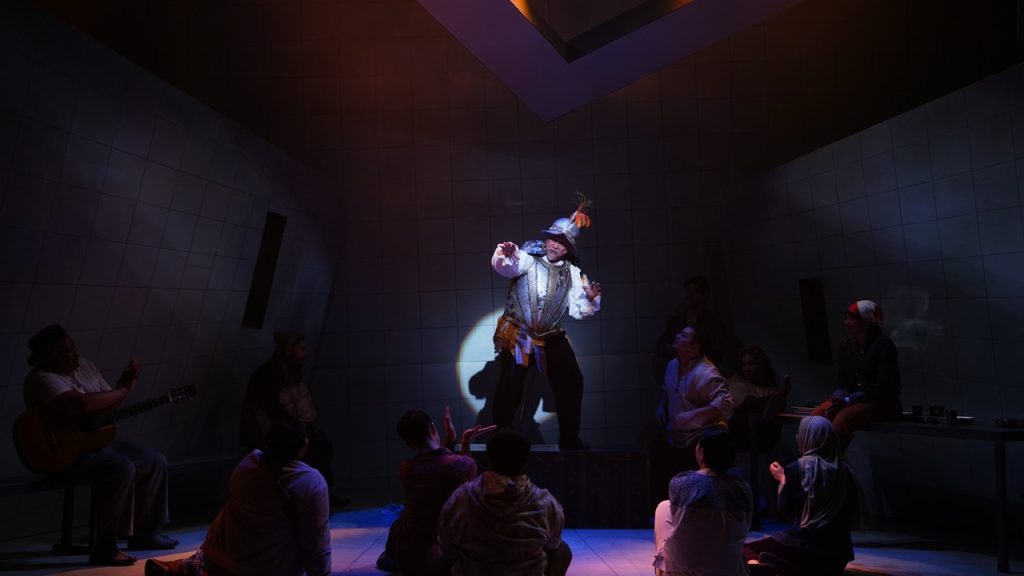
    Set in the late 16th Century during the Spanish Inquisition, Man of La Mancha begins as Miguel de Cervantes and his manservant, Sancho, are brought to prison to await trial. But in prison, the other prisoners there conduct their own mock trial.

    04 Gawad Buhay winner Marvin Ong plays Don Quixotes faithful squire Sancho Panza. Man of La Mancha
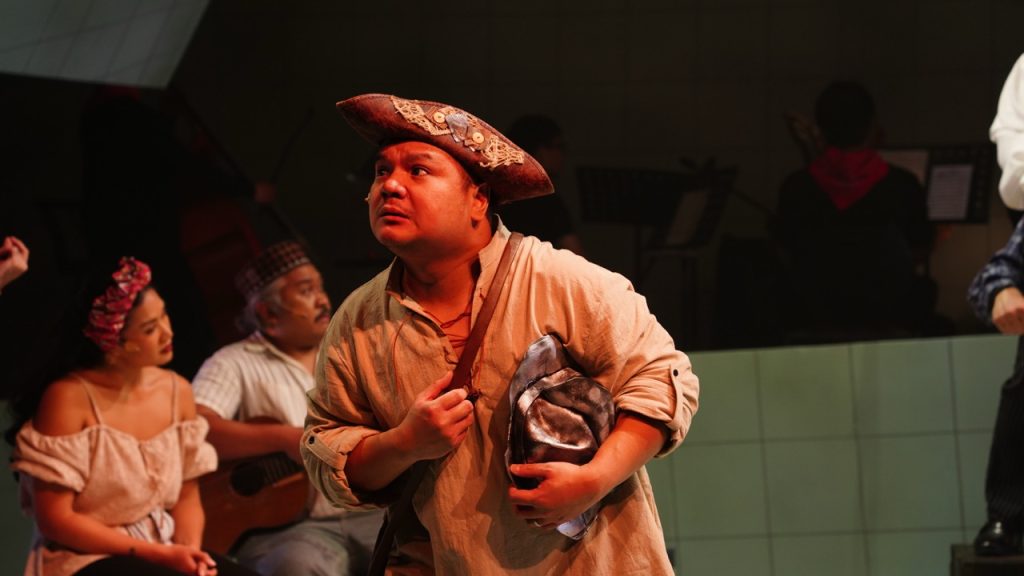
    Gawad Buhay winner Marvin Ong plays Don Quixote’s faithful squire, Sancho Panza, joining his master in his many adventures.
     Photo credit: Krizhal Daryl Ordas of Indio Creatives

    Because Cervantes is not just a former tax collector but a failed poet and author, the inmates quickly deemed him guilty. But Cervantes demands that he be given a chance to defend himself and presents his defense by performing a play.

    02 Nonie Buencamino makes his grand musical comeback. Man of La Mancha
    In REP’s Man of La Mancha, Nonie Buencamino makes his grand musical comeback playing three characters: the fictionalized version of the famed writer Miguel de Cervantes, and his characters the old gentleman Alonso Quijano and the iconic knight-errant Don Quixote. | Photo credit: Krizhal Daryl Ordas of Indio Creatives

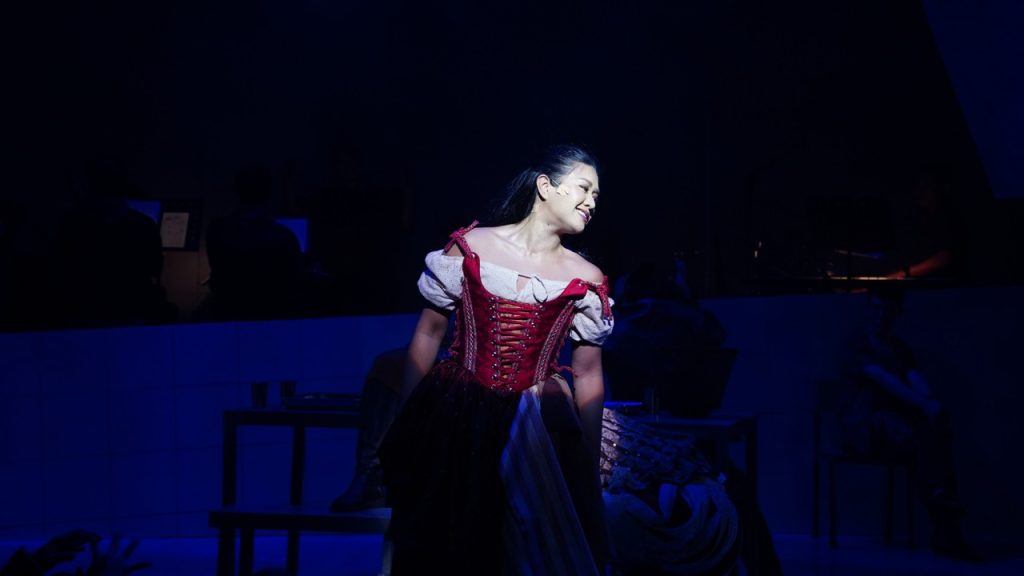
    He invites the other prisoners to take on roles in the story of Don Quixote, played by Cervantes himself, a noble who, driven by madness, believes he is a knight. Quixote renames Aldonza, a waitress and part-time sex worker, calling her by the name Dulcinea and insisting she is a noble lady.

    Man of La Mancha
    Esteemed classical singer and actress Katrine Sunga takes the role of Don Quixote’s muse, Aldonza, in Man of La Mancha. 
    Photo credit: Krizhal Daryl Ordas of Indio Creatives

    Though he is widely ridiculed, his delusion begins to transform those around him, inspiring them to see the best versions of themselves. Yet, as Don Quixote wants to fight for a better world, his family tracks him down as his exploits have become the talk of the town and brought shame to their name.

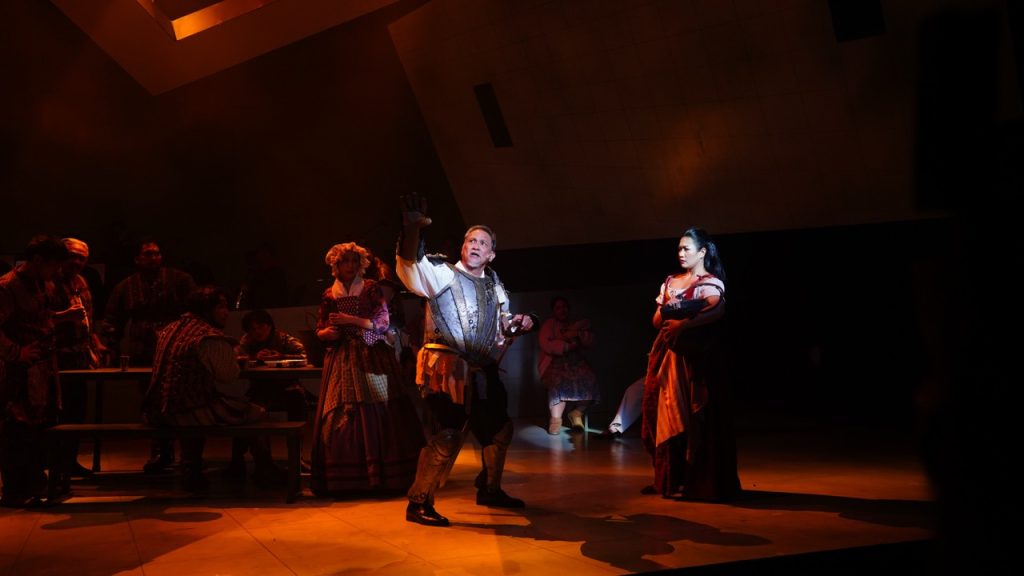
    Man of La Mancha
    Man of La Mancha features the timeless classic, “Dulcinea,” a song Don Quixote sings to Aldonza, a barmaid. 
    Photo credit: Krizhal Daryl Ordas of Indio Creatives

    Much of Quixote’s delusions were originally meant to be taken as a comic relief; it was written in 1965, after all, an era with a far more flippant attitude toward about how mental health is treated in this musical. What makes Gomez’s direction is so compelling is that he does not shy away from it. He never treats madness for mere comic effect, choosing instead to explore the very real, harrowing ramifications of Quixote’s delusions. Aldonza, for instance, is placed in harm’s way by his virtue-signaling, having been lured into believing Quixote’s idealistic vision of the world. There’s a hardness to Gomez’s direction that amplifies the other characters’ distaste for Quixote’s ramblings. Yet, there are moments of grace hit even harder. such when Quixote gives an innkeeper with dignity and honour, when Aldonza begins to desire the noble woman Quixote sees in her, and in the profound way Quixote wants the best for himself.

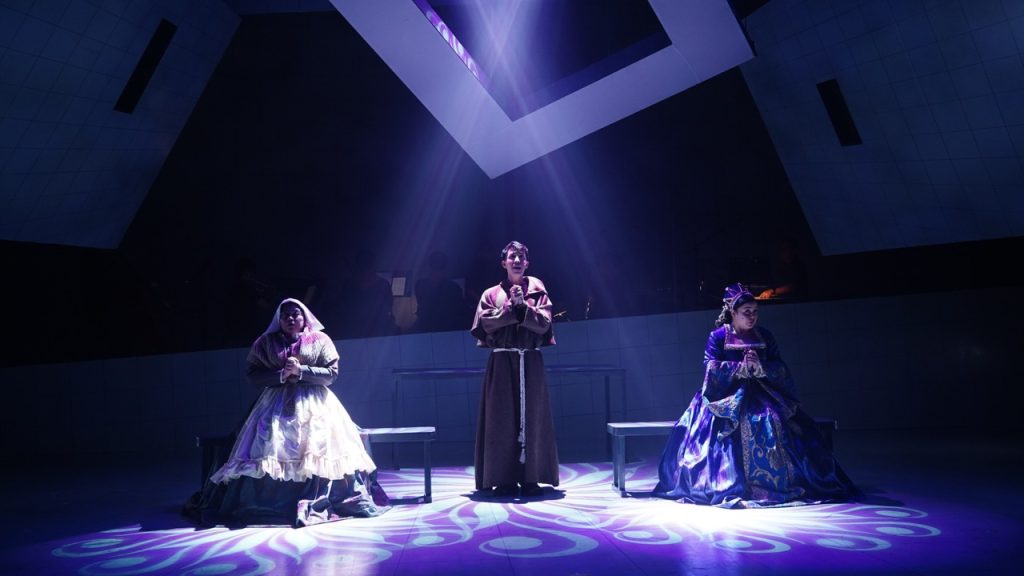
    Man of La Mancha
    Sarah Facuri as Housekeeper, Steven Hotchkiss as Padre, and Mikkie Bradshaw-Volante as Quijano’s niece Antonia share their worry for the old gentleman’s mental state in “I’m Only Thinking of Him.”  | Photo credit: Krizhal Daryl Ordas of Indio Creative

    That is the delicate tightrope Gomez walks in this staging. Rather than shying away from the age of the material, he highlights how our perspective is different now. He speeds up the tempo of certain songs – such as “I’m Only Thinking of Him,” which is traditionally one of my least favourite songs in the musical, but here in the new arrangement, the song is vibrant and funny, especially with Mikkie Bradshaw-Volante and Sarah Facuri eating up that song – keeping the show from ever feeling too rigid or slow. His vision for the stage, realized alongside set designer Julio Garcia, initially presents an ICE detention center, a huge chained fence trapping the actors within and partly obscured to the audience. But as Cervantes begins his defense and tells the story of Don Quixote, the fence lifts, the walls break open and suspend into the air and the stage opens up for the play. Even the backdrop opens up to reveal the live band. It is such a strong use of stage imagery that visualizes how art opens up the world and allows us a new way of looking at things.

    Man of La Mancha
    A favorite among REP audiences, Man of La Mancha in its third restaging dares audiences to believe in hope.  
    Photo credit: Krizhal Daryl Ordas of Indio Creatives

    In today’s world, there is a bit of misplaced idealism to Man of La Mancha that can make it feel like a time capsule from a more innocent and pure era. Yet, Gomez, his amazing cast, and his artistic team manage to critique the elements that have aged poorly while still allowing the spirit and profound hope of the play’s core message to shine through. 

    710813109 1311630684411881 877869560508839455 n

    Though there were noticeable technical difficulties, particularly with sound and lighting cues on opening night, these are easily remedied. The cast is incredible, with Buencamino leading the ensemble into a delightful frenzy. Marvin Ong’s Sancho is a breath of fresh air, while Katrine Sunga is utterly breathtaking as Aldonza. She is all power and forceful, Sunga commands a strong stage presence that matches Buencamino line for line. Meanwhile, Farley Asuncion’s musical arrangement is incredible, and Julio Garcia’s stage design is a theatrical revelation. Ultimately, this is a thoroughly engaging night at the theater and an interesting approach to reviving classic musicals. 

    My Rating: 4 Stars

    stars 4 0


    Don’t miss this striking revival! Repertory Philippines’ Man of La Mancha runs at the REP Eastwood Theater until June 28. Secure your tickets now via TicketWorld or Ticket2Me visit Repertory Philippines’ official social media pages for updates and show schedules.

  • MOVIE REVIEW: ‘Disclosure Day’ Is a Film That Uses Spielberg’s Entire Array of Cinematic Tools While Remaining Fun and Exciting to Watch

    MOVIE REVIEW: ‘Disclosure Day’ Is a Film That Uses Spielberg’s Entire Array of Cinematic Tools While Remaining Fun and Exciting to Watch

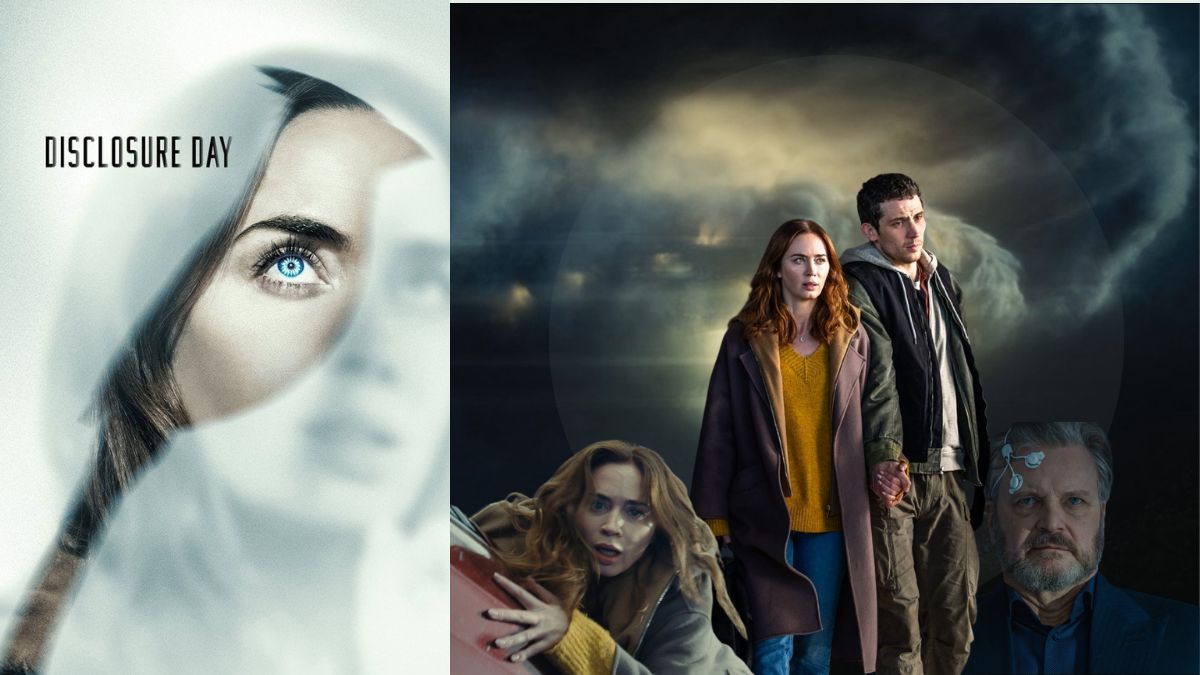
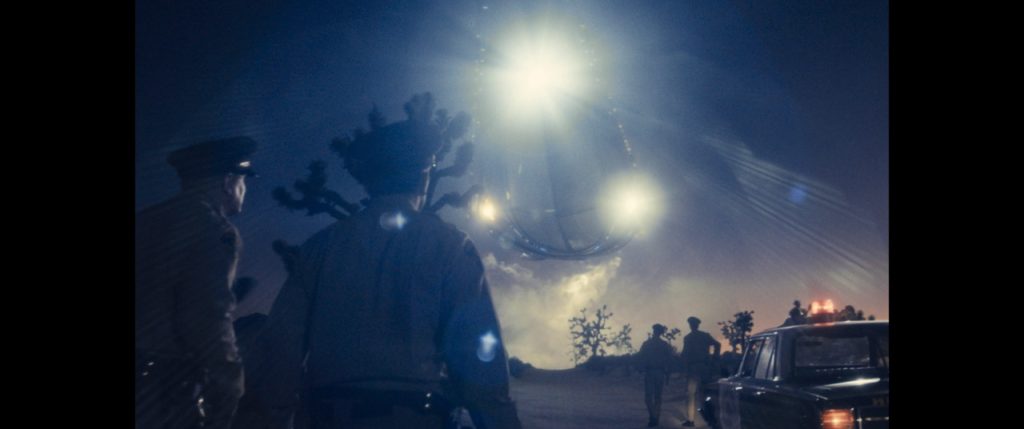
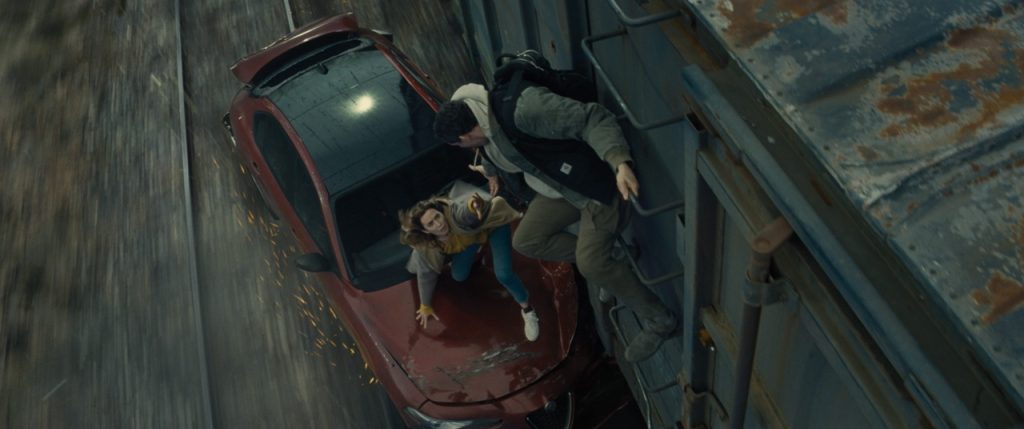
    There’s a classic feel to Disclosure Day, and I credit that to Steven Spielberg’s direction, Janusz Kaminski’s cinematography, Sarah Broshar’s editing, and John Williams’ score. The craftsmanship behind this epic sci-fi mystery thriller is so impeccable that you are effortlessly guided toward the exact emotions that Spielberg and his team want you to feel. The storytelling is so exquisite that it sweeps you up from the very first scene until its big finale, never letting you go through it all. Sure, they use a lot of new techniques as well; multiple one-shot takes that are complicated and involve stunt work, but where they point that camera and how they cut the scenes creates a seamless flow that really builds upon this amazing story about truth, aliens, and the human condition.

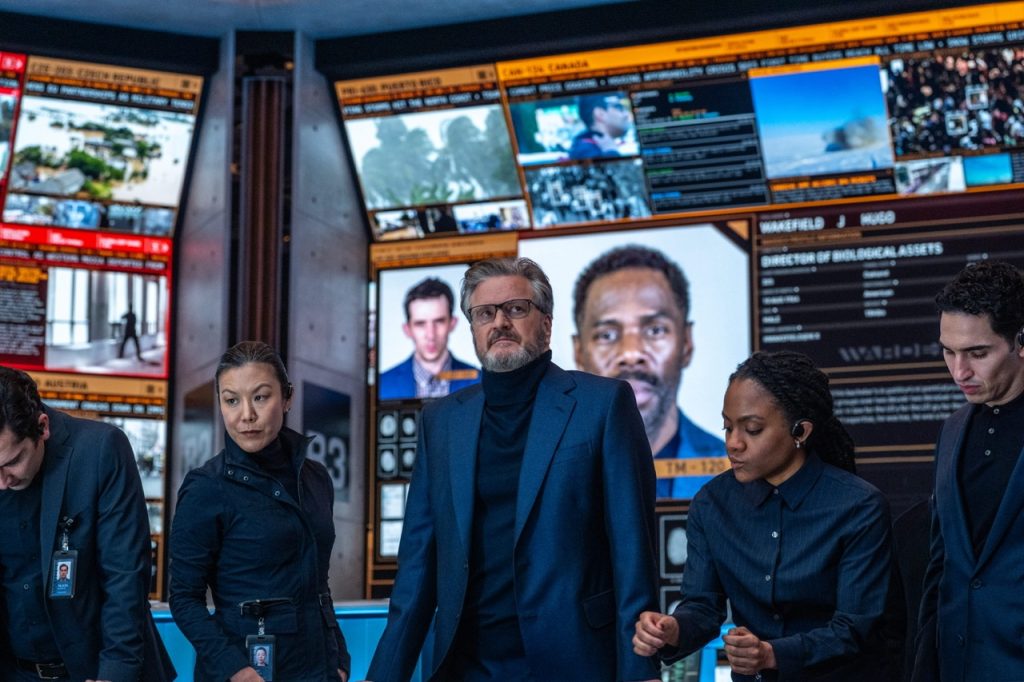
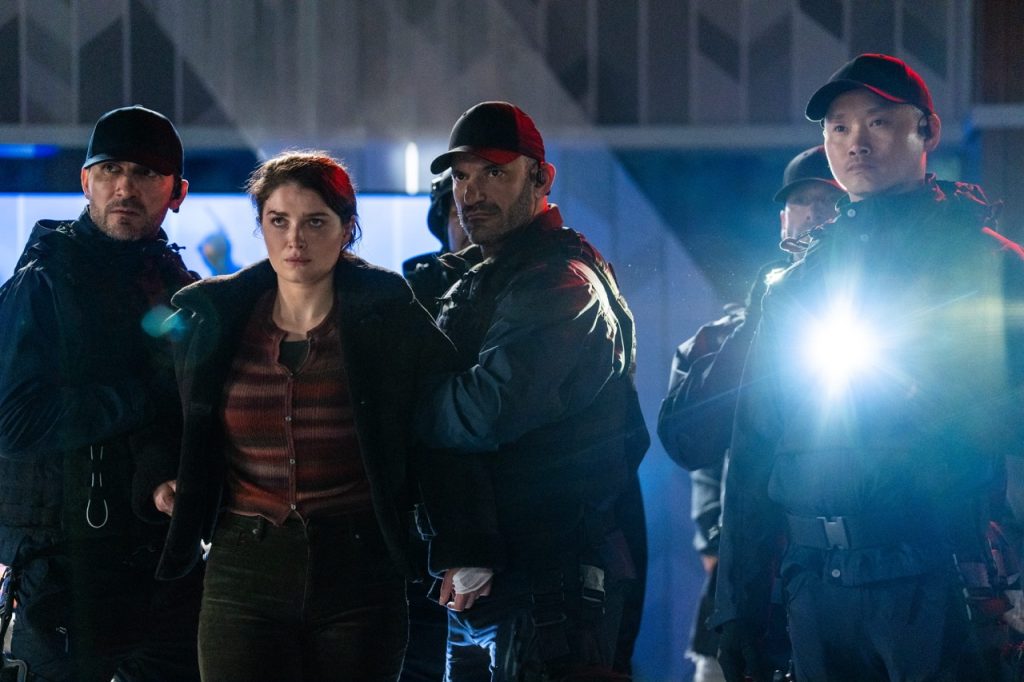
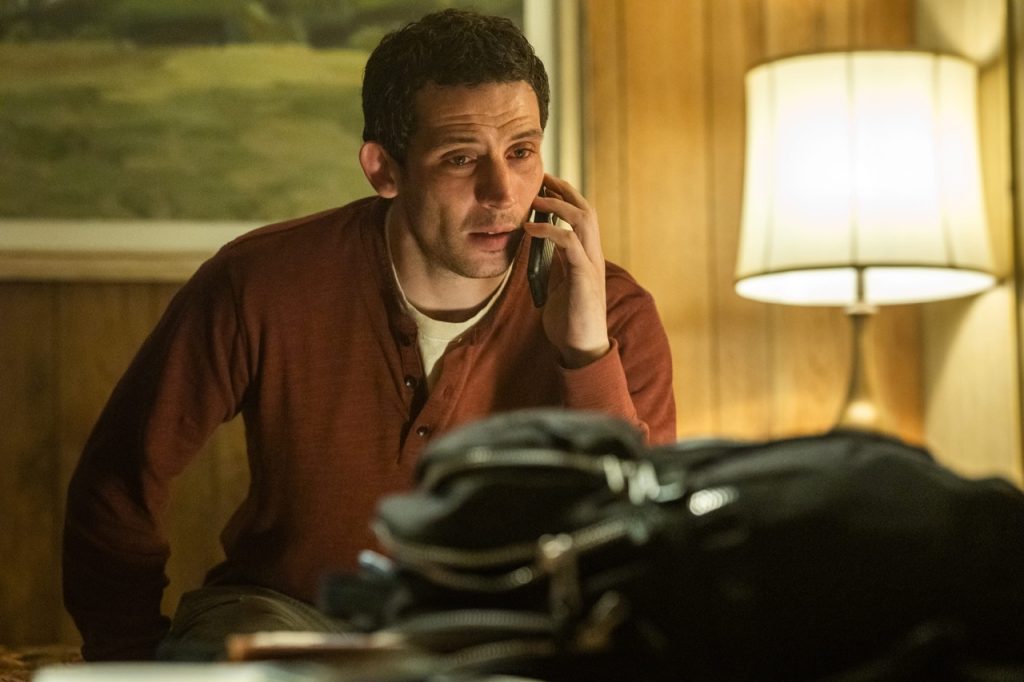
    Disclosure Day follows Daniel (Josh O’Connor) as he attempts a high-stakes trade off with what appear to be government forces led by Noah Scanlon (Colin Firth). Scanlon’s men have taken Daniel’s girlfriend, Jane (Eve Hewson); in exchange for her freedom, Daniel must return stolen documents and an alien artifact.

    Disclosure Day

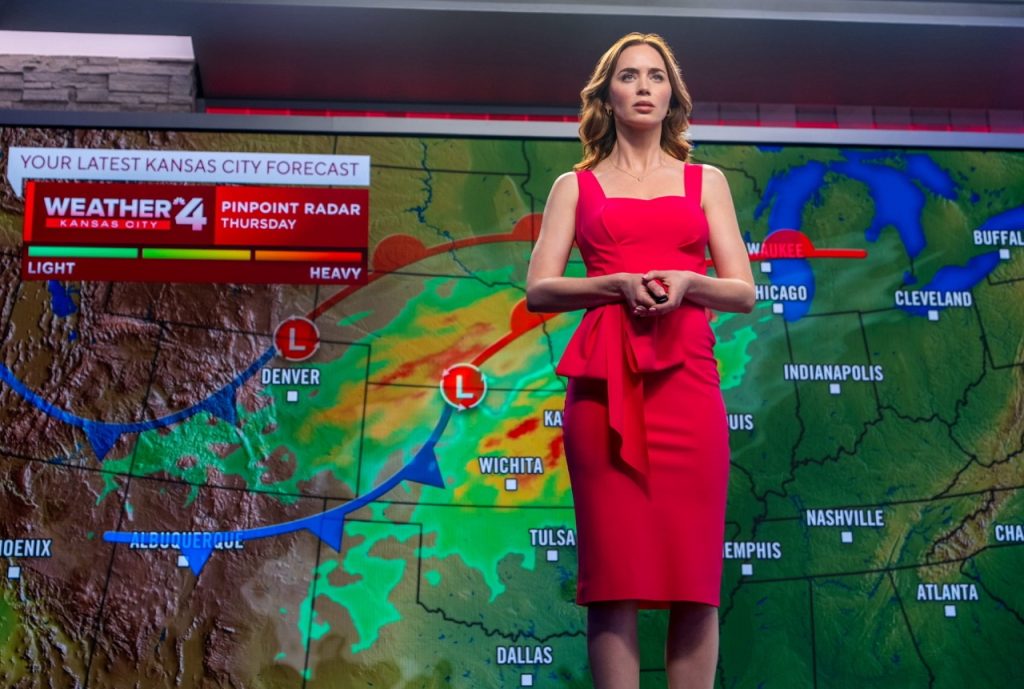
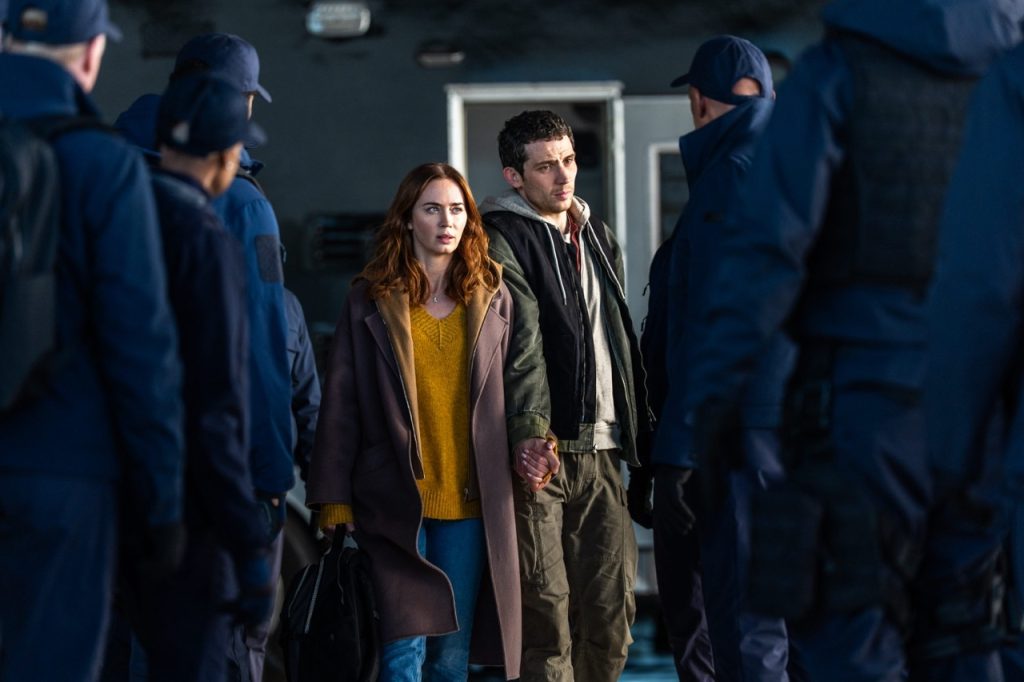
    However, Daniel manages to rescue his girlfriend and retrieve the items and escape. Simultaneously, Margaret (Emily Blunt), a meteorologist, experiences a strange visit that alters her, suddenly granting her inexplicable knowledge an the ability to speak multiple languages.

    DisclosureDay 3

    She feels compelled to search out Daniel, who in turn, is told to seek her out by his informant, Hugo (Coleman Domingo). The story and all its secrets unfolds one piece at a time while Daniel is on the run, Noah Scanlon gives chase, and a bewildered Margaret is drawn right into the center of the storm, completely unaware she is meeting the three right at the center of all of this.

    Disclosure Day ColinFirth2

    Written by David Koepp from a story by Spielberg, Disclosure Day has an unconventional narrative structure. It thrusts the audience directly into the middle of all the action – no exposition whatsoever – and we are learning about these characters and their dramatic situation as the film unfolds.

    Disclosure Day EveHewson

    Everything is a mystery, from the true identities of Daniel, Jane, and Margaret, to the capabilities and origins of the alien artifact. Everything is shrouded in secrets, the narrative relies on Spielberg and his team to let us into this world just one piece of information at a time. 

    DisclosureDay 2

    While he is doing this, he shows us a world on the brink of collapse; populated by people who are overthinking or would rather cede their autonomy to a higher authority. It’s a chaotic world, and Daniel is in the middle of it. He’s at the center of the conspiracy, he witnesses the sheer darkness that it holds and how it directly affects the people around him, especially Jane.

    DisclosureDay 1

    On the other hand, through Margaret, we can also see the wonder of it all: the awe-inspiring effect of a paranormal occurrence. Her sudden, inexplicable knowledge and ability to know things and people, it is played out with such levity and whimsy that it creates some of the most enjoyable scenes in the film. 

    DisclosureDay JoshOConnor

    In fact, O’Connor and Blunt play off of each other beautifully, marrying the film’s two contrasting sides – the pessimistic and the optimistic – and really grounding the film into a balanced shape. While O’Connor delivers a solid performance and holds his own in such a massive production, this territory is a walk in the park for Blunt, who has had her share of huge box-office movies. Yet, she adds a little bit more, her portrayal of Margaret is that of a woman completely overtaken by this alien power.

    Disclosure Day EmilyJosh

    She’s in awe of it, and while it frightens her, the phenomenon also feels like an answer to her character’s search for purpose. It is a complex, highly demanding role, yet Blunt manages to keep it real and engaging despite the fact she remains mostly reactive until the tide finally turns.

    DisclosureDay 6

    This movie makes full use of Spielberg’s greatest strengths as a director. It features stunning, large-scale chase sequences, intricate character work, and scenes where people find themselves beholden to forces far larger than themselves. While Disclosure Day evokes classic, old-school Spielberg, it simultaneously possesses a refreshing quality and a hopefulness that feels so fitting for this day and age. It is a lovely film even with some scenes where the narrative gets untethered, or takes a didactic approach to answer some questions still left hanging, these minor flaws are just a small price to pay for a cinematic experience that reaches out and makes us feel and believe in magic again.

    My Rating: 4.5 Stars

    stars 4 5


    Are you ready to experience the magic of classic Spielberg again? Disclosure Day is officially out in theaters. Check showtimes here.

  • THEATER REVIEW: The Restaging of Artist Playground’s ‘Reverse Card’ Brings Along a Friend in ‘Al.Ter’ in a Twin-Bill Presentation Called ‘Double Take’

    THEATER REVIEW: The Restaging of Artist Playground’s ‘Reverse Card’ Brings Along a Friend in ‘Al.Ter’ in a Twin-Bill Presentation Called ‘Double Take’

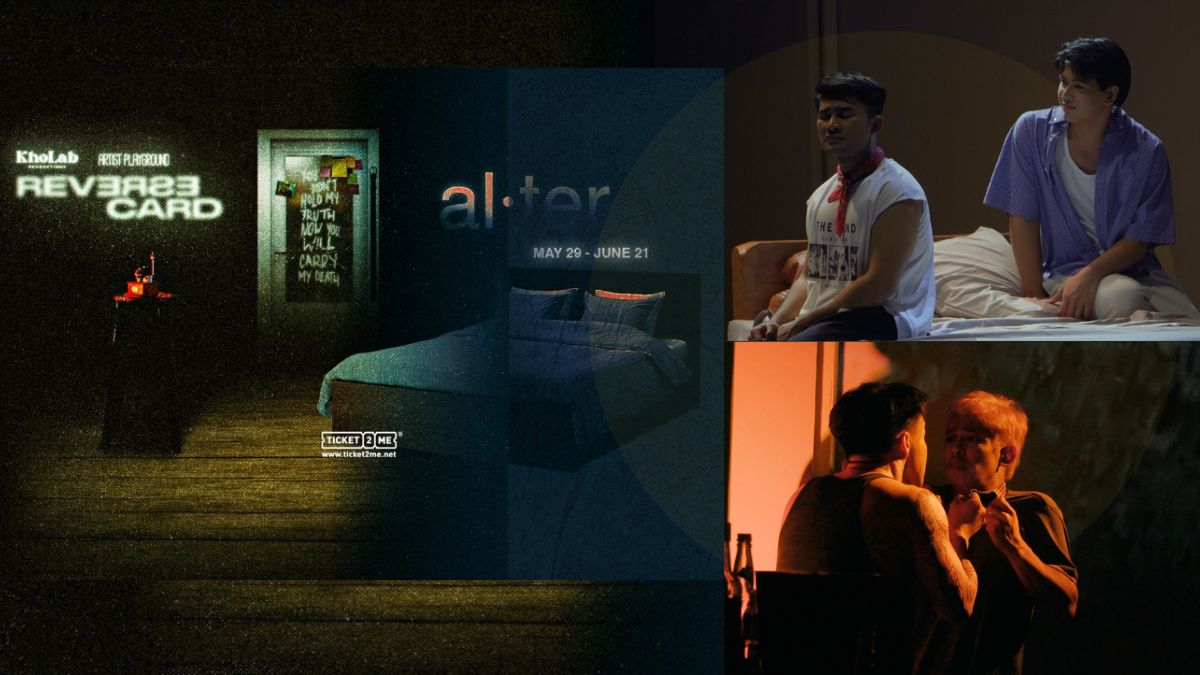
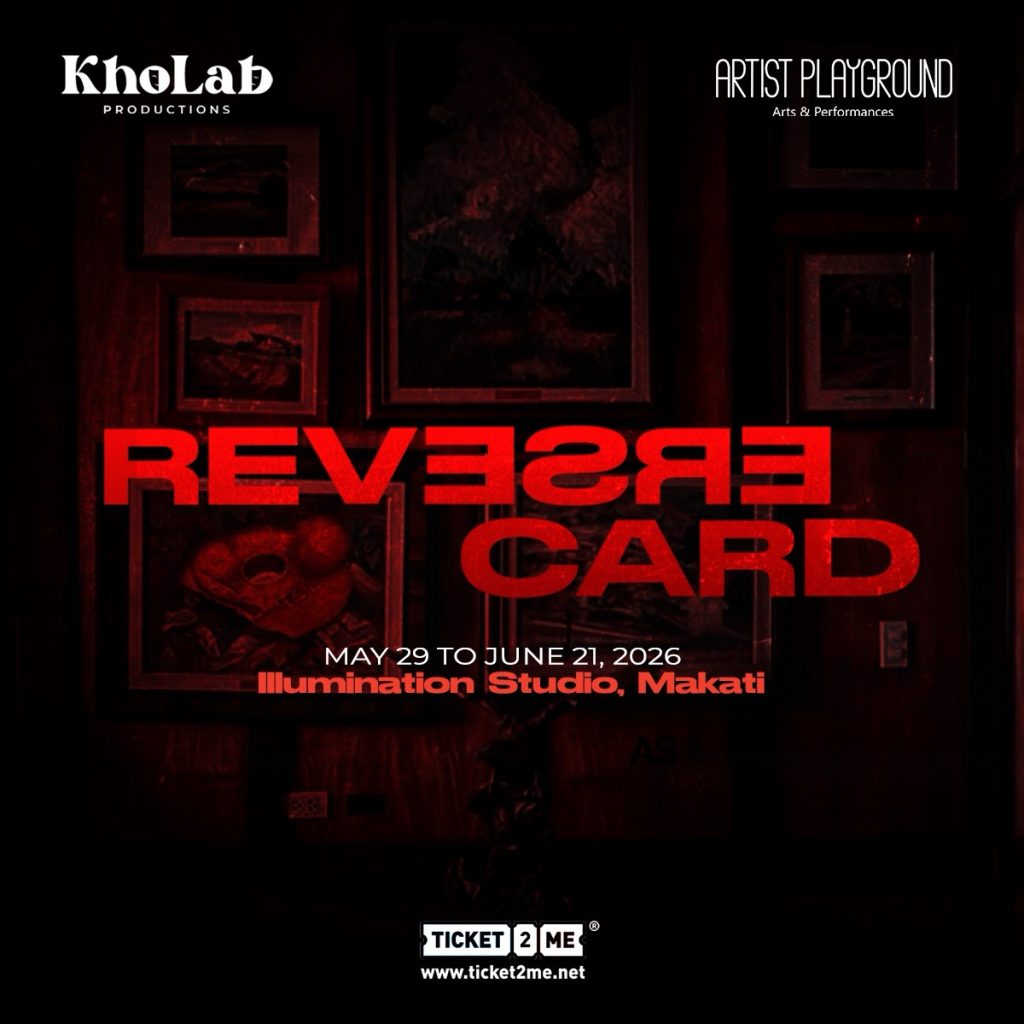
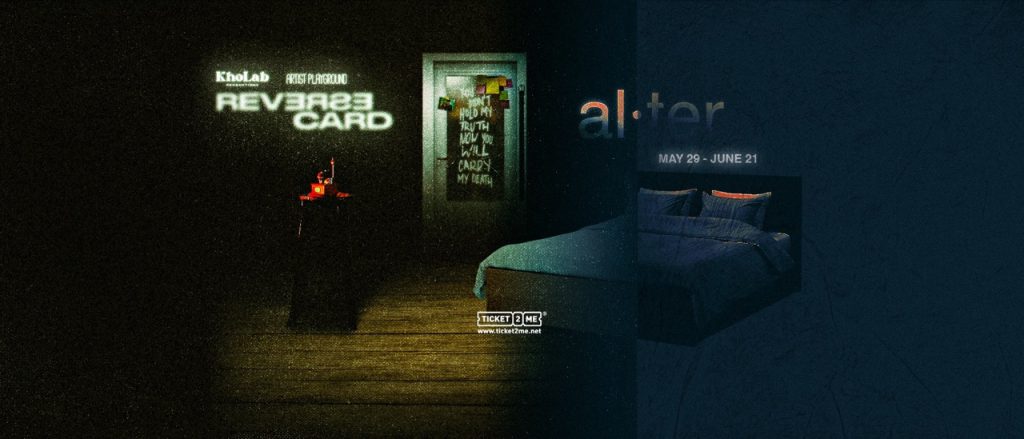
    Artist Playground, in cooperation with Kho-lab Productions, presents the twin bill Double Take: Reverse Card and Al.Ter. The two one-act plays, written by Chase Kyl Loza and Pablo Joaquin respectively, are directed by Paul Jake Paule. Performed by a plethora of performers with alternates for each role, the production is slated for a stunning 20 shows over four weeks. This run cuts directly through Pride Month, a fitting backdrop since both plays revolve around queer stories.

    ALTER MAIN POSTER
    al.ter | ARTIST PLAYGROUND

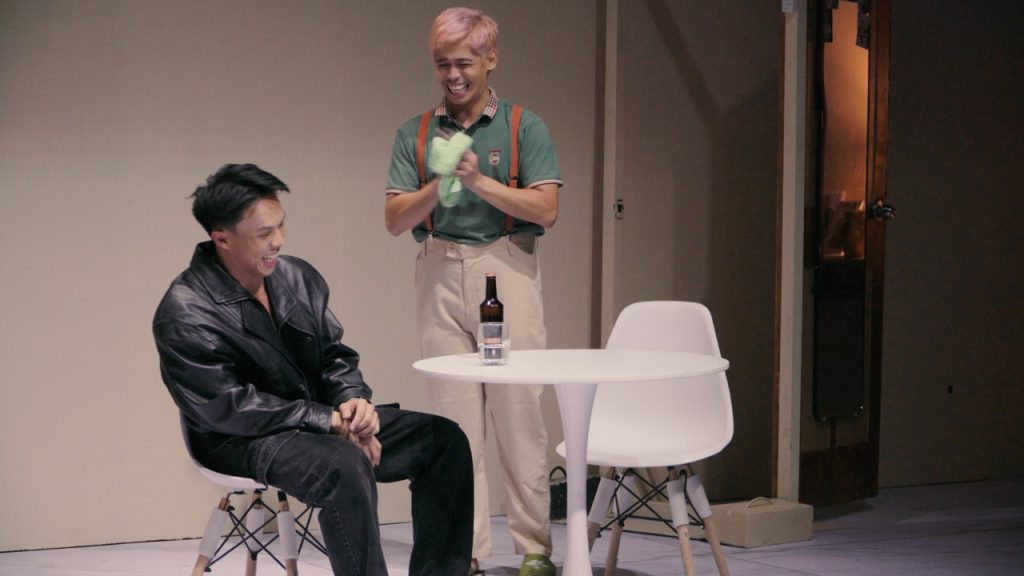
    The show opens with Al.Ter, which follows Al as he loses his live-in partner, Lester (nicknamed Ter), the morning after an argument. While wandering through the furniture section of a department store, a heartbroken Al meets Terrence, who also goes by Ter and looks exactly like Lester. Al befriends Terrence and asks him to roleplay as his deceased lover, desperate for a chance to find closure.

    Al.Ter opens provocatively with Al and two other actors acting out a threesome in the dark, recording it for publication on Al’s “alter” account. It’s daring, sexy, and shot in minimal light, giving the distinctimpression that one or two of them are actually naked. However, that provocative opening is merely a hook, from there on, Al must deal with the consequences of being caught living a double life.

    AlTer 1 Double Take
    al.ter | ARTIST PLAYGROUND

    It is through Ter’s double, played by the same actor, that Al ultimately finds some level of closure. The one-act play is poignant and bittersweet, cleverly incorporating the idea of doppelgangers and the theory of genetic variation and use it to push for a moving story about forgiveness.

    al.ter
    al.ter | ARTIST PLAYGROUND

    On opening night, Al.Ter was performed by Johnrey Rivas and Drei Arias as Al and Ter, respectively. I also had the opportunity to see an open rehearsal featuring Rivas alongside James Ramada, as Ter. Both Arias and Ramada have shown great skill in bringing Ter to life. Arias easily shifts from one version of Ter to the other, crafting distinct mannerisms and delivery of lines for each character; the fact that he switches between both roles in a split second on stage is quite a feat. Ramada’s approach relies on a much more internal switch.

    While there’s barely a visible difference between his two iterations, his Lester is softer and warmer, whereas his Terrence is all “bro” and macho energy. Ultimately, both actors do an excellent job at finding the nuances that allow the plays’s themes of forgiveness to flow, providing a grounded emotional core. Unfortunately, Rivas’ performance feels a bit too scripted and measured. It feels less natural than that of his co-actors. There’s a predictable pace and rhythm that gets in the way of the storytelling. 

    REVERSE CARD MAIN POSTER
    Reverse Card | ARTIST PLAYGROUND

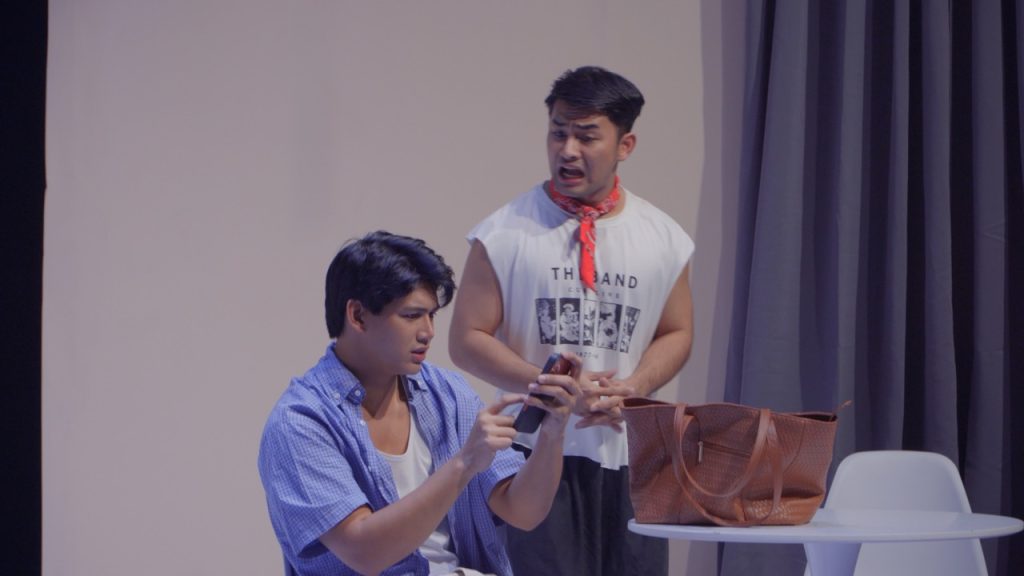
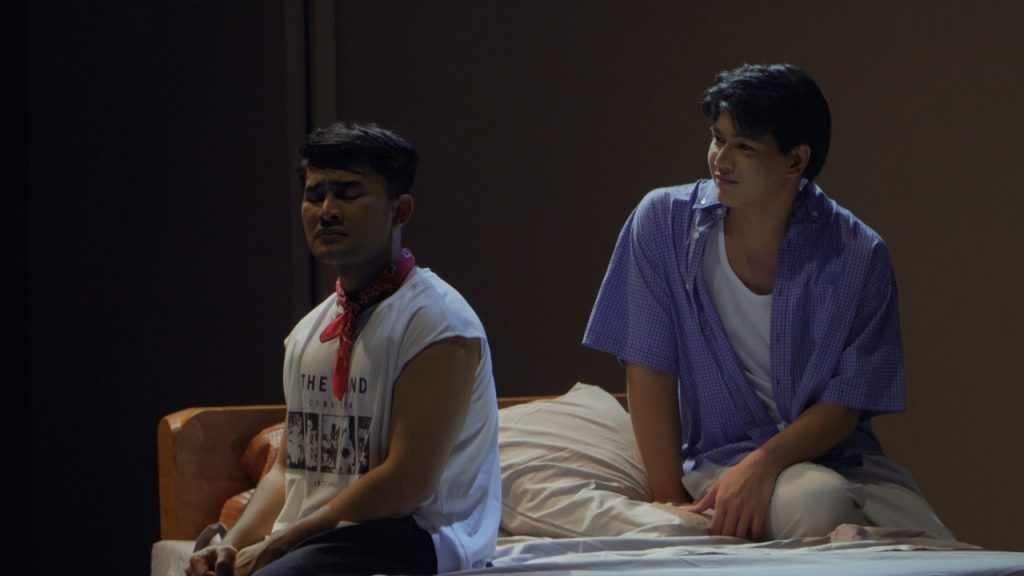
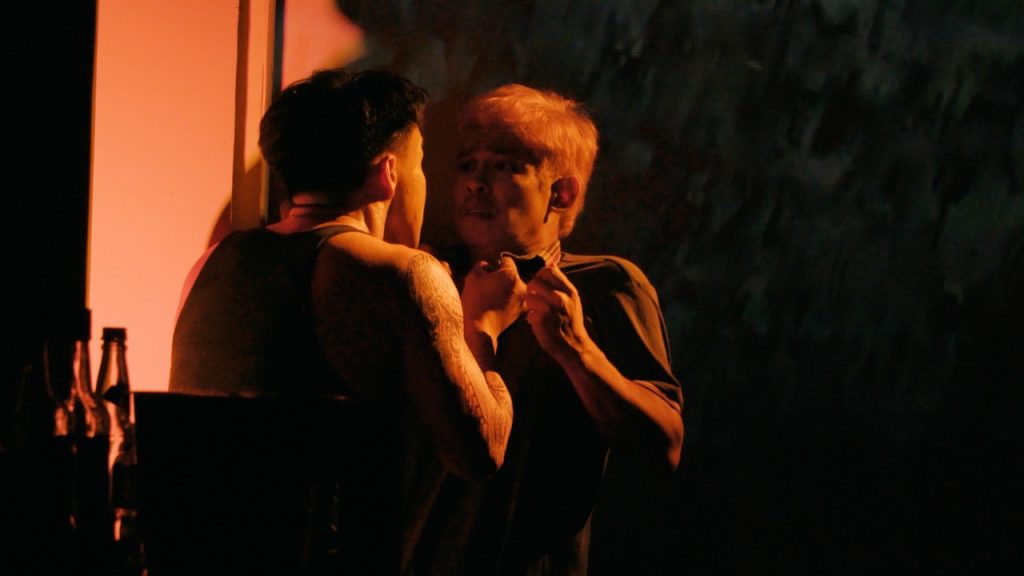
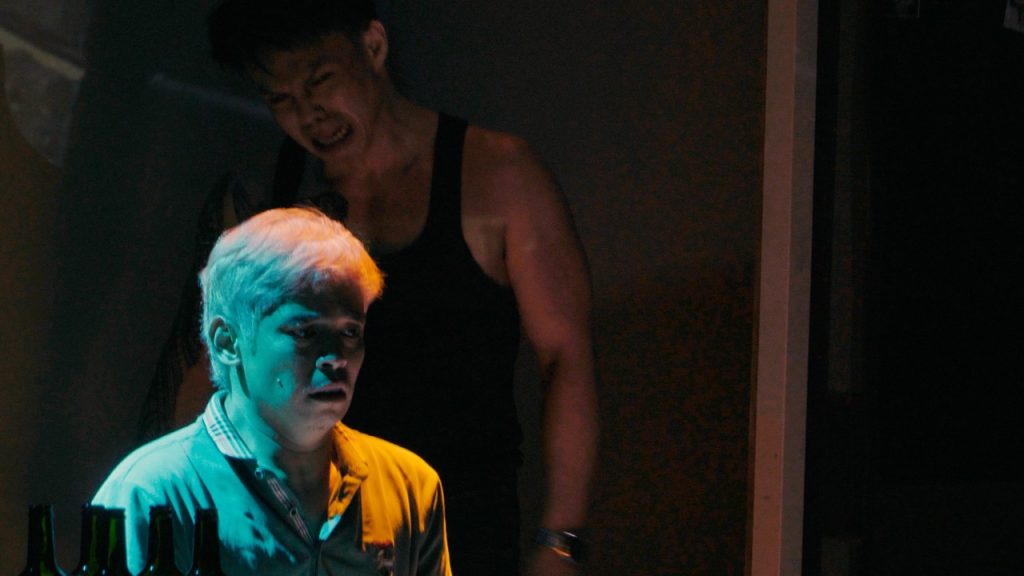
    Reverse Card, on the other hand, is a tense cat-and-mouse game between Marvin, a gay aspiring writer who was bullied in school, and John, former tormentor. As the play opens, Marvin is visibly excited because John is coming over to his house. While the encounter initially feels friendly, but as the night progresses, we realise there is far more to this meeting than a simple paid hookup. With secrets waiting to be revealed and mind games to be played, the atmosphere shifts from friendly to terrifying really quickly and it opens up a lot of emotions for both characters to unearth.

    RC 1 Double Take
    Reverse Card | ARTIST PLAYGROUND

    On opening night, Reverse Card starred Gerhard Krysstopher as Marvin and Gerald Magallanes as John. Both delivered incredibly strong performances. Krysstopher playing out a wide range of tones and styles for the more eccentric Marvin, who turns out to be playing a much darker game than John.

    RC 2 Double Take
    Reverse Card | ARTIST PLAYGROUND

    Meanwhile, Magallanes anchors the stage with a brusque, macho energy; he projects a frightening presence that makes you fear for Marvin except Marvin is not an easy character to break. I also had the opportunity to see Inah Evans and Drei Arias at the open rehearsal, and duo shared very good chemistry as well. Evans cleverly hides Marvin’s darker side behind a layer of comedy, which offers a refreshing contrast. Arias, not the other hand, brings a softer, more charming side to John that makes his John more charming and irresistible that it leads you to not question why Marvin would invite him to his home in the first place.

    Reverse Card

    My issue with Reverse Card is how it takes the collective anger and frustration of gay people who have been bullied and mistreated poorly by their families, and channels it entirely into a spirit of vengeance. It problematizes and subverts a common trope, but instead of offering empowerment, the narrative resorts to violence and harm.

    Double Take

    Dramaturgically, Double Take: Reverse Card and Al.Ter tackles the contrasting themes of retribution and forgiveness. The twin bill explores our shared humanity through the suffering inflicted upon us by others, alongside the suffering we inflict upon ourselves in relation to grief. However, by choosing to end it with Reverse Card, the production leaves us with such a sour note, considering that this is Pride Month. It’s not the best look.

    My Rating: 3.5 Stars

    stars 3 5


    Don’t miss out on this bold Pride Month twin bill. Experience the complex storytelling and powerhouse acting of Double Take live at the Illumination Studio, Makati. The production runs until June 21, 2026. Book your slots online via Ticket2Me.

  • MOVIE REVIEW: Reverent in Its Love for the Original, ‘Masters of the Universe’ Embraces Its Irreverence and Gives Nicholas Galitzine a Chance to Have Fun

    MOVIE REVIEW: Reverent in Its Love for the Original, ‘Masters of the Universe’ Embraces Its Irreverence and Gives Nicholas Galitzine a Chance to Have Fun

    The very name of the character in his godlike form, “He-Man,” was already distracting when I was a kid, and even more so as an adult. It’s why I entered the cinema for Masters of the Universe with very low expectations. Unless the filmmakers were going to lean into how silly it all really is, there was no way I could imagine this narrative taking itself seriously. Luckily for me, director Travis Knight along with screenwriters Chris Butler, Aaron Nee, Adam Nee, and David Callaham knows how to have a good time. Masters of the Universe is a 141-minutes of self-referential comedy that tries to stay true to the show’s spirit while poking fun at itself.

    In Masters of the Universe, the story begins with a narration by Prince Adam (Nicholas Galitzine), as he reflects on growing up on the world of Eternia. As a prince, he is a bit of a clown who doesn’t take his role very seriously. This upsets his father, King Randor (James Purefoy), who wants him to grow up stronger and take his role more seriously.

    Masters of the Universe
    (l-r): Roboto (Kristen Wiig), Man At Arms (Idris Elba), Adam (Nicholas Galitzine), Teela (Camila Mendes) and Cringer in MASTERS OF THE UNIVERSE.

    However, their family friction is cut short when the mystical warlord Skeletor (Jared Leto) launches a surprise attack on the kingdom. Because Randor’s bloodline comes from a long line of champions who can wield the Sword of Power, the Sorceress (Morena Baccarin), the guardian of that power sends Adam to his mother’s home planet, Earth, to keep the blade out of Skeletor’s hands. But Adam, still a child, loses the sword and finds himself standed on Earth for over 15 years.

    Masters of the Universe 4 Photo Credit Columbia Pictures
    Adam (Nicholas Galitzine), Teela (Camila Mendes) and Cringer in MASTERS OF THE UNIVERSE.

    Now an adult, Adam is isolated and unhappy in his corporate HR job while trying constantly searching for the sword that can bring him home. When he finally locates the blade, he enlists the help of Teela (Camila Mendes) to make his way back to Eternia. Upon arrival, he discovers that Skeletor has completely destroyed his homeland, forcing him to wield the power within to become the champion of his homeworld.

    Masters of the Universe Skeletor Photo Credit Columbia Pictures
    Jared Leto stars as ‘Skeletor’ in MASTERS OF THE UNIVERSE.

    What is hilarious is just how silly the creators of this movie think the whole premise is. Adam’s extended stay on Earth serves as a clever a way to acknowledge the property’s inherent campiness; that way, when the narrative finally shifts to the science fiction and fantasy, they can go completely all out and have as much fun as they want. There is very little story involved here, though Adam does experience a lovely reckoning regarding his relationship with his father, but character’s depth remains secondary to a barrage of fight scenes and there’s even a chase scene on a space ship.

    Masters of the Universe
    Nicholas Galitzine stars as He-Man in MASTERS OF THE UNIVERSE.

    Knight and his crew deliver a lot of fan service here while acknowledging at the source material’s questionable names and abilities in the first film – like Fisto (played by Johannes Haukur Johannesson), who seems very much aware of the joke as well. Ultimately, everyone, including Galitzine and Leto, are not afraid to amp up the homoeroticism in the imagery of the classic 80s cartoon.

    Masters of the Universe Idris Nick Photo Credit Columbia Pictures

    Galitzine attacks the role with such childlike wonder. He is clearly having a blast playing a kid who never really grew up but now finds himself inside the body of a muscle-bound god. There’s a levity and whimsical nature to his performance that really makes Masters of the Universe an absolute joy to watch. He is entirely in on the joke without ever overplaying it.

    Masters of the Universe TrapJaw Photo Credit Columbia Pictures
    Sam C Wilson stars as Trap Jaw in MASTERS OF THE UNIVERSE.

    The rest of the cast is having an equally fantastic time, from Idris Elba (who brings a wonderful gravity to Teela’s father, Man-at-Arms) to Mendes, and even Alison Brie as Evil-Lyn, who gets to play the evil henchwoman to the absolute hilt.

    Masters of the Universe EvilLyn Photo Credit Columbia Pictures
    Alison Brie stars as ‘Evil-Lyn’ in MASTERS OF THE UNIVERSE.

    It’s incredibly refreshing to encounter a movie that proudly decides to have fun and brings the audience along for the ride. There is immense reverence and love for the original 80s cartoon here, but the affection is so secure that the filmmakers can openly poke fun at the property’s inherent absurdities. They masterfully weave in various nostalgic references, even reaching outside of He-Man universe like playing songs and soundtracks of from other iconic fantasy franchises. Because the plot is secondary from the very get-go, we are directed to just what happens and enjoy the journey.

    Masters of the Universe heroes Photo Credit Columbia Pictures

    For a film that looks so glossy and expensive, it’s great that the filmmakers were cool enough to embrace irreverence rather than attempt to be serious. This was absolutely the right creative direction to take and make sure you stick around, because you will definitely want to watch all the post-credit scenes.

    My Rating: 4 Stars

    stars 4 0


    Masters of the Universe trades self-serious fantasy for glorious, unapologetic 80s camp. It is an absolute blast that gives Nicholas Galitzine plenty of room to shine. Don’t miss out on the fun, check showtimes here, and make sure to stay through the credits!

  • MOVIE REVIEW: In Praise of the Toxic Male—A Review of ‘Tayo sa Wakas’ and the Strong Perfomaces of Belle Mariano and Donny Pangilinan

    MOVIE REVIEW: In Praise of the Toxic Male—A Review of ‘Tayo sa Wakas’ and the Strong Perfomaces of Belle Mariano and Donny Pangilinan

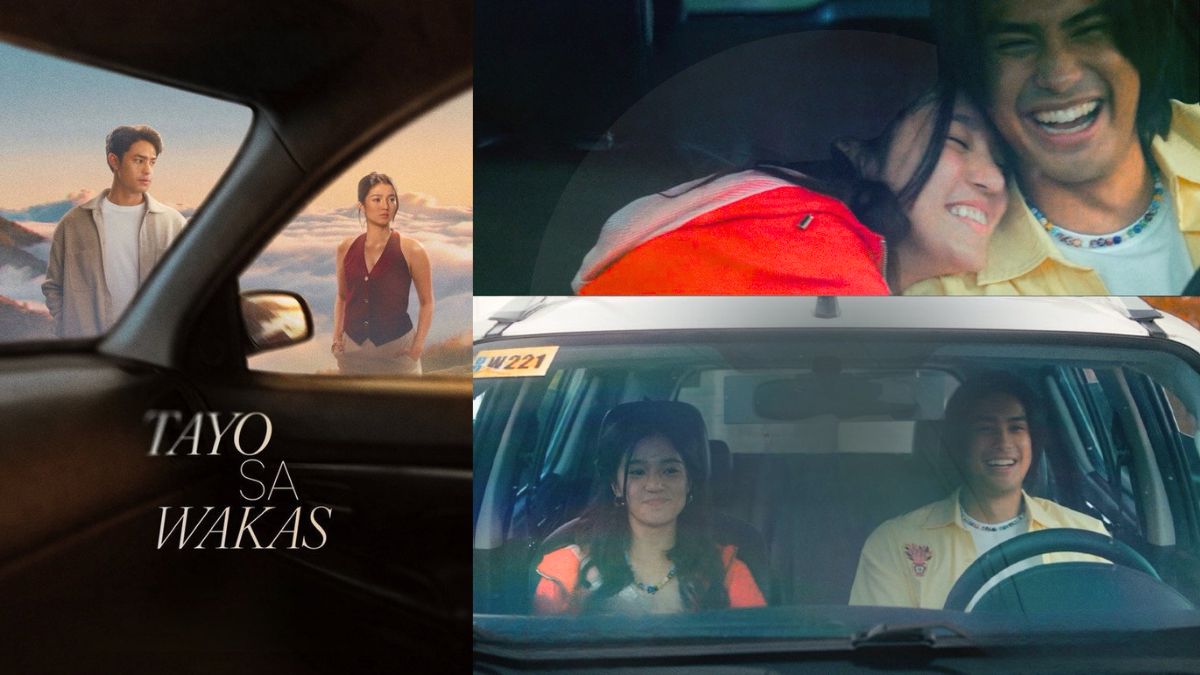
    There’s a shift that happens in the second part of Tayo sa Wakas that cuts away at the charm of the film, making me question how the film approaches its themes, how it romanticizes a toxic character, and how it highlights his redemption arc. It’s a strong enough story at the beginning; Cathy Garcia-Sampana’s directing is dynamic and strong, while lead stars Donny Pangilinan and Belle Mariano show off their impressive on-screen chemistry. Mariano is capable of such immense range and nuanced acting, while Pangilinan shines in the heavier, more dramatic requirements of his role. 

    But Tayo sa Wakas is centered on Pangilinan’s character, Cisco. It’s really his film, with Mariano’s Cheska serving as the romantic lead, though her character’s point of view is withheld from the film – and there is a story element as to why. Cisco is the typical romantic lead presented as the forlorn lover who cannot move on from a breakup. Despite this framing, Mariano is just so good that her character’s presence is felt all throughout the film, even when she is off-screen, her presence lingers. It’s an amazing feat, Mariano really is a powerhouse.

    The film, written by Vanessa R. Valdez, opens with a dizzying flashback of a break up between Cisco and Cheska. It’s hurtful. Cheska questions whether Cisco really deserves her love, and he walks away. We cut to the present, where Cisco has shaved his head. His family is scared for him as he insists on borrowing a car to visit someone. Not getting any help from his family, he goes to a friend (played by Joross Gamboa) who lends him a car and gives him advice. As Cisco is about to leave, Cheska appears and insists on going on a breakup trip. On the road, the two rehash their moments, the ones Cisco wants to hold on to and the ones Cheska wants to remind him of, when everything went wrong.

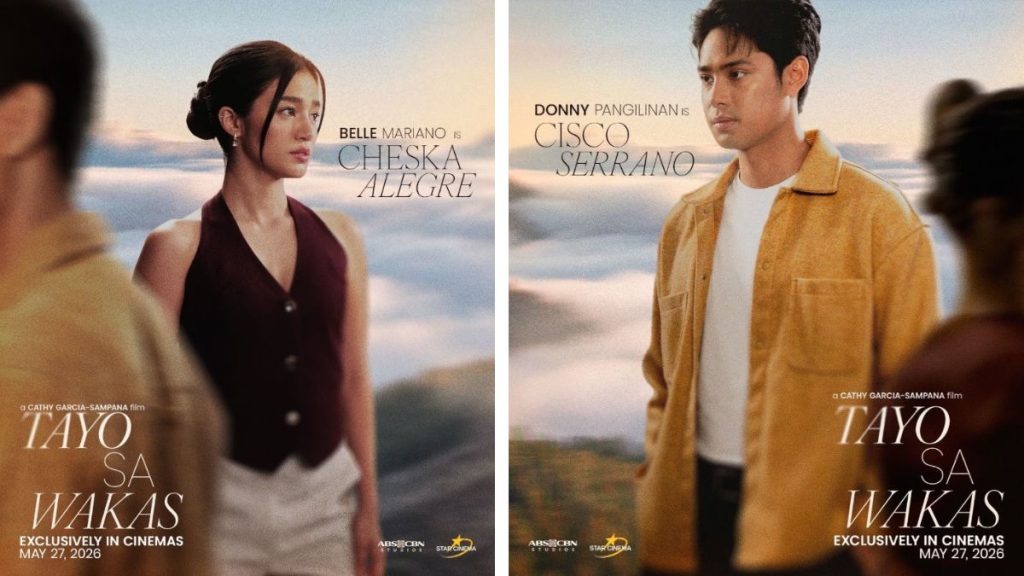
    Belle Mariano as Cheska in Tayo Sa Wakas
    Belle Mariano as Cheska in Tayo sa Wakas | ABS-CBN Film Productions Inc. (Star Cinema)

    Through these flashbacks, we see a highly competitive Cisco who falls in love with the new intern, Cheska, who recognizes his ideas and talent even when others aren’t sure about them. We see the ways in which Cisco falls for her and makes his moves, and she falls too. It’s a classic romance story as the couple move in together. But in such close proximity, with work as a shared space, Cheska begins to rise and the highly competitive Cisco finds himself uncomfortable with his lover and protege’s growing success.

    Donny Pangilinan as Cisco in Tayo Sa Wakas
    Donny Pangilinan as Cisco in Tayo sa Wakas | ABS-CBN Film Productions Inc. (Star Cinema)

    The first half of the movie has all the trappings of a romantic film, maybe even that of a rom-com (though every time it cuts back to the present, we know this won’t be a full-on comedy with a happy ending). Garcia-Sampana’s direction keeps the narrative busy and energetic. She even brings the two leads into the realm of the sensual, showing a lot of physical intimacy and skin. It looks grown-up, but it’s deceptive. It’s the lure of youth and young love, but the hard demands of the adult world will come calling, and they will find themselves unready.

    Tayo sa Wakas
    Tayo sa Wakas | ABS-CBN Film Productions Inc. (Star Cinema)

    But the truth is, Cheska is ready with the hard answers. Cisco, with all his privilege and bravado, is not. This is exactly where I felt more and more uncomfortable as the film progressed: Cisco is toxic. He fails at every turn when their relationship gets serious and when work gets in the way of their relationship. Throughout the film, we see only Cisco’s point of view. Garcia-Sampana’s direction tries to soften and humanize him, making the storytelling feel increadibly lopsided. Cheska’s perspective is just as important here, but the answer to that happens later in the film, leaving us entirely with Cisco’s road to redemption.

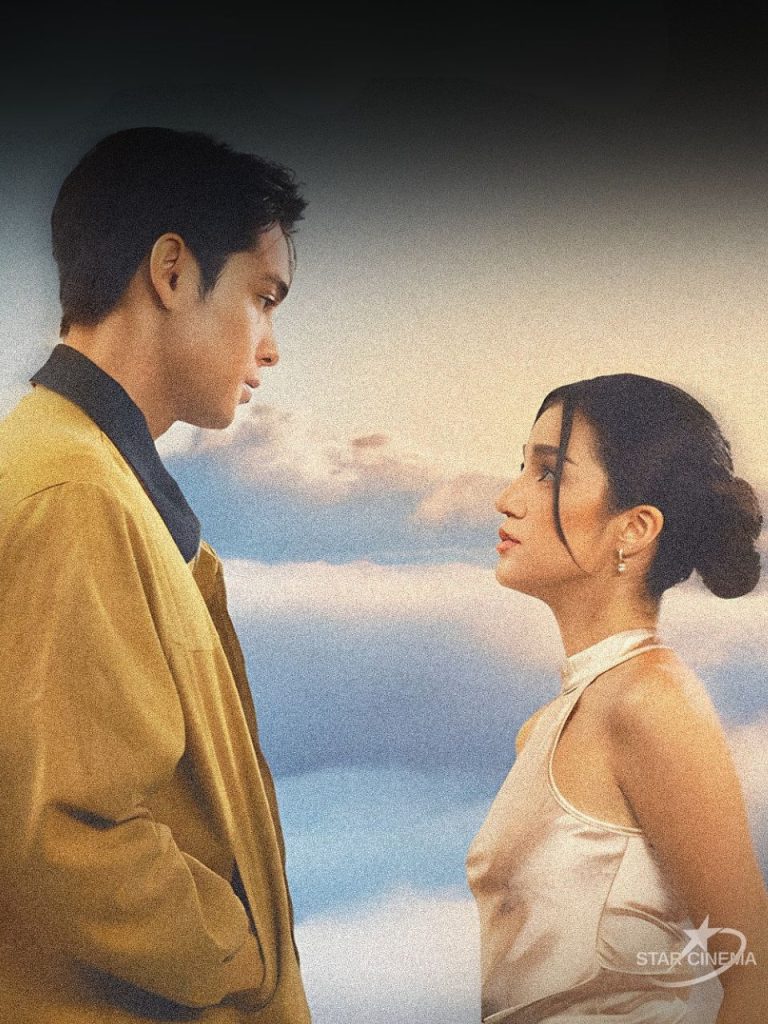
    Tayo sa Wakas DonBelle
    Images from: ABS-CBN Film Productions Inc. (Star Cinema) FB Page

    It’s not a pleasant movie to watch, though it starts out that way at the beginning. Mariano is magnificent all throughout, while Pangilinan seems more comfortable with the heavier, dramatic aspects of the narrative, feeling a bit out of place during the rom-com atmosphere of the film’s first half. There is a serious dramatic actor in Pangilinan, and I hope they give him more roles that play to his strengths. Yes, he’s attractive and his chemistry with Mariano is electric, but he doesn’t seem as natural in the kilig scenes as he is in the more emotionally demanding ones. 

    Sitting through this film became difficult after a while. So many movies have put toxic men and their high expectations of women in relationship into the spotlight, but they always seem to get their hard lessons served right up to them. I can recall Never Not Love You, Un/Happy For You, and just the recent The Loved One. In those films, the woman’s perspective served as the balance that kept the narrative from romanticize the man’s toxic behaviour. As good as Pangilinan is here, not even Marianos’ fantastic performance can fully balance this narrative’s gaps.

    My Rating: 2.5 Stars

    stars 2 5


    Tayo sa Wakas is a beautifully acted drama where the undeniable, explosive chemistry of Donny Pangilinan and Belle Mariano makes the journey worth taking. Check your local showtimes and watch it on the big screen this weekend!