Author: Wanggo Gallaga

  • MOVIE REVIEW: The Story He Wanted to Tell: Na Hong-jin’s South Korean Sci-Fi Action Thriller Hope

    MOVIE REVIEW: The Story He Wanted to Tell: Na Hong-jin’s South Korean Sci-Fi Action Thriller Hope

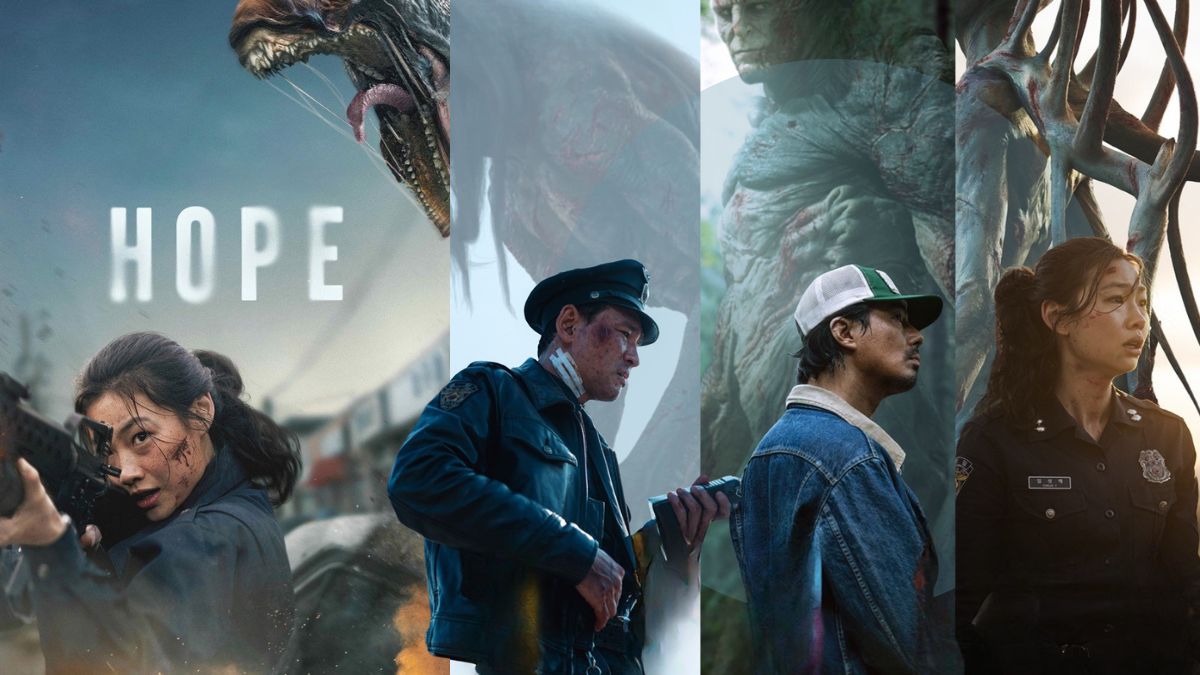
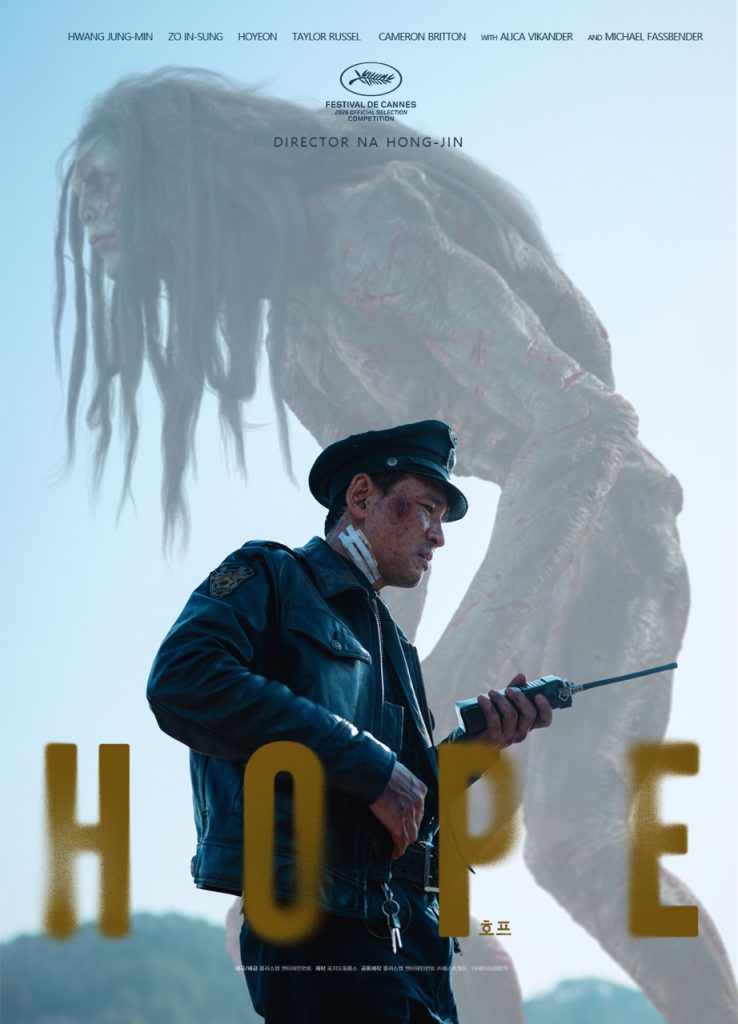
    Action-packed and relentless, Na Hong-jin’s Hope is a tireless sci-fi action thriller whose story unfolds over a single day during an alien attack. It’s a long film, running at approximately 156 minutes, but you don’t feel it. Every scene is loaded with information, steadily building the tension before erupting into a hair-raising battle across a tiny, quaint seaside town in northern South Korea and simultaneously the surrounding woods. Surprisingly, there’s not a lot of stories here, yet the film keeps you rooted by giving us characters to root for and energetic action sequences that send the adrenaline pumping. 

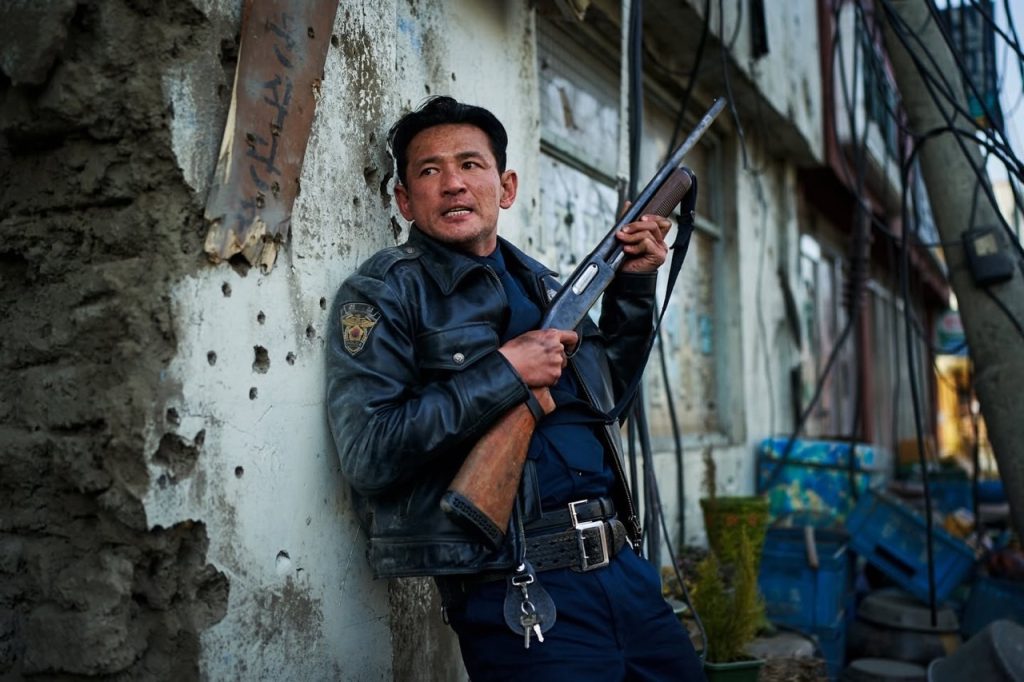
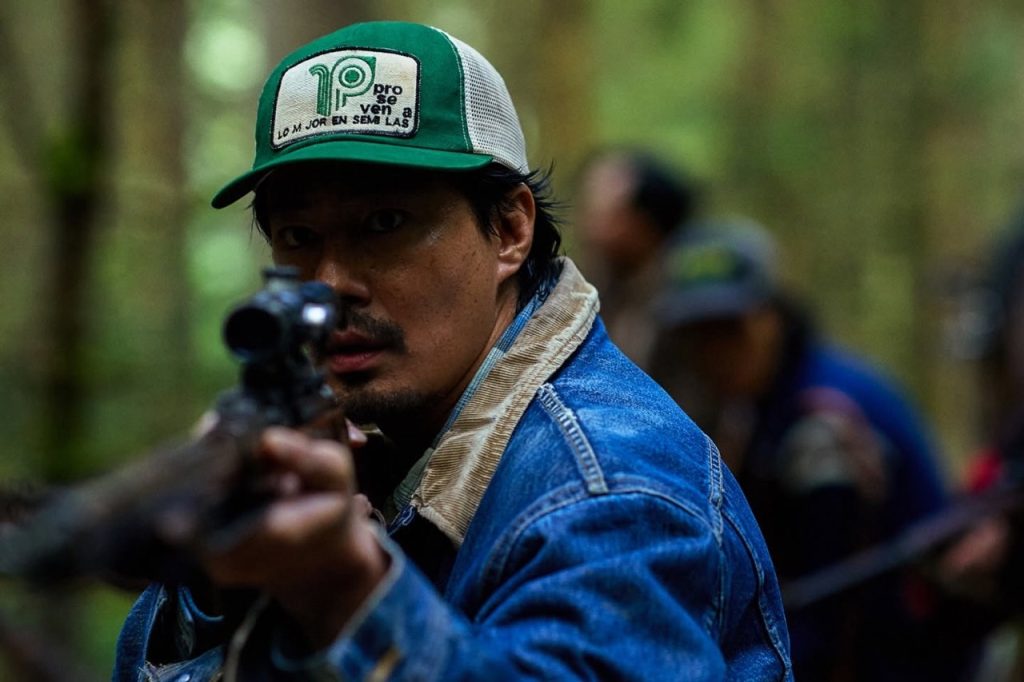
    Hope follows Bum-seok (Hwang Jung-min), the police chief of a quiet coastal town called Hope Harbor. He begins by investigating what initially appears to be a violent animal attack on a large cow, except the deep wounds are larger than any local animal in the area and the cow’s bloody carcass is left uneaten. While hunters, led by Sung-ki (Zo In-sung), rally into the surrounding woods to investigate, Bum-seok returns to town only to discover that whatever creature had attacked the cow has already reached Hope Harbor. 

    For a good 50 minutes, Na withheld the monster entirely. Instead, we are shown the massive carnage the creature has wrought upon the town. Whatever this thing is, it operates with destructive, massive, and terrifying efficiency. Through it, we come to understand Bum-seok and Sung-ki as characters as the tension over the creature builds. We get to know the town too and see how quickly the whole community spring into action.
    STILL 3 Hope
    Hope | Photo courtesy of Pioneer Films

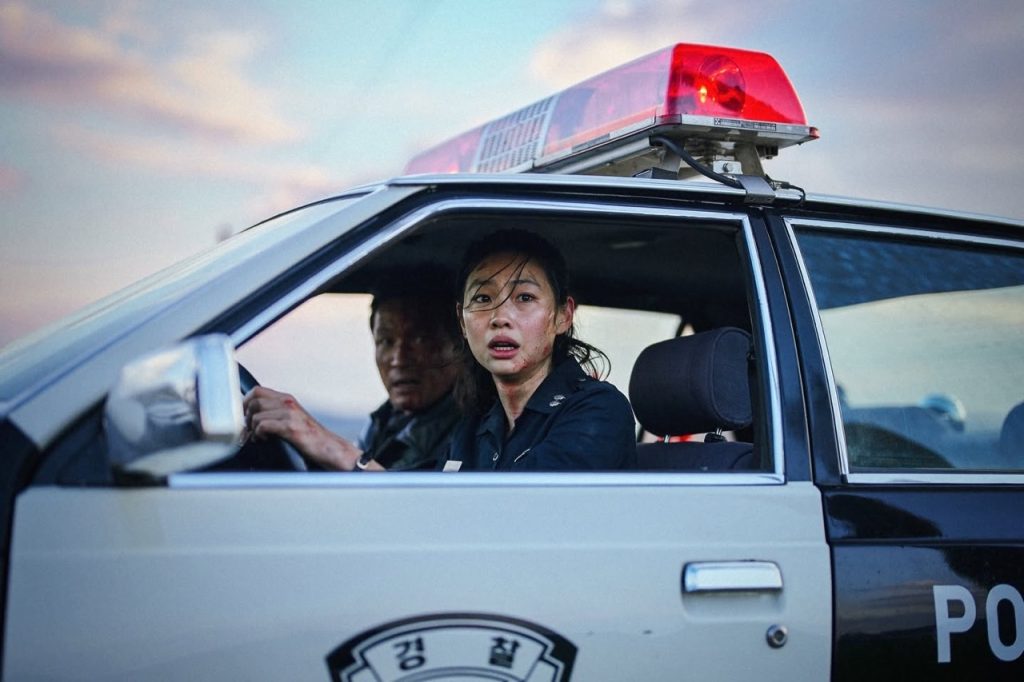
    The setup reminds us that South Korea has one of the most well-trained populace where nearly every adult male has undergone military service. Everyone knows how to handle a firearm and very surprisingly, in this little town of Hope Harbor reveals an access to military-grade weaponry that appears out of nowhere. When Bum-seok asks the townsfolk on where they got the arsenal, their response is “Don’t ask.” Later, when his rookie officer, Sung-ae (Hoyeon), rescues him, she answers the exact same line.

    Clearly, there is more to this town than meets the eye. By the time Na finally reveals the monster, which we later learn are aliens, we already know these characters well, we know the ins-and-outs of the town and the surrounding woods, and we can see how powerful the aliens are. These extraterrestrials possesses immense power and it’s going to take far more than a handful of firearms to bring one down, let alone four.
    STILL 5 Hope
    Hope | Photo courtesy of Pioneer Films

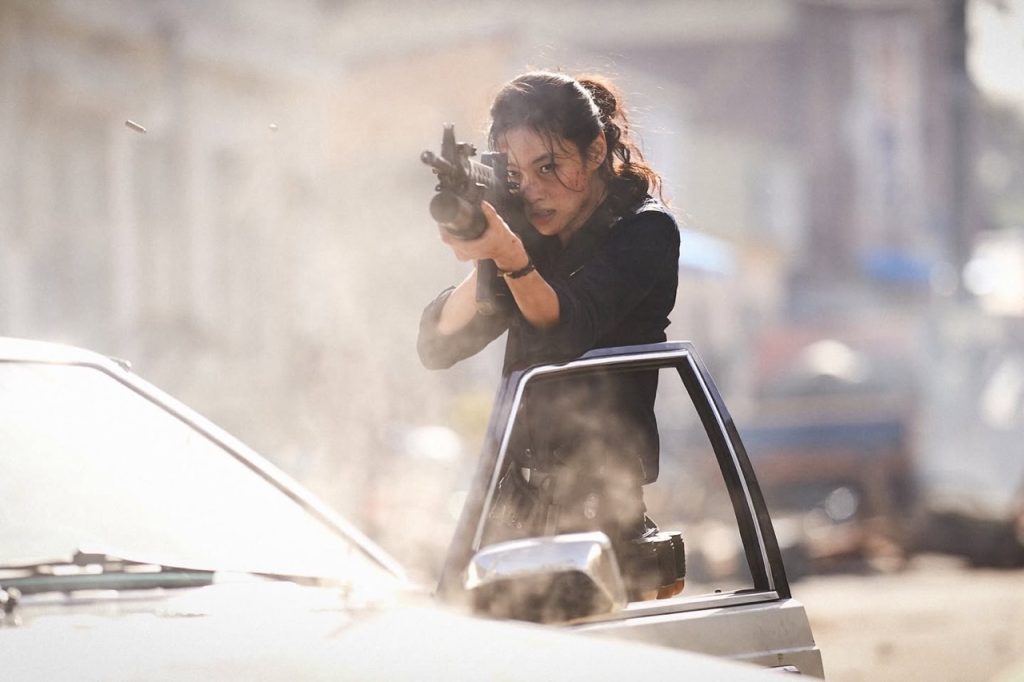
    Once the action starts, it never lets up. Director Na, who is also the screenwriter, along with cinematographer Hong Kyung-pyo do a marvelous job of keeping the energy running. It’s fast-paced, with dynamic coverage. Because these creatures are fast and strong and so there’s a lot of running, high-speed car chases, and endless gunfire, so its soundscape is loud and heart-racing. It really gets you into the moment and it does the trick in immersing you in the immediate danger.
    STILL 2 Hope
    Hope | Photo courtesy of Pioneer Films

    It slows down again in the middle to explain things just a little bit before ramping up the danger and bringing us back into the action again so that we can see Michael Fassbender, Alicia Vikander, Taylor Russell, and Cameron Britton as the faces of these aliens. Interestingly enough, every alien is rendered through motion-captured performance CGI, and Na has cast western actors in that role. Does this have an anti-colonial message behind it?
    STILL 1 Hope
    Hope | Photo courtesy of Pioneer Films

    I’m not sure, really. As noted earlier, there’s not much of a story. There’s no character that truly grows out of an internal conflict. Hope operates as a pure, adrenaline-inducing ride, and that’s fine. I got what I needed from this film, and it doesn’t have to have some profound thematic message, though it does reserve something interesting, unexpected turn at the very end of the film. 
    Hope
    Hope | Photo courtesy of Pioneer Films

    With a big, epic imagery that amps up the destruction to its peak, the aliens finally get to speak in the film’s climax. And from their brief dialogue, we are giving hints of a story that the audience isn’t privy to because we’ve been following the humans in the film. These aliens have their own backstory. There’s a larger story here at play; but it’s none of our concern. Na Hong-jin, as a filmmaker, is only interested in the South Koreans in the story and I love that about the film.

    My Rating: 4 Stars

    stars 4 0


    Experience the heart-pounding action and high-octane thrill of Hope on the big screen. Form your own verdict on Na Hong-jin’s sci-fi spectacle: now showing in cinemas nationwide. Get showtimes here.

  • MOVIE REVIEW: Exquisitely Shot, ‘Filipiñana’ Trades Local Aesthetics for European Arthouse Style

    MOVIE REVIEW: Exquisitely Shot, ‘Filipiñana’ Trades Local Aesthetics for European Arthouse Style

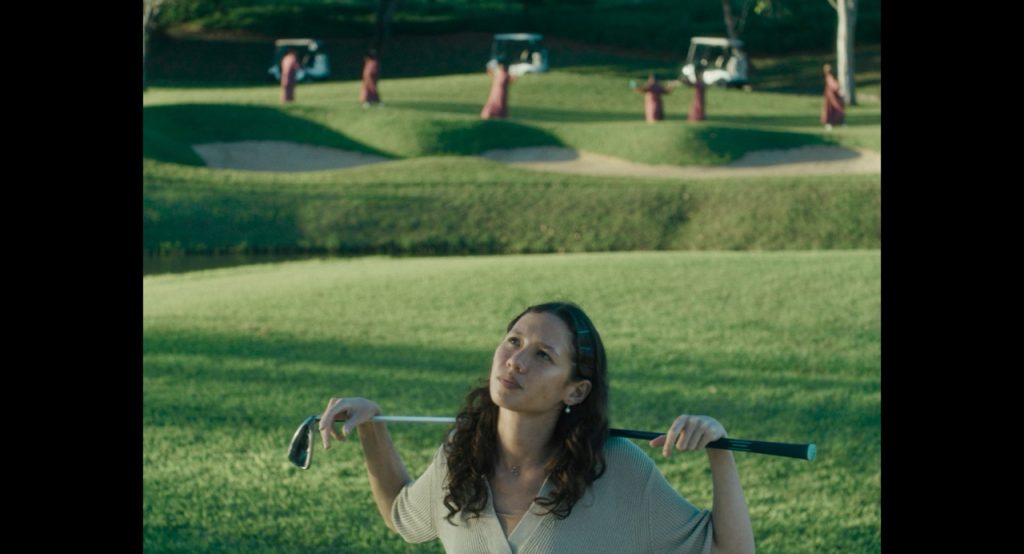
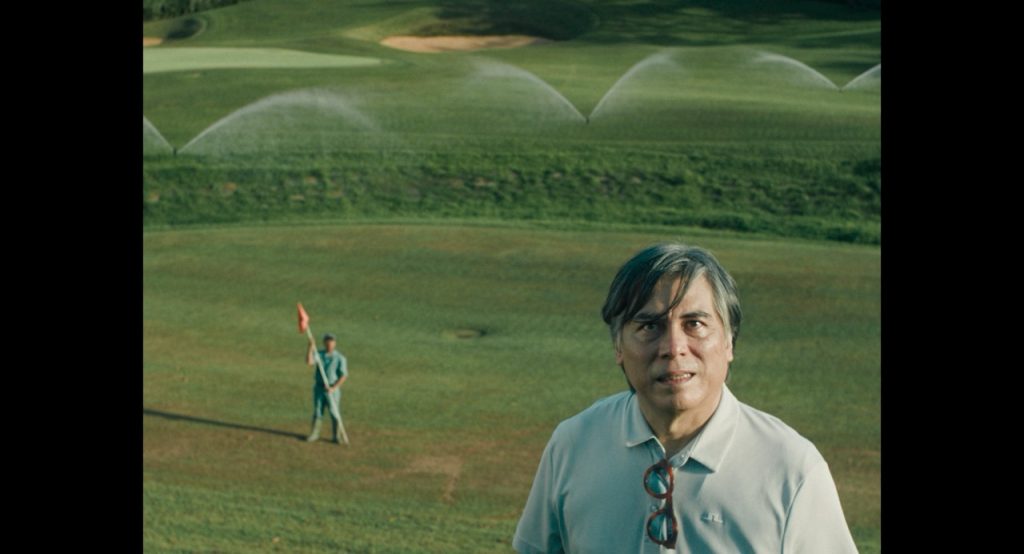
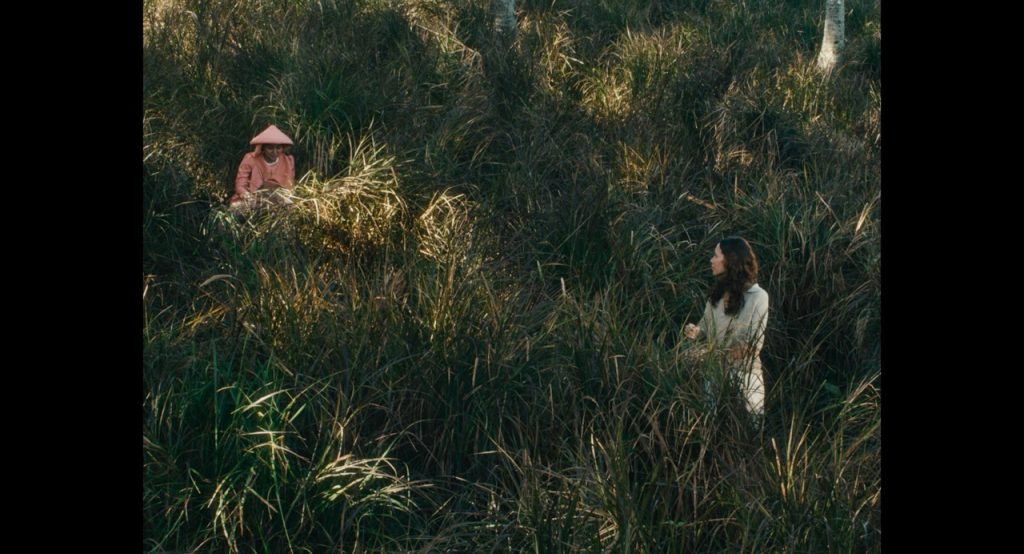
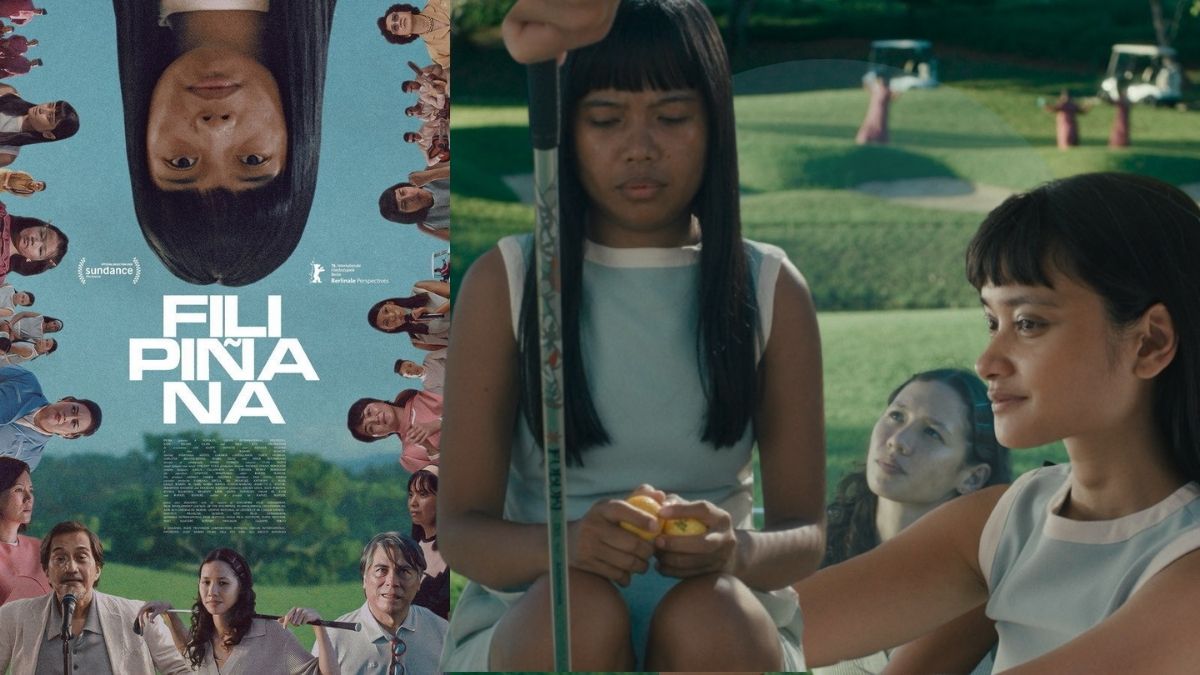
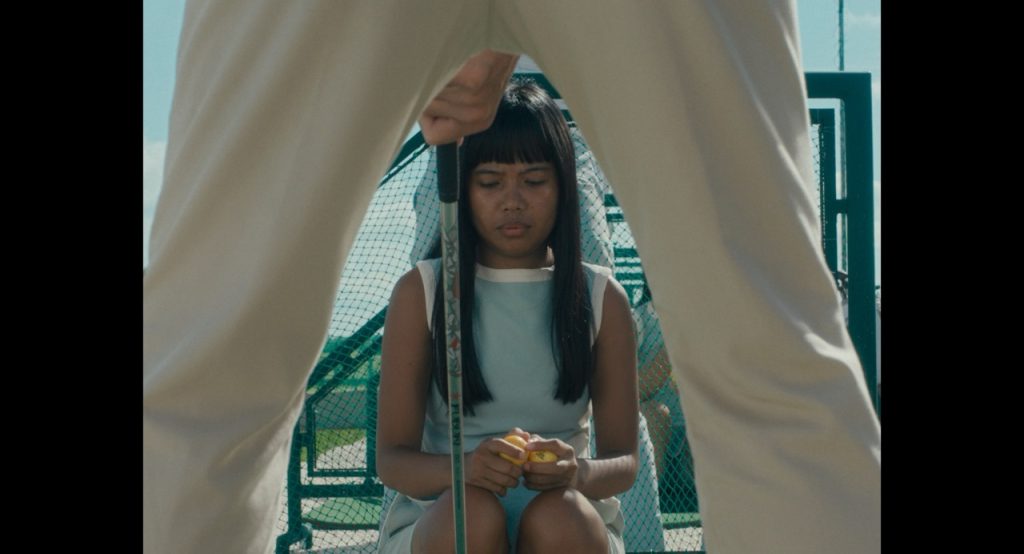
    Director and screenwriter Rafael Manuel definitely knows how to compose a shot. His debut feature film, Filipiñana is gorgeous to look at. It creates striking images that highlight the social inequality in our country through the symbolic film’s setting of an elite, members-only country club and golf course while simultaneously displaying a keen sense of the absurd. Shot alongside cinematographer Xenia Patricia, the film takes us on a journey into the ins-and-outs of the country club: which is no doubt an unmistakable metaphor for our nation’s struggle with class division and exploitation.

    But other than its visual flair, Filipiñana seems to lack urgency as its narrative meanders through its bare plot, building up toward a climax that leaves the audience with no real catharsis or release.

    14. Filipinana Wide Still 15 Photo courtesy of Epicmedia Productions Inc. Credit Xenia Patricia
    Photo courtesy of Epicmedia Productions Inc. | Credit: Xenia Patricia

    Its 100-minute running time is surprising because experiencing this movie feels as long as a Lav Diaz film with its static camera and penchant for silences. Yet when Diaz does this slow-burn approach, he infuses these long drawn-out shots with so much palpable pathos, anger, and rage. Whereas Manuel feels content with giving us just snapshots but keeping us at a distance.

    2. Filipinana Still 19 Photo courtesy of Epicmedia Productions Inc. Credit Xenia Patricia
    Photo courtesy of Epicmedia Productions Inc. | Credit: Xenia Patricia

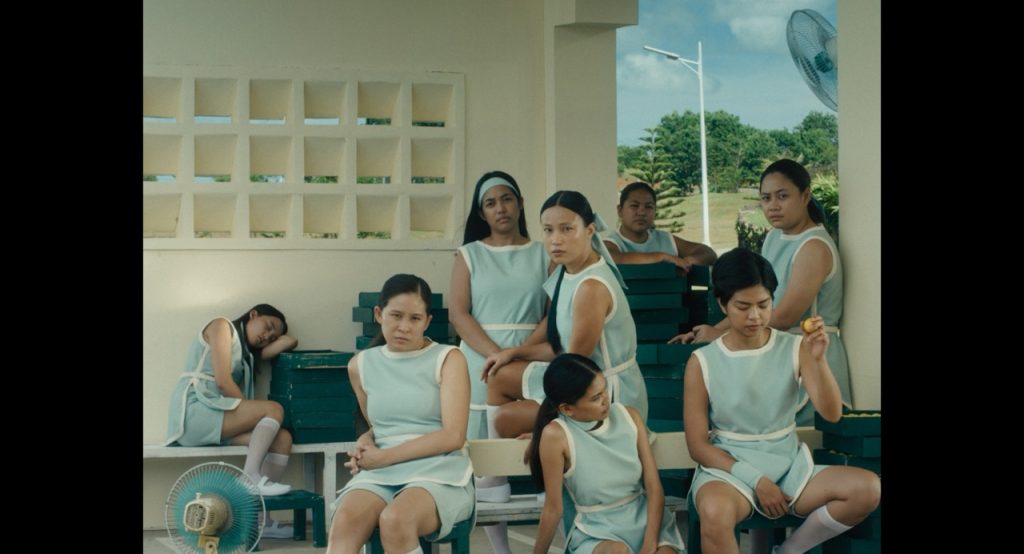
    Filipiñana follows Isabel (Jorrybell Agoto), a newly hired caddie at an exclusive country club and golf course. As she learns the ropes of the job – hunting down lost golf balls, teeing them up for the club’s wealthy clientele, and performing other odd jobs – the film lays bare the stark disparity between her and the other tee girls and the elite patrons they serve.

    9. Filipinana Main Actor Still Carms Cee Clara 1 Photo courtesy of Epicmedia Productions Inc. Credit Xenia Patricia
    Photo courtesy of Epicmedia Productions Inc. | Credit: Xenia Patricia

    For added contrast, the film also takes a moment to follow Clara (Carmen Castellanos), as she accompanies her uncle, Renato (Carlos Siguion-Reyna) around the course as he tries to convince her to come home from America and work in the country club with him. Yet while Isabel slowly wakes up to the harsh reality of the world, Clara shows no appetite for it, her eyes already opened from the privilege of having left the country and seeing it with new eyes.

    10. Filipinana Main Actor Still Carlitos Reyna Renato 3 Photo courtesy of Epicmedia Productions Inc. Credit Xenia Patricia
    Photo courtesy of Epicmedia Productions Inc. | Credit: Xenia Patricia

    Manuel takes his time to build his world, to establish the workings of his metaphor. It’s scene after scene that creates a rich tapestry of images that shows the exploitation at work and the stark realities of class divide in full display. The film unfolds almost like a slice of life, except each successive scene exposes fresh cracks in the shiny, manicured veneer of this world breaking.

    11. Filipinana Still 47 Photo courtesy of Epicmedia Productions Inc. Credit Xenia Patricia
    Photo courtesy of Epicmedia Productions Inc. | Credit: Xenia Patricia

    By all intents and purposes, I should love this movie, for what it says about our social structures and for its exercise of restraint. Yet the film embraces its arthouse aesthetic that the very world that I’m living in, a reality I am deeply cognizant of, feels strange and distant to me. Manuel takes his cues from that global indie playbook where the camera remains static and when people speak, they deliver their dialogue with deliberate slowness, as if every single word is precious, which makes it feel scripted, unnatural.

    5. Filipinana Still 43 Photo courtesy of Epicmedia Productions Inc. Credit Xenia Patricia
    Photo courtesy of Epicmedia Productions Inc. | Credit: Xenia Patricia

    Take the scenes where the tee girls take their breaks, lying in clumps to escape the oppressive heat. Not a singled person gossips, complains, or speaks about the world. Manuel’s world leans so heavily into formalism that while I can see the visual markers of my country and its current socio-political state, I don’t see its soul playing out in the movie.

    6. Filipinana Still 45 Photo courtesy of Epicmedia Productions Inc. Credit Xenia Patricia
    Photo courtesy of Epicmedia Productions Inc. | Credit: Xenia Patricia

    It’s very well-executed but it feels like a foreign approach telling a local story. That raw energy, that visceral struggle that I relate to with the Filipino experience has been smoothened over by a European arthouse tempo that feels out of touch with its subject matter. Seeing the reviews of Wester critics tells me that it worked, they love it. High marks and praise from critics on both sides of the Atlantic. Yet with a story so in touch with the issues of the country, I was hoping to see that Filipino fire inside these characters, in the unfolding of the narrative. 

    My Rating: 2.5 Stars

    stars 2 5


    Experience the striking visuals and quiet tension of Filipiñana on the big screen. A visually stunning debut that sparks necessary debate, form your own verdict on Filipiñana: now showing in cinemas nationwide. Get showtimes here.
  • THEATER REVIEW: Porvenir Collective’s ‘El Fuego del Alma’ Delivers Strong Performances and Dynamic Direction

    THEATER REVIEW: Porvenir Collective’s ‘El Fuego del Alma’ Delivers Strong Performances and Dynamic Direction

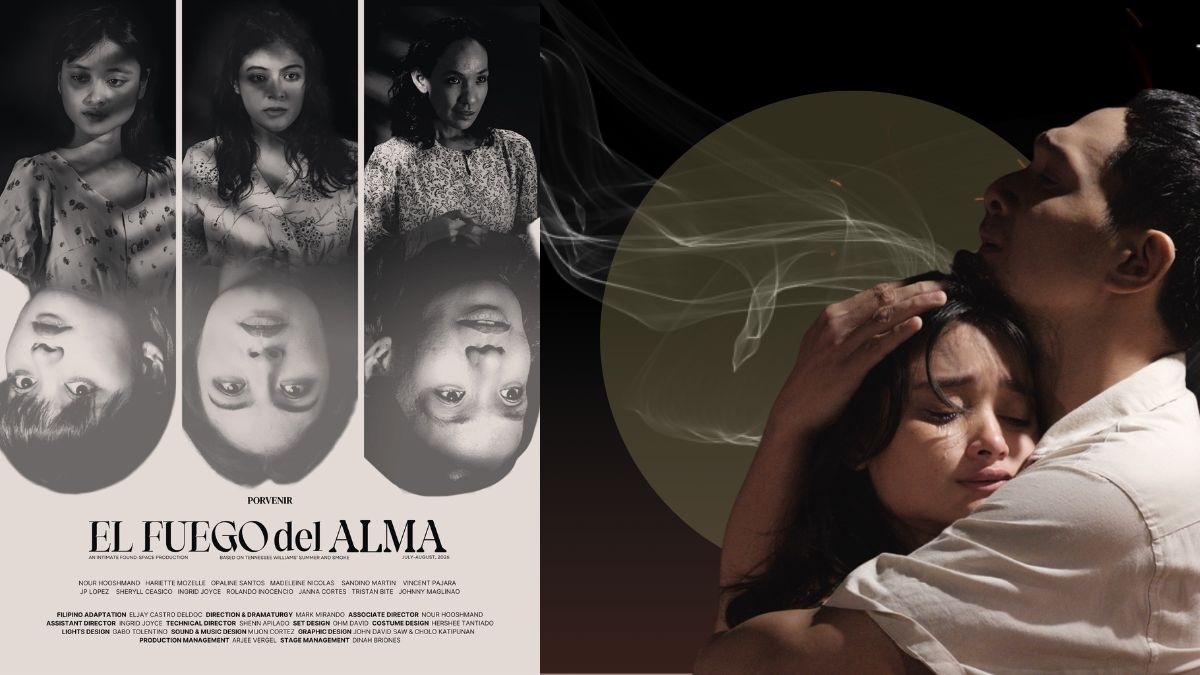
    I first caught the staged reading of Porvenir Collective’s adaptation of Tennessee Williams’ Summer and Smoke last May, which was already a provocative use of space and boasted an inventive directorial vision by Mark Mirando alongside a brilliant adaptation by Eljay Castro Deldoc. Without removing any of Williams’ pathos or intensity, Deldoc manages to take the American play and situate it right at the heart of a rural Filipino town. Mirando makes full use of the venue’s design at Sine Pop in Cubao, having the actors move in and out of the stage area and utilizing the venue’s glass windows and bamboo garden so we can see the characters play out the conflict from a distance. Even the stairs leading up to the second floor are used, and the stage area is so close to the audience that you could hear their longing in every inflection, even through their mics.

    El Fuego del Alma LB

    The staged reading was already fantastic, led by Sandino Martin and Nour Hooshmand, but the full production sans scripts and a bit more finesse brings the show into an even more impactful theatrical experience.

    Nour Hooshmand as Alma El Fuego del Alma
    El Fuego del Alma | Photo by Trish Shishikura Courtesy of Porvenir Collective

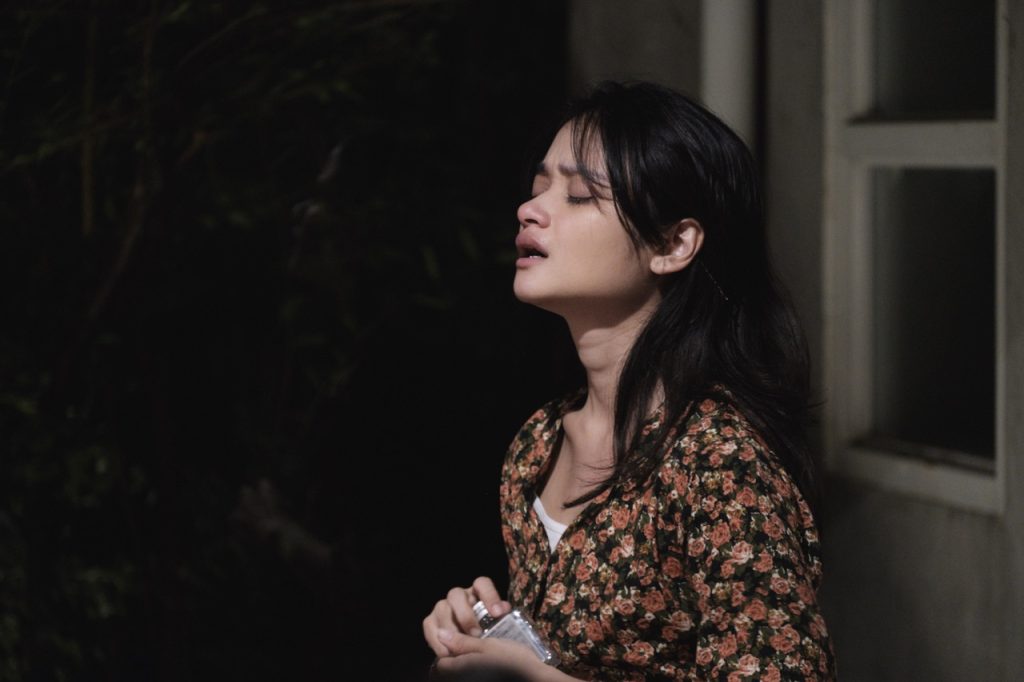
    El Fuego del Alma follows Alma (Nour Hooshmand, alternating with Opeline Santos and Hariette Mozelle), an unmarried, conservative woman struggling with a chaotic home life.

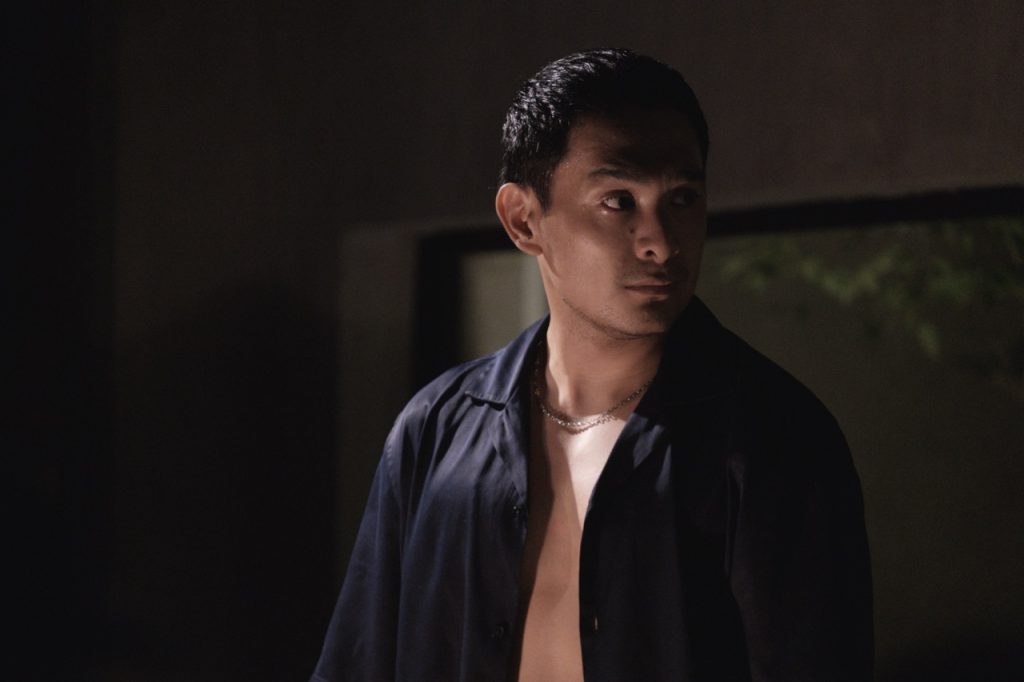
    Sandino Martin as Juanito El Fuego del Alma
    El Fuego del Alma | Photo by Trish Shishikura Courtesy of Porvenir Collective

    Her childhood friend, Juanito (Sandino Martin, alternating with Vincent Pajara), is the son of the town doctor. Though close as children, a romance blossoms between them as they grow up. Yet Juanito’s hedonistic indulgences run directly counter to Alma’s own spiritual convictions. This divide drives them apart and what follows is a story of repressed desire and a dissection of the spiritual bond between them.

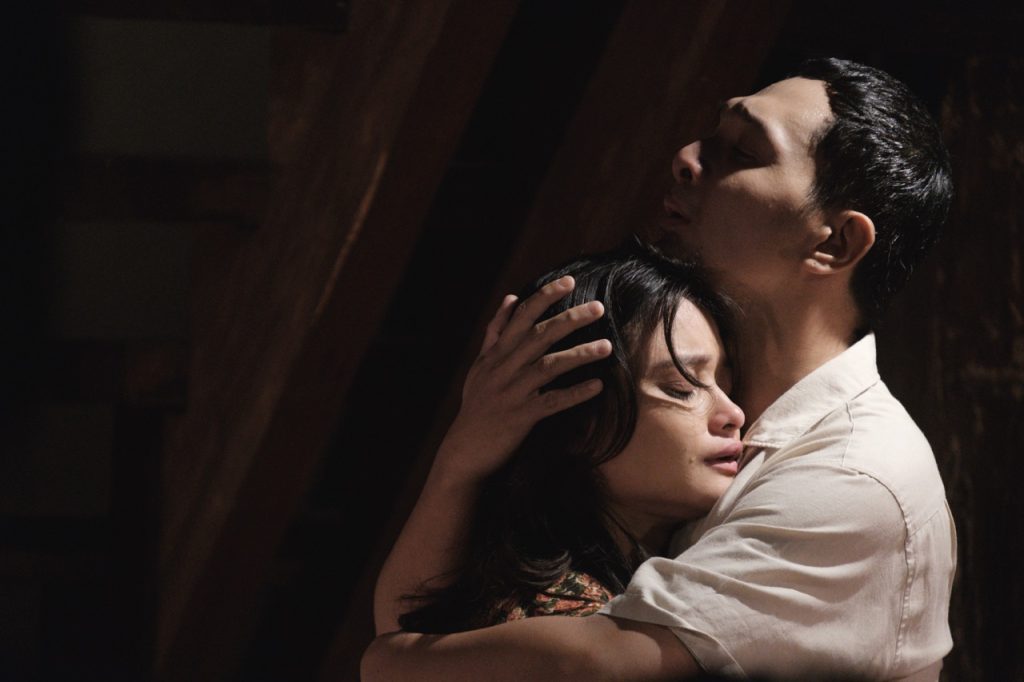
    Sandino Martin as Juanito Nour Hooshmand as Alma19 El Fuego del Alma
    El Fuego del Alma | Photo by Trish Shishikura Courtesy of Porvenir Collective

    The play moves with surprising speed, despite its setting during provincial hot summer days. The imagined atmospheric heat is symbolic of the growing fire that is burning inside Alma that doesn’t come out; the same fire that Juanito is constantly fanning, with gambling and drinking and women. The two characters, with their rich history, long for each other but their contrasting principles and approach to life (one deeply restrained, the other reckless and carefree) keep them from coming together.

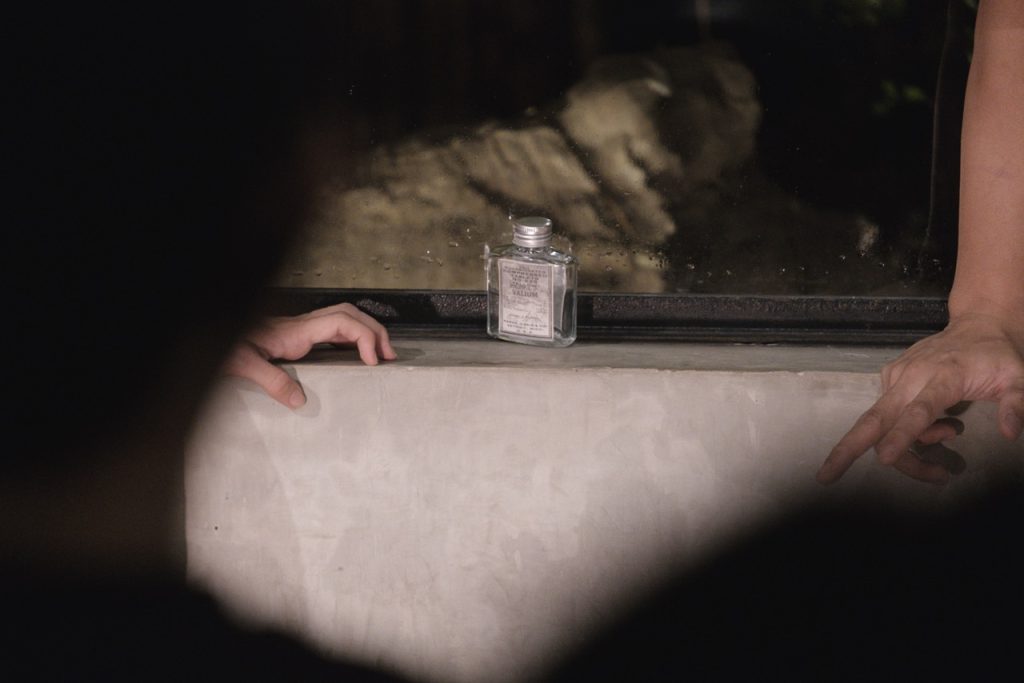
    Bottle of Medicine Prop Design by Ohm David El Fuego del Alma
    El Fuego del Alma | Bottle of Medicine Prop Design by Ohm David | | Photo by Trish Shishikura Courtesy of Porvenir Collective

    This is precisely why utilizing Sine Pop’s hall proves to be such an inventive directorial choice. Huge glass windows on all three sides of the space, allowing characters to exit the scene while still contributing to the movement of the narrative. Those left behind in the stage area can look out into the bamboo garden, watching as another character drifts into the trees or seeks a moment of freedom outside the claustrophobic constraints of their conservative nature of the quiet rural town.

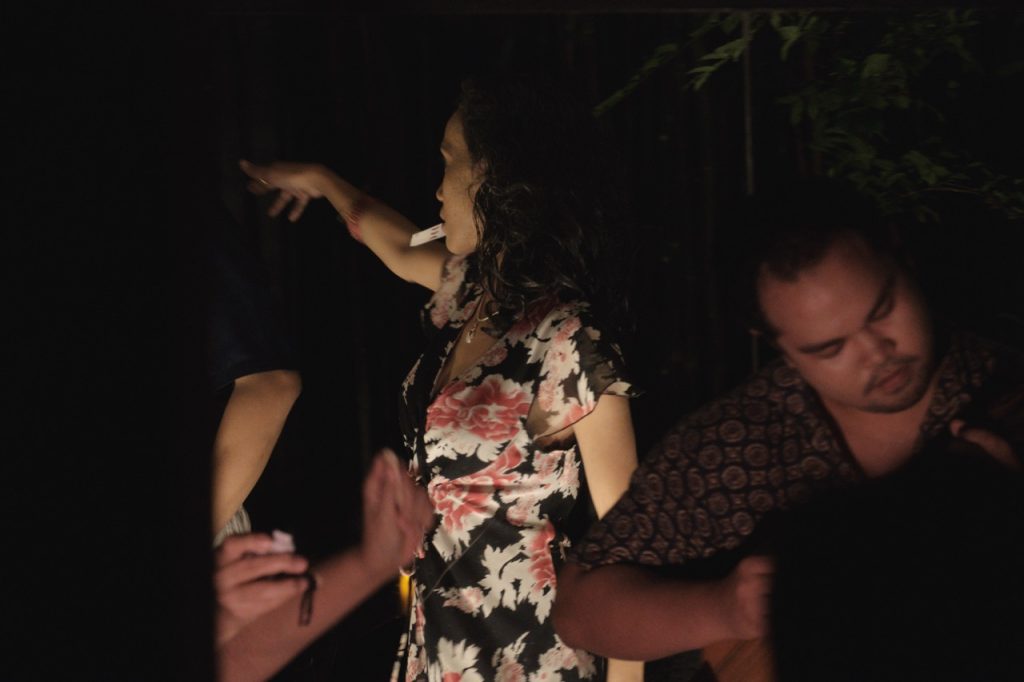
    El Fuego del Alma
    El Fuego del Alma | Photo by Trish Shishikura Courtesy of Porvenir Collective

    As an audience member, your senses are heightened, constantly catching movement in your periphery while knowing that lives are unfolding just outside as Alma ruminates on the choices that have left her alone.

    When I got to see the full production, I saw Hooshman reprise her role as Alma, this time sharing the stage with Pajara as Juanito. No longer bound by a script like she did in the stage reading, Hooshmand uses her entire body to telegraph the fire that’s inside of her consuming her character. Every subtle gesture – a clenched fist, a sharp inhale, a stolen glance – all so visible in the proximity of the audience to the cast. It’s such delicate work. Pajara, on the other hand, leans heavily into bravado, fire, and brimstone. He frequently raises his voice, equating Juanito’s passion with volume. At a certain point, this intense approach becomes monotone, almost indistinguishable from his more somber moments. It becomes hard to see what Alma has fallen in love with in Juanito when he’s firing on all cylinders in almost every turn. By contrast, Martin’s interpretation at the reading was more tempered. Yes, he is fiery and passionate, but in doses. He calms down when he’s around Alma, emphasizing the connection the two have. 

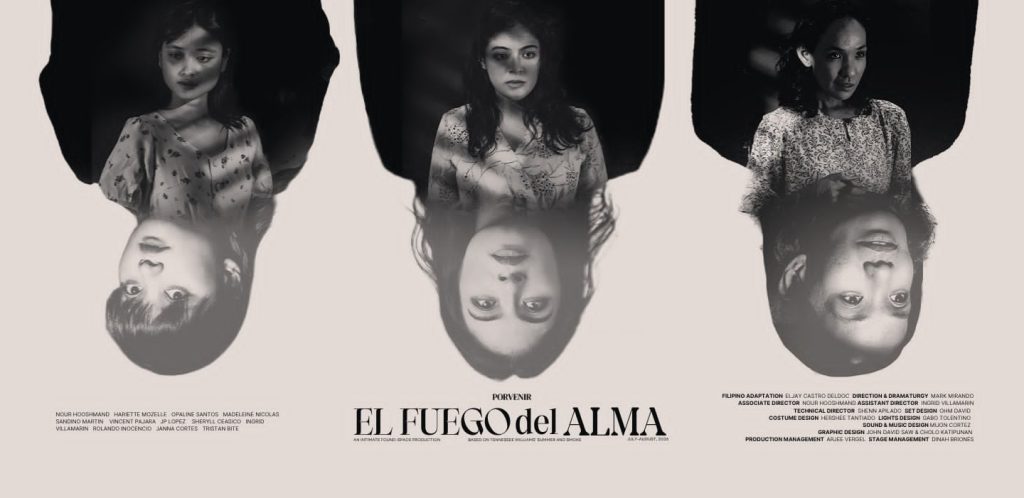
    El Fuego del Alma
    Porvenir Collective’s El Fuego del Alma | Source: Ticket2Me

    What makes Mirando’s direction even more revolutionary is how the production transforms between evening performances and daytime matinees. Natural light streaming through the glass windows bring in the sunlight during the daytime and change the mood entirely. A performance is even prepared just in case it rains; and again, a new approach is taken. The location is central to the directorial vision, but the elements of the environment also dictate what is seen. What an exciting creative use of space, making El Fuego del Alma a remarkable breakthrough in the contemporary theater landscape. 

    My Rating: 4.5 Stars

    stars 4 5

    An exciting, inventive breakthrough that demands to be seen in person. El Fuego del Alma has extended its run from September until October, stay tuned and watch for ticket sales to resume via Ticket2Me.

    Featured Images: Photo by Trish Shishikura and Poster Courtesy of Porvenir Collective

  • CINEMALAYA 22 FESTIVAL REVIEW: Unlocking the Metaphor Behind ‘Mag-iina’

    CINEMALAYA 22 FESTIVAL REVIEW: Unlocking the Metaphor Behind ‘Mag-iina’

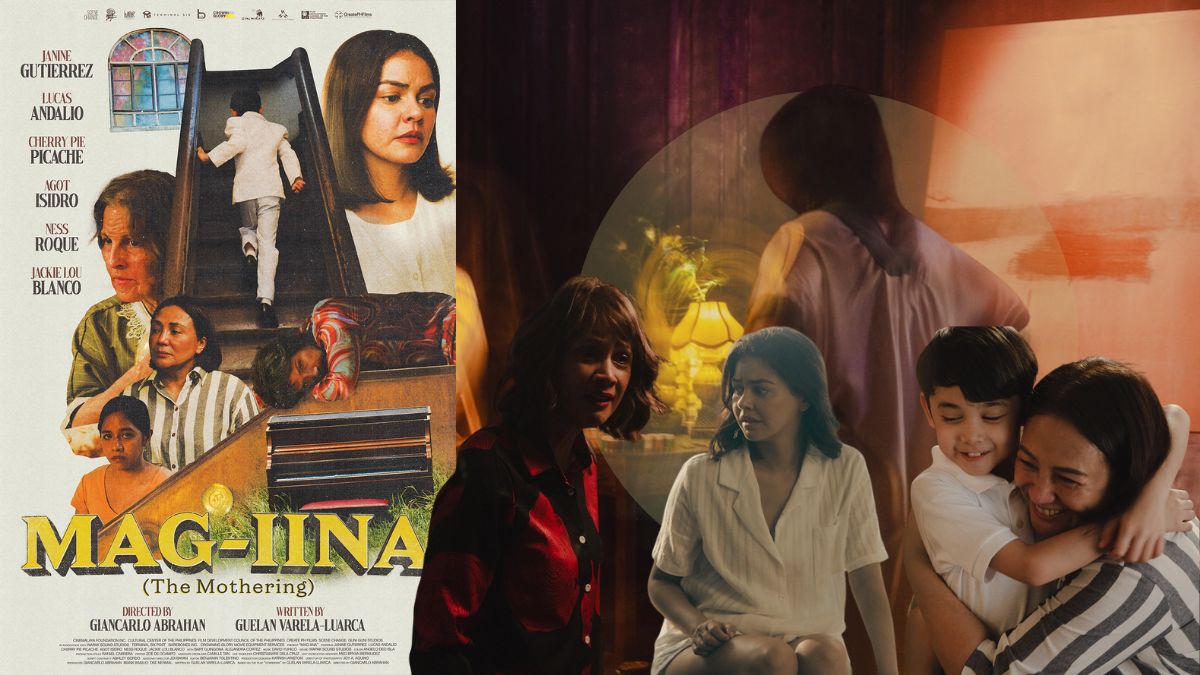
    I love a weakness for twisted, off-kilter movies that mess with your mind. Directed by Giancarlo Abrahan and written by Guelan Luarca-Varela, adapted from his own play ‘Corridors,’ Mag-iina is a gothic family-drama and horror movie that starts off grounded and begins to build slowly and slowly, getting weirder and darker as it gradually peels back its layers, eventually what is left is the realisation that underneath it all is a deeply rooted brokenness that needs to be looked at. On the level of a horror film, Mag-iina already succeeds. The tension is palpable. Set almost entirely within a decaying and old provincial mansion, the central family dynamic is grotesque in its dysfunction. Yet what makes the film even stronger is its sharp political metaphor that calls out one of the many ills of this country.

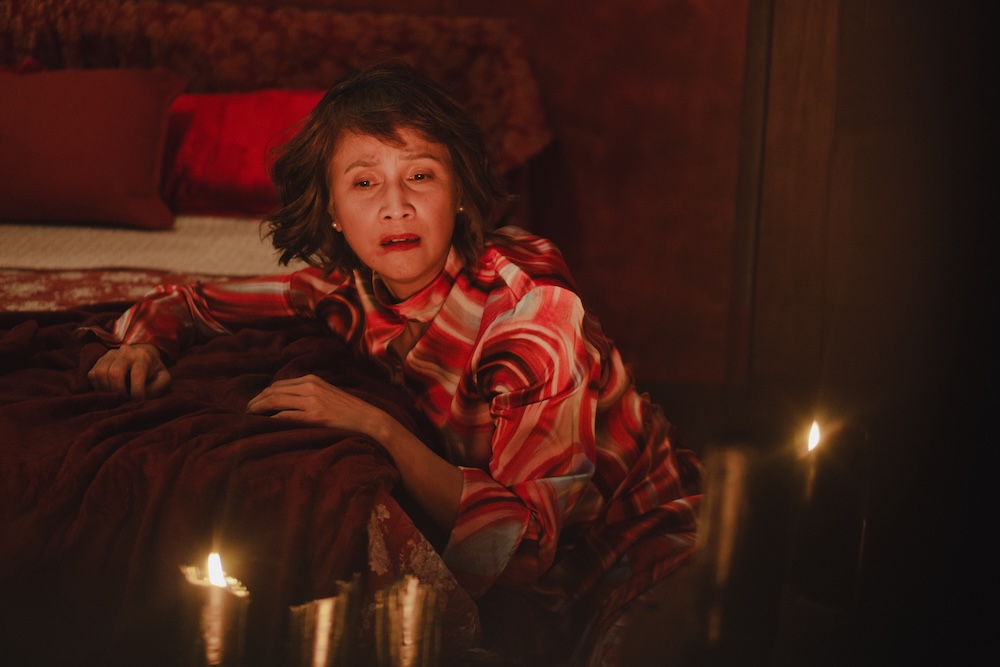
    The story begins with Anj (Janine Gutierrez) returning from abroad to mourn her father’s passing. It is near the 40th day since her father’s death, and she has come home to their fading mansion in the province. There she finds her mother Mita (Agot Isidro) slipping into madness, desperately hoping to see her late husband again, even as a ghost.

    Mag-iina
    Mag-iina | Image Source: Cinemalaya.org

    Her aunt Ysobel (Cherry Pie Picache) desperately trying to keep that household intact alongside their sole helper Katte (Ness Roque), while the family matriarch Angela (Jackie Lou Blanco), a revered National Artist for painting, holds the entire home in her chokehold.

    Mag-iina
    Mag-iina | Image Source: Cinemalaya.org

    The only male presence is Ysobel’s adopted son Ynigo (Lucas Andalio), named after Anj’s late father, who soon begins exhibiting unsettling signs of possession by his namesake.

    Mag-iina
    Mag-iina | Image Source: Cinemalaya.org

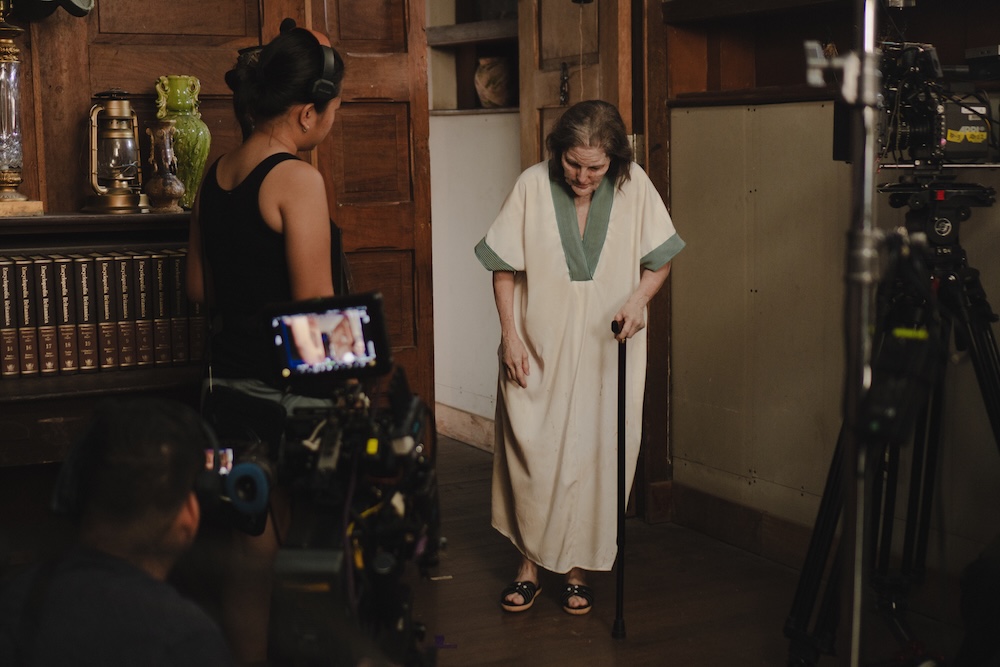
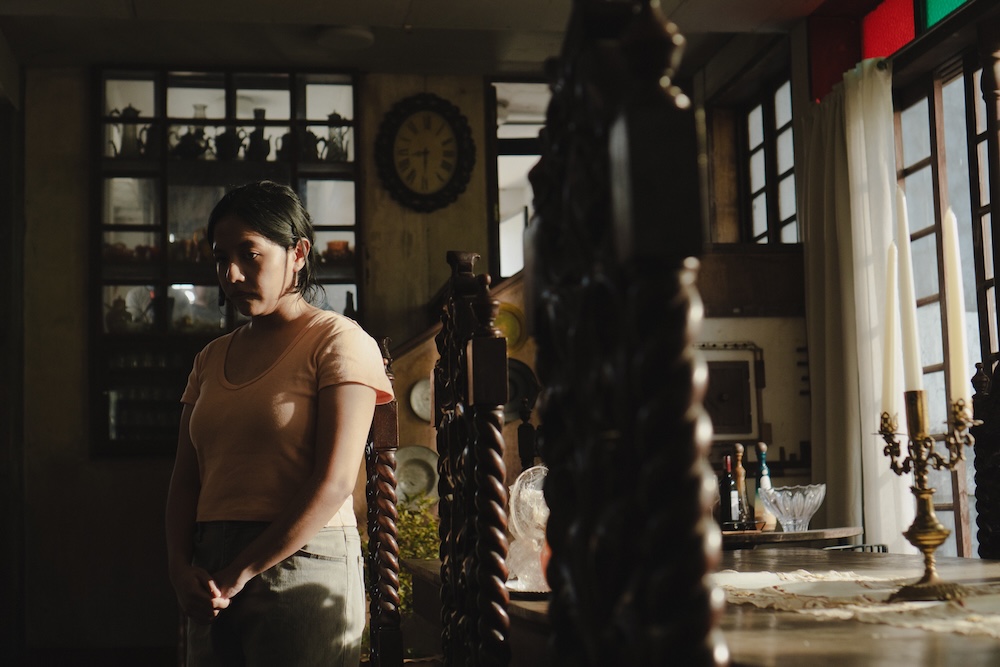
    The entire estate is falling apart from the inside out, deteriorating both physically and spiritually. Something is broken within and Anj, having been sent away at a very young age, she finds herself in collision with the traditions of that household. Younger, progressive, and her value systems run contrary to the traditional and almost draconian way that governs the household. It’s a house running on fear and tyranny. Production designer Katrish Aristoki signals a home frozen in time, stubbornly refusing to modernize. With its frayed upholstery and rotting timber, every corner feels trapped in a bygone era, clinging desperately to an expired glory.

    Mag-iina
    Mag-iina | Image Source: Cinemalaya.org

    Cinematographer Joy A. Aquino makes full use of the house’s architecture to create arresting visuals that heighten the tension and create a feeling of a suffocating labyrinth. Anj is hopelessly stuck there. As the story progresses and the hauntings escalates, the audience feels an almost instinctual urge that they must get out of that house. Yet through meticulous camerawork, Abrahan and Aquino assure us that escape is impossible in that house. The varied rooms, the spiraling staircases, the windows that present us a world outside, but one the characters can’t seem to get to. It is magnificent how the filmmaking makes us feel so trapped in that madness.

    Mag-iina
    Mag-iina | Image Source: Cinemalaya.org

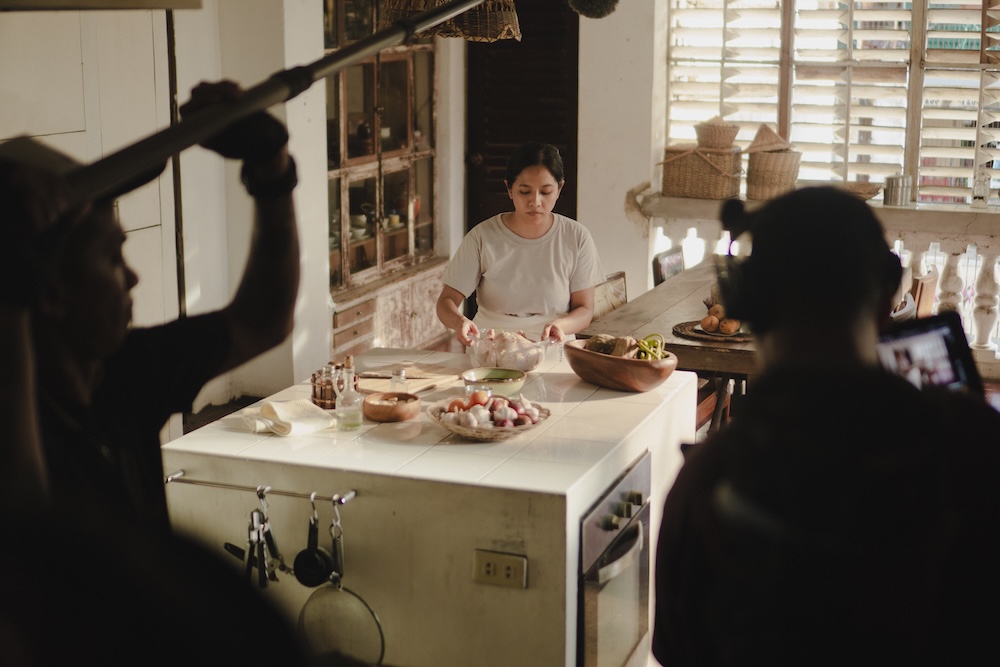
    As the horror escalates, the family’s dark secrets are revealed and it’s the worst kind of horror. We learn early on that Anj’s father was an adulterer, but when we discover who, it points us to the film’s larger, political message. Ysobel’s own dark desires, while hinted at in the first act, are fully visualised later on and what we see is an aristocratic family’s inability to contain their darkest urges. Mita, who married into the family, has been driven to madness simply by having lived this house. Meanwhile, Katte quietly carries the burden of their sins just to be able to earn a living. She is the most obvious victim, presenting Anj with a toxic legacy she must either find a way to end or inherit.

    Mag-iina
    Mag-iina | Image Source: Cinemalaya.org

    The cast is so unbelievably en pointe, flowing with the film’s steady rise to absurdity completely in sync with each other and the film’s tone. They all start off grounded and as the film gets weirder, darker, more twisted; each of the cast brings their performances to another level. Gutierrez is a strong foil, allowing us to root for her, even as her character begins to show her own frailty and self-righteousness. Roque understands her character’s importance of being both a fully formed person but also the symbol of the common man. Isidro is fully committed to the madness that consumes Mita. Picache is a tower of repressed rage. Andalio is brilliant playing the demanding duality of his role. But Blanco is a powerhouse. With very little scenes, she enters like a storm, turning and twisting everything in her path. Each performer plays off so well with each other that the ensemble, as a whole, works as one unit.

    Mag-iina
    Mag-iina | Image Source: Cinemalaya.org

    This is not your typical horror built on cheap jump scares. Instead, the film plays with dread, tone and oppressive atmosphere. Our nervous systems are firing up, and we just want these characters to get out of there and that’s where the fear stems from. It’s amazing once you realise that this is a metaphor for our country; a nation where the people in power refuse to change, feeding upon itself to remain in power and indulging in every dark desire to the detriment of everyday people. That decaying house is our country, and Mag-iina stands as a film, is symbolic of our need to overthrow this antiquated system. 

    Mag-iina
    Mag-iina | Image Source: Cinemalaya.org

    Mag-iina is set to disturb and rock us to our core, and it absolutely should. Consider what it says and what it decides to name; it should. You should be disturbed.

    My Rating: 5 Stars

    A Big Bold Beautiful Journey


    Prepare to be shaken to your core. Catch Mag-iina on the big screen at Cinemalaya 22. Check showtimes and grab your tickets today.

    Don’t miss Cinemalaya 22: Reel Reflections, running August 6 to 18 at Red Carpet Cinemas (Shangri-La Plaza), Gateway Cineplex 18, and Ayala Malls Cinemas. Witness a stellar lineup of stories that will move you and showcase the brilliance of local filmmaking. Follow the Cultural Center of the Philippines and Cinemalaya for official updates.

  • CINEMALAYA 22 FESTIVAL REVIEW: ‘2 Valid IDs’ Is a Wrecking Ball to the Bureaucratic Hell of the Country

    CINEMALAYA 22 FESTIVAL REVIEW: ‘2 Valid IDs’ Is a Wrecking Ball to the Bureaucratic Hell of the Country

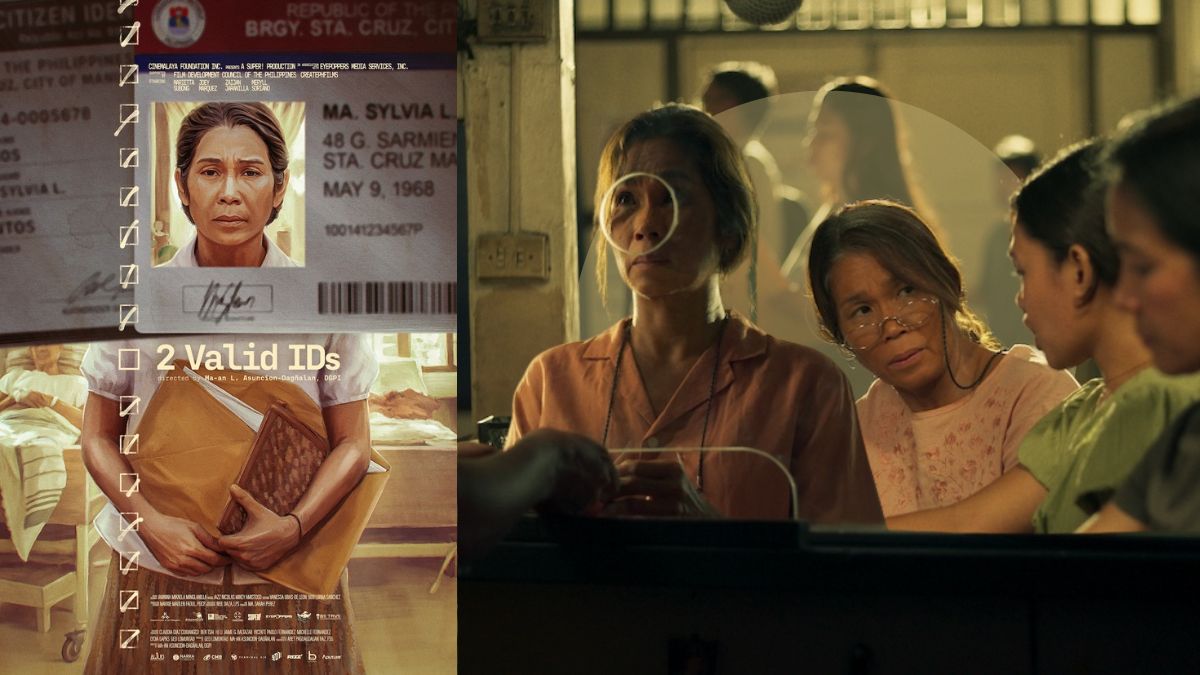
    There is a raw confidence and a purposeful approach behind 2 Valid IDs that makes it impossible to look away, no matter how painful the film becomes. Director Ma-an Asuncion-Dagnalan’s second Cinemalaya entry following explosive, politically charged Blue Room finds her returning to social issues alongside screenwriter Abet Pagdagdagan Raz. This time, however, they deploy a quiet restraints that steadily mounts, perfectly mirroring what it feels like when one is caught in the bureaucratic hell that is the labyrinthine systems of this country. By placing the sheer inanity of filing for many government forms front-and-center in this film, and we can only watch this with grim familiarity but not with the same sense of urgency that it has for its characters.

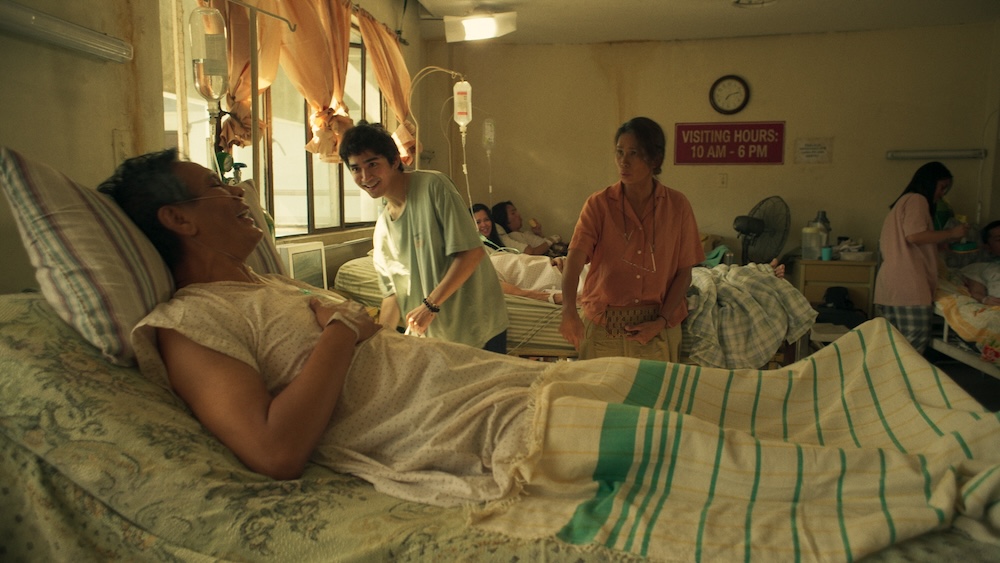
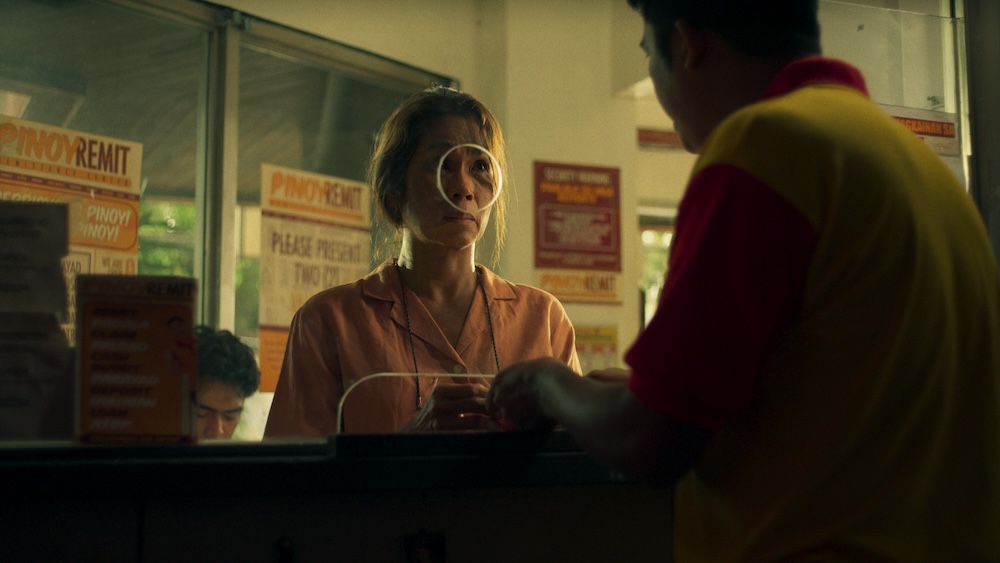
    We follow Sylvia (Marietta “Pokwang” Subong), an Ilocano farmer, who has brought her husband Ramon (Joey Marquez) to a public hospital in Manila to treat his worsening respiratory illness. With their provincial hospital ill-equipped to handle with his condition, medical expenses quickly mount, even at a public hospital, driving the couple into quiet desperation.

    2 Valid IDs 1
    2 Valid IDs | Image Source: Cinemalaya.org

    A family relative working abroad has sent money through a remittance center, only for Sylvia to hit an immediate wall at the remittance center: they won’t accept her PhilHealth ID, and as a first-time customer, she is required to produce the eponymous two valid IDs. Forced to navigate the maze of government agencies to secure them, Sylvia must now apply for two valid IDs but the system, as we are all aware, is not an easy one to take or follow.

    2 Valid IDs 3
    2 Valid IDs | Image Source: Cinemalaya.org

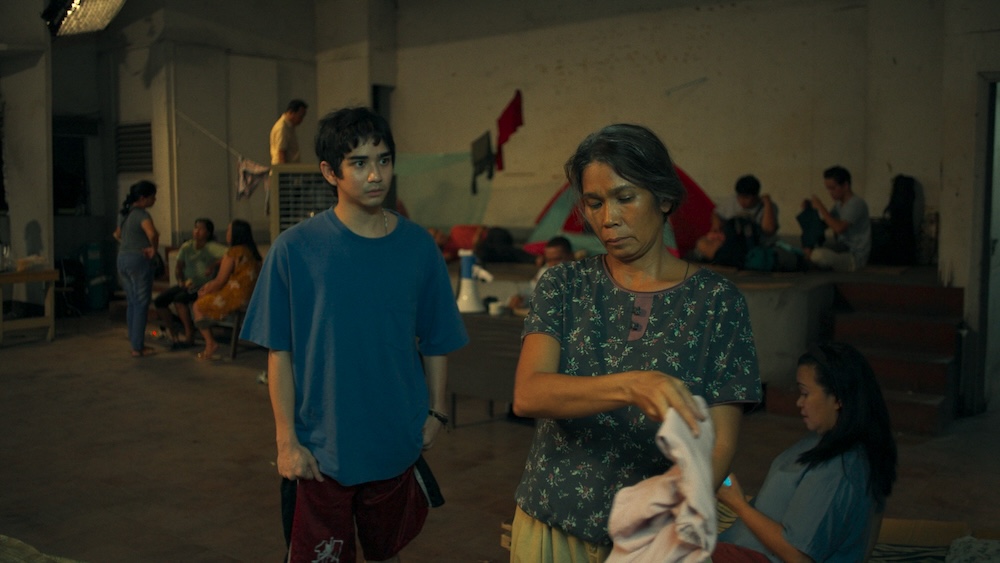
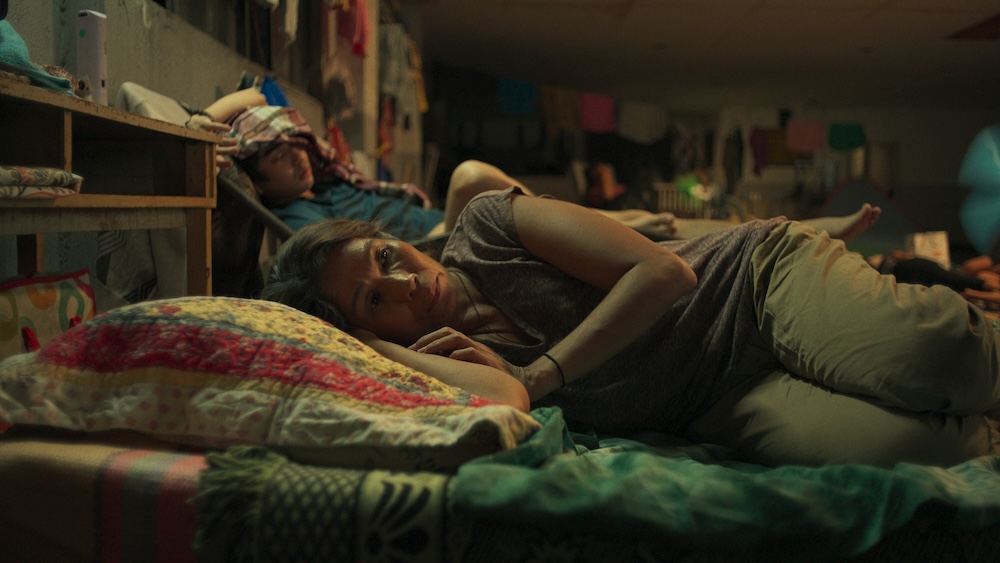
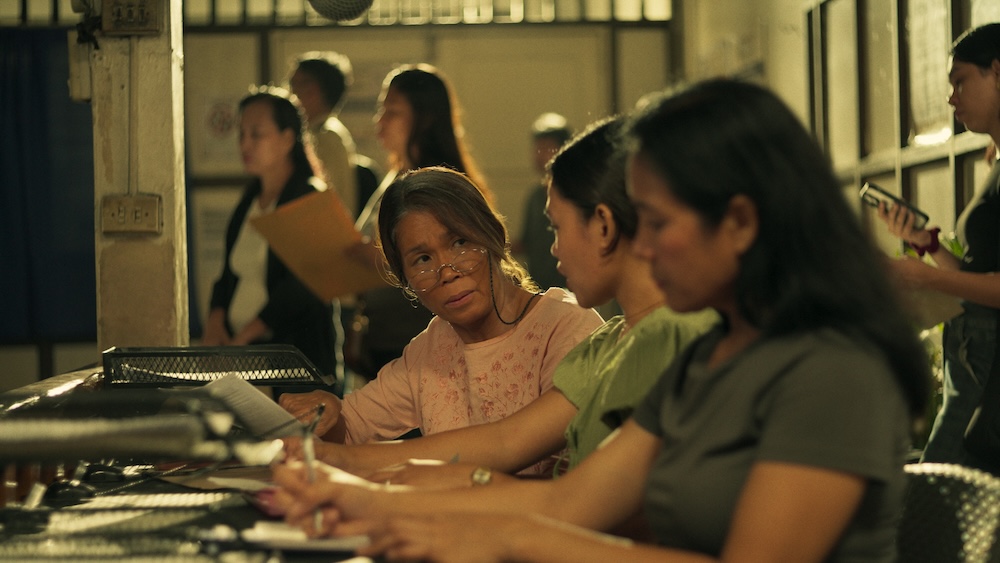
    The premise is elegant in its simplicity because Asuncion-Dagnalan and Raz make full use of the film’s setting and milieu to show us the horrific state of healthcare in our country. How much it is lacking for those who cannot afford even the basic necessities, capturing the indignities we rarely consider, like patient guardians have to stay in what looks like a parking lot turned dorm during the evening – things we take for granted when we go and visit the hospital. As Sylvia goes from one bureaucratic window to the next, clearing one absurd hurdle only to run straight into another, the camera patiently documents the excruciating waste of time and human energy, the inaccessibility of things we need to survive.

    2 Valid IDs 8
    2 Valid IDs | Image Source: Cinemalaya.org

    2 Valid IDs is so unapologetically upfront about its social commentary that it commands your complete attention. The lens zero in on all the cracks in the system and how it fails people like Sylvia and all the other patients and the countless families crammed into that hospital. Ultimately, this is a film about how our systems have failed to meet the needs of its most vulnerable citizens and, through its shocking finale, it highlights how the citizenry chooses to react.

    2 Valid IDs 7
    2 Valid IDs | Image Source: Cinemalaya.org

    Heavy as the film is, its weight is tempered by a deep, compassionate understanding of the Filipino’s sense of family. Beneath the bleakness, there is still warmth and tenderness here. Asuncion-Dagnalan and Raz purposefully carve out room to celebrate what can be celebrated and can find some measure of humor despite the burden these characters carry. 2 Valid IDs is as cynical as it is furious, yet it never reduces its characters to mere mouthpieces or tragic caricatures. 
    2 Valid IDs 5
    2 Valid IDs | Image Source: Cinemalaya.org

    Subong is a powerhouse, carrying the full emotional and thematic weight of the film’s message on her shoulders. She makes Sylvia intensely relatable. She’s fierce but also out of her depth. Subong’s performance is rooted in such great humanity that she juggles the character as both a fully formed person but also a stark symbol of those left behind by this country’s inability to get its act together. Marquez is always a solid performer, giving Subong so much to work with and to ensure that her mission is evident. While dependable Meryl Soriano shines as the Manila-based relative guiding Sylvia through the city’s ins-and-outs, it is Zaijian Jaranilla who truly stands out. Playing Denver, a young guardian tending to his grandfather in the same ward as Ramon, Jaranilla injects a hopeful warm energy into the film. A kind heart, Denver is a breath of fresh air and a sign that the Filipino resilience has pervaded among the youth. The way he navigates his scenes, especially in one dramatic moment near the end, creates such a profound effect that helps underscore the film’s message even further.

    2 Valid IDs
    2 Valid IDs | Image Source: Cinemalaya.org

    2 Valid IDs is as unapologetic as it is bold. There are so many ways for it to shift to satire but this one holds its ground to say its point loud and clear. And it demands that we should not just watch. but listen and demand the change we deserve.

    My Rating: 5 Stars

    A Big Bold Beautiful Journey


    A searing look at bureaucratic hell you cannot afford to miss, 2 Valid IDs is now showing on the big screen. Check showtimes and grab your tickets today.

    Don’t miss Cinemalaya 22: Reel Reflections, running August 6 to 18 at Red Carpet Cinemas (Shangri-La Plaza), Gateway Cineplex 18, and Ayala Malls Cinemas. Witness a stellar lineup of stories that will move you and showcase the brilliance of local filmmaking. Follow the Cultural Center of the Philippines and Cinemalaya for official updates.

  • Disney+ Review: ‘The Shards’ Boasts Unlikable Characters in a World That Celebrates Privilege and Excess

    Disney+ Review: ‘The Shards’ Boasts Unlikable Characters in a World That Celebrates Privilege and Excess

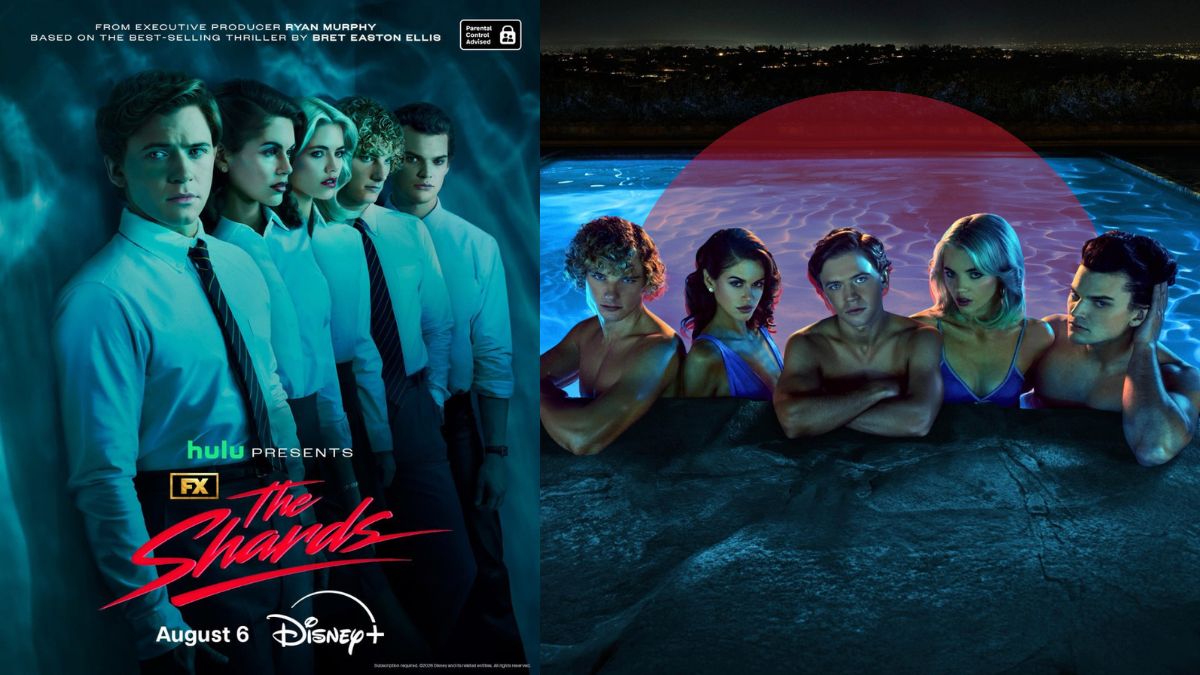
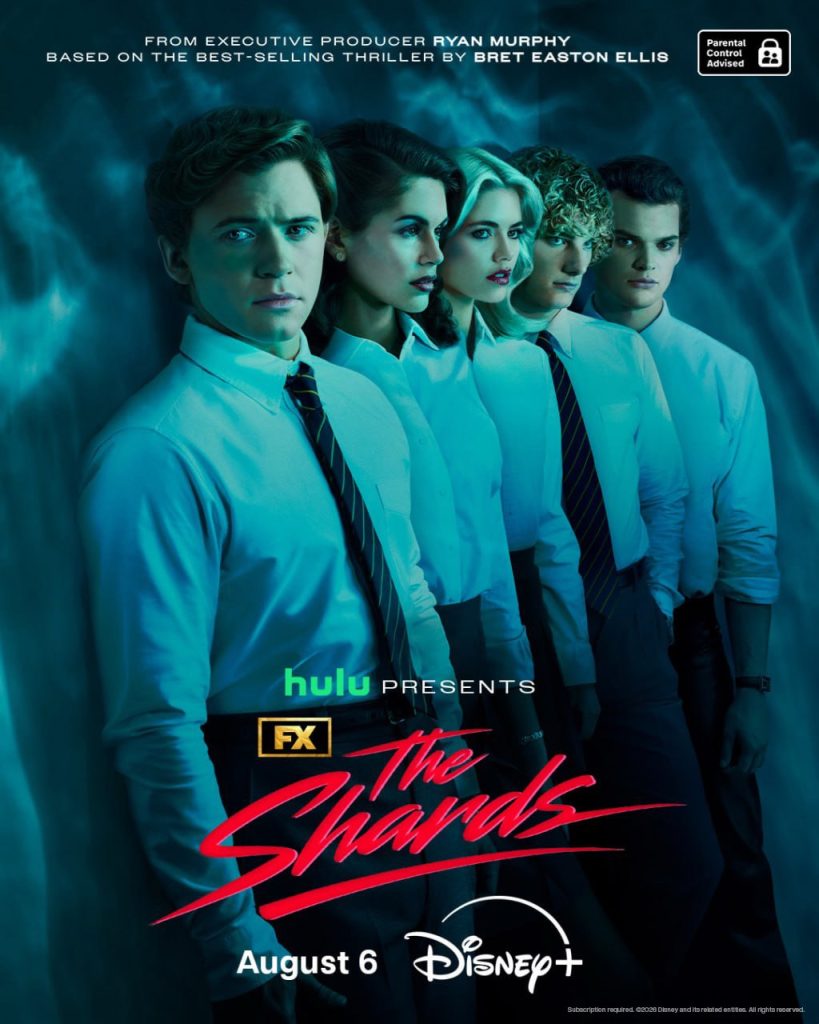
    There is a smugness and a seemingly celebratory tone to the all the excess and privilege surrounding the characters of Ryan Murphy and Bret Easton Ellis’ new Disney+ streaming series, The Shards. Based on Ellis’ semi-autobiographical, metafictional novel of the same name (which originated as a serialized audiobook), The Shards is a coming-of-age horror-thriller set in early 1980s in Los Angeles. It follows a group of wealthy, self-possessed high school seniors during an era when serial killers and cults were in everywhere.

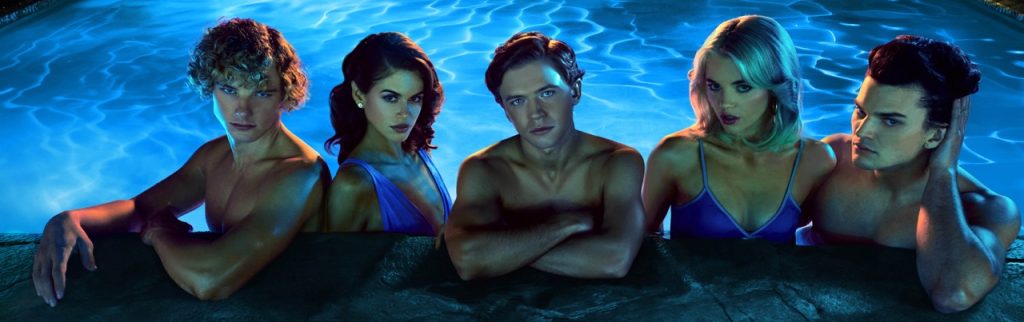
    The series is narrated by its protagonist, Bret (Igby Rigney), an aspiring novelist. He narrates the events of his senior year from the future, which allows him to editorialize and to talk with some hindsight about what is to transpire on the show. Bret is a rich kid, whose parents are never home, and lives a life defined by reckless excess – drinking, drug use, and fast driving with his best friends, Susan (Kaia Gerber) and Thom (Graham Campbell), alongside his girlfriend Debbie (Hayes Warner), all who share his same proclivities. Together, they all drink, take drugs, throw massive parties, have a lot of sex, and are completely self-possessed, with barely any adult supervision. But their senior year would be predicated by the arrival of a serial killer known only as “The Trawler,” while cultists have been attacking neighbouring cities and coming ever closer. And all this coincides with a new kid in school, Robert (Homer Gere), who first captures the eye of the gender-fluid Bret, only to quickly transform into his primary nemesis.

    The Shards

    Guided by Bret’s narration, we see a world that is very much like any Bret Easton Ellis novel (I’ve read a few and seen some of the movie adaptations of his works). It’s cynical and nihilistic. It parodies but, inadvertently, celebrates the cold, almost dismissive nature of his characters – very gorgeous, very rich, very elitist – which makes them very hard to like or root for. In the first four episodes, they take everything for granted. They smoke and drink and take drugs and feel untouchable. Driving their own expensive cars and have money in excess to throw lavish parties and think they are on top of the world.

    Consequently, the arrival of The Trawler and the intermittent mentions of the cultists roaming around their Los Angeles playground, creates tension and fear. Except I found myself actively rooting for their demise rather than hoping for their survival. It is a strange feeling to have on a series that attempts to frame these characters as tragic victims of their own privilege and wealth.

    The Shards

    When the initial murders happen, and of course, it is to people around them, I found myself least interested in The Trawler and more excited about finding out when he begins to go after our protagonists, most especially the aloof and intensely self-centered Bret.

    True to the signature styles of both Ryan Murphy and Bret Easton Ellis, the entire cast is gorgeous. There’s also quite a lot of nudity and objectification of their bodies – especially the male ones – which can be a draw. As Bret (yes, the lead character has the same name as the author) continues to explore his gender fluidity, he is equally cognizant of the bodies of his friends and the camera follows suit. Murphy, directing the first two episodes, is sure to put the camera right where we can see every taut muscle, every gorgeous smile, every curve of the bodies of his actors and actresses. Yet. despite this intimate lens. it doesn’t humanize them.

    The pacing is very good, maintaining a constant sense of something is about to happen. The mystery of Robert and Bret’s obsession with him intersects with Bret’s own fears about The Trawler that we are meant to feel that they are connected; but it will not be that simple. Other than the sex and drugs, the show is also unapologetic to show off the dirtier side of Hollywood; as Debbie’s parents are in showbusiness. Prostitution, implied sex with teens, and other taboos are scattered into the episodes to make a show that is meant to shock us but provide no real profound insight into the state of human nature.

    Because the show’s direction refrains from taking a moral stance, it presents these images and situations in a glossy, hyper-charged manner that gives the impression that Murphy and Ellis find this entertaining. The only character who ever almost reaches the precipice of depth is Kaia Gerber’s Susan. She’s a young woman who is growing out of her high school sweetheart, Thom, and is at the edge of growing up but she’s always undermined by her own privilege. She’s the only character I’m rooting for; hoping she’d break through the shallowness of Murphy and Ellis’ world. 

    Much like Ellis’ ‘American Psycho,‘ The Shards is obsessed with brand names and standout symbols that signal luxury and status. It is the celebratory tone of all this excess that I find truly disturbing; all amplified by the smugness of the lead character’s narration. He considers himself cool and undeniably important. And the fact that the narration is done in the future, as he looks back into his youth, it leaves a frightening thought that he is going to survive the horrors of this story entirely untamed and unhumbled.

    Ultimately, The Shards will be a difficult series to sit through, though I have hate-watched shows before. And the male objectification is done in the usual sensuality that Ryan Murphy is good at; so that’s a bonus (though they are all white people). I’m really hoping for Susan’s character to find growth. That’s the only thing I’m really sticking around for the rest of the season.

    My Rating: 2 Stars

    Springsteen Deliver Me from Nowhere


    Unchecked privilege, serial killers, and 1980s LA excess. Will you survive the thriller of the season? Stream The Shards today, only on Disney+.

  • DISNEY+ REVIEW: From a Slow Burn to an Explosive Ending, the Last Four Episodes of ‘Furious’ Are Worth the Wait

    DISNEY+ REVIEW: From a Slow Burn to an Explosive Ending, the Last Four Episodes of ‘Furious’ Are Worth the Wait

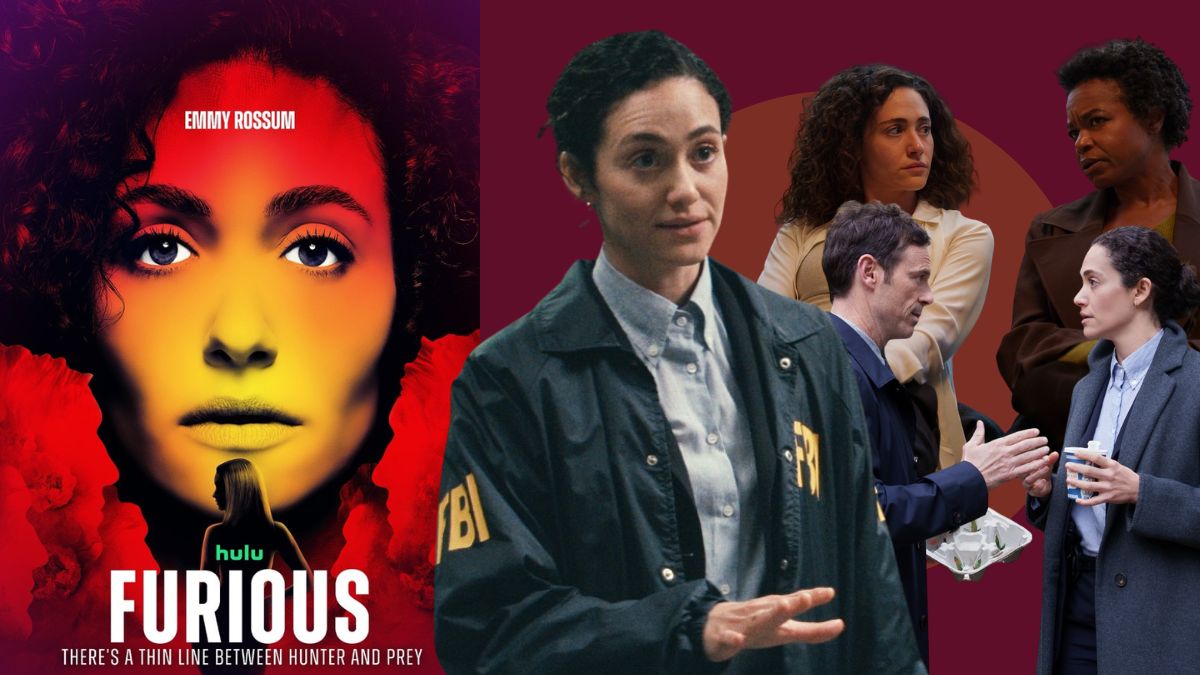
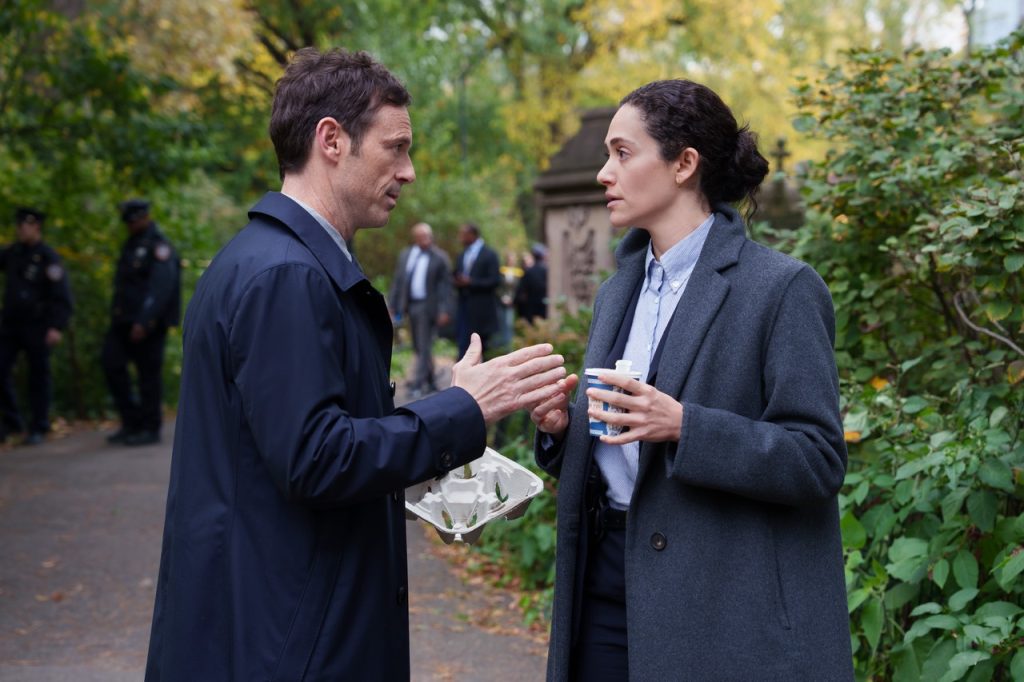
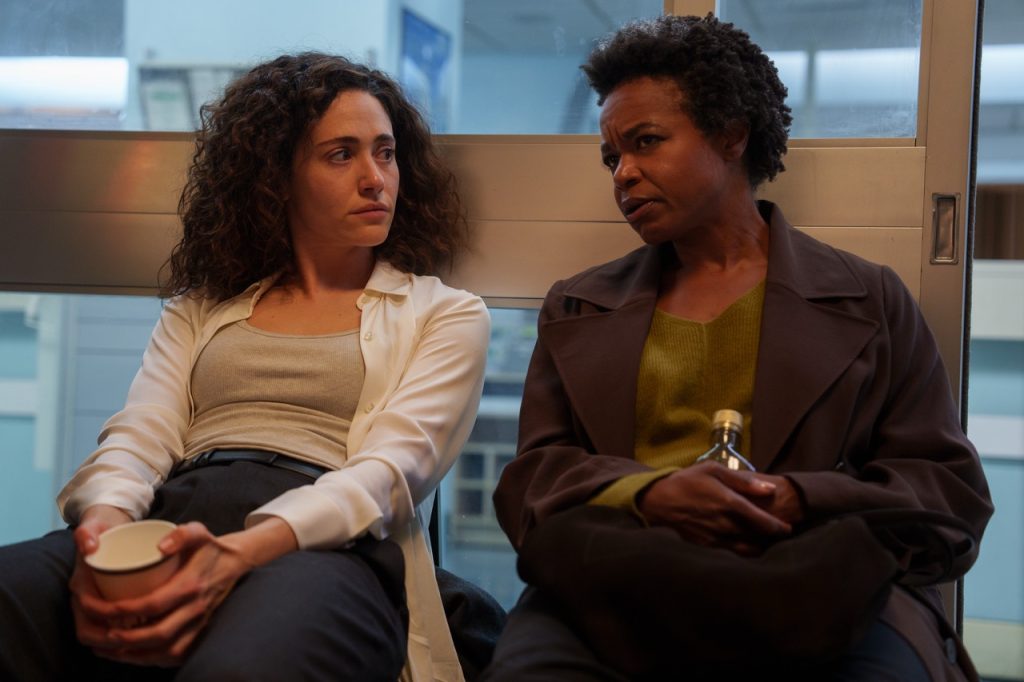
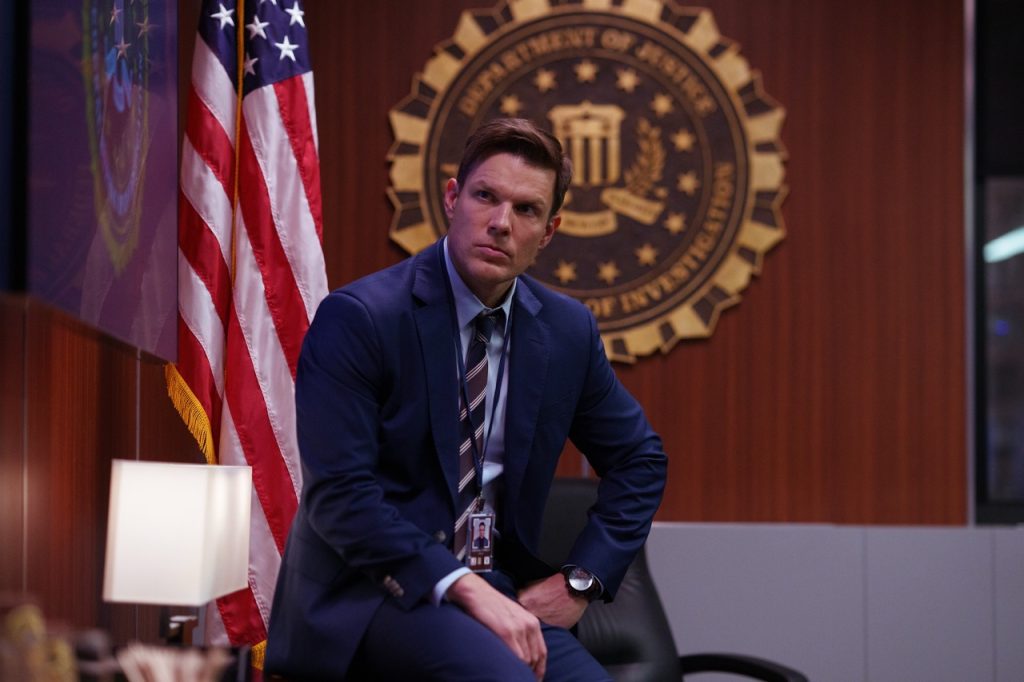
    By the end of its first four episodes, the Disney+ streaming show Furious finds FBI agent Alice Black (Emmy Rossum) working towards solving the serial killer murders despite having almost everyone against her. There’s heat from above, including her own superior and mentor, Nora (Quincy Tyler Bernstine), and continuing aggression from her ex-lover on the police force (Jake Lacey). Her only friend, Detective Danny (Scoot McNairy), is struggling with his own feelings for Alice, further complicating an already delicate investigation. But the show’s title remains apt as none of this is getting in the way of Alice from solving this murder or from the serial killer, who goes by the name of Jenny (Lola Petticrew), to exact vengeance for the dark past that haunts her.

    If the first four episodes were a slow burn, carefully maneuvering pieces across a chessboard toward a possible check, more of the characters come into play. We learn more and more about the sordid, twisted world of the billionaire who is at the center of all this human trafficking ring. The show brings us to the ways that they get away with literal murder and what Alice has to do to gather the evidence she needs to find some level of justice in this show’s cynical world where women have every right to their anger in the many ways by which they have been held back, oppressed, and violated.

    179475 0437 V1 Disney Sarah Shatz Furious
    FURIOUS – “First Look” – From Creator and Executive Producer Elizabeth Meriwether, “Furious” follows an FBI agent, Alice Black (Emmy Rossum) on the hunt for a mysterious and calculating female serial killer. Both walk their own paths toward justice, and as their lives start to intertwine, the line between right and wrong begins to blur. (Disney/Sarah Shatz) SCOOT MCNAIRY, EMMY ROSSUM

    The final four episodes of this explosive series ramp up the tension, heighten the emotional stakes, and reveal to us the dark truth behind Jenny and even Alice’s dark past. It is suspenseful, action-packed, and filled with great crime procedural narrative beats that it gets better and better with every episode.

    Through it all, Rossum delivers a fascinating study of unyielding persistence, portraying a woman who does not back down no matter how hard the world seems to be against her. We witness her grit as she confronts her own vulnerabilities, ghosts, and personal demons, and soldiers through regardless. She serves as a magnificent anchor to the series’ pervasive darkness, fully embracing it to help shape the show’s core identity.

    Furious
    FURIOUS – “First Look” – From Creator and Executive Producer Elizabeth Meriwether, “Furious” follows an FBI agent, Alice Black (Emmy Rossum) on the hunt for a mysterious and calculating female serial killer. Both walk their own paths toward justice, and as their lives start to intertwine, the line between right and wrong begins to blur. (Disney/Sarah Shatz) EMMY ROSSUM, QUINCY TYLER BERNSTINE

    In my review of the first four episodes, I noted that Lola Petticrew felt like the show’s weakest. However, across these final four episodes, as more of her past is revealed, and her own vulnerabilities are exposed, her acting prowess now shines. She proves to be a capable second lead, commanding the screen with her raw presence. As an actress, she’s able to do more heavy emotional lifting when she’s playing to the context her character is given. While in the first four episodes, she was working as a mystery. The danger was not that apparent. But now, as Jenny and Alice finally face-off, the two characters at opposite ends of the law, yet with a background that is so similar it’s almost identical; we see a kinship that helps amplify the show’s central themes.

    Furious

    Furious is not a simple story of good versus evil. Instead, it exposes the inherent flaws and weakness of a legal system in handing out justice. While the show is centered in the American justice system, we can see the universality of how the rich manipulate the system to get away with whatever crime they see fit to commit. The series highlights the way women have always been treated by a patriarchal society that looks at them as possessions, exploiting their bodies and personas used for the pleasure of men. And for the women who are in positions of power and authority? People like Alice or Nora? They are constantly reminded about how low they are at the totem pole in the larger scheme of things.

    Furious
    FURIOUS – “First Look” – From Creator and Executive Producer Elizabeth Meriwether, “Furious” follows an FBI agent, Alice Black (Emmy Rossum) on the hunt for a mysterious and calculating female serial killer. Both walk their own paths toward justice, and as their lives start to intertwine, the line between right and wrong begins to blur. (Disney/Sarah Shatz) JAKE LACY

    While the finale closes the case, whether the resolution proves satisfying depends largely on the viewer. What the finale truly accomplishes is opening a can of worms that exposes the true cost of the darkness that has been inside Alice. Though the door remains open for a possibility for a second season if the series performs well, but if it ends the way that it does on episode eight, it’s a good enough ending for me.

    My Rating: 4 Stars

    Springsteen Deliver Me from Nowhere


    Watch Emmy Rossum as Agent Alice Black face her darkest case yet. Binge Episodes 5 through 8 of Furious on Disney+.

  • CINEMALAYA 22 FILM FESTIVAL REVIEW: Dustin Celestino’s ‘A.ni.mal’ Is a Comedic Departure From His Previous Cinemalaya Work

    CINEMALAYA 22 FILM FESTIVAL REVIEW: Dustin Celestino’s ‘A.ni.mal’ Is a Comedic Departure From His Previous Cinemalaya Work

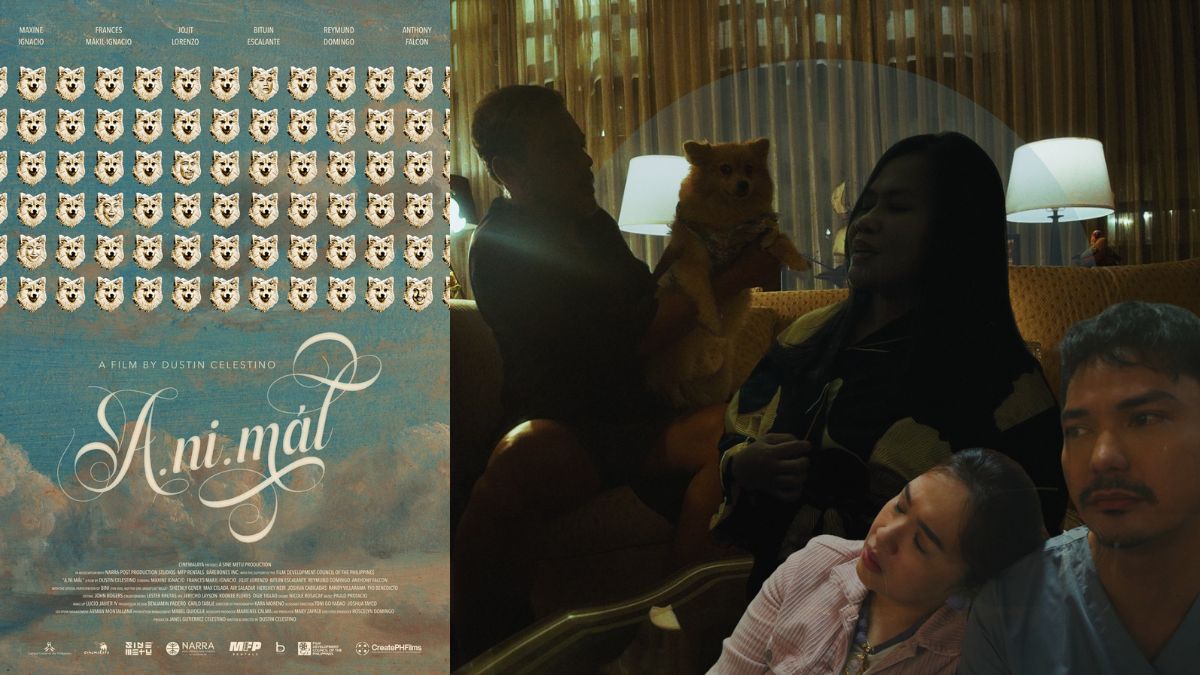
    If, like me, you are only familiar with Dustin Celestino’s work through his last two Cinemalaya films, Duyan ng Magiting and Habang Nilalamon ng Hydra ang Kasaysayan, then you’d think that his third entry to beanother serious, politically charged drama. But A.ni.mal is nothing like Celestino’s first two critically acclaimed Cinemalaya films. ‘A.ni.mal’ is a funny, dark comedy; a satire that explores one of the many faces of evil; breaking it down to its most mundane form in an almost farcical tragic comedy that strips away the pristine facades of people in the public eye.

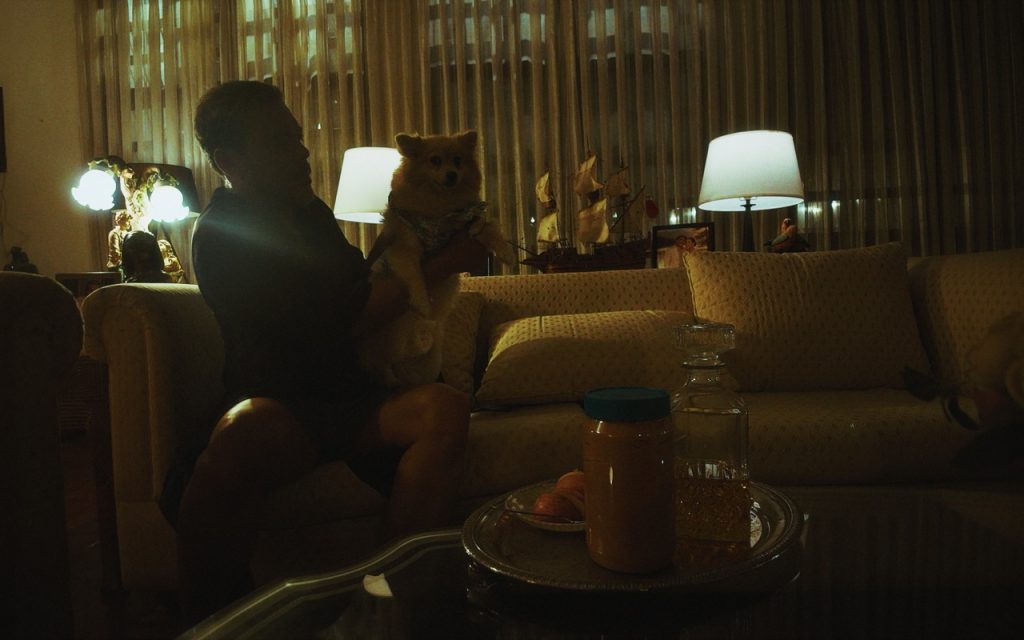
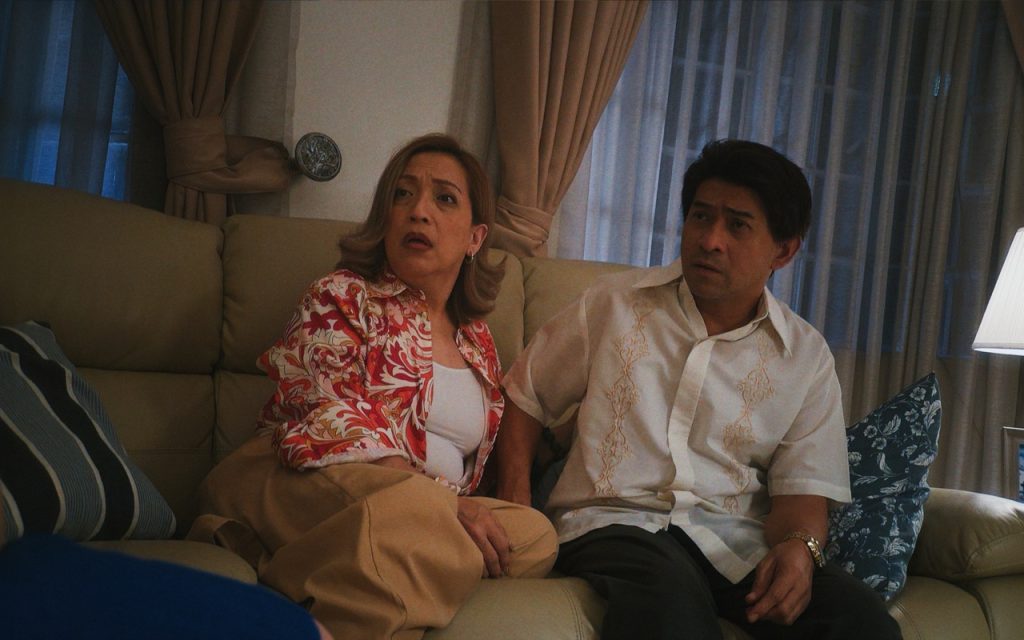
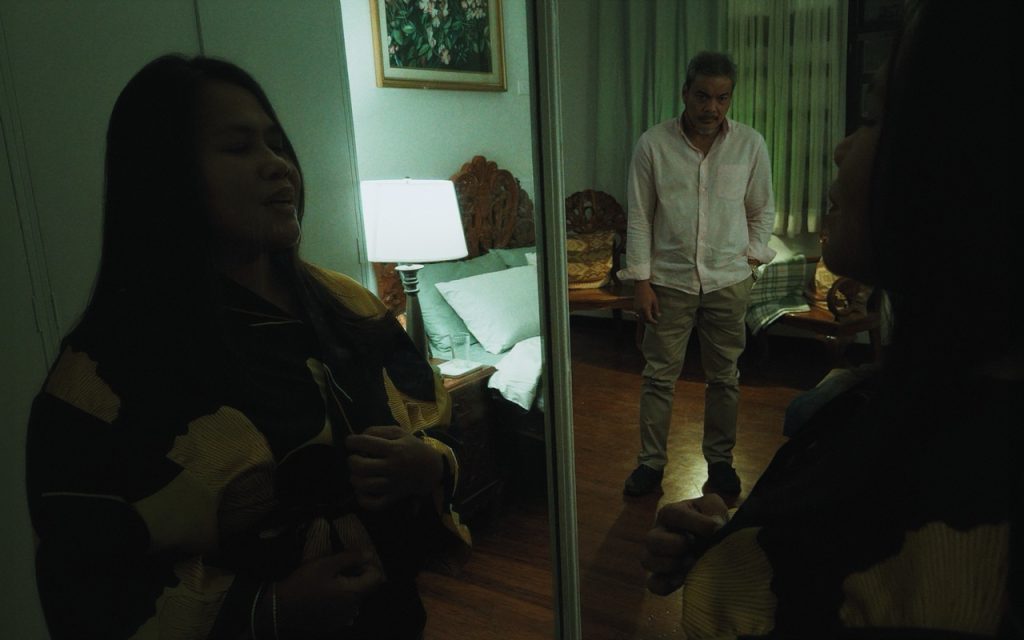
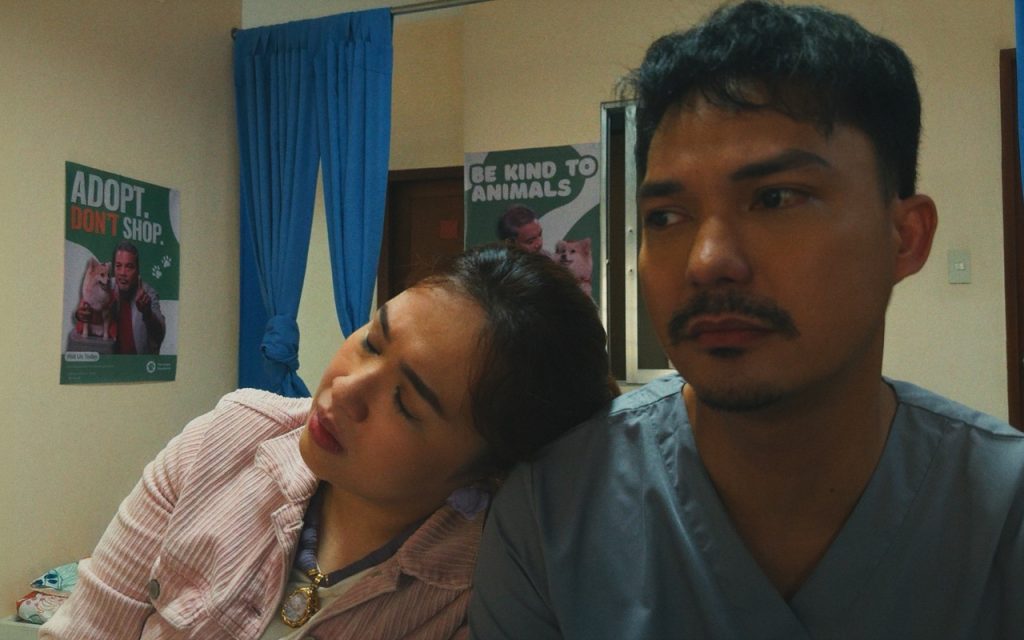
    The film centers on a leaked stolen cellphone recording of a Governor (Reymund Domingo) being intimate with his dog. The recording was captured by his goddaughter, Lily (Maxine Ignacio), who is the daughter of the mayor (Jojit Lorenzo). Lily, who imagines herself a young progressive, wants to protect the dog. After all, she volunteers at a pet shelter to prove she’s not just another nepo baby. But the video becomes a contentious topic. The Mayor wants it deleted but his wife, Ofel (Frances Makil-Ignacio), sees an opportunity to weaponize the secret and curry favour with the Governor’s wife, Grace (Bituin Escalante). The video’s mere existence and the subject matter of its content thrusts all the characters into a moral dilemma that becomes an exhibition of the worst of human nature.

    ANML Film Still 06 Cinemalaya 22
    Cinemalaya 22 A.ni.mal | Photo courtesy of Sine Metu Media Productions

    From the onset, A.ni.mal is hilarious, often-times absurd, and a clever and biting in its social commentary. The characters’ political nature and their desperate need to maintain the importance of their public image and branding becomes the focal point of many of the comedic elements. How these characters present themselves to the public are very much the opposite of what lingers in their minds. Shot entirely on iPhone 17 Pro Max, Celestino and Director of Photography Kara Moreno are not afraid to get really up close into the actor’s faces, capturing the nuances of their expressions. A lot about who we are is hidden but when the camera gets that close, everything is revealed. 

    ANML Film Still 07 Cinemalaya 22
    Cinemalaya 22 A.ni.mal | Photo courtesy of Sine Metu Media Productions

    The film’s cinematography generated an almost raw, documentary-like effect. Through handheld camera work, natural lighting, and an intense proximity to the subjects, Celestino and Moreno layer the film with added meaning. The imagery evokes the language of mobile screens, cellphone recordings, dramas, memes, and other viral videos we watch on our mobile phones. It adds a texture of engagement with the material, meant to create a relationship with the audience. What they are seeing onscreen is akin to what they watch all day on their phones.

    ANML Film Still 08 Cinemalaya 22
    Cinemalaya 22 A.ni.mal | Photo courtesy of Sine Metu Media Productions

    Witty and clever, A.ni.mal is propelled by spectacular performances, most notably from Maxine Ignacio, Bituin Escalante (whose terrifying third-act monologue is absolutely electrifying), and Anthony Falcon, who plays a veterinarian at the pet shelter, who serves as the film’s moral core, to a certain point. All the performances are solid here; another perfectly synergized ensemble in a Dustin Celestino film but certain characters do stand out.

    A.ni.mal
    Cinemalaya 22 A.ni.mal | Photo courtesy of Sine Metu Media Productions

    At the very center of this is Ignacio’s Lily, who carries most of the outrage at the film’s beginning that pushes this narrative forward and when her character is later fully revealed, do we see the brilliance of Ignacio’s approach. Each of the actors understand the dramatic frequency needed to fully embody this hilarious satire, and they use it for full effect.

    ANML Film Still 02 Cinemalaya 22
    Photo courtesy of Sine Metu Media Productions

    It is easily the most visually fluid work in Celestino’s filmography. The precise camerawork, thoughtful mise-en-scene, and the framing constantly amplifies and highlights the film’s themes. While just as politically charge as Duyan ng Magiting and Habang Nilalamon ng Hydra ang Kasaysayan, this entry feels far more accessible. 

    My Rating: 5 Stars

    A Big Bold Beautiful Journey


    A.ni.mal is now showing on the big screen. Check cinema showtimes near you and grab your tickets today.

    This year, don’t miss Cinemalaya 22: Reel Reflections runs this August 6 to 18 at Red Carpet Cinemas (Shangri-La Plaza), Gateway Cineplex 18, and Ayala Malls Cinemas. Witness another stellar lineup of stories that will move you and showcase the brilliance of Philippine cinema. Follow the Cultural Center of the Philippines and Cinemalaya for updates.

  • THEATER REVIEW: An Uneven Triptych of Broken Hearts: A Review of YPC Stage’s ‘Mapanakit’

    THEATER REVIEW: An Uneven Triptych of Broken Hearts: A Review of YPC Stage’s ‘Mapanakit’

    I’m quite impressed by Eljay Castro Deldoc’s previous works, most recently his translation of Tennessee Williams’ ‘Summer and Smoke’ (El Fuego del Alma) and Tanghalan Pilipino’s Gregoria Lakambini. I came into YPC Stage’s production of ‘Mapanakit: Mga Dulaang Bittersweet’ with much excitement. Deldoc’s writing is vibrant, rich, and lyrical, so I was eager to watch his later production: a triptych of three one-act plays (Ang Liknayang ng Ating Mga Katawan, Ilihan at Kalingaw, and Ganito ang Pangarap Kong Kasal), all directed by BJ Borja.

    Mapanakit
    Mapanakit | Image Source: YPC Stage FB Page

    What excited me the most was seeing a collaboration between community theater in Biñan – YPC Stage being the Youth Performance Council based in Biñan, Laguna – and Manila-based actors and theater practitioners. It’s a rare opportunity for us to experience regional theater while giving local artist from the provinces and allows them to collaborate with some of Manila’s finest talent. This king of creative synergy can only help elevate both parties and plays a vital role in enriching national theater in the country.

    Ang Liknayang ng Ating Mga Katawan

    Mapanakit
    Mapanakit: Ang Liknayang ng Ating Mga Katawan

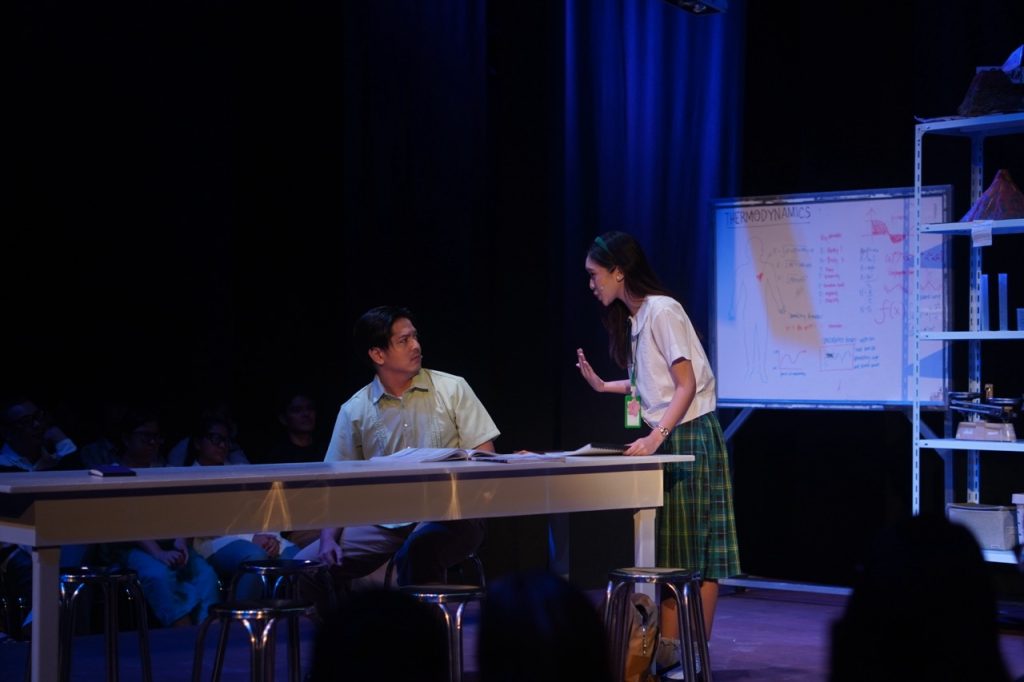
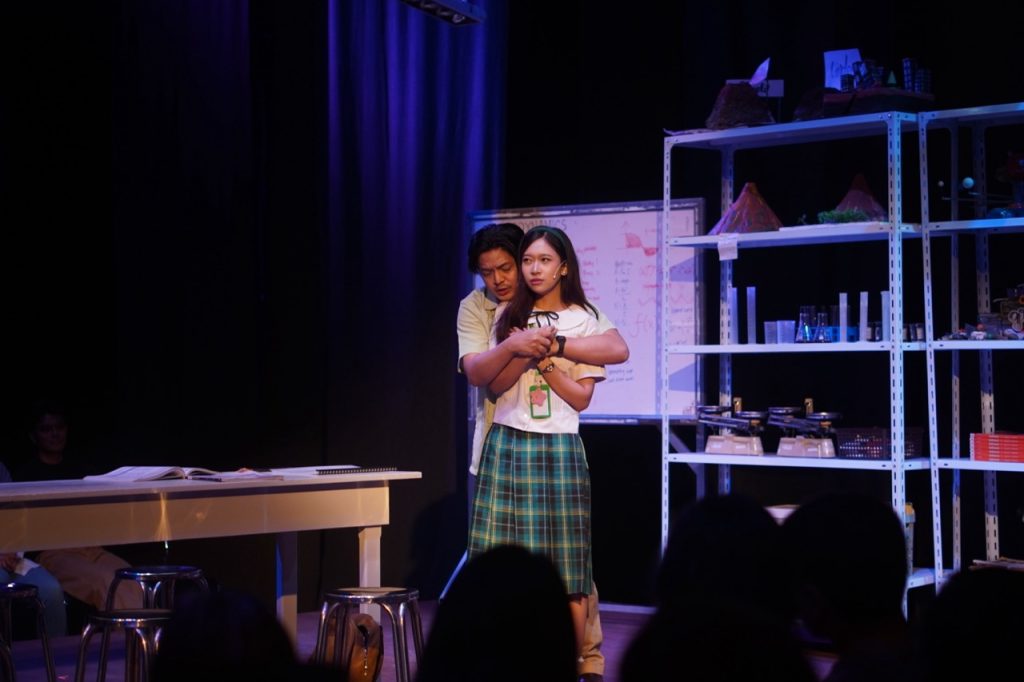
    The first one-act centers on Mr. Banakon (Ross Pesigan) and his student Hershey (Jury Sanchez), who meet in a chemistry lab under the guise of discussing the whereabouts of Hershey’s classmate who goes missing. But in the process, the conversation quickly pivots when Hershey confronts Mr. Banakon over a research paper, which he did not accept. As their back-and-forth unfolds, the play shifts into the story of a teacher-student relationship that has crossed moral boundaries.

    Mapanakit

    From the get-go, the play had a lot working against it. Jury Sanchez’s performance as Hershey was wildly animated, bordering on anime. She played the character like a villain, a young student who is confessing her love to her teacher, fighting tooth and nail to prove they belong together. When Hershey makes a point, she laughs maniacally; when she says the word “flirt,” her body in sinewy way. It felt very much like she’s indicating, acting out every word that was being said. It felt more directional than an actor’s choice because a lot of the blocking and the back-and-forth between the two characters was played for comedy. It’s a dark comedy for sure; using empirical science – specifically the laws of physics and thermodynamics – to contextualize two people’s feelings for each other. 

    Mapanakit CTL02908 Ang Liknayan ng Ating mga Katawan

    The play is inherently funny as it is. There is a ridiculousness that counterpoints the deeply inappropriate conflict that is happening in front of us. However, by leaning so heavily into playing the comedy, the play ends up not being taken seriously, which it needs to be because both Hershey and Mr. Banakon are complicit in a very unlawful, boundary-crossing relationship. Had the comic portrayals been toned down, the humor would have emerged naturally on its own, allowing the true strength of the material would have risen more to the front.

    While it remains a daring piece, with Pesigan and Sanchez fully committed to their characters but the production’s lighthearted tone ultimately undermines the dark, messy themes at its core.

    Ilihan at Kalingaw

    Starring Gab Pangilinan and Euden Moje as the title characters, this mythical story follows two members of the Buringkantada tribe whose forbidden love carries deep consequences. Ilihan, the tribe’s poet and historian tasked with recording the stories of people in the tribe whose deeds must be remembered, faces punishment when her private love poems for Kalingaw, a man who is betrothed to another, are revealed. The play centers entirely on the tense final confrontation between Ilihan and Kalingaw before the rest of the tribe arrives for her punishment.

    Mapanakit CTL04172 Ilihan at Kalingaw

    The weakest of the three plays, ‘Ilihan and Kalingaw’ is overburdened by a rich world-building and history that are never fully realized in its 45-minute running time. Pangilinan and Moje do their best with the dense rhetoric of the piece, must deliver the narrative through conversation – a narrative that would have been far stronger had it been actively dramatized rather than discussed. As a result, the play is more like a didactic musing on love and freedom.

    Mapanakit CTL03267 Ilihan at Kalingaw

    Production Designer Carlo Villafuerte Pagunaling does an amazing job transforming the stage into a mythical, pre-colonial Philippines, complete with lush costumes and a striking backdrop of large wooden poles suspended from the ceiling creating an image of a fence from the sky. However, these rich visual elements cannot not keep the play from never really reaching its climax because most of the story happens off-stage. Discoveries about their love and about each other are done prior to the play’s opening, and it’s just mentioned through dialogue rather than witnessed live. This is a love story – and an entire mythical world – that needed to be fully experienced on stage and as a one-act play, it doesn’t quite land as hard as it should.

    Mapanakit CTL03283 Ilihan at Kalingaw

    Ganito ang Pangarap kong Kasal

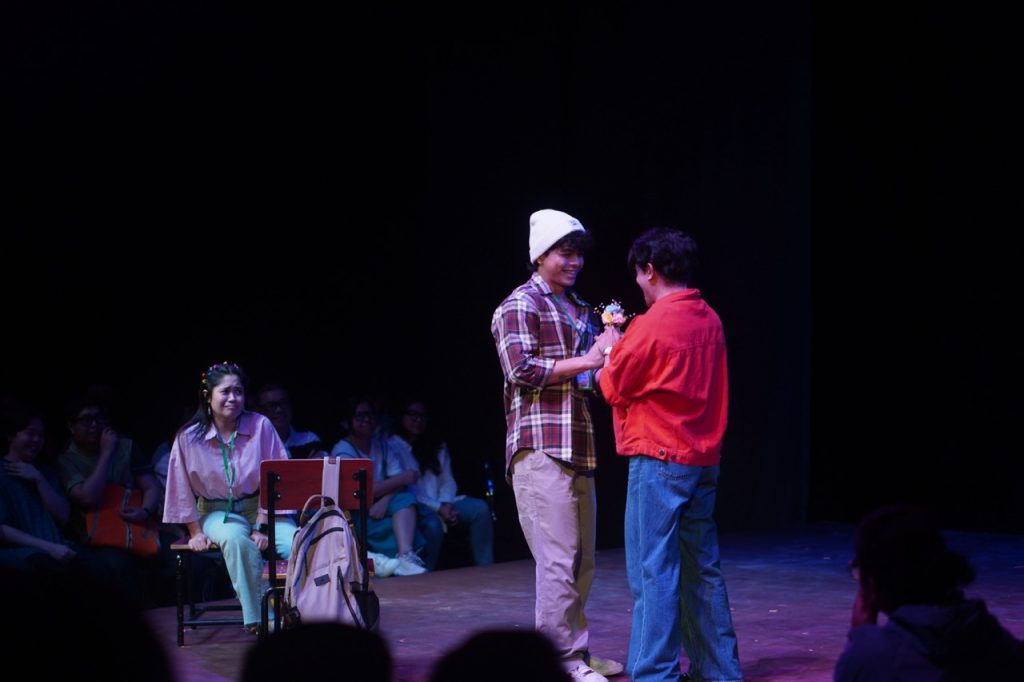
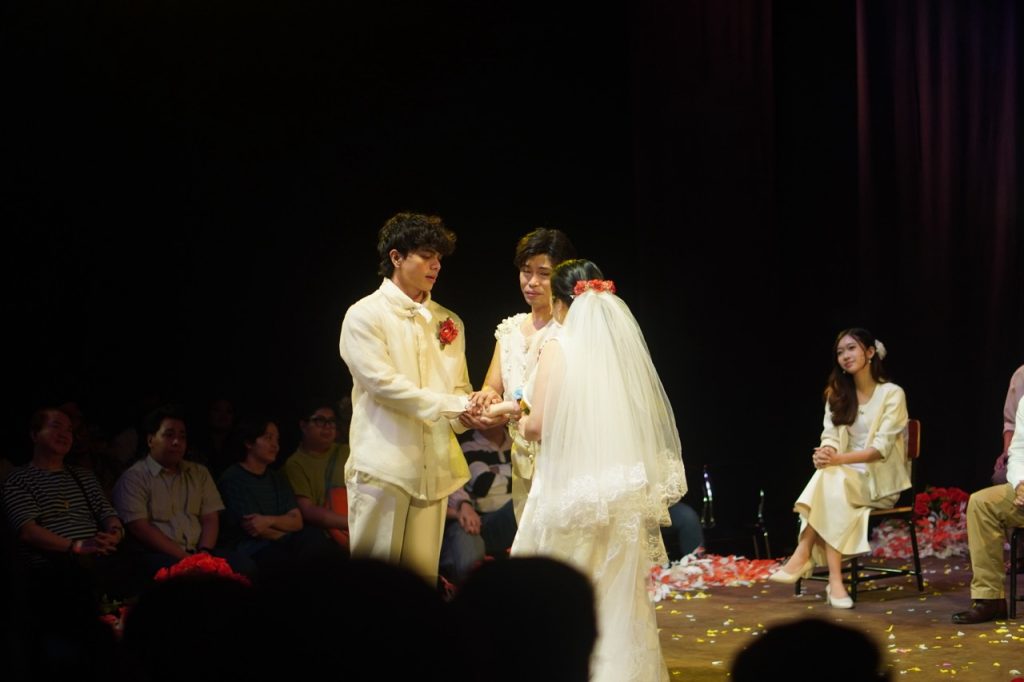
    The most successful of the three one-acts in terms of direction, ‘Ganito ang Pangarap kong Kasal’ follows two best friends, France (Phi Palmos) and Kris (Loudette Barjas), who are both pining for the same classmate, Noel (Kokoy De Santos). But Noel wants to be with France and as they find love – which they prefer to keep secret except Kris – we watch the three friends over the time and how the social pressures of fitting in can tear friendships and relationships apart.

    Mapanakit CTL03490 Ganito ang Pinangarap kong Kasal

    The three actors are incredible here. Palmos, Barjas, and De Santos fire on all cylinders, nailing all of the play’s comedic punchlines to hilarious effect. The first half had the audience in stitches. As the realities of the world kicks in, the trio shifts gears seamlessly and mine the pathos of each character that creates a duality, fully forming their characters and really catching the audience.
    Mapanakit CTL03720 Ganito ang Pinangarap kong Kasal

    My only gripe is the way the story approaches these friendships and how it navigates the play’s ending to once again play to the usual tropes of the gay romance storyline. It offers nothing new about gay love stories that we haven’t seen before and takes a conservative and melodramatic tone for its ending. The actors do an amazing job making it real, emphasizing the hurt and the loss of the choices that they make, but these characters deserve better. I can only hope that this is an older play written many years before, because as a friend stated after the show: “It’s 2026, we deserve better stories and better endings than this.” And I couldn’t agree more.
    Mapanakit

    All the good that the first half of the play was able to dramatize on stage gets lost at the end as the narrative surrenders to cliche. 
    My Rating: 2.5 Stars

    stars 2 5


    Youth Performance Council’s collaborative showcase, Mapanakit runs through August 9 at the KAL-IBG Theater in UP Diliman. Don’t miss this unique exchange between local regional talent and Manila stage veterans, secure your seats now via Ticket2Me.

  • MOVIE REVIEW: On the Right Note: A Review of ‘Tuner’

    MOVIE REVIEW: On the Right Note: A Review of ‘Tuner’

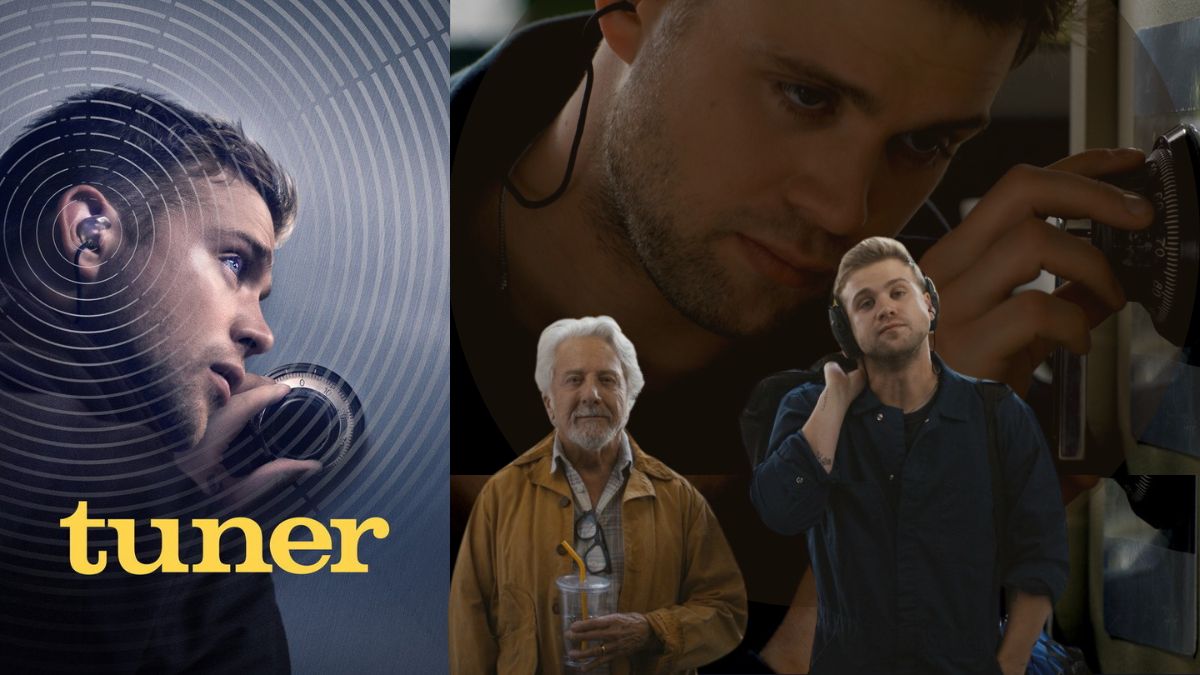
    There is something simple and elegant about director Daniel Roher’s crime thriller Tuner that calls back to mid-to-low-budget crime thrillers of the past. Written by Roher and Robert Ramsey, the film ably balances its independent film tone and aesthetic while still delivering mainstream satisfaction by taking the time to focus on the love story that completes the main character’s arc. The film’s duality (one part crime thriller and one part character study) works very well for the first two-thirds of the film, though its rather clean, neat ending feels more suited to a fully mainstream picture. It’s a satisfying ending, for sure, but it goes against the film’s overall tone, which may not be a bad thing; it just didn’t work for me. I liked it better when the film was messy.

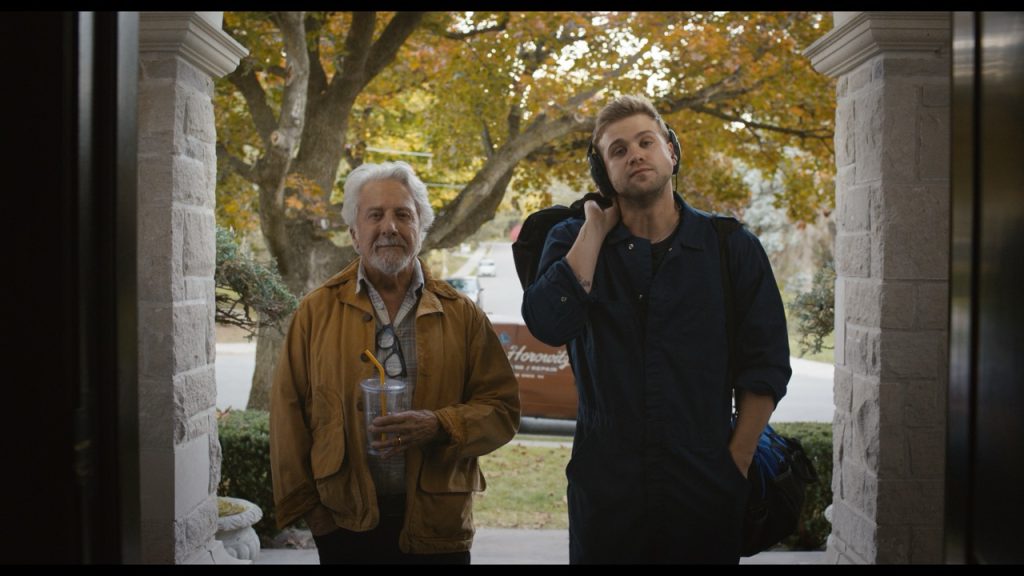
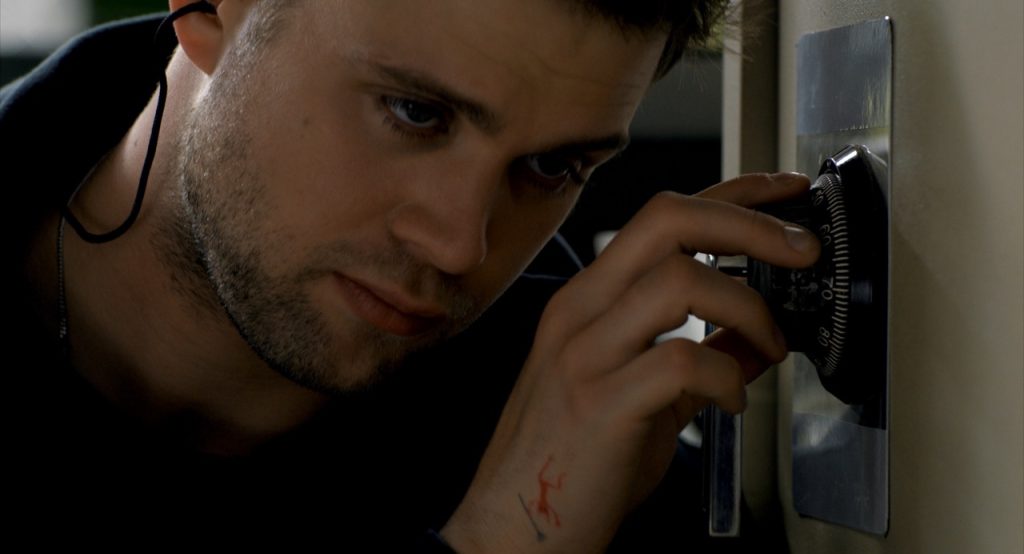
    Tuner centers on Niki White (Leo Woodall), a piano tuner with a rare condition that makes him allergic to loud noises. Hyper-sensitive to sound, he is constantly wearing earphones or headphones to drown out the sounds of the city. When his mentor, Harry (Dustin Hoffman), is hospitalized, Niki feels compelled to ally himself with Uri (Lior Raz), a security agency owner who robs from the wealthy, stealing just enough to fly under the radar. Niki’s sensitivity to sound makes him an ideal safecracker and Uri quickly puts his talents to work. As Niki take on jobs to cover for Harry’s hospital bills, he also finds himself forging a relationship with a music composition major, Ruthie (Havana Rose Liu).

    Tuner

    Roher stays light on the crime aspect of the film, for the most part, using it as a means to an end for Niki. The illegal work allows him to take care of Harry, who has become his only family in the city. While his condition has kept him from forming real relationships and from having a real life, the money he earns from cracking safes for Uri allows him to finally reach for what he’s always wanted. It builds his confidence, giving him means to provide for Harry and his wife, Marla (Torvah Feldshuh), the only family he’s got. He can take Ruthie on dates and get her expensive gifts. The way the film tracks the apparent changes in Niki from before he started working Uri and after, allows us to see a more nuanced conversation about struggling for survival and having the money one needs to really have a life.

    Tuner

    There is even a Robin Hood allegory that Uri makes that creates a justification for what it is that they do. We don’t know what Uri does with his money but we do know what Niki does with his money. It’s an interesting dramatic situation that fully forms the character arc of Niki.

    But the film is also very much ready to complicate things. At the end of the day, theft is theft, and stolen money always comes with consequences. By this time, we have gotten to see Niki at his highest, watching him fall to his lowest and it makes for an interesting film. It’s really a character study, especially as the film breaks down Niki’s own past and we see the full extent of what it is he has really lost because of his condition.

    The sound design is impeccable and a compelling reason to watch the film in theaters, where the volume itself plays an important aspect in telling the story. 

    I’ve seen Woodall before in the second season of The White Lotus and the AppleTV series Prime Target, but he never truly owned the screen. But in this film, he manages to mine all of Niki’s pathos to build a deeply engaging character that is so interesting to watch. Havana Rose Liu and Tovah Feldshuh are equally excellent, allowing their characters’ vibrancy to contrast with Niki’s dour view of the world. While the performances are good across the board, these three are the ones that I must discuss.

    My Rating: 3 Stars

    stars 3 0


    While you won’t get to experience its sound design in theaters anymore, Tuner is still well worth seeking out when it hits streaming platforms.