Author: Wanggo Gallaga

  • Movie Review — Endings and Beginnings: A Review of Cinemalaya XXI Opening Film ‘The Elysian Field’

    Movie Review — Endings and Beginnings: A Review of Cinemalaya XXI Opening Film ‘The Elysian Field’

    The Indian film ‘The Elysian Field’ opens Cinemalaya XXI with a poignant story about how the modern world is slowly wiping away small villages and what that looks like. This slice-of-life story gives us a peak at a secluded village in Meghalaya in the northeastern region of India. The village has only six inhabitants left and their lives are completely intertwined.
    The Elysian Field
    Photo courtesy of Cinemalaya / CCP Corporate Communications Division

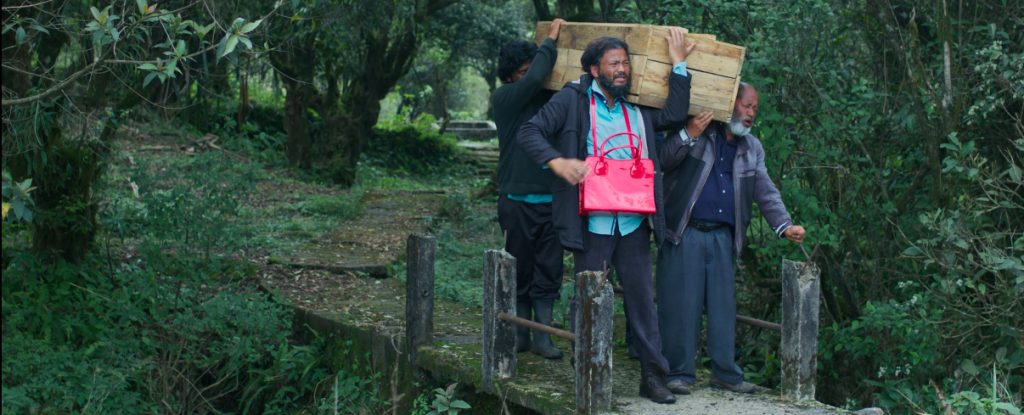
    The film opens with Livingstone (Albert Mawrie), who is coming home on a bus with the coffin of his recently deceased wife, Belinda. As he arrives, the three remaining men of the village – Complete (Richard Kharpuri), Promise (Merlvin Mukhim), and Friday (Jeetesh Sharma) – help carry the coffin down across a huge field, two bridges, a hill, and further along back to their secluded village. There they are joined by Maia (Baia Marbanjang) and Miss Helen (Helen Duiia), Livingstone’s mother. Over the course of the film, we see how life fares in this empty town that is surprisingly filled with life. We see them struggle with electricity, gossip about each other, a romance begins to bloom, and the spectre of death hangs above them in their little village filled with empty houses and ruins.

    The Elysian Field
    Photo courtesy of Cinemalaya / CCP Corporate Communications Division

    Written by Paulami Duttagupta and directed by Pradip Kurbah, the film immerses us in a world that is slowly fading away. Set against the gorgeous Meghalaya landscape, we are transported to a place seemingly beyond time and geography. To be able to resupply, the villagers must take the one and only bus back to the city (of which there are no scenes) and the impression is given that this is a whole day affair. The rest of the time is spent living out their days in the empty village, cooking food for each other, drinking at nights, and living truly as one community. 

    There are story elements that pop up: Belinda’s children from before her marriage to Livingstone are contesting her will and Livingstone must deal with the litigation and go to the city every now and then, Complete is fighting with the government for not providing service to their tiny village, Promise must continue to fix every issue involving electricity and electronics, while Maia finds herself wooed by some of the men in the village.
    The Elysian Field
    Photo courtesy of Cinemalaya / CCP Corporate Communications Division

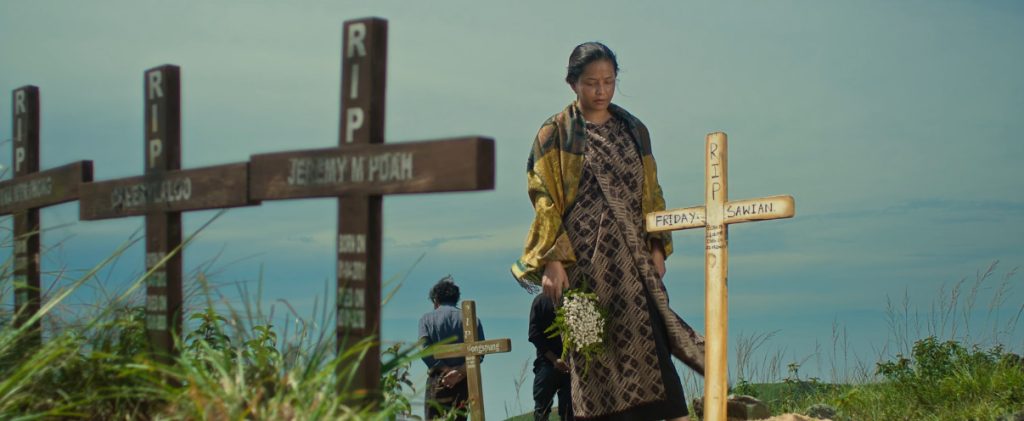
    But none of these take center stage in the story. These are just activities in the lives of the people of this secluded little town, and the film manages to show us this burst of live despite the fact that it is also dying right in front of us. There’s no future here. At some points, the men begin to dig graves for all of the inhabitants so that it wouldn’t be left to the women if the men died first. But while the threat of extinction hangs above them, they are just filled with life.
    The Elysian Field
    Photo courtesy of Cinemalaya / CCP Corporate Communications Division

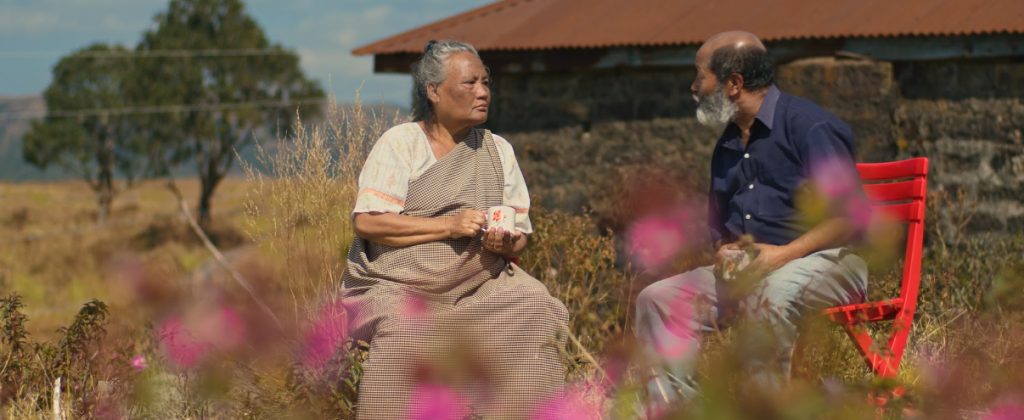
    It’s a gorgeous movie once you allow its languid, almost dreamlike pace to sink in. The way by which this small community engages with one another is very Filipino in spirit and in values. It’s a love letter, for sure, to a way of life that is slowly disappearing and while this may be a Northeastern Indian issue, this could very well be a small town in Northern Luzon or in the mountains of Mindanao. While being inherently Meghalayan in culture, the way director Pradib Kurbah puts it in his camera frame makes it utterly universal.

    The Elysian Field

    The performances are exquisite, with Marbanjang being the heart and soul of this ensemble. Her warmth is the center of which the community revolves around. The acting is so natural, so subtle and layered. It makes the film poignant and funny all at the same time.

    A Big Bold Beautiful Journey


    The Elysian Field is showing on the big screen! Check cinema showtimes near you and grab your tickets today!

    This year, don’t miss Cinemalaya 21: LAYAG sa Alon, Hangin, at Unos happening from October 3-12, 2025! Witness another stellar lineup of stories that will move you and showcase the brilliance of Philippine cinema. Follow the Cultural Center of the Philippines and Cinemalaya for updates!

  • Disney+ Streaming Review: ‘The Murky Stream’ Starts Strong With a Transformed Rowoon Heading This Incredible Ensemble

    Disney+ Streaming Review: ‘The Murky Stream’ Starts Strong With a Transformed Rowoon Heading This Incredible Ensemble

    The first three episodes of Disney+’s new K-drama ‘The Murky Stream’ have dropped, introducing a dark, gritty world of the underworld surrounding the ports of Korea’s past. A period drama in the time of Joseon, ‘The Murky Stream’ stays away from the stories of kings and nobles, as most period K-dramas tend to do. Instead, the focus is on the merchant class and the bandits and how criminality and corruption festers at the underbelly, far away from the king’s gaze. Director Choo Chang-min, best known for his work on film, brings his cinematic style to this nine-episode drama and tries to keep it thrilling at every turn.

    The story revolves around Jang Si Yul (played by Rowoon). Si Yul is a laborer in the docks, treated poorly by the bandits who charge exorbitant prices to carry goods in and out of the boats that belong to the merchant class.

    The Murky Stream Chart Disney
    Source: Disney+ PH FB

    The head bandit in Si Yul’s district, Park Mu-deok (played brilliantly by Park Ji-hwan), is now just a shadow of his former self. It is implied he was one of the first bandits in the area but now he’s old and a coward and the younger bandit leaders bully him and make fun of him. His contemporary, Deok-Gae (Choi Young-Woo), now oversees all the bandits in the area, and their relationship is an interesting one. In the first two episodes, Si Yul suffers every hardship imaginable until he finally snaps and faces off with Choi Eun (the formidable Shin Ye-eun), the daughter of a prominent merchant family who is taking leadership of the merchant’s guild, whom he believes has avoided payment for his labor.

    Within the first three episodes, we see Si Yul challenge the status quo and finds himself at the crosshairs of Mu-deok, who plans to use him and his strength and fighting skills to regain his past glory as frightening bandit. Along the way, the show also portrays the depths of the corruptions of these faraway towns as the police inspector Lee Dol-Gae (Choi Gwi-hwa) is set up to the main antagonist of the show. By the second episode, we see a young new officer, Jung Chun (Park Seo-ham), who is disgusted by all the corruption surrounding the police bureau and who has a connection with Si-Yul.

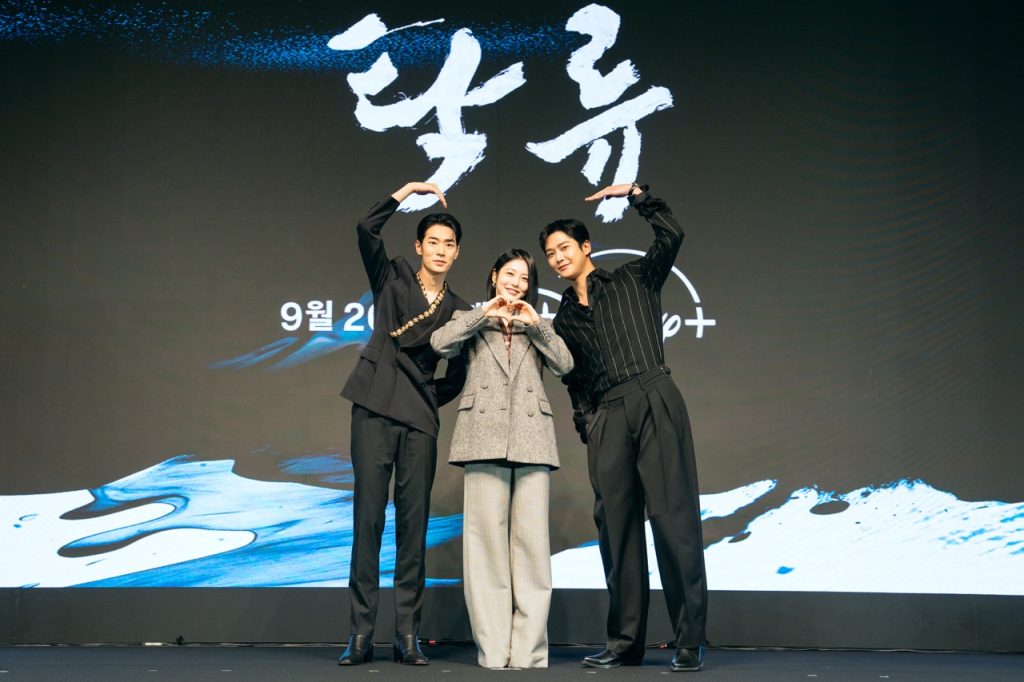
    Press Conference of Disney+ The Murky Stream
    Photo courtesy of Disney+ | The Murky Stream Press Conference

    The way the show shifts and turns are promising a complex story about the fate of the towns surrounding the Gyeonggang River that questions whether righteousness can survive in such a place. 

    Director Choo Chang-min at the Press Conference of Disney+ The Murky Stream
    Photo courtesy of Disney+ | The Murky Stream Press Conference | Director Choo Chang-min

    Director Choo Chang-min ensures that the action sequences are hard-hitting and brutal, while the world he builds is gritty and grounded. The bandits, especially Mu-deok and Si Yul are always grimy and dirty, a stark contrast with how clean and put-together Choi Eun and Jung Chun are. The show presents all the characters are leads and it feels like an ensemble piece, though we know Rowoon’s Si Yul is at the center of it. No character feels underutilized in the first three episodes. 

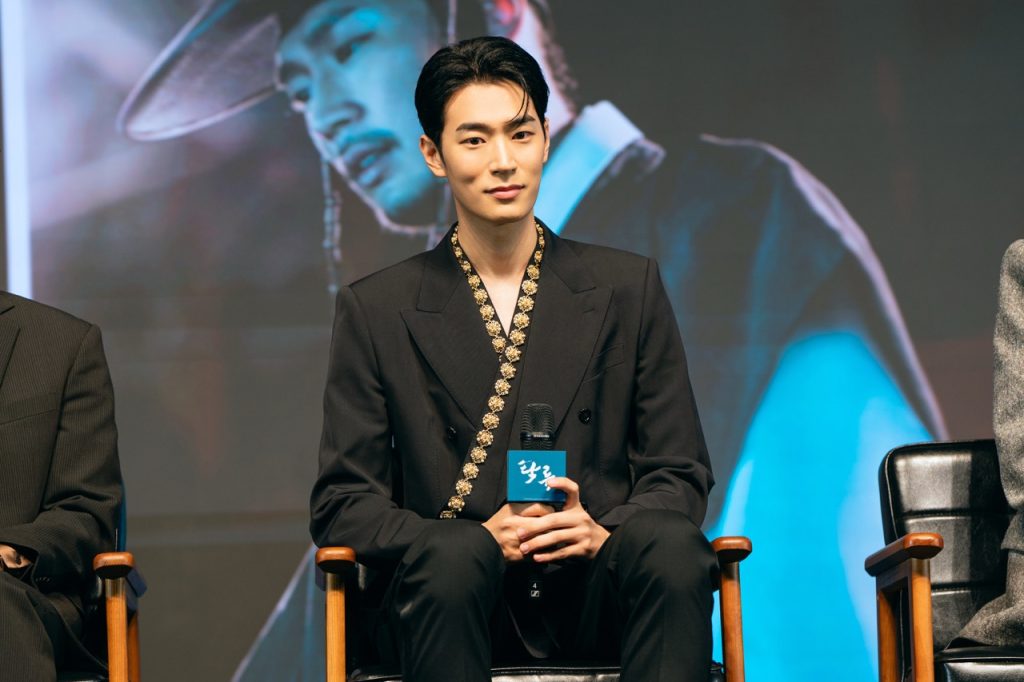
    Rowoon at the Press Conference of Disney+ The Murky Stream
    Photo courtesy of Disney+ | The Murky Stream Press Conference

    And what a transformation for Rowoon! Gone is his charm, as Si Yul is unlike any character he has played before. He barely speaks and has to project his inner world through his eyes, which are almost always glaring. It’s amazing how the star of such popular K-dramas like ‘Tomorrow’ and ‘The King’s Affection’ could play someone so broken down and undignified.

    Shin Ye-eun at the Press Conference of Disney+ The Murky Stream
    Photo courtesy of Disney+ | The Murky Stream Press Conference

    Shin Ye-eun continues to show off her talents as Choi Eun. As the merchant’s daughter, she is capable and fearless but also way in over her head. She was amazing in ‘Jeongnyeon: The Star is Born,’ practically stealing the show from the amazing Kim Taeri and in ‘The Murky Stream,’ she doesn’t disappoint.

    The Murky Steam 탁류 박서함 2
    Photo courtesy of Disney+ | The Murky Stream Press Conference

    This marks Park Seo-ham’s first mainstream role after gaining popularity from his previous role in the hit BL series ‘Semantic Error.’ His face gives away all of Jung Chun’s shock and disappointment and his expressive eyes help us understand his character’s motivations and agenda, as he has yet to show his full backstory. 

    Disney+ The Murky Stream
    Photo courtesy of Disney+ | The Murky Stream Press Conference

    But the most striking of all performances is Park Ji-hwan’s Mu-deok. Park Ji-hwan’s filmography is extensive, and I’ve seen him in ‘Gyeongseong Creature,’ ‘Our Blues,’ and most recently in ‘Seoul Busters,’ where his comedic timing is off the charts. But here, as Mu-deok, he is both frightening as he is pathetic. He’s a completely different person altogether and he’s primal and really all strung out. It’s an incredible performance as he does not play for sympathy. He’s the one to watch in this show.

    As Disney+’s first period K-drama, they are really hitting hard. The show looks expensive, and the scenes are grand. The story is complex and the dynamics of the characters within the first three episodes promise to be very intriguing. Whether the show can wrap things up within nine episodes is suspicious. The set up is big. The story seems grander than what nine episodes can hold.

    My Rating:

    stars 4 0


    Catch the gripping twists of The Murky Stream now streaming exclusively on Disney+. Don’t miss the next episode to see where the river leads.

  • Movie Review: The Relentless ‘One Battle After Another’ Utilizes Great Filmmaking to Distract From Its Political Commentary

    Movie Review: The Relentless ‘One Battle After Another’ Utilizes Great Filmmaking to Distract From Its Political Commentary

    Paul Thomas Anderson’s ‘One Battle After Another’ is a satirical action thriller that never takes a moment to breathe. It reminds me of his earlier work, one of my favourite films, ‘Magnolia,’ where throughout the film’s 188-minute runtime we witness a multi-character drama that never ends and never lets up. For 188-minutes, ‘Magnolia’ gives us scene-after-scene of high drama, characters at their lowest point, one after the other that leaves you breathless. ‘One Battle After Another’ feels exactly like this but instead of drama, it is danger, it is action, it is comic, and it is relentless.

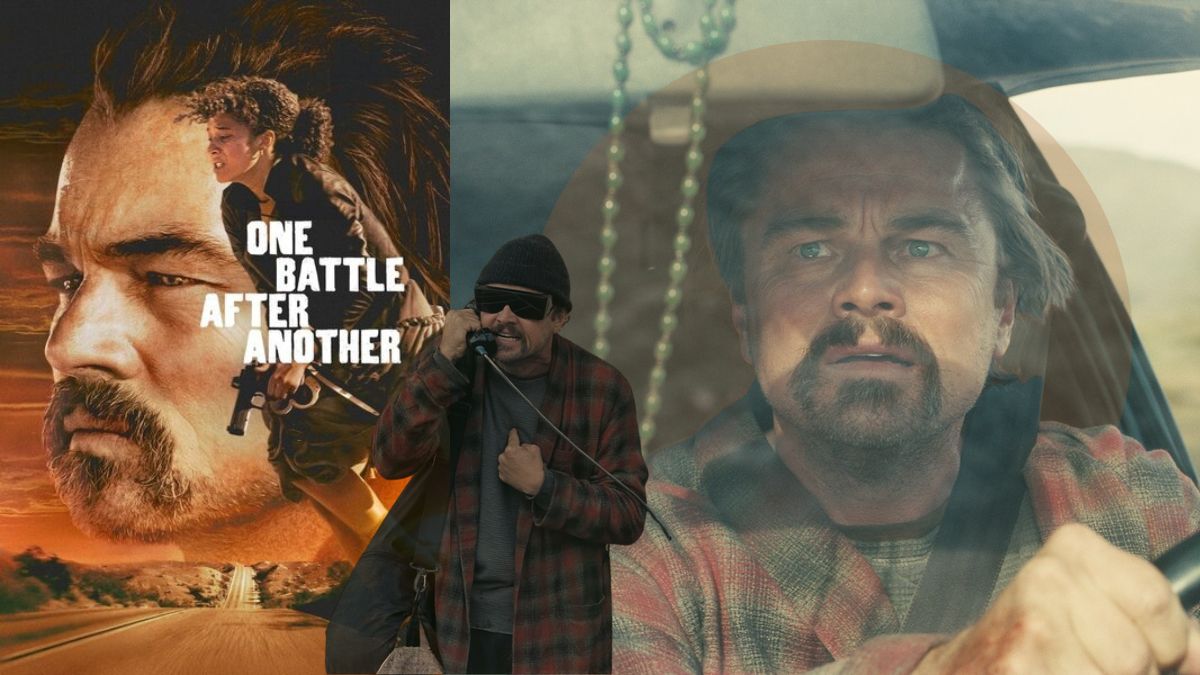
    The story revolves around Pat Calhoun (Leonardo DiCaprio), an explosives expert who is part of a revolutionary group called French 75. Alongside his partner Parfidia Beverly Hills (Teyanna Taylor), they commit robberies, armed breakouts of illegal detained immigrants, shut down power grids, and the like all in the name of toppling the capitalist overlords of America. Pat and Parfidia fall in love and become a couple but Parfidia is also the obsession of Steven Lockjaw (Sean Penn), a high-ranking soldier whom she humiliates during one of their revolutionary attacks. When one of their missions go astray, Parfidia is taken into custody and Pat changes his name to Bob and he takes their daughter, now called Willa (Chase Infiniti) and escapes into a sanctuary town. But Lockjaw is not done, he goes after Willa and Pat/Bob must rescue his daughter as the world continues the fight he has left behind when he went into hiding.

    One Battle After Another Leonardo DiCaprio
    Leonardo DiCaprio in Paul Thomas Anderson’s “One Battle After Another”
    Photo courtesy of Warner Bros. Pictures

    ‘One Battle After Another’ is a dark, cynical look at today’s world, written by Anderson, who was inspired by Thomas Pynchon’s novel ‘Vineland’. The world he creates in this movie satirizes both revolutionary movements as well as the conservative people in power as the film tangentially tackles racism, immigration, and different forms of oppression. I say tangentially, because the film takes the point-of-view of Pat/Bob, who we get the impression is a middling revolutionary at best. When he moves to the sanctuary town, he becomes addicted to weed and is a drunk and has left that whole world behind. When his daughter gets taken, he must return to the movement, but the movement has continued on without him. As Lockjaw practically invades the sanctuary town and its primarily Latin American population, the people of the town are ready to fight back but all of this goes over Pat/Bob’s head. He only has one thing in mind: getting Willa back.

    One Battle After Another
    Leonardo DiCaprio in Paul Thomas Anderson’s “One Battle After Another”
    Photo courtesy of Warner Bros. Pictures

    What’s incredible about Anderson’s direction and writing is how he put together a feisty film criticizing American politics while distracting us from it with humor, fast-paced suspense and action, and an incredible filmmaking style that has us at the edge of our seat throughout the entire film. Shot magnificently in IMAX by cinematographer Michael Bauman. He shifts from a handheld to wonderfully cinematic long shots that truly capture the scope of Anderson’s vision. The film is also scored by the incredible Jonny Greenwood, who uses a jazz score to constantly keep us from ever feeling settled. The syncopated, discordant notes are always keeping us on our toes, never allowing us to breathe.

    Everyone in the film is incredible. Leonardo DiCaprio and Sean Penn remind us why they are Oscar winners by completely inhabiting their characters and are playing it to the hilt and allowing for both the seriousness and the silliness of their characters to its full measure. Teyana Taylor is a force of nature as Perfidia. She’s commanding. Her permanent scowl evokes a fierceness that she brings with her to every scene.

    Chase Infiniti never gets swallowed by the sheer talent that surrounds her, standing on her own two feet, and shows off a powerful screen presence. Benicio Del Toro is such a wonderful presence as Pat/Bob’s only friend and the de facto leader of the Latin American community in the sanctuary town. 

    One Battle After Another DUS 250113 0050 7
    Leonardo DiCaprio in Paul Thomas Anderson’s “One Battle After Another”
    Photo courtesy of Warner Bros. Pictures

    The film is equal parts funny and thrilling, there’s very little to not enjoy in this movie. But what I love most about it is the way Anderson centers the film on two white people in a predominantly Hispanic and black and female, where one (Lockjaw) is the epitome of the conservative American white supremacist and the other (Pat/Bob), who is completely disconnected from the greater battle that surrounds the film as he only cares for his own personal mission to save his daughter. The way the film represents the current racial crisis in America is so obvious to me despite it not being in the front and center of the narrative. There’s no preaching or moralizing here. The film takes a whole hour to set up the backstory of Pat, Perfidia, and Lockjaw and then the next hour to have Willa taken and Pat-now-Bob chase after her. It’s clever and well-hidden in a flurry of great filmmaking.There’s no question this will to be a front-runner come awards season and it’s definitely one of my favourite cinematic experiences this year.

    My Rating:

    A Big Bold Beautiful Journey


    One Battle After Another is showing on the big screen! Experience Thomas Anderson’s relentless, thrilling vision the way it’s meant to be seen. Check cinema showtimes near you and grab your tickets today!

  • Theater Review — A Very Beautiful Mess: A Review of the Theatrical Adaptation of ‘Dagitab’

    Theater Review — A Very Beautiful Mess: A Review of the Theatrical Adaptation of ‘Dagitab’

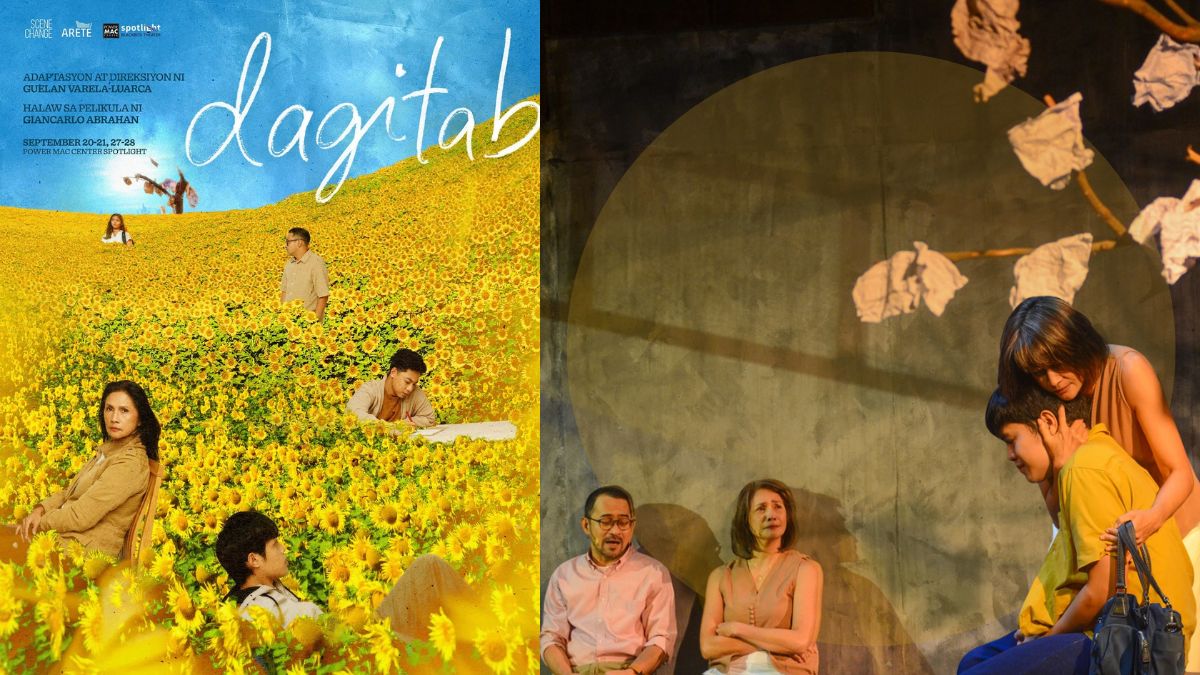
    The theatrical adaptation of the Gian Abrahan film ‘Dagitab’ is a gorgeous work of theater. It’s a vivid and vibrant exploration of a marriage untethering and of youthful desire violently taking form. Adapted and directed by Guelan Varela-Luarca, the play makes full use of its space and the sparse (but striking) stage design by D Cortezano and the versatility and power of its cast. You are at the edge of your seat the entire time as these lives are unfurling before your eyes and its breathtaking to watch.

    digitab

    The story revolves around a married couple, Issey and Jimmy, who are sort of rockstar professors in UP. Issey teaches writing classes and a renowned poet while Jimmy is an anthropologist, working on a new book. There’s love there between them, obviously, but when the play begins, we are seeing the tear in the relationship in the way they converse and argue. Issey is leaving for a workshop while Jimmy is out to explore a mountain looking for a “sundang,” a mythical blade from his research and a sore spot for Issey.

    Dagitab SNJ 2007
    Scene from ‘Dagitab.’ Photo by IR Arenas (@irarenas)

    In the writing workshop, Issey gets close to her 17-year old godson, Gab, who is a freshman in UP and a promising nonfiction writer. Soon, Gab falls for Issey and makes a move, which Issey tries to resist but her strained relationship with Jimmy becomes her excuse to give in. Complicating things further is Gab’s roommate at the workshop, Angelo, who is an older student and a “workshop veteran,” who falls for Gab.

    Dagitab SNJ 2034
    Scene from ‘Dagitab.’ Photo by IR Arenas (@irarenas)

    What’s amazing about the play is how clear each character’s motivations are: how the script maximizes its 2 hour and 20 minute runtime for us to really see the struggles of each character as the actions they take are much more complicated than what they appear. As the narrative unfolds, Jimmy’s trek to the mountains is an attempt for closure of a personal matter of which Issey is aware of. This affects Issey’s own self-worth which manifests in the way she deals with Gab. For Gab, there’s a conflation between his physical attraction to his godmother and his own ambitions to be a writer of worth, which is mirrored by Issey’s own stature. Angelo plays counterpoint, someone who is aware of the boundaries and is careful on how to breach it, unlike the other three.

    Dagitab SNJ 1937
    Scene from ‘Dagitab.’ Photo by IR Arenas (@irarenas)

    Valera-Luarca makes full use of Cortezano’s minimalist design. On stage, there’s only two tables and three stools but these become a car, rock formations in a forest path, a bar, the home of Issey and Jimmy, and bedroom shared by Gab and Angelo at the workshop. Off stage, there’s a huge tree and a mound made of paper, which correlates to Jimmy’s own journey into the mountains, and it has its own special moment.

    Dagitab SNJ 1943
    Scene from ‘Dagitab.’ Photo by IR Arenas (@irarenas)

    The actors come to move the stools and tables to establish the scene, but it also mirrors the interior world of the characters. At the start of the play, the tables are filled with paper. As the story progresses, the paper starts to fall off and fill the floor, symbolic of how messy things are getting. All of this is further enhanced by the lighting design of Jethro Nibaten. With barely anything on stage, the light changes help clarify the scene changes.

    Dagitab SNJ 1982
    Scene from ‘Dagitab.’ Photo by IR Arenas (@irarenas)

    But the space is further enhanced by Varela-Luarca’s direction allowing multiple characters on stage at any one time. When Issey is talking to Gab about her husband, Jimmy is on stage as well, acting out her story. If Issey and Gab have a fight, he storms off and sulks in a corner, while Issey and Jimmy act out the next scene while Gab is huddled in one corner, lost in his thoughts. It gives the impression that the imagined and the real are existing side-by-side and even if people are not present in the scene, their presence are there, just in the background occupying space. The mess these characters get themselves in keeps them always in mind.

    Dagitab SNJ 2087
    Scene from ‘Dagitab.’ Photo by IR Arenas (@irarenas)

    And these characters are brought to life by a brilliant cast. Benedix Ramos is striking as Angelo. The way he hovers around Gab betrays his vulnerability despite his tough exterior as a “workshop veteran.” Angelo uses physical proximity to lure Gab in, and Ramos never plays it aggressively. He’s subtle. It’s quite enjoyable to watch. Jojit Lorenzo is always reliable, and you can see this in his portrayal of Jimmy. He’s a man living in two worlds, one with Issey and another in his past. He declares his love for his wife but there’s something in the back of his voice that betrays his inability to move on. It’s quite thrilling to see. Elijah Canlas is revelation on stage as he plays Gab. I’ve seen him in many movies and he’s such a chameleon. He transforms once again and manages to infuse Gab with the unrestrained passion of a 17-year-old. He’s naive and full of energy and you almost forget that he’s not 17. 

    Dagitab SNJ 1938
    Scene from ‘Dagitab.’ Photo by IR Arenas (@irarenas)

    But this play becomes a showcase of Agot Isidro’s boundless talent. As Issey, she’s a force of nature. She fills up that stage with Issey’s verve and power. She loses herself dancing in one scene and then transitions to the next scene where’s suffering a hangover and it’s really there for you to see. Despite Issey’s strong personality, Isidro manages to let slip her vulnerable side too, one that Issey thinks she’s hiding but Isidro lets out in a gesture, a look, an inflection of her line delivery. This is some of the best work I’ve seen from her.

    Dagitab SNJ 2041
    Scene from ‘Dagitab.’ Photo by IR Arenas (@irarenas)

    While the sound design by Carlos Hombrebueno creates an interesting soundscape that highlights the mood, my issues about the sound in the PowerMac Spotlight Black Box theater is still present. Sometimes the mics lose their volume, sometimes you’ll hear static. Oftentimes the musical score is louder than the actors. But it’s negligible and the actors power through.

    Dagitab SNJ 2116
    Scene from ‘Dagitab.’ Photo by IR Arenas (@irarenas)

    ‘Dagitab’ is just an incredible theatrical experience that also hits close to home as someone who has been to some of these writing workshops. The characters are familiar to me, and these stories are stories I’ve heard before. And how it comes to life on stage is such an enjoyable experience. People around me were crying, I was gasping and reacting strongly at every powerful line delivered. This is truly great theater.

    My Rating:

    stars 5 0


    Dagitab runs until September 29, 2025, at Power Mac Center Spotlight Blackbox Theater, Circuit Makati. Tickets are available at Ticket2Me.

  • Movie Review: Too Big but Not Too Bold in ‘A Big Bold Beautiful Journey’

    Movie Review: Too Big but Not Too Bold in ‘A Big Bold Beautiful Journey’

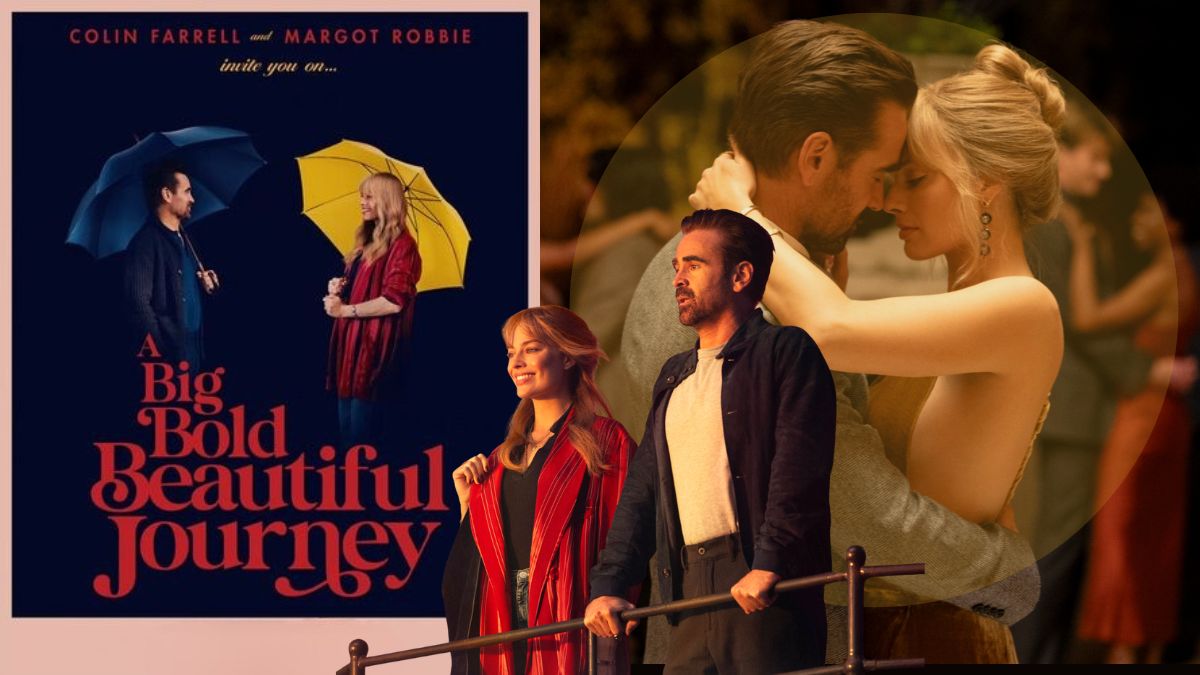
    It’s a strange thing to know that a film is bad, but it hits you hard anyway. That was my experience watching ‘A Big Bold Beautiful Journey.’ The film directed by Kogonada and written by Seth Reiss and starring Margot Robbie and Colin Farrell is beautifully shot and well-acted, but the film’s story is bogged down by an earnestness that leans towards the contrived. The whole film feels manipulative, blasting you with a lush musical score and wall-to-wall songs, trying to elicit an emotional reaction while providing simplistic and easy answers for the challenges that face its complicated characters.

    David and Sarah (Farrell and Robbie) are strangers on the way to attend a friend’s wedding. David’s car is indisposed, and he spots a poster for a car rental service on the wall where he parked. It leads him to an empty warehouse where two attendants (Kevin Kline and Phoebe Waller-Bridge) ask very strange questions before renting him a car with a GPS. We see him arrive at the wedding along with Sarah, also driving the same car model. They are introduced at the party and immediately enter a flirting game with Sarah coming in strong and David, quickly shying away. As they leave the following day, David’s GPS begins to talk to him and asks him if he wants to take a “a big, bold, beautiful journey” to which he answers “yes.” This journey leads him to Sarah, whose car has broken down, and together they follow the navigation that leads them to doors that lead them into their past.

    A Big Bold Beautiful Journey car
    Photo Courtesy of Columbia Pictures

    There’s a lot of promise here as we discover how David and Sarah have remained single – David, who seems to be afraid to take the leap, and Sarah is constantly sabotaging her relationships – and the two are navigating each other’s traumas to try and get the other to take the plunge. It’s a very verbose film where these two characters are saying exactly what they feel without inhibition. At times, it can get charming, but that’s because Farrell and Robbie are acting the hell out of this script, but as the narrative draws out, it starts to become cloying and tired. It never seems to progress to something concrete.

    A Big Bold Beautiful Journey door
    Photo Courtesy of Columbia Pictures

    And Reiss’ script creates a very simple formula for these two characters: key moments in their past has led them to this and the depths of David and Sarah’s complications seems too great for something than what is presented. Maybe it could work if it were a simple direct-to-streaming film with actors who weren’t putting too much into their characters, but this movie is trying to live up to its title: it’s big and bold and beautiful. The imagery and grandeur of its filmmaking make the simplistic writing really come off as weak and easy.

    A Big Bold Beautiful Journey standing
    Photo Courtesy of Columbia Pictures

    But for some reason, the film got to me. The majestic score by Joe Hisaishi and the cinematography by Benjamin Loeb just worked magic. It was manipulative, for sure, trying to hit all the emotional peaks but it’s also the sincerity of Robbie and Farrell that hit me in my tender spots. The way the film asks us to take a risk for love resonated with me. I am not exactly sold on the writing, but the message was loud and clear.

    A Big Bold Beautiful Journey lighthouse
    Photo Courtesy of Columbia Pictures

    I left the cinema torn. I could tell that the writing was bad and that the director was doing too much to land the emotional beats but because it spoke to me on a personal level, it still did the trick. I wonder if I watch this film again when I’m more settled with my own issues if that magic would still work. Films can do that sometimes and I love that about it. You could like a movie even if you know it’s not good.

    My Rating:

    A Big Bold Beautiful Journey


    A Big Bold Beautiful Journey is still showing on the big screen! Don’t miss the chance to experience this heartwarming adventure on film. Check cinema showtimes near you and grab your tickets today!

  • Movie Review: Gorgeously Shot, Lav Diaz’s ‘Magellan’ Invokes Thoughts but Can Leave You Emotionally Blank

    Movie Review: Gorgeously Shot, Lav Diaz’s ‘Magellan’ Invokes Thoughts but Can Leave You Emotionally Blank

    I still haven’t really found my way into fully grasping slow cinema, and Lav Diaz’s ‘Magellan’ continues to revel in the qualities of that cinematic mode. With the gorgeous cinematography of Artur Tort, ‘Magellan’ is filled with lush imagery and exquisite framing that forces us to look at nature, its sheer beauty, and then juxtapose it with the violence of colonization. I find that Diaz’s work is very cerebral, something that demands your attention and immersion; and this film has a thin narrative (which is my bailiwick), leaving all of the work that we want from the story for the image to deliver. 

    On the surface, the film follows Portuguese explorer Ferdinand Magellan (Gael Garcia Bernal) coming back to Portugal after his participation in the capture of Malacca, where he buys a Filipino slave whom he calls Enrique (Amado Arjay Babon). Our protagonist tries to convince the king to allow him to circumnavigate the globe to find a different route to Asia in order to find new trade routes without competition.

    Magellan MAGALHAES Still004

    When his proposal is rejected, he brings this to Spain who then gives him a ship to find that new pathway to the unconquered lands. At sea, he must face storms, mutiny, and even starvation but soon they arrive on the shores of Cebu. 

    We all know what happens next.

    Magellan MAGALHAES Still018

    As straightforward as this narrative seems, Diaz takes his usual distance from his subjects, allowing his camera to contextualize his characters in the vastness of their ambitions and their place in the world. We don’t even get to see Gael Garcia Bernal’s face until one hour into the film (I know, I checked) when he gets his first close-up. At the distance that he takes, we see these images like paintings, depicting moments of great import – the capture of Malacca, the mutiny on the ships, the arrival at Cebu, the blood compact between Magellan and Raja Humabon (Ronnie Lazaro) – we witness its epic scale, but I feel unable to grasp what he’s trying to say. 

    Magellan MAGALHAES Still009

    He makes no hero of Magellan. We see him marry his nurse (Angela Avezedo) and leave for his expedition while she is pregnant. He sentences two of his crew to death after being caught in a homosexual affair below deck. In the shores of Cebu, he quickly converts natives into Christians and destroys their idols and wooden statues of their gods. But never does he explore his hero’s interiority.

    Magellan MAGALHAES Still013

    We have long, still shots of Magellan in rumination – about what exactly, we do not know – and this is juxtaposed by stunning shots of the nature that surrounds him in his voyage. Maybe colonization is a force as powerful as nature, which makes the pushback of the Filipinos at the end of act three its own show of force.

    Magellan MAGALHAES Still017

    Still, this is Magellan’s story, not the Philippines’. Enrique barely gets to have a moment for himself until his own participation is revealed at the end of the film through a voice over. No contrast or juxtaposition between these two characters that could somehow contextualize Diaz’s stand about these events in the film.

    Magellan

    While I’m left emotionally empty after watching the movie, I have to give kudos to how beautifully shot ‘Magellan’ is. Diaz’s mise-en-scène, paired with Artur Tort’s exquisite handling of light and color, draws you into the metaphysical nature of Diaz’s films. It forces you to really look and what I saw was the violence of colonization and Magellan’s own ambitions that led to his own demise. It’s undeniably thought-provoking, but at 160 minutes, and leaving me feeling emotionally blank, I feel it’s not my favourite of Diaz’s works.

    My Rating:

    stars 3 5


    Lav Diaz’s Magellan is still showing in cinemas. Don’t miss the chance to experience it on the big screen, check showtimes and get your tickets here.

  • Theater Review: The Two Sides of GMG’s Staging of ‘Dear Evan Hansen’

    Theater Review: The Two Sides of GMG’s Staging of ‘Dear Evan Hansen’

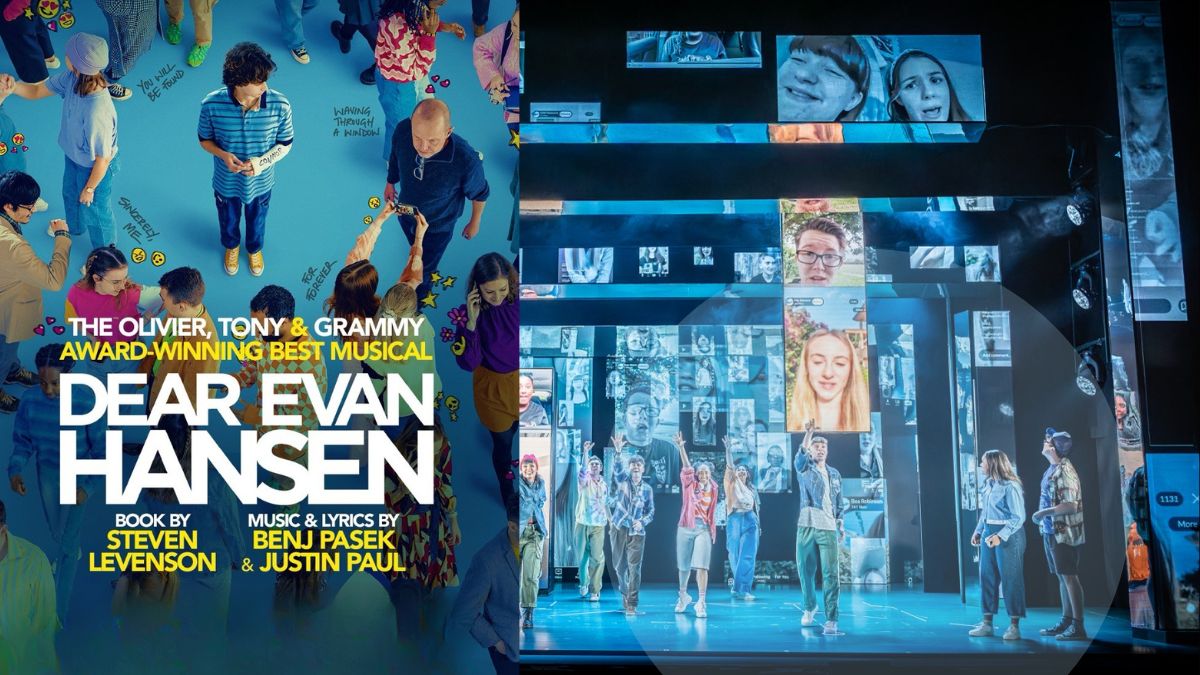
    I knew nothing about the show coming into the Solaire Theatre on press night for ‘Dear Evan Hansen.’ I knew that it was a popular musical – it won six of the nine Tony Awards it was nominated for, including Best Musical and Best Score, and was later adapted into a film – and that Benj Pasek and Justin Paul, who wrote the music and lyrics, are well-loved songwriters having written the songs of ‘La La Land,’ ‘The Greatest Showman,’ and a Broadway musical that I love, ‘Dogfight.’ I was expecting a great show, due to this popularity and how it’s the “favourite musical” of my close friends. What I was not expecting was to be pulled in two very different emotional directions.

    Dear Evan Hansen
    Photo by Marc Brenner

    First off, as a show, ‘Dear Evan Hansen’ was quite strong. The set design by Morgan Large along with the video direction and design by Large and Ravi Deepres, really created such powerful images, quickly transforming the stage from bedroom to school hallway complete with lockers, to a kitchen or a living room. The sets just swipe in and it’s quite a feat to watch. The stage is practically empty except for when the different set ups just rush in to complete the scene while the video wall in the back can heighten a song by creating a dazzling display that highlights the context of the scene. It’s so brilliantly put-together that it was doing exactly what it should without overwhelming a scene. The cast was quite strong, especially Ellis Kirk, who played the titular role of Evan Hansen, and Rebecca McKinnis, who plays Evan’s mom, Heidi. Both Kirk and McKinnis really brought the play to the emotional level it needed to go to and they were the cast’s strongest singers to boot.

    Dear Evan Hansen
    Photo by Marc Brenner

    The direction by Adam Penford allowed the show to shift and slide off to its comedic moments but can throw itself into its much darker themes when it has to. The cast do quite a good job at playing high school kids, though Tom Dickerson just looked like a mature man to effectively sell the character of Jared, Evan Hansen’s neighbour and only confidant. He did as best as he could to try and portray a teen but his height, body frame, and looks just went counter the imagery that I couldn’t suspend my disbelief. I had no trouble with the others, most especially with Kirk and Zoe Athena, who plays Zoe Murphy, Evan Hansen’s crush in school.

    Dear Evan Hansen
    Photo by Marc Brenner

    The songs of Pasek and Paul are so good that you can understand why the musical won a Tony, and it’s an overall good production. What shocked me, though, was halfway through the first act, I started to feel very uncomfortable with where the show was going narratively. The book by Steven Levenson details the story of an anxious high school senior who is tasked by his therapist to write letters to himself every day to help with his anxiety, hence the name of the play. After an encounter with Connor, the school bully, one of Evan’s letters gets mistaken for having been written by Connor and Evan begins to lie to try and become part of a larger narrative. Connor happens to be Zoe’s brother, Zoe being Evan’s crush in high school. The suicide shocks the whole campus, and it is even more shocking to discover that Connor had a friend and it’s the socially awkward outsider, Evan Hansen.

    Dear Evan Hansen
    Photo by Marc Brenner

    What makes the show so uncomfortable is how far Evan takes this lie and how much bigger the misunderstanding grows. It gets so big that, at some point, it becomes harder and harder to imagine how the story can properly position Evan into a place where he can be forgiven for what he’s done. Lives are changed, perceptions are altered, and even a movement begins, and it’s all based on a lie from one socially awkward young man with a serious mental condition who just wanted to belong.

    Dear Evan Hansen
    Photo by Marc Brenner

    The play never actually manages to properly give any sort of justice to the characters of the story. The way it handles all the deception was so uncomfortable to me that, no matter how powerful McKinnis sings her song near the end of Act II (‘So Big So Small,’) as she cradles her son when he finally tells the truth to her (after he does such a horrid thing to her as well) I found myself so incapable of connecting. People around me were sobbing as Evan sings his regret (‘Words Fail’) in a powerful ballad but nobody is there to hear him. It’s a soliloquy but it does not equate to asking for forgiveness. Not in any way that is meaningful to the ones who were hurt.

    And I sit in my seat, amazed at how Kirk manages to keep me invested in his performance despite my inability to connect with the character he plays; this role would kill a lesser actor. Instead, I think about the women of the show – Zoe, who was terrorized by her brother when he was alive, Connor’s mom, and Evans’ mom – who all have to suffer from Evan’s deceit, yet must somehow forgive him because he’s broken and not let him face the full consequence of his actions.

    I sit there wondering how to feel. The performances were great. That stage design and the video wall made so much theater magic with something so simple. And yet, I just couldn’t bring myself to empathize with story. A lot of people did, though, but I felt like justice was denied and that it wasn’t fair. I didn’t want to applaud that, no matter how good the production was.

    My Rating:

    stars 3 5


    Dear Evan Hansen runs until October 5, 2025, at The Theater at Solaire. Don’t miss the chance to experience this Tony Award-winning musical live on stage. Tickets are available at Ticketworld.

  • Theater Review: While Some Performances Shine, ‘Into the Woods’ Gets Lost in Some of Its Creative Choices

    Theater Review: While Some Performances Shine, ‘Into the Woods’ Gets Lost in Some of Its Creative Choices

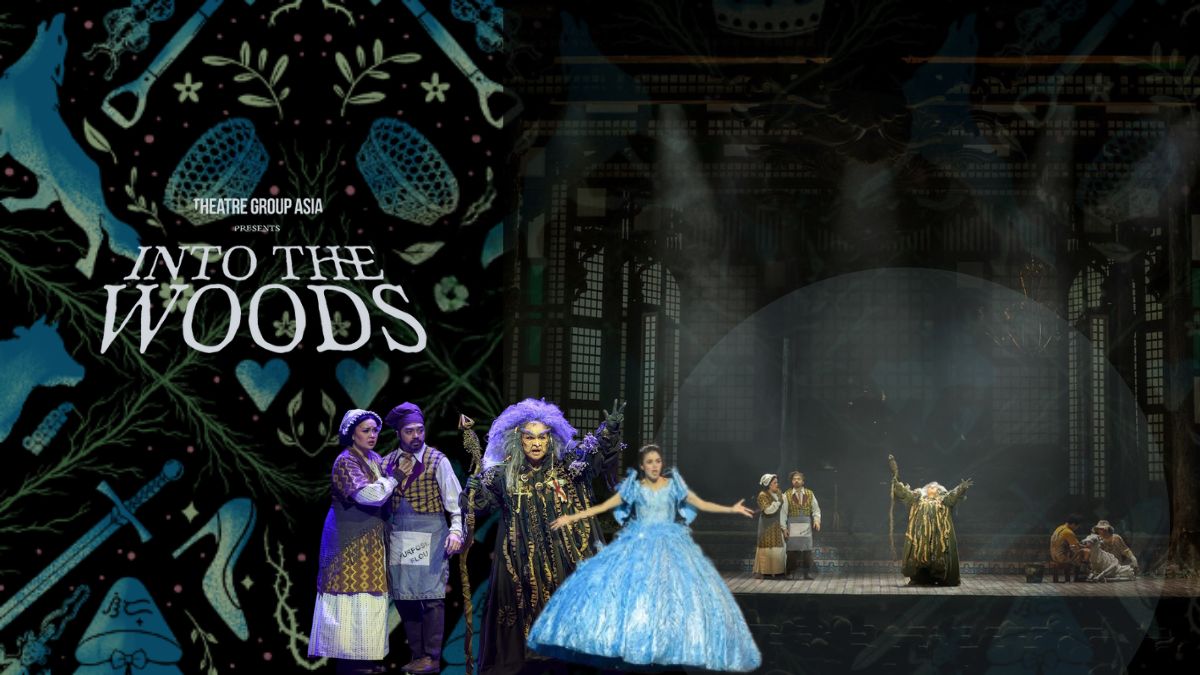
    ‘Into the Woods’ is a legendary musical. It’s quite accessible as it uses familiar characters from fairy tales and have them engage and interact with each other with comedic results, in the first act, and then heavier, more dramatic effect in the second act. Stephen Sondheim’s Tony Award-winning music and James Lapine’s Tony Award-winning book creates a deceptively fun but also deeply profound musical about the human condition of wishes, hopes, and dreams, and the innocence of longing and desire. 

    Into The Woods Theater Review
    Lea Salonga as The Witch, Mikkie Volante as the Baker’s Wife and Nyoy Volante as the Baker in Theatre Group Asia’s Into the Woods. Photo by Mark Alvarez

    The story revolves around some pretty famous fairy tale characters: Cinderella, Little Red Riding Hood, Jack (of Jack and the Beanstalk), and The Baker and the Baker’s Wife (adapted from a classic French tale). Each character must go to the woods but it is the Baker and his wife who enter the forest to gather ingredients needed to lift a curse put upon them so they can have a child. The witch who cursed them demands “a cow as white as milk, a cape as red as blood, hair as yellow as corn, and a slipper as pure as gold.” Their interactions force each character to learn, to grow, and to discover things about themselves and of life in general.

    Arielle Jacobs as Cinderella in Theatre Group Asia s Into the Woods. Photo by Mark Alvarez
    Arielle Jacobs as Cinderella in Theatre Group Asia’s Into the Woods. Photo by Mark Alvarez

    I grew up with this musical. My dad would play the original Broadway soundtrack at home on CD, and we watched the 1991 recording of the original Broadway cast performing it in front of a live audience on PBS American Playhouse. I knew every line and could sing every song. So, to be able to catch this show in the Philippines, with an incredible line-up of Filipino talents (Lea Salonga! Nyoy and Mikkie Volante! Teetin Villanueva! And more…) and Filipinos by roots (Arielle Jacobs, Josh Dela Cruz) and a multi-award-winning creative team led by Clint Ramos as producer and Chari Arespacochaga as director, felt like a no-brainer. Adding to the mix a full, live 19-piece orchestra, and this staging became everything I could ask for.

    But despite all the talent, the show I saw at the opening gala night seemed to buckle under the pressure of all that expectation. It was opening night, so I can excuse some missed cues and some technical issues with the microphones. The first thing that really stood out was the stage design of Ohm David. Making full use of the Samsung Performing Arts Theater gigantic stage, he created a cavernous set framed by Capiz-shell lattice windows that created the image of an indoor locale. There are three elevated areas creating three large steps to create levels and there are four gray poles meant to stand for trees. Each of the three levels have entrances and exits on both sides of the stage. The size of which becomes problematic as ‘Into the Woods’ is a bit of a farce and the exits and entrances must be quick but because there’s so much space to cover, it kills the momentum as we shift from one scene to the other. Without more trees to hide in for a quiet exit out, the play has to wait for characters to step in and out and it kills the pacing of the show.

    Lea Salonga as The Witch and Joreen Bautista as Rapunzel in Theatre Group Asia s Into the Woods. Phot by Mark Alvarez 2
    Lea Salonga as The Witch and Joreen Bautista as Rapunzel in Theatre Group Asia’s Into the Woods. Phot by Mark Alvarez

    This design was the seat of the most of my problems. Much of the story involves going into the woods for the characters to get their wishes – Cinderella, Little Red Riding Hood, Jack (of Jack and the Beanstalk), and the Baker and the Baker’s Wife (from a classic French tale) – and some of the songs repeatedly reference the woods. Yet, visually, the stage never truly evokes that image. The production boasts of approaching the material through a Filipino lens – Capiz-shell window frames, a salakot hat worn by one character, and the magical harp taken from the giant’s lair in Jack’s story designed to resemble a Sarimanok. These are all adornments meant to create a sense of the Filipino but it never really says anything about the culture or how the culture adds a texture or layer to the material. It feels added on rather than integrating itself organically into the show.

    Are the four gray poles meant to symbolize that the Philippines has gone urban and so are woods are concrete? Later on, as Jack’s story with the bean stalk play out and the giant’s wife searches for her husband’s killer, she speaks with a Southern American accent, unmistakably? Is the giant meant to be America? But as a friend pointed out, the show’s enemy isn’t the giant, it’s their greed for wanting to get their wishes.

    Lea Salonga as The Witch and Joreen Bautista as Rapunzel in Theatre Group Asia s Into the Woods. Phot by Mark Alvarez
    Lea Salonga as The Witch and Joreen Bautista as Rapunzel in Theatre Group Asia’s Into the Woods. Phot by Mark Alvarez

    It’s some choices like this that created a resistance to really get into the show. The heavier, more profound parts of ‘Into the Woods’ wasn’t quite hitting its mark but all the fun and humour of it was in full display. Lea Salonga, as the Witch, gave her some of the best songs of the evening, and she can really imbue each one with the weight of emotions that’s required of it. I personally felt that she struggles on the opening night with the first-act costume, the mechanics of the witch’s garb got in the way of her clarity in her performance but the moment she shows her true form, Salonga cut through and delivered some powerful moments. Of the very talented cast, the standouts were really Mikkie Bradshaw-Volante and Arielle Jacobs. Bradshaw-Volante was able to project the difficulties of a wife being taken seriously by her husband, a shade of a typical Filipino household that I would have loved if it was amplified more. But she was able to balance the comedy and the heart of her story and really nailed her solo, which was a triumph of this production. Airelle Jacobs was just perfect as Cinderella. Her vocal range and her innocence; it really created a wonderful space for Jacobs to take Cinderella and show us the not so happy side of happily ever after. Her character’s growth – the realisation that not everything you wish for is what you really wanted – is so evident, especially in her final scene between herself and her prince (Josh Dela Cruz). The moment was so affecting that it left the entire theater in a hushed silence. 

    The Witch s entrance in Theatre Group Asia s Into the Woods. Photo by Mark Alvarez
    The Witch’s entrance in Theatre Group Asia’s Into the Woods. Photo by Mark Alvarez

    The cast who got to play and really felt so in synch with the play’s more joyful elements were Josh Dela Cruz and Mark Bautista as Cinderella and Rapunzel’s Princes, along with Kakki Teodoro and Sarah Facuri as the wicked stepsisters. Aside from Dela Cruz, these characters play counterpoints to the main cast and thus have the unenviable task of just having fun and they do. Teodoro and Facuri are campy and loud, create a nice contrast to Jacob’s Cinderella. Dela Cruz and Bautista, on the other hand, take their melodramatic princes into another level completely. They have so much fun, one-upping each other, and trying to find a way to make their princes the most scene-stealing prince of all. It never feels too much, for some reason, because it’s campy approach somehow works with the show’s design that doesn’t quite gel together: the lack of any real woods, the Capiz-shell frames that makes the show feel contained rather than wild and free.

    There’s still plenty to enjoy in this production. The songs are gorgeous and gorgeously performed – especially with a 19-piece orchestra under Gerard Salonga’s baton – and some performances really stand out. There are just some choices that I feel restrains the show from reaching its full potential and while there are aspects of Filipino imagery by design or adornments, it never really makes any full connection to the Filipino lived experience to justify these tacked on Filipino markers.

    My Rating:

    stars 2 5


    Don’t miss your chance to experience this beloved Sondheim classic brought to life on the big stage. Into the Woods runs until August 31, 2025, at the Samsung Performing Arts Theater. Secure your tickets now a TicketWorld.

  • Movie Review: Funny but Also Grotesque and Dramatic, ‘Together’ Is Body Horror Made Fun

    Movie Review: Funny but Also Grotesque and Dramatic, ‘Together’ Is Body Horror Made Fun

    A body horror film that is also equal parts a love story about a couple on the verge of untethering, ‘Together’ makes full use of the paranormal dramatic situation to amplify the human drama at the center of this film. Screenwriter and director Michael Shanks does not shy away from both themes and goes full-on with the dramatic elements as well as the body horror for an all-around attack on the senses. This film, along with its grotesque imagery and the explosive performances of Alison Brie and Dave Franco makes for a solid horror film in a year of splendid scary movies.

    Brie and Franco play Millie and Tim, a couple preparing for a big move. Tim has lost both of his parents, and their passing has left Tim somewhat broken and emotionally distant from Millie. Millie, on the other hand, has accepted a job outside New York, and the couple decided to relocate to the countryside so that Millie can work in her dream environment while giving Tim the change of page he needs.

    Together Movie Review

    But Tim is haunted by bad dreams, and the couple are falling apart until one day, while hiking in the woods, they accidentally fall into an underground cavern where a mysterious pool casts a spell on them, causing their bodies to physically merge into one.

    TOGETHER STILL 6

    As strange things begin to happen, Tim starts acting erratically in ways Millie cannot understand, and their relationship starts to unravel. Yet the mystical nature of the pool keeps forcing them closer to each other, so close that they eventually become one.

    TOGETHER STILL 1

    The film’s use of dramatic irony creates a level of humour here that keeps the film both entertaining and surprising. While Shanks is keen on using a few jump scares here and there to keep his audiences on their toes, he excels when he puts that camera squarely on the faces of Brie and Franco, allowing them to showcase their acting range – showing us their characters at their most vulnerable, as they try to navigate the complex emotions that are at the core of their relationship issues – and allowing them every bit of physical performance that is required in this genre.

    TOGETHER STILL 8

    The merging in itself is a visual treat. Millie’s and Tim’s bodies move out of their own volition, moving with a will of its own; and Brie and Franco have to show us how the body literally longs for one thing while the mind says “no.” It’s a whole lot of acting and performance, but also CGI and practical effects to fully execute one of their bodies attempts to merge.

    TOGETHER STILL 9

    Interestingly enough, the film begins as terrifying and horrific. Frightening imagery and eerie music help build the scary scenes before it happens. But later, as the backstory unfolds and the characters understand what’s going on, what’s interesting is how the characters begin to understand what’s happening, try to find solutions and the film takes a more comic turn. There’s a desperation that sets in that goes counter to the tone of fear and death. That desperation becomes the core of the humour.

    TOGETHER STILL 5

    Brie has always been a natural comedienne, so it comes off as funny and organic. But she also manages to bring out all of Millies’ insecurities and frailty. Her Millie is the standard broken girl who’d give a million chances to the boyfriend that nobody in her group or circle cares much for. It’s a wonderfully nuanced performance that highlights Brie’s range.

    TOGETHER STILL 3

    Franco, on the other hand, brings the bravura. He has the less nuanced role. Tim, from the get-go, is suffering from the trauma of having found both his parents dead. It haunts him. It gives him issues with sleeping and connecting with Millie. It is a role that is set to the extremes from off the gate. But fortunately, Franco delivers the necessary intensity.

    My only real resistance to the piece is how it still leans into formulaic or predictable story points that undermines its otherwise fresh approach to the genre. It could have been weirder. It could have been more unconventional. As grotesque as it is, the film still feels safe in its presentation. And its ending comes off a little too clean.

    My Rating:

    stars 3 5


    Experience the chilling thrills of Together on the big screen! Find showtimes and book your tickets now.