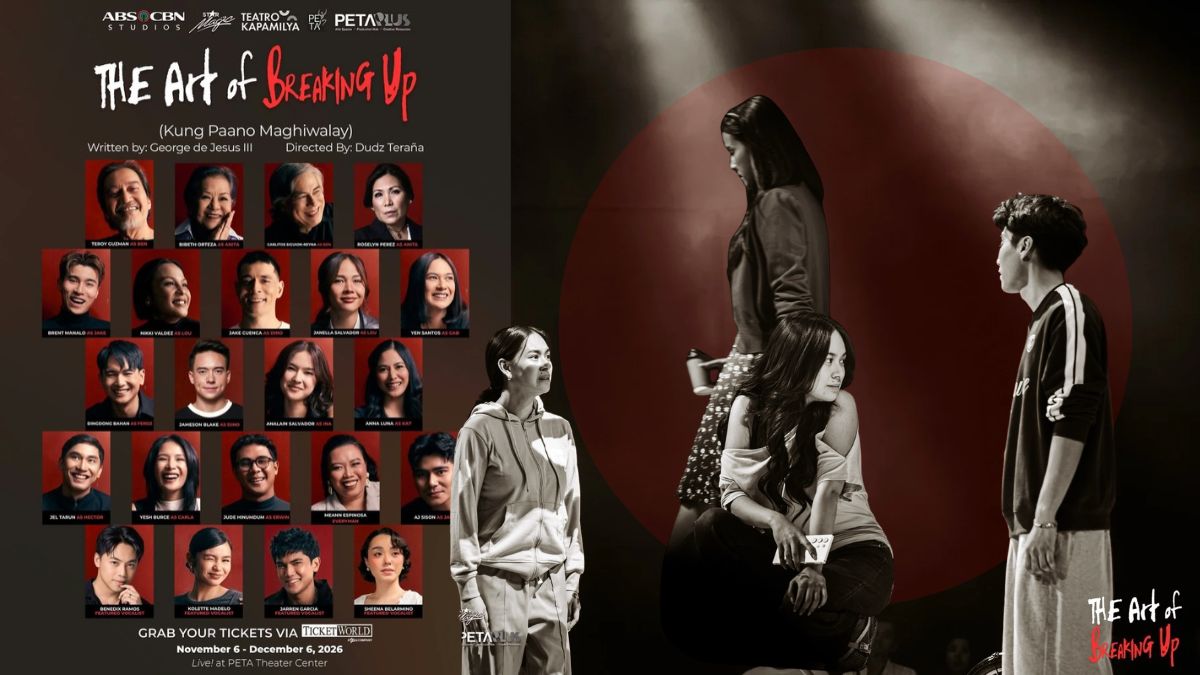
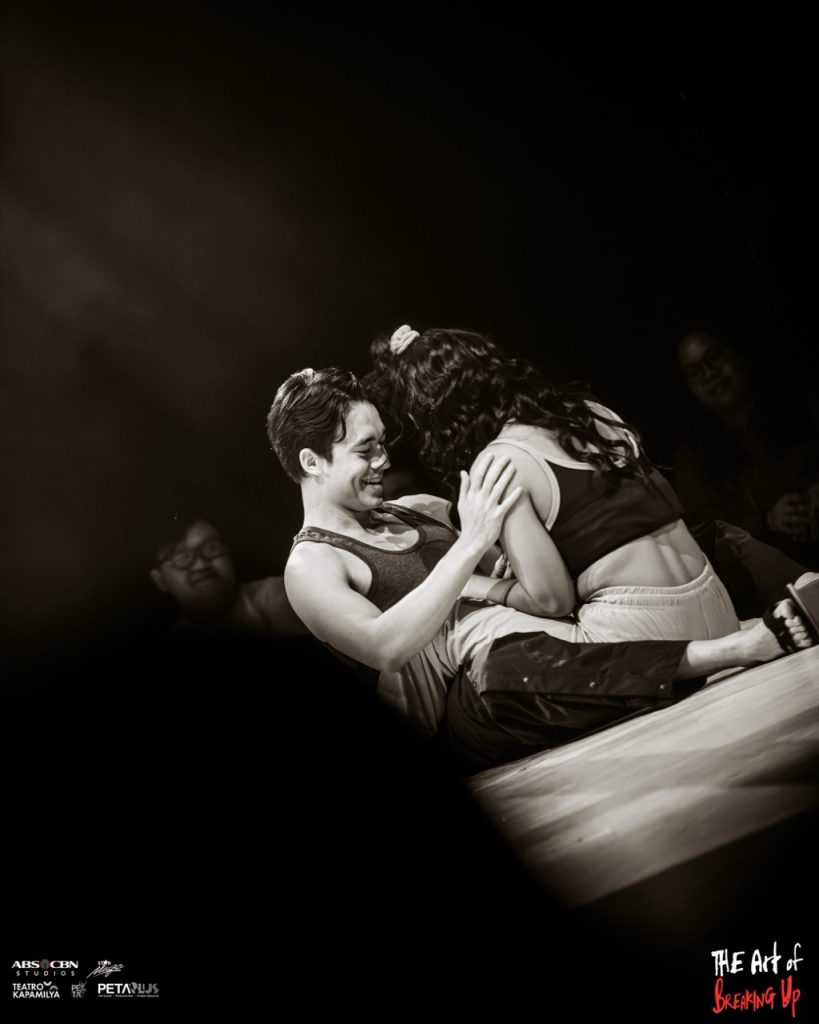
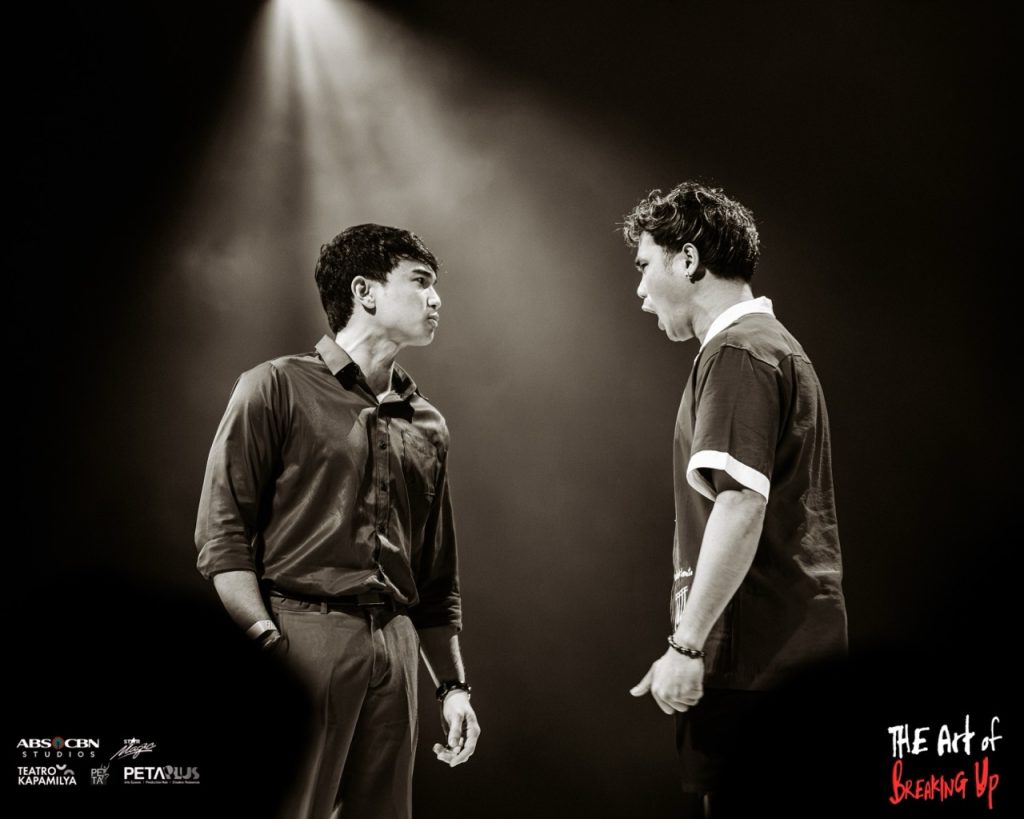
I never got to see Kung Paano Maghiwalay by George de Jesus III, but watching this new staging of his play by Teatro Kapamilya and PETA Plus, retitled The Art of Breaking Up reveals a strong sense of poignancy to structure a piece by showing us vignettes of couples breaking up – one after the other – compounding the emotions of such a scene and allowing the audience to grapple and digest the feelings brought about by witnessing such a moment. Then, in Act Two, the play rewinds to show each couple’s beginnings, the exact moments they first came together. Without any sort of narrative direction to lead us to any sort of epiphany, we see the value that we have put in love and being in a relationship and it strikes me as such an interesting way to put together a play.
In this new staging, now titled The Art of Breaking Up, and directed by Dudz Teraňa, the material is reimagined as a vessel for our fascination with relationships and being in love. Teraňa adds music from the Kapamilya network’s catalogue of classic love songs, performed by two vocalists who are not directly part of the play’s narrative (though they occasionally function as a sort of manifestations of a character’s lingering memories of the past) to end particular scenes. He also adds a protean character, played by the remarkably versatile Meann Espinosa, to seamlessly help transition from one scene to the next.
Again, I have not seen the original play, but these two additions in The Art of Breaking Up feel noticeably added on to the play, a directorial choice whose effect makes the play more entertaining and enjoyable, but at the sacrifice of the drama’s poignancy and pathos. The play’s structure is such that we are introduced to the characters at the point of their breakup. With no context or backstory beyond what unfolds in the scene, we witness characters made vulnerable and bare, without any expectation or judgement. Theatrically, it is a powerful scene. You are only seeing the effects of heartbreak. However, the entrance of the singers launching into a popular tune pulls us out from dwelling into the moment and instead shifts us to the level of melodrama. These breakups now become entertainment rather than points of meditation. The songs frame each scene as something to watch rather than something to internalize.
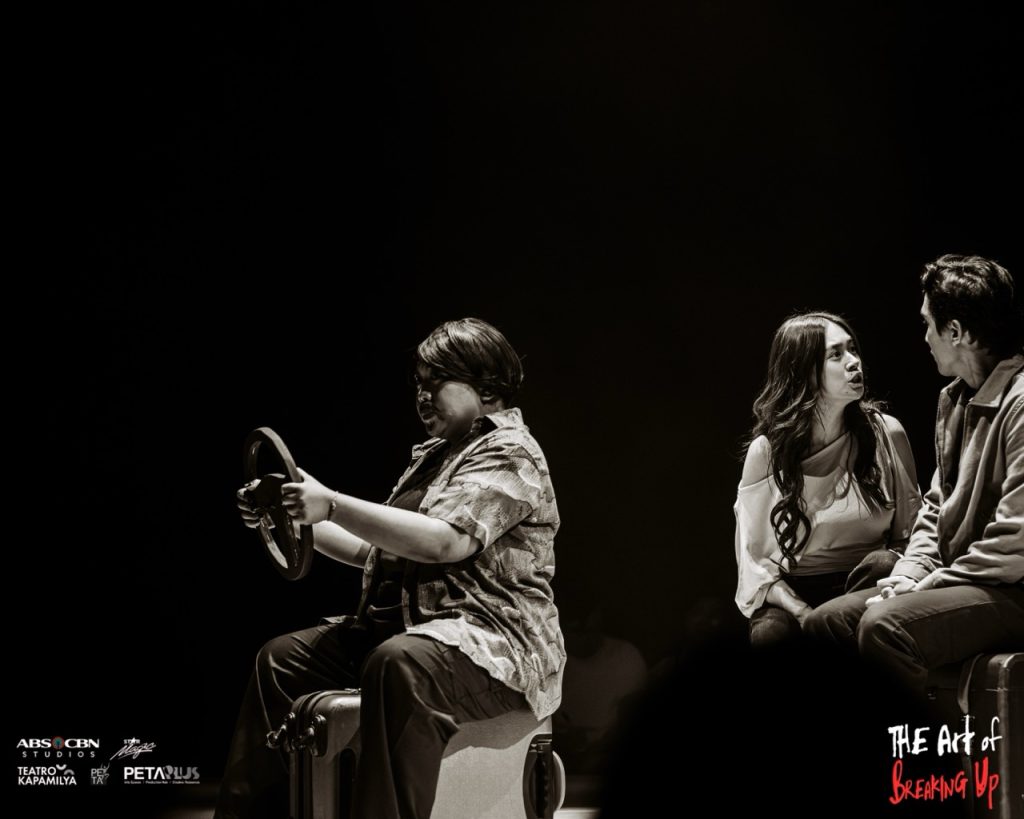
And as this is happening, Espinosa enters as a new character to help shift it to a new scene, with new characters, and another breakup. In moments that feel more improvised than scripted (which makes them funnier), it sets the scene up with a punchline before we get into the scene that de Jesus wrote. It doesn’t help that Espinosa is so good and has such great comedic timing that the audience gets excited for her arrival that she tends to overshadow the real meat of the play.
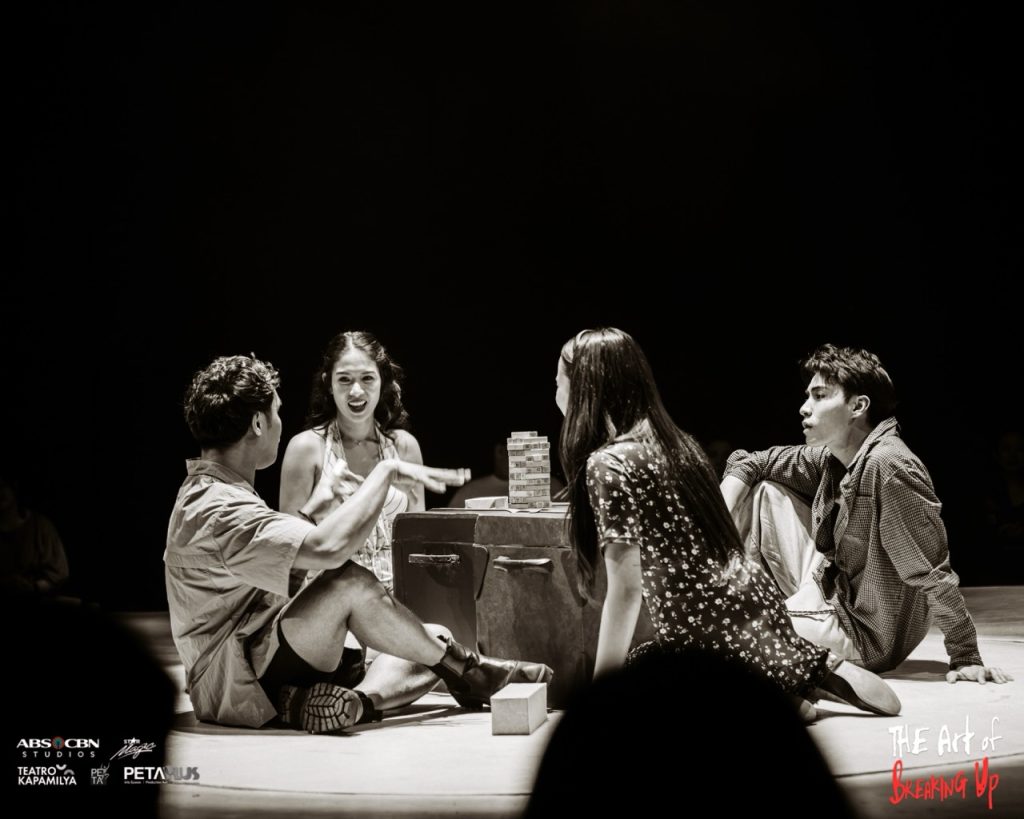
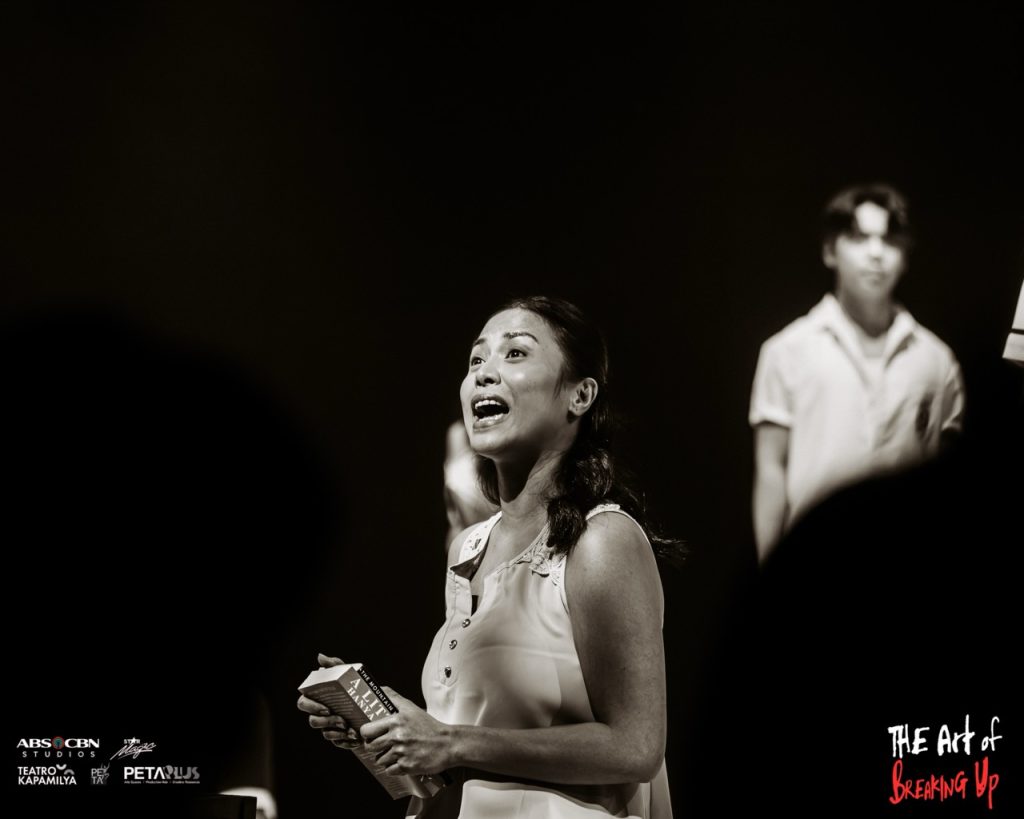
And it is a shame, because there’s a lot of good work happening on that stage. Nikki Valdez is excellent as Lou, a lesbian who is breaking up with Anna Luna’s Kat because of growing resentment and the drifting apart that can happen with lived-in partners. The sheer history of their relationship has become a burden, leaving letting go and finding space as the only best recourse.
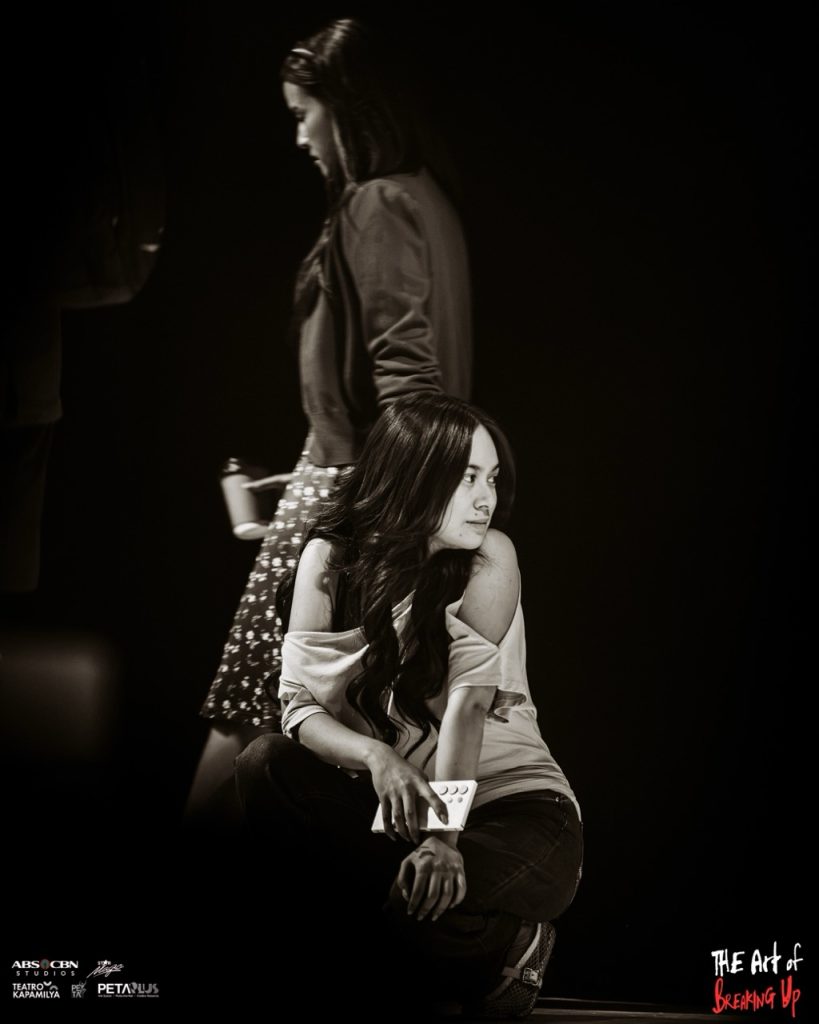
Valdez manages those wild, messy emotions within the framework of the very put-together Lou. Yesh Burce is equally standout as Carla, a young woman who seems larger-than-life while playing a really delicate emotional game; projecting a flippant, bubbly facade but underneath are real questions that she can’t say aloud. It’s so easy to play Carla as a caricature, but Burce manages to skirt that edge that makes the character look comical yet believable.
Several other performers I saw were doing excellent work – Jameson Blake, Dingdong Bahan, Brent Manalo, and Analain Salvador – despite it being their debut on a stage. Unfortunately, their work was still internalized, better suited for the camera than in the theater, but Teraňa did them a tremendous favor by setting up the stage in the round. With the audience surrounding the action on all sides, allowing us the proximity to see the work that they are doing. They are there emotionally but they still need to learn that in theater, it’s projected outwards into the audience. It is something they will surely develop with time.
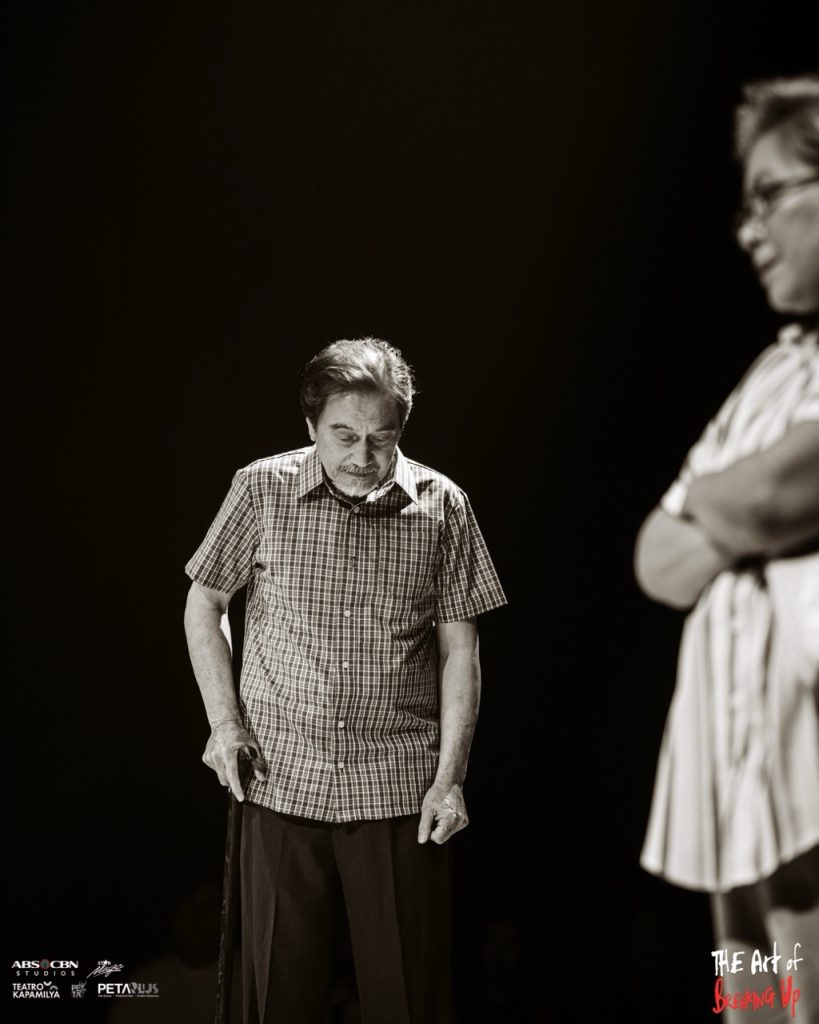
Among the seasoned stage veterans, there was never any doubt that Teroy Guzman, Roselyn Perez, Valdez and Luna, and Jel Tarun would really own that stage and deliver. I’ve seen them all in previous productions, but this is my first time to catch Tarun onstage, and he has a strong presence and does a really good job of creating a moment with his scene partner, Dingdong Bahan, as the ensemble’s gay couple.
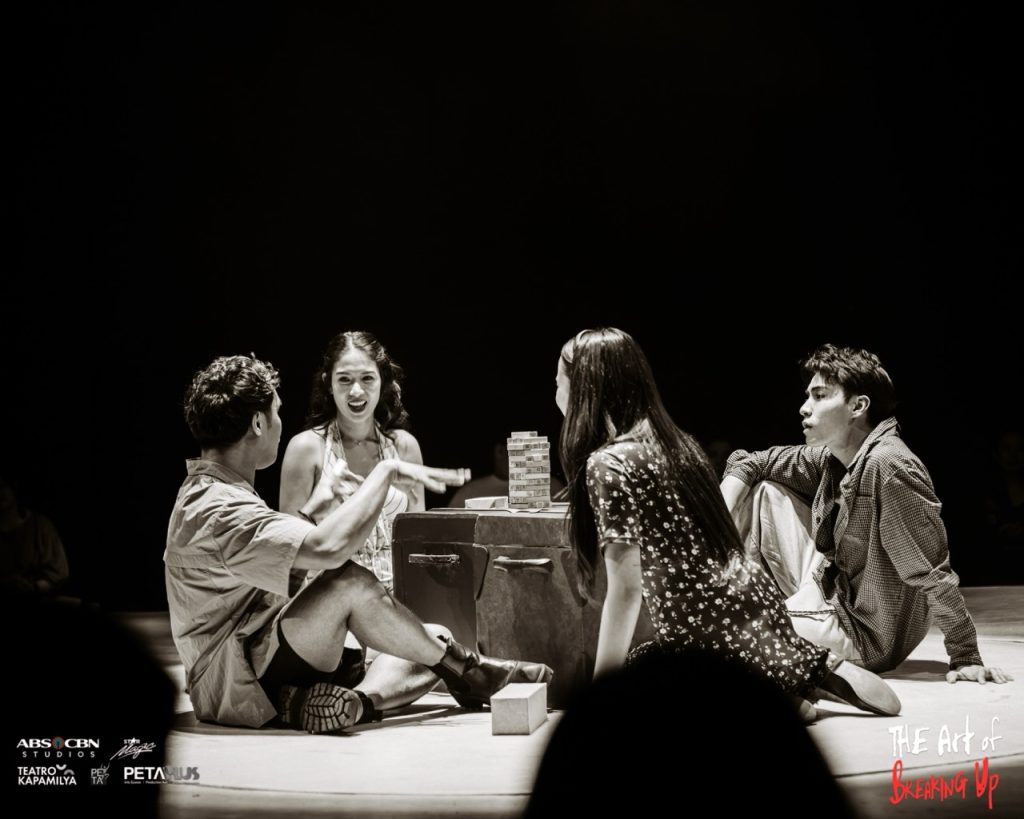
The Art of Breaking Up is an enjoyable piece. The way the crowd reacted (and crying at the end of it) shows the power and fascination we have over love and being in a relationship. Teraňa’s directorial choices are clearly put there to amplify the material’s commercial appeal, pushing for a more accessible production and it’s going to hit all the right notes for a wide spectrum of audiences.
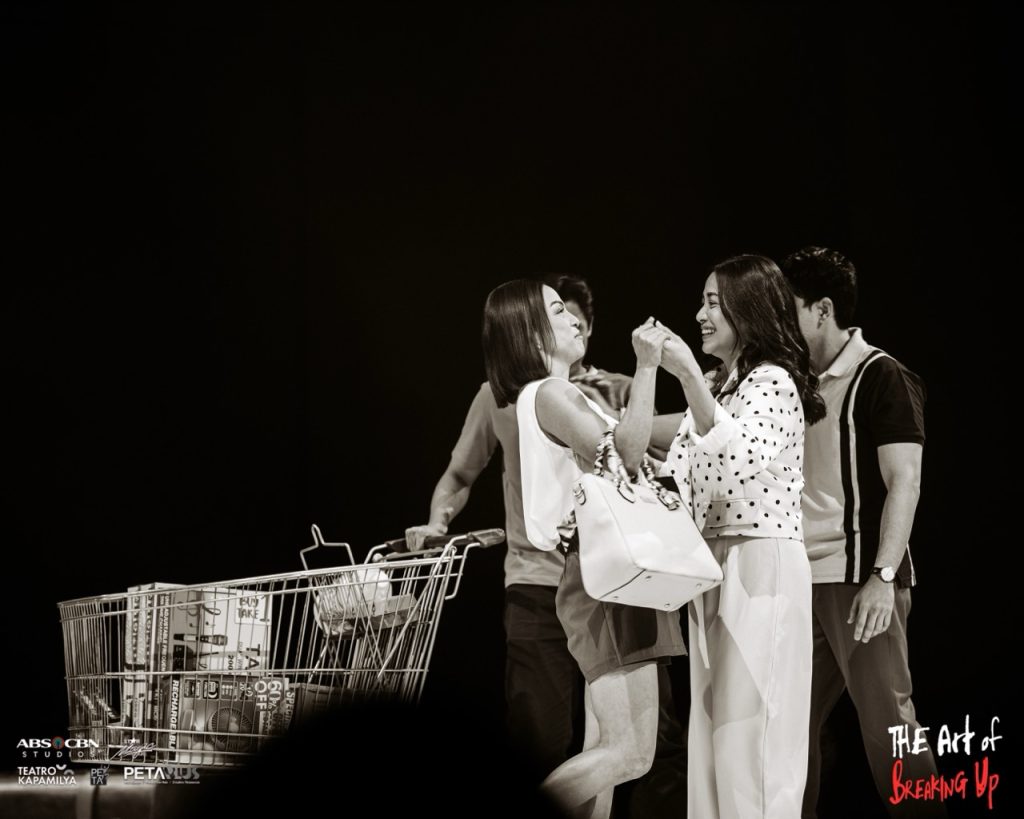
But I’m the pretentious type who would rather dig straight into the meat of de Jesus’ play and really revel in the raw emotions that I’m picking up right off the script.
My Rating: 3 Stars

The Art of Breaking Up, written by George de Jesus III and directed by Dudz Teraña, runs until December 6, 2026.Tickets are available via TicketWorld, and for group bookings, contact +63 917 637 3655.