Tag: Tanghalang Ateneo

  • Theater Review: Tanghalang Ateneo’s “Ikalabindalawang Gabi” Is an Enthusiastic Season Opener for the Company

    Theater Review: Tanghalang Ateneo’s “Ikalabindalawang Gabi” Is an Enthusiastic Season Opener for the Company

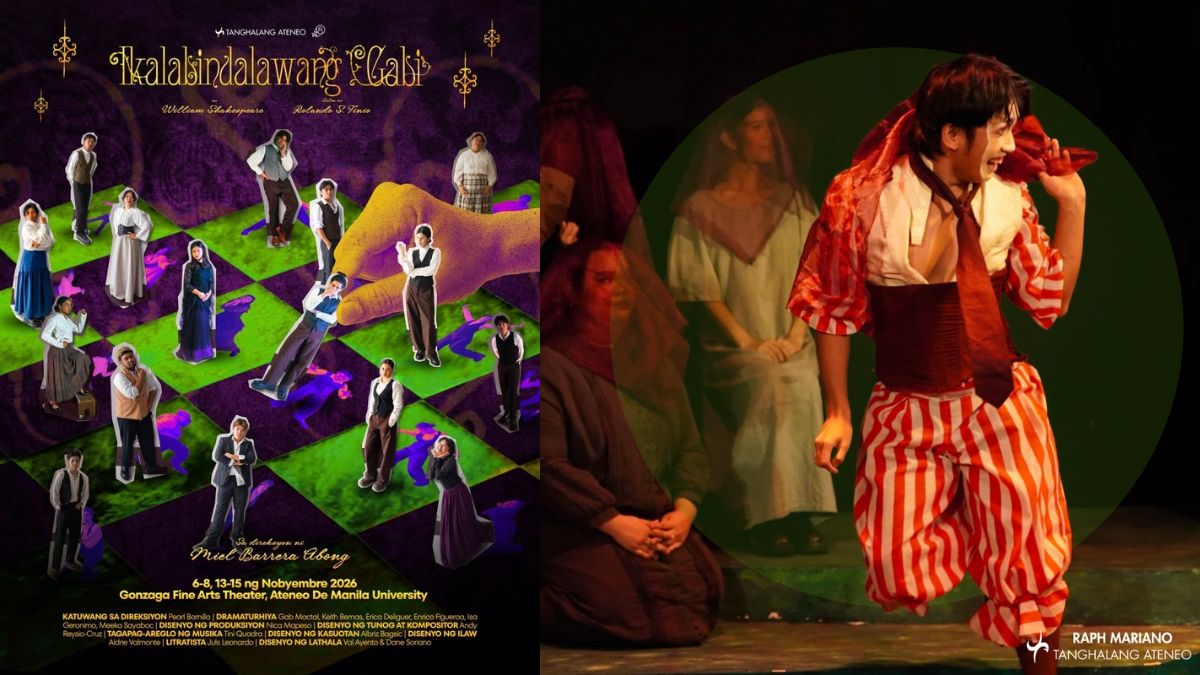
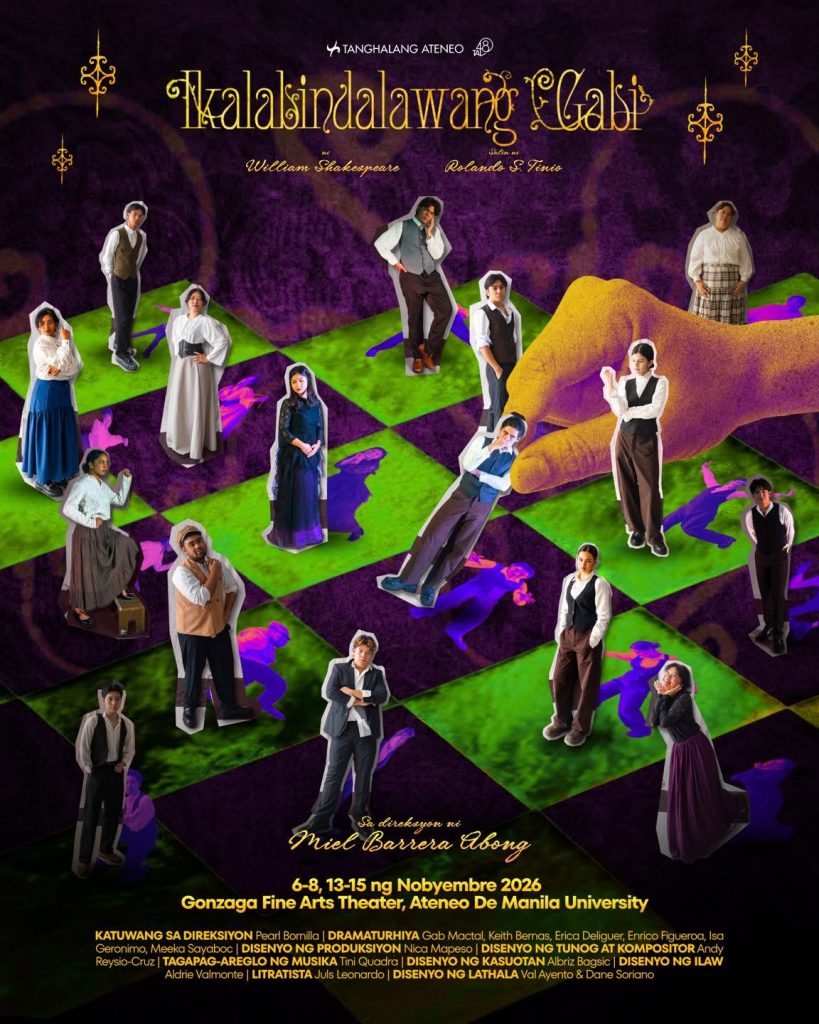
    Shakespeare’s comedies translate remarkably well into Filipino – especially when the translation is done by National Artist Rolando Tinio. The natural fit stems from the rich history of Komedya, one of the oldest genres of formal theater in the Philippines, which is the root of many of our comedies in radio dramas, film, and television. Traditionally centered on tales of royalty or conflicts between Christians and Moros, the Komedya is played out as slapstick humor and a lot of the wit comes from sharp-witted mockey. Shakespeare employs these comedic elements across works like Taming of the Shrew, Midsummer Night’s Dream, and Twelfth Night. Tinio’s Filipino translation of the latter, Ikalabingdalawang Gabi, serves as the latest production from Tanghalang Ateneo, directed by Miel Barrera Abong.
    Tanghalang Ateneo 
Ikalabingdalawang Gabi

    As the opener of the company’s 48th season, this trainee production, which means Ikalabingdalawang Gabi carries the vibrant energy of Tanghalang Ateneo’s newest cast and crew. While naturally still rough around the edges, their infectious verve and enthusiasm breathe fresh life into Shakespeare’s classic comedy of errors, mistaken identities, and crisscrossed lovers.
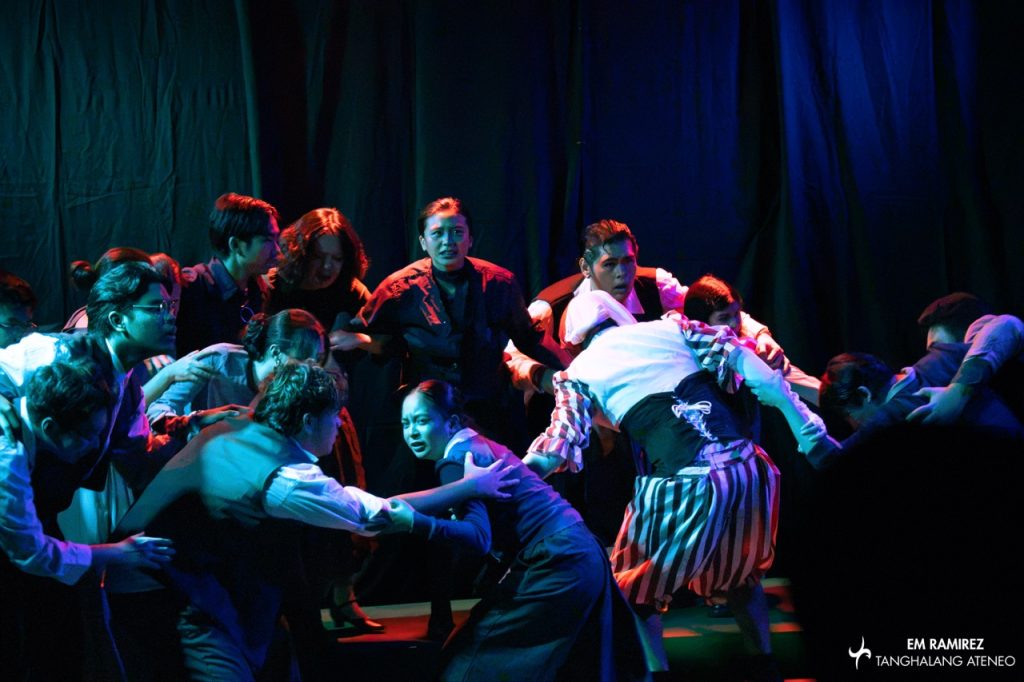
    Ikalabindalawang Gabi
    Photo by Em Ramirez | Courtesy of Tanghalang Ateneo

    It follows the story of Viola (Sabel Lamadrid), who washes ashore after a shipwreck during a storm. Believing her twin brother Sebastian (Jio Japson), has perished, she disguises herself as a young man named Cesario and employment with the country’s Duke Orsino (Jeshua Christian M. Cases). Duke Orsino, madly in love with the lady Olivia (Bea Villena), and have sent Cesario to woo her on his behalf. However, Olivia falls in love with Cesario, unaware he is Viola in disguise, while Viola begins to fall for the romantic Orsino. Fleshing out the play’s comedic subplots, Olivia’s household is filled with chaos as her brother, Sir Toby (Sen Mendoza), his friend, Sir Andrew (Yeoj De Vera), and her lady’s maid, Maria (Rona Layne Badilla), play a prank on the stern Malvolio (Juan Miguel Ponce), who also works at the household. 
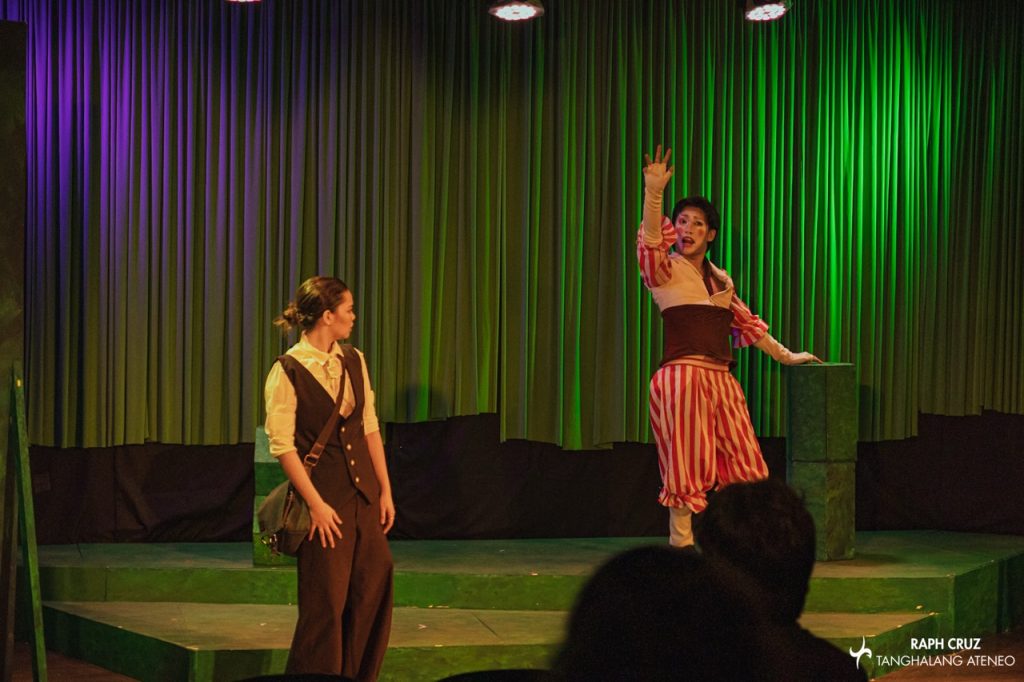
    Ikalabindalawang Gabi
    Photo by Raph Cruz | Courtesy of Tanghalang Ateneo

    Surprisingly, the play runs at a tight approximately 90 minutes without an intermission, a lot of the narrative has been cut out of the play. I’m not familiar with Tinio’s original translation so I’m not sure if this edit is Tinio’s or the work of the Abong and the TA Dramatist Collective (whose work on Emilia is still one of my favourites of this year), the streamlined narrative focuses mostly on the comedic prank on Malvolio and Olivia’s relentless courtship of Viola/Cesario. Consequently, Orsino is out of the picture. This truncated version undermines Viola’s dilemma, because without enough scenes establishing her dynamic with Orsino, we can’t see the full extent of her conflict. It’s less a misdirection of the love stories as originally intended than Olivia falling in love for a woman disguised as a man.
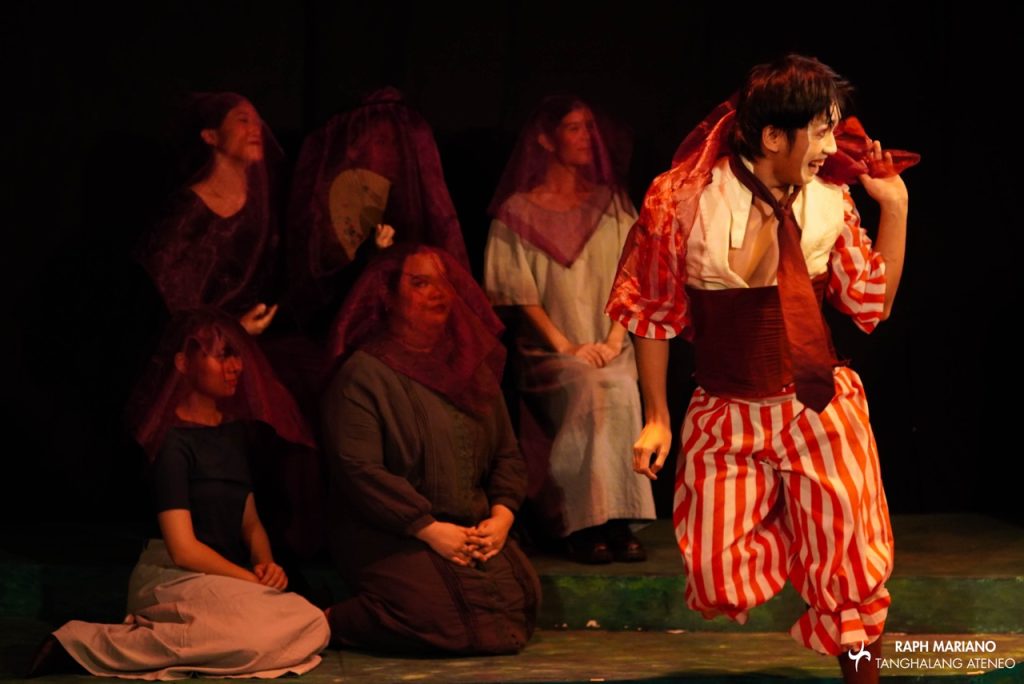
    Ikalabindalawang Gabi
    Photo by Raph Cruz | Courtesy of Tanghalang Ateneo

    What makes the show enjoyable, however, is the focus it has given on the trick played against Malvolio. These scenes elicit the night’s strongest laughs, as Mendoza, De Vera, and Badilla have an absolute blast playing the tricksters, while Ponce delivers a fully committed performance at bringing Malvolio’s gullibility to its full potential. 
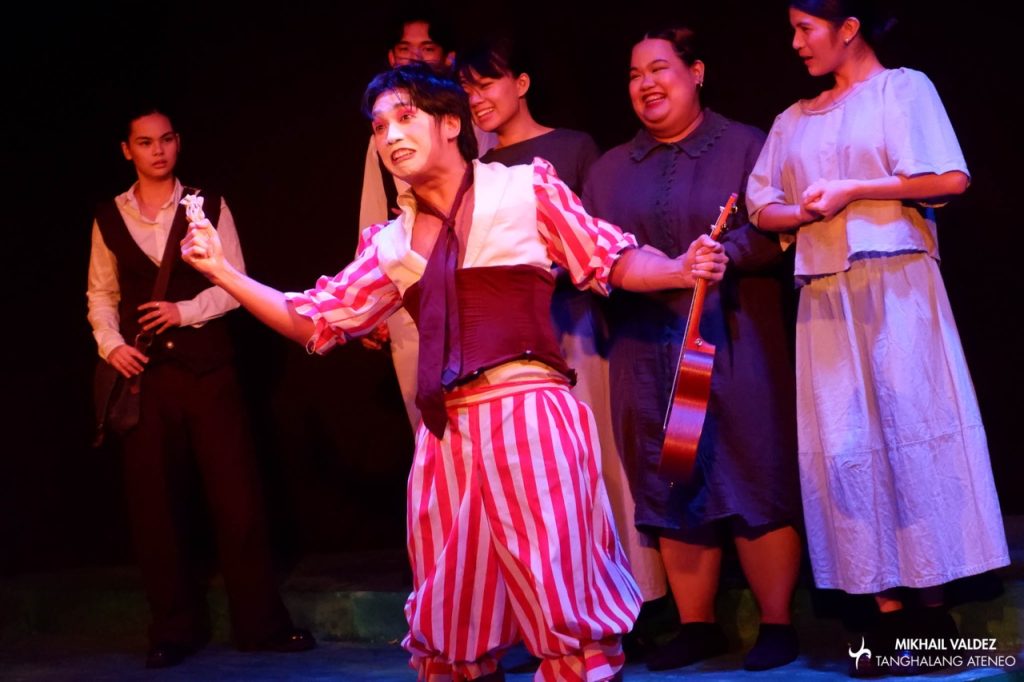
    Ikalabindalawang Gabi
    Photo by Mihhail Valdez | Courtesy of Tanghalang Ateneo

    The staging of the piece is quite clever. It’s a farce and the excellent use of energy and pacing, the characters jumping in and out of the scenes, are well-timed by Miel Barrera Abong and executed well by her cast. However, often enough, this is also where the cast’s trainee status becomes evident as there’s still a lack of tension in their movements, acting fully with their whole bodies rather than relying solely on their voices and facial expressions.
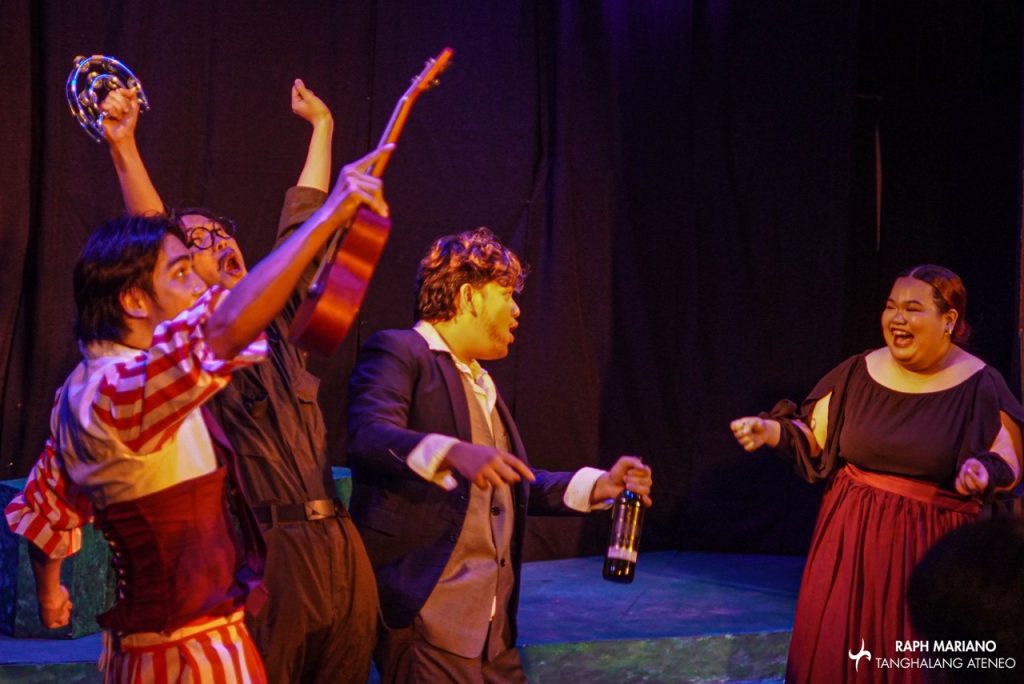
    Ikalabindalawang Gabi
    Photo by Raph Cruz | Courtesy of Tanghalang Ateneo

    Of the cast, it is Sabel Lamadrid, Rona Layne Badilla, and KD San Juan (as the fool, Feste) who have really adapted well to Rolando Tinio’s script. The pulse and heart of the translation are delivered so effortlessly that it sounds spontaneous and natural in their performance. For some, there is still a tendency for the prose to sound scripted, performed. But Lamadrid, Badilla, and San Juan have fully embodied the language and made it sound second nature to them. Lamadrid is able to capture the nuances of Viola’s dilemma through subtle gestures and facial expressions that still telegraph to the whole audience. Badilla, meanwhile, plays Maria with a bold, large and larger-than-life energy that never feels performed. It feels like a quality of Maria’s character. Her comedic timing and stage presence is extraordinary. San Juan manages Feste’s sharp wit and captures the nature of the Fool in Shakespeare’s plays; ridiculing the other characters while illuminating on truths. It’s a challenging role and his full commitment to it is inspiring.
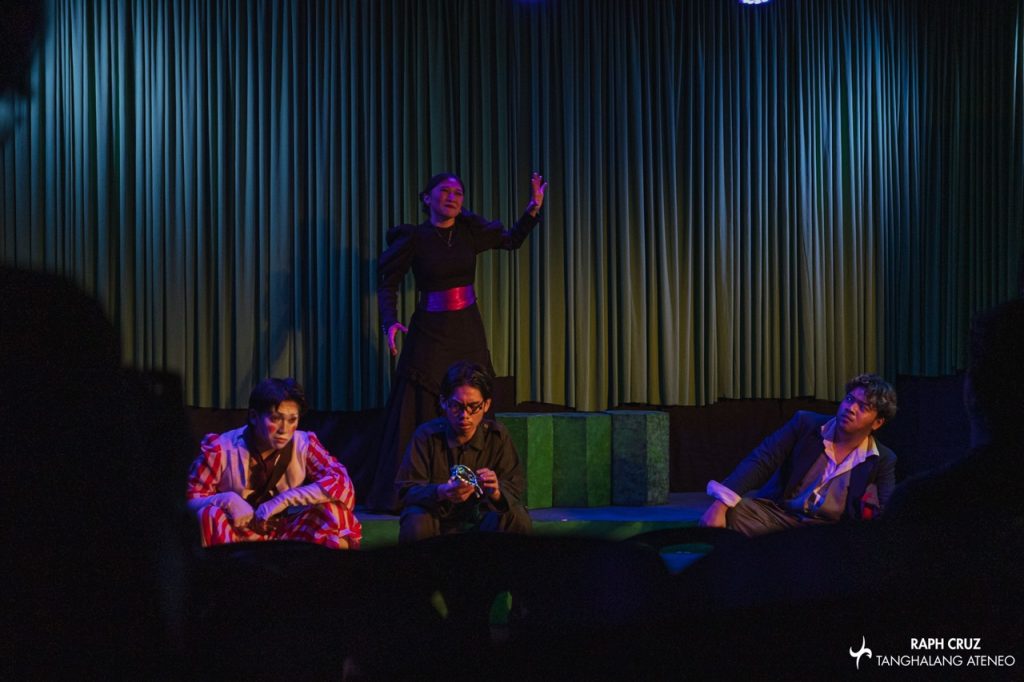
    Ikalabindalawang Gabi
    Photo by Raph Cruz | Courtesy of Tanghalang Ateneo

    As a whole, the production is a fun watch. I watched during the opening night and while some cues still need to be refined, I am sure this will be smooth out as the run progresses. Ultimately, it is a lively production and the energy is thrilling. It’s wonderful when Shakespeare can be made accessible like this.

    My Rating: 3.5 Stars

    stars 3 5

    Ready to experience Shakespeare’s hilarious comedy of errors? Head to the Gonzaga Fine Arts Theater, Ateneo de Manila University on November 6–8 or November 13–15. Get your Ikalabindalawang Gabi tickets throug bit.ly/TA48IkalabindalawangGabi.
  • THEATER REVIEW: The Urgency of Tanghalang Ateneo’s ‘Emilia’ is Electric; an Incendiary Breakthrough for Director Sarah Facuri

    THEATER REVIEW: The Urgency of Tanghalang Ateneo’s ‘Emilia’ is Electric; an Incendiary Breakthrough for Director Sarah Facuri

    Tanghalang Ateneo’s Emilia would have been a perfect fit for Women’s Month. The play is a translation of Morgan Lloyd Malcolm’s work of the same title, telling the story of the poet Emilia Bassano Lanier, who is suspected to be William Shakespeare’s “Dark Lady” in his sonnets. In 17th-century England, women were expected to serve their husband or the men in their lives, but Emilia was a writer and a poet who wanted her voice to be heard. Consequently, the patriarchy erased her story from history.

    TP Emilia 654871917 1438492774957164 1171257163574143359 n

    Translated by the TA Dramatist Collective’s Gab Mactal, Keith Bernas, and Meeka Sayaboc—with dramaturgy by Regina Manalo, Petes Castillo, Joyce Ann San Buenaventura, Thandie Alino, and PM Oliveros—the text is a vital adaptation. By utilizing deep Tagalog for the English aristocracy and modern Filipino slang for the common folk, the translation brilliantly bridges the social class divide and connects it to the Filipino lived experience. Through the impeccable direction of Sarah Facuri, the play manages to retain Emilia Bassano Lanier’s historical narrative while grounding it in real-world, modern Filipino class struggle. The effect is electric.

    Emilia
    EMILIA | PHOTO CREDIT: MAY CELESTE

    The story follows Emilia as she narrates her own life and the erasure of her legacy from the history books. As a young woman of the courts, she refuses to play the game in search of a husband, preferring instead to write poetry much to the displeasure of those around her. She eventually finds a suitor in Lord Henry Carey, who takes her in as his mistress. Through his support, she is able to be free of the shackles of society’s low measure of a woman and allows her to engage in her literary proclivities.

    Emilia 12 Tanghalang Pilipino
    EMILIA | PHOTO CREDIT: MAY CELESTE

    It is during this time that she captures the eye of William Shakespeare, her intellectual and literary arts match. They fall in love, but Shakespeare begins to use her in his works and writing about her. She also becomes a subversive, writing for women to empower them but is eventually betrayed. Stripped of her patron and her status, she finds refuge among a community of common folk women. She dedicated herself to teaching and empowering them until the weight of the patriarchy once again intervenes to silence her.

    Emilia 111 Tanghalang Pilipino
    EMILIA | PHOTO CREDIT: MAY CELESTE

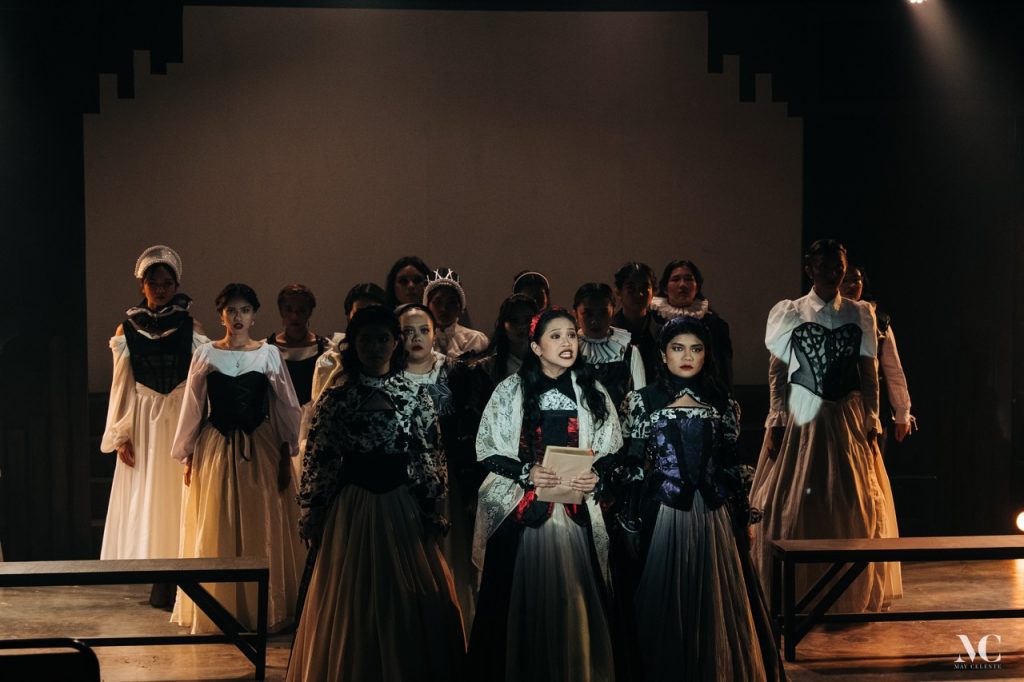
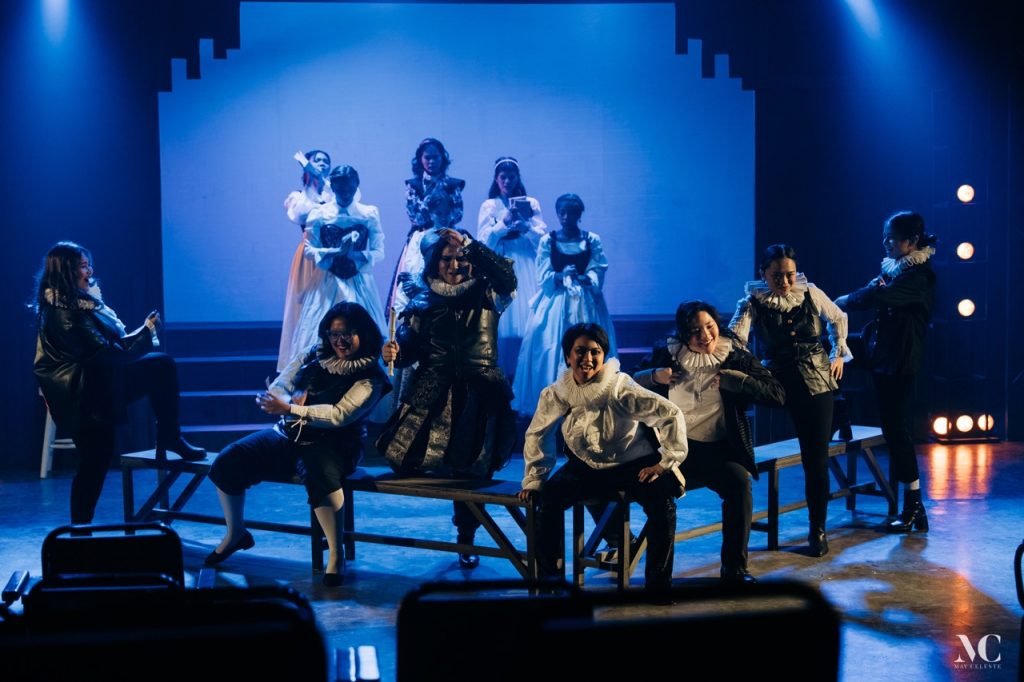
    Facuri, who also designed the movement and the set, keeps the pace running quickly, there is never a dull moment in the play’s two-and-a-half-hour runtime (which includes a fifteen-minute intermission). Her blocking is superb, utilizing the full power of the ensemble to amplify every scene when needed and then empties it out for a dramatic duet to find its intimacy.

    Emilia 95 Tanghalang Pilipino
    EMILIA | PHOTO CREDIT: MAY CELESTE

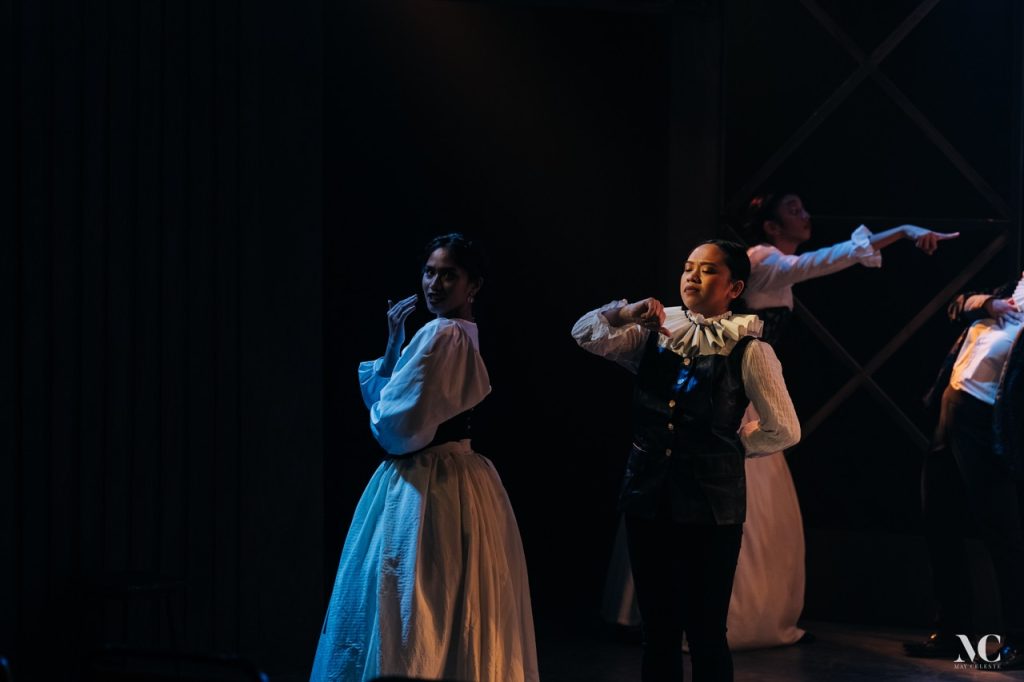
    Like a conductor leading a symphony, Facuri orchestrates her performers to shift from drama to comedy effortlessly. This tonal shifts never break the play’s rhythm, instead, they surprise the audience without ever feeling jarring. In one standout scene, the play transitions into a musical number and it happens at just the right time that it doesn’t feel like it doesn’t belong, particularly as the song’s arrangement has a touch of the modern edge in its arrangement.

    Emilia 410 Tanghalang Pilipino
    EMILIA | PHOTO CREDIT: MAY CELESTE

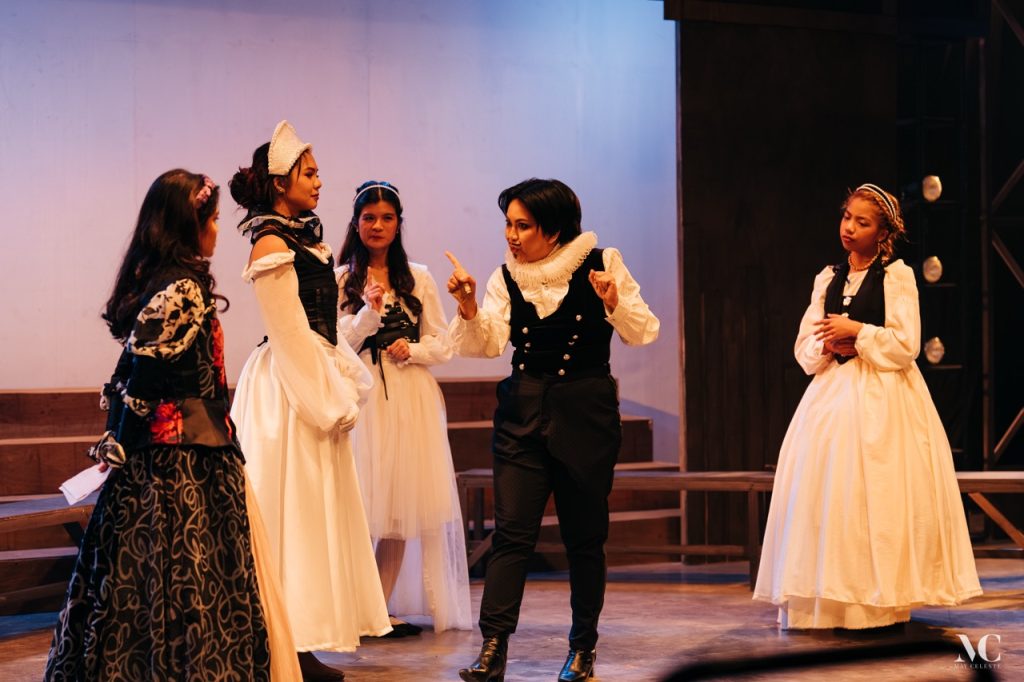
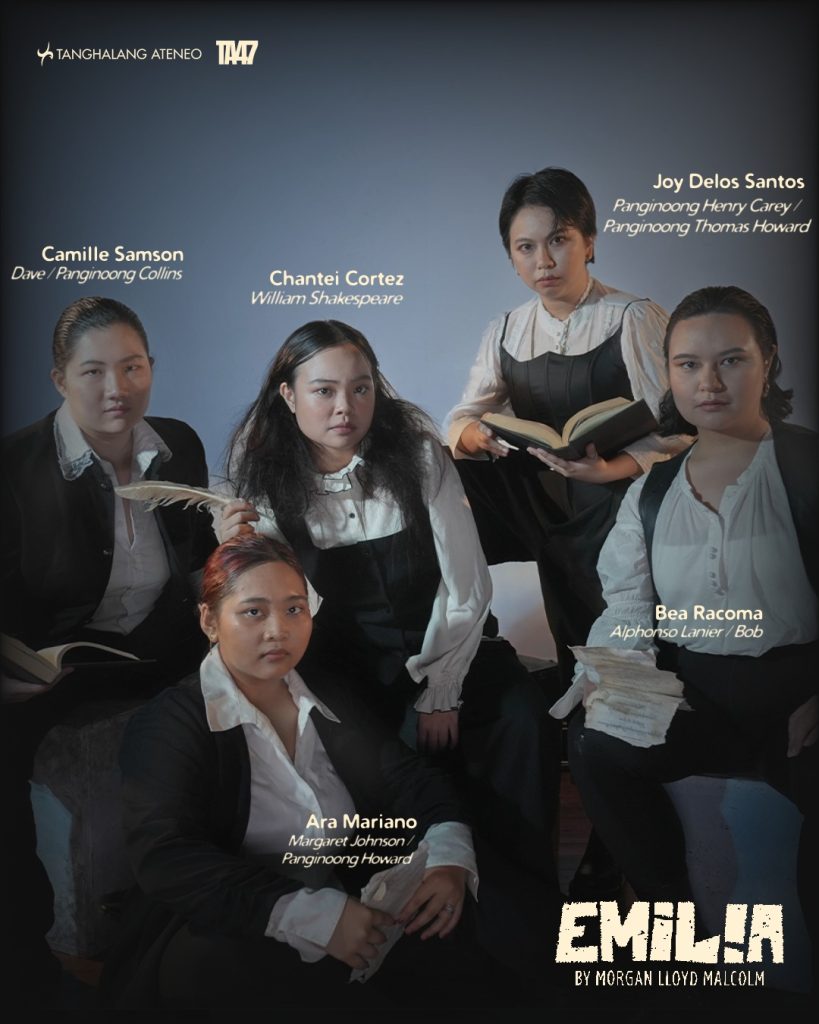
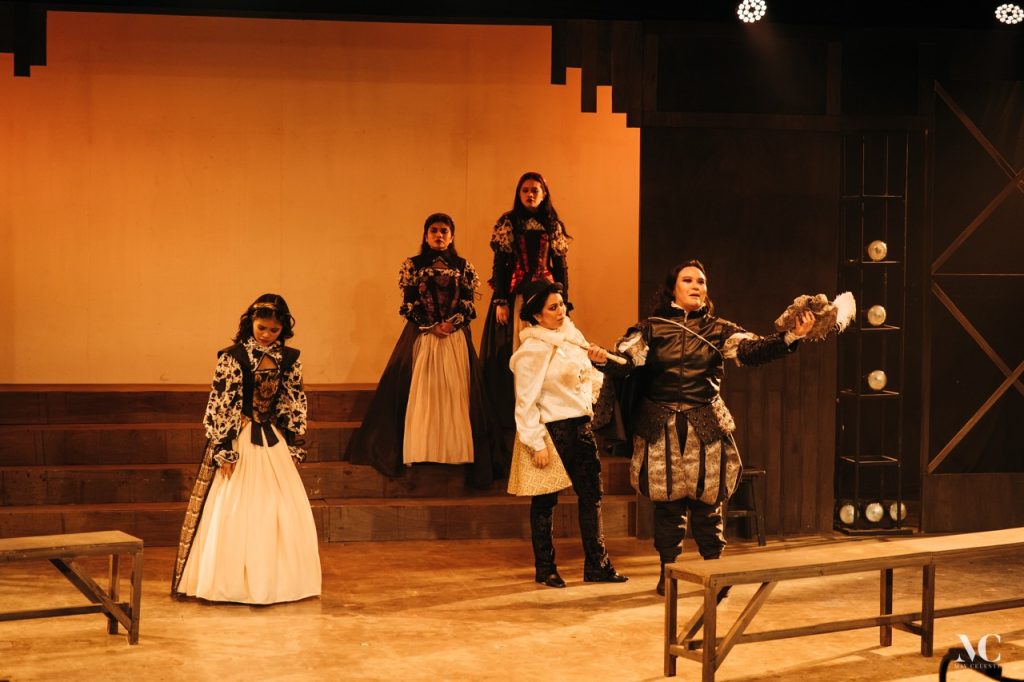
    And what a cast she has assembled. Much like how, in Shakespeare’s time, where all the roles were originally performed by men – even the women parts – this production of Emilia features an all-female cast, including the male characters. Since the play serves as a direct attack on the patriarchy, the actors playing the male parts perform their roles as parodies of various types of toxic masculinity. The effect is both breathtaking and oftentimes funny. The intent feels as if to ridicule, and it reads right with the audience.

    Emilia 270 Tanghalang Pilipino
    EMILIA | PHOTO CREDIT: MAY CELESTE

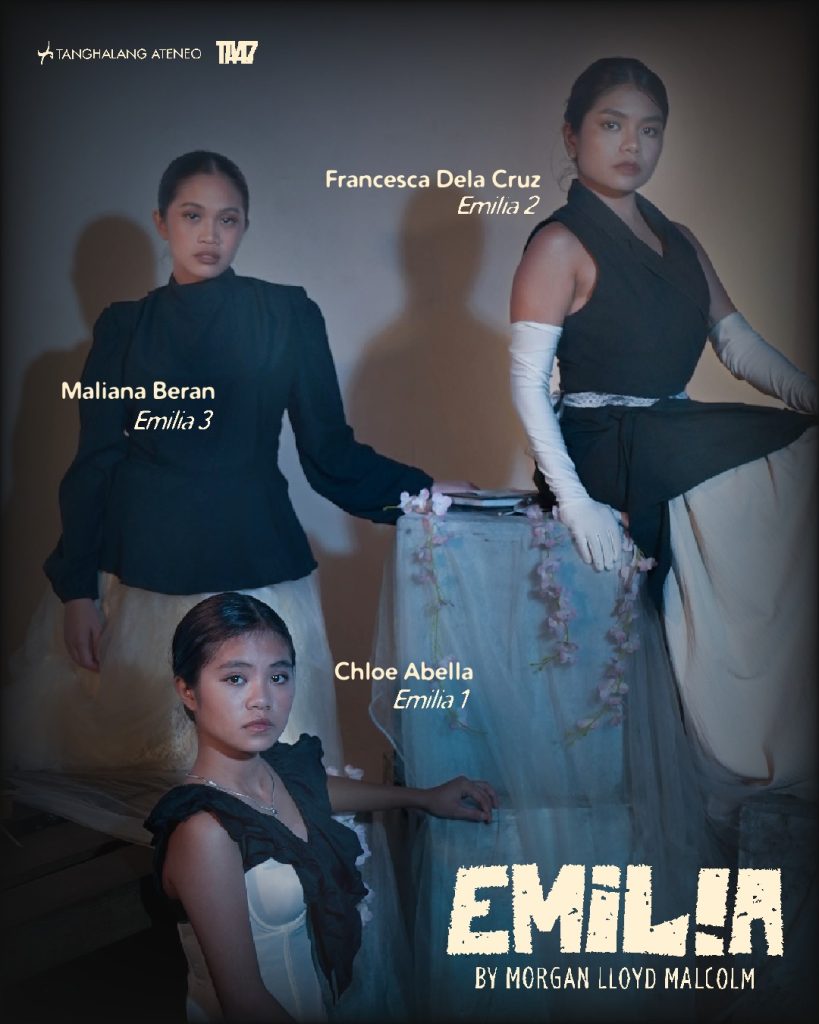
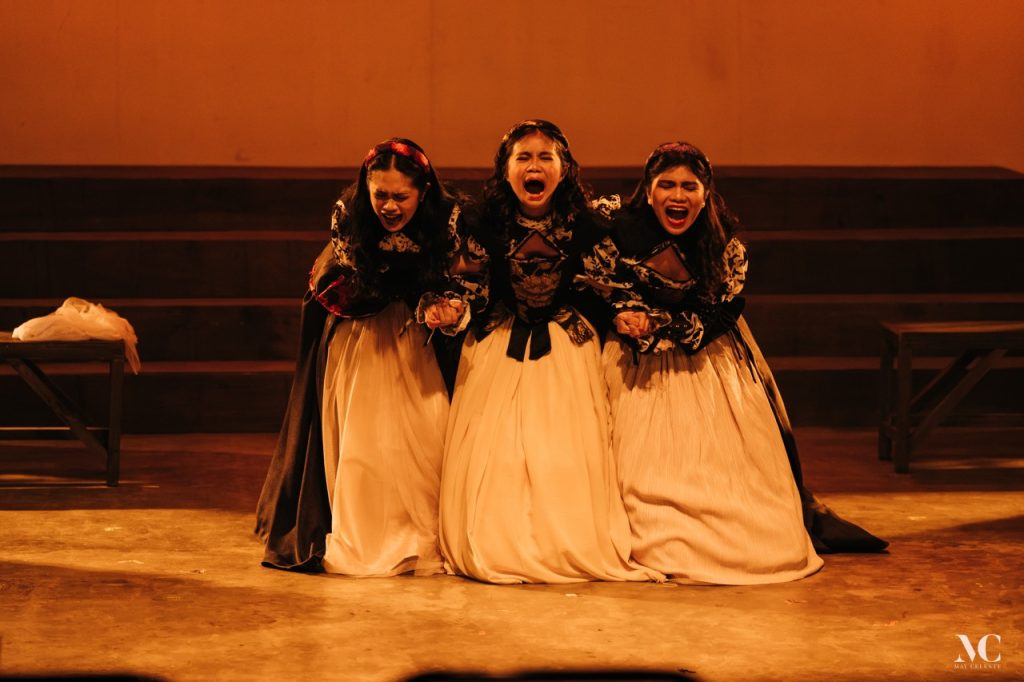
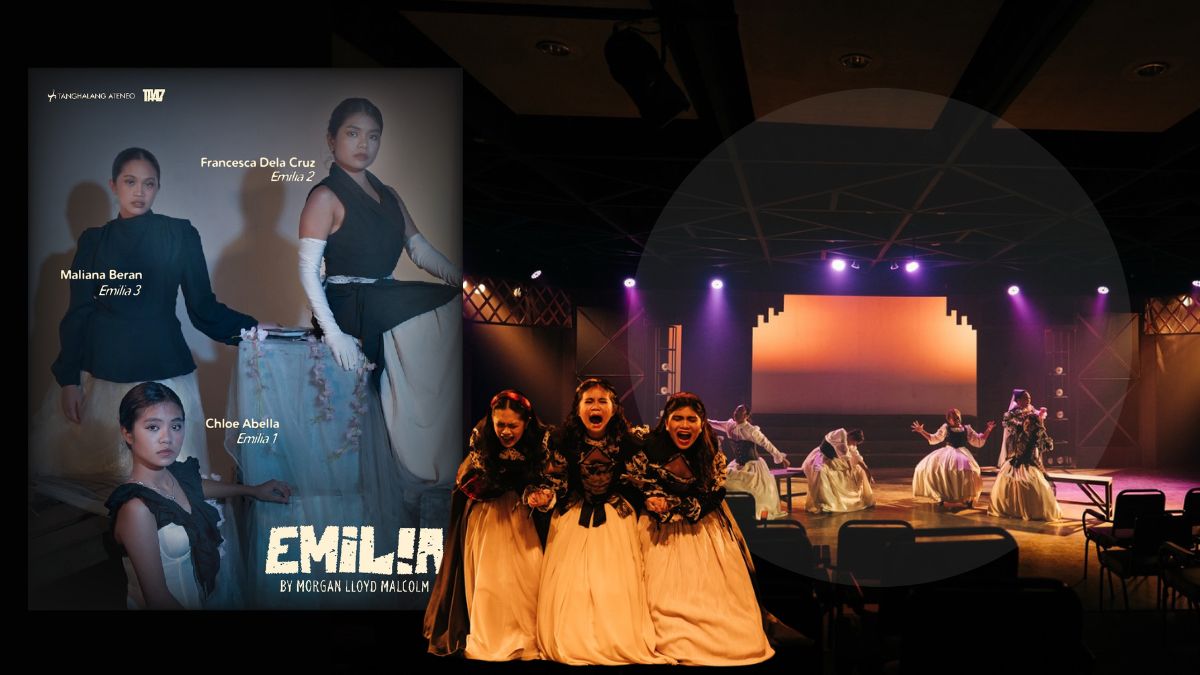
    While the entire ensemble is great, I have to commend the three actresses playing Emilia: Chloe Abella, Francesca Dela Cruz, and Maliana Beran – who play Emilia at the courts, Emilia as a young woman, and Emilia as an older woman, respectively. The trope of the child, the mother, and the crone in full view. As one Emilia plays the scene, the other two watch, sometimes commenting. They are witness to their own rise and fall. Each actress commands the stage and filled it with their presence.

    TP Emilia 655991383 1437619825044459 6061623620985181394 n

    The other standout in this extremely powerhouse cast is Joy Delos Santos, who doubles as Lord Henry Carey and Thomas Howard. As Carey, she is respectful, warm, and nurturing. He’d be the only decent man in the play if he wasn’t cheating on his wife. On the other side of the spectrum, Delos Santos’s Thomas Howard, the man who eventually persecutes Emilia for immorality, is the perfect English fop – effete, cowardly, and full of hot air. Through the Filipino translation, this character takes the form of either the evil Spanish friars in our colonial history or the soft aristocrat, almost feminine, hiding his weakness with his power and his gender.

    Emilia 205 Tanghalang Pilipino
    EMILIA | PHOTO CREDIT: MAY CELESTE

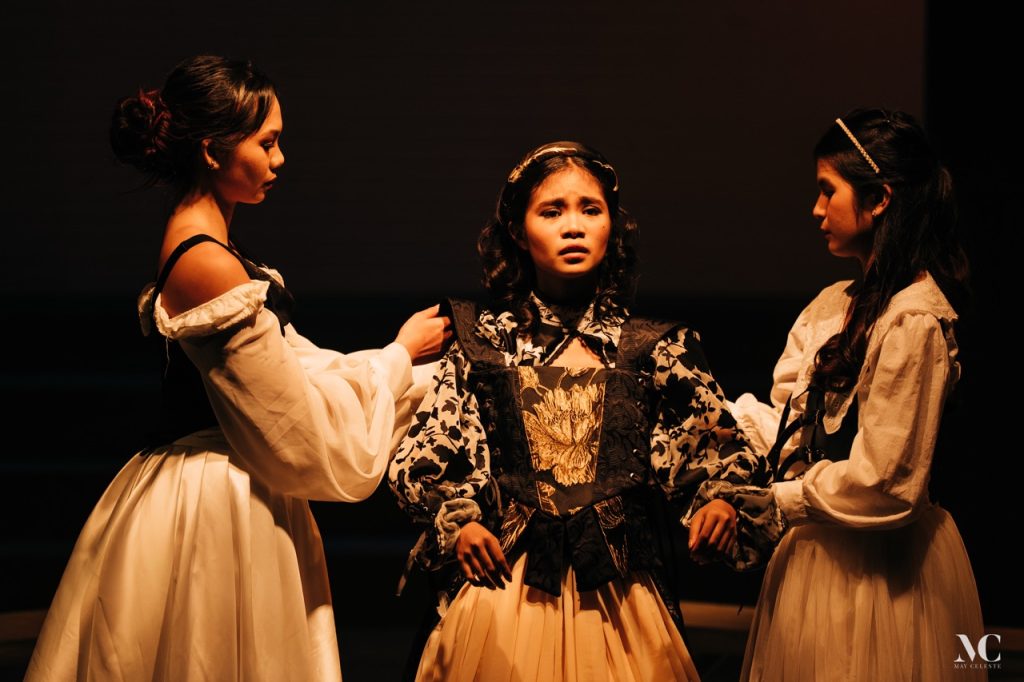
    The costumes by Hershee Tantiado are exquisite, a deconstruction of 17th-century style that allows the translation to harken back to that era while remaining “broken” enough to operate on a figurative level, like the modern Filipino sensibilities that seep into the play. The lighting design of Jethro Nibaten allows for the play to shift from the dramatic to the comic seamlessly while highlighting what needs to be seen and amplifying the emotions that are already there.

    Emilia 548 Tanghalang Pilipino
    EMILIA | PHOTO CREDIT: MAY CELESTE

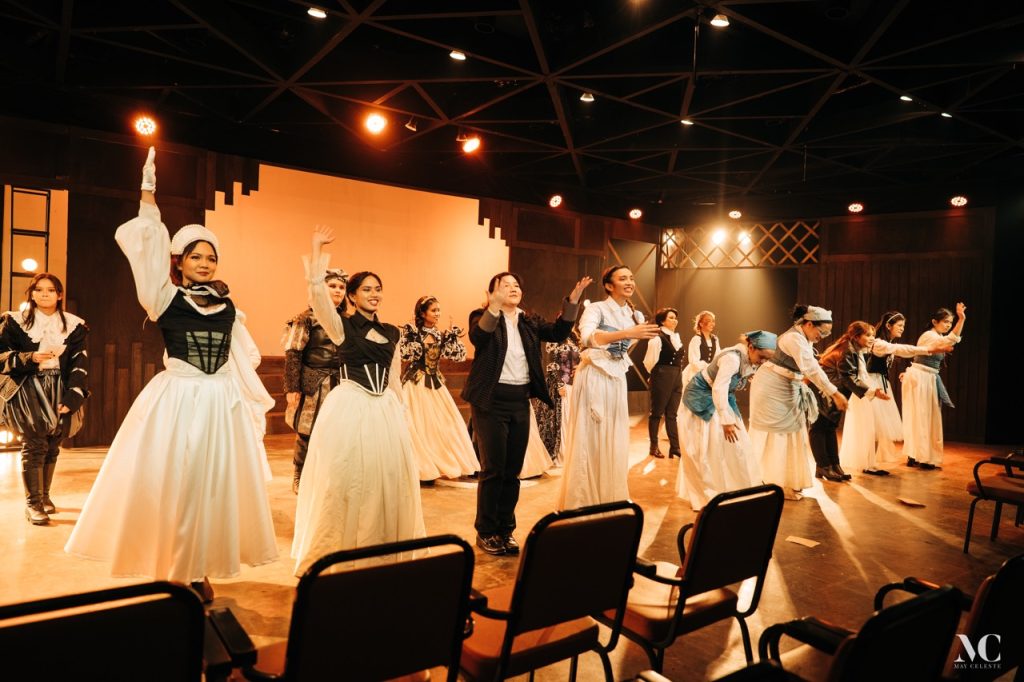
    I cannot talk enough about how this production moved me; I haven’t stopped thinking about it since I watched it on its opening night. It is brash, daring, and bold, without sacrificing craft and nuance. Emilia is an incendiary piece of play that is a call to action for all women to reclaim their voices, the one that has been taken away – and continuously so – by the patriarchy. The final chant, with the ensemble speaking as one voice, sent shivers down my spine. Tanghalang Ateneo’s production of Emilia is one of the best shows I have ever seen.

    My Rating: 5 Stars

    stars 5 0


    Don’t let this story be erased again. Experience the raw, electric power of Tanghalang Ateneo’s Emilia before it closes. The production runs until April 26 at the Rizal Mini Theater, Ateneo de Manila University. Secure your seats now and witness what is easily one of the most vital shows of the season.

  • Areté, In Collaboration with Tanghalang Ateneo, Presents ‘Sintang Dalisay’

    Areté, In Collaboration with Tanghalang Ateneo, Presents ‘Sintang Dalisay’

    Areté, Ateneo de Manila University’s creativity and innovation hub, together with Tanghalang Ateneo, the university’s longest-running theater company, proudly restages Sintang Dalisay. This Filipino adaptation of Shakespeare’s Romeo and Juliet, which fuses the translation of National Artist Rolando S. Tinio and a 1904 poem by G.D. Roke, and directed by the late Ricardo G. Abad with Guelan Varela-Luarca, celebrates the enduring legacy of Dr. Abad in Philippine theater. 

    Sintang Dalisay

    Set in an imagined Muslim community in the Southern Philippines, Sintang Dalisay reimagines the timeless story of star-crossed lovers. Rashiddin and Jamila must navigate their secret love amidst the longstanding feud between their families, the Mustaphas and Kalimuddins. This adaptation combines Shakespeare’s tragedy with the Filipino spirit of festive love and enduring hope, brought to life through the Igal dance of the Sama-Bajau people and neo-ethnic and gamelan music. 

    3

    This production is part of Tanghalang Ateneo’s “ELOQUENTIA, SAPIENTIA, HUMANITAS: The Ricky Season,” a tribute to the late theater veteran. Dr. Abad rst directed Sintang Dalisay in 2011. The following year, it earned ALIW Awards for Best Non-Musical Production and Best Direction For Non-Musical Production. In 2016, it won the Silver Medal for Production at the 3rd International Experimental Theater Festival in Vietnam. Its 2024 revival earned four nominations at the BroadwayWorld Philippines Awards, including Best Play, Best Ensemble, and Best Choreography for Matthew Santamaria. The production’s music direction, helmed by Edru Abraham, Jayson “Dyandi” Gildore, and Aurea Dagnalan, also received acclaim. The production also boasts of the fantastic Southeast Asian-inspired design of National Artist Salvador Bernal. 

    1 5

    This 2025 restaging is more than a performance; it is a tribute to Dr. Abad’s vision and his transformative contributions to Philippine theater, which continue to inspire generations. 

    Coming up as the organization’s third oering this season, the production features the return of Maliana Beran and Karl Borromeo as the star-crossed lovers, Jamila at Rashiddin. Joining them are an ensemble of members, alumni, and professional theater artists: Jerome Dawis, Fred Layno, James Reyes, Yani Lopez, Sophia Alba, Nicole Chua, Sachi Dris, Roldine Ebrada, Ian Beriña, Kaiser Cortina, Joaquin De Los Santos, Paul Felias, Philippe Reyes, Catherine Valentin, and Maxine Ventura. 

    Sintang Dalisay

    Members of the Artistic Team: 

    Ricardo G. Abad✝ and Guelan Varela-Luarca for Direction 
    Sabrina Basilio for Dramaturgy 
    Matthew Santamaria for Choreography and Associate Direction 
    Brian Sy for Fight Choreography and Assistant Choreography 
    Jayson “Dyandi” Gildore for Music Design 
    Edru Abraham for Music Consultation 
    Salvador Bernal✝ and Tata Tuviera for Production Design 
    D Cortezano for Lighting Design 
    John Robert Yam for Sound Design 
    Pat Ong for Photography 
    Zoe de Ocampo for Graphic Design 

    Sintang Dalisay’s show dates are February 14 – 23, 2025, with the following showtimes: 2:00 PM on February 15, 16, 22, and 23 and 7:30 PM on February 14, 15, 21, 22, and 23. 

    Tickets are priced at Php 1,200.00 for the General Public and Php 600.00 for Ateneo de Manila University Community and faculty and students from our partnered schools for Orchestra seats. Balcony seats are available at Php 800.00 for the General Public and Php 600.00 for the Ateneo de Manila University Community and faculty and students from our partnered schools. They can be purchased online at bit.ly/ta46sdtickets.

    For more information about the show, follow Tanghalang Ateneo through the following platforms:

    Facebook: fb.com/TanghalangAteneo
    Instagram: instagram.com/tanghalangateneo