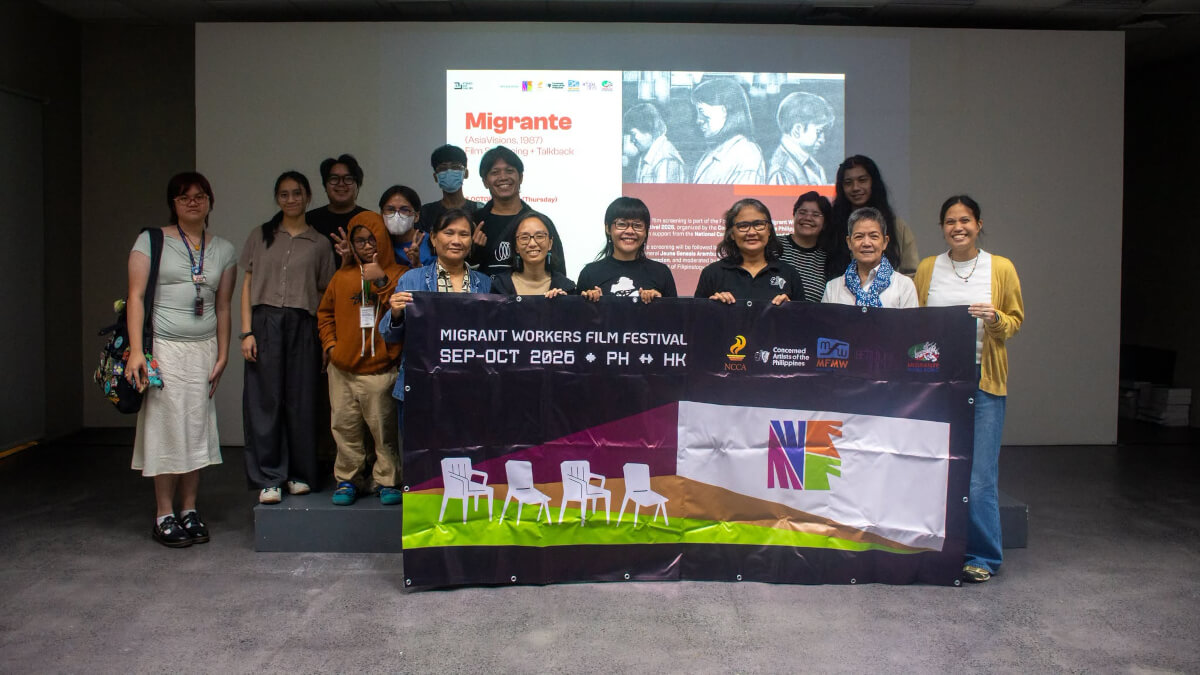
The 2026 Migrant Workers Film Festival has opened conversations about what it means to leave the country, during its Philippine leg screenings across university auditoriums, cultural centers, and film labs.
Following its run in Hong Kong, the festival has turned its lenses toward the complex web of labor, displacement, family sacrifice, and resilience that defines the Filipino diaspora.
The event, organized as a cultural and educational initiative by the Concerned Artists of the Philippines with support from the National Commission for Culture and the Arts, featured a curated lineup spanning nearly four decades of migration cinema.
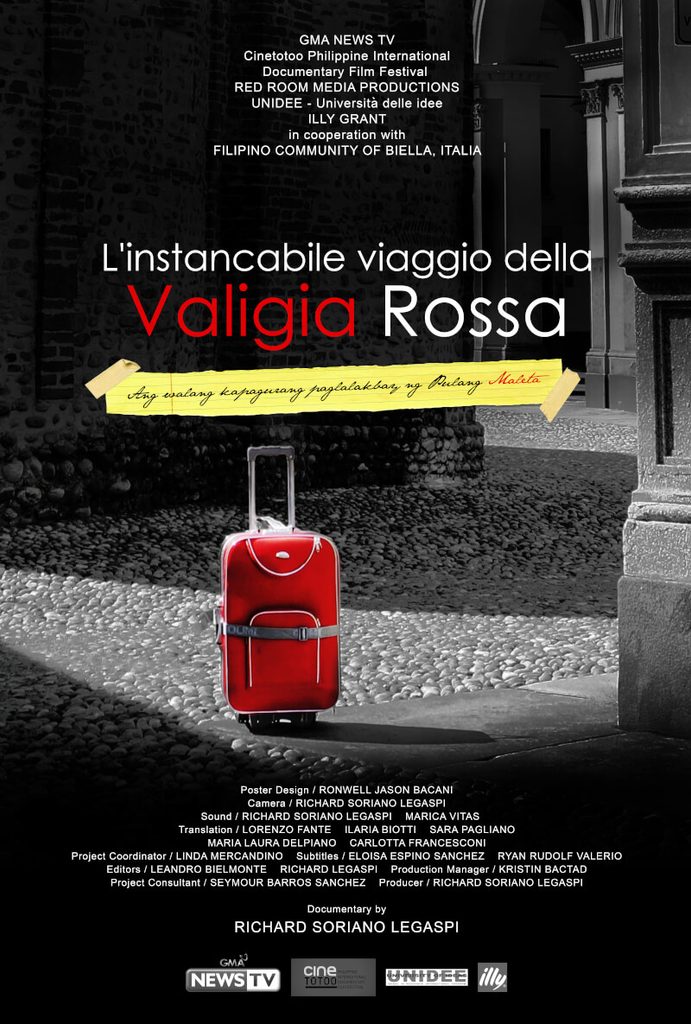
The program included “Migrante” (AsiaVisions, 1987), “Modern Heroes, Modern Slaves” (Marie Boti and Michelle Smith, 1997), “Rhose” (Nawruz Paguidopon, 2008), “Rhose, Where Do Your Dreams Go?” (Paguidopon, 2012), “Ang Walang Kapagurang Paglalakbay ng Pulang Maleta” (Richard Soriano Legaspi, 2014), and “Gusto Nang Umuwi ni Joy” (Jan Tristan Pandy, 2014).
The festival’s footprint has stretched across multiple institutions, creating spaces for students, artists, and migrant advocates to engage with audiovisual heritage.
The Philippine run kicked off last October 1 and 2 at the UPFI Film Center Videotheque, featuring screenings paired with talkback sessions featuring CAP National Secretary General Edge Uyanguren, Migrante International Deputy Secretary General Josefina Pingkihan, and filmmakers Nawruz Paguidopon, JT Pandy, and Richard Soriano Legaspi.
On October 7, audiences gathered at Lawak Sinehan in UP Cebu to trace generations of migration narratives in partnership with local academic unions and community groups.
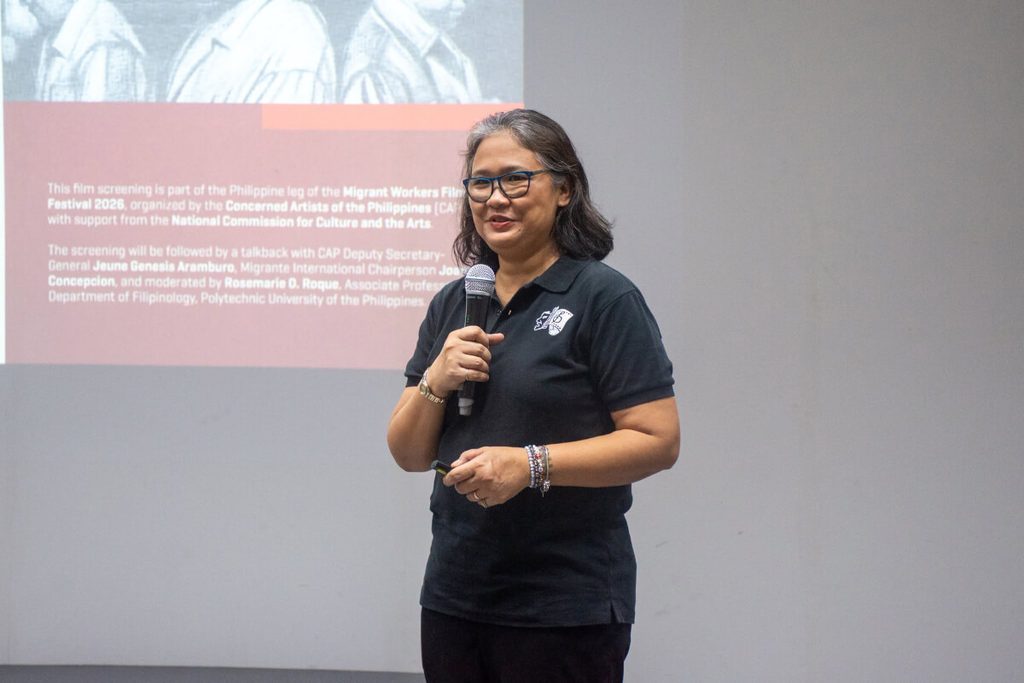
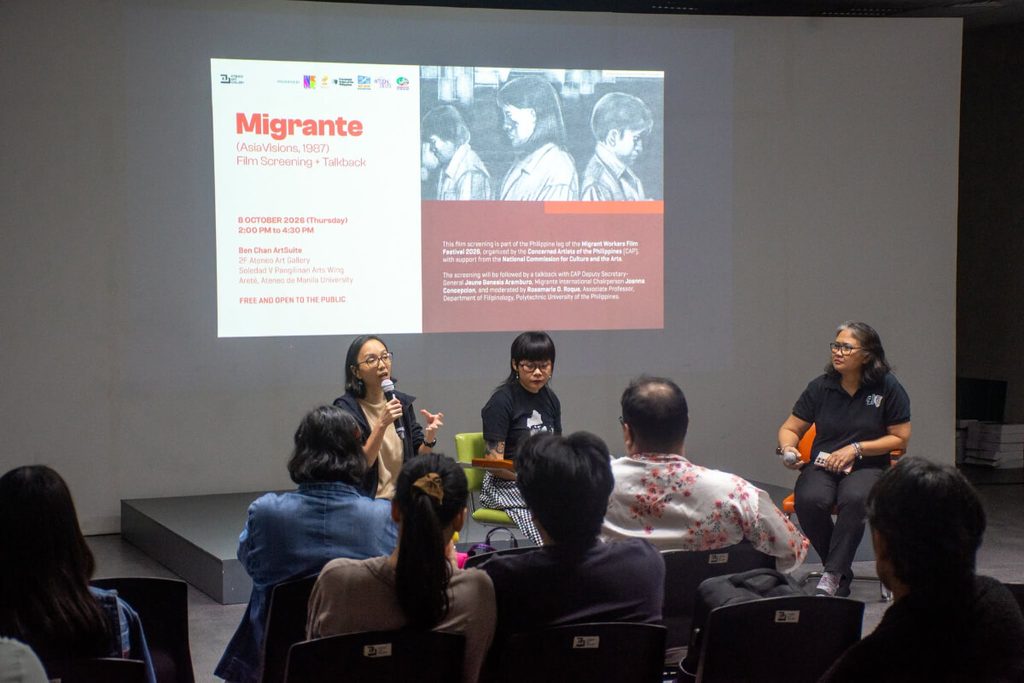
As part of the Ateneo Art Gallery’s Moving Image Program last October 8, a special screening of the 1987 landmark documentary “Migrante” was held at the gallery’s Ben Chan ArtSuite.
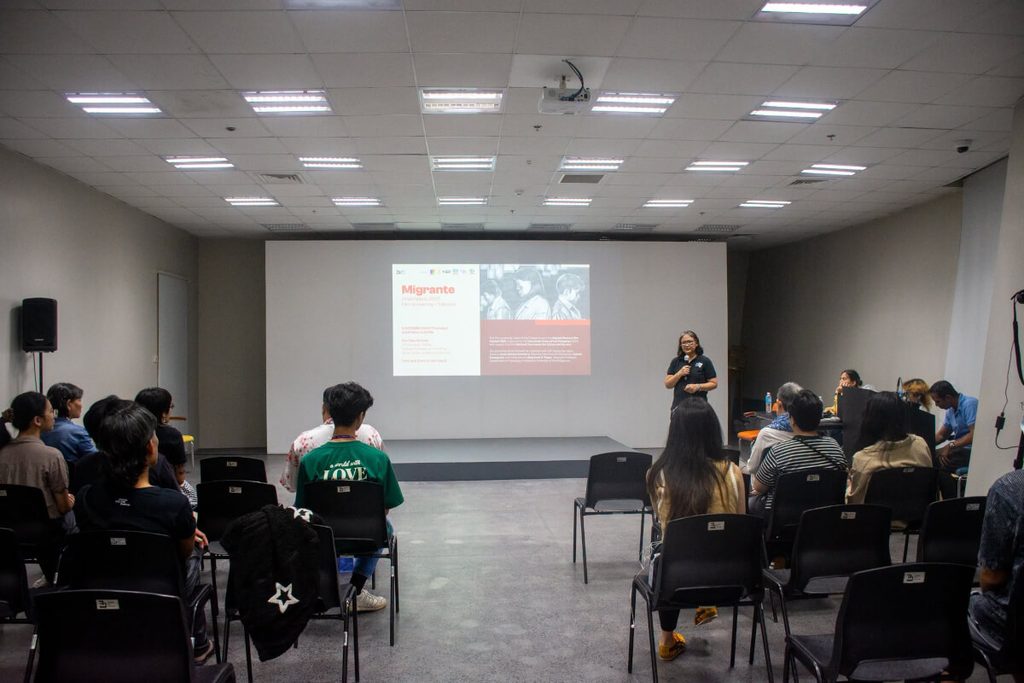
Screenings also took place at the Polytechnic University of the Philippines Bulwagang Bonifacio last October 9 and PUP Claro M. Recto Hall last October 13, drawing deep engagement from the university’s academic community.
On October 20, screenings at UP Los Baños Makiling Film Laboratory featured a dedicated focus on Paguidopon’s “Rhose” series, along with works by Legaspi and Pandy.

The festival landed at the Mowelfund Center last October 21 for afternoon screenings of “Migrante” and “Modern Heroes, Modern Slaves,” paired with reflections from invited speakers.
What sets the event apart was how it treated cinema as a catalyst for dialogue. Each screening was followed by talkbacks that bridged historical documentation with present-day realities.
During the Ateneo Art Gallery session, moderated by PUP Department of Filipinology Assoc. Prof. Rose Roque, Migrante International Chairperson Joanna Concepcion pointed out the truth that the fundamental conditions driving Filipinos abroad have barely shifted in the 39 years since “Migrante” was first released. Concepcion underscored how the state’s labor export policy continues to treat citizens as commodities, directly contradicting official rhetoric surrounding workers’ welfare.
CAP Deputy Secretary-General Jeune Genesis Aramburo echoed this statement and reiterated the call to address the root causes of forced migration. Aramburo noted that if Filipino industriousness has built and sustained prosperity in foreign lands, the ultimate challenge remains transforming domestic conditions so that workers are met with livable wages and dignity at home.
By merging archival memory with contemporary struggle, the Migrant Workers Film Festival made sure that the stories of those who cross borders are neither silenced nor forgotten, reminding audiences that the fight for migrant rights extends far beyond the final credits.