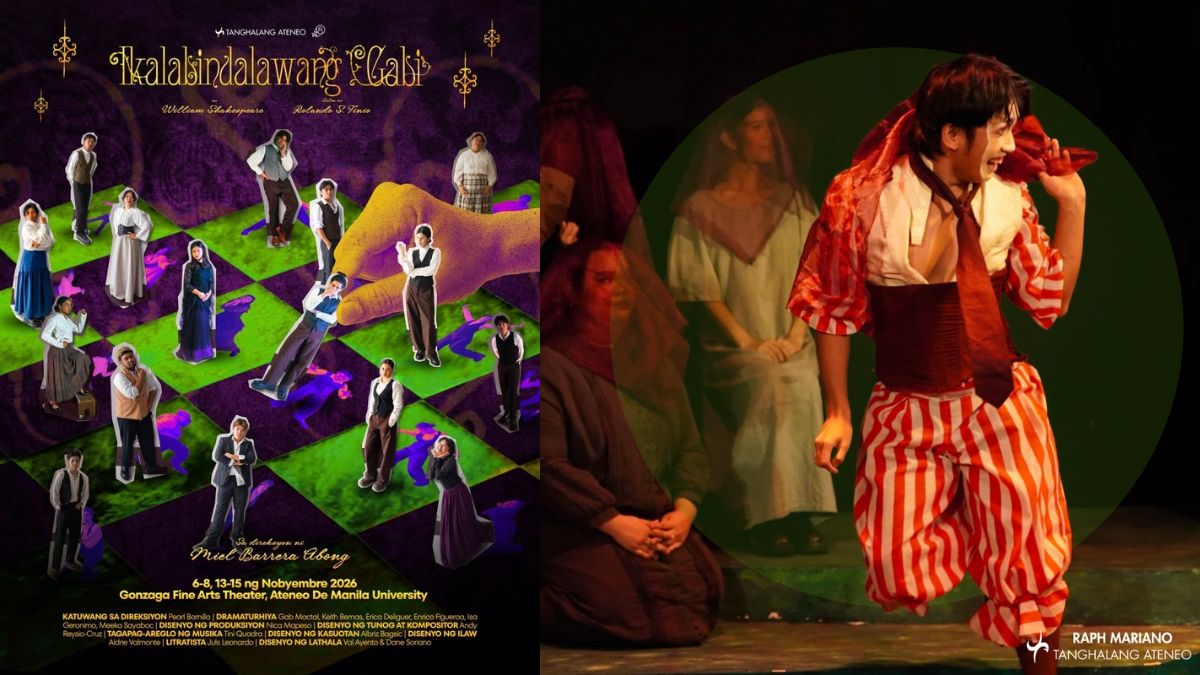
Shakespeare’s comedies translate remarkably well into Filipino – especially when the translation is done by National Artist Rolando Tinio. The natural fit stems from the rich history of Komedya, one of the oldest genres of formal theater in the Philippines, which is the root of many of our comedies in radio dramas, film, and television. Traditionally centered on tales of royalty or conflicts between Christians and Moros, the Komedya is played out as slapstick humor and a lot of the wit comes from sharp-witted mockey. Shakespeare employs these comedic elements across works like Taming of the Shrew, Midsummer Night’s Dream, and Twelfth Night. Tinio’s Filipino translation of the latter, Ikalabingdalawang Gabi, serves as the latest production from Tanghalang Ateneo, directed by Miel Barrera Abong.
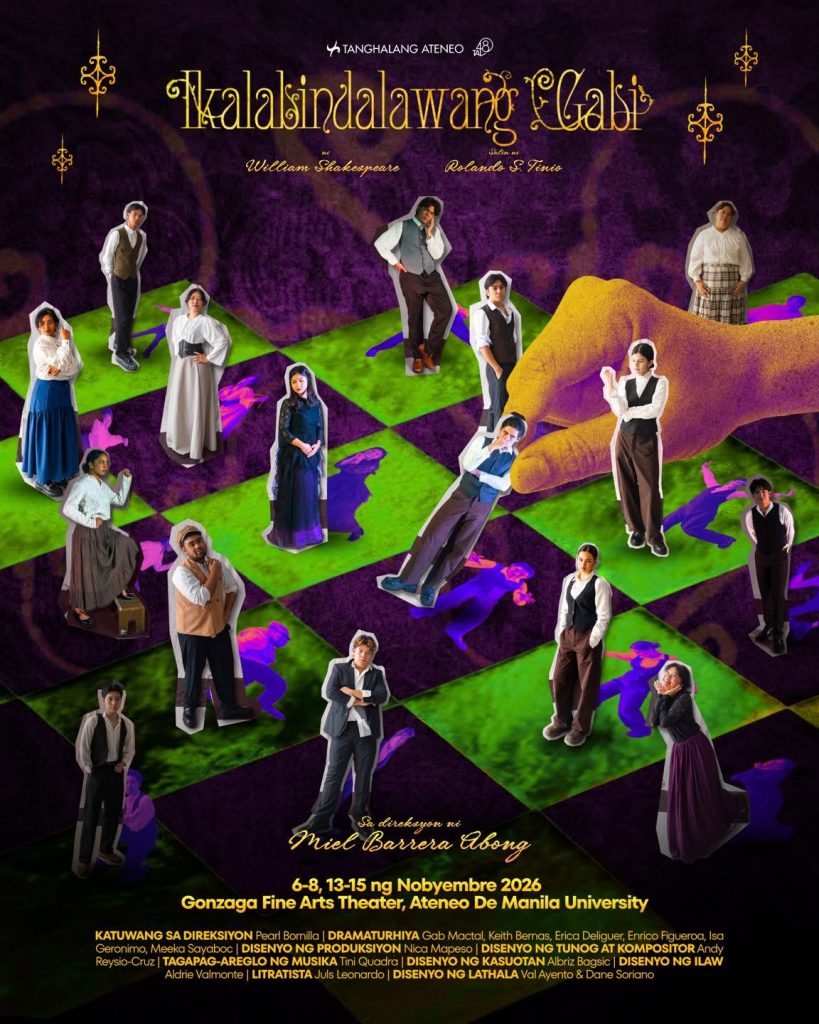
As the opener of the company’s 48th season, this trainee production, which means Ikalabingdalawang Gabi carries the vibrant energy of Tanghalang Ateneo’s newest cast and crew. While naturally still rough around the edges, their infectious verve and enthusiasm breathe fresh life into Shakespeare’s classic comedy of errors, mistaken identities, and crisscrossed lovers.
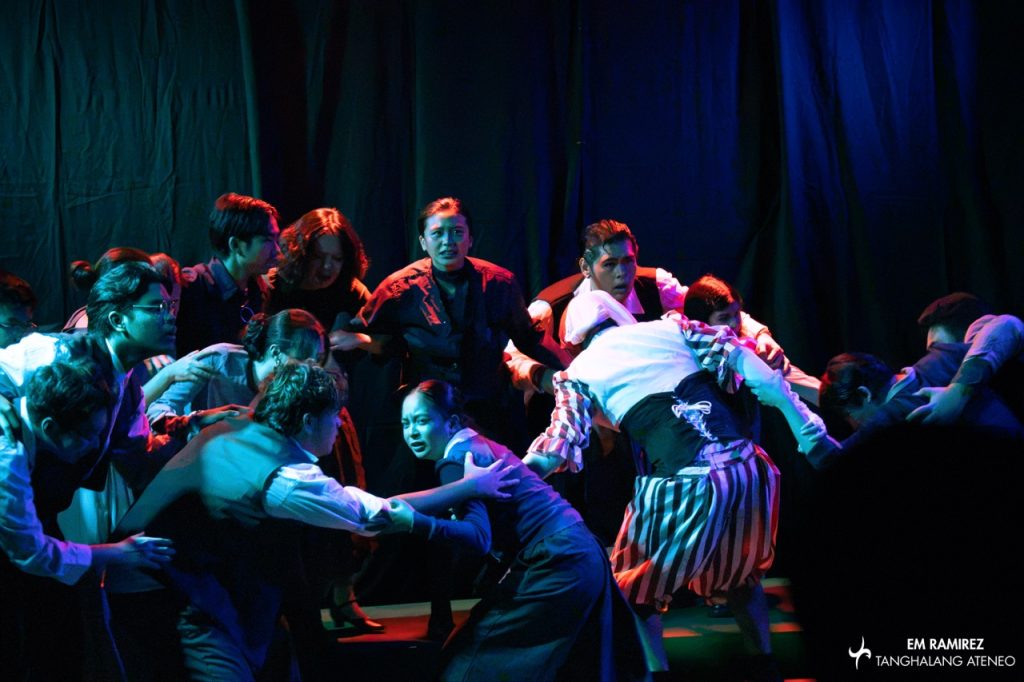
It follows the story of Viola (Sabel Lamadrid), who washes ashore after a shipwreck during a storm. Believing her twin brother Sebastian (Jio Japson), has perished, she disguises herself as a young man named Cesario and employment with the country’s Duke Orsino (Jeshua Christian M. Cases). Duke Orsino, madly in love with the lady Olivia (Bea Villena), and have sent Cesario to woo her on his behalf. However, Olivia falls in love with Cesario, unaware he is Viola in disguise, while Viola begins to fall for the romantic Orsino. Fleshing out the play’s comedic subplots, Olivia’s household is filled with chaos as her brother, Sir Toby (Sen Mendoza), his friend, Sir Andrew (Yeoj De Vera), and her lady’s maid, Maria (Rona Layne Badilla), play a prank on the stern Malvolio (Juan Miguel Ponce), who also works at the household.
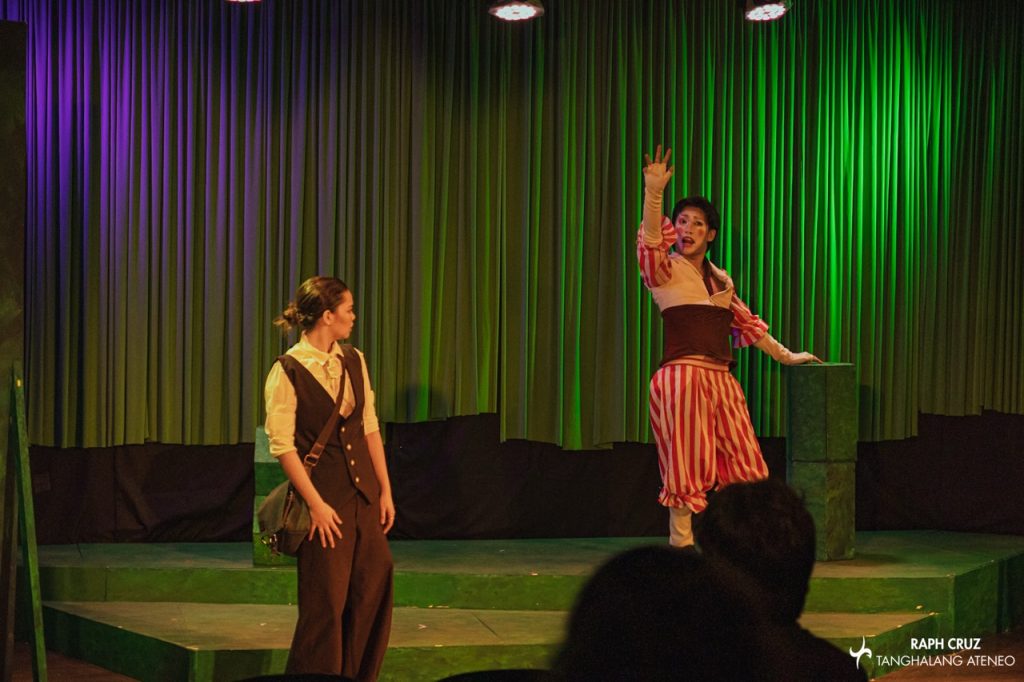
Surprisingly, the play runs at a tight approximately 90 minutes without an intermission, a lot of the narrative has been cut out of the play. I’m not familiar with Tinio’s original translation so I’m not sure if this edit is Tinio’s or the work of the Abong and the TA Dramatist Collective (whose work on Emilia is still one of my favourites of this year), the streamlined narrative focuses mostly on the comedic prank on Malvolio and Olivia’s relentless courtship of Viola/Cesario. Consequently, Orsino is out of the picture. This truncated version undermines Viola’s dilemma, because without enough scenes establishing her dynamic with Orsino, we can’t see the full extent of her conflict. It’s less a misdirection of the love stories as originally intended than Olivia falling in love for a woman disguised as a man.
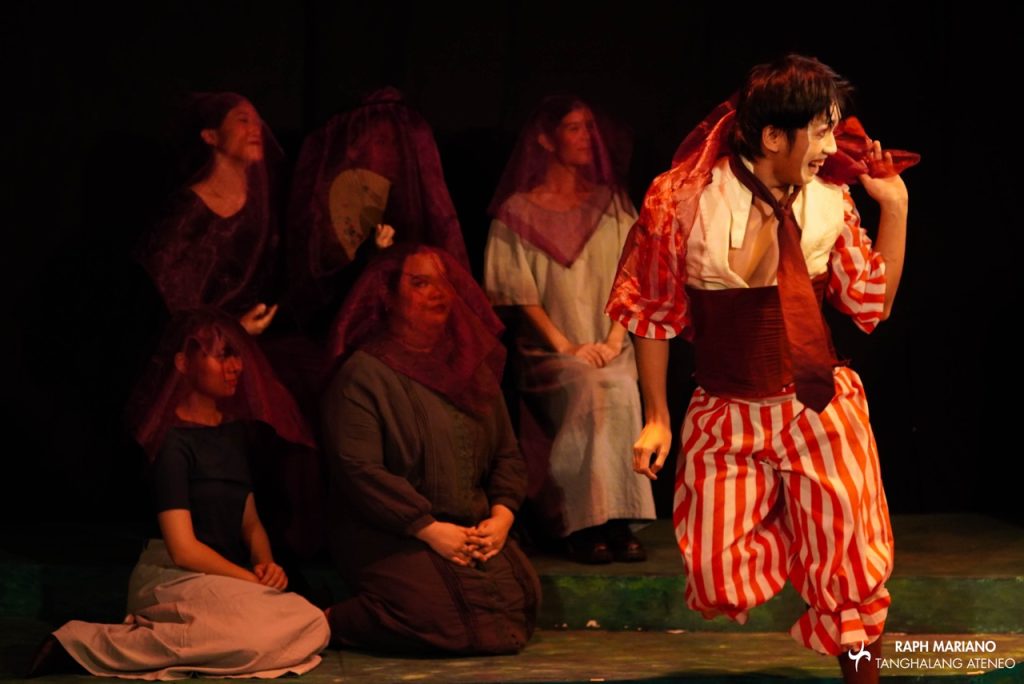
What makes the show enjoyable, however, is the focus it has given on the trick played against Malvolio. These scenes elicit the night’s strongest laughs, as Mendoza, De Vera, and Badilla have an absolute blast playing the tricksters, while Ponce delivers a fully committed performance at bringing Malvolio’s gullibility to its full potential.
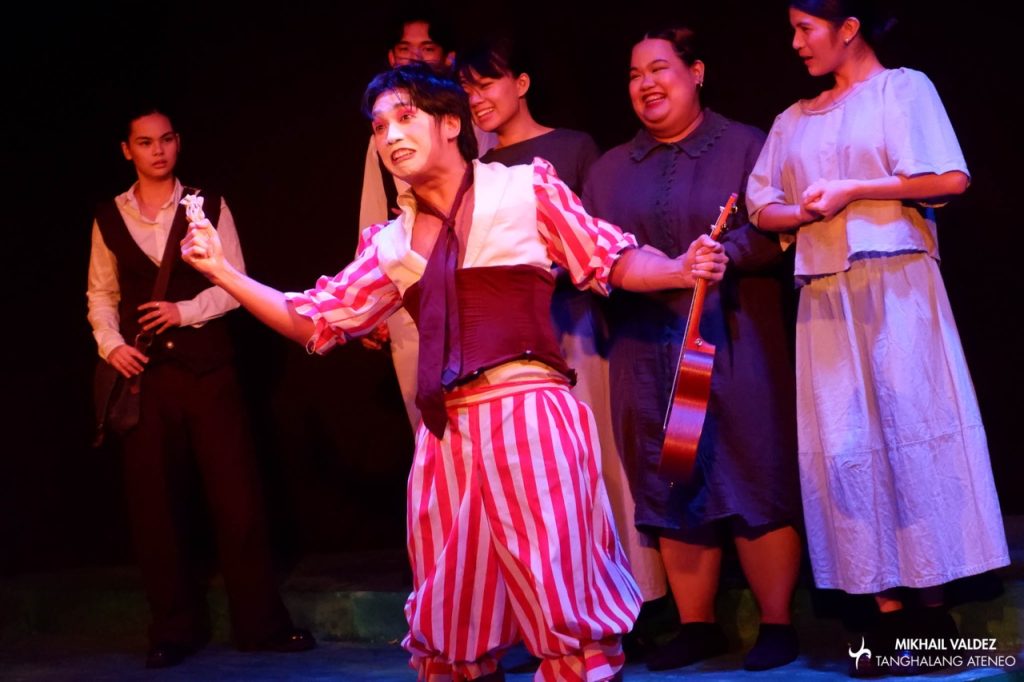
The staging of the piece is quite clever. It’s a farce and the excellent use of energy and pacing, the characters jumping in and out of the scenes, are well-timed by Miel Barrera Abong and executed well by her cast. However, often enough, this is also where the cast’s trainee status becomes evident as there’s still a lack of tension in their movements, acting fully with their whole bodies rather than relying solely on their voices and facial expressions.
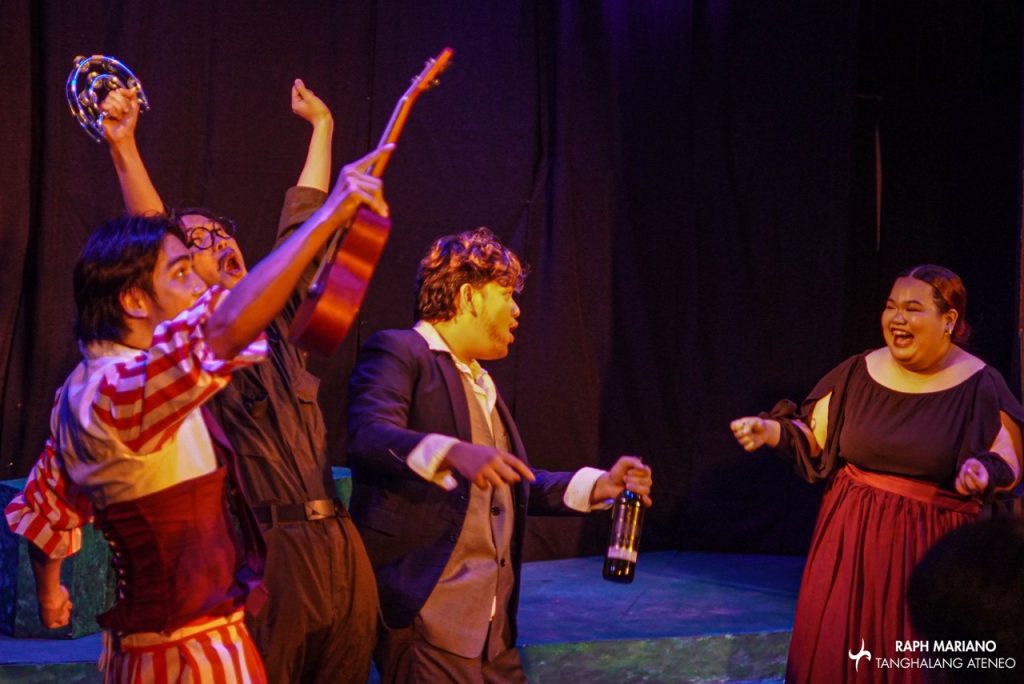
Of the cast, it is Sabel Lamadrid, Rona Layne Badilla, and KD San Juan (as the fool, Feste) who have really adapted well to Rolando Tinio’s script. The pulse and heart of the translation are delivered so effortlessly that it sounds spontaneous and natural in their performance. For some, there is still a tendency for the prose to sound scripted, performed. But Lamadrid, Badilla, and San Juan have fully embodied the language and made it sound second nature to them. Lamadrid is able to capture the nuances of Viola’s dilemma through subtle gestures and facial expressions that still telegraph to the whole audience. Badilla, meanwhile, plays Maria with a bold, large and larger-than-life energy that never feels performed. It feels like a quality of Maria’s character. Her comedic timing and stage presence is extraordinary. San Juan manages Feste’s sharp wit and captures the nature of the Fool in Shakespeare’s plays; ridiculing the other characters while illuminating on truths. It’s a challenging role and his full commitment to it is inspiring.
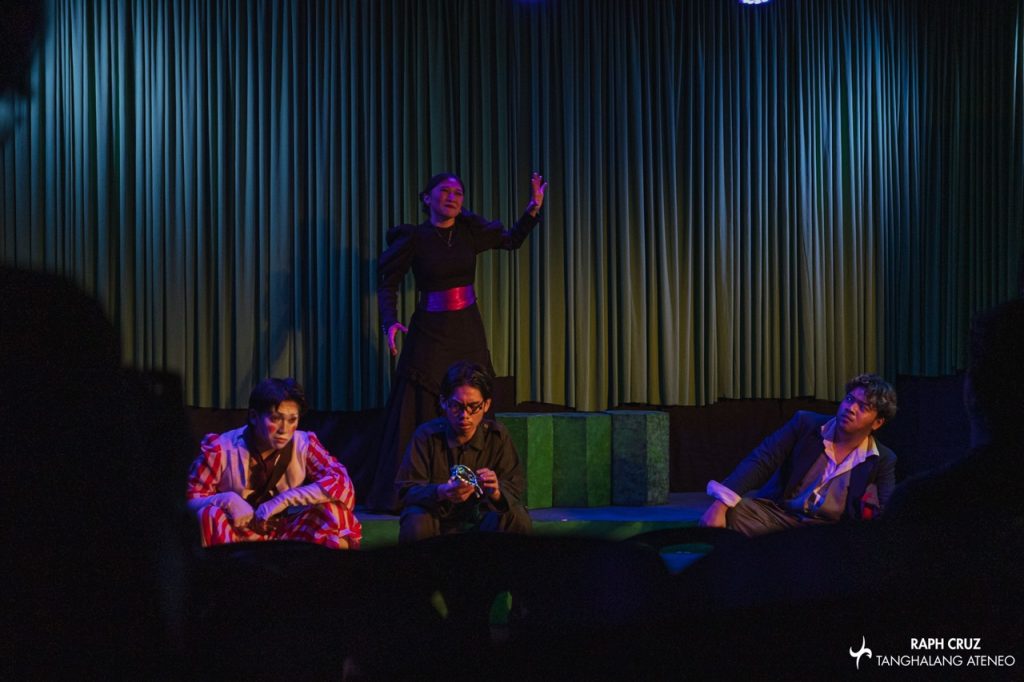
As a whole, the production is a fun watch. I watched during the opening night and while some cues still need to be refined, I am sure this will be smooth out as the run progresses. Ultimately, it is a lively production and the energy is thrilling. It’s wonderful when Shakespeare can be made accessible like this.
My Rating: 3.5 Stars

Ready to experience Shakespeare’s hilarious comedy of errors? Head to the Gonzaga Fine Arts Theater, Ateneo de Manila University on November 6–8 or November 13–15. Get your Ikalabindalawang Gabi tickets throug bit.ly/TA48IkalabindalawangGabi.