
I’m quite impressed by Eljay Castro Deldoc’s previous works, most recently his translation of Tennessee Williams’ ‘Summer and Smoke’ (El Fuego del Alma) and Tanghalan Pilipino’s Gregoria Lakambini. I came into YPC Stage’s production of ‘Mapanakit: Mga Dulaang Bittersweet’ with much excitement. Deldoc’s writing is vibrant, rich, and lyrical, so I was eager to watch his later production: a triptych of three one-act plays (Ang Liknayang ng Ating Mga Katawan, Ilihan at Kalingaw, and Ganito ang Pangarap Kong Kasal), all directed by BJ Borja.

What excited me the most was seeing a collaboration between community theater in Biñan – YPC Stage being the Youth Performance Council based in Biñan, Laguna – and Manila-based actors and theater practitioners. It’s a rare opportunity for us to experience regional theater while giving local artist from the provinces and allows them to collaborate with some of Manila’s finest talent. This king of creative synergy can only help elevate both parties and plays a vital role in enriching national theater in the country.
Ang Liknayang ng Ating Mga Katawan
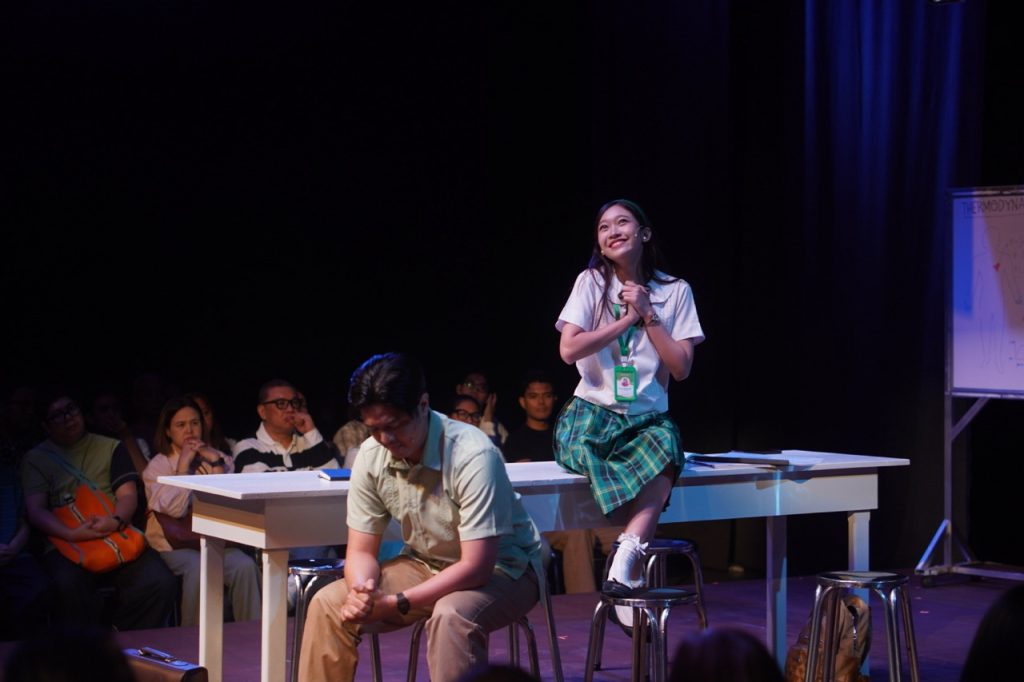
The first one-act centers on Mr. Banakon (Ross Pesigan) and his student Hershey (Jury Sanchez), who meet in a chemistry lab under the guise of discussing the whereabouts of Hershey’s classmate who goes missing. But in the process, the conversation quickly pivots when Hershey confronts Mr. Banakon over a research paper, which he did not accept. As their back-and-forth unfolds, the play shifts into the story of a teacher-student relationship that has crossed moral boundaries.
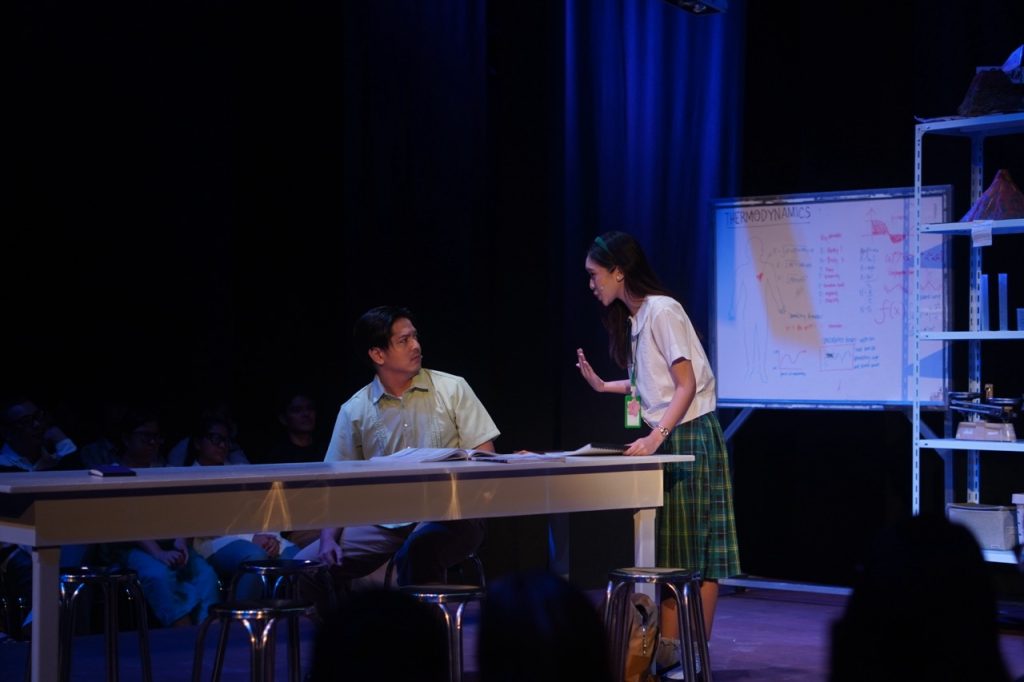
From the get-go, the play had a lot working against it. Jury Sanchez’s performance as Hershey was wildly animated, bordering on anime. She played the character like a villain, a young student who is confessing her love to her teacher, fighting tooth and nail to prove they belong together. When Hershey makes a point, she laughs maniacally; when she says the word “flirt,” her body in sinewy way. It felt very much like she’s indicating, acting out every word that was being said. It felt more directional than an actor’s choice because a lot of the blocking and the back-and-forth between the two characters was played for comedy. It’s a dark comedy for sure; using empirical science – specifically the laws of physics and thermodynamics – to contextualize two people’s feelings for each other.
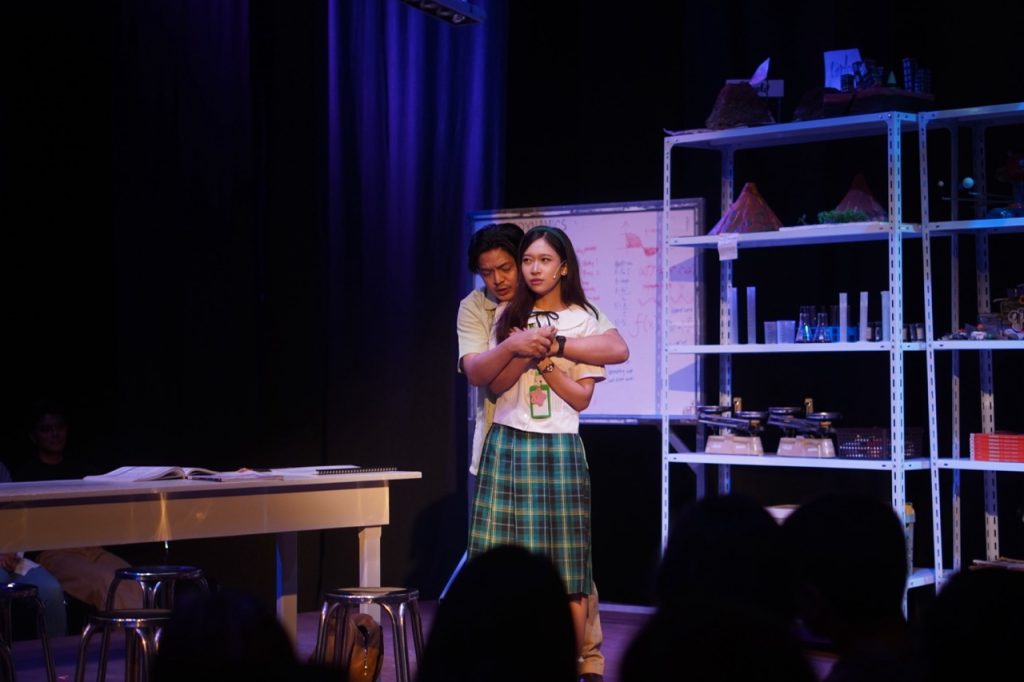
The play is inherently funny as it is. There is a ridiculousness that counterpoints the deeply inappropriate conflict that is happening in front of us. However, by leaning so heavily into playing the comedy, the play ends up not being taken seriously, which it needs to be because both Hershey and Mr. Banakon are complicit in a very unlawful, boundary-crossing relationship. Had the comic portrayals been toned down, the humor would have emerged naturally on its own, allowing the true strength of the material would have risen more to the front.
While it remains a daring piece, with Pesigan and Sanchez fully committed to their characters but the production’s lighthearted tone ultimately undermines the dark, messy themes at its core.
Ilihan at Kalingaw
Starring Gab Pangilinan and Euden Moje as the title characters, this mythical story follows two members of the Buringkantada tribe whose forbidden love carries deep consequences. Ilihan, the tribe’s poet and historian tasked with recording the stories of people in the tribe whose deeds must be remembered, faces punishment when her private love poems for Kalingaw, a man who is betrothed to another, are revealed. The play centers entirely on the tense final confrontation between Ilihan and Kalingaw before the rest of the tribe arrives for her punishment.

The weakest of the three plays, ‘Ilihan and Kalingaw’ is overburdened by a rich world-building and history that are never fully realized in its 45-minute running time. Pangilinan and Moje do their best with the dense rhetoric of the piece, must deliver the narrative through conversation – a narrative that would have been far stronger had it been actively dramatized rather than discussed. As a result, the play is more like a didactic musing on love and freedom.

Production Designer Carlo Villafuerte Pagunaling does an amazing job transforming the stage into a mythical, pre-colonial Philippines, complete with lush costumes and a striking backdrop of large wooden poles suspended from the ceiling creating an image of a fence from the sky. However, these rich visual elements cannot not keep the play from never really reaching its climax because most of the story happens off-stage. Discoveries about their love and about each other are done prior to the play’s opening, and it’s just mentioned through dialogue rather than witnessed live. This is a love story – and an entire mythical world – that needed to be fully experienced on stage and as a one-act play, it doesn’t quite land as hard as it should.

Ganito ang Pangarap kong Kasal
The most successful of the three one-acts in terms of direction, ‘Ganito ang Pangarap kong Kasal’ follows two best friends, France (Phi Palmos) and Kris (Loudette Barjas), who are both pining for the same classmate, Noel (Kokoy De Santos). But Noel wants to be with France and as they find love – which they prefer to keep secret except Kris – we watch the three friends over the time and how the social pressures of fitting in can tear friendships and relationships apart.

The three actors are incredible here. Palmos, Barjas, and De Santos fire on all cylinders, nailing all of the play’s comedic punchlines to hilarious effect. The first half had the audience in stitches. As the realities of the world kicks in, the trio shifts gears seamlessly and mine the pathos of each character that creates a duality, fully forming their characters and really catching the audience.
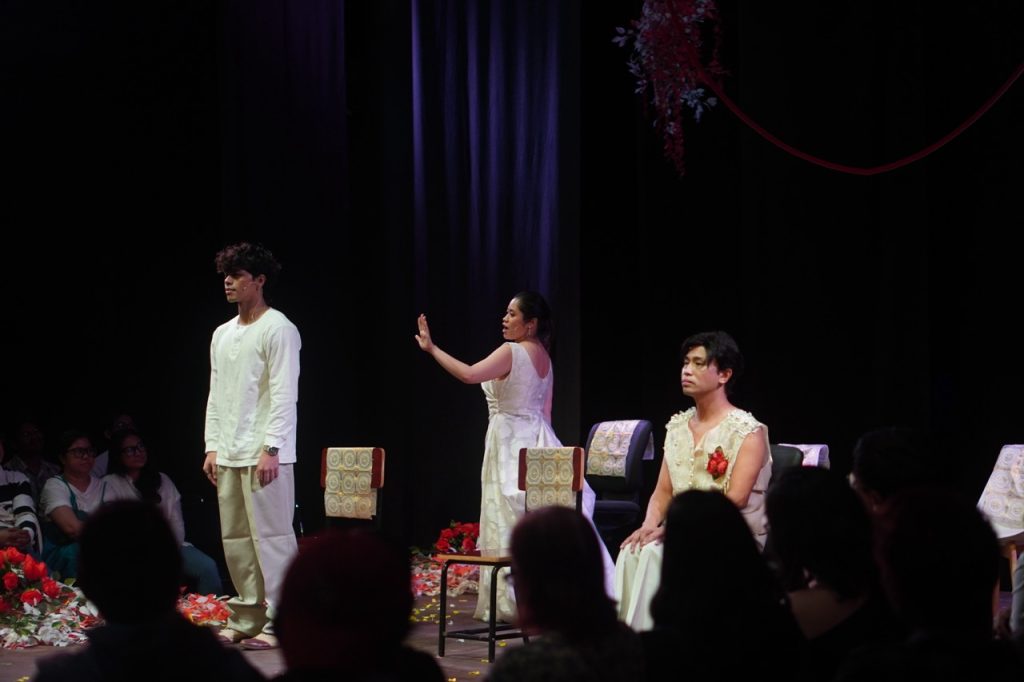
My only gripe is the way the story approaches these friendships and how it navigates the play’s ending to once again play to the usual tropes of the gay romance storyline. It offers nothing new about gay love stories that we haven’t seen before and takes a conservative and melodramatic tone for its ending. The actors do an amazing job making it real, emphasizing the hurt and the loss of the choices that they make, but these characters deserve better. I can only hope that this is an older play written many years before, because as a friend stated after the show: “It’s 2026, we deserve better stories and better endings than this.” And I couldn’t agree more.
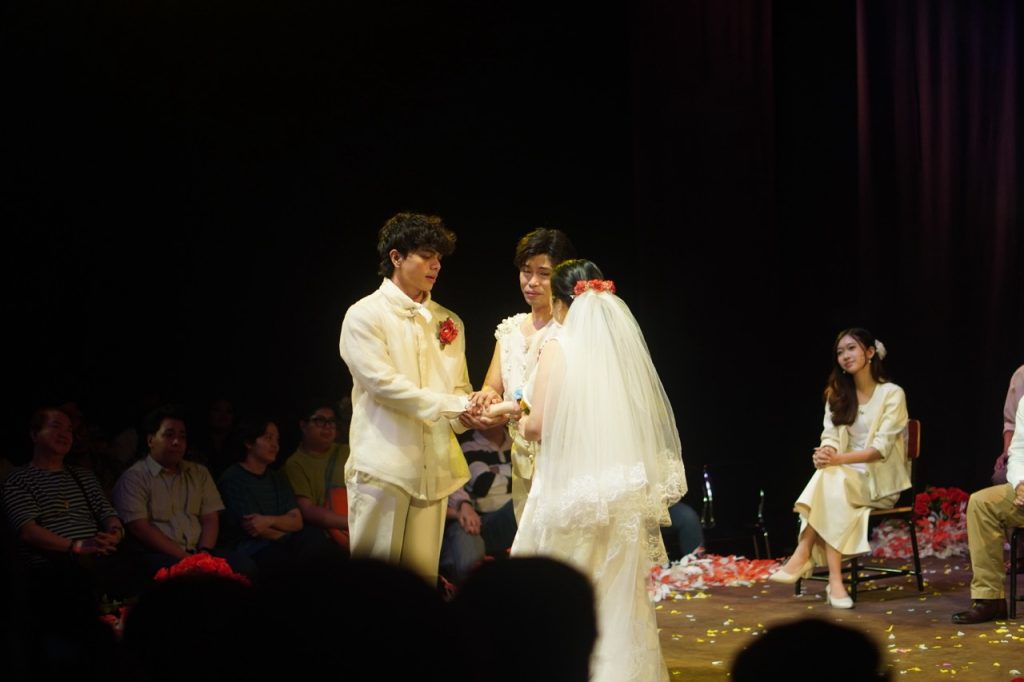
All the good that the first half of the play was able to dramatize on stage gets lost at the end as the narrative surrenders to cliche.
My Rating: 2.5 Stars

Youth Performance Council’s collaborative showcase, Mapanakit runs through August 9 at the KAL-IBG Theater in UP Diliman. Don’t miss this unique exchange between local regional talent and Manila stage veterans, secure your seats now via Ticket2Me.
Leave a Reply
You must be logged in to post a comment.